
One Delay Can Cost Your Entire Cruise
A quick coverage check now protects you from the problems no one sees coming.
Short Excerpt
- Understand why September is the historical peak of Atlantic hurricane activity without assuming your cruise will encounter a storm.
- Compare early-, mid-, and late-September departures, including what the calendar can and cannot tell you about weather.
- Discover how southern, eastern, and western Caribbean itineraries differ geographically and why departure ports matter.
- Learn what to expect from September temperatures, rainfall, possible itinerary changes, and travel arrangements.
Quick Take
- The Atlantic hurricane season runs from June 1 through November 30, with its historical activity peak around September 10.
- There is no reliably hurricane-free week in September. Early and late September both fall within an active period.
- Southern Caribbean destinations such as Aruba, Bonaire, and Curaçao generally have lower historical exposure to direct hurricane strikes, but the full cruise route can still be affected by tropical weather.
- September may offer attractive fares on some sailings, although lower prices, empty ships, and complimentary upgrades are not guaranteed.
- Warm temperatures, humidity, tropical showers, and possible rough seas deserve consideration even when no hurricane affects your itinerary.
- The best September cruise is one whose destinations, departure arrangements, fare conditions, and flexibility match your priorities.
Is September a Good Month for a Caribbean Cruise?
September can be a wonderful month to explore the Caribbean by cruise ship.
The islands are tropical, the water is inviting, and there may be appealing opportunities to enjoy a Caribbean vacation outside the traditional summer school-holiday period.
Yet September has one distinction that deserves particular attention: it falls at the historical peak of Atlantic hurricane activity.
For many travelers, that creates a difficult decision. Is the possibility of a storm worth accepting for an itinerary or fare you really like?
The answer depends less on whether September is universally good or bad and more on what you’re expecting from the vacation.
If you want a particular island, a completely predictable schedule, or a guaranteed return date, September’s weather uncertainty deserves significant weight.
If you’re comfortable with possible changes to port stops and sailing schedules, you may find a voyage that suits you very well.
Modern cruise lines monitor tropical weather and can adjust routes when necessary.
However, their ability to change course doesn’t guarantee that a ship will avoid all rough weather or arrive according to its original schedule. (Royal Caribbean — Hurricane Operating Policy)
The National Hurricane Center identifies September 10 as the historical peak of Atlantic hurricane activity, with much of the season’s tropical cyclone activity concentrated between mid-August and mid-October. (National Hurricane Center — Tropical Cyclone Climatology)
That is an important planning fact, but it isn’t a prediction for any particular September departure.
A cruise sailing near September 10 could encounter favorable weather.
Another voyage later in the month might face a tropical system affecting a scheduled destination.
What matters is understanding the seasonal conditions before choosing your date and itinerary.
September Caribbean Cruise Decision Planner
This planner helps you assess whether a September sailing fits your priorities.
Instead of producing an artificial hurricane-risk score, it identifies the questions worth answering about your dates, destinations, travel schedule, and flexibility.
September Caribbean Cruise Decision Planner
Compare your sailing period, itinerary, and travel flexibility before booking. This guide does not predict storms or rate vessel safety.
What your choices mean
0 of 5 steps complete
Planning guidance only. No real-time weather or booking inventory. Confirm conditions with official sources and follow the cruise line’s instructions.
What Is September Weather Like in the Caribbean?
A September Caribbean cruise can include brilliant sunshine, intense tropical showers, warm evenings, and occasional unsettled seas—all within the same vacation.
The weather varies by island, however, and it’s important to distinguish between ordinary tropical conditions and the effects of a developing hurricane.
September generally remains warm and humid across much of the Caribbean.
Top Cruise Deals From Trusted Cruise Lines
Compare exclusive online offers and find the fare that fits your trip and your budget
In many destinations, daytime temperatures commonly reach the upper 80s°F, although conditions vary by island, elevation, wind, and rainfall.
Warm ocean water is another characteristic of the season.
These conditions can be appealing for beach activities, but they also mean sun protection and hydration deserve attention.
Rain Doesn’t Automatically Mean a Hurricane Is Nearby
Tropical showers can develop without any tropical cyclone affecting the region.
A passing rain shower may interrupt a beach excursion briefly and then give way to sunshine.
In other situations, persistent rainfall can affect visibility, road conditions, or planned activities.
A forecast showing thunderstorms for a Caribbean port doesn’t automatically indicate that a hurricane threatens the ship.
Evaluate everyday weather forecasts separately from official tropical cyclone advisories.
Humidity Can Affect Your Shore Excursion Plans
September’s heat and humidity can make physically demanding shore excursions more tiring.
If you’re planning a lengthy walking tour, hiking excursion, or outdoor activity, consider the availability of shade, drinking water, and breaks.
A morning excursion may be more comfortable than a long outdoor activity during the hottest part of the day, depending on the destination.
Bring appropriate sun protection and follow local advice about heat conditions.
The CDC recommends reviewing destination-specific health considerations before traveling, including protection from mosquito-borne illnesses and other environmental risks. (CDC — Cruise Ship Travel)
Can the Sea Be Rough Even When the Sky Is Sunny?

Yes.
Swells can travel considerable distances from the weather systems that generate them.
A cruise ship may encounter noticeable movement even when the immediate sky is clear and no hurricane is directly affecting its location.
Other wind and wave patterns can also produce uncomfortable conditions.
A sunny forecast for your next port doesn’t guarantee smooth sailing between destinations.
If you’re susceptible to seasickness, plan appropriate prevention measures and consider a cabin location that may reduce the sensation of movement.
Early, Middle, or Late September: Is One Week Better?
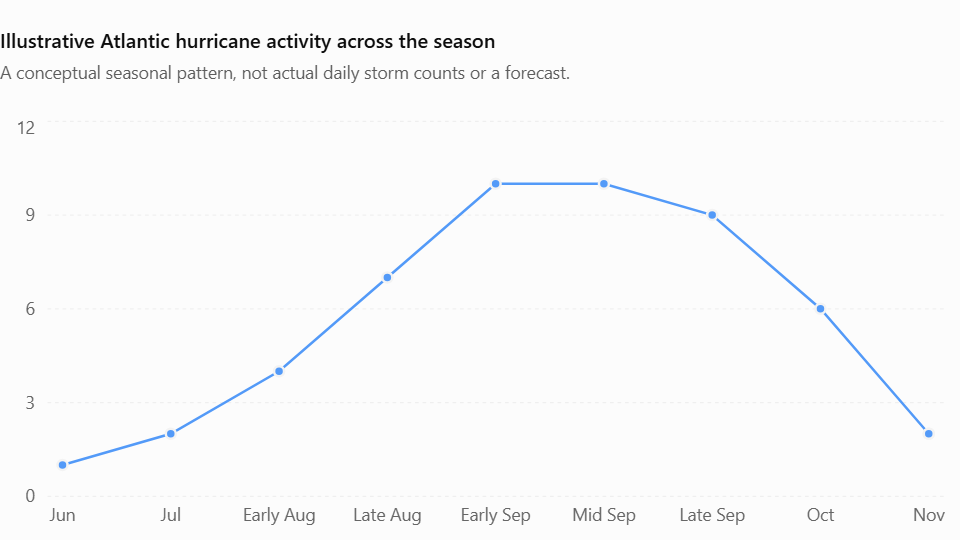
The chart illustrates the broad historical peak around September, not measured probabilities or actual storm counts.
It must not be used to choose a supposedly safe sailing date.
Many travelers want to identify the safest week within September.
That sounds straightforward, but hurricane climatology doesn’t provide a precise answer for a particular cruise.
The historical Atlantic peak is around September 10.
Online‑Only Cruise Offers You Won’t Find Elsewhere
Unlock special pricing and start planning the sailing that matches your perfect itinerary
However, tropical cyclone activity remains elevated through much of the month and into October.
That means you can’t reliably divide September into a dangerous middle and safe beginning or end.
September 1–10: The Approach to the Historical Peak
The first ten days of September fall within one of the most active portions of the Atlantic hurricane season.
Conditions may be entirely favorable for your cruise, but the calendar doesn’t support treating the beginning of the month as a reliably low-risk alternative.
If you’re booking early September, consider the same itinerary and scheduling flexibility you would for another peak-season departure.
September 11–20: Still Within a Highly Active Period
The second part of September follows the approximate climatological peak.
However, the broader environment can remain favorable for tropical cyclone development.
A September 15 sailing shouldn’t be presumed more or less likely to encounter a problem than a September 8 sailing based solely on the dates.
Where storms develop and where your ship is scheduled to travel are far more relevant to a particular voyage.
September 21–30: Activity Doesn’t Suddenly Disappear
Late September remains an active part of the Atlantic hurricane season.
Although the historical seasonal pattern eventually declines, significant tropical systems can still develop toward the end of September and during October.
There is no dependable cutoff within the month after which passengers can stop considering hurricane-related disruptions.
If your primary goal is choosing a period with substantially lower historical Atlantic tropical cyclone activity, you may want to compare dates outside the broader peak season rather than shifting by only a week or two.
Which Caribbean Cruise Region Makes Sense in September?
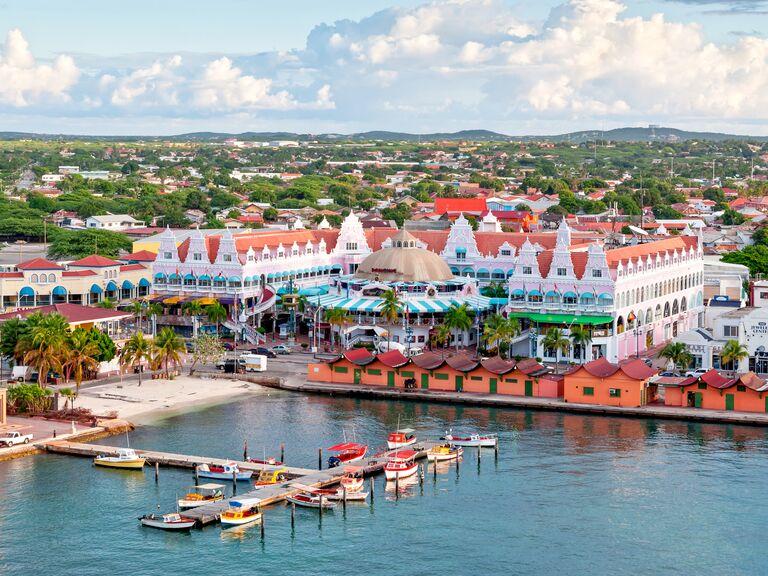
Southern Caribbean
Itineraries may include Aruba, Bonaire, Curaçao, or other southern destinations. The ABC islands have comparatively low historical exposure to direct hurricane strikes, but the ship’s full route and departure port remain important.
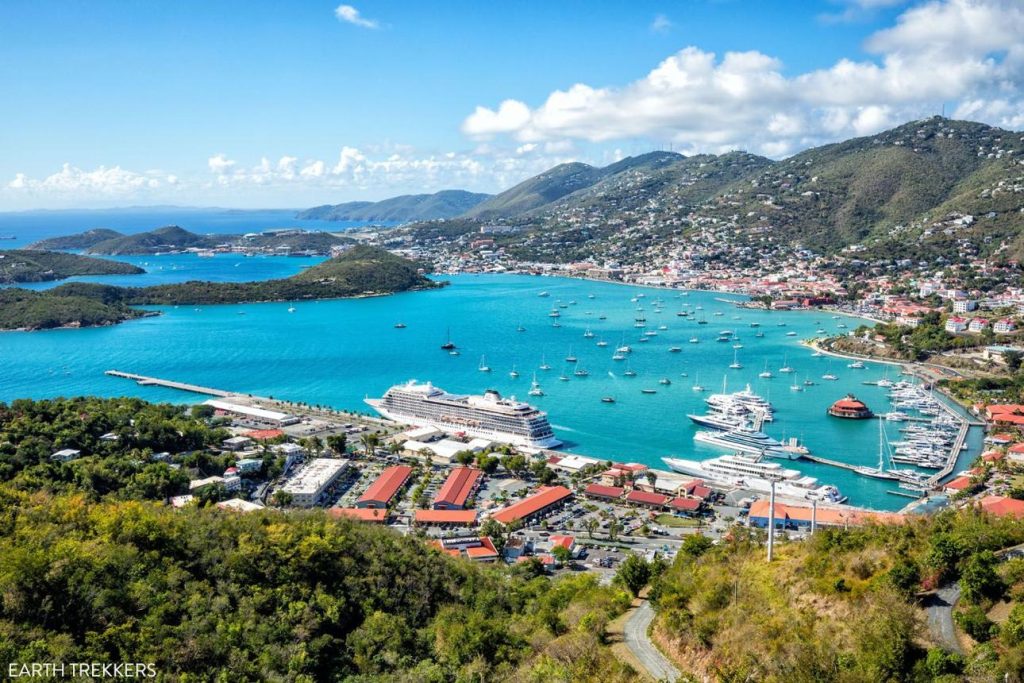
Eastern Caribbean
Popular itineraries can include destinations such as St. Thomas, Puerto Rico, St. Maarten, or the Bahamas. Conditions may differ widely across the region depending on developing weather.
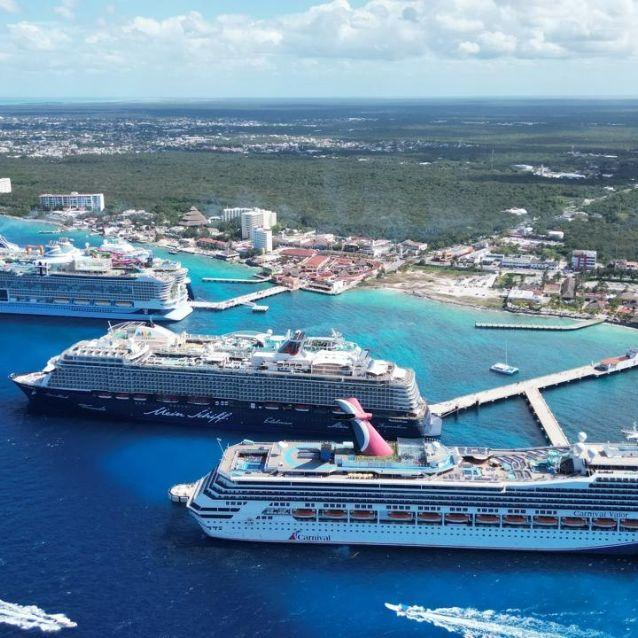
Western Caribbean
Itineraries often include destinations such as Cozumel, Grand Cayman, Jamaica, or Belize. Tropical systems affecting the western Caribbean or Gulf can disrupt ports and travel arrangements.
The Southern, Eastern, and Western Caribbean labels are useful geographic descriptions, but they don’t establish the weather your cruise will experience.
A storm may affect one part of the Caribbean while other regions have favorable conditions.
The route between ports, not merely the destination names, also influences the weather a vessel might encounter.
The ABC Islands: A Different Geographic Exposure
The islands of Aruba, Bonaire, and Curaçao sit relatively far south.
The U.S. Department of State describes Bonaire as outside the main hurricane belt, where direct hurricane hits are rare. (U.S. Department of State — Bonaire)
That makes the southern Caribbean worth considering for travelers comparing September itineraries.
However, no destination can promise complete protection from severe weather.

Luxury Cruise Experiences at Smarter Prices
See premium sailings and upgraded cabins priced for travelers who know how to book well
An itinerary visiting Bonaire may still embark from a different Caribbean region or require flights through airports affected by tropical systems.
The practical question is whether the overall route suits you—not whether one island is described as outside the hurricane belt.
Eastern Caribbean: Appealing Destinations With More Geographic Variation
Eastern Caribbean cruises may visit beautiful islands with beaches, historic towns, snorkeling opportunities, and varied excursions.
Yet a specific destination can be affected by storms arriving from different parts of the Atlantic.
For September, it helps to consider how important each port is to your enjoyment.
If you’re booking a cruise primarily to visit St. Thomas, for example, would a substituted destination fundamentally change the trip for you?
A cruise line may alter the itinerary when weather conditions warrant it, but an alternative port is not guaranteed.
Western Caribbean: Consider Both Caribbean and Gulf Conditions
Western Caribbean itineraries can include destinations in Mexico, Jamaica, the Cayman Islands, Belize, and surrounding areas.
Weather systems affecting the Caribbean Sea or Gulf can influence port operations and the journey to or from the departure port.
However, it would be misleading to suggest that western routes usually experience only brief rain during hurricane season.
An individual storm can create significant disruption.
Review the planned voyage and current conditions rather than assuming an entire region will remain unaffected.
Does Your Departure Port Matter More Than the Islands?

For many September travelers, the departure port deserves as much attention as the itinerary.
A tropical system might affect transportation to the cruise terminal even when the ship can operate.
Consider a traveler flying to South Florida before a Caribbean cruise.
If a hurricane threatens the departure region, their flight may be delayed or canceled, hotels may change their operations, and road access could be restricted.
The cruise ship may be able to adjust its schedule or route, but the traveler still has to reach it.
Florida Departures
Fort Lauderdale, Miami, Port Canaveral, and Tampa offer access to many Caribbean itineraries.
They also sit in a region where tropical weather can affect flights, ports, and road transportation.
The particular vulnerability depends on the storm, not simply the name of the departure city.
If you fly to Florida for a September sailing, allow time to manage ordinary flight delays and consider the consequences of broader weather disruptions.
San Juan Departures
San Juan provides access to a range of Caribbean itineraries, including voyages visiting southern and eastern islands.
But Puerto Rico can also be affected by tropical weather during September.

Sail Away to Paradise Without Overpaying
Find cruise deals that make it easy to escape, relax, and enjoy the ocean without stretching your budget
A southern Caribbean itinerary departing San Juan isn’t automatically free from hurricane-related disruption.
Your pre-cruise travel arrangements still matter.
Barbados and Other Southern Departure Ports
A southern departure port may offer access to itineraries with less travel through some northern Caribbean waters.
However, the advantages depend on the actual route, available sailing dates, and how you reach the embarkation location.
Longer or more complicated flights might create additional travel commitments.
Compare the complete journey rather than selecting a departure port based only on a broad geographic label.
Are September Caribbean Cruises Less Expensive?
September can present attractive pricing opportunities, particularly when demand for a particular sailing is lower.
However, the price difference isn’t uniform.
Cruise fares vary by ship, departure city, itinerary, cabin category, inventory, promotions, and other market conditions.
Claims that September cruises reliably cost 30%–50% less than peak-season voyages aren’t supported without comparing specific offers.
Compare Identical or Similar Cabin Categories
When evaluating a September fare against another month, compare the same ship and a similar cabin category where possible.
Otherwise, a lower price may reflect a different vessel, itinerary, or accommodation rather than a seasonal discount.
Also check what’s included.
A fare with a lower headline price may have different gratuity, beverage, dining, or other expenses.
Don’t Assume the Ship Will Be Half Empty
Lower demand in some travel markets doesn’t guarantee a nearly empty ship.
Cruise lines manage fares and inventory, and a September sailing can still attract substantial demand.
A quieter school-holiday calendar may influence the mix of passengers, but it doesn’t establish occupancy or shorter dining lines.
If avoiding crowds is particularly important, compare the actual ship size, sailing date, and facilities rather than relying on the month alone.
Are Complimentary Upgrades More Likely?
An attractive fare doesn’t automatically include an upgrade.
Complimentary upgrades, bidding programs, cabin assignments, and promotional offers differ by cruise line.
A September departure shouldn’t be booked on the expectation that an upgrade will become available.
Choose a cabin you’d be comfortable occupying at the fare you’re paying.
What Should You Pack Specifically for a September Caribbean Cruise?

September packing deserves a few adjustments for heat, humidity, rain, and the possibility of travel delays.
However, a typical Caribbean cruise wardrobe remains appropriate.
Focus on lightweight clothing that suits your destinations and planned activities.
Clothing for Warm, Humid Weather
Choose breathable shirts, shorts, dresses, or other comfortable resort clothing.
Quick-drying fabrics may be practical for excursions, especially when occasional rain is possible.
A lightweight layer can help in air-conditioned dining rooms, theaters, and lounges.
Bring appropriate swimwear and any attire required for the ship’s restaurants or evening venues.
Rain and Shore-Excursion Protection
A compact rain jacket, waterproof phone pouch, and suitable walking shoes may be more useful than a collection of specialized storm accessories.
Keep your day bag manageable and follow any excursion rules.
If weather affects a shore activity, the operator may change or cancel it regardless of what you’ve packed.
Medication and Motion Sickness Preparation
Carry essential prescription medication and an appropriate reserve for potential travel delays, as advised by your healthcare professional.
Discuss motion sickness treatments before sailing if you’re susceptible to nausea.
The CDC notes that motion sickness medications have potential side effects and contraindications, and that preparation should reflect individual circumstances. (CDC Yellow Book — Motion Sickness)
Don’t assume ginger, wristbands, or a patch will prevent all symptoms.
Phone Charging and Internet Access
Pack suitable charging cables and a portable power bank permitted by your transportation providers.
Review cruise-line restrictions before bringing adapters, power strips, or other electrical accessories.
A charged phone can help with travel logistics, but passenger internet availability may vary.
If you plan to use a local eSIM ashore, verify its coverage and remember that it won’t automatically provide mobile service in open ocean waters.
How Far in Advance Should You Check September Hurricane Forecasts?
A useful September cruise planning routine changes as departure approaches.
Months before sailing, seasonal climatology helps you understand the general timing of Atlantic hurricane activity.
It cannot tell you whether a tropical system will affect your specific vacation.
Closer to departure, official short-range forecasts and active storm advisories become increasingly relevant.
Several Months Before Departure
Focus on the decisions that need to be made early: itinerary, fare restrictions, flights, accommodation, excursions, and insurance.
Avoid treating a seasonal hurricane outlook as a detailed forecast for your particular ship.
Even an active overall hurricane season can include periods when no storm affects your route.
Similarly, a comparatively quiet season can contain a significant individual hurricane.
One to Two Weeks Before Sailing
Review the National Hurricane Center’s tropical weather outlooks and your cruise line’s travel-update channels.
If a storm is already active, read the latest official advisories and check where hazardous conditions may occur.
Don’t use an early model projection as proof that your cruise will be canceled or rerouted.
Forecast uncertainty increases over longer periods, and cruise-line operating decisions depend on additional factors.
During the Final Days Before Departure
Check the cruise line’s confirmed boarding arrangements, flight status, port conditions, and any applicable local safety instructions.
If a tropical system threatens your departure area, official instructions may become more important than the usual pre-cruise schedule.
The NHC forecast cone describes uncertainty around the predicted path of a storm’s center, not the full area where hazardous conditions can occur. (National Hurricane Center — Forecast Cone)
Follow relevant government warnings and your cruise operator’s confirmed travel instructions.
What If a September Storm Changes Your Itinerary?
September cruise planning should allow for the possibility that a scheduled port may become unavailable.
Cruise operators can adjust routes, change the order of destinations, substitute ports, or spend additional time at sea.
Royal Caribbean, for example, directs passengers to official Travel Updates when tropical systems affect itineraries or port operations. (Royal Caribbean — Weather and Itinerary Updates)
A changed itinerary isn’t necessarily evidence that the entire vacation is in jeopardy.
However, it may affect the experiences and arrangements you were counting on.
A Missed Beach Day or Shore Excursion
When a port is skipped, cruise-line excursions may be canceled or handled according to the operator’s published terms.
For example, Royal Caribbean publishes procedures addressing excursions when a ship misses a port. (Royal Caribbean — Missed-Port Excursions)
Independent tours have their own cancellation arrangements.
Before booking, read the terms for missed ship calls and late arrival.
Don’t assume that every excursion provider automatically refunds a reservation when the ship cannot dock.
An Additional Day at Sea
A revised itinerary may replace a port visit with time aboard the ship.
That can be enjoyable if you like dining, shows, enrichment activities, pools, or time in the observation lounge.
But the extra sea day might not have the same entertainment schedule as an originally planned day at sea.
Follow the updated shipboard program and any weather-related restrictions.
If the reason for the itinerary change involves unsettled seas, some outdoor facilities may temporarily close.
A Delayed Return
An unexpected change to the return schedule can affect flights, hotels, work commitments, or medical appointments.
Keep essential information accessible and wait for confirmed arrival instructions before changing separately purchased arrangements.
For flights covered by U.S. Department of Transportation rules, a canceled or significantly changed flight can create a refund entitlement when the traveler doesn’t accept the offered alternative or qualifying credits.
Weather does not automatically eliminate that right. (U.S. DOT — Refunds)
A ticket refund is different from compensation for every inconvenience or additional expense.
Does Travel Insurance Make More Sense for a September Cruise?
September’s historical hurricane activity is one reason to consider travel insurance carefully.
But purchasing a policy doesn’t guarantee that every weather-related cost will be reimbursed.
Different products cover different events, and some policies exclude losses connected to storms that were already known when coverage was purchased.
The National Association of Insurance Commissioners recommends reviewing coverage limits, exclusions, cancellation provisions, and purchase timing before selecting travel insurance. (NAIC — Should I Get Travel Insurance?)
Which Benefits Deserve Attention?
| Benefit | September cruise consideration |
|---|---|
| Trip cancellation | Which events permit cancellation before sailing |
| Trip interruption | Whether qualifying disruptions affect prepaid, unused arrangements |
| Travel delay | Minimum delay requirements and eligible extra expenses |
| Missed connection | Whether a qualifying transportation delay creates a covered loss |
| Emergency medical | Coverage limits, exclusions, and treatment locations |
| Medical evacuation | Authorization, covered circumstances, and transportation limits |
| Cancel For Any Reason | Partial reimbursement, eligibility rules, and advance cancellation requirements |
Does Cancel For Any Reason Cover a Weather-Related Change of Mind?
An eligible Cancel For Any Reason benefit may allow a traveler to cancel for reasons not covered under standard cancellation protection.
However, it usually reimburses only part of qualifying prepaid, nonrefundable trip costs.
The NAIC describes typical CFAR reimbursement as 50%–75%, subject to policy conditions and deadlines. (NAIC — Travel Insurance)
It should not be treated as a promise of a full refund.
Can You Buy Coverage Once a Hurricane Has Been Named?
You may still be able to purchase some forms of travel insurance after a storm has been named.
However, claims resulting from that known event are commonly excluded.
Check the policy’s known-event rules, effective dates, and covered reasons rather than assuming that a newly purchased policy will protect you against an already developing storm.
Who May Enjoy a September Caribbean Cruise Most?
September can be especially appealing to travelers whose schedules and expectations allow some flexibility.
A couple primarily interested in the ship’s dining, entertainment, and several possible Caribbean destinations may be comfortable with a weather-related adjustment.
A family trying to coordinate school schedules, a wedding in a specific port, or an important event immediately after returning may evaluate the same sailing differently.
The distinction isn’t about being adventurous versus cautious.
It’s about whether the uncertainty fits the purpose of your vacation.
When September May Be a Good Fit
A September sailing could suit you if you like the itinerary and price, can accommodate certain port changes, and understand the consequences of possible travel delays.
You should still prepare for ordinary tropical weather and review any important cancellation conditions.
When Another Month May Suit You Better
If the exact destination is essential, your return date is inflexible, or substantial nonrefundable arrangements depend on every part of the itinerary occurring as scheduled, September’s historical storm activity may make another travel period more appealing.
That doesn’t mean other months are entirely free from bad weather or disruption.
It simply means your choice of season can reflect the uncertainty you’re willing to accept.
Your September Caribbean Cruise Planning Checklist
Before booking, compare the actual fare and itinerary rather than relying on general statements about September discounts.
Review the full route, including departure and return ports, and consider how important each destination is to you.
Arrange transportation with enough flexibility for ordinary delays and confirm any cancellation or change penalties.
Check whether your travel documents meet the itinerary’s requirements.
The U.S. Department of State strongly recommends that international cruise passengers carry a valid passport book in case an emergency requires a flight home. (U.S. Department of State — Cruise Ship Travel)
Prepare for warm weather, occasional rain, and potential changes to the sailing schedule.
As departure approaches, use the National Hurricane Center for official tropical cyclone forecasts and your cruise line for information about the actual voyage.
These steps won’t eliminate uncertainty.
They will help you make a booking decision grounded in what September is really like.
A September Caribbean Cruise Can Still Be Worth Looking Forward To
September’s reputation is closely tied to hurricane season, and that connection is understandable.
The month falls within the most active historical portion of Atlantic tropical cyclone activity.
Yet the calendar alone cannot tell you what the weather will be like on your ship or at the destinations you hope to visit.
There may be beautiful days, warm seas, attractive fares, and memorable shore experiences.
There may also be rain, itinerary adjustments, uncomfortable swells, or transportation delays.
The most rewarding September cruise is one chosen with those possibilities in mind.
Understand the seasonal pattern, compare the actual itineraries, and decide how much flexibility suits your vacation.
Once you’ve made those decisions, you can look forward to the destinations and onboard experiences that drew you to cruising in the first place.
FAQ – Is September a Good Time to Cruise the Caribbean?
Is September a good month for a Caribbean cruise?
September can be a good month for a Caribbean cruise if you’re comfortable with the possibility of weather-related itinerary changes.
Some sailings may offer attractive prices and destinations that suit your travel preferences.
However, September falls at the historical peak of Atlantic hurricane activity, so weather and transportation uncertainty deserve consideration.
Compare the actual sailing rather than assuming the month is universally good or bad.Is September the worst month for Caribbean hurricanes?
September contains the historical peak of Atlantic tropical cyclone activity, around September 10.
That makes it one of the most active months in the season overall.
However, historical basin-wide activity isn’t a prediction that a particular cruise or island will encounter a hurricane.
The actual location and development of tropical systems matter more when evaluating a specific voyage.Is early September safer for Caribbean cruising than late September?
There isn’t a reliable rule that early September is safer than late September for an individual cruise.
Both periods fall within the active portion of the Atlantic hurricane season.
While the climatological peak occurs around September 10, elevated activity continues through much of the month and into October.
Your itinerary and developing forecasts are more meaningful than selecting a supposedly safe week.Does hurricane activity decrease after September 10?
The historical average gradually decreases after the climatological peak, but that doesn’t mean individual storms stop developing.
Significant Atlantic hurricanes can occur later in September and October.
A cruise departing September 25 can still face weather-related disruption.
Seasonal patterns should inform broad travel planning, not create certainty about a particular departure.Are Caribbean cruises cheaper in September?
Some September sailings may have attractive fares because of demand, itinerary choices, and other pricing factors.
However, there is no guaranteed discount simply because the cruise departs during September.
Prices also vary by ship, cabin category, departure port, and included services.
Compare actual total vacation costs against similar sailings in other months.Are September cruise ships less crowded?
Passenger demand can differ in September because many schools are in session and travel patterns change after summer.
However, that doesn’t guarantee low occupancy, shorter dining lines, or quiet pool decks.
Cruise lines adjust fares and manage inventory, and individual ships may still carry many passengers.
Consider the specific ship and sailing rather than assuming the entire month will be uncrowded.Which Caribbean islands are less exposed to hurricanes in September?
Aruba, Bonaire, and Curaçao are often considered because of their relatively southern location and lower historical exposure to direct hurricane strikes.
However, no island is completely immune to severe weather.
A cruise visiting these destinations may also travel through other regions affected by a tropical system.
Evaluate the complete itinerary, including the departure port, rather than individual islands alone.Is Aruba a good cruise destination in September?
Aruba can be an appealing September destination because of its beaches, attractions, and comparatively low historical exposure to direct hurricanes.
However, its location doesn’t guarantee favorable weather throughout your voyage.
The ship’s route and departure port may be affected by conditions elsewhere.
Choose an Aruba itinerary for its overall appeal rather than expecting the island to eliminate weather uncertainty.Is the Eastern Caribbean too risky for September cruises?
Eastern Caribbean itineraries can operate during September, and many voyages may experience favorable conditions.
However, the region can be affected by Atlantic tropical systems, and ports may become unavailable when weather threatens.
Cruise operators may adjust itineraries, but replacements aren’t guaranteed.
If one eastern Caribbean island is essential to your vacation, consider the possible consequences of a missed call.Is the Western Caribbean better for cruising in September?
Western Caribbean destinations offer appealing excursions, beaches, and varied itineraries.
Yet the region can also be affected by tropical systems in the Caribbean Sea and Gulf.
It isn’t automatically a lower-risk alternative to every eastern Caribbean itinerary.
Compare the actual route, departure arrangements, and your willingness to accept possible changes.Will a cruise ship sail through a hurricane in September?
Cruise operators monitor tropical weather and generally seek to avoid hazardous hurricane conditions.
They may adjust routes, schedules, or ports when necessary.
However, the ship can still experience rough seas or operational disruption even when it remains away from the storm’s center.
Follow the captain’s instructions rather than using a personal forecast map to assess the ship’s navigational safety.Can a September cruise be canceled because of a hurricane?
Yes, weather or related operational restrictions can lead to a cruise cancellation in some circumstances.
However, a storm appearing in the forecast doesn’t automatically mean the sailing will be canceled.
The cruise line may instead change ports, adjust timing, or make another operational decision.
Monitor official travel updates and review the booking terms that apply to an actual cancellation.Should I arrive at the cruise port a day early in September?
Arriving before embarkation day can provide additional time to address ordinary flight delays and certain travel disruptions.
It doesn’t guarantee that you’ll avoid problems if a hurricane causes widespread airport or port closures.
Consider the added hotel expense and your travel route when deciding how much extra time to allow.
Arriving early can be especially useful when a missed connection would make it difficult to reach the ship.What should I pack for a Caribbean cruise in September?
Pack lightweight clothing suitable for warm, humid conditions, along with swimwear, sun protection, and footwear appropriate for your activities.
A compact rain jacket and protective pouch for your phone may also be useful.
Keep essential medication, travel documents, and important belongings accessible during embarkation.
If you experience motion sickness, discuss appropriate prevention strategies before departure.Is the Caribbean Sea rough in September?
The Caribbean Sea can be smooth or rough during September, depending on wind, waves, swells, and tropical weather systems.
Hurricane-season activity may create uncomfortable conditions in some areas, but it doesn’t mean every voyage experiences heavy seas.
Swells can also reach places where the immediate weather appears favorable.
If motion sensitivity is a concern, consider suitable cabin placement and medical advice about seasickness.Do I need hurricane travel insurance for a September cruise?
Travel insurance is worth considering when you have nonrefundable expenses, international medical exposure, or concern about transportation disruptions.
The appropriate policy depends on your circumstances and existing coverage.
Not every travel insurance plan covers every hurricane-related cancellation, delay, or missed port.
Compare written terms, exclusions, benefit limits, and purchase deadlines before choosing.Does Cancel For Any Reason insurance reimburse the full cruise fare?
Cancel For Any Reason benefits typically reimburse only a portion of eligible prepaid, nonrefundable costs.
Requirements may include purchasing within a specified period and canceling before a particular deadline.
It is generally an optional benefit rather than a standard feature of every insurance plan.
Review the selected policy’s conditions and reimbursement percentage instead of assuming it guarantees a full refund.What happens to September shore excursions if a port is skipped?
If a cruise ship misses a scheduled port, excursions booked through the cruise line may be canceled or handled under its published terms.
Independent excursion operators have their own cancellation and refund conditions. Keep the official itinerary change notice and relevant booking records.
Don’t assume every missed port creates an automatic entitlement to a refund for every separately purchased activity.Should I constantly monitor hurricane apps during a September cruise?
No, continuous monitoring isn’t necessary for most passengers.
The National Hurricane Center provides official Atlantic tropical cyclone forecasts, while the cruise line communicates decisions affecting the specific sailing.
A supplementary weather app may be useful for viewing broader conditions, but it doesn’t confirm a ship’s route or future itinerary.
Check meaningful updates and follow official instructions rather than repeatedly reacting to speculative forecasts.What is the most important consideration when booking a September Caribbean cruise?
The most important consideration is whether the itinerary and booking arrangements match your tolerance for weather-related uncertainty.
Think about the importance of exact ports, your return schedule, nonrefundable expenses, and any medical or accessibility requirements.
Review the actual fare and cancellation terms before paying.
September can be enjoyable when the vacation is planned around realistic expectations rather than guaranteed conditions.
Plan Your Next Cruise!

Sail Into Timeless Luxury: Cunard Cruises for Transatlantic Elegance and Destination‑Rich Voyages
One Delay Can Cost Your Entire Cruise A quick coverage check now protects you from the problems no one sees coming….

Unlock The Viking Ocean Experience: Elegant Ships, Cultural Immersion, And Unrushed Travel
One Delay Can Cost Your Entire Cruise A quick coverage check now protects you from the problems no one sees coming….

Sail Into Modern Luxury: Celebrity Cruises for Design, Culinary Excellence, and Destination‑Rich Voyages
One Delay Can Cost Your Entire Cruise A quick coverage check now protects you from the problems no one sees coming….

Sail the World in Style: MSC Cruises’ Innovative Ships, Luxury Amenities, and Global Adventures
One Delay Can Cost Your Entire Cruise A quick coverage check now protects you from the problems no one sees coming….
Explore More

Discover Princess Cruise Line: Elegant Ships, Immersive Voyages, and World‑Class Experiences

Inside Cruise Ship Backup Power: Blackouts, Safety Systems, and What Passengers Should Expect
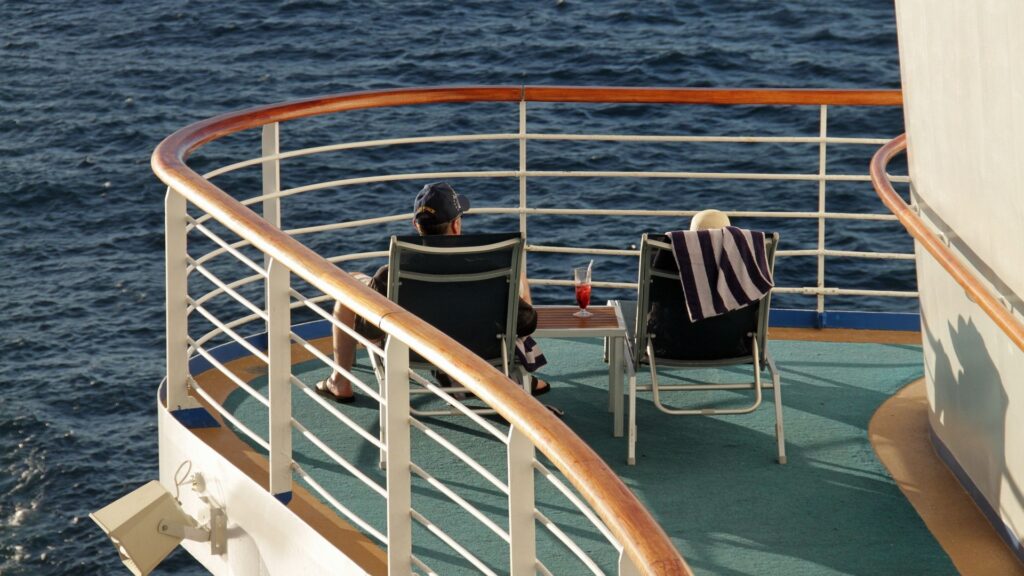
Unlock a Tailored Cruise Experience: From Cabin Choice to Shore Adventures