One Delay Can Cost Your Entire Cruise
A quick coverage check now protects you from the problems no one sees coming.
Booking a cruise should feel exciting, not overwhelming.
With the right strategy, you can secure the best price, choose the perfect cabin, and enjoy perks that make your voyage unforgettable.
From timing your booking to leveraging loyalty programs and travel agent expertise, every decision can add value to your trip.
This guide walks you through each step so you can book with confidence and start your cruise adventure stress-free.
We’ll also delve into the necessary documentation, payment requirements, and considerations for selecting a cabin and dinner seating.
1. Follow This Step-By-Step Cruise Booking Plan for the Best Price and Experience
To book a cruise, you’ll first need to research and find a cruise that matches your preferences.
Determine your preferred cruise line, destinations, length of the cruise, and travel dates.
Use online search tools and cruise comparison websites like Cruise Direct and the cruise line’s official site to find available cruises.
Once you have a list of potential cruises, compare the itineraries, look at the ports of call, sea days, and embarkation and disembarkation ports.
Check reviews from previous cruisers to get an idea of the ship’s condition, service quality, and overall experience.
Evaluate the total cost, including the base fare, taxes, fees, and any additional charges for amenities or excursions.
Choosing the right cabin is an essential part of booking a cruise.
Decide between interior, ocean view, balcony, and suite cabins based on your budget and preferences for space and views.
Also, consider the location of your cabin; some may prefer proximity to elevators, quiet areas, or specific decks.
When you’ve made your decision, you can book your cruise either online or through a travel agency.
Booking online allows you to do it from the comfort of your home at any time, giving you complete control over the process, including selecting your cabin and dining preferences.
You can easily compare multiple cruises, prices, and itineraries on different websites.
However, this method can be overwhelming due to the sheer number of options and lack of personalized advice if issues arise.
Booking a cruise involves several steps, from selecting the right itinerary to securing your spot with a deposit.
Here’s a detailed step-by-step guide to help you navigate the process:
Step 1: Research and Find a Cruise
- Determine Your Preferences: Decide on your preferred cruise line, destinations, length of the cruise, and travel dates.
- Search for Cruises: Use online search tools and cruise comparison websites to find available cruises that match your criteria.
Websites like Cruise Direct and the cruise line’s official site are great places to start.
Step 2: Compare Options
- Compare Itineraries: Look at the ports of call, sea days, and embarkation and disembarkation ports.
- Check Reviews: Read reviews from previous cruisers to get an idea of the ship’s condition, service quality, and overall experience.
- Evaluate Costs: Compare the total cost, including the base fare, taxes, fees, and any additional charges for amenities or excursions.
Step 3: Select Your Cabin
- Cabin Types: Choose between interior, ocean view, balcony, and suite cabins.
Consider your budget and preferences for space and views.
- Cabin Location: Decide on the location of your cabin based on factors like proximity to elevators, quiet areas, or specific decks.
Step 4: Book Your Cruise
- Book Online: Visit the cruise line’s website or an online travel agency to book your cruise.
You’ll need to provide personal information, select your cabin, and make a deposit.
- Use a Travel Agent: Alternatively, contact a travel agency specializing in cruises.
They can offer expert advice, handle the booking process, and may have access to exclusive deals.
2. Decide Between Online Booking and Travel Agents to Maximize Cruise Value
When it comes to booking a cruise, you have two primary options: booking online yourself or using a travel agency.
Each method has its pros and cons.
Using a travel agency for booking a cruise has its advantages.
Travel agents have extensive knowledge of cruise lines, ships, and itineraries and can provide personalized recommendations based on your preferences.
They often have access to exclusive deals, discounts, and perks not available online.
Moreover, agents offer support with booking, documentation, and any issues that may arise before or during your cruise.
The downside is that some travel agencies may charge a booking fee, and you might have less direct control over the booking process compared to booking online yourself.
If the travel agency you choose does charge a booking fee, DO NOT USE THEM!
You should NOT have to pay the travel agency.
The agency gets paid with commission from the cruise line.
After you take the cruise, the cruise line pays the travel agency up to a 16% commission.
Therefore, there is NEVER a reason to pay a travel agency no matter how much they try to convince you otherwise.
Booking a Cruise Online
Pros:
- Convenience: Book from the comfort of your home at any time.
- Control: Have complete control over the booking process, including selecting your cabin and dining preferences.
- Comparison: Easily compare multiple cruises, prices, and itineraries on different websites.
Cons:
- Overwhelming: The sheer number of options can be overwhelming, especially for first-time cruisers.
- Limited Assistance: Lack of personalized advice and support if issues arise.
Booking a Cruise with a Travel Agency
Pros:
- Expertise: Travel agents have extensive knowledge of cruise lines, ships, and itineraries.
They can provide personalized recommendations based on your preferences.
- Exclusive Deals: Agents often have access to exclusive deals, discounts, and perks not available online.
- Support: Receive assistance with booking, documentation, and any issues that may arise before or during your cruise.
Cons:
- Cost: Some travel agencies may charge a booking fee, although many do not.
- Less Control: You may have less direct control over the booking process compared to booking online yourself.
3. Gather Essential Documents and Details Before Booking Your Cruise
To book a cruise, you’ll need certain information and documentation.
This includes personal information such as your full name as it appears on your passport or government-issued ID, date of birth, and contact information.
You’ll also need travel documentation; a passport is highly recommended for all cruises, especially those with international ports of call.
While some closed-loop cruises (departing and returning to the same U.S. port) may accept a birth certificate, a passport is preferred for its flexibility and universal acceptance.
Additionally, you’ll need credit or debit card information for the deposit and final payment, as well as your cruise preferences like preferred dining time and any special requests.
Here’s what you’ll need:
Personal Information:
- Full name as it appears on your passport or government-issued ID
- Date of birth
- Contact information (email, phone number, address)
Travel Documentation:
- Passport: Highly recommended for all cruises, especially those with international ports of call.
- Birth Certificate: Accepted for some closed-loop cruises (departing and returning to the same U.S. port), but a passport is preferred.
Payment Information:
- Credit or debit card for the deposit and final payment
Cruise Preferences:
- Preferred dining time (early, late, or anytime dining)
- Special requests (dietary restrictions, accessibility needs)
4. Complete Your Cruise Booking Form Accurately to Avoid Delays And Issues
When booking online, you’ll need to complete a booking form that includes fields for personal information, travel information, payment details, and additional information like emergency contact details and loyalty program membership.
After filling out the form, review all entered information for accuracy, agree to the terms and conditions, and submit your booking.
Here’s a breakdown of the typical fields and sections you’ll encounter:
1. Personal Information:
- Full name
- Date of birth
- Gender
- Contact information (email, phone number, address)
2. Travel Information:
- Cruise itinerary and dates
- Cabin selection (type and location)
- Dining preferences
3. Payment Information:
- Credit or debit card details
- Billing address
4. Additional Information:
- Emergency contact details
- Loyalty program membership (if applicable)
5. Review and Confirm:
- Review all entered information for accuracy
- Agree to the terms and conditions
- Submit your booking
5. Use Proven Strategies to Unlock Cruise Discounts and Perks
There are several ways to secure discounts on your cruise vacation.
Early booking discounts are often available for reservations made well in advance.
If you have flexible travel dates, look for last-minute deals on unsold cabins.
Some cruise lines offer senior discounts (typically for those aged 55 and above) and resident discounts for certain states or regions.
Joining the cruise line’s loyalty program can earn you points and access to member-only discounts and perks.
Booking as a group can also provide group rates and additional perks.
Shareholders of some cruise lines may be eligible for onboard credits and discounts.
Additionally, frequent cruisers who spend time in the onboard casino may receive special offers and discounts through the casino’s rewards program.
Here are some tips:
1. Early Booking Discounts:
- Book Early: Many cruise lines offer discounts for bookings made well in advance.
2. Last-Minute Deals:
- Flexible Dates: If you have flexible travel dates, look for last-minute deals on unsold cabins.
3. Age and Residency Discounts:
- Senior Discounts: Some cruise lines offer discounts for seniors (typically age 55+).
- Resident Discounts: Discounts may be available for residents of certain states or regions.
4. Loyalty Programs:
- Cruise Line Loyalty Programs: Join the cruise line’s loyalty program to earn points and access member-only discounts and perks.
5. Group Discounts:
- Traveling in a Group: Book as a group to take advantage of group rates and additional perks.
6. Cruise Line Stockholder Benefits:
- Stockholder Benefits: Shareholders of some cruise lines are eligible for onboard credits and discounts.
7. Casino Offers:
- Casino Programs: Frequent cruisers who spend time in the onboard casino may receive special offers and discounts.
6. Understand Cruise Deposit Rules and Final Payment Deadlines to Protect Your Booking
When booking a cruise, you’ll typically need to make a deposit to hold your reservation.
The deposit amount varies by cruise line and itinerary but is generally a small percentage of the total fare.
Deposits are often refundable up to a certain date before the cruise.
The final payment is usually due 60 to 90 days before the sail date, depending on the cruise line and itinerary.
You can pay by credit card, debit card, or in some cases, by check or bank transfer.
Here’s what you need to know:
Deposit:
- Amount: The deposit amount varies by cruise line and itinerary but is generally a small percentage of the total fare.
- Refundable: Deposits are often refundable up to a certain date before the cruise.
Final Payment:
- Due Date: The final payment is usually due 60 to 90 days before the sail date, depending on the cruise line and itinerary.
- Payment Methods: Pay by credit card, debit card, or in some cases, by check or bank transfer.
7. Know Cruise Passport Rules to Avoid Travel Disruptions
While some cruises allow travel with a birth certificate, it’s highly recommended to cruise with a passport.
A passport provides flexibility, allowing you to fly home from a foreign port in case of an emergency, and serves as a universally accepted proof of citizenship and identity.
Without a passport, you may face difficulties returning home if you need to disembark at a foreign port due to an emergency, and some cruise lines and itineraries require a passport for boarding.
For example, if you need to fly back home in an emergency, you will not be able to board a plan with a birth certificate.
If for some reason you miss boarding your ship in port and you have to meet it at the next port, you may need a passport to make the trip.
The safest thing is to cruise with a passport. It makes life a lot easier.
Additionally, certain countries may not accept birth certificates as valid travel documents.
Ensure your passport is valid for at least six months beyond the end of your cruise, as some countries require this validity period for entry.
Here’s why:
Why Cruise with a Passport:
- Flexibility: A passport allows you to fly home from a foreign port in case of an emergency.
- Proof of Citizenship: A passport serves as a universally accepted proof of citizenship and identity.
Problems Without a Passport:
- Emergency Situations: Without a passport, you may face difficulties returning home if you need to disembark at a foreign port due to an emergency.
- Denied Boarding: Some cruise lines and itineraries require a passport for boarding.
Additionally, certain countries may not accept birth certificates as valid travel documents.
Passport Validity:
- Expiration Date: Ensure your passport is valid for at least six months beyond the end of your cruise.
Some countries require this validity period for entry.
8. Choose The Right Cabin and Dining Time for Comfort and Convenience
Choosing the right cabin and dinner seating can enhance your cruise experience.
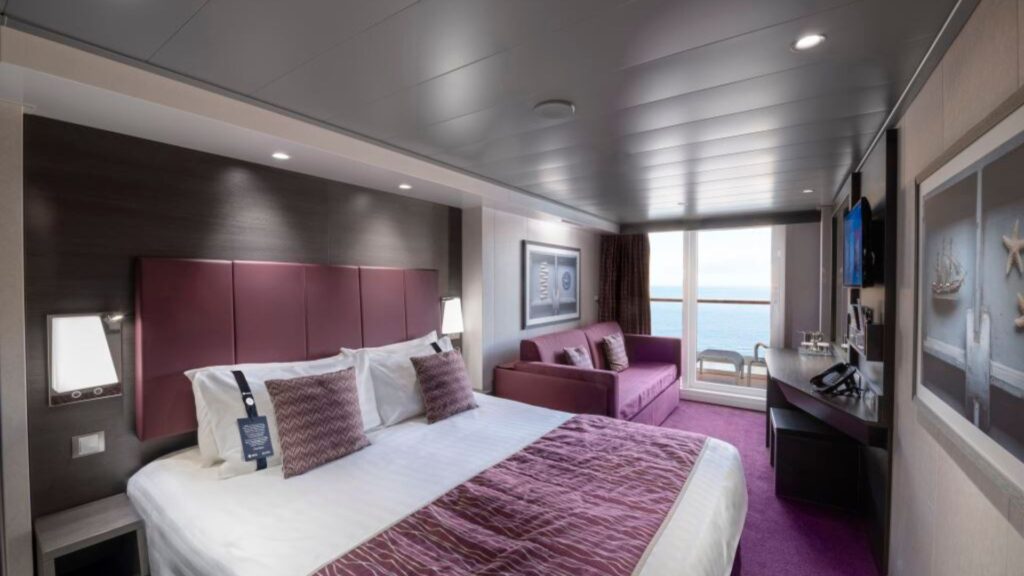
When selecting a cabin, consider the types available: interior cabins are budget-friendly with no windows.
Ocean view cabins have windows or portholes with a view of the sea.
Balcony cabins offer private balconies for outdoor space and sea views.
And suites are larger and more luxurious with additional amenities.
The location of your cabin also matters: midship cabins are more stable and less prone to motion.
Aft cabins are quieter with great views but may feel more motion.
Forward cabins are close to entertainment venues but may experience more motion.
Higher decks are closer to pools and dining but may experience more motion, and lower decks are quieter and more stable.
For dinner seating, traditional dining includes early seating (typically around 6:00 PM) for those who prefer to dine early and late seating (typically around 8:00 PM) for those who enjoy a leisurely evening.
Anytime dining allows you to dine at any time during the dinner hours, offering more flexibility in your schedule.
Some cruise lines also offer specialty dining venues that require reservations and may have an additional fee.
Here’s what to consider:
Cabin Selection:
Cabin Types:
- Interior Cabins: Budget-friendly, no windows.
- Ocean View Cabins: Windows or portholes with a view of the sea.
- Balcony Cabins: Private balconies for outdoor space and sea views.
- Suites: Larger, more luxurious cabins with additional amenities.
Cabin Location:
- Midship: More stable and less motion, ideal for those prone to seasickness.
- Aft (Rear): Quieter with great views, but may feel more motion.
- Forward (Front): Close to entertainment venues but may experience more motion.
- Higher Decks: Closer to pools and dining but may experience more motion.
- Lower Decks: Quieter and more stable.
Dinner Seating:
Traditional Dining:
- Early Seating: Typically around 6:00 PM, ideal for those who prefer to dine early.
- Late Seating: Typically around 8:00 PM, better for those who enjoy a leisurely evening.
Anytime Dining:
- Flexible: Allows you to dine at any time during the dinner hours, offering more flexibility in your schedule.
Specialty Dining:
- Reservations: Some cruise lines offer specialty dining venues that require reservations and may have an additional fee.
9. Apply These Final Cruise Booking Tips to Sail with Confidence
Booking a cruise vacation can be a smooth and enjoyable process with the right information and planning.
Start your research and booking process early to secure the best cabins and rates.
Read the fine print and review the cruise line’s terms and conditions, cancellation policies, and any additional fees.
Stay informed by signing up for newsletters from cruise lines and travel agencies to receive notifications about promotions and deals.
Consider travel insurance to protect your investment against trip cancellations, medical emergencies, and other unforeseen events.
And for first-time cruisers, using a travel agent can provide valuable guidance and support throughout the booking process.
1. Start Early:
- Begin your research and booking process early to secure the best cabins and rates.
2. Read the Fine Print:
- Review the cruise line’s terms and conditions, cancellation policies, and any additional fees.
3. Stay Informed:
- Sign up for newsletters from cruise lines and travel agencies to receive notifications about promotions and deals.
4. Consider Travel Insurance:
- Protect your investment with travel insurance that covers trip cancellations, medical emergencies, and other unforeseen events.
5. Use a Travel Agent:
- Especially for first-time cruisers, a travel agent can provide valuable guidance and support throughout the booking process.
Booking a cruise vacation can be a smooth and enjoyable process with the right information and planning.
Whether you choose to book online yourself or use a travel agency, this guide provides the tools and knowledge needed to book your dream cruise with confidence.
FAQ – Book Your Cruise with Confidence and Maximize Value from Start To Sail
What Steps Should I Follow to Book A Cruise Successfully?
Start by researching cruise lines, destinations, travel dates, and itinerary options that match your preferences.
Compare itineraries, ports of call, sea days, and embarkation ports to find the best fit.
Read reviews to assess ship quality, service, and passenger experiences.
Select your cabin type and location based on budget, comfort, and convenience.
Book online for full control or through a travel agent for expert guidance and potential perks.Is It Better to Book A Cruise Online or Through a Travel Agent?
Booking online offers convenience, instant comparisons, and complete control over your selections.
Travel agents provide personalized recommendations, access to exclusive deals, and support with documentation and issues.
Agents are paid by the cruise line, so you should avoid any that charge booking fees.
Choose the method that best matches your comfort level and need for assistance.What Documents and Information Do I Need Before Booking?
You’ll need your full legal name, date of birth, and contact details.
A valid passport is strongly recommended, even for closed-loop cruises, to ensure flexibility in emergencies.
Have a credit or debit card ready for deposits and final payment.
Decide on dining preferences and note any special requests such as dietary needs or accessibility requirements.How Can I Get the Best Cruise Deals and Perks?
Book early to secure lower fares and better cabin choices.
Look for last-minute deals if you have flexible travel dates.
Join cruise line loyalty programs for member-only discounts and benefits.
Check for senior, resident, group, or shareholder discounts.
Consider casino loyalty offers if you’re a frequent onboard player.What Should I Know About Cruise Deposits And Final Payments?
Deposits are typically a small percentage of the fare and may be refundable up to a set date.
Final payments are usually due 60–90 days before sailing, depending on the cruise line.
Accepted payment methods include credit cards, debit cards, and sometimes checks or bank transfers.
Paying on time secures your booking and avoids cancellation.Why Is a Passport Recommended Even for U.S. Closed-Loop Cruises?
A passport allows you to fly home from a foreign port in emergencies.
It serves as universally accepted proof of citizenship and identity.
Without a passport, you may face denied boarding or difficulty rejoining your ship if you miss a port.
Ensure your passport is valid for at least six months beyond your cruise end date.How Do I Choose the Right Cabin and Dining Time?
Interior cabins are budget-friendly, ocean view cabins offer natural light, balcony cabins provide private outdoor space, and suites deliver luxury.
Midship cabins are more stable, aft cabins are quieter with scenic views, and forward cabins are close to entertainment but may feel more motion.
Early dining suits those who prefer structured evenings, late dining offers leisurely afternoons, and anytime dining provides flexibility.
Specialty dining venues may require reservations and an extra fee.
Plan Your Next Cruise!

Sail Into Freestyle Freedom: Norwegian Cruise Line for Adventure Thrills, Gourmet Dining, and Destination‑Rich Voyages
One Delay Can Cost Your Entire Cruise A quick coverage check now protects you from the problems no one sees coming….
Sail the World in Style: MSC Cruises’ Innovative Ships, Luxury Amenities, and Global Adventures
One Delay Can Cost Your Entire Cruise A quick coverage check now protects you from the problems no one sees coming….

Sail in Style: Oceania Cruises’ Culinary Excellence, Cultural Immersion, and Refined Luxury
One Delay Can Cost Your Entire Cruise A quick coverage check now protects you from the problems no one sees coming….

Sail Smart: Discover The Real Cost of Luxury Cruises and Maximize Your Travel Value
One Delay Can Cost Your Entire Cruise A quick coverage check now protects you from the problems no one sees coming….
Explore More

From Ocean to Plate — The Secrets of Cruise Ship Menu Creation Revealed
Sail Smart: Discover The Real Cost of Luxury Cruises and Maximize Your Travel Value

Discover Princess Cruise Line: Elegant Ships, Immersive Voyages, and World‑Class Experiences