One Delay Can Cost Your Entire Cruise
A quick coverage check now protects you from the problems no one sees coming.
Short Excerpt
- Learn how cruise ships communicate storm developments, weather restrictions, port changes, and revised arrival times.
- Discover which official weather sources and onboard communication channels deserve your attention.
- Understand hurricane watches, warnings, forecast cones, and why a weather alert doesn’t automatically mean your cruise will change.
- Use an interactive Storm Update Action Guide to identify what to do before departure, onboard, or after an itinerary change.
Quick Take
- Your cruise line and captain are the authorities for your sailing. Weather apps provide forecast context, not confirmed navigation or itinerary decisions.
- The National Hurricane Center (NHC) is the primary official source for Atlantic tropical cyclone forecasts.
- Check the cruise line’s app, travel-alert page, onboard announcements, and guest services for information affecting your specific reservation.
- A hurricane watch means conditions are possible; a hurricane warning means they are expected. Neither automatically confirms a cruise cancellation.
- Download important contact details and booking information before departure, but don’t rely on saved weather maps for current forecasts.
- When an itinerary changes, confirm the new schedule before modifying flights, excursions, or other reservations.
How Can You Stay Informed About Storms Without Spending Your Cruise Watching the Weather?
You’re enjoying a Caribbean cruise when you hear another passenger mention a tropical storm developing near your next destination.
You open your phone and find a forecast cone covering part of the region.
A weather app shows strong winds, someone in a travel discussion group predicts a canceled port, and your cruise line hasn’t announced any changes.
It’s easy to wonder whether you should be concerned, contact your excursion provider, or start preparing for a different itinerary.
But those sources aren’t answering the same question.
A weather forecast describes conditions that may develop.
A cruise line’s official communication explains what the operator has decided to do about them.
Until you distinguish between the two, even accurate information can create unnecessary confusion.
Fortunately, staying informed during hurricane season doesn’t require you to become a meteorologist.
The Atlantic hurricane season officially runs from June 1 through November 30, although tropical systems can form outside those dates.
Cruise operators monitor developing weather and may adjust routes, destinations, or schedules when conditions warrant it. (National Hurricane Center — Tropical Cyclone Climatology)
Top Cruise Deals From Trusted Cruise Lines
Compare exclusive online offers and find the fare that fits your trip and your budget
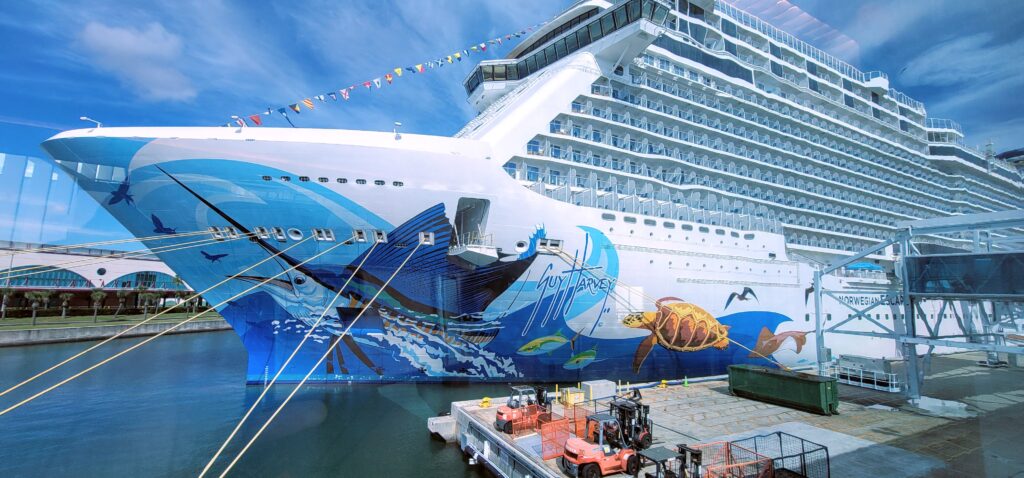
Royal Caribbean, for example, states that it closely monitors tropical systems, tries to avoid operating ships in their vicinity, and directs passengers to its travel-update information for confirmed changes. (Royal Caribbean — Hurricane Operating Policy)
That doesn’t mean every voyage will avoid rough seas or that every update will arrive far in advance.
What it does mean is that you can prepare a straightforward communication routine.
Know where official forecasts come from, how your particular cruise line delivers announcements, and which developments require a response from you.
The first step is separating ordinary forecast awareness from decisions that actually affect your travel plans.
Cruise Storm Update Action Guide
When weather changes during your cruise, the most useful question isn’t simply “Where is the hurricane?”
It’s “What has actually happened, and what should I do next?”
This interactive guide helps you identify the appropriate next steps based on your situation.
It doesn’t track live storms, determine a ship’s safety, or predict a cruise cancellation.
Cruise Storm Update Action Guide
Choose your stage of travel and what has happened. Get a practical checklist for your next steps.
Follow official emergency instructions immediately. This tool is not an emergency response service.
Your action checklist
0 of 4 completePlanning aid only. Does not retrieve live weather, verify port conditions, predict itinerary changes, or assess vessel safety. Follow the captain, cruise operator, and relevant public authorities.
Where Do Cruise Passengers Get Official Storm Updates?
Cruise operators use weather forecasts and marine information to help plan voyages, but the precise communication channels available to passengers differ by ship and company.
Some provide itinerary updates through their mobile apps, while others supplement digital notifications with printed schedules, public announcements, or messages delivered directly to cabins.
Rather than expecting every channel to carry the same information, establish a simple hierarchy.
| Information source | What it can tell you | What it cannot reliably establish |
|---|---|---|
| Captain and shipboard announcements | Confirmed onboard instructions, restrictions, and sailing changes | Every detail of future weather |
| Cruise line’s official app | Current itinerary and operational information where supported | A complete account of marine forecasting |
| Cruise line’s travel-alert website | Company announcements affecting particular sailings | The live operating status of every individual port |
| Guest services | Clarification about schedules, excursions, and available assistance | An independent prediction of the captain’s decisions |
| National Hurricane Center | Official tropical cyclone forecasts and warnings | Whether your particular cruise will change |
| Third-party weather apps | Convenient maps, forecasts, and visualizations | Confirmed ship navigation or port substitutions |
| Social media and passenger groups | Other travelers’ observations and experiences | An authoritative itinerary decision |
The important principle is straightforward: use weather information to understand developing conditions, but use official cruise communications to determine what has changed about your trip.
Captain’s Announcements and Bridge Updates
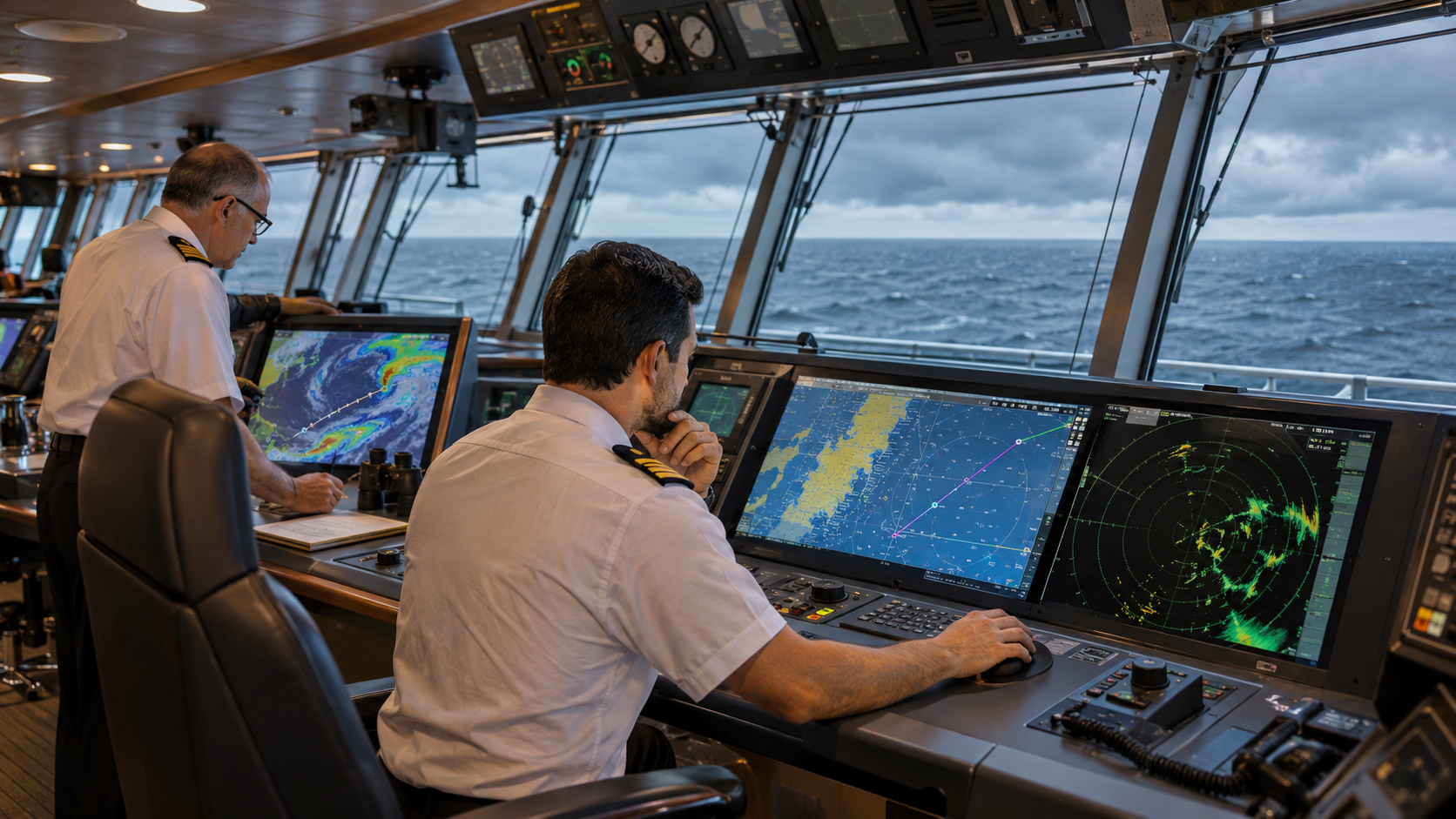
The captain and ship’s officers are responsible for operational communications affecting the vessel.
During a weather-related disruption, passengers may receive announcements about revised arrival times, altered ports, temporary restrictions on outdoor areas, or instructions for moving safely around the ship.
Some operators provide routine voyage or weather announcements during ordinary days, but there isn’t a universal requirement that every cruise ship deliver a detailed tropical-weather briefing each morning.
Top Cruise Deals From Trusted Cruise Lines
Compare exclusive online offers and find the fare that fits your trip and your budget
Likewise, don’t assume that a potential reroute will always be announced at breakfast or several days before it happens.
Weather forecasts evolve, and operational decisions can change accordingly.
If you miss an announcement, check the ship’s published communication channels or ask guest services for the current instructions.
Cruise Line Apps and Itinerary Notifications
Many contemporary cruise lines offer mobile apps that display reservation details, daily activities, dining information, and other onboard services.
The exact features vary, and the presence of an app doesn’t guarantee that every important weather instruction will arrive as a push notification.
Here are three major examples:
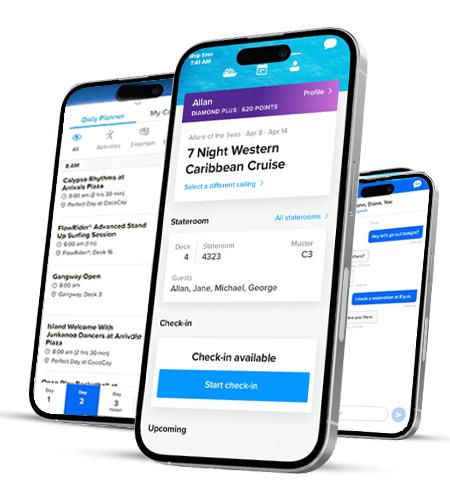
Royal Caribbean says guests can access its app by connecting to the ship’s Guest Wi-Fi without purchasing an internet package. The app provides access to cruise planning and onboard features, while the company’s Travel Updates page communicates affected itineraries. (Royal Caribbean — App Access) Royal Caribbean Cruises
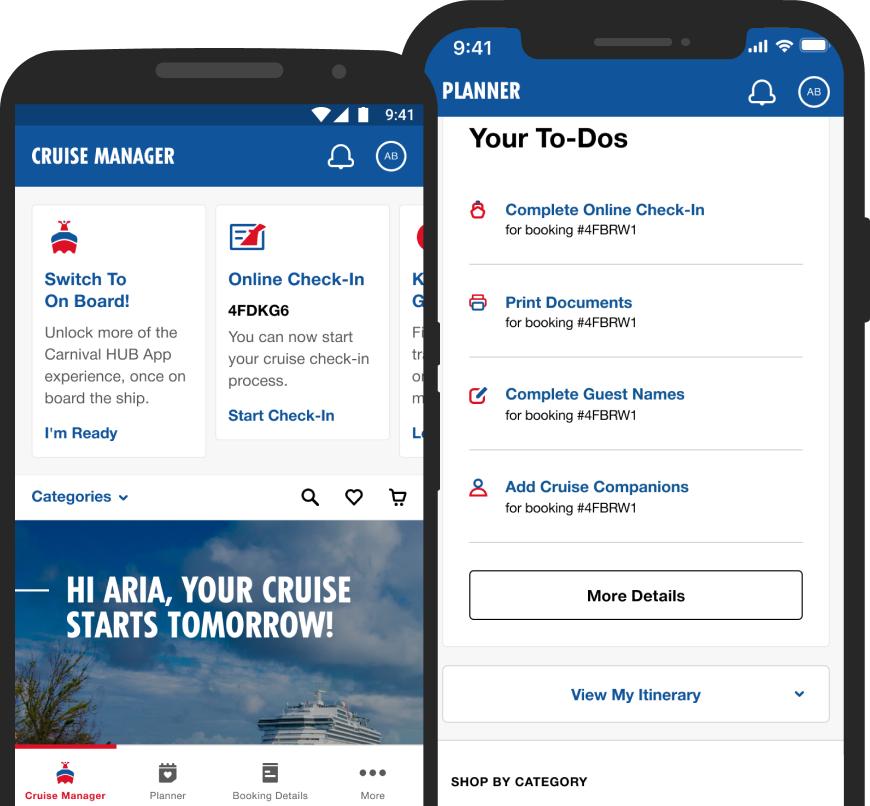
Carnival’s HUB App operates through the ship’s internal Wi-Fi network without requiring a paid internet plan for its core functions. It offers onboard schedules and services, while some features, such as chat, may have separate charges or conditions. (Carnival — HUB App) Carnival
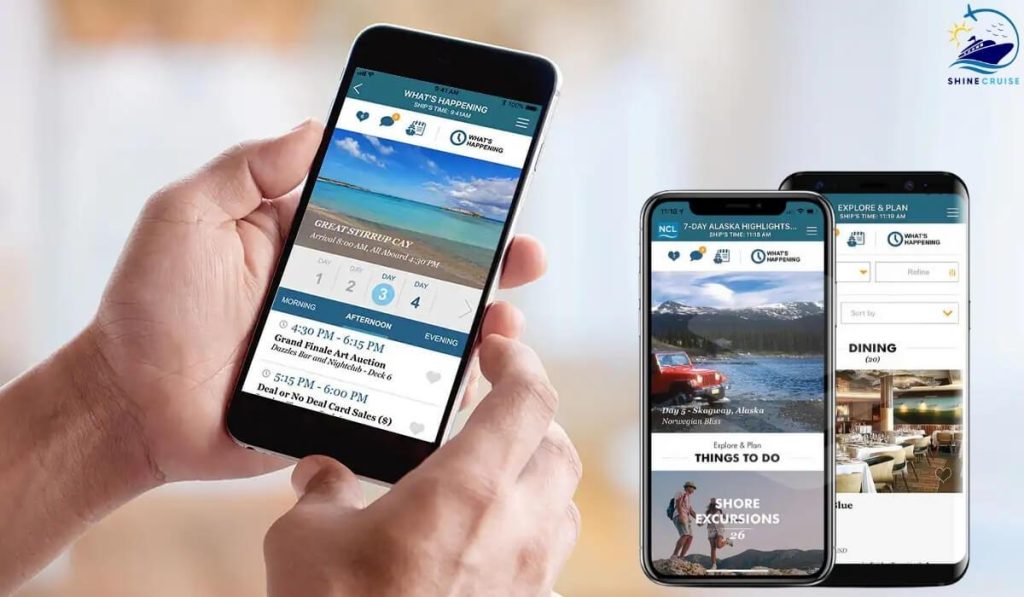
Norwegian’s app includes itinerary information, daily schedules, and reservations. NCL states that passengers can access it using the ship’s Wi-Fi without consuming purchased internet minutes. (Norwegian Cruise Line — App FAQ) NCL
Before departure, install the app for your particular cruise line and learn where itinerary details and shipboard messages appear.
When you board, connect as instructed and check whether notifications are enabled.
Even if the app provides useful information, follow direct crew instructions whenever they are issued.
Stateroom Television and Daily Programs
Some cruise ships provide itinerary information, navigational details, or weather programming through cabin televisions.
Others offer digital or printed daily schedules with announcements and operational information.
These can be useful secondary channels, but don’t assume that every ship offers a dedicated weather channel showing the exact data used by the bridge.
Online‑Only Cruise Offers You Won’t Find Elsewhere
Unlock special pricing and start planning the sailing that matches your perfect itinerary
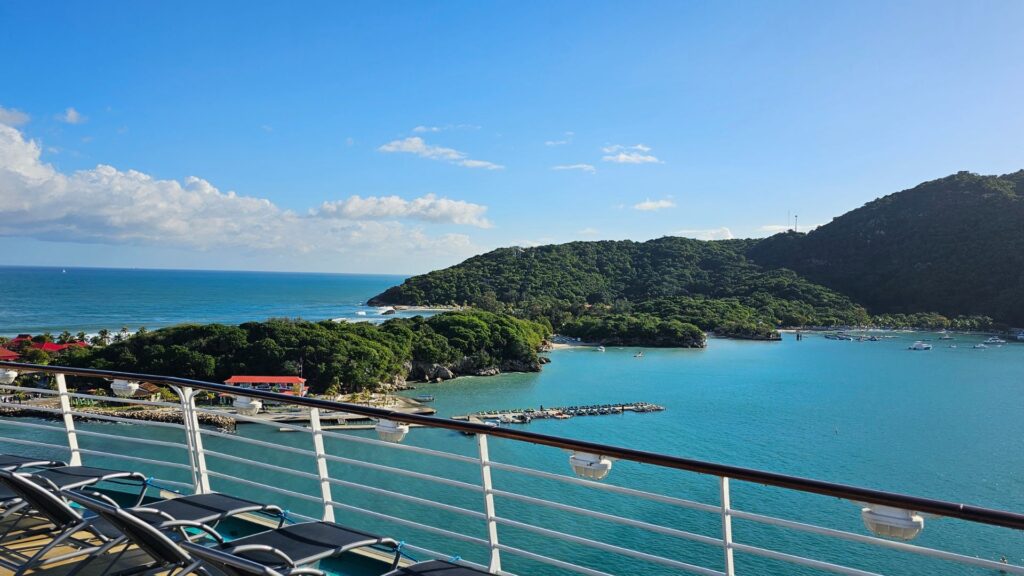
A consumer-facing route display may be simplified or updated less frequently than operational systems.
Use cabin programming to stay informed, not to independently interpret the ship’s navigation decisions.
If you’re unsure where updates are published, ask the crew early in the voyage.
Guest Services and Shore Excursion Desks
Guest services can clarify confirmed itinerary changes and direct passengers toward available assistance.
The shore excursion desk may be more appropriate for questions about cruise-line-operated tours, especially when a port is changed or canceled.
For accessibility arrangements, transfers, or specific medical needs, ask which department handles those requests.
These teams can help explain what has actually changed and what services are available, but they may not be able to predict future weather or reverse an operational decision.
Which Weather Sources Should You Trust During Hurricane Season?
Not all weather information is equally authoritative.
A general weather app may help you decide whether to bring a rain jacket ashore, while a specialized tropical cyclone forecast provides a different kind of information.
For Atlantic hurricanes, the National Hurricane Center should be your primary independent forecast source.
National Hurricane Center: Official Tropical Cyclone Forecasts
The National Hurricane Center publishes official information about tropical systems, including advisories, forecast tracks, watches, warnings, and discussions of forecast uncertainty.
Its products are particularly useful when a named storm threatens your departure area or a scheduled destination.
Begin with the latest advisory and the storm’s Key Messages, when available.
Then review the projected track, extent of tropical-storm-force winds, and potential timing of hazardous conditions.
The NHC’s forecast discussion is helpful when you want more detail about why the forecast has changed.
These products provide weather context. They do not establish that your ship will skip a port, change course, or delay its return. (National Hurricane Center — Tropical Cyclone Products)
National Weather Service: U.S. Port-Area Warnings
The National Weather Service provides local forecasts and warnings that may be relevant to departure ports, airports, and ground transportation in the United States.
For example, a storm affecting South Florida might create airport delays or hazardous road conditions even when the cruise ship itself can operate.

Sail Away to Paradise Without Overpaying
Find cruise deals that make it easy to escape, relax, and enjoy the ocean without stretching your budget
Local warnings can therefore be important before embarkation and after the cruise.
For ports outside the United States, use the relevant national weather and emergency authorities.
Marine Forecasts: Conditions Beyond the Hurricane Track
A tropical cyclone isn’t the only source of uncomfortable or hazardous conditions at sea.
Marine forecasts can provide information about wind, seas, and warnings affecting broader ocean regions.
The NHC’s Tropical Analysis and Forecast Branch produces marine forecasts covering portions of the Atlantic, Caribbean, and eastern Pacific, including information about wind and wave conditions. (NHC — Marine Forecast Products)
These resources may help interested passengers understand regional weather.
However, they aren’t a substitute for the bridge team’s operational forecasts or navigation decisions.
What About Windy, MyRadar, and Cruise Ship Tracking Apps?
Third-party applications can be convenient, particularly for readers who prefer interactive maps.
The key is understanding what each app actually provides.
Windy: Multiple Weather Layers and Forecast Models
Windy.com offers interactive weather visualizations, including wind, wave, and forecast-model information.
These can help you understand broader conditions around your itinerary.
However, different forecast models may disagree, and a visual model track isn’t the same as the official NHC forecast.
Use Windy as supplementary context rather than a tool for deciding whether your ship’s route is safe. (Windy)
MyRadar: Everyday Radar and Storm Context
MyRadar offers weather radar and additional weather features.
It can be useful for reviewing precipitation or broader conditions near a port, depending on the selected layers and available features.
But radar coverage over the open ocean isn’t equivalent to the coverage available over land, and not all map layers update or work identically.
Verify which hurricane-related features are included in your version of the app, especially before paying for a subscription. (MyRadar)
CruiseMapper: Public Vessel Information, Not Operational Instructions
CruiseMapper offers cruise information, itineraries, and public vessel-position information.
It may help you understand where a vessel has been reported, but a displayed position may be delayed or subject to coverage limitations.
A public ship-tracking map cannot confirm a captain’s intended future route.
Nor should you assume that a changed map position is proof of an unannounced itinerary decision. (CruiseMapper)
For detailed hurricane-app comparisons, the important choice is between an official forecast source and supplementary presentation tools.
For your actual cruise, the operator’s communications remain decisive.
Why Offline Weather Maps Can Be Misleading
One of the original article’s most significant problems was its claim that most weather applications continue providing useful forecasts offline for up to 48 hours.
That isn’t a reliable general rule.
An app may display data it downloaded earlier, but that doesn’t mean it has received updated weather information.

Luxury Cruise Experiences at Smarter Prices
See premium sailings and upgraded cabins priced for travelers who know how to book well
A map saved yesterday may show a storm position or forecast track that has since changed substantially.
The National Hurricane Center even provides browser guidance explaining how cached pages and graphics can cause outdated advisory information to appear after newer information is available. (National Hurricane Center — Browser Help)
What You Can Prepare Offline
Before boarding, save travel information that remains useful without a network connection.
This may include your cruise reservation, emergency contacts, airline and hotel references, and important insurance policy information.
You may also save a copy of the itinerary or the cruise line’s general communication instructions.
A screenshot of a weather advisory can be useful as a dated record, but don’t treat it as an ongoing forecast.
When connectivity returns, check the latest advisory and confirm its issuance time.
Passenger Wi-Fi and Shipboard Communication Are Different Systems
A disruption to passenger internet access doesn’t necessarily mean the ship has lost its operational communication systems.
Cruise vessels use specialized navigation and communication equipment to support maritime operations.
But passengers shouldn’t assume that every shipboard app, cabin telephone, television channel, or onboard communication feature will continue functioning in every possible emergency.
The practical rule is to identify the ship’s official instructions and follow announcements from the crew.
If your phone app isn’t working, don’t rely exclusively on it to obtain important information.
How to Understand Hurricane Watches and Warnings
When a storm is developing, the terminology used by the NHC can sound intimidating.
Understanding the basic terms makes the forecast easier to interpret without overstating what it means for your cruise.
| Weather term | What it means | What it means for your cruise |
|---|---|---|
| Tropical disturbance | A weather system that may warrant monitoring for possible tropical cyclone development | Check official outlooks; it does not establish a cruise disruption |
| Tropical depression | An organized tropical cyclone with sustained winds below tropical-storm strength | Monitor its forecast and relevant travel notices |
| Tropical storm watch | Tropical-storm conditions are possible in the watch area, generally within 48 hours | Consider effects on ports, airports, and shore arrangements |
| Tropical storm warning | Tropical-storm conditions are expected in the warning area, generally within 36 hours | Follow local safety instructions and check confirmed travel changes |
| Hurricane watch | Hurricane conditions are possible in the watch area, generally within 48 hours | Review official forecasts and cruise communications closely |
| Hurricane warning | Hurricane conditions are expected in the warning area, generally within 36 hours | Follow authorities and any confirmed cruise-line instructions |
| Marine gale warning | Gale-force winds are forecast or occurring in a marine area | Relevant to maritime conditions, but not itself a cruise itinerary notice |
| Cruise itinerary update | The operator has announced a schedule or destination change | Review the actual revised arrangements and respond accordingly |
The time frames for tropical cyclone watches and warnings refer to the anticipated arrival of tropical-storm-force winds, which can make preparations difficult before hurricane-force winds arrive. (NHC — Glossary)
Why a Hurricane Watch Doesn’t Mean Your Cruise Is Canceled
A hurricane watch indicates that hurricane conditions are possible in a designated area.
It does not confirm that a storm will strike your ship or that your particular port will close.
Similarly, a hurricane warning indicates expected conditions for the warning area, but it doesn’t tell you exactly how your cruise operator will respond.
A ship may already be away from the affected location, or the cruise line may need to evaluate other operational factors before communicating a change.
The distinction between a forecast warning and an itinerary decision is essential.
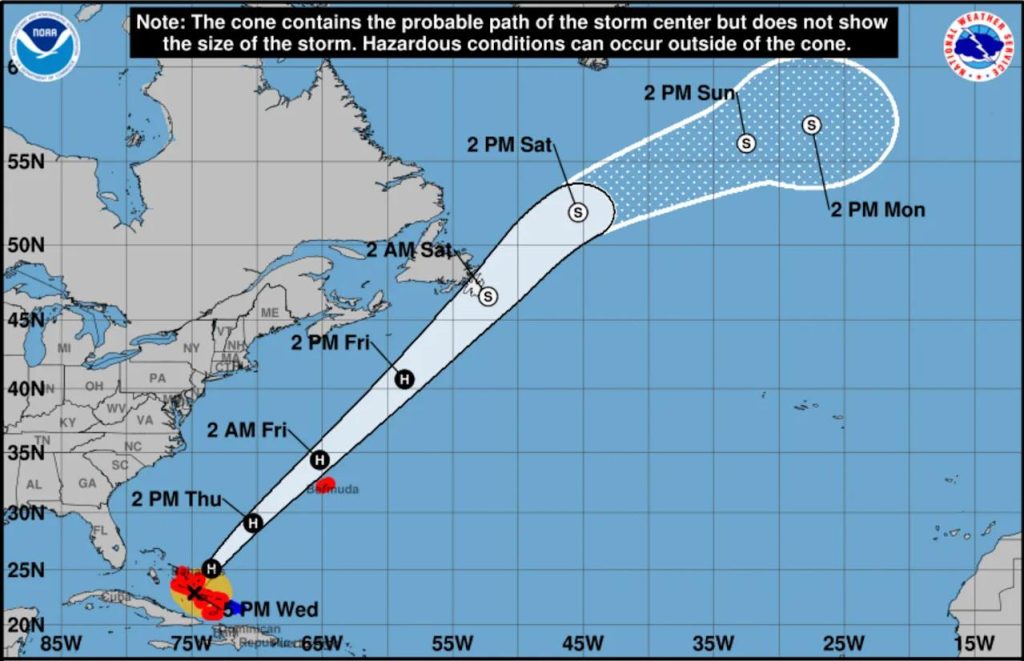
What the Hurricane Forecast Cone Actually Shows
The forecast cone represents uncertainty around the predicted path of a tropical cyclone’s center.
It does not show the entire area where dangerous winds, waves, rain, or other hazards may occur.
Sail Away to Paradise Without Overpaying
Find cruise deals that make it easy to escape, relax, and enjoy the ocean without stretching your budget
A port outside the cone can still experience storm-related disruption, while a destination inside it isn’t automatically certain to close.
Don’t use the cone alone to decide whether your cruise route is safe or to challenge the captain’s navigation decisions. (NHC — Forecast Cone Explanation)
What to Do When Your Cruise Line Announces a Reroute
A changed itinerary can mean different things.
Your cruise might skip a port, substitute another destination, reverse the order of visits, spend an additional day at sea, or adjust its arrival and departure times.
Some changes involve only a few hours, while others have wider consequences for flights, hotels, or private excursions.
Royal Caribbean’s itinerary guidance, for example, states that weather can lead to scheduled sailings or port calls being altered and that substitutions are not always possible. (Royal Caribbean — Itinerary Changes)
Confirm the Revised Plan Before Changing Your Bookings
Read the full official announcement.
Identify which port or time has changed and whether the message concerns a proposed adjustment or a confirmed new itinerary.
If you’re onboard, check the updated schedule and ask guest services about details that affect your plans.
For independent shore excursions, contact the provider after confirming the change.
If the ship will return later than scheduled, review your onward transportation arrangements once the revised arrival information is available.
Don’t assume that a forecast graphic provides enough information to cancel a nonrefundable flight or tour.
Record What Happened Without Assuming Compensation
Save a copy of the official itinerary notice.
Keep your booking confirmation, receipts, communications with providers, and any documentation of additional expenses.
These records may be useful for a refund request, insurance claim, or customer-service inquiry.
However, a missed port or weather-related reroute doesn’t automatically create an entitlement to compensation.
The outcome depends on the contract, relevant law, provider terms, and applicable insurance coverage.
Does Travel Insurance Help You Stay Informed About Storms?
Travel insurance can provide assistance contacts and explain potential financial benefits after qualifying disruptions.
But it is not a primary weather forecasting system.
The original article described specific insurance providers as if they supplied guaranteed hurricane alerts, automatic coverage for reroutes, and assured reimbursement.
Those claims should not be made without verifying the exact product and its written terms.
What Insurance Can Actually Do
Travel insurance may reimburse certain covered expenses involving trip cancellation, interruption, delay, or other specified events.
Some policies also include travel assistance services, although their scope varies.
The National Association of Insurance Commissioners emphasizes that policies have exclusions, benefit conditions, and coverage limitations that consumers should review before purchasing.
It also warns that buying insurance after a storm has already been named may leave claims arising from that storm excluded. (NAIC — Travel Insurance Guidance)
A missed port is not automatically a covered trip interruption.
Nor does contacting an insurer when a storm appears guarantee that a later claim will be accepted.
When Should You Contact Your Insurer?
Before departure, save your insurer’s assistance number and understand its claims and notification requirements.
When a covered event may have occurred, review the policy and contact the relevant assistance or claims service as instructed.
For a serious medical emergency, the policy may contain specific authorization procedures that matter before certain services are arranged.
For a weather forecast without an actual loss, there is no universal rule that passengers must file a preemptive disruption notice.
Use the written policy’s requirements rather than assuming that an early call automatically creates coverage.
How to Keep Family Informed if Your Cruise Schedule Changes
A sudden itinerary adjustment may concern family members at home, especially if they see alarming headlines about a hurricane near your destination.
It’s helpful to have a communication plan before leaving.
Designate an appropriate contact who knows your cruise line, ship name, travel dates, and general itinerary.
Let that person know that a weather warning doesn’t necessarily mean your vessel has encountered dangerous conditions.
Choose a Realistic Communication Method
If you purchase internet access, you may be able to use ordinary messaging services when the connection is functioning.
However, a messaging application doesn’t create connectivity when none exists.
Apps such as WhatsApp require a working data connection, and performance may vary with the ship’s network.
Avoid promising family members that you’ll always be able to reply instantly.
It’s more useful to agree that delays in communication may occur and identify the cruise line’s official emergency contact procedure if urgent information needs to reach you.
Share Confirmed Changes, Not Every Forecast
If the itinerary changes, communicate what the cruise line has actually announced.
For example, you might tell a family member that the ship has canceled a scheduled port visit and will spend an additional day at sea.
There’s no need to forward every speculative model track or unverified social-media post.
Clear information is more helpful than constant updates without context.
How to Prepare Your Phone Before a Hurricane-Season Cruise
Your phone can be useful for both travel logistics and weather information, but the most important preparation happens before boarding.
Download your cruise line’s app while you still have a reliable connection.
Verify that you can access your reservation and understand how to connect to the ship’s onboard network.
Bookmark the National Hurricane Center and save relevant travel details for offline access.
Should You Use Airplane Mode Onboard?
Airplane mode can help prevent your phone from automatically connecting to cellular networks, including maritime roaming services that may involve additional charges.
You can generally enable Wi-Fi separately while keeping cellular connectivity disabled, depending on your device.
Then connect to the ship’s permitted Wi-Fi service according to the cruise line’s instructions.
For Royal Caribbean, Carnival, and Norwegian, certain onboard app features are available through the ship’s Wi-Fi without purchasing an internet package.
That doesn’t mean the same arrangement applies to all cruise lines or that unrestricted internet access is included. (Royal Caribbean — App Wi-Fi Access) (Carnival — HUB App) (NCL — App Wi-Fi Access)
Consider STEP for Eligible International Travelers
The U.S. Department of State’s Smart Traveler Enrollment Program, or STEP, allows U.S. citizens and nationals to register international travel plans and receive relevant embassy or consular safety information.
It can also help the State Department contact you or your designated contact during certain emergencies. (U.S. Department of State — STEP) Travel.state.gov
STEP is not a cruise-specific hurricane tracker or a replacement for onboard announcements.
It is an additional government communication resource for eligible travelers.
A Simple Storm-Update Routine for Every Stage of Your Cruise
You don’t need to monitor tropical weather constantly.
Instead, organize your attention around the decisions that could affect your trip.
Before leaving home, check the cruise line’s travel advisories, your departure-port conditions, and relevant airline communications when a storm threatens the area.
Once onboard, establish where your ship publishes schedule updates and how important announcements will be delivered.
If a named tropical system could affect an upcoming destination, review the latest NHC advisory when connected.
When the cruise line confirms an itinerary change, focus on the practical details: new ports, revised times, excursions, accessibility arrangements, and onward transportation.
Finally, if severe weather threatens your return port, review official arrival instructions and prepare to contact affected travel providers when a change is confirmed.
This routine helps you act on meaningful information without treating every tropical weather outlook as a reason to reorganize your vacation.
Enjoy Your Cruise With Reliable Information and a Clear Plan
Hurricane-season cruising brings some uncertainty, but staying informed doesn’t have to mean worrying about every cloud or refreshing radar maps throughout the day.
The National Hurricane Center provides official tropical cyclone forecasts.
Your cruise line communicates decisions affecting your sailing, and the captain and crew provide instructions relevant to the ship.
Third-party weather apps can help you understand the broader picture, while your own travel preparations make itinerary changes easier to manage.
Each source has a different job.
When you understand those differences, a weather alert becomes information you can interpret rather than a reason to assume something has gone wrong.
Prepare your communication channels before departure, know where to find official updates, and keep essential travel details accessible.
Then enjoy the voyage—knowing that if the weather changes, you’ll have a practical way to find out what matters and decide what to do next.
FAQ – How Can You Stay Informed About Storms During a Cruise?
How do cruise passengers receive hurricane updates while onboard?
Cruise lines may communicate weather-related information through captain’s announcements, onboard apps, printed schedules, cabin messages, and guest services.
The available channels vary by operator and vessel, so passengers should identify their ship’s arrangements early in the voyage.
Important safety instructions may be delivered directly by the crew rather than through an app notification.
Follow the ship’s official communications whenever a weather-related decision affects your sailing.Will the captain announce every storm developing near my cruise?
Not necessarily, because a tropical system may be too distant or unlikely to affect the ship’s operations.
Cruise lines monitor relevant weather and communicate information according to their procedures and the circumstances.
Some vessels provide routine weather announcements, but their frequency and detail aren’t standardized.
You can consult official NHC forecasts independently when you want broader weather context.What is the most reliable hurricane forecast source for Caribbean cruising?
The National Hurricane Center is the primary official source for Atlantic tropical cyclone forecasts.
It publishes advisories, forecast tracks, watches, warnings, and discussions of uncertainty.
Third-party apps can make this information easier to follow but may present it differently or require subscriptions for certain features.
The NHC doesn’t determine individual cruise itinerary changes, which must be confirmed by the operator.Can I receive cruise storm updates through my cruise line’s app?
Many cruise-line apps provide onboard schedules, itinerary details, and other communication features.
However, the availability of specific weather alerts or push notifications varies by cruise line and ship.
You should install the appropriate app before sailing and test its onboard connectivity.
Always follow direct captain and crew instructions even if an app doesn’t display an alert.Do cruise line apps work without a paid internet package?
Some major cruise lines allow guests to use their onboard apps through the ship’s internal Wi-Fi network without buying a separate internet plan.
Royal Caribbean, Carnival, and Norwegian publish guidance describing this arrangement for their respective apps.
That access doesn’t necessarily include unrestricted internet browsing or every premium app feature.
Check your operator’s current policy and connect according to its instructions.Can I track hurricanes while my cruise ship is at sea?
You can use hurricane forecasting websites and apps when you have suitable internet connectivity.
The National Hurricane Center provides official information about developing storms and their projected paths.
Consumer apps may help you interpret the forecast but cannot establish whether your ship’s actual route is safe.
The captain and cruise line remain responsible for operational decisions and onboard instructions.Do hurricane tracking apps work offline on cruise ships?
Some weather apps may display maps or forecasts that were downloaded earlier.
However, cached content cannot receive new storm information while the device is disconnected.
A previously saved forecast may therefore become outdated as the storm’s path or intensity changes.
Check advisory timestamps after reconnecting and rely on official shipboard communications when internet service is unavailable.What should I do if passenger Wi-Fi stops working during a storm?
Follow announcements and instructions from the ship’s crew rather than depending on your weather app.
Passenger internet service and a vessel’s operational communication systems are not necessarily the same.
If you’ve missed information or need clarification, use the assistance channels designated by your cruise line.
Don’t assume that a lack of internet access means the ship has stopped monitoring weather conditions.What does a tropical storm watch mean for my cruise?
A tropical storm watch means tropical-storm conditions are possible in a designated area, generally within 48 hours.
It provides weather information that may matter for a cruise port, airport, or other travel location.
A watch doesn’t automatically mean your ship will visit dangerous conditions or that its itinerary will change.
Check the official forecast and wait for confirmed cruise-line announcements about your sailing.What is the difference between a hurricane watch and warning?
A hurricane watch means hurricane conditions are possible within the watch area, generally within 48 hours.
A hurricane warning means hurricane conditions are expected, generally within 36 hours.
These time frames are tied to the anticipated arrival of tropical-storm-force winds, which can complicate preparations.
Neither term independently tells you whether a particular cruise will be canceled or rerouted.Does a hurricane forecast cone show where my cruise ship is in danger?
No, the forecast cone describes uncertainty around the predicted path of a tropical cyclone’s center.
Dangerous winds, seas, rainfall, and coastal impacts may extend outside it.
A ship’s actual exposure depends on additional weather and operational factors that a simple forecast graphic cannot show.
Don’t use the cone to independently judge the safety of a captain’s route.Can CruiseMapper confirm whether my ship has been rerouted?
CruiseMapper may display publicly available ship-position information and itinerary details.
However, reported positions can be delayed, incomplete, or affected by coverage limitations.
A ship’s displayed location does not necessarily reveal its intended route or confirm a future port substitution.
Use the cruise line’s official announcement to verify a reroute.How far in advance will a cruise line announce a hurricane reroute?
There is no universal notification period because forecasts and operational conditions can change.
Some adjustments may be confirmed before embarkation, while others occur after the voyage begins.
Cruise lines may also change the timing or order of ports without replacing every affected destination.
Check official updates regularly when a relevant storm develops, but don’t assume a fixed announcement deadline.What if my cruise changes ports while I’m onboard?
Read or request the revised itinerary and identify any new destinations, arrival times, or departure instructions.
Check what happens to cruise-line excursions and independently booked activities.
If you use accessibility services or arranged transportation, ask whether suitable arrangements remain available.
Save the official announcement and update your plans using confirmed details rather than rumors.Should I change my return flight when a hurricane watch is issued?
A hurricane watch doesn’t automatically mean the cruise will return late or to a different port.
Review official cruise-line updates and any notices from your airline or departure airport before making changes.
If a schedule adjustment is confirmed, contact affected providers and review their change policies.
Avoid unnecessary cancellation charges based solely on a projected storm track.Should I contact my travel insurer as soon as a storm is named?
There is no universal requirement to report every potential weather threat before an actual disruption occurs.
Your policy may have specific notification, assistance, or claims requirements that should be followed.
A named storm may also affect whether newly purchased coverage applies to claims arising from that event.
Review your policy terms and contact the insurer when required by the circumstances.Can travel insurance compensate me if my cruise skips a port?
Some insurance policies include benefits relevant to particular travel disruptions, but missed-port coverage isn’t universal. A route change or canceled port visit doesn’t automatically satisfy the conditions for trip interruption or another benefit. The cruise contract and independent excursion bookings may also affect possible refunds. Check your written terms and retain documentation of confirmed changes.
Should I enroll in STEP before an international cruise?
Eligible U.S. travelers may find the State Department’s Smart Traveler Enrollment Program useful for receiving relevant embassy or consular safety information.
STEP can also help the department contact registered travelers or their emergency contacts during certain situations abroad.
It isn’t designed to deliver ship-specific itinerary decisions or replace NHC hurricane forecasts.
Consider it an additional travel-safety communication resource rather than your main cruise weather service.How can I keep my family informed if a hurricane affects my cruise?
Before departure, share your ship name, general itinerary, and the cruise line’s appropriate contact information with someone you trust.
Explain that a weather forecast near the itinerary doesn’t automatically indicate danger aboard the ship.
If an official change occurs and you have connectivity, provide the confirmed details rather than forwarding speculative predictions.
Agree in advance that messaging may be delayed when the ship’s internet service is unavailable.What’s the simplest way to stay updated without constantly checking the weather?
Start with the National Hurricane Center for official forecasts and your cruise line for confirmed itinerary information.
Learn where onboard announcements are delivered and how to access the daily schedule.
Check forecasts more closely when a tropical system could affect your departure, destination, or return, rather than continuously refreshing several apps.
Act on official instructions and confirmed changes, allowing the rest of the trip to remain your vacation.
Plan Your Next Cruise!

Sail Into Modern Luxury: Celebrity Cruises for Design, Culinary Excellence, and Destination‑Rich Voyages
One Delay Can Cost Your Entire Cruise A quick coverage check now protects you from the problems no one sees coming….

Sail in Style: Oceania Cruises’ Culinary Excellence, Cultural Immersion, and Refined Luxury
One Delay Can Cost Your Entire Cruise A quick coverage check now protects you from the problems no one sees coming….
From Icon to Oasis: Explore Royal Caribbean’s Groundbreaking Ships and Unforgettable Voyages
One Delay Can Cost Your Entire Cruise A quick coverage check now protects you from the problems no one sees coming….

Unlock The Viking Ocean Experience: Elegant Ships, Cultural Immersion, And Unrushed Travel
One Delay Can Cost Your Entire Cruise A quick coverage check now protects you from the problems no one sees coming….