

One Delay Can Cost Your Entire Cruise
A quick coverage check now protects you from the problems no one sees coming.
Short Excerpt
- Learn exactly where to pack essential clothing, medications, documents, electronics, and rain protection.
- Discover which items should stay with you during embarkation rather than travel in checked luggage.
- Organize a compact port-day bag for sunny excursions, tropical showers, and changing schedules.
- Use an interactive three-bag packing planner to sort your essentials and avoid carrying unnecessary supplies.
Quick Take
- Your carry-on is your most important bag during embarkation. Keep required identification, essential medications, medical equipment, and necessary valuables accessible.
- Your checked suitcase should contain most of your clothing, additional footwear, and ordinary personal-care supplies.
- Your port-day bag should be smaller, carrying only the identification, medication, sun protection, rain protection, and other items needed ashore.
- A few waterproof pouches help protect sensitive belongings without requiring you to seal everything in plastic.
- Cruise-line electrical restrictions differ. Never assume a surge protector, extension cord, or multi-outlet accessory is allowed.
- If you’re flying, portable power banks and spare lithium batteries must travel in cabin baggage under applicable aviation rules.
- Preparing for possible delays means prioritizing irreplaceable essentials, not filling your suitcase with several days of unnecessary emergency equipment.
Three Bags, Three Purposes: The Simplest Way to Pack for Hurricane Season
You have your favorite cruise clothes ready, your passport is nearby, and you’re deciding where to put a rain jacket, prescription medication, phone charger, and a few things for shore excursions.
It’s tempting to put everything into one suitcase and organize it after boarding.
But during hurricane season, where you pack something can matter as much as what you bring.
Your suitcase may be handed to porters before embarkation and delivered to your cabin later.
Your carry-on stays with you during that process.
Your shore-excursion bag serves a different purpose once you’re visiting destinations.
If weather disrupts transportation, changes a scheduled port, or delays the arrival of checked luggage, this distinction becomes especially useful.
You don’t need a separate survival kit for every possible scenario.
A thoughtful three-bag system can keep your most important belongings available without adding excessive weight.
The Atlantic hurricane season runs from June 1 through November 30, with the historical peak around September 10.
That doesn’t mean your cruise will encounter a tropical cyclone, but it makes adaptable travel arrangements worth considering. (National Hurricane Center — Tropical Cyclone Climatology)
Think of your luggage in three parts: your carry-on protects essential access, your suitcase provides everyday comfort, and your port-day bag supports the activities you’re actually doing.
Hurricane-Season Cruise Three-Bag Packing Planner
This interactive planner helps you decide where individual items belong.
Select a bag, check what you’ve packed, and copy the complete organized list.
The categories are recommendations for an ordinary warm-weather cruise.
Confirm your airline, cruise-line, and destination requirements, particularly for identification, medication, batteries, and equipment.
Hurricane-Season Cruise Three-Bag Planner
Keep essentials accessible and organize your suitcase and port-day bag without extra clutter.
Check cruise-line, airline, and destination rules. This checklist is a planning aid, not an official baggage or medical requirements list.
What Belongs in Your Cruise Carry-On During Hurricane Season?
Your embarkation carry-on has one important advantage: it remains accessible when your main suitcase does not.
You may hand checked luggage to porters before boarding, and it can take time for those bags to reach your stateroom.
That can happen in perfectly normal weather.
If transportation delays or operational changes complicate embarkation, access to essential belongings becomes even more important.
Passport, Boarding Documents, and Essential Identification
Keep the original documents required for your voyage with you.
The exact rules depend on your nationality, itinerary, cruise line, and destinations.
Top Cruise Deals From Trusted Cruise Lines
Compare exclusive online offers and find the fare that fits your trip and your budget

Some qualifying closed-loop cruises permit certain U.S. travelers to use alternative identification, but the U.S. Department of State strongly recommends carrying a passport book even when it is not required for the planned voyage.
An emergency flight home from another country can require documentation that a passport card or birth certificate does not provide. (U.S. Department of State — Cruise Ship Travel)
A secure digital copy may help if an original document is lost.
It doesn’t replace an original when that document is legally required.
Prescription Medication and Essential Medical Equipment
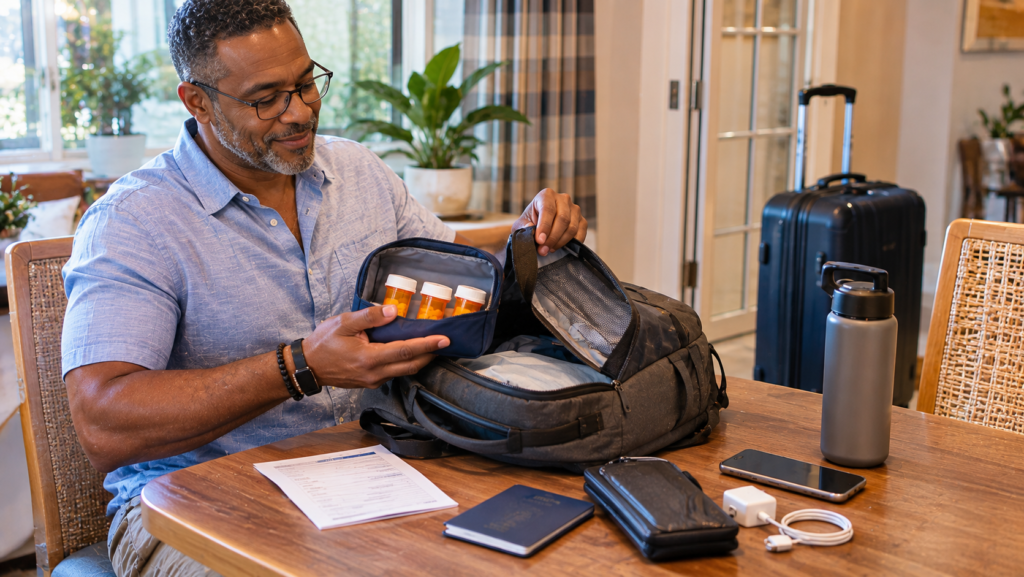
Medication should be treated as a carry-on priority rather than something to retrieve from checked luggage later.
Bring the amount you need for the entire trip, plus an appropriate reserve for possible delays.
The CDC specifically recommends packing additional medication in case travel arrangements are extended. (CDC — Cruise Ship Travel)
There is no single extra-supply period suitable for every traveler.
Speak with your healthcare professional or pharmacist about the right reserve, especially if your medication has refill limitations or special storage requirements.
If you use medical oxygen, refrigerated medication, or specialized equipment, confirm arrangements with the cruise line before departure.
A Complete Change of Clothes
A change of clothes is useful if your suitcase arrives later in the day, your flight is delayed, or your clothing gets wet while traveling.
For most adults, one complete change is a sensible starting point.
That can include a lightweight shirt, shorts or trousers, underwear, and socks.
If you’re traveling with young children, have particular care needs, or face a complicated journey, you may need additional changes.
There is no universal rule requiring everyone to pack two full days of clothing in their embarkation bag.
Phone, Charger, and Other Important Electronics
Keep your phone accessible for flight information, hotel reservations, boarding instructions, and other travel needs.
Bring the correct charging cable and a power source that is permitted by your airline and cruise line.
If you’re flying, spare lithium batteries and power banks must remain in carry-on baggage rather than checked luggage.
The FAA also sets battery capacity limits, with most personal lithium-ion spare batteries limited to 100 watt-hours without additional authorization. (FAA — PackSafe Lithium Batteries)
If your carry-on is gate-checked, remove the power bank and keep it in the aircraft cabin.
A Compact Toiletry and Comfort Pouch
Consider keeping a toothbrush, essential toiletries, tissues, prescription glasses, and a small personal comfort item accessible.
A book, headphones, or downloaded entertainment may make an ordinary delay more pleasant.
If you are flying to the cruise port, follow applicable airport security rules for liquids and other restricted items.
You don’t need a full-size toiletries collection in your carry-on when the same products can travel in your checked suitcase.
What Should Go in Your Checked Cruise Suitcase?
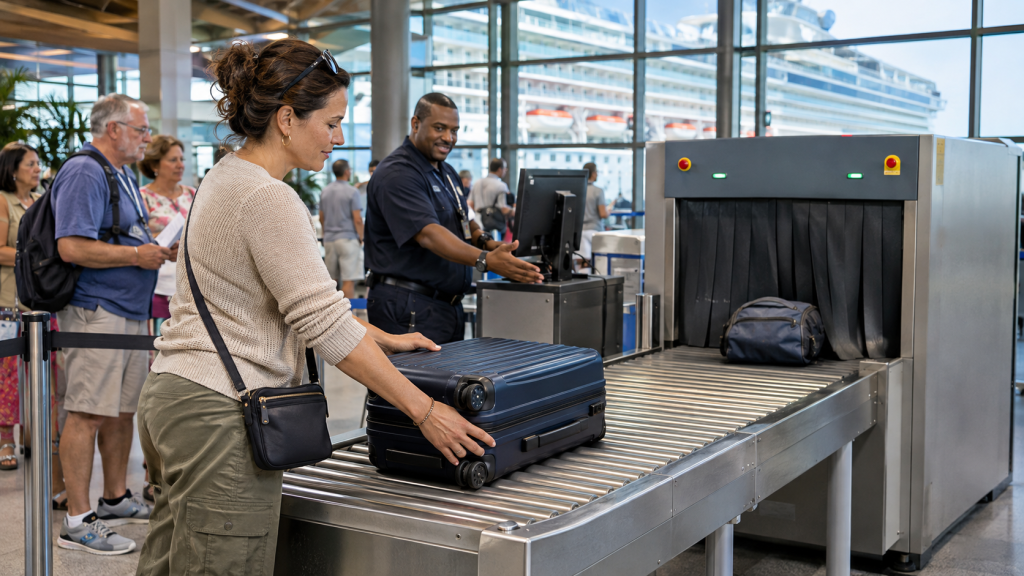
Your checked suitcase is the place for belongings you’ll use throughout the voyage but don’t need during check-in and the first hours aboard.
That generally means clothing, additional footwear, most toiletries, and organizational accessories.
A practical suitcase should be manageable enough to lift and move safely.
Clothing for Sunshine, Rain, and Air-Conditioned Interiors
For a Caribbean itinerary, choose lightweight clothes that suit warm, humid weather.
Quick-drying fabrics can be especially useful for wet excursions and swimwear, while comfortable linen or cotton blends may work well during sunny days.
Include a lightweight cardigan or sweater for indoor venues where the air-conditioning feels cool.
Online‑Only Cruise Offers You Won’t Find Elsewhere
Unlock special pricing and start planning the sailing that matches your perfect itinerary

A compact rain jacket is more useful than heavy storm clothing for most ordinary port visits.
If you’re cruising outside the tropics during the local storm season, adapt the wardrobe to the actual destinations.
Alaska and Northern Europe require a different approach from the Caribbean.
Footwear Without Extra Weight
Most warm-weather cruise passengers can build a practical footwear selection around comfortable walking shoes, sandals suitable for their activities, and optional evening shoes.
You may need water shoes if a particular excursion involves rocky beaches or another specialized environment.
Heavy waterproof boots are generally unnecessary for ordinary Caribbean sightseeing.
Make sure walking shoes fit well before departure instead of bringing a brand-new pair for an excursion requiring several hours on your feet.
A Few Organizers Instead of Many Plastic Bags
Packing cubes can help separate clothing categories.
A lightweight laundry bag can keep used clothing away from clean outfits.
A small protective pouch is useful for items that should remain dry.
But waterproofing every article of clothing individually adds bulk and may make packing unnecessarily complicated.
If clothing becomes wet, allow it to dry appropriately rather than keeping it sealed in plastic for an extended period.
Additional Toiletries and Personal Supplies
Your main suitcase can hold the ordinary products you expect to use during the cruise.
Consider sunscreen, personal hygiene supplies, additional skin-care items, and any accessories needed for your planned activities.
Bring enough of products that may be difficult to replace, but avoid unnecessary duplication.
Keep essential medication and medical supplies in the bag you retain access to, rather than treating them as ordinary toiletries.
What Goes in Your Port-Day Bag When the Forecast Is Uncertain?

A port-day bag should be significantly smaller than your embarkation carry-on.
You aren’t packing for the entire voyage.
You’re bringing the belongings needed for one particular destination and excursion.
That distinction helps you stay comfortable while walking through ports, beaches, shopping districts, and sightseeing areas.
Identification and Cruise Access Information
Carry your cruise card and whatever other identification the cruise line and destination require for going ashore and returning to the ship.
Don’t assume every port requires the same documents.
In some destinations, passengers may need to carry their original passports. In others, the operator may advise a different arrangement.
Follow the ship’s specific instructions.

Luxury Cruise Experiences at Smarter Prices
See premium sailings and upgraded cabins priced for travelers who know how to book well
Avoid bringing multiple original identity documents ashore when they aren’t needed.
Sun Protection Is Still Important on Cloudy Days
Pack sunscreen, sunglasses, and a hat appropriate for your excursion.
Cloud cover doesn’t eliminate ultraviolet exposure.
If you’re spending considerable time outdoors, also consider shade, water access, and comfortable clothing.
You don’t need a separate sun-protection kit for every person if some supplies can be shared appropriately, though individuals should retain what they personally need.
A Compact Rain Layer
A packable jacket or poncho is useful if showers develop while you’re visiting a destination.
Choose something light enough to carry even if you don’t need to wear it.
A rain jacket is usually more practical than a large umbrella during active sightseeing or windy conditions.
However, rain gear should never be treated as permission to remain in a hazardous area or ignore local weather warnings.
Small Waterproof Protection for Your Phone
A correctly rated waterproof phone pouch can be useful for beach trips, kayaking, snorkeling, or other activities involving water exposure.
For ordinary sightseeing, a simple protective pouch may be sufficient.
Check the manufacturer’s instructions and the actual protection rating before exposing a device to water.
Don’t assume a low-cost pouch provides reliable underwater protection merely because it is advertised as waterproof.
Medication Needed While Ashore
If you take medication on a schedule, carry the doses you’ll need during your excursion, in an appropriate container and under suitable storage conditions.
Be particularly careful when temperatures are high or the outing involves direct sun exposure.
Some medications require protection from heat, moisture, or light.
If you have specific medical equipment or an emergency medication, make sure it remains accessible as clinically appropriate.
Which Belongings Need Waterproof Protection?
Rain and humidity affect different materials in different ways.
A cotton T-shirt becoming damp is inconvenient, but a soaked passport or damaged electronic device can create a much larger problem.
Instead of waterproofing everything, prioritize belongings with consequences if they get wet.
| Belonging | Suggested protection | Why it matters |
|---|---|---|
| Original passport | Water-resistant or waterproof travel wallet | Helps prevent physical damage |
| Phone | Suitable protective pouch | Useful during wet excursions |
| Paper reservation details | Protective sleeve or securely stored digital copy | Preserves readable information |
| Medication | Appropriate original container and storage arrangement | Helps protect medicines under specified conditions |
| Camera | Padded protective bag and suitable rain cover | Protects delicate equipment |
| Ordinary clothing | Suitcase or packing cube | Usually doesn’t need individual waterproof packaging |
| Damp swimwear | Temporary separate bag | Prevents contact with clean clothes until drying |
Do You Need Silica Gel Packets?
Silica gel can help control moisture in some enclosed storage environments.
However, it isn’t essential for most ordinary cruise passengers, and a few packets won’t protect electronics against direct water exposure.
Don’t treat silica gel as a replacement for a properly designed protective case.
Use the level of protection appropriate for the item and activity.
Which Cruise Electrical Accessories Should Stay Home?
This is an area where checking the actual cruise-line policy matters more than choosing equipment based on online packing advice.
Cruise operators don’t all permit the same electrical accessories.
Royal Caribbean prohibits electrical extension cords, power strips, multi-plug outlets, and several other categories of equipment under its current prohibited-items policy. (Royal Caribbean — Prohibited Items)

Sail Away to Paradise Without Overpaying
Find cruise deals that make it easy to escape, relax, and enjoy the ocean without stretching your budget
Carnival publishes different rules that allow certain power strips, multi-plug adapters, and extension cords without surge protection, subject to safety restrictions. (Carnival — Electric Outlets and USB Ports)
That means a product marketed as cruise-approved may still be prohibited on your particular ship.
Don’t Bring a Surge Protector Just Because You’re Concerned About Storms
A surge protector should not be viewed as universal cruise safety equipment.
A ship’s electrical system differs from a typical residential environment, and cruise lines establish their own rules governing passenger accessories.
If your operator prohibits a particular type of device, leave it at home.
The fact that an accessory is useful in a hotel or home office does not establish that it’s permitted at sea.
Pack Cables Before Adding Adapters
For many passengers, the simplest charging arrangement is a compatible cable and a permitted charger.
Check what outlets or USB connections your stateroom provides.
If an adapter is necessary, verify that it complies with the cruise line’s policies.
Don’t purchase an extension cord or multi-outlet device solely because a packing checklist recommends one.
How Much Extra Medication Should You Bring for Possible Travel Delays?
This question deserves greater care than a standard clothing recommendation.
If your cruise returns later than expected, replacing a prescription may be difficult in some destinations or while at sea.
But the right amount of additional medication varies.
A traveler using an ordinary daily prescription may have different needs from someone who requires temperature-controlled medicine, a controlled medication, or treatment that cannot be interrupted.
The CDC recommends that cruise travelers carry enough medication for their trip plus extra for potential travel delays. (CDC — Cruise Ship Travel) CDC
Prepare Before Departure
Speak with your prescriber or pharmacist about an appropriate supply and any documentation or storage requirements.
Check whether you must carry medication in its original labeled container.
If your medication requires refrigeration, coordinate arrangements with the cruise line rather than assuming a stateroom refrigerator or minibar meets medical storage standards.
Keep necessary supplies accessible during embarkation.
Don’t Depend on the Ship to Replace Your Prescription
Cruise ship medical centers can provide healthcare services, but their capabilities and available medicines differ.
The CDC advises travelers with medical conditions or special needs to contact the cruise operator before departure about available medical resources. (CDC Yellow Book — Cruise Ship Travel)
A personal reserve remains important when interruption of treatment could have serious consequences.
Should You Pack Motion Sickness Supplies Even If You Rarely Get Seasick?
You may wish to bring a suitable motion sickness treatment if you’ve experienced symptoms before or are concerned about ship movement.
Cruise ships can experience noticeable swells even when they are not near a hurricane’s center.
The CDC discusses both preventive approaches and medications for motion sickness, while noting that treatments can have side effects and individual contraindications. (CDC Yellow Book — Motion Sickness)
Some remedies work better when used before motion exposure rather than after significant nausea begins.
Consult a healthcare professional if you’re unsure what is appropriate, especially if you have other medical conditions or take medications that could interact.
Ginger and pressure bands may appeal to some travelers, but shouldn’t be described as guaranteed prevention.
What if Your Cruise Adds an Extra Sea Day or Skips a Port?
An itinerary change doesn’t necessarily require different luggage.
If you packed adaptable casual clothing, a light layer, appropriate shoes, and personal essentials, you may already have what you need for another day aboard.
The main consequences of a delay are often logistical rather than clothing-related.
A changed arrival date may affect flights, transfers, work commitments, or medication supplies.
Prepare for Downtime Without Overpacking
An e-reader, downloaded book, headphones, or another compact entertainment option may be useful when you spend more time indoors.
You don’t need a separate collection of large board games or equipment merely because tropical weather might affect outdoor activities.
If the ship restricts deck access, follow crew instructions.
Don’t attempt to observe severe weather from an exposed balcony or open deck.
Keep Financial and Travel Information Accessible
Have access to relevant booking references, insurer assistance contacts, and payment methods suited to your circumstances.
Store sensitive documents securely.
A small amount of appropriate cash may be useful ashore, but don’t carry more than you can safely manage or assume every port accepts the same currency.
If you incur additional travel expenses after a confirmed disruption, keep receipts and official correspondence.
Travel insurance reimbursement depends on the specific covered event, conditions, and exclusions—not simply on carrying a policy certificate.
The Three-Bag Packing Comparison at a Glance
| Type of item | Embarkation carry-on | Checked suitcase | Port-day bag |
|---|---|---|---|
| Required travel identification | Yes | No | As instructed for port |
| Essential prescription medicine | Yes | No | Doses needed ashore |
| Main clothing collection | No | Yes | No |
| Complete change of clothes | Yes | Additional outfits | Usually no |
| Swimwear | Optional for first afternoon | Yes | If needed |
| Rain jacket | Optional | Yes | When appropriate |
| Walking shoes | Wear or carry | Extra footwear | Wear appropriate pair |
| Phone and charging cable | Yes | Optional spare cable | Phone; charger if useful |
| Power bank when flying | In cabin baggage | Not in checked flight luggage | Optional |
| Sun protection | Optional | Yes | Yes |
| Important booking contacts | Yes | No need to duplicate everything | Relevant excursion details |
| Waterproof pouch | Optional | Spare if useful | Based on exposure |
These categories aren’t rigid rules for every traveler.
For example, you might wear your walking shoes during embarkation, put a rain jacket into your carry-on when traveling through wet weather, and transfer it to your port-day bag for an excursion.
The important distinction is that essential items remain available when needed.
What Should You Leave Behind?
More luggage doesn’t automatically mean better preparation.
In fact, unnecessary equipment can make moving through airports, cruise terminals, and staterooms more difficult.
For an ordinary Caribbean itinerary, you can generally avoid bringing oversized survival kits, multiple raincoats, duplicate electronics you won’t use, large supplies of packaged food, and heavy waterproof boots unless a specific activity calls for them.
Likewise, don’t bring electrical equipment you haven’t verified with the cruise line.
If your trip includes specialized medical needs, accessibility requirements, or adventure excursions, those requirements may justify additional supplies.
Pack for the activities and personal needs you actually have.
Finish Packing With the Things You Cannot Easily Replace
Before closing your suitcase, check your carry-on first.
Confirm your travel documents, essential medication, necessary medical equipment, phone, and travel information are accessible.
Then finish the main suitcase with the clothes and personal belongings you’ll use throughout the cruise.
Finally, prepare a small port-day bag that can be adjusted for each destination.
A hurricane-season cruise can include beautiful weather, occasional showers, route changes, or delays.
Your luggage cannot control those events.
But a clear bag-by-bag system can help you avoid misplaced essentials, unnecessary weight, and the frustration of knowing you packed something but not being able to reach it.
That’s a much more useful form of packing confidence than carrying equipment for every imagined storm.
FAQ – Where Should You Pack Cruise Essentials During Hurricane Season?
What should I pack for a cruise during hurricane season?
Pack the clothing and personal items appropriate for your destinations, plus a few useful supplies for rain and potential travel delays.
A compact rain jacket, comfortable shoes, protective phone pouch, and accessible essential medication can be worthwhile.
The most important step is deciding which belongings belong in your carry-on, suitcase, and shore-excursion bag.
You generally don’t need specialized storm-survival equipment for an ordinary cruise.What should stay in my cruise carry-on?
Keep required identification, boarding details, essential medications, necessary medical equipment, your phone, and important personal belongings accessible.
One change of clothing and a small toiletry kit can help while waiting for checked luggage.
If you’re flying, spare lithium batteries and portable power banks must remain in cabin baggage.
Don’t put belongings you cannot safely do without into bags that will be handled separately by porters.What should go in my checked suitcase?
Your checked suitcase can hold most of your daytime clothing, evening outfits, swimwear, additional footwear, and ordinary toiletries.
Packing cubes or a lightweight laundry bag can help with organization.
Keep essential medication, required travel documents, and irreplaceable personal items out of separately checked luggage.
Follow airline and cruise-line restrictions for any specialized equipment.What belongs in a cruise port-day bag?
Carry the items required for that specific outing, such as your cruise card, appropriate identification, sunscreen, water, essential medication, and a phone.
A light rain jacket or protective phone pouch may be useful depending on the forecast and excursion.
Keep the bag small enough to carry comfortably.
Avoid bringing unnecessary valuables or every travel document you own.Do I need two days of clothing in my cruise carry-on?
There is no universal requirement to carry two complete days of clothing.
One change of clothes is a practical starting point for many adults, particularly when checked luggage may arrive later.
Young children, special medical needs, or complicated travel arrangements may justify additional clothing.
Pack according to your personal circumstances rather than treating a fixed number as mandatory.How much extra prescription medication should I carry?
The appropriate reserve depends on your prescription, health needs, travel duration, and potential delays.
Ask a healthcare professional or pharmacist for specific guidance before departure.
Keep essential medication and associated equipment accessible during embarkation.
Don’t assume a cruise medical center can replace a particular prescription.Should I pack my passport in my checked suitcase?
Required original travel documents should remain with you during embarkation.
You may not have access to a suitcase handed to cruise terminal porters when you’re checking in.
Keep the correct identification and boarding information together in a secure, accessible location.
After boarding, follow cruise-line guidance on storing passports and carrying identification ashore.Can I use a passport photocopy instead of the original?
A photocopy does not generally replace an original passport when one is required by law or the cruise operator.
However, a secure copy may help if the original document is lost or stolen.
Some qualifying cruises permit alternative original or certified identification documents under specific rules.
Verify the requirements for your citizenship and itinerary before departure.Do I need a waterproof bag for all my cruise clothes?
Usually not.
Your suitcase and packing organizers provide ordinary protection, while sensitive belongings may justify additional waterproof storage.
Phones, paper documents, and certain electronics may benefit from protective pouches.
If clothes become wet, dry them properly rather than leaving them sealed for long periods.
A few appropriately chosen protective bags are often sufficient.Should I pack a rain jacket even if the forecast is sunny?
A compact rain jacket can be useful for occasional tropical showers, regardless of whether a hurricane is nearby.
It occupies relatively little space and can be moved into your port-day bag when needed.
A poncho may be an alternative for some activities.
Neither item should be used as a reason to ignore crew instructions restricting access during dangerous weather.Are surge protectors allowed on cruise ships?
You should not assume surge protectors are permitted.
Cruise lines have different rules for power strips, extension cords, multi-outlet devices, and related accessories.
An item allowed by one operator may be prohibited by another.
Check the current policy for your particular cruise line before packing electrical equipment.Can I bring a portable power bank on a cruise?
A permitted power bank can be useful for ordinary travel delays or keeping devices charged.
However, you must comply with the cruise line’s rules and any applicable airline requirements.
When flying, spare lithium batteries and power banks belong in cabin baggage rather than checked luggage.
Battery capacity limits and additional carrier restrictions may apply.Are cruise weather apps useful without internet access?
Some apps can display previously downloaded information without a connection.
That doesn’t mean they can update hurricane forecasts or storm advisories while offline.
Current National Hurricane Center information normally requires connectivity, while the cruise line communicates operational decisions affecting the vessel.
Don’t mistake a cached map for a live weather forecast.Should I pack seasickness medication for a hurricane-season cruise?
Consider an appropriate remedy if you’ve experienced motion sickness or are concerned about seasickness.
Ship movement can occur even without a nearby tropical cyclone.
Medication choices and timing depend on individual health circumstances and potential side effects.
Seek professional guidance when necessary rather than assuming ginger, bands, or one over-the-counter product will work for everyone.Should I bring an emergency flashlight?
A small flashlight may be a personal convenience, but most ordinary passengers don’t need specialized emergency lighting equipment.
Cruise ships maintain their own emergency lighting and safety procedures.
Follow the crew’s instructions if onboard conditions change.
Avoid packing oversized lighting devices or prohibited electrical equipment without a specific reason.Will I need extra clothes if my cruise changes ports?
Usually, versatile clothing suitable for the original warm-weather itinerary will also work at many alternative Caribbean destinations.
A rain jacket, comfortable shoes, and mix-and-match outfits provide flexibility.
Different climates or specialized shore activities may require different clothing, so check the actual itinerary and excursion details.
You don’t need complete alternate wardrobes for hypothetical destinations.Do I need extra snacks in case my cruise is delayed?
Cruise ships normally provide onboard dining and drinking water, so large emergency food supplies aren’t necessary for most passengers.
Some permitted packaged snacks may be useful during flights, transfers, or shore outings.
Check the operator’s food restrictions and any destination import rules.
Travelers with medical or dietary requirements should make suitable arrangements rather than depend on general snack recommendations.Should I bring a blanket or warm sweater?
A lightweight sweater or cardigan is useful for air-conditioned restaurants, lounges, and theaters on many Caribbean cruises.
A personal blanket is usually optional because bedding is supplied in the cabin.
Packing needs differ for cooler destinations and specialized circumstances.
Choose items based on expected conditions and your comfort rather than hurricane season alone.Is travel insurance something I should physically pack?
If you have travel insurance, save the policy details and assistance contact information in a secure, accessible format.
A short printed backup can be helpful if connectivity is unavailable.
Insurance benefits depend on the actual policy and qualifying loss, not merely on carrying the paperwork.
Keep relevant receipts and notices if a disruption occurs.What’s the biggest mistake when packing for a hurricane-season cruise?
A common mistake is focusing on unlikely emergencies while overlooking access to everyday essentials.
A suitcase full of backup supplies won’t help if required identification or important medication is inaccessible during embarkation.
Organize belongings into a carry-on, main suitcase, and compact port-day bag based on when you’ll need them.
This approach keeps your vacation practical without creating unnecessary luggage.
Plan Your Next Cruise!

Sail Into Modern Luxury: Celebrity Cruises for Design, Culinary Excellence, and Destination‑Rich Voyages
One Delay Can Cost Your Entire Cruise A quick coverage check now protects you from the problems no one sees coming….

Sail Into Sophistication: Holland America Cruises for Luxury, Culture, and Unforgettable Journeys
One Delay Can Cost Your Entire Cruise A quick coverage check now protects you from the problems no one sees coming….

Sail Smart: Discover The Real Cost of Luxury Cruises and Maximize Your Travel Value
One Delay Can Cost Your Entire Cruise A quick coverage check now protects you from the problems no one sees coming….

Discover Silversea Cruises: Ultra‑Luxury Voyages to the World’s Most Exclusive Destinations
One Delay Can Cost Your Entire Cruise A quick coverage check now protects you from the problems no one sees coming….