One Delay Can Cost Your Entire Cruise
A quick coverage check now protects you from the problems no one sees coming.
Short Excerpt
- Cruise safety during hurricane season depends on early storm detection, experienced crews, and well-rehearsed emergency procedures.
- Captains can adjust routes or departure plans before threatening weather reaches the ship, while onboard systems help maintain passenger safety and comfort.
- Knowing how these protocols work can make hurricane-season cruising feel far more predictable.
Quick Take
- Cruise ships combine satellite data, radar, forecasting, and meteorological support to track storms well in advance.
- Captains can change course, speed, ports, or departure timing when conditions threaten the planned itinerary.
- Muster drills and trained crews prepare passengers and staff for emergencies before the ship leaves port.
- Stabilizers, reinforced ship design, and clear crew communication help reduce disruption during rough conditions.
- Cruise-specific travel insurance can add financial protection when storms cause cancellations, delays, or itinerary changes.
How Cruise Safety Protocols Protect You During Hurricane Season
Sailing during hurricane season doesn’t have to feel risky.
Cruise lines combine advanced tracking technology, expert crews, and strict safety protocols to keep passengers secure and comfortable.
Understanding these systems—and pairing them with trusted insurance—turns uncertainty into confidence, so you can enjoy your voyage worry-free.
This guide explores hurricane tracking, captain decision-making, onboard safety measures, and insurance considerations, providing an authoritative overview of cruise safety during high-risk weather periods.
By the end, you will know exactly how cruise lines prepare for and respond to storms, empowering you to plan your next adventure with peace of mind.
Advanced Hurricane Tracking Technology That Protects Your Cruise
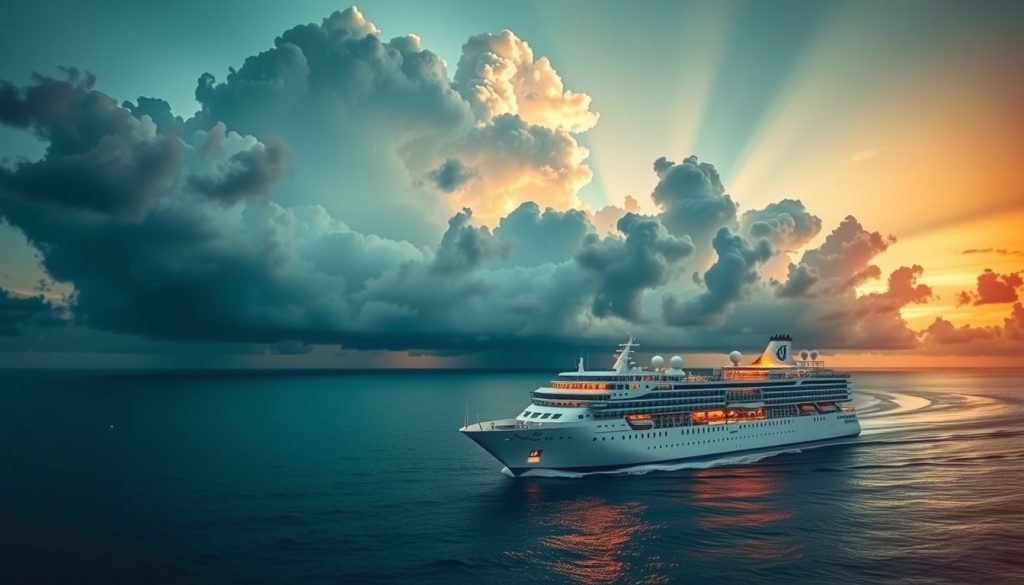
Modern cruise ships are equipped with sophisticated hurricane tracking systems, integrating satellite data, ocean sensors, and real-time radar.
This technology enables the crew to anticipate storms days in advance, providing ample time to adjust routes or delay departures when necessary.
Unlock Your Dream Cruise with Exclusive Online Deals!
Coordination with meteorological centers ensures data accuracy, and ships continuously monitor conditions along their intended path.
These systems are complemented by predictive modeling that considers historical storm behavior, ocean currents, and atmospheric conditions.
Travelers with coverage through VisitorsCoverage or World Nomads benefit from additional reassurance, knowing disruptions can be financially mitigated.
The combination of human expertise and technology ensures that ships operate safely even in challenging weather, and that passengers remain informed throughout their voyage.
Important Insights
- Cruise lines use multiple tracking systems for precise hurricane monitoring.
- Coordination with meteorologists ensures timely rerouting decisions.
- Insurance providers like VisitorsCoverage and World Nomads provide additional traveler security.
Captain Decision-Making in Storm Conditions to Keep You Safe
Cruise captains are trained extensively in emergency navigation and storm response.
When a hurricane is detected, the captain evaluates the storm’s intensity, speed, and trajectory to determine the safest course.
Communication with ports, fleet management centers, and other vessels ensures rerouting is efficient and coordinated.
Decisions often involve balancing safety, passenger comfort, and scheduling constraints.
Coverage from Ekta or Insubuy can ease passenger concerns, as these policies typically support itinerary changes caused by weather.
Historical storm data informs these decisions, allowing captains to predict potential risks and adjust navigation plans proactively.
Ultimately, the captain’s expertise and the ship’s technology work in concert to protect passengers while minimizing disruption.
Traveler Highlights
- Captains rely on both real-time and historical weather data for route planning.
- Efficient communication with ports ensures smooth rerouting when storms appear.
- Ekta and Insubuy insurance policies help cover unexpected itinerary changes.
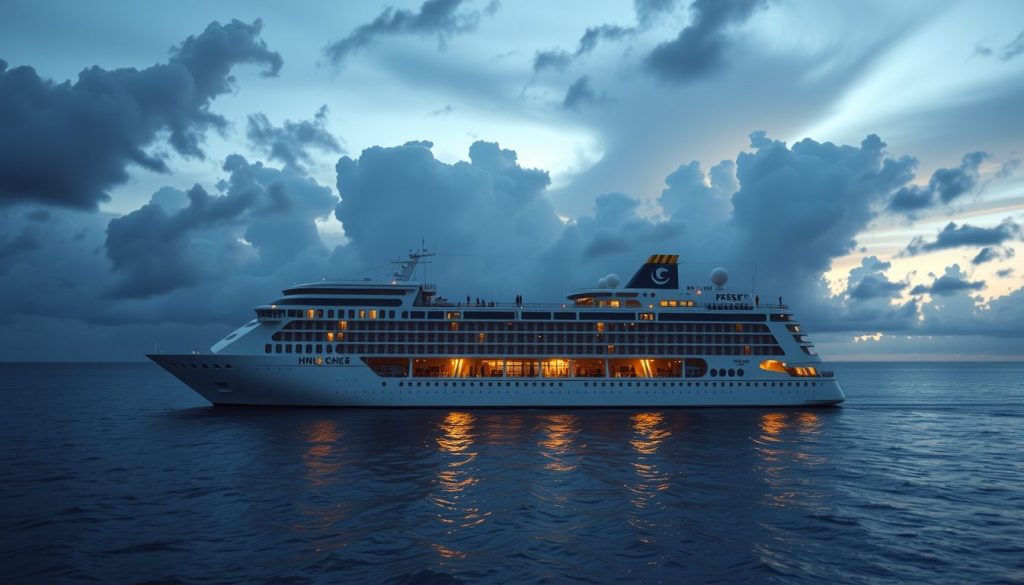
Onboard Safety Protocols That Guarantee Passenger Security
Cruise ships implement rigorous safety protocols to protect passengers during adverse weather.
Muster drills, conducted at the start of every voyage, familiarize passengers with emergency procedures and life jacket usage.

Grab Your Ticket to Paradise with These Deals!
Ships are constructed to withstand high winds and turbulent seas, providing a stable environment during storms.
Crew members are trained to manage large groups efficiently, ensuring calm and orderly procedures.
Passengers are advised to stay attentive to announcements, follow crew instructions, and review safety briefings carefully.
Insurance options such as Compensair or World Nomads complement these measures, offering financial coverage for disruptions or delays.
Every detail, from structural safety to emergency response, is designed to maximize security and minimize passenger stress.
Safety Reminders
- Muster drills ensure passengers know how to respond in emergencies.
- Ship design provides enhanced stability during rough seas.
- Insurance from Compensair or World Nomads protects against trip disruptions.
The Role of Cruise Insurance in Hurricane Season for Peace of Mind
Travel insurance plays a pivotal role in hurricane season, providing protection against cancellations, delays, medical emergencies, and evacuation costs.
Policies often include reimbursement for missed ports or altered itineraries, offering both financial and emotional security.
Many travelers choose providers like VisitorsCoverage, Insubuy, Ekta, Compensair, or World Nomads, which specialize in cruise coverage.
Beyond money, insurance frequently provides access to emergency support services, including medical consultations and travel coordination.
Selecting the right plan ensures peace of mind, enabling passengers to focus on enjoying their voyage instead of worrying about potential storm-related issues.
Essential Points
- Cruise-specific insurance covers trip interruptions caused by storms.
- Providers like VisitorsCoverage, Insubuy, Ekta, Compensair, and World Nomads offer specialized support.
- Access to emergency assistance ensures travelers remain connected and safe.
Click for Exclusive Offers on Top Cruise Lines!
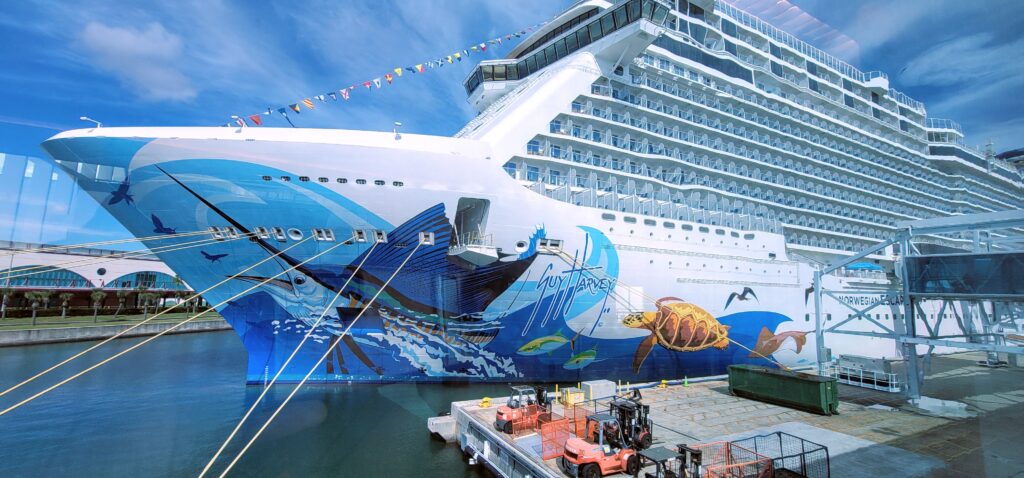
Navigating Passenger Comfort During Storms With Expert Care
While safety is paramount, cruise lines also prioritize passenger comfort during stormy conditions.
Stabilizers and hull designs minimize the feeling of rough seas.
Crew members provide guidance, entertainment adjustments, and updated itinerary information to reduce stress.
Passengers can remain in secure interior spaces, enjoying dining, entertainment, or onboard amenities while the ship navigates safely around weather systems.
Having insurance coverage, including through VisitorsCoverage or Ekta, provides further reassurance that financial concerns are addressed if ports are missed.
Communication is key, with crews proactively informing passengers about weather conditions and anticipated itinerary changes.
Passenger Insights
- Stabilizers reduce motion and increase onboard comfort.
- Crew updates and entertainment adjustments minimize stress during rough seas.
- Insurance ensures travelers are covered for any missed ports or changes.
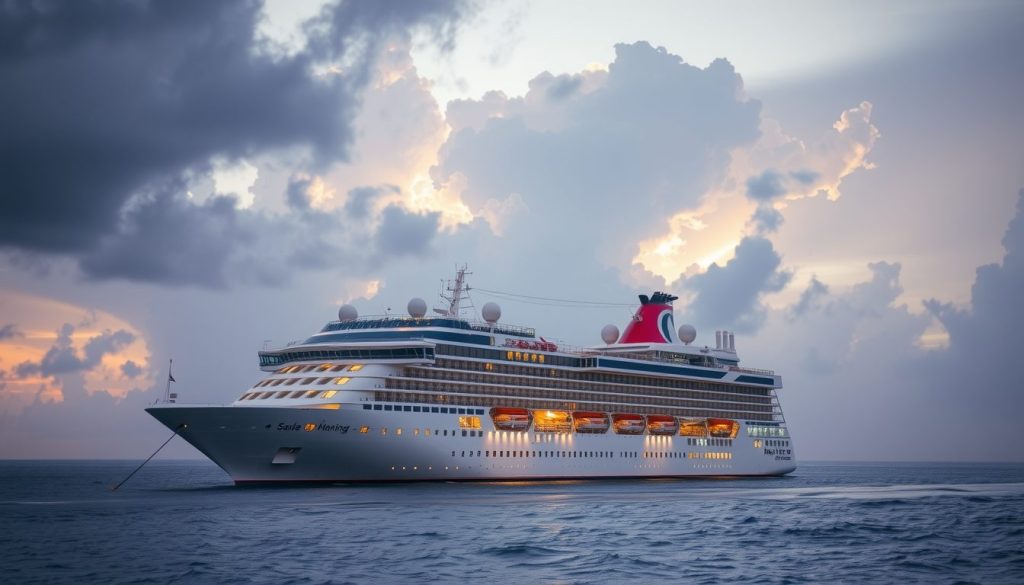
Planning Ahead for Hurricane Season to Ensure Stress-Free Cruising
Proactive planning allows travelers to cruise confidently even during hurricane season.
Booking refundable itineraries, reviewing insurance options, and understanding emergency protocols are key steps.
Policies from Compensair, World Nomads, VisitorsCoverage, Insubuy, or Ekta ensure comprehensive protection.
Checking historical hurricane data for planned destinations can also help in scheduling safer travel windows.
Flexibility, awareness, and preparation allow travelers to enjoy their cruise with minimal disruption, while cruise lines execute expert risk management procedures behind the scenes.
Strategic Highlights
- Refundable or flexible itineraries reduce potential financial loss.
- Insurance from multiple providers enhances overall traveler protection.
- Knowledge of historical hurricane patterns helps in planning safer travel dates.
Cruise Safety Assurance: Your Peace of Mind During Hurricane Season
Cruise lines combine advanced technology, experienced personnel, and detailed protocols to protect passengers during hurricane season.
From tracking storms to implementing safety measures and offering rerouting options, every aspect is designed for security and comfort.
Travelers can further reinforce peace of mind with cruise-specific insurance from VisitorsCoverage, Insubuy, Ekta, Compensair, or World Nomads.
Understanding these protocols helps passengers feel confident and relaxed, knowing that both human expertise and technological systems are actively safeguarding their journey.
By following safety briefings, maintaining awareness, and planning ahead, you can enjoy your cruise with reassurance, even in high-risk weather periods.
FAQ – How Do Cruise Safety Protocols Protect Passengers During Hurricane Season?
How Do Cruise Ships Track Hurricanes Before They Become Dangerous?
Cruise ships use satellite data, ocean sensors, real-time radar, predictive modeling, and information from meteorological centers to monitor tropical systems well before they approach the planned route.
Bridge teams continuously evaluate changes in storm intensity, direction, atmospheric conditions, and ocean currents rather than relying on a single forecast.
That advance warning gives the captain time to change speed, alter course, substitute ports, or delay a departure before conditions become threatening.
For passengers, the practical advantage is that hurricane avoidance usually begins days before severe weather could become an immediate problem.How Does a Cruise Captain Decide Whether to Reroute Around a Hurricane?
The captain evaluates the hurricane’s intensity, speed, trajectory, and potential effect on the ship’s intended course before deciding whether a route change is necessary.
Those decisions also involve communication with fleet management centers, ports, meteorologists, and other vessels so an alternate plan can be coordinated safely.
Scheduling and passenger comfort matter, but avoiding hazardous conditions takes priority when the original itinerary becomes unsuitable.
A rerouting announcement therefore usually represents an early risk-management decision rather than evidence that the ship has suddenly encountered an emergency.Can a Cruise Line Change Ports or Delay Departure Because of a Hurricane?
Yes, a cruise line can change ports, alter the route, adjust departure timing, or make other itinerary changes when hurricane forecasts threaten the original plan.
These adjustments give the ship more room to remain outside dangerous conditions while preserving as much of the cruise as circumstances allow.
Travelers should remember that the published itinerary can change when weather or port conditions make a scheduled stop impractical.
Booking flexible arrangements around the cruise can make those changes easier to absorb if embarkation timing or port calls are affected.Why Are Muster Drills Important During Hurricane Season?
Muster drills make sure passengers know their assigned emergency station, understand basic emergency procedures, and recognize the instructions they may receive from the crew.
That preparation becomes more valuable when severe weather creates uncertainty because passengers are not encountering the ship’s safety process for the first time during a stressful situation.
Crew members also train to manage large groups and coordinate emergency responses in an orderly way.
Paying attention to the muster briefing and knowing where to report gives you a clear role if additional safety instructions ever become necessary.How Do Cruise Ships Handle Rough Seas During Hurricane Season?
Modern cruise ships combine structural design, hull characteristics, stabilizers, and careful navigation to reduce the effects of rough water and maintain safe operation.
Stabilizers can lessen rolling, although passengers may still feel noticeable movement when ocean conditions deteriorate.
The bridge can also adjust course or speed when doing so improves the ship’s response to changing seas.
Feeling the vessel move more than usual can be uncomfortable, but motion alone does not mean the ship is operating in unsafe hurricane conditions.What Should Passengers Do When Severe Weather Changes a Cruise Itinerary?
Pay attention to announcements, follow crew instructions, and confirm any revised port, excursion, or schedule information before making new plans.
Cruise crews provide weather and itinerary updates so passengers understand what is changing while the bridge manages navigation around the affected area.
Dining, entertainment, and other onboard activities may also be adjusted when outdoor conditions or an unexpected sea day changes the normal schedule.
Staying flexible is often more useful than focusing on the original itinerary, because avoiding a port or altering the route may be the safest way to preserve the rest of the voyage.What Does Travel Insurance Add to Cruise Hurricane Protection?
Travel insurance provides financial protection that the ship’s navigation and safety systems cannot provide, particularly when a storm causes covered cancellations, delays, trip interruptions, medical emergencies, or evacuation expenses.
Some policies may also provide benefits for specific itinerary disruptions or missed ports, depending on their terms and covered reasons.
VisitorsCoverage, Insubuy, EKTA, Compensair, and World Nomads are among the providers travelers may compare when evaluating hurricane-season protection.
Coverage varies considerably, so travelers should verify hurricane provisions, exclusions, reimbursement limits, and when coverage must be purchased rather than assuming every policy responds to a storm in the same way.Can Travel Insurance Help When a Hurricane Causes a Missed Port or Itinerary Change?
It can, but reimbursement depends on the specific policy and the reason the itinerary changed.
Some cruise-oriented policies include benefits connected to missed ports, trip interruptions, delays, or other covered disruptions, while others may provide little or no payment simply because a scheduled destination was removed.
Travelers should read the policy language closely and compare what VisitorsCoverage, Insubuy, EKTA, Compensair, World Nomads, or another provider actually covers before purchasing.
The useful question is not simply whether a plan advertises hurricane coverage, but which storm-related expenses and circumstances qualify for reimbursement.How Can You Plan a Cruise More Carefully During Hurricane Season?
Start by considering refundable or flexible booking options, reviewing insurance before the trip, and understanding the ship’s emergency and weather procedures.
Historical hurricane patterns can also help you compare destinations and travel periods, although past storm activity cannot predict what will happen during a particular sailing.
Flexibility becomes especially valuable because weather may affect ports, departure timing, flights, or other pieces of the vacation even when the cruise itself continues.
Combining informed scheduling with flexible reservations and appropriate insurance gives you more ways to respond when conditions change.How Do Cruise Lines Keep Passengers Comfortable While Avoiding a Storm?
Cruise lines manage comfort alongside safety by using stabilizers, changing navigation when appropriate, providing frequent updates, and adjusting onboard programming when weather affects normal activities.
Passengers can often continue using dining venues, entertainment, and interior amenities while the ship follows a safer route away from the weather system.
Crew communication is particularly important because understanding why a port, schedule, or activity changed can reduce unnecessary uncertainty.
The experience may not unfold exactly as originally planned, but effective navigation and onboard adjustments can allow much of the vacation to continue while hazardous conditions are avoided.
Plan Your Next Cruise!
Discover Princess Cruise Line: Elegant Ships, Immersive Voyages, and World‑Class Experiences
One Delay Can Cost Your Entire Cruise A quick coverage check now protects you from the problems no one sees coming….
Experience the Ultimate Vacation with Carnival Cruise Line’s Fun Ships, World‑Class Entertainment, and Relaxation
One Delay Can Cost Your Entire Cruise A quick coverage check now protects you from the problems no one sees coming….

Sail Into Italian Elegance: Costa Cruises for Culture, Cuisine, and Unforgettable Voyages
One Delay Can Cost Your Entire Cruise A quick coverage check now protects you from the problems no one sees coming….
Sail Into Sophistication: Holland America Cruises for Luxury, Culture, and Unforgettable Journeys
One Delay Can Cost Your Entire Cruise A quick coverage check now protects you from the problems no one sees coming….
Explore More
Unlock More Time at Sea: Extend Your Cruise Vacation Without Rebooking
Escape To Paradise: Inside The Exclusive World of Cruise Line Private Islands
Avoid Costly Mistakes: Cruise Cancellation Rules You Must Know Before Paying