One Delay Can Cost Your Entire Cruise
A quick coverage check now protects you from the problems no one sees coming
Short Excerpt
- Feeling anxious before your first cruise is common, especially when you’re unfamiliar with embarkation procedures, ship navigation, and travel schedules.
- A practical preparation plan can help you manage worries about missing the ship, unexpected expenses, unfamiliar dining arrangements, and your first day onboard.
- Simple travel buffers, realistic expectations, and a manageable pre-cruise checklist can help you replace repeated second-guessing with greater confidence.
Quick Take
- Arrive in your embarkation city the day before sailing whenever possible to reduce the risk of travel delays causing you to miss the ship.
- Confirm important arrangements early, including travel documents, boarding instructions, transportation, and essential medications.
- Separate practical concerns from imagined scenarios so you can address genuine risks without continually researching unlikely problems.
- Create a simple embarkation-day routine that gives you time to eat, complete safety procedures, and become familiar with the ship.
- Keep your vacation expectations flexible. You don’t need to understand every cruise procedure or eliminate every nervous feeling before boarding.
How to Stop Worrying About Your First Cruise and Start Feeling Prepared
You’ve booked your cruise, chosen your cabin, and started imagining what it will feel like to watch the coastline disappear behind the ship.
Everything should be exciting, yet the closer departure gets, the more questions seem to appear.
What happens if your flight is delayed?
Will you know where to go when you reach the terminal?
What if the ship feels overwhelming, you don’t understand the dining arrangements, or everyone around you seems to know something you haven’t figured out?
Those questions can make even a carefully planned vacation feel unfamiliar.
Fortunately, you don’t need to know everything about cruising to enjoy your first sailing.
You need to understand the parts of the experience that genuinely require preparation, identify where to get help, and give yourself permission to learn the rest once you’re onboard.
The most useful way to approach pre-cruise anxiety is to separate the things that could interfere with your vacation from the things that simply feel unfamiliar.
Both deserve attention, but they don’t require the same response.
Separate Real Travel Risks From First-Time Uncertainty
Some pre-cruise worries point toward practical arrangements that should be addressed before departure.
Missing a flight connection, arriving without the correct travel documents, or discovering that your transportation won’t reach the terminal on time can have serious consequences.
Fortunately, these concerns also have specific solutions.
You can confirm your identification requirements, arrange an appropriate travel schedule, and save your booking documents somewhere accessible.
Once those arrangements are complete, you have a dependable foundation for the trip.
Other concerns are less about a possible travel disruption and more about entering an environment you haven’t experienced before.
You might wonder whether you’ll find the dining room, understand the cruise line’s app, or know when to attend the mandatory safety briefing.
These details can sound intimidating when you’re sitting at home imagining them, but they become much easier to understand when you’re following the ship’s signs and instructions.
Crew members regularly assist guests with directions, dining questions, and onboard procedures.
Top Cruise Deals From Trusted Cruise Lines
Compare exclusive online offers and find the fare that fits your trip and your budget
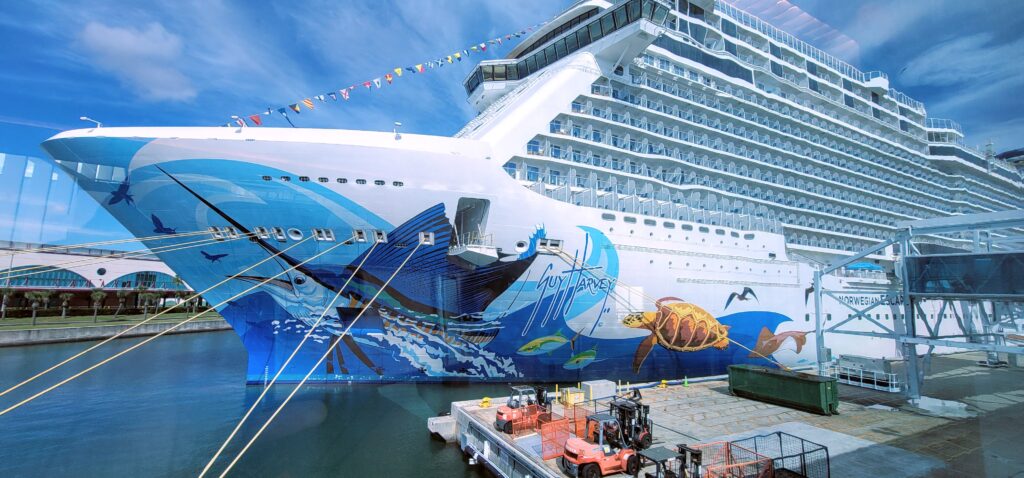
You aren’t expected to arrive knowing the entire ship.
Recognizing the difference helps you spend your preparation time where it provides the greatest benefit.
Build a Travel Buffer Before You Worry About Everything Else
If there’s one preparation decision that deserves particular attention, it’s how and when you’ll reach the departure port.
Cruise ships operate according to established boarding deadlines, and passengers who arrive too late can miss their sailing.
That’s why flying into the embarkation city on departure morning carries more risk than many first-time cruisers realize.
Whenever your circumstances allow, plan to arrive at least the day before your cruise.
This creates additional flexibility if your flight is delayed, baggage arrives late, or ground transportation takes longer than expected.
The same principle applies when you’re driving a considerable distance.
Unexpected traffic, vehicle problems, or severe weather can disrupt an otherwise reasonable schedule.
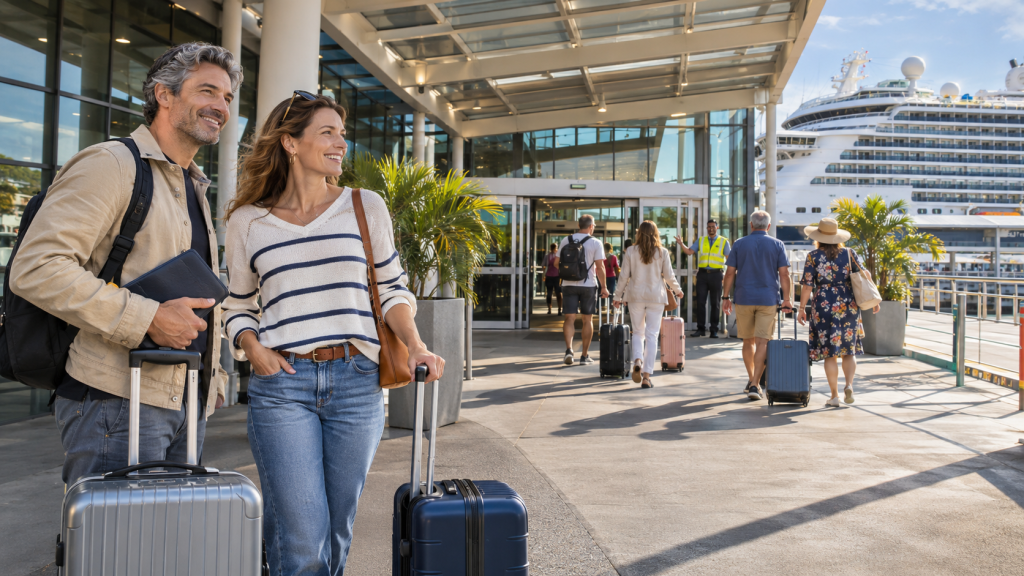
Staying overnight near the port may add to your expenses, but it can also make embarkation morning considerably more enjoyable because you’re starting nearby rather than racing across an unfamiliar city.
Before departure, confirm your cruise line’s assigned arrival arrangements, final boarding deadline, and terminal location.
Those details matter more than general advice about what time cruisers should arrive.
For shore excursions, use the ship’s published all-aboard time as your nonnegotiable deadline and aim to return with a generous buffer.
You’ll be able to enjoy your port visit more when your plans don’t depend on everything running exactly on schedule.
Know What Your First Few Hours Onboard Will Actually Involve
A major source of first-time anxiety is imagining embarkation as one enormous event when it’s really a sequence of smaller steps.
You’ll arrive at the terminal, follow the check-in and security procedures, and board according to the cruise line’s instructions.
Once you’re on the ship, you’ll need to complete the required safety procedures, including the muster briefing or other designated requirements.
After those essentials, the experience becomes much more flexible.
Your stateroom may not be available immediately, and luggage delivery can take additional time.
That’s why your carry-on should contain travel documents, essential medications, valuables, and anything else you might need before your larger bags arrive.
When you’re ready, find somewhere to eat and spend a little time exploring one or two familiar areas.
You don’t have to race toward the pool, reserve every activity, or visit every deck before sail-away.
There’s nothing wrong with making your first onboard experience a comfortable lunch followed by a short walk to see the ocean.
By the time you finish those simple activities, you’ll already have learned more about the ship than hours of imagining it could have taught you.
Give Yourself a Plan for the Moments That Feel Unfamiliar
Preparation becomes more useful when it includes knowing what you’ll do if a concern actually arises.
For example, if you can’t locate a restaurant, your next step is checking the ship’s map or asking a crew member.
If your dining assignment doesn’t suit you, contact the dining team and ask what alternatives are available.
Online‑Only Cruise Offers You Won’t Find Elsewhere
Unlock special pricing and start planning the sailing that matches your perfect itinerary

When your schedule changes unexpectedly, consult official announcements before deciding whether anything needs to be rearranged.
These responses are straightforward, but having them in mind can prevent an unfamiliar situation from feeling larger than it is.
You can also choose a comfortable public area to revisit during the first day.
A lounge overlooking the ocean, a quieter outdoor deck, or a café might become a useful place to relax between activities.
Knowing where you’d like to spend a little downtime can be especially helpful on a large ship, when crowded public areas and constant entertainment initially feel like a lot to take in.
Prepare Your Budget Without Trying to Predict Every Expense
Another common source of pre-cruise worry is uncertainty about how much you’ll spend after boarding.
Cruise fares often include accommodations, designated dining options, and a variety of entertainment, but additional charges can apply to gratuities, specialty restaurants, beverages, Wi-Fi, excursions, spa services, and other purchases.
Rather than trying to anticipate every possible temptation, review what’s included in your particular fare and decide which extras you’d genuinely enjoy.
You might choose one specialty dinner and an interesting shore excursion while skipping packages you don’t expect to use.
Another traveler may prioritize internet access or a spa experience.

Both approaches can work because the goal is aligning your spending with your interests.
It’s also helpful to understand how your cruise line manages onboard accounts and when charges are settled.
If its app offers spending information, check it periodically rather than repeatedly worrying about what the final bill might contain.
A modest contingency fund can provide flexibility for unexpected expenses, while an agreed spending limit helps you make decisions without feeling that every purchase needs reconsideration.
Protect Your Excitement by Knowing When Preparation Is Finished
There comes a point when additional research stops providing useful answers.
You’ve checked your documents, confirmed transportation, reviewed the ship’s basic layout, and packed your essentials.
Yet another cruise video or discussion thread introduces a new concern you hadn’t considered.
The temptation is to keep searching until every uncertainty disappears.
Unfortunately, there will always be something about a new vacation that you can’t completely predict.
Weather changes, restaurants get busy, and occasionally an activity won’t unfold exactly as expected.
Instead of continuing to research, identify what is already handled and which arrangements genuinely remain unfinished.
Once an important task is complete, give yourself permission to stop reviewing it unless new information requires action.
Spend the remaining time looking forward to the things that made you book the cruise: ocean views, memorable meals, unfamiliar destinations, and the opportunity to step away from your normal responsibilities.
The goal isn’t to board your first cruise without a single worry.
It’s to board knowing you’ve handled the important details and can deal with ordinary surprises as they arise.
With that perspective, you can feel excited about the experience without expecting yourself to become a cruise expert before leaving home.
Why First-Cruise Anxiety Happens Before Sailing—and How to Feel More Confident About Embarkation
Cruise anxiety before sailing can make excitement feel distant, even when your trip is booked.
Your trip is booked, the countdown is real, and your brain starts running simulations.
Your mind starts running “what if” scenarios—missed flights, confusing terminals, and awkward first moments onboard.
It pictures a ship that feels enormous, with routines you have not learned yet.
That tension is normal, especially for first-time cruisers, because new environments trigger uncertainty.
Nothing about that reaction means you are not built for cruising.
The good news is you can turn that nervous energy into a confidence plan that works before you ever step on the ship.
This guide gives you practical buffers, a short checklist, and simple scripts so you board feeling steady instead of stressed.
The goal is not eliminating every anxious thought before you leave home.

Luxury Cruise Experiences at Smarter Prices
See premium sailings and upgraded cabins priced for travelers who know how to book well
A first cruise is new, and new experiences come with nervous energy.
What you can do is turn that nervous energy into a plan that works even when your stomach flips.
A plan reduces uncertainty, and uncertainty is what anxiety feeds on.
You will learn which worries are “noise,” which ones are solvable, and which ones deserve one simple precaution.
You will also build a short routine that helps your body feel steadier in the week before sailing.
Once your body feels steadier, your mind stops overreacting to small details.
That is how you show up at the port feeling prepared instead of fragile.
Why Pre-Sail Anxiety Hits First-Time Cruisers
Pre-sail anxiety is often strongest before you even see the ship.
Anticipation gives your brain room to imagine problems that have not happened.
At home, you do not have sensory proof that things are fine.
You are not hearing ocean sounds, seeing the horizon, or watching crew guide guests with practiced ease.
You are staring at checklists, emails, and travel times, which can feel abstract and high-stakes.
That combination can make worries pile up fast.
A first-time cruiser also lacks “memory evidence,” meaning you cannot say, “I’ve done this, and it was fine.”
Your job is to create that evidence in advance through small, controlled steps.
Name The Trigger
Anxiety usually spikes for one of three reasons.
Uncertainty is the first, because new systems feel hard to predict.
Loss of control is the second, because ships and schedules run on fixed rules.

Fear of embarrassment is the third, because nobody wants to look confused in public.
Naming which one is loudest for you is a turning point.
It helps you stop treating anxiety like one big monster.
Instead, it becomes a few specific issues with specific fixes.
Specific problems are easier to solve than vague dread.
What Your Body Does
Cruise anxiety often shows up physically, not just mentally.
Your chest can feel tight, your sleep can get lighter, and your appetite can shift.
That does not mean danger is near.
It means your nervous system is treating the trip like an important event.
Important events trigger activation, especially when they include travel logistics.
You can respond to that activation with routines that lower the intensity.
When intensity drops, thoughts become easier to challenge.
That is why your body plan matters as much as your packing plan.
Why Cruising Feels “Different”
Cruising bundles many decisions into one experience.
Travel day, boarding, ship navigation, dining, ports, and timing all sit under one umbrella.
For some people, that sounds convenient and still feels intimidating.
The intimidation comes from not knowing the sequence.
Once you know the sequence, cruising becomes one of the most structured vacations available.
Structure is actually reassuring when you understand it.
Your goal before sailing is learning enough of the sequence to feel anchored.
Anchored people do not spiral over minor uncertainty.
Anxiety Wants Clarity
Naming the exact trigger turns vague worry into a solvable plan.
Bodies Need Support
Physical activation is normal before new travel, and routines can lower it.
Sequences Build Confidence
Learning the basic order of events is the fastest route to feeling steady.
Turn Anxiety Into A Simple Plan
Anxiety shrinks when you stop trying to “think your way out” and start planning your way through.
Planning does not mean over-control.
It means deciding what matters, what is optional, and what you will do if something small goes off-script.
Most first-time cruise anxiety comes from imagining only two outcomes.
Either everything goes perfectly, or everything falls apart.
Real travel lives in the middle.
Flights run late, lines happen, plans shift, and vacations still end up great.
A strong plan is one that works in the middle.
Build Your Three Buffers
Buffers are the best anxiety tool because they create space.
Space prevents rush, and rush is where panic starts.
Buffer one is time.
Arrive in your embarkation city the day before whenever possible.
That single choice removes the tightest travel-day fear, which is missing the ship because of a delayed flight.
Buffer two is money.
Build a small “oops fund” for snacks, rides, and small fixes, so nothing feels catastrophic.
Buffer three is energy.
Plan one quiet break on embarkation day, because your brain will be processing a lot.
Choose What You Control
A first cruise feels easier when you focus on controllables.
You control your documents, your arrival plan, your packing basics, and your timing habits.
You do not control weather, crowds, or the exact speed of a check-in line.
Trying to control those things increases anxiety because you will lose that battle.
Instead, build a plan that assumes normal delays.
Normal delays are not emergencies.
They are part of travel.
When you accept that in advance, your nervous system stops treating every delay like a threat.
Make A “What If” Card
Your brain will ask “what if” questions.
Give it answers.
Write a small note in your phone with three scenarios and your response.
“What if my flight is delayed” becomes “I have a day-before arrival plan or a backup flight option.”
“What if I get overwhelmed onboard” becomes “I have a reset spot and a quiet activity ready.”
“What if I overspend” becomes “I have a daily spending cap and I check my account each night.”
This is not pessimism.
This is reassurance through preparation.
Prepared brains relax faster.
Buffers Create Relief
Time, money, and energy buffers prevent the rushed moments that trigger spirals.
Control The Controllables
Focusing on what you can influence reduces mental friction immediately.
Answers Stop Loops
A simple “what if” card keeps anxious thoughts from repeating all week.
The Week-Of Anxiety-Reduction Checklist
A checklist can either soothe you or make you obsess.
The difference is whether it is short, realistic, and designed to finish.
You are not building a perfect system.
You are building a reliable one.
Reliable beats perfect for anxious brains.
Use this checklist once a day in the week before sailing, then stop.
Completion is part of the relief.
When you finish the checklist, give yourself permission to be done for the day.
Anxiety-Reduction Checklist
| Category | What To Do | Why It Lowers Anxiety |
|---|---|---|
| Documents | Confirm passport or ID rules, boarding docs, and emergency contacts. | Missing paperwork is a common fear, and confirmation removes it. |
| Travel Day | Lock your arrival plan, airport transfer plan, and port arrival window. | Predictability reduces “unknown” stress. |
| Money | Set a daily onboard spend cap and a small “oops fund.” | A cap reduces fear of surprise costs. |
| Health | Pack key meds, motion support, and a simple hydration plan. | Physical comfort reduces anxious escalation. |
| Tech | Download cruise app, save confirmations offline, and secure logins. | Knowing you can access info prevents panic. |
| Packing | Pack a carry-on with essentials for day one. | Carry-on control prevents “lost bag” spirals. |
| Backup Plan | Write your three “what if” responses in your phone. | Answers reduce rumination loops. |
Keep It Gentle
A checklist works best when it is kind.
Pick one category per day rather than trying to do everything at once.
Let your brain feel progress.
Progress is the antidote to helplessness.
If you notice obsessive checking, set a boundary.
Check once, then close the tab.
Your goal is readiness, not constant scanning.
Readiness feels lighter than scanning.
Use Supportive Tools
A few travel tools can reduce the background stress that makes anxiety louder.
Travelpro luggage can reduce worry about durability, wheels, and the annoying scramble of a broken bag.
Radical Storage can help if you arrive early and want freedom from dragging luggage around.
NordVPN can help you feel safer using public networks when you check reservations or sensitive accounts.
Incogni can reduce long-term data exposure, which helps some travelers feel less vulnerable online.
Compensair and AirHelp can be useful if flight disruption is your biggest stressor, because they help you navigate passenger-rights claims when delays happen.
World Nomads, VisitorsCoverage, Ekta, and Insubuy can reduce fear around medical costs, trip disruptions, and unexpected changes, depending on the coverage you choose.
These tools are not magic, and you do not need all of them.
They are optional supports that can lower the mental load.
Finish One Thing
A checklist should complete, because completion creates real relief.
Progress Builds Trust
Small daily actions teach your brain that you are handling this.
Tools Reduce Friction
Optional supports can lower background stress so you start your cruise steadier.
The Three Biggest Fears And The Truth Behind Them
Most first-time cruise anxiety clusters around a few fears.
You may feel like your fears are unique, but they are usually shared by thousands of beginners.
That is good news.
Common fears have common solutions.
This section tackles the three biggest fears directly.
It gives you the truth behind each fear, plus one practical move you can make before you sail.
Practical moves create emotional relief because they restore agency.
Agency is what anxiety tries to steal.
Fear One Missing The Ship
Fear of missing the ship is one of the most intense worries, because it feels final.
That fear often shows up even before sailing, because it connects to travel-day uncertainty.
The best prevention is arriving the day before, which removes most flight-related risk.
The second-best prevention is building a strict timing habit for port days.
Plan to return to the ship no later than one hour before all-aboard time.
That buffer protects you from traffic, long pier walks, and security lines.
It also protects your nervous system, because rushing triggers panic fast.
If this fear is loud for you, structure your trip around buffers, not wishful thinking.
Fear Two Getting Overwhelmed
Ships are big, and the first day can feel busy.
Overwhelm usually comes from too many choices, not from danger.
A simple fix is limiting your daily plan to two highlights.
Two highlights keeps the day fun without turning it into a performance.
Another fix is choosing a reset spot early, like a quiet lounge or a shaded deck area.
A reset spot is where you go before you are overstimulated, not after.
That timing matters.
When you reset early, you never reach the sharp edge of anxiety.
Fear Three Surprise Costs
Money stress is a common trigger because cruise pricing can feel layered.
Gratuities, drink packages, specialty dining, Wi-Fi, photos, and excursions can add up.
An anxious brain hears “add up” and turns it into “I will lose control.”
Control returns when you decide your rules in advance.
Pick a daily spending cap.
Decide which extras you truly want and which ones you will skip without guilt.
Choose one planned splurge, so the rest of your spending feels intentional.
Intentional spending feels safer than reactive spending.
High-Stakes Fears Have Fixes
The biggest fears respond well to buffers and simple timing rules.
Overwhelm Is Choices
Two daily highlights and a reset spot prevent sensory overload.
Money Needs Rules
A spending cap and planned splurge reduce the fear of losing control.
Social Anxiety Before Sailing
Some cruise anxiety is not about logistics.
It is about people.
A first-time cruiser may worry about looking inexperienced.
They may fear awkward dinners, confusing etiquette, or not knowing where to stand.
They may worry that everyone else has cruised before and will notice you are new.
That fear can feel heavy because it mixes uncertainty with embarrassment.
The reality is simpler.
Ships run on routines, and crew are trained to guide you through them.
You Are Not Behind
Experienced cruisers look confident because they recognize patterns.
They know where to go and what to ignore.
They are not watching you.
Most guests are focused on their own vacation.
Crew members answer beginner questions all day, every day.
Asking a clear question is normal cruise behavior.
A good question is, “What is the simplest next step for first-time guests right now.”
That one line turns social anxiety into direction.
Dining Anxiety Preview
Dining is a common social trigger.
A simple pre-sail strategy is choosing your dining comfort level in advance.
Some nights, you may want a quieter meal.
Other nights, you may want to be more social.
Both are allowed.
If you worry about shared tables, remember that preferences can be requested.
If you worry about eating alone, remember that solo dining is common onboard.
Comfort improves when you treat dining as a choice rather than a test.
Shore Days Feel Safer With Structure
Ports can be intimidating because they feel unfamiliar and time-sensitive.
Structure reduces that fear.
A guided tour through Viator or GetYourGuide can remove “where do I go” stress, because meeting points and timing are clear.
Big Bus Tours can be a low-pressure option for city overviews when you want an easy route.
BikesBooking.com can help in ports where a bike ride is the simplest way to see more without complex logistics.
Using structure does not make you less adventurous.
It makes the day predictable enough to enjoy.
Enjoyment is the goal.
New Does Not Mean Noticeable
Most guests are focused on themselves, and crew expect beginners.
Choices Reduce Social Pressure
Dining and social moments feel easier when you decide your comfort level first.
Structure Protects Ports
Clear plans in port reduce time stress and prevent spirals.
Avoid These Pre-Cruise Habits That Amplify Anxiety
Cruise anxiety often grows because of habits that seem helpful.
Excessive research is one.
Compulsive packing is another.
Last-minute changes are a third.
These habits feel like control, but they often increase agitation.
The better approach is choosing a point of “good enough” and stopping.
Stopping is part of the skill.
A steady plan beats constant adjustments.
Here are the mistakes that most often amplify pre-sail worry.
Mistake One Doom-Scrolling
Searching for worst-case stories can make you feel prepared, but it usually spikes anxiety.
Online, extreme stories travel farther than normal stories.
Normal cruises are not viral.
Your brain does not always understand that bias.
It treats every story as a realistic probability.
Instead of doom-scrolling, limit research to one short window per day.
Then shift to action, like confirming documents or planning arrival timing.
Action lowers anxiety better than reading.
Mistake Two Overpacking
Overpacking is often anxiety wearing a practical disguise.
It says, “If I bring everything, nothing can go wrong.”
In reality, too much stuff creates friction, which creates stress.
A simpler bag is easier to manage, easier to unpack, and easier to re-pack.
Pick versatile clothing and comfortable shoes.
Put the essentials in your carry-on.
Then stop adding “just in case” items unless they are truly essential.
Less stuff often creates a more relaxed travel day.
Mistake Three No Backup Plan
Anxiety increases when your plan has no flexibility.
A single flight with no alternatives can feel like a cliff edge.
A tight transfer window can feel like a trap.
A schedule packed with every activity can feel like pressure.
Backups do not need to be elaborate.
They can be as simple as arriving a day early, saving your confirmations offline, and building a small buffer fund.
If flight disruption is a major fear, tools like AirHelp and Compensair can add a layer of support for claims and disruptions.
Backups are reassurance in concrete form.
Research Needs Limits
Information is helpful until it becomes fuel for rumination.
Less Stuff Helps More
Simpler packing reduces friction and supports a steadier travel day.
Backups Create Safety
A flexible plan lowers anxiety because it removes the “cliff edge” feeling.
Reset Your Mind and Body 24 Hours Before Embarkation
The day before you travel to the port is when many first-time cruisers feel the spike.
Sleep can get lighter.
Thoughts can get repetitive.
You can suddenly feel behind even when you are prepared.
That is normal, and it is fixable.
A reset routine helps your body settle so your mind does not overreact.
This is not a complicated wellness program.
It is a simple pre-travel routine designed for real life.
Lock The Plan
Decide what “done” looks like.
Confirm documents and boarding info once.
Confirm flight and hotel plans once.
Confirm port arrival time once.
Then stop checking.
Place your essentials in your carry-on.
Lay out your travel-day outfit.
Charge devices.
When the plan is locked, your brain stops searching for unfinished business.
Lower Stimulation
Your nervous system cannot settle if it is constantly fed novelty.
Reduce stimulation for a few hours before bed.
Avoid intense news and worst-case travel content.
Choose a simple meal.
Take a short walk.
Stretch lightly.
Set an earlier bedtime window than usual.
Even if sleep is not perfect, the routine itself signals safety.
Safety signals lower the intensity of anxious thoughts.
Create A Morning Script
Morning anxiety often comes from decision overload.
Remove decisions.
Write a short script in your notes with your first five steps.
“Breakfast, final room check, rideshare or shuttle, arrive, breathe.”
A script prevents frantic improvising.
Improvising is where small stress becomes big stress.
A script keeps your body moving steadily.
Steady movement is confidence in action.
Done Means Done
Locking the plan reduces the need for repeated checking.
Stimulation Affects Sleep
Lowering input can help your nervous system settle before travel day.
Scripts Stop Panic
A simple morning script prevents decision overload when you feel jittery.
You Can Board Feeling Ready
Cruise anxiety before you sail is not a sign you should cancel.
It is often a sign you are stepping into something new, and your brain wants certainty.
Certainty is not always available in travel, but readiness is.
Readiness comes from buffers, a short checklist, and a few simple scripts you can repeat.
Once you arrive at the port and see the system working, your body usually relaxes quickly.
Then the trip becomes what you hoped it would be.
A first cruise can be one of the most confidence-building vacations you ever take.
You just need a plan that supports you before you ever step onboard.
FAQ – How Can You Manage First-Cruise Anxiety, Prepare for Embarkation, and Feel More Confident Before Sailing?
Is It Normal to Feel Anxious Before Your First Cruise?
Yes, feeling nervous before your first cruise is a common response to preparing for an unfamiliar travel experience.
You may be excited about the vacation while still worrying about boarding procedures, ship size, seasickness, or whether you’ll understand how everything works onboard.
Those concerns can feel more significant when you haven’t cruised before and don’t have personal experience to draw on.
Learning the essentials, preparing for important travel requirements, and leaving room to discover the ship gradually can help make the experience feel more manageable.Why Does Cruise Anxiety Sometimes Get Worse as Departure Gets Closer?
As departure approaches, arrangements that once seemed far away become immediate decisions involving packing, transportation, identification, and boarding deadlines.
It’s easy to begin imagining things that could go wrong, particularly when you’re unfamiliar with cruise travel and want the vacation to go smoothly.
Repeatedly researching unlikely scenarios can also make those possibilities seem more prominent than they deserve to be.
Concentrating on practical preparations and establishing a clear point when you’re finished checking them can help prevent last-minute uncertainty from dominating your anticipation.What Is the Best Way to Reduce Anxiety Before Your First Cruise?
Begin by identifying the specific part of cruising that concerns you most instead of treating every unfamiliar detail as one enormous problem.
If you’re worried about missing the ship, review your transportation schedule and consider arriving in the departure city the previous day.
When navigation is your concern, look at the ship’s deck plan and familiarize yourself with the areas you’ll use most often.
Addressing individual questions with practical actions can make preparation feel more useful than repeatedly imagining situations without deciding how you’d handle them.Should You Fly into Your Cruise Departure City the Day Before Sailing?
Arriving the day before is generally a sensible option when your embarkation arrangements involve air travel, especially if you’re flying from another city or making connections.
A delayed or canceled flight on embarkation morning can leave very little time to reach the terminal before the cruise line’s final boarding deadline.
Staying overnight nearby creates additional flexibility and gives you the opportunity to begin the day without a rushed airport transfer.
Although it adds a hotel expense, that extra margin can be worthwhile when you’re trying to protect an important vacation.What Happens if Your Flight Is Delayed and You Miss Your Cruise?
If your flight is delayed and you cannot reach the ship before the boarding deadline, contact the cruise line and your travel provider immediately to discuss the available options.
Depending on the circumstances, your booking arrangements, itinerary, and cruise line policies, joining the vessel at a later port may or may not be permitted or practical.
Travel insurance or certain cruise-line air programs could provide assistance in qualifying situations, but coverage and obligations depend on their terms.
The best prevention is allowing sufficient travel time before departure and understanding your options before an actual delay occurs.What Documents Should You Check Before Your First Cruise?
Confirm the identification and travel documents required for your specific itinerary, including any applicable passport, visa, or other entry requirements.
Some cruises have different documentation rules depending on departure ports, destinations, passenger citizenship, and the type of sailing, so relying on general advice can create problems.
You should also complete required online check-in procedures and keep your boarding information accessible during travel.
Reviewing these details early gives you time to address missing or incorrect information instead of discovering an issue at the terminal.How Can You Avoid Feeling Overwhelmed on Embarkation Day?
A simple first-day sequence can make embarkation feel easier because you don’t need to decide what to do with every moment.
Follow the terminal’s check-in instructions, complete the ship’s required safety procedures, and then find a convenient place to enjoy a meal or take a short break.
Once you’ve settled in, explore a few useful areas rather than trying to become familiar with the entire vessel immediately.
Allowing extra time for crowds, cabin availability, and luggage delivery can also prevent ordinary boarding-day delays from feeling like unexpected problems.What Should You Do if You Feel Lost on a Large Cruise Ship?
Start by checking your current deck number and locating a nearby sign, elevator bank, or recognizable public area.
The cruise line’s app or onboard maps may show the location of your destination, although available navigation features vary between ships.
You can also ask a crew member for the easiest route, which is a routine request that doesn’t require any explanation about being a first-time cruiser.
After traveling between your cabin and a few important venues, you’ll gradually develop familiar routes that make the ship easier to navigate.Can a Simple Cruise Checklist Actually Help With Pre-Sail Anxiety?
A short checklist can help when it focuses on important decisions and provides a clear way to confirm that they’ve been completed.
Useful categories include travel documents, transportation arrangements, essential medications, cabin and boarding information, and a manageable spending plan.
However, a checklist becomes less helpful when it encourages constant checking or keeps expanding with every possible concern.
Review your arrangements when necessary, mark completed tasks, and avoid reopening them without a specific reason.What Are the Three Most Useful Travel Buffers for First-Time Cruisers?
Time, money, and personal energy are three practical areas where a little flexibility can make traveling easier.
A time buffer helps protect you against transportation delays, while a modest contingency fund can cover unexpected expenses without disrupting your entire budget.
An energy buffer means allowing time to eat, rest, and adjust to unfamiliar surroundings instead of filling every available hour with activities.
These preparations won’t prevent every inconvenience, but they can make ordinary travel challenges easier to manage when they occur.How Can You Stop Worrying About Missing the Ship During Shore Excursions?
Begin by confirming the ship’s published all-aboard time, which may be earlier than its scheduled departure.
If you’re exploring independently, research transportation arrangements and allow a generous return buffer for traffic, unexpected delays, and the time needed to reach the gangway.
Organized excursions can simplify logistics, although you should understand whether an excursion is operated by the cruise line or an independent provider.
Choosing activities that fit comfortably within the available port time is more dependable than repeatedly checking the clock while you’re trying to enjoy the destination.What Should You Do if You’re Anxious About Dining on Your First Cruise?
Review your cruise line’s available dining arrangements before sailing so you understand whether it offers assigned seating, flexible reservations, or both.
If you’re uncomfortable with shared tables, prefer an earlier dinner, or need particular dietary accommodations, ask about those options in advance.
You can also begin with a casual dining venue while you’re getting familiar with the ship, rather than assuming your first meal needs to be a formal experience.
Once you know how dining works, it becomes another enjoyable part of the vacation instead of an unfamiliar social obligation.How Can Solo Travelers Manage Social Anxiety Before Their First Cruise?
Solo cruising can feel intimidating when you’re imagining eating alone, attending entertainment without company, or introducing yourself to unfamiliar passengers.
However, cruise ships provide opportunities to enjoy activities independently while still offering group experiences for travelers who want social interaction.
Some sailings include solo traveler gatherings, and interactive activities such as trivia or classes can make meeting people feel more natural.
You don’t have to socialize constantly to have a successful trip, so choose a level of interaction that suits your personality rather than trying to meet an imagined expectation.How Do You Prepare for Seasickness Without Making Yourself More Anxious?
If you’re concerned about motion sickness, discuss appropriate prevention options with a healthcare professional or pharmacist before departure, particularly if you have medical conditions or take other medications.
Some travelers benefit from choosing a cabin in a location where movement may be less noticeable, while others prefer spending time where they can see the horizon when seas are unsettled.
It’s also useful to understand the ship’s medical assistance arrangements and keep any recommended remedies accessible.
Preparing for the possibility is sensible, but it doesn’t mean you’ll necessarily experience seasickness during your cruise.How Can You Avoid Worrying About Unexpected Cruise Expenses?
Start by reviewing what’s included in your cruise fare and identifying the purchases that could generate additional charges.
Depending on the operator, these may include gratuities, specialty restaurants, drinks, internet access, excursions, spa services, and certain activities.
Decide which optional experiences you genuinely want and establish a spending amount that fits your budget before boarding.
Once onboard, review your account using the cruise line’s available methods so you can make informed choices rather than waiting until disembarkation to discover the total.Does Travel Insurance Help with Anxiety About Cruise Disruptions?
Travel insurance can provide financial protection for certain unexpected events, which may help travelers feel more prepared for the consequences of disruptions.
Depending on the policy, coverage might include qualifying trip cancellations, travel delays, missed connections, emergency medical expenses, or other specified circumstances.
However, insurance doesn’t guarantee that every delay or cancellation will be reimbursed, and exclusions or eligibility requirements can be significant.
Reviewing the policy carefully is more useful than assuming that purchasing any travel insurance automatically eliminates the financial risks associated with cruising.What Should You Do if Cruise Anxiety Makes It Difficult to Sleep Before Departure?
Try to maintain a familiar bedtime routine while reducing late-night travel research and other activities that keep your attention focused on unfinished preparations.
Organizing important documents, packing essentials, and confirming transportation earlier in the day can reduce the need for last-minute decisions.
Gentle activities you already find relaxing, such as reading or taking an easy walk, may also help you wind down.
If anxiety is persistent, significantly disrupting sleep or daily life, or accompanied by concerning physical symptoms, seek advice from a qualified healthcare professional rather than assuming it’s simply ordinary pre-travel nervousness.What Are the Biggest Mistakes First-Time Cruisers Make When They’re Anxious?
One frequent mistake is researching increasingly unlikely problems long after the important travel arrangements have been completed.
Others include repeatedly changing plans, overpacking in an effort to prepare for every possibility, or scheduling transportation with little room for delays.
Trying to understand every detail of shipboard life before boarding can also create unnecessary pressure.
Focusing on the essential arrangements, establishing practical backups, and accepting that some things are best learned through experience makes preparation more manageable.What Should You Do During the Final 24 Hours Before Your First Cruise?
Use the final day to confirm your travel documents, review your boarding instructions, check transportation details, and make sure essential medication and valuables are in your carry-on luggage.
Charge devices, organize any confirmations you may need offline, and prepare comfortable clothing for the journey to the terminal.
Once those tasks are complete, avoid continually revisiting arrangements that haven’t changed.
Getting adequate rest and following a straightforward departure routine will usually serve you better than spending the evening searching for additional cruise advice.How Can You Feel Confident About Your First Cruise Even if You’re Still Nervous?
Confidence doesn’t require knowing every procedure or feeling completely certain about everything that might happen during your vacation.
You can feel nervous while still having the documents, transportation arrangements, and practical knowledge needed to travel successfully.
Begin with a few manageable priorities, ask crew members for help when necessary, and allow yourself time to become familiar with the ship.
As you complete ordinary first-day experiences, you’ll have the opportunity to replace uncertainty with your own knowledge of how cruising actually works.
Plan Your Next Cruise!

Discover Silversea Cruises: Ultra‑Luxury Voyages to the World’s Most Exclusive Destinations
One Delay Can Cost Your Entire Cruise A quick coverage check now protects you from the problems no one sees coming….

Sail Boldly: Experience Virgin Voyages’ Adults‑Only Cruises With Style, Freedom, And Fun
One Delay Can Cost Your Entire Cruise A quick coverage check now protects you from the problems no one sees coming….

Sail Into Sophistication: Holland America Cruises for Luxury, Culture, and Unforgettable Journeys
One Delay Can Cost Your Entire Cruise A quick coverage check now protects you from the problems no one sees coming….

Experience the Ultimate Vacation with Carnival Cruise Line’s Fun Ships, World‑Class Entertainment, and Relaxation
One Delay Can Cost Your Entire Cruise A quick coverage check now protects you from the problems no one sees coming….
Explore More

Turn the Ocean into Your Dance Floor: Cruises for Non‑Stop Nightlife

Sail With the Soundtrack You Love — Theme Cruises for Jazz, Rock, R&B, and More
Discover Silversea Cruises: Ultra‑Luxury Voyages to the World’s Most Exclusive Destinations