One Delay Can Cost Your Entire Cruise
A quick coverage check now protects you from the problems no one sees coming
Short Excerpt
- Dramatic cruise disaster videos rarely explain the training, emergency procedures, and safety equipment behind everyday ship operations.
- Understand the difference between passenger muster drills, crew lifeboat exercises, emergency announcements, and an actual evacuation.
- Use the interactive muster preparation card to record your assembly station, check your readiness, and make sure everyone traveling with you understands the ship’s instructions.
Quick Take
- Take the passenger muster seriously. Every first-time cruiser needs to complete the ship’s required safety briefing and understand where to assemble in an emergency.
- Recognize the difference between drills and real emergencies. Crew may conduct lifeboat, fire, and other exercises during a sailing, but don’t assume an alarm is only a drill unless the ship confirms it.
- Know your assigned station. Find its location and learn the route from your cabin and other frequently used areas.
- Listen before acting. Emergency instructions depend on the situation; not every alarm means passengers should immediately board lifeboats.
- Follow crew directions. Stay out of restricted areas, keep passages clear, and use the procedures explained during the safety briefing.
- Prepare your traveling companions. Children, people with mobility needs, and anyone requiring assistance should understand the arrangements applicable to them.
What Really Happens During a Cruise Ship Emergency on Your First Sailing?
You’ve booked your first cruise, started planning the activities you want to enjoy, and imagined watching the ocean from the ship’s open decks.
Then you come across a video of a cruise ship caught in rough weather or passengers gathering near lifeboats.
The images may leave you with questions that didn’t occur to you when you booked.
What would happen if an alarm sounded in the middle of the night?
Would you know where to go?
How would the crew communicate instructions to thousands of passengers, especially if people were scattered across restaurants, theaters, cabins, and outdoor decks?
Those are reasonable questions to ask before your first sailing.
But it’s important to distinguish dramatic footage from the actual emergency procedures used aboard modern cruise ships.
A video may show only a few minutes of an incident.
It may not explain why an alarm sounded, whether passengers were ever at risk, or what happened before and after the recording.
The more useful information comes from understanding how ships prepare for incidents and how passengers are expected to respond.
International maritime safety rules require passenger ships to maintain lifesaving arrangements, conduct emergency training, and provide safety instructions to passengers.
Under the International Convention for the Safety of Life at Sea (SOLAS), newly embarked passengers on voyages lasting more than 24 hours must participate in a muster before or immediately upon departure.
The purpose includes explaining lifejacket use and what passengers should do in an emergency. (International Maritime Organization — Passenger Ship Safety)
For a first-time cruiser, that means the safety briefing isn’t simply a formality to complete before the restaurants and pools become your focus.
It’s your introduction to the instructions that matter if the ship encounters an unusual situation.
Why Passenger Musters and Crew Lifeboat Drills Are Different
Two terms frequently appear in discussions of cruise emergencies: muster drill and lifeboat drill.
They’re related, but they aren’t the same activity.
A passenger muster introduces guests to their assigned assembly location, essential emergency instructions, and the relevant lifesaving arrangements.
The ship may use a combination of video instruction, audio guidance, app-based steps, and in-person station verification, depending on the operator and approved procedures.
Royal Caribbean, for example, describes a three-part muster process involving a lifejacket video, the emergency signal, and visiting the assigned muster station for verification. (Royal Caribbean — What Is a Muster Drill?)
Crew lifeboat and abandon-ship drills serve a different purpose.
They involve practicing assigned emergency responsibilities, using lifesaving equipment, and coordinating procedures that passengers aren’t expected to carry out themselves.
The U.S. Coast Guard explains that cruise ships conduct emergency drills weekly, while individual crew members must participate in drills according to applicable training requirements. (U.S. Coast Guard — Cruise Ship Safety FAQs)
Top Cruise Deals From Trusted Cruise Lines
Compare exclusive online offers and find the fare that fits your trip and your budget
That training is important, but it doesn’t mean passengers need to understand the technical operation of lifeboats.
Your responsibility is to complete the safety briefing, know your assigned location, and follow the instructions provided by the crew.
Learn Your Muster Station Before You Need It
Your muster station is the location where you may be directed to assemble during an emergency.
Depending on the ship, it might be in a lounge, theater, dining area, or another designated space.
It isn’t necessarily beside a lifeboat.
The location and identification method vary, so you should use the station assignment and route information provided for your own cabin.
Once you’ve boarded, confirm where the station is, review the posted emergency instructions, and complete every required part of the muster briefing.
If you’re traveling with children or anyone who may need assistance, also learn the applicable procedures for your group.
You don’t need to spend your cruise rehearsing evacuation scenarios.
You simply need enough familiarity to recognize the instructions that apply to you and know where to go when directed.
Interactive First-Cruise Muster Preparation Card
Use this tool to create a simple reference for your assigned muster station and track the safety preparations you’ve completed.
It deliberately doesn’t tell passengers to evacuate, proceed to lifeboats, or interpret an alarm.
Those decisions depend on the circumstances and the instructions issued by the ship.
My First-Cruise Muster Card
Record your ship’s verified muster information and review the safety steps that matter on embarkation day.
My Muster Reference
Assigned station: Not confirmed
Cabin route: Not confirmed
Assistance notes: None recorded
During an emergency, follow the ship’s official announcements and crew instructions. Do not rely on this card as an evacuation plan.
Preparation aid only. Does not replace the required muster process, validate safety information, contact emergency personnel, or save your entries.
How Crew Prepare for Emergencies That Passengers May Never See
A cruise ship’s emergency planning includes far more than showing passengers how to reach an assembly station.
Crew have assigned responsibilities for different types of incidents, which may involve firefighting, technical failures, medical emergencies, evacuation preparations, and assistance to passengers.
The crew’s responsibilities are described in formal procedures and training requirements.
According to the U.S. Coast Guard, cruise ships are required to conduct weekly emergency drills, and crew members must participate in designated drills under applicable international standards. (U.S. Coast Guard — Cruise Ship Safety FAQs)
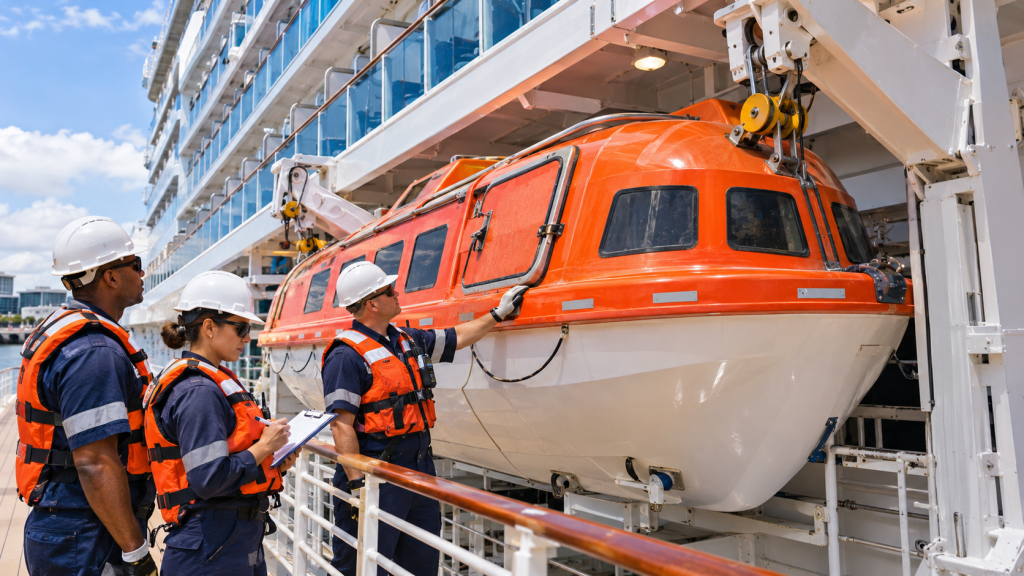
You might see crew practicing during a port day or notice that an area is temporarily closed while maintenance or training is underway.
However, never assume an alarm or unexpected announcement is only a drill.
A genuine incident can also occur while a ship is docked.
If an alarm sounds, pay attention to any announcement that follows and ask crew for clarification when necessary.
Don’t ignore instructions simply because training exercises are common.
What Happens When a Cruise Ship Detects a Problem?
Different emergencies require different responses.
A fire alarm, technical fault, medical incident, security concern, or developing weather problem won’t necessarily produce the same passenger instructions.
The crew may begin by evaluating an alert and dispatching the appropriate response team.
Some situations can be resolved without requiring passengers to change their activities, while others may lead to announcements, temporary restrictions, or instructions affecting particular areas of the vessel.
Online‑Only Cruise Offers You Won’t Find Elsewhere
Unlock special pricing and start planning the sailing that matches your perfect itinerary
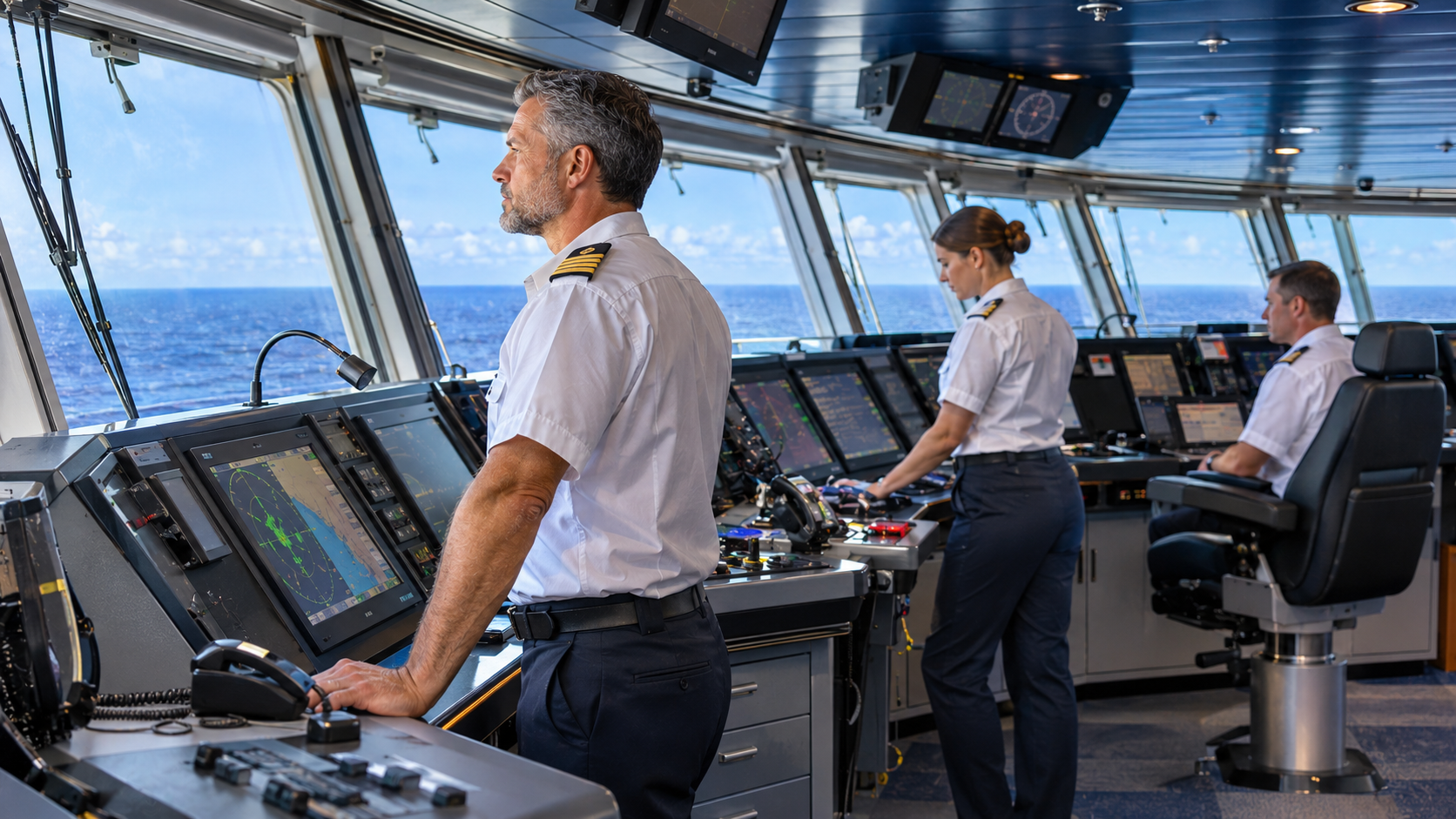
The captain and senior officers are responsible for managing the ship’s response within its established procedures.
For passengers, it’s more useful to understand the possible instructions than to memorize a fixed six-step emergency sequence.
You may be told to remain in your current location, avoid a particular part of the ship, or proceed to your muster station.
Don’t assume every alarm means you should immediately go to a lifeboat.
The ship’s briefing and official announcements explain the actions appropriate to that situation.
Why Going to Your Muster Station Isn’t the Same as Abandoning Ship
This is one of the most important distinctions for first-time cruisers.
A muster is an organized assembly of passengers.
It helps the crew account for people and provide instructions.
An abandon-ship operation is a separate, much more consequential response involving the use of lifesaving arrangements when ordered.
The International Maritime Organization’s passenger safety requirements establish the importance of muster procedures and emergency training. (International Maritime Organization — Passenger Ship Safety)
You shouldn’t interpret being told to assemble as proof that the ship is sinking or that lifeboat loading is imminent.
Nor should you attempt to reach or board a lifeboat on your own.
Follow instructions and remain at the assigned location until authorized personnel provide the next steps.
What to Do When You Hear an Emergency Signal
Your cruise line’s muster briefing should explain the emergency signals and what passengers are expected to do.
Some signals are standardized, while ships may also use internal announcements or codes for particular crew responses.
For instance, the general emergency alarm is conventionally seven or more short blasts followed by one long blast.
However, recognizing an alarm is only part of the process.
The correct passenger response depends on the instructions supplied during the safety briefing and any announcement issued during the incident.
If you hear an unfamiliar signal, stop what you’re doing, listen carefully, and follow the directions provided by the crew.
Don’t assume a code you’ve seen discussed in an online video applies to your ship.
What Should You Take to an Emergency Muster?
Your cruise line will explain what passengers should do and what, if anything, they should bring when proceeding to an assembly station.
That guidance may depend on the emergency and the ship’s arrangements.
You should not automatically return to your cabin to collect belongings, especially if an announcement instructs you to proceed directly elsewhere.
Likewise, don’t assume you should bring a lifejacket from your room or retrieve luggage before assembling.
Follow the specific instructions you received during muster and those provided by authorized crew during an actual event.

Luxury Cruise Experiences at Smarter Prices
See premium sailings and upgraded cabins priced for travelers who know how to book well
If you require essential medication or assistance, discuss the appropriate arrangements with your cruise line before departure.
Passengers with mobility limitations or other accessibility needs should also confirm how the ship will assist them during an emergency.
What Happens After Passengers Assemble?
At a muster station, designated crew members organize passengers and communicate the instructions appropriate to the incident.
They may verify attendance or account for guests using procedures specific to the ship.
If everyone needs to remain assembled, the crew will provide further guidance when available.
Depending on what is happening, passengers may eventually return to normal activities or receive additional instructions.
The U.S. Coast Guard’s passenger-muster examination guidance specifically addresses the ability of crew to direct passengers, explain lifejacket use, communicate emergency actions, account for people, and keep escape routes unobstructed. (U.S. Coast Guard — Foreign Passenger Vessel Examination Guidance)
That illustrates why following the assigned route and avoiding unnecessary crowding matter.
Passengers should not leave their designated assembly area merely because they believe the situation has improved.
How to Help Children and Traveling Companions Prepare
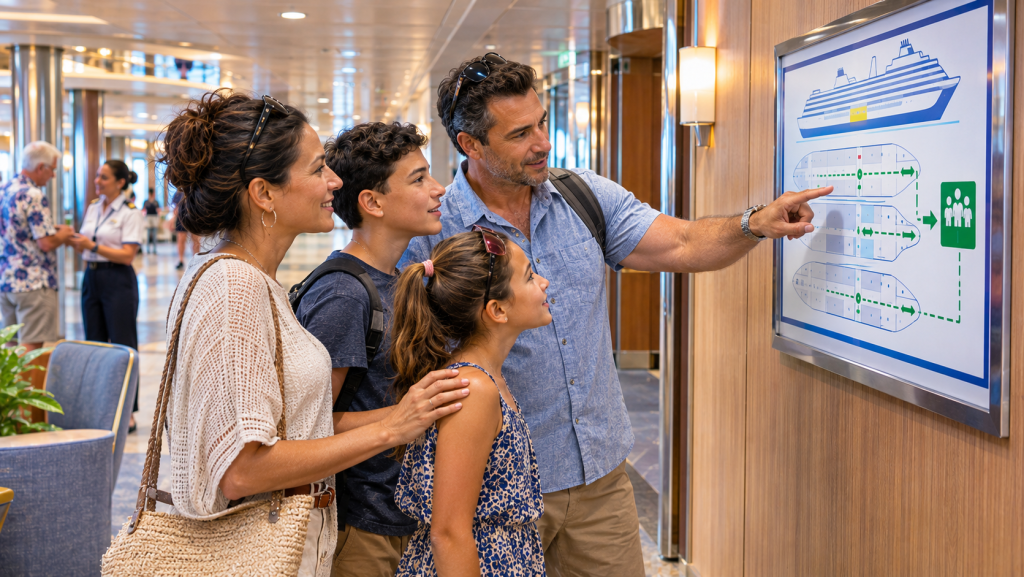
Children may hear an unfamiliar alarm and react to the sound before they understand what’s happening.
Before sailing, explain that the ship’s safety briefing teaches the family where to go and whom to follow if instructions are issued.
Show children the assigned muster station, in language suitable for their age.
Discuss what to do if family members are separated when an incident occurs, using the arrangements supplied by the cruise line.
Passengers who require assistance should confirm that need with the operator rather than assuming their traveling companions will be able to manage every situation.
If you’re sailing with a group, make sure everyone understands that crew instructions take priority over informal plans to meet at a cabin or restaurant.
When Emergencies Affect the Rest of Your Cruise
Some incidents may lead to itinerary changes, delayed arrival times, missed ports, or disruptions to onward travel.
These outcomes aren’t identical, and they don’t automatically result in refunds or compensation.
For instance, a diversion to obtain medical assistance may affect a ship’s schedule even when there is no broader danger to passengers.
If your sailing changes, follow the cruise line’s official announcements and review the specific terms governing your booking.
Travel insurance may cover certain eligible disruptions, but benefits depend on the policy and circumstances.
Airline compensation services shouldn’t be presented as a general solution to cruise emergencies.
Compensation for a flight disruption depends on the airline’s responsibility and applicable passenger-rights rules, not simply on the fact that your cruise itinerary changed.
The immediate priority during a genuine emergency remains following safety instructions, rather than making travel arrangements.
Keep Online Disaster Videos in Perspective Without Dismissing Real Risks
An alarming video can leave a strong impression, particularly when it shows dramatic conditions without explaining the circumstances.
However, it would be misleading to claim that every serious event is merely a harmless exception or that emergency training guarantees nothing will go wrong.
Cruise ships operate within a regulated maritime safety framework, and crews receive emergency training. Those protections matter, but they don’t eliminate every possible risk.
The International Maritime Organization describes passenger-ship safety as an evolving area of regulation, including changes to stability requirements and mandatory passenger muster procedures. (International Maritime Organization — Passenger Ship Safety)
A useful response to frightening online content is to learn the procedures that actually apply to you.

Sail Away to Paradise Without Overpaying
Find cruise deals that make it easy to escape, relax, and enjoy the ocean without stretching your budget
Know your muster station, understand how to recognize official announcements, and listen carefully when crew provide instructions.
You don’t need to interpret every mechanical noise or rehearse dramatic scenarios throughout the voyage.
A first cruise feels much more manageable when you know your role in an emergency, understand the crew’s responsibilities, and recognize that preparation is different from expecting disaster.
How Cruise Muster Drills, Emergency Announcements, and Lifeboat Procedures Work
Worried about cruise ship emergencies after seeing dramatic videos online?
You are not alone.
If you have spent any time on YouTube watching cruise ship “disaster” videos, it is completely understandable if your imagination is running ahead of you.
Big waves.
Dramatic music.
Shaky footage.
Comment sections full of “I’d never cruise again.”
What those videos usually do not show is the bigger truth.
Serious emergencies involving the ship itself are extremely rare.
The dramatic clips are the outliers, edited to hold attention, not to reflect what happens on thousands of normal, uneventful sailings every single year.
Behind the scenes, crews train constantly so that if anything unusual ever does happen, they already know exactly what to do long before passengers even realize something is wrong.
That is why you will sometimes hear alarms or see crew members practicing drills on port days when most guests are ashore.
Those are training exercises, not signs that your ship is in trouble.
Once you understand how emergencies are handled in real life—what a lifeboat drill is, what an emergency muster means, and how the crew is trained—your fear shifts from “I’m on my own out here” to “There is a system, and I know my part in it.”
Why Cruise Emergencies Feel Scarier Online Than They Are In Real Life
When you are on land, you hear about cruises mostly when something unusual happens.
Mechanical issues.
Medical evacuations.
Those stories make news because they are rare, not because they are the rule.
Then you add YouTube and social media on top.
Creators choose the most intense moments they can find, add commentary, and present them in a way that keeps you watching.
They do not show the thousands of cruises where nothing dramatic happens.
They almost never show the boring parts where crew practice, rehearse, and double-check equipment.
Your brain only sees the highlight reel.
It does not see the baseline.
So when you book your first cruise, your mind understandably pulls up those images and asks, “What if that happens to me.”
The answer is that the odds are incredibly low, and even in unusual situations, there are structured steps that trained people follow.
You are not on a floating free-for-all.
You are on a vessel run by a team that treats safety as a daily, practical job.
How Your Brain Gets Fooled By Disaster Clips
Online videos are designed to grab attention, not to give a balanced picture of how safe cruising normally is.
They focus on rare moments and leave out the context that would make those moments feel less terrifying.
Why “Nothing Happened” Cruises Don’t Go Viral
No one uploads a twenty-minute video of a completely smooth sea day with nothing going wrong, even though that is what most cruises actually look like.
Training Is Boring To Watch But Crucial For You
Crew drills, briefings, and equipment checks are not dramatic, but they are a huge part of why real emergencies almost never escalate the way online footage suggests.
How Cruise Ships Actually Prepare For Emergencies
Long before you ever walk up the gangway, the ship’s crew has been practicing for scenarios you will probably never see.
Safety is not something they think about only when something goes wrong.
It is a constant rhythm in their work.
There are written procedures, international rules, and company policies that dictate how often drills must be run, how equipment is maintained, and how crew are certified for their roles.
Every department has a part to play.
Deck officers, engineers, hotel staff, housekeeping, entertainment teams, and medical staff all have assigned duties for different types of emergencies.
They train for fire scenarios.
They train for medical emergencies.
They train for the vanishingly rare case where guests might need to move to muster stations or lifeboats.
You are not expected to know all those details.
You are, however, part of the plan, which is why you have to attend the safety briefing at the beginning of your cruise.
What Is A Lifeboat Drill
A lifeboat drill is a structured practice session where the crew rehearse the steps they would take if they ever had to prepare lifeboats or life rafts.
For passengers, the visible part of this is usually the safety drill on embarkation day, where you learn where to go and how to behave in an emergency.
For crew, it goes much deeper.
They lower lifeboats.
They practice loading and securing them.
They review communication procedures and timing.
These drills happen regularly, even when no passengers are watching.
What Is An Emergency Muster
An emergency muster is the process of gathering passengers at their assigned muster stations if there is an emergency.
Your muster station is your designated meeting point on the ship.
You will see its letter or number on your keycard, on the back of your cabin door, and on ship maps.
During an emergency muster, guests are guided from cabins and public spaces to those specific locations so the crew can account for everyone, give instructions, and move people in an orderly way if further steps are needed.
Why You Might Hear Drills On A Port Day
On some port days, you will stay on board while many passengers go ashore.
You might be reading by the pool or relaxing in a lounge when you suddenly hear alarms or see crew members gathering, wearing vests, carrying equipment, or lowering a lifeboat.
This is usually a crew drill.
The ship uses quieter times to run in-depth training without interrupting guest activities.
Crew may practice launching lifeboats, running internal fire scenarios, or conducting muster procedures with no passenger involvement.
It can look intense, but it is a sign of preparation, not a sign that something is wrong.
Everyday Safety Preparation: Big Picture
Training Happens Whether You See It Or Not
Crew complete regular, mandatory drills that cover everything from fires to lifeboat procedures, long before any issue arises.
Your Muster Station Is Your Anchor Point
Learning where to go in an emergency gives structure and focus to what could otherwise feel chaotic.
Drills Are A Sign Of Readiness, Not Danger
Hearing alarms or seeing crew practice on port days is normal and expected, and it means they are keeping their skills sharp.
Step-By-Step: What Happens If There’s An Emergency At Sea
Now let’s talk about what actually happens if something unusual occurs while you are on board.
Real emergencies do not usually look like a sudden, unexplained announcement telling everyone to panic.
They follow a sequence.
Most of the work happens behind the scenes while you carry on with your day.
1. Detection And Assessment
Every ship has monitoring systems and trained people watching for problems.
It might be a technical alarm in the engine spaces.
It might be a sensor detecting smoke.
It might be a medical call from a guest cabin.
When something appears out of the ordinary, officers and crew assess the situation quickly.
They verify what is happening, where it is happening, and what level of response is needed.
2. Internal Crew Alerts
Once the crew confirm that an issue needs organized attention, they use internal codes and alarms to alert specific teams.
You might hear certain tones or announcements that are clearly labeled for crew.
In many cases, you will not understand the codes, and you do not need to.
They are there to tell different departments how to respond.
While this is happening, the majority of guests keep doing what they are doing.
The goal is always to handle issues quietly when possible.
3. Decisions About Guest Communication
The captain and senior officers decide when and how to inform guests.
If the situation is minor and quickly resolved, you may hear nothing or only a brief update.
If there is a change that affects your experience—such as a medical evacuation that requires slowing the ship or changing course—you may hear a clear, calm announcement explaining what is happening and what you need to do.
Even then, what you usually hear is structured and measured, not dramatic.
4. Emergency Muster, If Needed
In the extremely rare cases where an emergency muster is required, you will hear a specific signal and clear instructions telling you to go to your muster station.
Crew members appear in hallways, stairwells, and public areas to direct traffic.
You would take only essential items like your cruise card, any medication you need, and a light cover-up, and follow the route you learned during the safety briefing.
At your muster station, crew scan your card or check you off a list, account for everyone, and give you instructions.
This is the moment where all that training and those drills matter.
Instead of thousands of people all trying to decide what to do on their own, you are following a rehearsed plan with leaders who practice this regularly.
5. Lifeboat Preparation And Evacuation, In The Rare Worst Case
Actual evacuations into lifeboats are extraordinarily rare, especially on modern ships.
If it ever reached that point, the crew would guide each group step by step.
They would prepare and lower lifeboats, organize loading by section, and use their drill experience to keep people moving in an orderly way.
By the time anything like this happened, you would have received multiple instructions, and the crew would be following procedures they have rehearsed many times.
6. Communication, Care, And Aftercare
During any significant emergency, the crew’s job is not only to solve the technical problem but also to care for guests.
That can mean making announcements, answering questions, providing blankets or water, and offering support to people who are frightened.
If travel plans are affected—such as a medical detour or an unexpected change in port—you may also need help on the logistics side.
This is where planning tools and protections come in.
Having travel insurance from providers like VisitorsCoverage, World Nomads, Ekta, or Insubuy can help you handle covered expenses related to delays, missed flights, or extra hotel nights after a significant disruption.
If an airline problem is involved, services such as Compensair and AirHelp can help you pursue eligible compensation for flight issues, so you are not trying to navigate everything alone.
Emergency Sequence: What To Remember
Most Issues Are Handled Behind The Scenes
The majority of unusual situations never rise to the level of guest-visible emergencies.
If You Need To Act, You Will Be Told How
Announcements and crew instructions are designed to give clear, simple steps, not vague hints.
You Are Part Of A Practiced Plan
If there is ever an emergency muster or evacuation, the crew has already rehearsed their part many times, and your only job is to follow directions.
Avoid Safety Mistakes That Trip Up First-Time Cruisers
First-time cruisers rarely make mistakes on purpose.
They simply do not realize what matters most.
The biggest mistake happens before anything ever goes wrong.
Some guests do not take the safety drill seriously.
They show up physically but do not really listen or look around.
They treat it as a box to tick instead of a moment to learn something important.
Others skip reading the back of the cabin door, where evacuation routes and muster station letters are clearly shown.
They assume they will just “follow the crowd” if something ever happens.
In an unusual situation, not knowing where you are going can create unnecessary stress for you and for the crew trying to organize people.
Mistakes That Make Things Harder
Talking loudly, wandering off, or checking your phone instead of paying attention during the safety drill makes it harder to remember what to do later.
Ignoring crew instructions during a minor incident because you think you know better can slow down the response and put you in more stressful situations than necessary.
Blocking stairwells or crowding elevators during drills or real situations makes movement harder for everyone, especially guests with mobility challenges.
Assuming that a loud alarm always means “panic” instead of listening for the actual instructions can make your mind race ahead of what is really happening.
How To Avoid These Pitfalls
Treat the safety briefing like important information, not background noise.
Look around your muster station and note the route from your cabin so it feels familiar.
If you hear an announcement that sounds serious, pause, listen fully, and follow the instructions rather than filling in the gaps with guesses.
Remember that the crew want things to go smoothly just as much as you do; they are not looking for reasons to make your day more complicated.
Mistakes And Better Choices: Quick Guide
Pay Real Attention Once So You Don’t Have To Guess Later
A few focused minutes at the drill give you confidence you can draw on if anything unusual ever happens.
Follow Crew Instructions Even If You Feel Unsure
They have context you do not have, and their job is to guide you to the safest option, not the most dramatic one.
Keep Pathways Clear And Movements Steady
Being aware of space and staying patient helps everyone, including you, move more smoothly through any procedure.
Overcome Emergency Fears: Reassurance For First-Time Cruisers
Even when you know the odds are low and the crew is trained, it is normal to feel uneasy.
You are far from home.
You are surrounded by water.
You are trusting people you have never met with your safety.
Those feelings are not a sign that you made a mistake by booking a cruise.
They are a sign that your brain is doing its job and checking the exits.
“What If Something Happens And No One Helps Us”
In reality, cruise ships do not operate as isolated islands with no support.
They are in constant communication with ports, coast guards, and maritime authorities.
If something serious happens, there are established ways to request assistance, coordinate rescues, or arrange medical evacuations.
The crew trains specifically so they can bridge the gap between you and those resources until help arrives or the ship reaches a safe port.
“What If I Freeze Or Panic”
You might worry that if an alarm sounded, you would not know what to do or would panic and forget everything.
That is part of why procedures are simple and repeated.
Muster station letters.
Clear routes.
Straightforward instructions like “proceed to your muster station” or “remain where you are and await further instructions.”
Even if your heart races, having practiced once and knowing there are crew in every hallway makes it far easier to take the next step.
“What If It’s Like The Videos I Saw Online”
Most of the time, it is not.
The videos you have seen are edited slices from rare events, often filmed from one person’s perspective in a moment of peak stress.
They do not show the full picture.
They do not show the quiet, competent work happening in control rooms, on the bridge, and in crew stations.
Reminding yourself that those clips are exceptions—not the baseline—helps your mind put them in perspective.
“What If Something Goes Wrong With My Travel Because Of An Emergency”
Sometimes, the impact of an incident is not about physical safety but about logistics.
Maybe the ship has to reroute to a different port.
Maybe you miss a connecting flight.
Maybe you need an unexpected hotel night on land.
That is where planning tools and protections earn their keep.
Travel insurance from providers like VisitorsCoverage, World Nomads, Ekta, or Insubuy can help with covered costs related to delays, missed connections, or changes to your itinerary.
Airline-focused tools such as Compensair and AirHelp can help you pursue eligible compensation if flight disruptions are involved.
Knowing you have that backup in place makes it easier to focus on your well-being and your loved ones instead of staring at your wallet.
Emotional Reassurance You Can Carry On Board
Serious Ship Emergencies Are Exceptionally Rare
The stories that make headlines do so precisely because they are unusual, not because they are expected.
You Are Not Expected To Be The Expert
Your job is to listen, follow directions, and move steadily.
The crew’s job is to handle the technical details.
Preparation Turns Fear Into A Plan
Knowing your muster station, paying attention at the drill, and having travel protection in place gives your worry somewhere productive to go.
FAQ – What Happens During a Cruise Ship Emergency and How Should First-Time Cruisers Respond?
FAQ – What Happens if There Is an Emergency on Your First Cruise?
The ship’s crew assesses the situation and follows the emergency procedures appropriate to the incident.
Depending on the circumstances, passengers may receive announcements, instructions to avoid particular areas, or directions to proceed to their muster stations.
Not every emergency requires passengers to assemble or abandon ship.
Your responsibility is to listen to official instructions and follow the directions given by authorized crew.FAQ – Are Serious Cruise Ship Emergencies Common?
Major ship emergencies aren’t part of routine cruising, but their frequency should not be described using invented percentages or unsupported claims.
Cruise ships operate under international safety requirements and carry lifesaving equipment appropriate to their operations.
Crews also undertake regular emergency training.
Those protections reduce risks but don’t guarantee that an accident or serious incident cannot happen.FAQ – What Is a Muster Drill on Your First Cruise?
A muster drill is a mandatory passenger safety exercise that introduces you to your assigned assembly location and important emergency instructions.
Depending on the cruise line, you may complete instructional components through an app, television, or in-person briefing.
Some operators also require you to report to your assigned station for verification.
Follow the complete process specified for your actual sailing.FAQ – What Is the Difference Between a Muster Drill and an Emergency Muster?
A muster drill is a planned safety exercise conducted to familiarize passengers with emergency procedures.
An emergency muster is an actual instruction for passengers to assemble at designated locations because of a developing situation.
Both involve the ship’s assigned muster stations, but their purposes are different.
During an emergency, follow the announcements and directions issued by the crew rather than assuming the experience will be identical to the practice drill.FAQ – What Is a Lifeboat Drill on a Cruise Ship?
A lifeboat drill is an exercise in which designated crew members practice aspects of operating lifesaving equipment.
Depending on the training requirements, that may include preparing boats, practicing assigned duties, and using launch or recovery equipment.
Passengers generally aren’t responsible for carrying out these technical tasks.
Their preparation focuses on the safety briefing, muster location, lifejacket instructions, and following crew directions.FAQ – Do You Have to Complete a Muster Drill Before Your First Cruise Departs?
Passenger muster is a mandatory safety requirement governed by applicable maritime regulations.
Under SOLAS, newly embarked passengers on voyages lasting more than 24 hours must muster before or immediately upon departure.
Individual operators may use different approved methods for completing the process.
Follow your cruise line’s instructions and confirm that you’ve completed every required step.FAQ – How Do You Find Your Muster Station on a Cruise Ship?
Your assigned muster station should be identified in the safety information supplied by your cruise line.
Depending on the ship, the location may appear on your cruise card, in the app, or in the emergency instructions posted in your cabin.
Verify the station assignment and route during embarkation.
Ask a crew member if you have any uncertainty about where you are expected to assemble.FAQ – Is Your Muster Station Always Beside a Lifeboat?
No, a muster station isn’t necessarily located directly beside a lifeboat.
Depending on the ship’s approved arrangements, your station may be inside a lounge, theater, or another designated assembly area.
The purpose is to provide an organized location for passenger instructions and accountability.
Follow your assigned station information rather than trying to identify a lifeboat independently.FAQ – What Does the Cruise Ship General Emergency Alarm Sound Like?
The general emergency alarm is conventionally seven or more short blasts followed by one long blast.
However, ships may also use announcements and other signals for particular operational or emergency situations.
Learn the signals described in your vessel’s safety briefing.
When an alarm sounds, listen for the instructions that accompany it and follow authorized crew directions.FAQ – Does Hearing an Emergency Alarm Mean the Cruise Ship Is Sinking?
No, an alarm by itself doesn’t establish that a ship is sinking or that an evacuation will occur.
Different incidents can trigger alerts, and some sounds may be associated with announced training exercises.
The correct response depends on the ship’s emergency procedures and the instructions being issued.
Don’t ignore an unfamiliar alarm or immediately assume the worst; listen carefully and follow the crew’s directions.FAQ – Why Do Cruise Ships Conduct Crew Drills While Passengers Are Onboard?
Crew must remain familiar with their assigned emergency responsibilities throughout the voyage.
Ships may conduct exercises involving firefighting, lifesaving equipment, medical responses, and other operational scenarios.
Some training occurs while passengers are aboard, including during port calls.
If you see or hear an exercise, rely on official announcements to confirm what is happening rather than assuming any alarm is automatically a drill.FAQ – What Should You Do if an Emergency Announcement Happens at Night?
Wake up, listen carefully, and follow the instructions provided through the ship’s emergency communication system.
Don’t assume you must return to your cabin, collect belongings, or proceed to a lifeboat unless instructed.
Use the designated route if directed to your muster station and ask crew for help when necessary.
Passengers with assistance needs should follow the arrangements established for their particular sailing.FAQ – Should You Put on a Lifejacket When an Alarm Sounds?
Follow the lifejacket instructions provided during the ship’s muster briefing and any directions issued during the incident.
The correct response can depend on where lifejackets are stored and what passengers are instructed to do.
Don’t return to your cabin to retrieve equipment if the crew directs you elsewhere.
Ask an authorized crew member for assistance if you are unsure how to use the equipment provided.FAQ – What Happens When Passengers Arrive at Their Muster Stations?
Designated crew members organize arriving passengers and provide instructions appropriate to the situation.
The ship may use a method of accounting for guests, such as checking attendance or scanning identification.
Passengers may be told to remain assembled, move elsewhere, or return to their activities when the situation permits.
Follow the instructions given at the station rather than independently deciding when to leave.FAQ – Does Going to a Muster Station Mean You Will Have to Board a Lifeboat?
No, emergency muster and abandoning ship are separate stages of emergency response.
A muster can help crew account for passengers and communicate instructions without involving lifeboat boarding.
Abandon-ship procedures would occur only when authorized by the ship’s command.
Passengers should never attempt to board or launch lifesaving equipment without instructions.FAQ – Are Cruise Ship Crews Trained to Handle Emergencies?
Cruise ship crew members receive training associated with their duties and relevant maritime safety requirements.
Personnel assigned emergency responsibilities must understand their tasks, and ships conduct regular drills to maintain preparedness.
The specific training differs according to each employee’s role.
Passengers aren’t expected to perform the crew’s technical duties but must follow the official instructions that support the response.FAQ – How Are Children Helped During a Cruise Ship Emergency?
Cruise lines establish emergency procedures for assisting and accounting for passengers, including children.
The specific arrangements may depend on the ship, the child’s location, and whether they are participating in a supervised youth activity.
Families should review those procedures before departure and explain the muster instructions in age-appropriate language.
Don’t assume every cruise line uses an identical family reunification process.FAQ – What if You Have Mobility Limitations During a Cruise Ship Emergency?
Passengers with mobility limitations or other assistance requirements should contact the cruise line before departure to discuss available arrangements.
During embarkation, confirm any ship-specific emergency assistance procedures and instructions.
Elevator use, evacuation routes, and designated assistance locations may differ from normal passenger movement.
Follow the crew’s directions rather than assuming your everyday route will remain available during an emergency.FAQ – Can a Cruise Emergency Cause Missed Ports or Travel Delays?
Yes, a significant incident or necessary operational response may affect a cruise itinerary or arrival schedule.
The consequences can include changed ports, delayed flights, additional accommodation needs, or other travel adjustments.
Refunds, compensation, and insurance benefits depend on the circumstances and applicable terms.
Follow the cruise line’s official updates and review your booking and coverage documents before assuming a particular financial outcome.FAQ – How Can You Prepare for Cruise Emergencies Without Worrying Throughout Your Vacation?
Complete your required safety briefing and confirm your assigned muster station early in the voyage.
Learn the ship’s emergency signals, follow the posted route information, and discuss relevant arrangements with your traveling companions.
If an unexpected situation occurs, listen to announcements and follow the directions of authorized crew.
Those habits give you a practical role without requiring you to spend your first cruise anticipating every possible emergency.
Plan Your Next Cruise!

Discover Regent Seven Seas Cruises: Opulent Suites, Gourmet Dining, and Exclusive Destinations
One Delay Can Cost Your Entire Cruise A quick coverage check now protects you from the problems no one sees coming….
Discover Princess Cruise Line: Elegant Ships, Immersive Voyages, and World‑Class Experiences
One Delay Can Cost Your Entire Cruise A quick coverage check now protects you from the problems no one sees coming….
Experience the Ultimate Vacation with Carnival Cruise Line’s Fun Ships, World‑Class Entertainment, and Relaxation
One Delay Can Cost Your Entire Cruise A quick coverage check now protects you from the problems no one sees coming….
From Icon to Oasis: Explore Royal Caribbean’s Groundbreaking Ships and Unforgettable Voyages
One Delay Can Cost Your Entire Cruise A quick coverage check now protects you from the problems no one sees coming….
Explore More
Sail Without Limits: Wheelchair‑Accessible Cruise Ships That Deliver Comfort and Independence

Stay Warm Safely: Cruise Heating Pad Rules, Safety Checks, and Packing Tips
Stay Safe on Your Voyage: What Cruise Ship Doctors Can Do for You