One Delay Can Cost Your Entire Cruise
A quick coverage check now protects you from the problems no one sees coming.
Short Excerpt
- Cruise safety drills are more than a boarding requirement because they show you where to go and what to expect if an emergency occurs.
- During hurricane season, that familiarity can replace uncertainty with a clear understanding of how the ship and crew are prepared to respond.
- Knowing the routine also makes weather announcements and unexpected itinerary changes easier to process without assuming the ship is in immediate danger.
Quick Take
- Muster drills identify your emergency station, basic procedures, and the instructions you would follow if the crew needed passengers to respond.
- Many ships now use e-muster systems that combine digital safety instruction with an individual visit to your assigned station.
- Cruise lines monitor developing storms and can reroute ships well before dangerous weather reaches the planned course.
- Crew members train repeatedly for emergencies, making the passenger drill one visible part of a much larger safety system.
- Treating the drill as preparation rather than a warning can make hurricane-season cruising feel far less intimidating.
Why Cruise Safety Drills Should Make You Feel More Confident at Sea
Every traveler remembers their first cruise safety drill — the announcement over the loudspeakers, the buzz of movement as passengers gather at muster stations, and the quiet realization that this is serious business.
For some, it’s reassuring. For others, especially first-time or anxious cruisers, it can be unnerving.
But when you understand what these drills truly represent — a deep, coordinated safety culture designed to protect every person onboard — it changes everything.
Especially during hurricane season, when storm headlines can heighten nerves, knowing exactly how these systems work brings clarity and confidence.
This isn’t about memorizing safety card instructions.
It’s about understanding why cruise safety drills exist, how they’re executed, and how they fit into storm-season readiness.
By the end, you’ll see drills not as reminders of risk, but as proof of how committed cruise lines are to your well-being.
Understand the True Purpose of Cruise Safety Drills
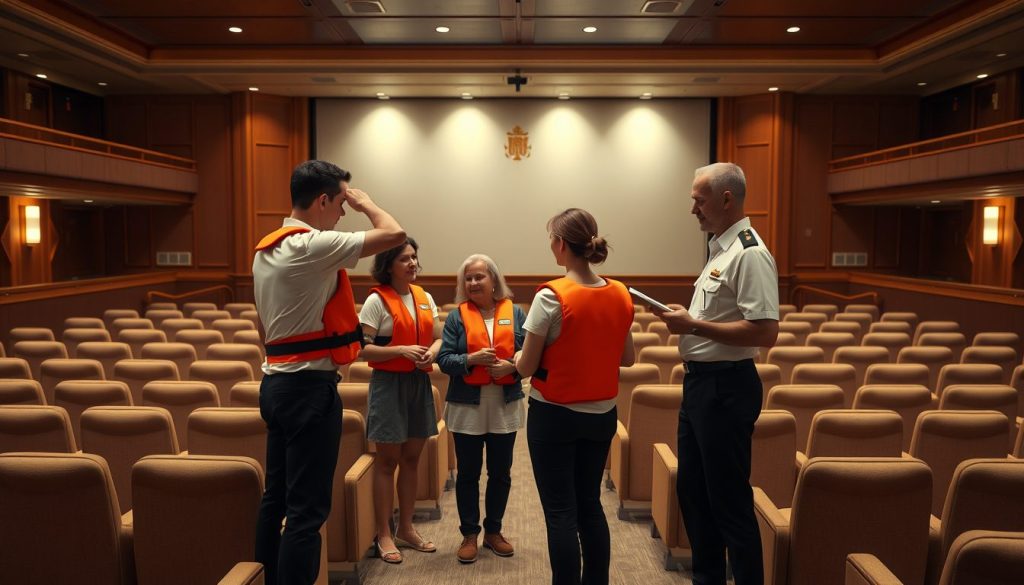
Many new passengers view safety drills as a formal requirement — something the ship must do before setting sail.
While that’s technically true (they’re mandated under SOLAS — Safety of Life at Sea regulations), their deeper purpose is much more reassuring: to make sure you and every traveler can respond calmly and confidently if the unexpected ever happens.
Every modern cruise line, from Royal Caribbean to Princess to Norwegian, runs these drills within the first few hours after boarding.
They’re carefully designed rehearsals, led by trained crew members, to show you where to go, what to bring, and how to act if the captain ever announces a real emergency.
During hurricane season, these drills serve another function — they help passengers feel grounded.
Once you’ve physically located your muster station (the designated safety area where guests gather during emergencies), it removes that “what if?” anxiety that fuels storm-related worry.
Online‑Only Cruise Offers You Won’t Find Elsewhere
Unlock special pricing and start planning the sailing that matches your perfect itinerary
Feel Secure: Why Cruise Safety Drills Calm Storm Anxiety
Storms are unpredictable, but routine is stabilizing.
Cruise drills are the same across ships, ports, and oceans — a ritual of reassurance that everything onboard follows a practiced rhythm.
The familiarity itself is calming.
And while hurricanes may sound intimidating, they rarely pose direct threats to ships.
Captains reroute long before any system gets close.
Drills simply ensure that, in the unlikely event of sudden weather changes or rerouting, everyone onboard already knows the choreography of safety.
Step Inside: What Happens During a Cruise Safety Drill
If you’ve never sailed before, here’s what to expect.
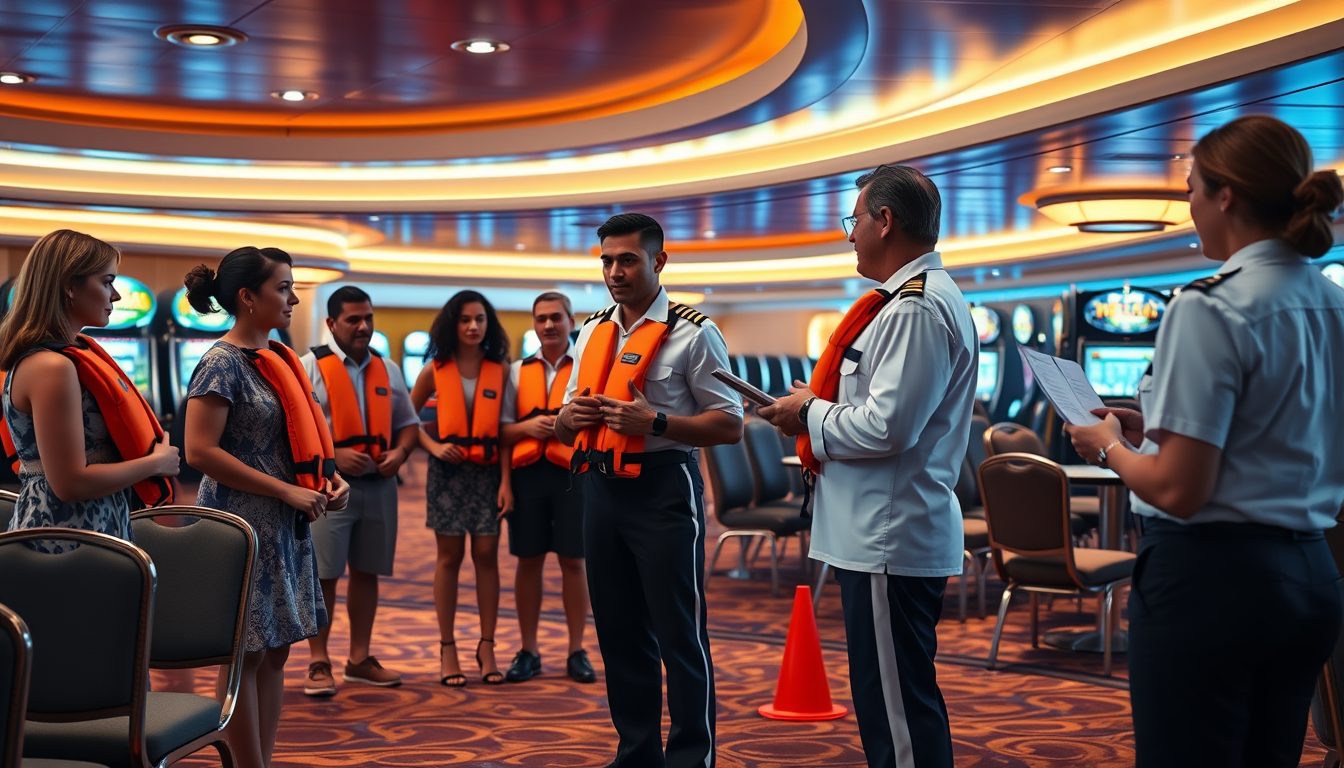
You’ll hear an announcement inviting all guests to their assigned muster stations.
Your cabin key or cruise app lists your muster location — typically on an open deck or near lifeboats.
Crew members stand along corridors and stairways, guiding guests the entire way.
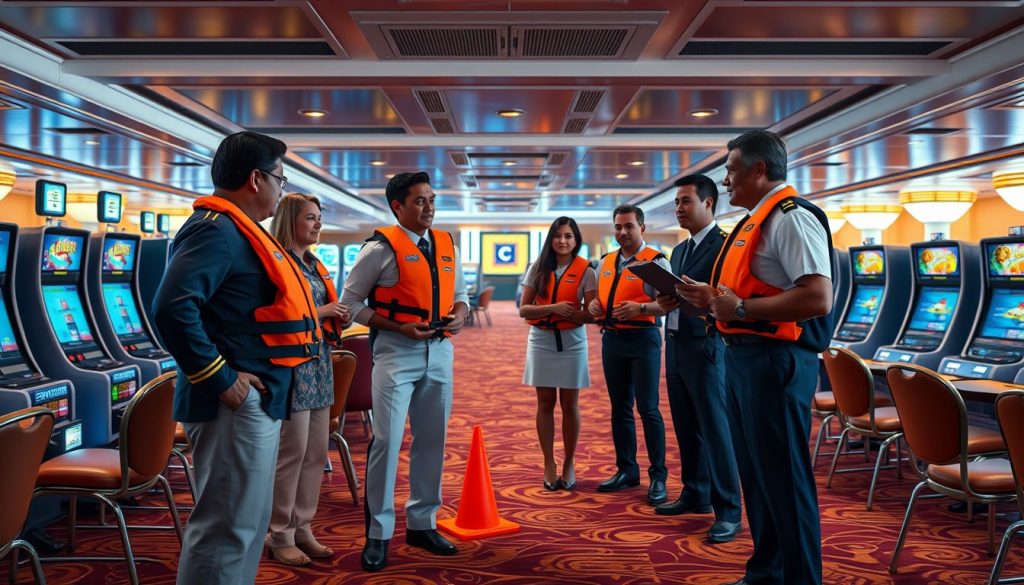
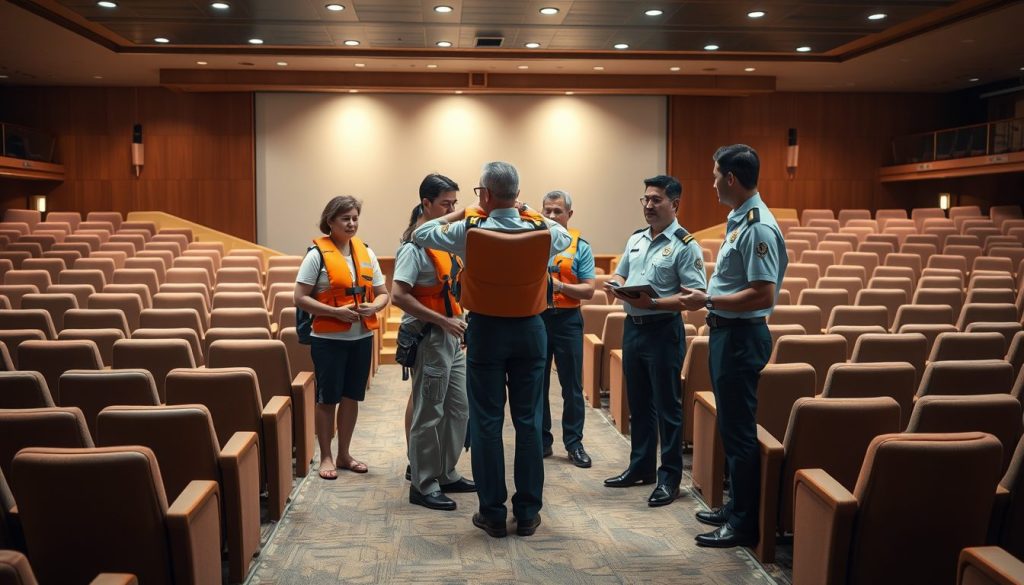
Once everyone arrives, the crew demonstrates how to properly wear a life jacket, identifies emergency exits, and explains how communication would work during a real alert.
Explore the Modern E-Muster System for Safer Sailing
Post-2020, many cruise lines introduced “e-muster” or digital muster drills.
Instead of gathering en masse, you watch a safety video on your TV or smartphone, then check in at your muster station individually.
This system reduces crowding and allows passengers to absorb safety info calmly.
During hurricane season, this modernization has another advantage: it allows faster re-confirmation if conditions change.
Should a storm unexpectedly alter plans, the crew can quickly repeat or update drills for clarity without disrupting guests.
Key Comfort Points Every Cruiser Should Remember
1. Drills aren’t about fear — they’re about familiarity. The more you know, the calmer you feel.
2. Every crew member knows their role by heart. You’re surrounded by professionals trained to respond to any situation.
3. Once you complete the drill, you’re prepared — not scared. It’s the moment you become part of the ship’s safety rhythm.

Sail Away to Paradise Without Overpaying
Find cruise deals that make it easy to escape, relax, and enjoy the ocean without stretching your budget
How Cruise Safety Drills Strengthen Hurricane Season Readiness
When hurricanes make headlines, cruise lines activate some of the most detailed logistical planning in the travel industry.
Every vessel has an emergency operations center on land and an onboard team that monitors developing systems around the clock.
Safety drills integrate directly into that protocol.
They ensure that if a storm’s outer bands cause rerouting, every passenger and crew member already knows where to go and what to expect if communication protocols shift.
Think of it as emotional muscle memory.
You’ve rehearsed once, so if the captain ever needs to make an announcement during turbulent weather, you already understand what’s happening and why.
That knowledge removes the shock factor.
Why Cruise Safety Drills Matter Most During Hurricane Season
Storms don’t just test ships; they test people’s emotions.
Anxiety spikes when uncertainty appears.
Cruise drills counter that by giving passengers a clear script — one that turns chaos into structure.
During active storm monitoring, captains might make preemptive safety announcements — not because danger is imminent, but because transparency builds trust.
You’ll often hear updates like, “We’re adjusting our course 200 miles west to maintain smooth sailing.”
That’s your cue that the systems you practiced in the drill are working exactly as designed: safety first, comfort second.
Inside Crew Training: The Hidden Strength Behind Passenger Safety
Safety drills are only the visible tip of a massive iceberg of preparation.
Behind the scenes, the ship’s officers and crew undergo months of training every year — far exceeding maritime legal requirements.
Bridge officers use storm simulators that replicate real hurricane conditions, allowing them to practice navigation adjustments and communication timing under pressure.
Every department, from engineering to hospitality, participates in onboard emergency role drills multiple times a week — even when guests never notice.
Top Cruise Deals From Trusted Cruise Lines
Compare exclusive online offers and find the fare that fits your trip and your budget
Crew Readiness Rituals That Keep Passengers Protected
1. Daily briefings: Officers review updated weather reports, including satellite feeds from the National Hurricane Center and private maritime systems.
2. Emergency signal tests: Shipwide communication systems are tested regularly to ensure full functionality.
3. Evacuation practice: Crew-only lifeboat drills occur multiple times each cruise to keep readiness sharp.
When a storm system appears anywhere in the Caribbean or Atlantic, those procedures activate automatically.
Ships reroute early — often hundreds of miles from potential paths — long before passengers sense any change.
This is why, even in hurricane season, cruise safety records remain exceptional.
Ships are designed to avoid storms, not ride them out.
How Passengers Can Mentally Prepare for Smooth Sailing
Understanding the logic behind safety drills is empowering, but you can take that reassurance further by preparing your mindset before you even board.
Turn Cruise Safety Drills Into Confidence-Building Moments
When the crew leads the safety demonstration, treat it like your personal practice of calm.
Look around, observe the orderliness, and remind yourself that every person around you is part of a team — a unified, prepared community.
Carry that same mindset through the rest of the trip.
Each time you hear routine announcements or see crew members double-checking equipment, let that serve as a reminder of the invisible network of care surrounding you.
Small Steps That Ease Anxiety Before and During Your Cruise
1. Visit your muster station early. Familiarity builds comfort.
2. Keep your key documents in a small, waterproof pouch. A sense of control reinforces calm.
3. Download your cruise line’s app. It’s where weather updates and safety notices appear first.
4. Review your travel insurance. Brands like VisitorsCoverage, EKTA, Insubuy, and World Nomads provide peace of mind by covering interruptions, rerouting, or emergency medical needs that arise from severe weather.
When the Captain Announces a Storm Reroute: What It Means for You
One of the most anxiety-triggering moments for nervous travelers is when the captain makes an unexpected weather announcement.
But that’s actually one of the most reassuring moments you can experience at sea.
Why? Because it shows the ship is proactively avoiding discomfort or danger.
It’s the visible part of the massive safety system at work.
When a reroute happens, the onboard safety framework — including everything practiced in the drill — becomes the backbone of smooth adjustment.
Crew communication protocols, PA systems, and even emergency lighting are tested and maintained precisely for moments like this.
What You’ll Likely Experience During a Storm Reroute
You’ll hear an announcement such as, “We’re adjusting course to stay clear of developing weather.”
Then, normal operations continue. Entertainment, dining, and activities adapt seamlessly.
The safety drill you completed ensures that every passenger onboard knows where to go and every crew member knows what to do — if it ever became necessary to regroup or secure certain areas.
In most cases, it never will. But the routine itself removes uncertainty, which is the heart of anxiety.

Luxury Cruise Experiences at Smarter Prices
See premium sailings and upgraded cabins priced for travelers who know how to book well
The Psychological Power of Routine Cruise Safety Drills
Here’s a fascinating truth about human behavior: repetition reduces fear.
When your mind sees a process repeated — calmly, predictably, and efficiently — it starts to associate that process with control, not chaos.
That’s exactly what safety drills accomplish.
You may go through one drill, but crew members go through dozens throughout their contracts.
Their muscle memory becomes your emotional buffer.
If a storm builds, that routine multiplies your peace of mind.
You’re part of a floating community that’s not improvising; it’s executing a practiced plan.
Reassuring Takeaways That Build Confidence at Sea
1. Safety isn’t reactive — it’s built-in. Ships prepare before weather exists.
2. Calm is contagious. When you see crew members acting with poise, mirror it.
3. Preparation transforms panic into presence. Knowing the plan frees your mind to focus on the experience.
In Case of Emergency: How Cruise Protocols Protect You
It’s natural to wonder, “What if?”
The good news is that true emergencies are exceedingly rare in modern cruising.
But even in that improbable event, every action you’ve practiced during the drill becomes second nature.
Evacuation protocols are designed for efficiency and calm.
Muster station officers conduct roll calls, life jackets are distributed, and lifeboats are deployed in precise, pre-assigned order.
Layers of Safety Redundancy That Keep You Protected
1. Multiple power systems: Ships can operate on secondary engines if one fails.
2. Communication overlaps: Internal PA, handheld radios, and satellite links ensure no breakdown in command.
3. Weather bypass technology: Advanced radar helps ships maintain wide safety margins from storm centers.
Understanding these redundancies is comforting — it shows that ships don’t rely on luck. They rely on layers of control.
Families and Safety Drills: How to Keep Kids Calm and Confident
For parents, drills can be both a teaching moment and an anxiety check-in.
Children often take cues from adult reactions.
If you treat the drill as routine — even fun in a “look how prepared we are” way — kids internalize calm instead of fear.
Cruise lines often run kid-friendly versions of safety briefings through youth clubs, turning instructions into games or story-based learning.
This approach helps children understand safety without overwhelm.
If your family is traveling during hurricane season, take five minutes before the cruise to explain that storms happen far away and the ship knows how to move around them.
That single conversation can make a world of difference in how everyone reacts onboard.
Why Cruise Safety Records Inspire Confidence Every Season
It’s worth emphasizing this: in the modern cruise era, serious storm incidents involving passengers are virtually nonexistent.
Ships reroute constantly during hurricane season — not as a response to danger, but to maintain comfort.
Cruise lines coordinate with maritime authorities, meteorologists, and port agencies daily.
When a storm forms, the captain’s primary objective is to keep guests as far as possible from its projected path.
Safety drills, therefore, are part of a larger system that keeps cruising among the safest vacation experiences on the planet.
You’re statistically far more likely to experience a flight delay than a cruise emergency.
Sailing Into Confidence: Your Cruise Safety Promise
When you step onboard during hurricane season, the safety drill you participate in is more than compliance — it’s your personal orientation to confidence.
Every demonstration, every instruction, every crew member’s calm voice is part of a rehearsed promise: that your well-being is never left to chance.
Next time you hear that muster signal or see the crew running through their checks, take a deep breath and remind yourself — this is what safety looks like.
Predictable.
Practiced.
Proven.
You’re in good hands.
FAQ – How Do Cruise Safety Drills Really Protect Me During Hurricane Season?
What Is the Real Purpose of Cruise Safety Drills When I Sail During Hurricane Season?
Cruise safety drills exist to make sure every passenger can respond calmly and correctly if something unexpected happens, especially when storms are being monitored.
They are mandated under SOLAS regulations, but in practice they function as rehearsals that show you where to go, what to bring, and how to move if the captain ever issues an emergency announcement.
During hurricane season, that familiarity matters because it replaces vague “what if?” worry with a clear script you’ve already walked through, so your reactions are guided by practice rather than panic.What Actually Happens During a Traditional Muster Drill on a Cruise Ship?
In a traditional muster drill, you hear an announcement directing everyone to their assigned muster stations, which are listed on your cabin key or in the cruise app.
Crew members line corridors and stairways, guiding you to an open deck or area near lifeboats, where they demonstrate how to wear a life jacket, point out exits, and explain how communication would work in a real alert.
Experiencing that process once makes the ship’s layout and emergency choreography feel familiar, so if weather or other factors ever require quick action, you already know the route and routine.How Does the Modern E-Muster System Change My Experience of Safety Drills?
The e-muster system replaces large group gatherings with a digital briefing followed by an individual check-in at your muster station.
You watch a safety video on your cabin TV or smartphone, then visit your muster location to confirm you understand the procedures.
This approach reduces crowding, lets you absorb information at your own pace, and makes it easier for the crew to repeat or update instructions if hurricane-season conditions shift, so safety communication stays clear without disrupting the rest of your day.In What Ways Do Safety Drills Connect to The Ship’s Hurricane-Season Planning and Rerouting Decisions?
Safety drills are woven into the broader storm-readiness system that includes land-based emergency operations centers and onboard teams monitoring weather around the clock.
When a storm’s outer bands prompt a reroute, the drill you completed ensures passengers already know where to gather and how communication will unfold if the captain needs to adjust plans.
That integration turns rerouting from a confusing surprise into a managed transition, where both crew and guests follow a practiced pattern instead of improvising under stress.What Kind of Training Do Crew Members Receive to Make These Drills So Effective During Storm Months?
Crew members undergo extensive, recurring training that goes far beyond minimum maritime requirements, including storm simulators for bridge officers and frequent emergency role drills for every department.
They practice lifeboat deployment, communication timing, and evacuation procedures multiple times each cruise, often without passengers noticing.
This constant rehearsal builds muscle memory so that, if a hurricane system appears anywhere near the ship’s region, the crew can act decisively and consistently, giving you the benefit of a well-practiced safety framework rather than ad‑hoc reactions.How Can I Use the Safety Drill Itself to Reduce My Own Anxiety About Storms at Sea?
You can treat the drill as a personal exercise in calm rather than a reminder of danger.
Paying attention to the orderliness of crew movements, the clarity of instructions, and the way passengers are guided step by step helps your mind associate the process with control and structure.
Carrying that perspective into the rest of the cruise—seeing routine announcements and equipment checks as signs of a prepared community—turns the drill into a mental anchor you can recall whenever storm headlines or reroute notices make you uneasy.What Practical Steps Before and During the Cruise Help Me Feel More Prepared for Any Weather-Related Announcements?
Visiting your muster station early, keeping key documents in a small waterproof pouch, and downloading your cruise line’s app are simple steps that increase your sense of control.
The app is usually where weather updates and safety notices appear first, so being comfortable with it reduces uncertainty when the captain announces a course adjustment.
Pairing these logistics with a basic understanding of the drill procedures means that, if a storm prompts a reroute, you already know both the physical path and the information channels you’ll rely on.How Should I Interpret a Captain’s Announcement About Adjusting Course for Developing Weather?
When the captain announces a course change, it typically signals proactive avoidance rather than imminent danger.
You might hear something like, “We’re adjusting our route to stay clear of developing weather,” followed by normal continuation of dining, entertainment, and activities.
The safety drill you completed underpins that moment: it confirms that if conditions ever required more structured movement, everyone already knows the plan.
Understanding that reroutes are part of a deliberate safety strategy helps you see these announcements as evidence of systems working, not as a sign that things are out of control.How Can Families Use Safety Drills to Keep Children Calm and Confident During Hurricane Season Sailings?
Families can frame the drill as a routine check that shows how prepared everyone is, rather than as something scary.
Children tend to mirror adult reactions, so treating the muster as normal and even slightly curious—“Let’s see where our special meeting place is”—helps them internalize calm.
Many cruise lines reinforce this by offering kid-friendly briefings through youth clubs, turning instructions into simple stories or games; combining that with a short pre‑cruise conversation about how ships move around storms gives children a clear, reassuring narrative to hold onto.What Role Does Travel Insurance from Brands Like VisitorsCoverage, EKTA, Insubuy, Or World Nomads Play Alongside Safety Drills?
Travel insurance from providers such as VisitorsCoverage, EKTA, Insubuy, and World Nomads complements onboard safety drills by protecting the financial side of storm-related disruptions.
While drills and crew training focus on physical safety and orderly response, insurance can cover trip interruption, rerouting costs, and emergency medical needs if severe weather affects your plans.
Reviewing coverage before you sail turns potential logistical chaos—missed connections, extra hotel nights, altered itineraries—into manageable scenarios with clear recourse, so both your well-being and your budget are supported if hurricane-season conditions change.
Plan Your Next Cruise!

From Icon to Oasis: Explore Royal Caribbean’s Groundbreaking Ships and Unforgettable Voyages
One Delay Can Cost Your Entire Cruise A quick coverage check now protects you from the problems no one sees coming….

Experience the Perfect Blend of Disney Magic, Luxury Cruising, and Family Adventure at Sea
One Delay Can Cost Your Entire Cruise A quick coverage check now protects you from the problems no one sees coming….

Discover Silversea Cruises: Ultra‑Luxury Voyages to the World’s Most Exclusive Destinations
One Delay Can Cost Your Entire Cruise A quick coverage check now protects you from the problems no one sees coming….

Unlock The Viking Ocean Experience: Elegant Ships, Cultural Immersion, And Unrushed Travel
One Delay Can Cost Your Entire Cruise A quick coverage check now protects you from the problems no one sees coming….
Explore More
Avoid Drone Confiscation: Master Cruise Line Rules and Fly Legally at Every Port
Avoid Vacation Regret: Pick The Right Cruise Line For Your Destination, Budget, And Travel Style
Discover Regent Seven Seas Cruises: Opulent Suites, Gourmet Dining, and Exclusive Destinations