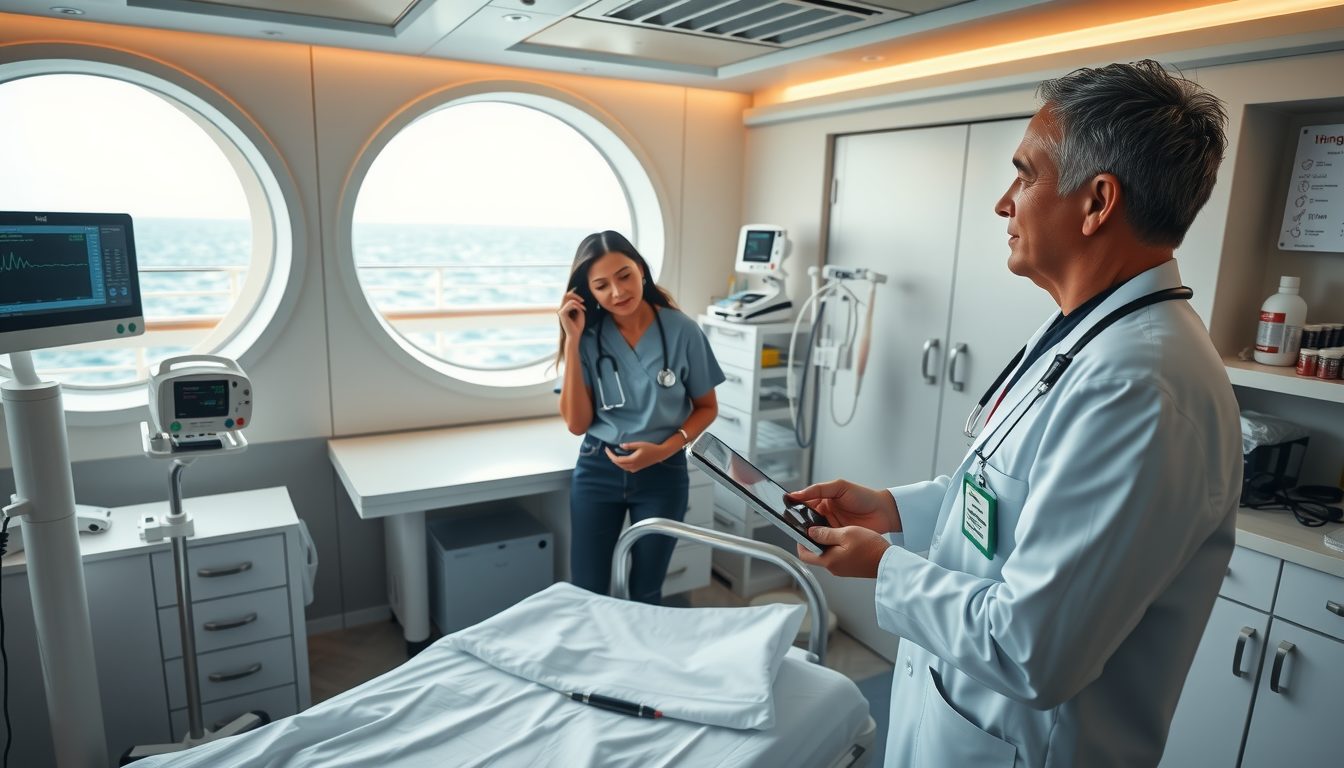
One Delay Can Cost Your Entire Cruise
A quick coverage check now protects you from the problems no one sees coming.
Short Excerpt
- Cruise medical centers are equipped to handle far more than seasickness, including injuries, dehydration, infections, and other urgent problems.
- During hurricane season, medical teams coordinate with ship officers, shore hospitals, and rescue services so care can continue even when routes change.
- Knowing what happens onboard can make medical concerns feel much more manageable before you sail.
Quick Take
- Cruise ships carry licensed medical professionals, diagnostic equipment, medications, and emergency treatment capabilities.
- Medical centers continue operating during rough weather and storm-related rerouting.
- Serious cases can be coordinated with telemedicine specialists, nearby hospitals, or emergency evacuation services.
- Travel insurance with medical evacuation and severe-weather coverage can protect against potentially high costs.
- Keep essential medications, insurance information, and emergency contacts easy to access throughout the cruise.
How Cruise Medical Teams Protect You During Hurricane Season
Cruising during hurricane season can feel risky—but safety is never left to chance.
Every ship’s medical team trains relentlessly to manage emergencies with precision and calm.
When you’re sailing into the heart of hurricane season, peace of mind begins with knowing what happens if something goes wrong.
Stormy seas can heighten nerves, especially for travelers worried about medical emergencies while surrounded by ocean.
But today’s cruise ships are not only built to withstand tropical weather—they’re equipped with advanced medical facilities and professional teams prepared for nearly any situation.
Understanding how these onboard medical systems function during hurricane season can replace anxiety with confidence and clarity.
Cruise lines take passenger safety seriously, and that commitment extends well beyond sturdy hulls and stabilizers.
Medical readiness has become a defining part of modern cruising.
Whether it’s managing seasickness, treating a minor injury, or responding to a rare emergency during rerouting from a storm, onboard medical staff are trained, licensed, and ready.
If you’ve ever hesitated to book a cruise during hurricane season because of “what if” scenarios, this guide will calm those doubts and show how cruise ships are designed to protect, treat, and reassure you at every stage of your journey.
Inside Cruise Medical Readiness: How Ships Prepare for Hurricane Season
The medical centers on today’s cruise ships are closer to small hospitals than you might expect.
They’re built to handle most non-critical emergencies with a combination of advanced equipment, experienced doctors, and 24-hour availability.
When hurricane season arrives, cruise lines elevate those preparations.
Medical facilities are restocked with additional supplies, staffing levels are reviewed, and coordination with shoreside hospitals is tightened.
Cruise lines understand that rerouting is common in rough-weather months, and they ensure continuity of care no matter the location.
Online‑Only Cruise Offers You Won’t Find Elsewhere
Unlock special pricing and start planning the sailing that matches your perfect itinerary
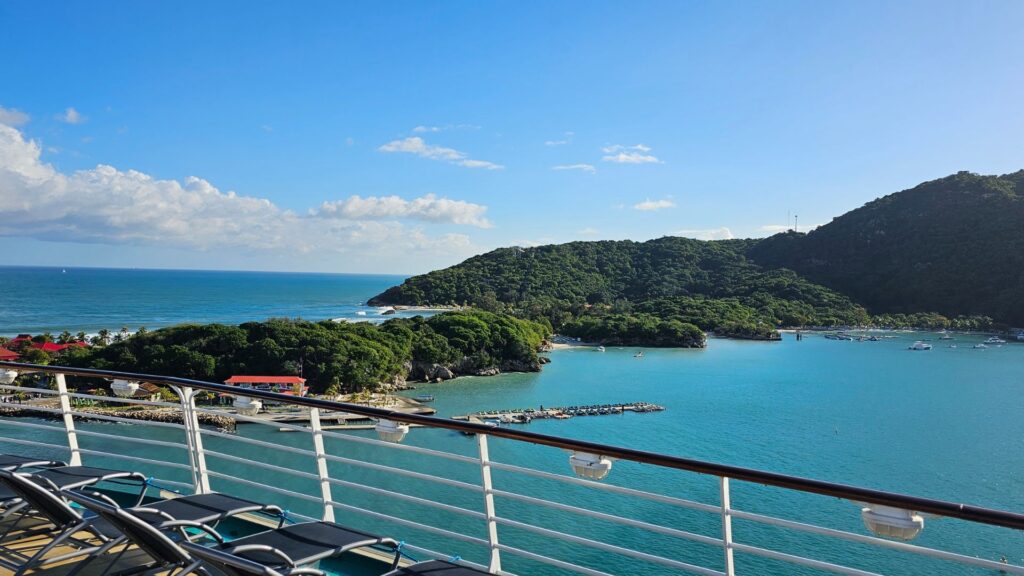
These facilities typically include diagnostic tools such as X-rays, ECGs, defibrillators, and lab testing equipment.
Many ships also carry a pharmacy stocked for emergency prescriptions, allergy medication, pain relief, and motion sickness treatments.
During hurricanes or major reroutes, the medical staff also stays in constant contact with port authorities to confirm which nearby hospitals are open and accessible if an evacuation is required.
Preparedness in Action: How Cruise Medical Teams Respond During Hurricanes
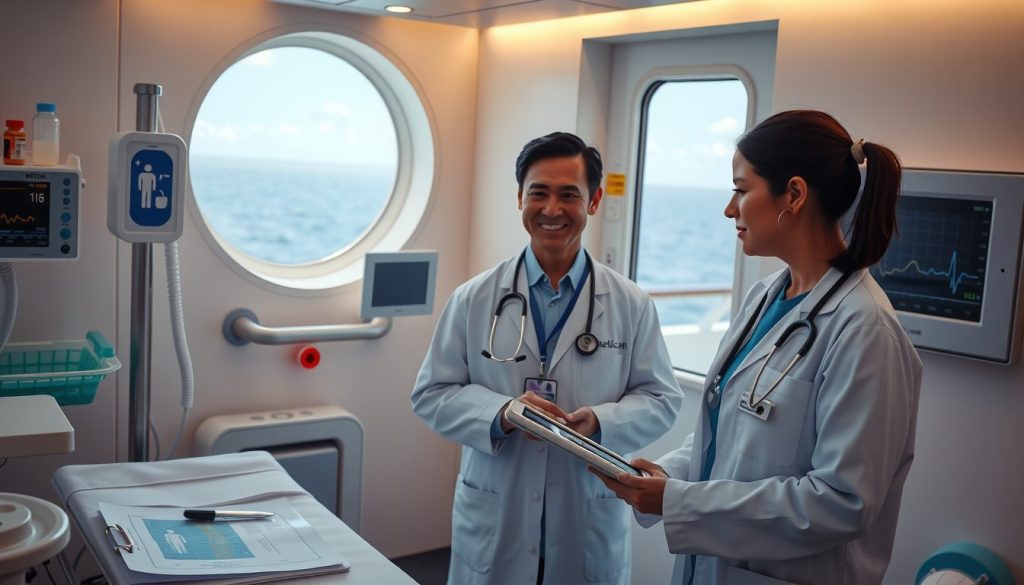
When forecasts indicate developing tropical systems, the onboard medical team joins daily safety briefings alongside the captain and navigation officers.
These updates assess weather patterns, determine passenger health needs, and ensure equipment is secured for potential turbulence.
Even if you never step into the medical bay, this level of coordination is constantly happening behind the scenes—quietly building the safety net that allows cruise vacations to continue smoothly despite the season.
What Passengers Can Expect: Cruise Medical Safety During Storms
- You’ll always have licensed medical professionals onboard trained in emergency response.
- Supplies are restocked proactively before voyages during hurricane season.
- Cruise lines coordinate with nearby ports for evacuation or hospital access if necessary.
Getting Care During Hurricanes: How Cruise Medical Teams Keep You Safe
When rough seas roll in, passengers sometimes fear that medical services might be disrupted.
In reality, the medical center is one of the most reinforced and self-sufficient parts of a cruise ship.
If you need care while the ship is adjusting its route due to weather, you can expect the same professionalism as any clinic on land.
The staff can handle everything from seasickness and dehydration to sprains and high fevers.
Should your condition require advanced treatment beyond the ship’s capacity, the ship’s officers will coordinate with port authorities for medical evacuation—typically via helicopter or rapid return to the nearest port.
The ship’s medical team also communicates directly with maritime telemedicine partners, who can advise on specialized care while at sea.
This system ensures no medical decision is made in isolation, even when far from land.

Sail Away to Paradise Without Overpaying
Find cruise deals that make it easy to escape, relax, and enjoy the ocean without stretching your budget
Medical Evacuations Made Clear: How Cruise Ships Handle Emergencies
- Evacuations are rare but highly organized.
- Ships maintain standing agreements with coastal rescue services.
- Airlifts are only performed when absolutely necessary and weather conditions permit.
When to Seek Care: Key Reasons to Visit Cruise Medical Facilities
- Persistent seasickness unrelieved by medication.
- Fever or flu-like symptoms.
- Injuries from motion or falls.
- Anxiety, panic, or dizziness due to rough seas.
Travel Insurance That Protects: Why It Matters During Hurricane Cruises
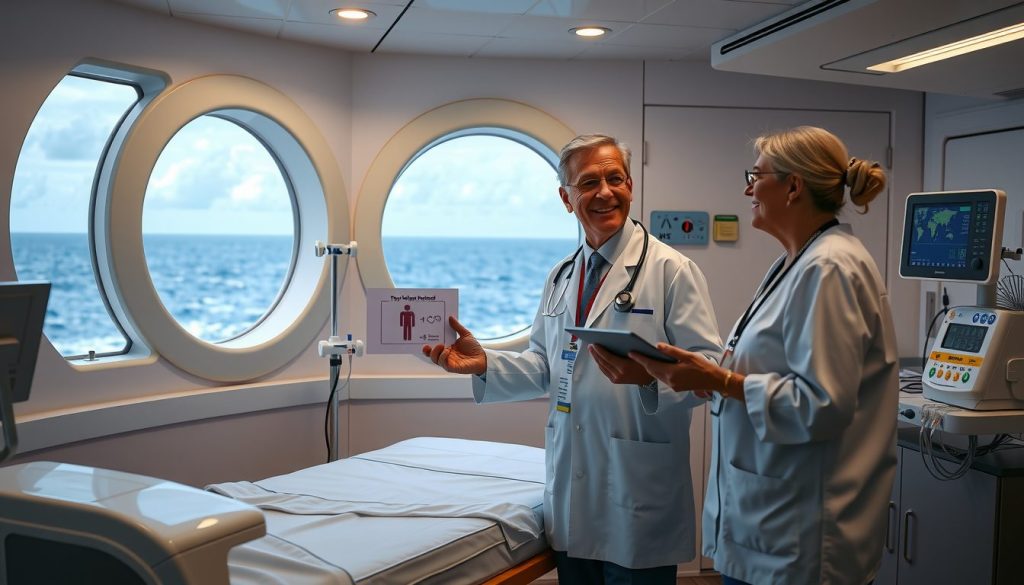
Even though ships are well-equipped, travelers should never underestimate the value of comprehensive travel insurance—especially during hurricane season.
Policies from reputable providers like VisitorsCoverage, EKTA, Insubuy, Compensair, and World Nomads can protect you against medical costs, itinerary changes, and unexpected cancellations.
These plans often include emergency evacuation coverage, hospital transport, and reimbursement for delayed or canceled segments caused by tropical storms.
With hurricanes occasionally forcing reroutes or extended port stays, insurance becomes not just a safety net but an essential part of smart planning.
When comparing policies, look for those that explicitly cover “severe weather disruption” and “medical evacuation.”
Reputable companies will offer 24-hour global assistance hotlines, ensuring that if you do fall ill or injured during a storm, the logistics of care are handled seamlessly.
What to Ask Before You Buy
- Does the plan include medical evacuation from sea or remote ports?
- Are hurricanes or tropical storms covered under trip interruption or cancellation?
- Is there 24-hour emergency support in your preferred language?
Why Insurance Brings Peace of Mind During Hurricane Season Cruises
- It bridges any financial gap between shipboard care and land-based hospitalization.
- It ensures you’re not left stranded during weather-related rerouting.
- It gives nervous travelers the confidence to relax, knowing every scenario is covered.
Training That Saves Lives: How Cruise Lines Prepare for Hurricane Medical Emergencies
Cruise lines invest millions each year in emergency-response training.
Crew members across departments—hospitality, engineering, entertainment, and medical—participate in joint drills designed to simulate real scenarios.
During hurricane season, those drills focus on specific challenges: rapid course changes, passenger stability, and medical triage during high seas.
Medical staff rehearse evacuation procedures, emergency communications, and power-continuity checks for medical equipment.
Top Cruise Deals From Trusted Cruise Lines
Compare exclusive online offers and find the fare that fits your trip and your budget
Every major cruise line is also bound by the Maritime Labour Convention (MLC) and American College of Emergency Physicians (ACEP) guidelines, which set standards for shipboard medical facilities.
These frameworks ensure consistent quality across the industry, regardless of ship or itinerary.
Safety Drill Highlights: How Cruise Crews Practice for Hurricane Emergencies
- Medical teams practice emergency stabilization techniques in simulated rough seas.
- Ships conduct full-deck safety drills involving all crew, ensuring everyone knows their role.
- Coordination with shore-based partners guarantees continuity if rerouting is necessary.
Myths vs Reality: What You Need to Know About Cruise Medical Care During Hurricanes
It’s easy to misunderstand what happens on a ship during rough weather. Let’s separate myth from reality.
Myth 1: The medical center closes during storms.
False. The medical team operates 24/7 regardless of sea conditions.
Myth 2: Seasickness medicine is your only option.
Incorrect. Doctors can administer injections, IV fluids, and other professional-grade treatments that work faster than over-the-counter remedies.
Myth 3: Evacuation is nearly impossible during a hurricane.
Evacuation can be delayed in extreme conditions, but modern rescue coordination ensures medical support is never out of reach.
Myth 4: You’ll be charged exorbitant fees.
While onboard medical care is not free, costs are transparent and insurance typically reimburses the majority, especially with comprehensive coverage.

Luxury Cruise Experiences at Smarter Prices
See premium sailings and upgraded cabins priced for travelers who know how to book well
Mental Readiness: How to Stay Calm and Confident During Hurricane Season Cruises
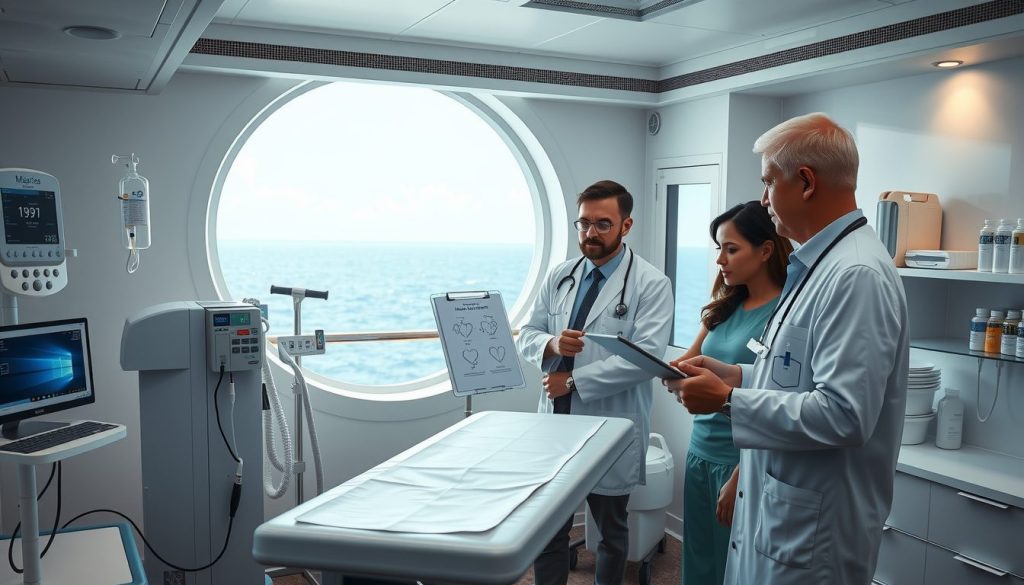
Anxiety is natural when the unknown involves open seas.
But knowledge reduces fear. Understanding the protocols—how medical teams, captains, and insurers collaborate—restores your sense of control.
Before your cruise, familiarize yourself with the ship’s safety plan.
Attend the muster drill even if it feels routine. Keep your medications and important documents in a waterproof pouch, and store insurance details digitally for easy access.
It’s also wise to download weather-tracking apps and follow the ship’s communications during your voyage.
Transparency is standard practice; captains regularly update guests on weather adjustments, keeping everyone informed and calm.
Reduce Storm Anxiety: Practical Tips for Hurricane Season Cruising
- Focus on facts: cruise ships are designed to avoid storms, not sail through them.
- Trust in protocols: safety and medical teams train constantly for weather emergencies.
- Prepare realistically: carry essential medications and insurance documents.
Cruise With Confidence: Why Hurricane Season Doesn’t Mean Medical Risk
When you realize how well-prepared cruise lines are for medical situations—especially during hurricane season—it’s easier to relax and enjoy your journey.
Every major cruise ship operates under strict international safety laws, employs trained medical professionals, and partners with global response networks.
If you’ve hesitated to book a storm-season sailing because of safety worries, take this as reassurance: the infrastructure protecting passengers today is the strongest in maritime history.
You can travel confidently knowing that whether it’s a minor seasickness spell or an unexpected emergency, help is right there onboard—and a plan is always in place.
FAQ – How Do Cruise Medical Teams Really Keep Me Safe During Hurricane Season?
What Can Cruise Ship Medical Centers Actually Handle If Something Goes Wrong During a Storm?
Cruise medical centers can manage most non‑critical emergencies, even when seas are rough.
They typically include diagnostic tools like X‑ray machines, ECGs, defibrillators, lab testing equipment, and a pharmacy stocked with prescription and over‑the‑counter medications for pain, allergies, and motion sickness.
In practice, that means issues such as persistent seasickness, dehydration, sprains, infections, and high fevers can be assessed and treated onboard, giving you access to real clinical care without waiting to reach a port.How Do Medical Teams Prepare Specifically for Hurricane Season Before Passengers Even Board?
Ahead of hurricane season, medical teams review staffing levels, restock supplies, and tighten coordination with shoreside hospitals and rescue services.
Cruise lines update lists of nearby ports and hospitals along common storm‑season routes so evacuation options are clear if needed.
This preparation matters because it ensures that when itineraries change or storms prompt rerouting, the medical team already has a plan for where to send patients and how to maintain continuous care.What Happens Behind the Scenes When a Tropical System Develops Near the Ship?
When forecasts show a developing tropical system, the medical team joins daily safety briefings with the captain and navigation officers.
They review weather patterns, assess passenger health needs, and secure equipment for potential turbulence so nothing shifts or fails during rough seas.
Even if you never visit the clinic, this quiet coordination builds a safety net that supports every decision about rerouting, speed changes, and port adjustments.Will Medical Care Be Disrupted If the Ship Is Rerouted or Seas Become Rough?
Medical care continues even when the ship changes course or the sea state becomes more intense.
The medical center is one of the most reinforced areas on the vessel, with priority given to power continuity and equipment security.
Staff follow contingency protocols to protect supplies and maintain treatment capacity, so you can expect the same level of professionalism during a storm‑related reroute as you would on a calm day.When Does a Situation Move from Routine Treatment to a Full Medical Evacuation?
A medical evacuation is considered only when a passenger’s condition exceeds what the ship’s facilities and staff can safely manage.
At that point, officers coordinate with coastal rescue services and port authorities to arrange helicopter airlift or a rapid return to the nearest suitable port, depending on weather and distance.
Knowing that evacuation is reserved for serious cases—and backed by standing agreements with rescue agencies—helps you understand that there is a clear escalation path if something truly critical occurs.What Kinds of Symptoms Should Prompt Me to Visit the Ship’s Clinic During Hurricane Season?
You should seek care for persistent seasickness that doesn’t respond to basic medication, high fever or flu‑like symptoms, injuries from motion or falls, and severe dizziness or chest discomfort.
It’s also appropriate to visit if anxiety or panic related to rough seas starts affecting your breathing, sleep, or ability to function.
Going early allows the medical team to stabilize you, rule out more serious problems, and keep minor issues from becoming emergencies while the ship is managing storm‑season conditions.How Do Travel Insurance Providers Like VisitorsCoverage, EKTA, Insubuy, Compensair, And World Nomads Work with Shipboard Care During Hurricanes?
Travel insurance from companies such as VisitorsCoverage, EKTA, Insubuy, Compensair, and World Nomads can cover the financial side of medical events and weather disruptions.
Policies often include benefits for emergency evacuation, hospital transport, trip interruption, and cancellations caused by tropical storms.
When your onboard care needs to continue ashore—whether through a port transfer or hospital stay—having a plan that explicitly covers “severe weather disruption” and “medical evacuation” turns complex logistics and costs into structured, reimbursable events instead of personal crises.What Training and Standards Guide Cruise Medical Teams During Hurricane Emergencies?
Cruise lines invest heavily in emergency‑response training, running joint drills that involve medical staff, hospitality crews, engineers, and officers.
During hurricane season, these drills focus on rapid course changes, passenger stability, triage in high seas, and power continuity for critical equipment.
Medical facilities operate under frameworks like the Maritime Labour Convention and guidelines from organizations such as the American College of Emergency Physicians, which set minimum standards for staffing, equipment, and procedures so care remains consistent across ships and itineraries.How Do Ships Coordinate with Shore Hospitals and Telemedicine When a Serious Case Appears During a Storm?
When a complex case arises, the onboard medical team contacts port authorities to confirm which nearby hospitals are open and reachable, then works with ship officers to plan the safest transfer route.
At the same time, they consult maritime telemedicine partners who provide specialist input on diagnosis and treatment while the ship is still at sea.
This dual coordination—local hospital planning plus remote expert guidance—ensures decisions are made with full clinical context, not in isolation.What Can I Do Personally to Feel Medically Prepared Before a Hurricane‑Season Cruise?
You can pack essential medications in a waterproof pouch, keep insurance details and emergency contacts stored digitally, and learn the basics of your ship’s safety plan.
Attending the muster drill, even if it feels routine, gives you a clear sense of where to go and how communication works if an emergency arises.
Downloading weather‑tracking apps and paying attention to captain updates during the voyage helps you stay informed, turning vague worry into a practical understanding of how medical teams, navigation officers, and insurers work together to protect you.
Plan Your Next Cruise!

Sail Into Sophistication: Holland America Cruises for Luxury, Culture, and Unforgettable Journeys
One Delay Can Cost Your Entire Cruise A quick coverage check now protects you from the problems no one sees coming….

Sail Into Freestyle Freedom: Norwegian Cruise Line for Adventure Thrills, Gourmet Dining, and Destination‑Rich Voyages
One Delay Can Cost Your Entire Cruise A quick coverage check now protects you from the problems no one sees coming….

Escape To Paradise: Inside The Exclusive World of Cruise Line Private Islands
One Delay Can Cost Your Entire Cruise A quick coverage check now protects you from the problems no one sees coming….

Sail in Style: Oceania Cruises’ Culinary Excellence, Cultural Immersion, and Refined Luxury
One Delay Can Cost Your Entire Cruise A quick coverage check now protects you from the problems no one sees coming….
Explore More

Relieve Tension Onboard: Cruise Hot Stone Massage Benefits and Booking Tips

Sail Boldly: Experience Virgin Voyages’ Adults‑Only Cruises With Style, Freedom, And Fun
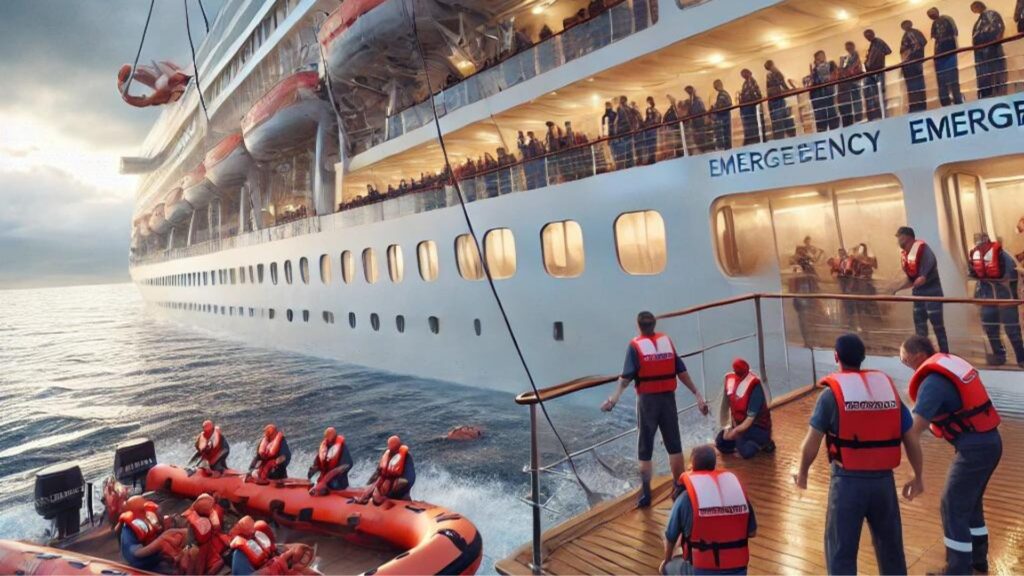
Cruise Ship Emergency Evacuation Plans — How Safety Systems Protect Passengers at Sea
