One Delay Can Cost Your Entire Cruise
A quick coverage check now protects you from the problems no one sees coming
Short Excerpt
- Learn what to pack for your first cruise, including travel documents, clothing, toiletries, medications, and electronics.
- Understand which items need special attention because of cruise-line restrictions or international travel requirements.
- Prepare for differences between Caribbean, Alaska, Mediterranean, and other cruise itineraries.
- Use a practical packing checklist to avoid bringing unnecessary items or forgetting something important.
Quick Take
- Start with your travel documents. Your identification requirements depend on your citizenship, itinerary, departure port, and cruise line.
- Check your cruise line’s prohibited-items policy before packing electrical accessories, appliances, beverages, or other restricted belongings.
- Pack for your itinerary rather than following a generic tropical-vacation checklist.
- Use your cruise line’s embarkation instructions to confirm your luggage requirements, boarding documents, and arrival arrangements.
- Keep essential documents, medications, valuables, and anything needed immediately after boarding in your carry-on.
- Build your wardrobe around activities and practical clothing combinations instead of packing a different outfit for every possible situation.
What Should You Know Before Packing for Your First Cruise?
Packing for your first cruise involves a few decisions you probably haven’t encountered on an ordinary vacation.
You’re preparing for a floating hotel that visits different destinations, follows its own security rules, and may not give you immediate access to your checked luggage.
That doesn’t mean packing needs to become complicated.
It means a successful checklist should account for more than the number of shirts, shoes, or swimsuits you’ll need.
Before choosing what goes into your suitcase, consider your itinerary, the documents required for boarding, the cruise line’s luggage and prohibited-items policies, and the activities you’ve already booked.
These details establish what you genuinely need to bring.
They also help prevent the more serious packing mistakes that can’t necessarily be fixed by purchasing something after departure.
Check Your Cruise Documents Before You Pack Anything Else
One of the most important distinctions for first-time cruisers is that a cruise reservation doesn’t automatically mean you have everything required to board.
Your travel documents depend on several factors, including your citizenship, the countries you’re visiting, whether your itinerary begins and ends at the same U.S. port, and your cruise line’s requirements.
For example, some U.S. citizens taking qualifying closed-loop cruises may be able to travel with approved proof of citizenship and identification instead of a passport book.

However, these exceptions don’t apply universally, and individual countries or cruise lines may have additional requirements. (U.S. Customs and Border Protection — Cruise Travel Documents)
The U.S. Department of State strongly recommends that cruise passengers travel with a valid passport book, even when one isn’t required for the itinerary.
An unexpected medical emergency or another situation requiring an international flight home can create serious difficulties without one. (U.S. Department of State — Cruise Ships)
Why Your Departure and Return Ports Matter
A closed-loop cruise generally begins and ends at the same U.S. port, but that description alone doesn’t guarantee that every passenger qualifies for alternative documentation.
An itinerary departing from Miami and returning to Miami may have different documentation implications from one departing in Florida and ending in another country.
Citizenship and destination requirements also matter. Someone traveling with a non-U.S. passport may need documents or visas that aren’t required for a U.S. citizen on the same sailing.
Before packing, verify your exact itinerary against your cruise line’s travel-document instructions and the applicable government requirements.
What to Verify Before Leaving Home
Confirm that your identification is valid for your particular itinerary, that any required visas or entry authorizations are arranged, and that the names on your reservation and travel documents match.
If you’re traveling with children, review the cruise line’s documentation requirements for minors, including any additional consent or custody paperwork that may apply.
Top Cruise Deals From Trusted Cruise Lines
Compare exclusive online offers and find the fare that fits your trip and your budget

Don’t rely exclusively on advice from someone who previously sailed a similar itinerary.
Documentation requirements can differ based on individual circumstances.
Once these details are settled, you’ll know which paperwork belongs at the top of your packing priorities.
Understand What Your Cruise Line Won’t Allow Onboard
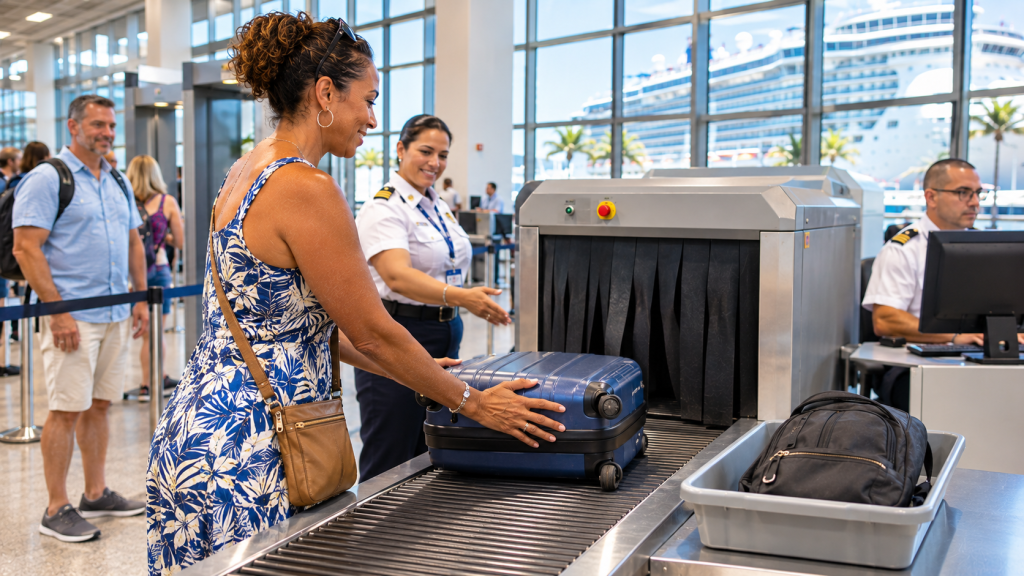
Packing for a cruise isn’t exactly the same as packing for a hotel because ships have specific security and fire-safety restrictions.
An item that travels perfectly well in your airline luggage may still be prohibited when you reach the cruise terminal.
Electrical accessories are a particularly important example. It’s easy to assume that a travel power strip or extension cord is harmless, but cruise lines don’t all treat these products the same way.
Electrical Accessories and Power Strips
Royal Caribbean prohibits extension cords, power strips, and multi-plug outlets, with certain permitted charging-device exceptions.
Carnival, by contrast, permits some non-surge-protected power strips and extension cords subject to its safety conditions. (Royal Caribbean — Prohibited Items), (Carnival — Electric Outlets and USB Ports)
This difference matters because a product advertised as suitable for cruising isn’t automatically permitted aboard every ship.
Before packing any multi-outlet charger, electrical adapter, or similar device, check the specific cruise line’s current restrictions.
Ordinary phone chargers may be acceptable even when power strips are prohibited, but the permitted equipment and conditions still matter.
Heat-Producing Appliances and Other Restricted Items
Royal Caribbean also prohibits personal clothes irons and garment steamers, and cruise lines commonly restrict other appliances that present fire risks. (Royal Caribbean — Iron and Steamer Policy)
Restrictions can extend to beverages, certain food items, recreational equipment, and other belongings that may not seem particularly unusual during a land-based vacation.
The most reliable approach is to consult the official prohibited-items list before departure rather than relying on general cruise-packing advice.
That small check can prevent security delays, confiscated belongings, and the inconvenience of discovering that a travel accessory can’t come aboard.
Match Your Cruise Packing Plan to Your Destination
A Caribbean cruise, an Alaska sailing, and a Mediterranean itinerary may all involve the same basic shipboard activities, but their clothing and weather requirements can be very different.
A general packing checklist is useful for remembering essentials.
Your itinerary determines which additional items deserve space in your suitcase.
Caribbean Cruises: Prepare for Sun and Sudden Weather Changes
Caribbean sailings often involve warm temperatures, strong sunshine, beaches, pools, and outdoor excursions.
However, warm weather doesn’t guarantee that every day will be dry or that every indoor venue will feel warm.
Air-conditioned restaurants and theaters can feel noticeably cooler than the pool deck, while passing showers may interrupt outdoor activities.
Your itinerary and the seasonal forecast should influence how much sun protection, breathable clothing, and lightweight rain protection you bring.
Alaska Cruises: Think About Changing Conditions
Alaska itineraries can involve cool mornings, wind on open decks, rain, and changing temperatures between ports.
A traveler who packs only bulky winter clothing may discover that lighter layers offer more flexibility for walking around town, spending time indoors, and enjoying shore excursions.
Online‑Only Cruise Offers You Won’t Find Elsewhere
Unlock special pricing and start planning the sailing that matches your perfect itinerary

Weather-resistant outerwear and practical footwear may matter more than the number of extra casual outfits you bring.
The specific month and planned activities should guide your decisions, particularly if you’ve booked glacier viewing, hiking, or other outdoor excursions.
Mediterranean and European Cruises: Plan Around Your Activities
Mediterranean cruises can combine warm weather, city sightseeing, historical attractions, and long days walking over uneven surfaces.
The weather varies with destination and season, and the clothing appropriate for a beach excursion may differ from what is expected inside certain religious or cultural sites.
If you’re visiting places with modest-dress requirements, check those restrictions before departure rather than assuming everyday sightseeing clothes will be acceptable everywhere.
Practical planning means considering the actual destinations and excursions on your itinerary, not just the general climate of the region.
Cruise Packing Rules That Depend on Whether You’re Flying
If you’re flying to your departure port, your luggage needs to satisfy two different sets of requirements: airline and airport-security rules, followed by your cruise line’s boarding policies.
An item permitted in checked airline luggage isn’t necessarily approved for a cruise ship, and a product permitted aboard the ship may still be restricted in an airline carry-on.
Airport Liquid Restrictions
For flights departing through U.S. airport security, the TSA’s standard 3-1-1 liquids rule applies to ordinary liquids, gels, and aerosols in carry-on luggage.
Containers generally must hold no more than 3.4 ounces or 100 milliliters and fit within one quart-sized bag, subject to applicable exceptions. (TSA — Travel Checklist)
Medically necessary liquids may qualify for different screening rules, so travelers carrying medication or other essential medical supplies should check the applicable TSA guidance before flying.
These airline restrictions shouldn’t be confused with cruise-line baggage rules, which operate separately.
Portable Chargers and Power Banks
Portable chargers can be particularly useful when you’re traveling, but they also require attention to transportation rules.
If you’re flying, review your airline’s requirements for lithium-battery power banks, including where they must be packed and any capacity limitations.
Carnival specifies that power banks and portable chargers must be carried aboard in carry-on luggage rather than checked bags. (Carnival — Prohibited Items and Safety Requirements)
The simplest approach is to verify your airline and cruise-line policies before deciding where to pack rechargeable accessories.
Make Your Packing Checklist Match Your Actual Sailing
Before you start laying everything on the bed, look at your cruise reservation and ask what your particular vacation will involve.
Are you flying to the port or driving?
Does your itinerary include beaches, city tours, outdoor adventures, or mostly relaxing days aboard the ship?
Have you reserved specialty dining, booked excursions with equipment requirements, or planned activities that call for particular clothing?
These aren’t reasons to pack more than necessary.

Luxury Cruise Experiences at Smarter Prices
See premium sailings and upgraded cabins priced for travelers who know how to book well
They’re reasons to make each item serve a genuine purpose.
A first-time cruiser taking a short Bahamas getaway may need a very different collection of clothing and accessories from someone sailing through Alaska for a week.
Once you understand what your trip actually requires, the packing process becomes more straightforward.
You can work through the checklist below knowing which categories deserve your attention and which can stay relatively simple.
Why Cruise Packing Feels Different When It’s Your First Sailing
Packing for your first cruise can feel like trying to solve a puzzle without seeing the picture on the box.
Suitcases sit open.
Lists multiply.
Weather forecasts change.
And somewhere in the middle of all that, you quietly start wondering if you are about to forget something important.
That feeling is normal, especially when you have never walked onto a cruise ship before.
The good news is that cruise packing does not have to be complicated to be effective.
A clear checklist and a simple plan can take you from “overwhelmed” to “I’ve got this” surprisingly fast.
This guide is built specifically for new cruisers.
You will see a full, beginner-friendly checklist, broken into categories you can literally lay out on the bed.
You will also see common mistakes first-timers make and the fears hiding underneath them.
Along the way, you will pick up practical tips for luggage, organization, and small upgrades that make travel days easier.
Think of this less as a rulebook and more as a reassuring roadmap.
By the time you zip the suitcase, you should feel prepared without feeling weighed down.
Understand Why Cruise Packing Feels Different Before You Start
Cruise packing is not quite the same as packing for a hotel stay on land.
Once the ship sails, you cannot run to the car or a nearby store for anything important you forgot.
At the same time, you also do not have to pack for “every possible disaster” to feel prepared.
The trick is understanding how cruise days usually unfold.
Sea days often mean more time on deck, in lounges, or at shows.
Port days mean walking, waiting, and dealing with sun, wind, or rain.

Sail Away to Paradise Without Overpaying
Find cruise deals that make it easy to escape, relax, and enjoy the ocean without stretching your budget
Embarkation day lives in its own category because your cabin and checked bags do not always become available right away.
Those patterns matter because they tell you what your luggage really needs to do.
Your bag is not just holding clothes.
It is holding comfort, backup plans, and the little items that make ship life feel easy instead of frustrating.
When you know the rhythm of the trip, the checklist stops feeling random and starts feeling logical.
Logical is what takes the edge off that “what if I mess this up” feeling many beginners have.
Full Cruise Packing Checklist For Beginners
Use this section like a real-life worksheet.
You can spread items out by category, check things off physically, or copy the sections into your own planner.
If a category does not apply to you, you are allowed to skip it.
The goal is a bag that fits your life, not someone else’s.
1. Documents and Non-Negotiable Essentials
These are the items that protect your ability to board, travel, and handle surprises.
They are the first things to pack and the last things to leave your sight.
- Passport or government-approved ID, plus any required visas or entry forms.
- Printed or digital cruise documents and boarding passes.
- Flight confirmations and hotel details if you are flying in early.
- Wallet with payment cards and a small amount of local currency if ports use it.
- Copies of important documents stored separately from the originals.
- Prescription medications in original containers, plus a few extra days’ supply.
- A small list with emergency contacts and your cruise line’s contact information.
Anything in this category should go in your carry-on, not in a checked suitcase.
If it would ruin your day to lose it, keep it with you.
2. Luggage and Bags That Make Travel Days Easier
The right luggage does not have to be fancy.
It just needs to roll smoothly, open easily, and help you stay organized in a small cabin.
Many new cruisers find that a lightweight carry-on plus a medium checked suitcase feels like the sweet spot.
A Travelpro carry-on spinner works well for this because it glides through airports and cruise terminals without fighting you.
Inside, compression straps and pockets help keep essentials where you put them, instead of sliding into a heap.
For checked luggage, a medium-size Travelpro spinner or checked case usually provides enough space without tempting you to bring your entire closet.
Interior dividers and a built-in suiter or garment area make it easier to keep dinner outfits neat.
Packing cubes or garment folders from the same line can turn one large space into smaller “drawers” that behave better in a cabin.
You will also want a personal item or small day bag.
That bag can double as your “port day” bag once you reach each destination.
Look for something comfortable to carry with a zip top so nothing spills out when you set it down.
3. Clothing: Day, Evening, Swim, and Layers
Clothing is where most new cruisers overdo it.
A simple structure keeps things under control while still giving you options.
For a seven-night cruise, many beginners are well served by something like this:
- Four to six casual daytime outfits for ship and port.
- Two to three slightly dressier outfits for evenings in the main dining room or specialty restaurants.
- Two swimsuits so one can dry while the other is in use.
- A swim cover-up or easy dress or tee-and-shorts combination for walking to and from the pool.
- One light sweater, hoodie, or cardigan for cool theaters and breezy decks.
- One packable jacket or shell for wind or light rain, depending on itinerary.
- Comfortable sleepwear that feels familiar and helps your body recognize “bedtime” in a new room.
When you choose pieces, think about mixing and matching.
Neutral bottoms and versatile tops can create more outfits with fewer items.
That approach keeps the cabin less cluttered, which has a bigger impact on your stress level than most people expect.
4. Shoes: Let Each Pair Have a Job
Shoes are heavy, and they multiply fast if you let them.
Instead of packing by color or style, pick shoes by job.
Most beginners do well with three core pairs.
- One comfortable walking shoe for airports, ports, and exploring.
- One pair that looks a little dressier for dinners and evening shows.
- One sandal or flip-flop for pool decks and beach days.
If a fourth pair comes along, it should have a very specific purpose, such as a true athletic shoe for the gym or a water shoe for rocky snorkel beaches.
Anything that does almost the same job as a shoe you already packed can probably stay home.
5. Toiletries and Personal Care
Cruise lines often provide basic soap and shampoo, but not everything will feel familiar.
Bringing a small kit of products you already know your body likes can prevent a lot of small annoyances.
- Toothbrush, toothpaste, floss, and any usual dental care items.
- Hairbrush, comb, and simple styling products you use regularly.
- Deodorant or antiperspirant.
- Razor and shaving supplies if needed.
- Travel-sized skincare basics that will not irritate your skin in sun or wind.
- Sunscreen for face and body, plus SPF lip balm.
- After-sun lotion or soothing gel if you tend to burn easily.
Liquids need to follow airline rules if you are flying, which usually means smaller bottles in a clear bag for carry-on.
Non-liquid items can ride in checked luggage if you do not need them on travel day.
6. Health and Comfort Items
No one wants to think about not feeling well on vacation.
A few small items can make a big difference if you need them.
- Pain and fever relief in a form you tolerate well.
- Motion sickness remedies, if recommended by your healthcare provider.
- Basic bandages and a small antiseptic product for scrapes or blisters.
- Any allergy medications you rely on at home.
- A small pack of tissues or wipes for on-the-go use.
These do not need to take up a lot of room.
You are simply giving yourself options so a minor issue does not turn into a major mood-changer.
7. Tech, Money, and “Small but Mighty” Items
Little pieces of tech and organization often make travel feel smoother.
They also tend to be the easiest things to forget.
Consider including:
- Phone, charger, and a small power bank.
- E-reader or tablet if you enjoy digital books or shows.
- Headphones for flights, lounges, and quiet time.
- A simple non-surge travel power strip if your cruise line allows it, or a multi-USB charger instead.
- Sunglasses that actually block glare on deck and in ports.
- A refillable water bottle that fits comfortably in your day bag.
These kinds of items weigh very little and usually earn their place in your packing plan.
They also support comfort on travel days, where long waits are common.
8. Comfort, Sleep, and “This Feels Like Home”
Cruise cabins are cozy, and the sounds and motions of a ship can feel different at night.
A few comfort-focused items help your body understand that you are safe and it is okay to relax.
- Light sleepwear that matches how you normally sleep at home.
- A small travel-size pillow or pillowcase if familiar texture matters to you.
- Earplugs or a white noise app to soften hallway sounds.
- A light robe or extra T-shirt if you like a layer for mornings and evenings in the cabin.
Sleep is one of the biggest factors in how any trip feels.
Packing for rest is not indulgent; it is practical.
9. Port Day Kit
Shore days have their own rhythm and needs.
A small port kit that drops into your day bag can make those days feel much more relaxed.
- Sunscreen and SPF lip balm for reapplication.
- Sunglasses and a hat or other light sun protection.
- Small pack of wipes or hand sanitizer.
- Bandages and blister patches in case shoes rub.
- A compact rain jacket or travel umbrella if the forecast suggests it.
- Refillable water bottle and a small snack.
Travel days can be long, and you might not love every kiosk or snack stand you see.
Having a few basics on hand keeps you from feeling stuck.
10. Embarkation Day Carry-On vs. Checked Bag
Embarkation day sits at the crossroads of packing and planning.
Checked luggage usually goes with porters and appears outside your cabin later.
Carry-on bags stay in your hands while you move through the terminal and explore the ship.
A simple split works well here.
Carry-on holds your documents, medications, electronics, first-evening outfit if you want it, and anything else you need to feel okay on day one.
Checked luggage holds bulk clothing, extra shoes, and full-size products you do not need immediately.
That hybrid approach keeps your shoulders happier and your stress lower.
A smooth-rolling Travelpro carry-on makes this even easier because you are not fighting stiff wheels in long lines.
Common Packing Mistakes New Cruisers Make
Even with a checklist, certain patterns show up over and over again.
Seeing them in advance makes it much easier to step around them.
Overpacking for “Every Possible Scenario”
Imagining every what-if can lead to a very heavy suitcase.
Extra outfits that never get worn, duplicate shoes, and too many “just in case” layers create clutter in a small cabin.
Clutter then makes you feel disorganized, which feeds the same anxiety you were trying to avoid.
A better approach is packing for ranges and roles.
Clothing that mixes and matches gives you options without sheer quantity.
Layers handle temperature swings more effectively than bulky single-purpose pieces.
Checking All the Essentials
Sending every bag with porters feels efficient.
Later, you remember that your swimsuit, medication, and phone charger are inside those bags.
At that point, there is nothing to do but wait.
Keeping one small bag with embarkation-day essentials prevents that exact scenario.
You should be able to eat, explore, and relax even if checked suitcases have not found your cabin yet.
Bringing Unworn Shoes and “Someday” Clothes
New shoes and never-tested outfits look great in the mirror at home.
On the ship, they might rub, pinch, or feel just wrong.
By then, you are too far from your closet to fix it.
Cruise days involve walking, stairs, and standing in lines.
Items that already feel good on your body will serve you better than anything you are still “breaking in.”
Mistakes Section Takeaways
Less With Purpose Beats More Without
A thoughtful list that fits your real life works better than a suitcase stuffed in panic.
Essentials Stay Close
If an item holds your health, identity, or ability to function, keep it in carry-on.
Comfort Is Non-Negotiable
Worn-in shoes and familiar outfits reduce stress more than “perfect” new pieces ever will.
Fears Beginners Have About Cruise Packing—and How to Handle Them
Underneath most packing questions, there is a nervous thought.
New cruisers worry about forgetting something vital, looking out of place, or feeling uncomfortable far from home.
Those worries are understandable.
They are also workable.
If you fear forgetting something crucial, focus first on documents, medications, and a basic outfit plan.
Those items protect your ability to travel and to feel okay on day one.
Anything left is usually about convenience rather than survival.
If you fear standing out in the wrong way, remember that cruise ships see an enormous mix of styles on every sailing.
Neat, comfortable, and weather-appropriate clothing will fit far better than you might imagine.
Dress codes, where they exist, are usually aimed at keeping dining rooms pleasant, not at shaming guests.
If you fear luggage delays, a carry-on with one full change of clothes, basic toiletries, and your important items removes most of the sting.
Travel insurance is not a requirement to cruise, and many people sail without it.
Still, some beginners feel calmer knowing there is financial and medical backup if flights, bags, or health issues disrupt the trip.
Planning tools like well-organized luggage, a clear checklist, and that simple carry-on strategy are just as important as any policy.
Together, they turn vague anxiety into something you have already thought through.
Fear Section Takeaways
Focus on What Truly Matters
Once documents, health items, and a basic wardrobe are covered, remaining worries usually soften.
You Will Not Be the Only Beginner
Every sailing includes first-timers figuring it out alongside you.
Calm Comes From Clarity
A written plan and organized bags create the sense that you are ready, even if this is all new.
Step Onto the Ship With a Checklist You Trust
Packing for a cruise does not have to feel like guessing.
A simple beginner-friendly checklist, divided by category, keeps you from chasing every passing idea.
Documents and essentials protect your ability to board and travel.
Clothing, shoes, and layers support comfort in real ship conditions.
Toiletries and health items handle small problems before they grow.
Tech, comfort pieces, and a port-day kit make daily life onboard smoother.
Luggage that rolls easily and opens into organized sections, such as a well-designed Travelpro carry-on and checked case, takes the physical strain off travel days.
Packing cubes and garment folders keep your cabin feeling more like a calm retreat and less like a storage unit.
Once everything has a place and a purpose, the suitcase stops feeling like a source of stress.
Instead, it becomes one more piece of your cruise that is already under control.
You do not need to be perfect to be prepared.
You simply need a plan that matches how cruises actually work and how you actually live.
FAQ – What Should First-Time Cruisers Know About Packing for Their First Cruise?
What are the most important things to pack for your first cruise?
Your travel documents, required identification, medications, payment methods, and embarkation-day essentials deserve priority because forgetting them can create problems that extra clothing cannot solve.
After those items are accounted for, focus on suitable clothing, comfortable shoes, toiletries, chargers, and anything needed for planned activities.
Your itinerary, cruise line, and travel arrangements determine which additional belongings are necessary.
Use the checklist to distinguish essential items from conveniences rather than treating everything as equally important.Do you need a passport for your first cruise?
Whether a passport is required depends on your citizenship, cruise itinerary, departure and return ports, and the cruise line’s rules.
Certain qualifying closed-loop cruises allow some U.S. citizens to travel with approved alternative documents, but that exception doesn’t apply to every sailing or passenger.
A valid passport book is strongly recommended for international cruises because it can be necessary if an emergency requires you to fly home from another country.
Verify your personal documentation requirements before departure instead of relying on general advice about passport-free cruises.How many outfits should you pack for a seven-night cruise?
A seven-night cruise doesn’t necessarily require seven completely different daytime outfits and seven separate evening outfits.
Many travelers can pack fewer items by choosing tops, bottoms, and layers that work together in different combinations.
Your exact needs depend on the weather, excursions, dining plans, and whether you expect to use the ship’s laundry services.
Plan clothing around actual activities and leave room for anything that has a specific purpose rather than automatically adding extra outfits.What should you pack in your embarkation-day carry-on?
Keep your travel documents, identification, medications, valuable belongings, and essential electronics with you rather than handing them to luggage porters.
A swimsuit, sunscreen, basic toiletries, and a change of clothes may also be useful if your checked bags arrive later than expected.
The contents should allow you to enjoy your first afternoon without depending on immediate suitcase delivery.
Choose a bag that’s comfortable to carry because you may need to keep it with you until your cabin is available.What happens to your checked luggage when you board a cruise?
Many cruise terminals have luggage porters who collect properly tagged checked bags before passengers enter the terminal.
Those suitcases are processed and delivered to guest cabins, but delivery may take several hours and isn’t necessarily completed before the ship departs.
The exact procedure depends on your cruise line, departure port, and boarding arrangements.
Keep everything needed immediately after boarding in your carry-on rather than assuming your suitcase will arrive as soon as you reach your cabin.How much luggage can you bring on your first cruise?
Cruise luggage allowances vary by cruise line, and some operators publish recommendations or limits for the number, size, or weight of bags.
If you’re flying to the departure port, your airline may impose additional restrictions or baggage fees.
Larger suitcases can also be inconvenient in cruise cabins, where storage space is often limited.
Review the requirements of both transportation providers and choose luggage that accommodates your actual packing needs without unnecessary bulk.Can you bring full-size toiletries on a cruise?
Cruise-line security rules aren’t identical to airline carry-on liquid restrictions, so full-size toiletries may be permitted aboard your ship even when they wouldn’t pass through an airport checkpoint in your carry-on.
If you’re flying, ordinary liquids, gels, and aerosols in cabin baggage generally must follow the applicable airport-security limits.
You should also verify your cruise line’s restrictions on particular products and containers.
Pack toiletries securely to prevent leaks, especially when they’re traveling inside checked luggage.Can you bring a power strip or extension cord on a cruise?
Power-strip and extension-cord policies differ between cruise lines, so a device permitted on one ship may be prohibited on another.
Royal Caribbean prohibits power strips, extension cords, and multi-plug outlets under its published policy, while Carnival allows certain non-surge-protected devices subject to safety conditions.
A product marketed as cruise-friendly isn’t automatically approved by every cruise operator.
Check your cruise line’s current prohibited-items list before purchasing or packing electrical accessories.Are portable power banks allowed on cruise ships?
Many cruise lines allow ordinary portable power banks, but specific restrictions and handling requirements may apply.
If you’re flying to the cruise terminal, your airline’s lithium-battery rules also matter, including requirements for carry-on rather than checked baggage.
Carnival specifies that portable chargers and power banks must be carried in carry-on luggage.
Confirm both sets of transportation rules and avoid packing damaged or recalled batteries.Should you pack motion sickness medication for your first cruise?
Motion sickness remedies can be useful if you’re prone to nausea or concerned about how you’ll respond to movement at sea.
Some medications can cause drowsiness or interact with other medicines, so ask a healthcare professional about appropriate options before traveling.
Prescription medications and essential medical supplies should remain accessible in your carry-on.
You don’t need to assume you’ll become seasick, but having a suitable plan can prevent an uncomfortable situation from becoming more disruptive.How many pairs of shoes should you pack for a cruise?
Many first-time cruisers can manage with comfortable walking shoes, a suitable pair for evening dining, and sandals or pool footwear.
Your shore excursions may justify additional specialized shoes, such as water shoes or hiking footwear.
Rather than packing multiple pairs that perform the same function, match each pair to a specific activity.
Test unfamiliar shoes before departure because blisters or discomfort can interfere with long days of sightseeing.What should you pack differently for an Alaska cruise?
Alaska cruises often require more attention to temperature changes, rain, wind, and outdoor activities than warm-weather itineraries.
Moisture-resistant outerwear, comfortable walking shoes, and practical clothing layers can help you adjust throughout the day.
Your sailing month and shore excursions determine whether additional cold-weather accessories are useful.
Check the forecast for your actual destinations rather than packing exclusively for either winter conditions or mild summer weather.Do you need special clothing for cruise formal nights?
Some cruise lines schedule formal or elegant evenings, while others offer greater flexibility in how passengers dress for dinner.
Traditional formalwear isn’t universally required, but individual dining venues can maintain their own clothing restrictions.
If you’re planning specialty dining or formal-night photographs, review the ship’s guidance before choosing your outfits.
A comfortable, versatile evening outfit may be sufficient for your needs without requiring an entirely separate formal wardrobe.Should you bring your own beach towels on a cruise?
Many mainstream cruise ships provide towels for pool use and may allow passengers to take designated towels ashore under specific procedures.
However, availability and policies differ, and some cruise lines charge for towels that aren’t returned.
Check your ship’s towel arrangements before packing large beach towels that occupy valuable suitcase space.
If towels are provided, you may only need to plan how you’ll carry and return them during pool visits and excursions.Can you do laundry during a cruise?
Laundry facilities and services vary considerably by cruise line and ship.
Some ships provide self-service laundry rooms, while others offer paid washing, pressing, or dry-cleaning services without passenger-operated machines.
Knowing which services are available can help you decide how many outfits to bring, especially on longer sailings.
Check your specific ship’s options and any associated fees before building a packing plan around doing laundry onboard.What should you pack for a cruise shore excursion?
Your excursion type should determine what belongs in your day bag.
A walking tour may call for comfortable shoes, sun protection, water, and appropriate identification, while a beach excursion may require swimwear and other destination-specific items.
Check whether your tour operator provides equipment or has clothing, footwear, or baggage restrictions.
Also review the local weather and your ship’s reboarding instructions before leaving the vessel.Do you need to pack a refillable water bottle?
A refillable water bottle can be convenient for staying hydrated around the ship and during suitable shore activities.
However, cruise lines may have rules about filling bottles directly from shared beverage dispensers, and some excursions or destinations may have limited access to safe drinking water.
Check the ship’s beverage and sanitation guidance before using onboard refill stations.
Choose a bottle that’s easy to carry, clean, and store in your day bag.What should you leave at home when packing for your first cruise?
Leave behind prohibited belongings, unnecessary duplicate clothing, and items that don’t serve a practical purpose on your itinerary.
Personal irons, some electrical accessories, and certain other products may be restricted because of shipboard safety policies.
Bulky items that duplicate amenities already provided in your cabin can also consume suitcase space without improving your vacation.
Check your cruise line’s prohibited-items list and cabin amenities before deciding what deserves a place in your luggage.Should you pack extra clothes in case your suitcase is delayed?
A spare change of clothes in your carry-on can be useful if your checked luggage arrives late or an airline delays your bag before the cruise.
Choose versatile clothing that could work for your first afternoon or an unexpected overnight disruption.
Keep documents, medication, and valuables with you regardless of whether you pack extra clothing.
The goal is to remain functional during a delay without carrying a second suitcase full of backups.When should you start packing for your first cruise?
Start reviewing your cruise documents, prohibited-items rules, and itinerary requirements well before departure so there’s time to resolve missing essentials.
You can then create your checklist and identify any clothing or equipment that needs to be purchased, tested, or replaced.
In the final days before leaving, check destination weather forecasts and confirm your transportation and embarkation details.
A final carry-on and document check before departing home helps catch the most consequential omissions.
Plan Your Next Cruise!

Experience the Ultimate Vacation with Carnival Cruise Line’s Fun Ships, World‑Class Entertainment, and Relaxation
One Delay Can Cost Your Entire Cruise A quick coverage check now protects you from the problems no one sees coming….

Sail Boldly: Experience Virgin Voyages’ Adults‑Only Cruises With Style, Freedom, And Fun
One Delay Can Cost Your Entire Cruise A quick coverage check now protects you from the problems no one sees coming….

Sail Into Freestyle Freedom: Norwegian Cruise Line for Adventure Thrills, Gourmet Dining, and Destination‑Rich Voyages
One Delay Can Cost Your Entire Cruise A quick coverage check now protects you from the problems no one sees coming….

Sail Smart: Discover The Real Cost of Luxury Cruises and Maximize Your Travel Value
One Delay Can Cost Your Entire Cruise A quick coverage check now protects you from the problems no one sees coming….