
One Delay Can Cost Your Entire Cruise
A quick coverage check now protects you from the problems no one sees coming
Short Excerpt
- Learn practical cruise packing hacks that save space without sacrificing the things you’ll actually need.
- Understand how cruise luggage tags, terminal baggage handling, and airline restrictions affect your packing decisions.
- Avoid bringing electrical accessories and other belongings that your cruise line may prohibit.
- Prepare for embarkation, shore excursions, and your return journey without unnecessary packing complications.
Quick Take
- Check your cruise line’s luggage instructions before leaving home, including baggage tags, carry-on requirements, and restricted items.
- Remember that airline baggage rules and cruise-ship security policies are separate. An item allowed on your flight might not be permitted aboard your ship.
- Keep identification, cruise documents, medications, valuables, and important electronics with you during embarkation.
- Don’t assume that a product advertised as cruise-approved is permitted by every cruise line, particularly electrical accessories.
- Allow for the return journey when deciding how much luggage to bring, including airline weight restrictions and anything you purchase during the cruise.
- Use the ten practical packing hacks below to organize your clothing, simplify cabin storage, and avoid common first-cruise packing mistakes.
What Should First-Time Cruisers Know Before Trying Cruise Packing Hacks?
The most useful cruise packing hacks aren’t necessarily clever folding tricks or special accessories.
Some of the biggest improvements come from understanding how your luggage will travel from home to the cruise terminal, onto the ship, and back again.
Your first cruise may involve airport security, airline baggage limits, cruise terminal porters, shipboard security screening, and a cabin that isn’t immediately available when you board.
Each stage introduces different requirements, and a packing strategy that works well for one part of the journey might create problems during another.
For example, you might carefully organize your suitcase only to discover that a particular charging accessory isn’t permitted aboard your ship.
Or you might arrive at the cruise terminal with your travel documents packed inside a suitcase you’ve already handed to a porter.
Neither problem is solved by rolling your clothes more tightly.
Before trying the ten hacks in this guide, it’s worth understanding a few practical details that can prevent those complications.
Understand How Your Luggage Gets from the Cruise Terminal to Your Cabin
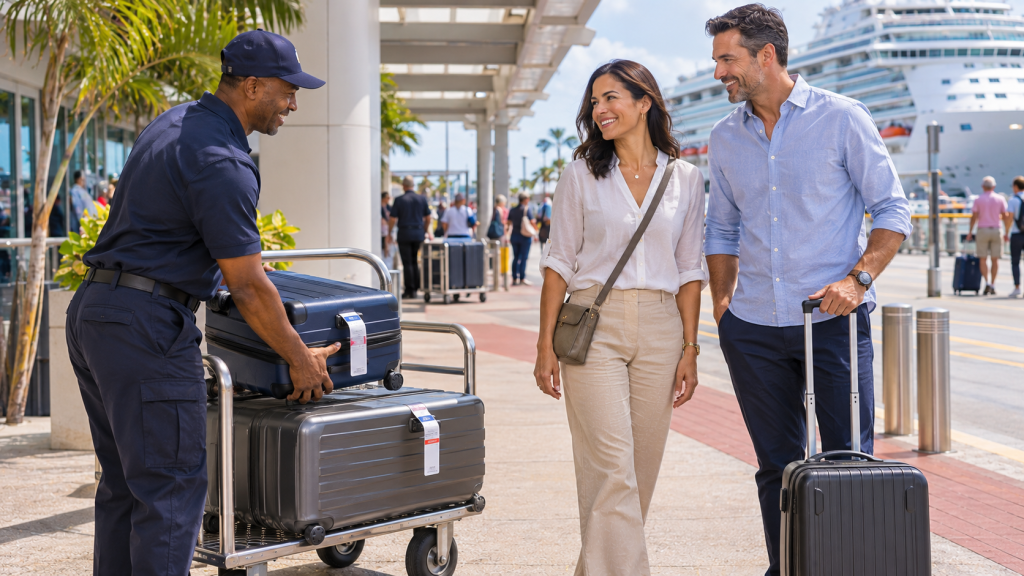
Unlike checking into a hotel, boarding a cruise ship often involves separating from your larger suitcases before entering the passenger terminal.
Many cruise lines allow guests to hand properly tagged luggage to authorized porters, who arrange for bags to be processed and delivered to the appropriate cabins.
You then complete terminal check-in and security screening with the belongings you’ve chosen to carry yourself.
That arrangement makes luggage identification especially important.
Check Your Cruise Luggage Tags Before Leaving Home
Cruise luggage tags help the ship’s baggage-handling team identify the correct sailing, cabin, and destination for each suitcase.
Royal Caribbean, for example, provides luggage tags through its guest travel documents.
The tags contain information associated with the passenger’s ship, sailing date, stateroom, and deck. (Royal Caribbean — How to Get Luggage Tags)
If you forget your Royal Caribbean luggage tags, generic tags are normally available from porters at the pier.
However, preparing them before departure can save an unnecessary step at the terminal. (Royal Caribbean — Replacement Luggage Tags)
Other cruise lines may use different luggage-labeling procedures, so check your own cruise documents rather than assuming every terminal follows the same system.
Top Cruise Deals From Trusted Cruise Lines
Compare exclusive online offers and find the fare that fits your trip and your budget

Before handing over your suitcase, confirm that the attached tag identifies the correct cabin and sailing.
It’s also sensible to include your contact details inside your luggage in case an external label becomes damaged or detached.
Know What Happens After You Hand Over a Suitcase
Once a suitcase goes to the authorized luggage-handling team, you may not see it again until it’s delivered to your cabin.
Delivery timing varies, and there’s no guarantee that your bag will be waiting when you first enter your stateroom.
This makes the distinction between checked luggage and belongings you keep with you particularly important.
The detailed embarkation carry-on strategy later in this article explains what to keep accessible during those first hours.
Understanding the baggage-handling process beforehand helps you appreciate why that strategy matters.
Check Airline and Cruise Rules Separately
If you’re flying to your cruise departure port, your belongings may be subject to two different sets of restrictions.
Airport security and airline policies determine what can travel in the aircraft cabin or checked baggage.
Your cruise line then applies its own safety and security policies before allowing belongings onto the ship.
One set of rules doesn’t replace the other.
Airport Liquid Restrictions Don’t Determine Cruise Rules
For flights departing through U.S. airport security, ordinary liquids, gels, and aerosols in carry-on baggage generally fall under the TSA’s 3-1-1 rule.
Containers must typically hold no more than 3.4 ounces or 100 milliliters and fit within one quart-sized bag, subject to applicable exceptions. (TSA — Travel Checklist)
Those requirements apply to the airport-security portion of your journey.
Your cruise line may have separate restrictions on certain beverages, containers, or personal products, regardless of whether they passed airport screening.
This distinction matters when deciding which belongings belong in airline checked luggage, your flight carry-on, or the suitcase you’ll eventually take aboard the ship.
Portable Power Banks Need Special Attention
Portable battery chargers are useful while traveling, but they’re also subject to aviation safety requirements.
The Federal Aviation Administration states that spare lithium batteries, including power banks, must travel in carry-on baggage rather than checked airline luggage.
Battery-capacity restrictions also apply, and airlines may impose additional limitations. (FAA — PackSafe Lithium Batteries)
If an airline requires you to check your carry-on at the gate, remove any spare power banks before surrendering the bag.
You should also check your cruise line’s policies regarding portable chargers and other electronic devices.
Don’t assume that compliance with airline rules automatically establishes shipboard permission.
Why Cruise-Approved Products Aren’t Always Approved
Cruise travelers frequently encounter accessories advertised as cruise essentials or cruise-approved products.
These descriptions can be misleading because cruise lines don’t all permit the same belongings.
Power strips provide a useful example.
Royal Caribbean’s prohibited-items policy includes electrical extension cords, power strips, and multi-plug outlets, subject to its stated exceptions and security review. (Royal Caribbean — Prohibited Items)
Online‑Only Cruise Offers You Won’t Find Elsewhere
Unlock special pricing and start planning the sailing that matches your perfect itinerary

Carnival permits certain power strips, multi-plug adapters, and extension cords without surge protection when used according to its safety conditions. (Carnival — Electrical Outlets and USB Ports)
An accessory that may be acceptable on a Carnival sailing could therefore create a problem on Royal Caribbean.
The important lesson is to verify the exact item against your specific cruise line’s current prohibited-items guidance before purchasing or packing it.
This applies to electrical accessories, appliances, beverages, recreational equipment, and other belongings subject to onboard restrictions.
Plan for the Trip Home Before You Finish Packing
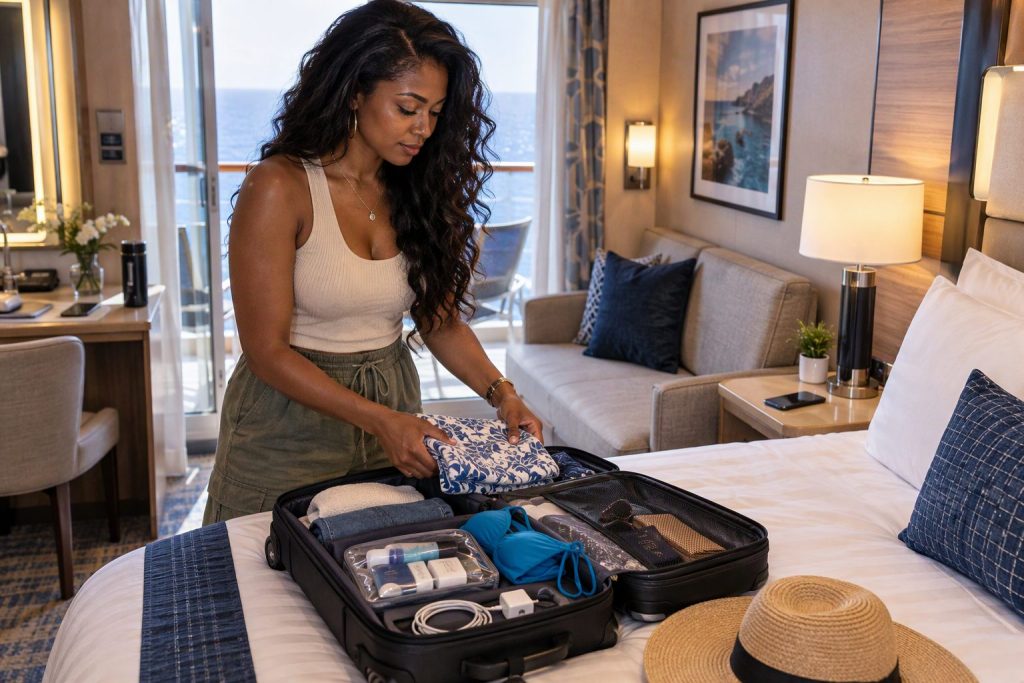
First-time cruisers often concentrate on getting their luggage onto the ship without giving much thought to the journey home.
However, your return trip introduces another set of practical considerations.
You may purchase souvenirs, gifts, clothing, or other items during the cruise.
Even when everything fits comfortably into your suitcase, those additions can increase its weight or make it harder to repack.
If you’re flying home, airline baggage allowances still apply.
An overweight or oversized suitcase can create an unexpected expense at the airport, regardless of how easily it traveled aboard the ship.
If you’re driving, you may have more flexibility, but you still need to transport your belongings through the terminal and back to your vehicle.
Before departure, check your airline’s baggage allowance if applicable, think about whether you’ll be shopping, and consider how easily your luggage can be repacked at the end of the voyage.
The final packing hack in this guide explains why leaving some unused suitcase space can make that return journey easier.
The Most Useful Packing Hack Is Understanding Your Actual Trip
Not every first-time cruiser needs the same packing strategy.
A traveler flying to Miami for a short Caribbean sailing faces different baggage considerations from someone driving to a nearby port or embarking on a longer itinerary with changing weather.
Your cruise length, destinations, transportation arrangements, dining plans, and planned excursions should all influence what you bring.
Before following any packing recommendation, ask whether it solves a genuine problem on your particular trip.
You don’t need every storage accessory, folding technique, or piece of travel equipment marketed to cruise passengers.
The useful ones are those that make your luggage easier to transport, your cabin easier to organize, or your belongings more accessible when you need them.
With those details established, the ten packing hacks below become easier to evaluate and apply to your first sailing.
Define Roles Before You Pack: Stop Guessing
Packing for your first cruise can feel like a test you did not study for.
You are trying to guess what life will feel like on a ship you have never stepped on.
Port days, sea days, dress codes, weather swings, and small cabins all pile into the same suitcase.
That is usually when people start tossing “just in case” items into their bags and hoping for the best.
There is a calmer way to do this.
You do not need a perfect packing list to have a great cruise.
What you need are a few smart, practical hacks that make the suitcase feel under control.
Once packing feels under control, the whole trip feels more manageable.

Luxury Cruise Experiences at Smarter Prices
See premium sailings and upgraded cabins priced for travelers who know how to book well
The ideas below are built specifically for first-time cruisers.
Every hack is meant to be simple enough to actually use, not just smile at on a blog.
Some tricks save space.
Others save time or protect your mood on embarkation day.
All of them are about the same thing—helping you step onboard feeling prepared instead of second-guessing everything.
When your bag works with you, the cruise feels more like a vacation and less like a logistics project.
Define Roles Before You Pack: Stop Guessing
Most overpacking happens when everything looks useful in theory.
Packing becomes calmer when you ask each item one question: “What is your job on this trip?”
A job might be comfort for long walks in port.
Another job could be warmth on a windy deck or polish at dinner.
When every item has a clear role, duplicate pieces are easier to spot and leave at home.
That is how the suitcase starts to shrink without feeling like you are giving anything up.
Think about the roles that matter most on a cruise.
You will need something to walk in comfortably.
You will want a way to handle cool air-conditioned theaters and breezy railings.
You will want at least one outfit that feels a little dressier for nicer dinners.
You will also need a tiny “safety net” kit so embarkation day feels under control even if checked bags arrive late.
Once these roles feel defined, packing stops being a guessing game.
Role-Based Packing Snapshot
Pick a shoe that handles long days in port without complaining.
Add one pair that looks right for dinner and evening shows.
Choose a mid-weight layer that works for chilly indoor spaces and breezy decks.
Include a light outer layer that blocks drizzle and wind when the weather surprises you.
Build a small carry-on kit that lets you eat, relax, and swim even if your suitcase is still being delivered.
Why This Reduces Stress
A suitcase full of “maybes” creates noise every time you open it.
A suitcase full of pieces with jobs feels straightforward.
Straightforward is exactly what you want as a first-time cruiser.
Hack 1: Build a “First Six Hours” Carry-On Kit
Embarkation day has its own rhythm.
You check in, clear security, and step onto the ship full of adrenaline and questions.
Cabins may not be ready yet, and checked bags often show up later in the afternoon.
Those first few hours can either feel relaxed or frustrating, depending on what you can reach quickly.
A tiny “first six hours” kit in your carry-on flips that from stressful to easy.
Think of this as your mini day-one survival bag.
It does not need to be large or heavy.
It only needs to hold the things that would genuinely frustrate you to be without.
Many cruisers like using a small Travelpro underseat bag or compact spinner for this kit because it rolls easily through the terminal and still fits close by once you are onboard.
That kind of bag is large enough for essentials but small enough to handle without strain.
What Goes Into the Six-Hour Kit
Medications and daily health items belong with you, not in a bag you cannot reach.
Travel documents, IDs, and cruise paperwork should also stay in this bag.
A swimsuit and cover-up or lightweight outfit let you head straight to the pool or hot tub.

Sail Away to Paradise Without Overpaying
Find cruise deals that make it easy to escape, relax, and enjoy the ocean without stretching your budget
Basic toiletries, a travel-size deodorant, and a quick face refresh item help you feel human again after travel.
Chargers and a small power bank keep your phone from dying right when you need to check times or take photos.
If you wear contacts or glasses, pack a small backup here as well.
Why This Hack Matters
Embarkation day feels lighter when you can relax before the cabin is ready.
You get to start the cruise with lunch, a swim, or a quiet corner on deck instead of hovering and worrying about luggage.
That tone carries into the rest of the week.
Hack 2: Build a Cruise Capsule Wardrobe: More Outfits, Less Stress
Stuffing the suitcase with “options” is the classic first-cruise instinct.
It feels safe, but it usually backfires.
Cabins have limited storage, and piles of clothing create visual noise that never quite goes away.
A small cruise capsule wardrobe is easier to live with and surprisingly flexible.
A capsule is just a set of pieces that all work together.
Every top goes with every bottom.
Layers match everything.
Shoes cover roles instead of single outfits.
That kind of planning gives you more usable outfits from fewer pieces.
Travelpro packing cubes are helpful here because they let you group items by type or by “day,” then slide cubes straight into drawers.
You are not buying organization to show off—it simply keeps the cabin from turning into a clothing tornado.
How to Build a Simple Capsule
Pick two or three bottoms that you already love wearing—shorts, casual pants, or skirts that fit your style.
Add four to six tops that all match those bottoms, with a mix of casual and slightly dressier looks.
Include one dedicated dinner or photo-friendly outfit that makes you feel a little extra polished.
Layer in one mid-weight piece, like a light sweater or soft jacket, that works with everything in the pile.
Finish with one packable outer layer for wind or light rain so you can still enjoy the deck and ports when the forecast shifts.
Why Capsules Feel So Reassuring
Standing in front of a tiny cruise closet wondering what matches what is not relaxing.
Standing in front of a small set of mix-and-match pieces is.
You know anything you grab will work, and that calm is worth more than one extra “maybe” outfit.
Hack 3: Roll the Soft Stuff, Protect the Structured Stuff
Everyone has heard “roll your clothes to save space.”
That advice helps—up to a point.
Soft items like tees, casual dresses, and workout gear roll beautifully and resist deep creases.
Structured pieces like dress shirts, blazers, and certain dresses need more protection.
Using one rule for everything creates wrinkles you do not want on a formal-night photo or smart-casual dinner.
Splitting your approach keeps things tidy without adding effort.
When Rolling Works
T-shirts, leggings, sleepwear, and simple sundresses are ideal candidates for rolling.
These pieces tuck neatly into corners of a suitcase or packing cube.
Rolled stacks also make it easy to see what you have when you open the bag.
When Folding Wins
Dress shirts, jackets, and more tailored pieces stay calmer when folded and gently compressed.
A garment folder or the built-in suiter section inside some Travelpro checked bags can make a real difference here.
The goal is not museum-level crispness, only “good enough that you feel confident walking into the dining room.”
Why This Hack Helps Emotionally
Wrinkled clothes can make you feel underdressed even when you are technically “within dress code.”
Neater pieces take that worry off the table so you can focus on enjoying the evening.
Hack 4: Give Every Small Thing a Parking Spot
Cruise cabins look clean when you first walk in.
A few hours later, chargers, keycards, sunscreen, and lip balm can be scattered everywhere.
Little items are the first to go missing and the easiest to trip over mentally.
A simple over-the-door organizer or a few small pouches can change the entire feel of the space.
This does not need to be complicated or expensive.
You are simply giving small things a home so your brain does not have to keep track of them.
Easy Ways to Do It
An organizer that hangs on the bathroom or closet door can hold sunscreen, hair accessories, small toiletries, and extra masks or wipes.
Soft zip pouches can group electronics—one for chargers and cables, another for headphones and small tech.
A small tray or corner of the desk becomes the designated spot for keycards, sunglasses, and daily essentials.
Why This Feels So Good
When you always know where sunscreen or your charger lives, you stop feeling like you are constantly searching for things.
That break in mental clutter is surprisingly calming on a first cruise.
Hack 5: Let Laundry Replace Half a Suitcase
Many new cruisers pack a fresh outfit for every single day and night.
That approach fills drawers fast and makes it hard to keep track of what you brought.
Cruise ships often have laundry services or self-serve machines, and even without that, quick sink washes for a few basics are possible.
You do not need to plan a major laundry day.
You only need to give yourself permission to rewear certain pieces.
Smart Laundry-Minded Choices
Quick-dry underwear and base layers are easier to wash and rewear.
Neutral shorts or pants can appear in multiple outfits without feeling repetitive.
Sleepwear and casual loungewear can serve double duty in the cabin.
Emotional Upside
A smaller wardrobe means fewer decisions every day.
Fewer decisions create more mental space for actually enjoying the ship and ports.
Hack 6: Make Shoes Do Specific Jobs
Shoes are one of the fastest ways to turn a sensible suitcase into a heavy one.
First-time cruisers often toss in pairs for every mood and outfit.
Feet care more about comfort and roles than variety.
A simple rule set keeps things reasonable here.
Build a Three-Role Shoe Lineup
Choose one pair that makes your feet happy on long walking days in port.
Pick a slightly nicer pair that feels right for dinner and evening venues.
Add a sandal or flip-flop option that works for pools, hot tubs, and beach days.
A fourth pair can come along only if it genuinely solves a specific need, such as proper athletic shoes for the gym or a specialty excursion.
Why This Hack Matters
Dragging around a heavy suitcase because of extra shoes does not feel good at the end of a travel day.
Smart choices here protect both your back and your mood.
Hack 7: Use a “No Confiscation” Filter Before You Zip the Bag
Cruise security cares deeply about fire safety and onboard risk.
That concern shows up in the list of items they will pull from bags.
Nothing ruins the start of a vacation like having a bag flagged for inspection over something you could have left at home.
You do not need to memorize every line of a policy to avoid problems.
A simple filter helps you catch the most common issues.
Questions to Ask Before Packing
Does this item heat up, steam, or create an open flame?
Could this be considered a tool, weapon, or self-defense item?
Is this a bulky surge-protected power strip instead of a simple non-surge extension?
If the answer is yes or “I am really not sure,” the safe move is leaving it out or checking the cruise line guidance before it ever touches your suitcase.
Why This Hack calms Your Nerves
Security becomes just another smooth step instead of something you dread.
A clean bag moves through screening quickly, which instantly lowers stress.
Hack 8: Pre-Pack a Port-Day Pouch
Shore days are usually the highlight of a cruise, especially for first-timers.
They are also where tiny packing misses show up the loudest.
Forgetting sunscreen, bandages, or a hat feels small at home but big on a hot pier.
A simple port-day pouch keeps the basics together and ready to go.
You drop it into whatever day bag you are using and walk off the ship knowing the essentials are covered.
What to Include
Sunscreen, lip balm with SPF, and a pair of sunglasses belong here.
Bandages or blister patches, plus any small personal medicines you might appreciate during a long walk, are worth the space.
A foldable hat or light scarf protects you in strong sun.
A compact rain shell or travel umbrella can save the day in shoulder-season ports.
A refillable water bottle and a light snack keep energy steady between stops.
Travelpro organizers or small packing cubes make great port-day pouches because they are easy to grab from a drawer and drop into a backpack or tote.
Why This Helps First-Timers
Stepping off the ship already prepared feels very different from realizing what you forgot halfway through an excursion.
Confidence rises when you know your basics are already handled.
Hack 9: Choose Smart Luggage That Works for You
Good luggage cannot fix every mistake, but it can remove a lot of friction.
Smooth wheels make long terminals and cruise piers less tiring.
A stable handle keeps the bag from twisting and fighting you.
Thoughtful interior structure keeps things from sliding into a messy pile.
Those details matter more when you are trying to learn a brand-new travel environment like a cruise ship.
Travelpro bags are built around exactly those pain points—easy rolling, strong handles, and interiors that actually help you stay organized instead of giving you one big empty box.
A well-designed carry-on, plus a medium checked spinner, is often the sweet spot for first-time cruisers.
You get enough room for what you truly need, with enough structure to keep it all under control.
Why This Counts As a “Hack”
When your bag rolls smoothly, stands up straight, and opens into usable sections, your energy stays focused on the fun part of the trip.
You are not wrestling zippers, chasing runaway wheels, or digging blindly for that one shirt you know is “in there somewhere.”
Hack 10: Leave Yourself a Little Breathing Room
The last hack is simple and often ignored.
Do not pack your suitcase to the absolute brim.
A bit of empty space is not “wasted.”
It is breathing room.
Space left over can hold small souvenirs or an extra layer you pick up along the way.
Room inside the bag also makes it easier to re-pack at the end of the cruise without sitting on the suitcase.
Most importantly, leaving space is a physical reminder that you did not have to panic-pack to feel prepared.
Why Breathing Room Feels Reassuring
A suitcase that closes easily and rolls without strain tells your nervous system, “We are okay. We have what we need.”
That is exactly the feeling you want when you walk up the gangway for the first time.
Common Packing Mistakes First-Time Cruisers Make
Even with good intentions, some patterns show up again and again.
Knowing them in advance helps you sidestep them gracefully.
Mistake 1: Checking Everything and Keeping Almost Nothing With You
Sending every bag with the porter feels efficient in the moment.
Later, you realize your swimsuit, medications, and phone charger are all inside those bags.
Then you stand on deck watching other people swim and relax while you wait for luggage.
A small carry-on kit prevents that entire spiral.
Mistake 2: Bringing Shoes for Every Outfit
Multiple pairs that do almost the same thing eat space fast.
Extra bulk here usually does not translate into extra comfort.
Feet mostly care about support and fit.
If each pair has a clear job, you are probably set.
Mistake 3: Packing As If Laundry Does Not Exist
Some travelers pack as if they are heading to a remote cabin with no services.
Cruise ships are more flexible than that.
A small willingness to rewear items can cut your clothing volume dramatically.
Mistake 4: Ignoring Cabin Storage
Drawers, closets, and shelves exist, but they are not endless.
Overpacking turns every surface into a storage zone.
That clutter quietly drains energy every day.
Why Seeing These Mistakes Helps
Once you recognize the patterns, it is easier to pause before you add “just one more” item.
That pause is often all you need to make a different, calmer choice.
Fears First-Time Cruisers Have About Packing—and How to Calm Them
Packing fear usually sounds like, “What if I don’t have what I need?”
Sometimes it sounds like, “What if I look out of place?”
On cruises, those fears are very common and very human.
A few simple shifts can soften them.
If you worry about comfort, focus on roles—good shoes, smart layers, and that “first six hours” kit.
If you worry about looking out of place, remember that ships see all kinds of styles on every sailing; neat, comfortable, and confident beats trendy and miserable every time.
If you worry about travel hiccups, a solid carry-on plus well-chosen checked bag already protects you more than you think.
You are not expected to pack like a seasoned cruiser on your first trip.
You are allowed to learn as you go.
The hacks in this guide are not about impressing anyone.
They are about shortening the learning curve so you can spend more time on the balcony, in the pool, or exploring ports—and less time staring into a suitcase wondering why you brought half your closet.
FAQ – What Should First-Time Cruisers Know About Cruise Packing Hacks?
What are the most useful packing hacks for your first cruise?
The most useful packing hacks help you organize belongings, reduce unnecessary clothing, and keep important items accessible during travel.
A small embarkation carry-on, mix-and-match wardrobe, and organized packing cubes can solve several common first-cruise problems.
Checking your cruise line’s prohibited-items policy is equally important because some popular travel accessories aren’t permitted aboard every ship.
Choose hacks that address your actual itinerary and travel arrangements rather than trying every packing trick you encounter.Is rolling clothes better than folding them for a cruise?
Rolling can work well for soft clothing such as T-shirts, leggings, sleepwear, and casual garments.
Structured items, including blazers and certain dress shirts, may benefit from careful folding or a garment folder instead.
Neither method guarantees fewer wrinkles or more suitcase space because results depend on the fabric, clothing construction, and packing pressure.
Use whichever approach keeps each garment organized and protected without overfilling your luggage.How many suitcases should you bring on your first cruise?
The appropriate number depends on your cruise length, clothing needs, transportation arrangements, and cruise line’s luggage policy.
Many first-time cruisers find that a manageable checked suitcase and a smaller carry-on provide enough space for their belongings.
Travelers flying to their departure port must also consider airline baggage allowances and possible fees.
Choose luggage you can comfortably handle through airports, terminals, and other transportation connections rather than filling every bag you’re permitted to bring.What should you pack in your first six hours cruise carry-on?
Your carry-on should contain required travel documents, identification, medications, valuables, and belongings you may need before your checked suitcase arrives.
A swimsuit, change of clothes, sunscreen, and basic personal-care items can make your first afternoon more convenient.
Keep essential electronics and chargers accessible, especially if you use your phone for boarding information or communication.
Choose a bag you can carry comfortably because your cabin may not be available immediately after boarding.Do you need special luggage tags for a cruise?
Many cruise lines provide luggage tags that identify your ship, sailing, and assigned stateroom.
These tags help authorized porters and shipboard staff direct checked suitcases to the correct cabins.
Some cruise lines allow passengers to print tags before departure, while others provide alternatives at the terminal.
Review your cruise documents and attach the required tags securely before handing over your luggage.Can you carry your own suitcase onto a cruise ship?
Many cruise lines allow passengers to carry suitable luggage aboard instead of handing everything to terminal porters.
However, bags may need to meet size requirements for security screening, and passengers must be able to manage them independently.
Carrying a large suitcase can become inconvenient when cabins aren’t ready immediately after boarding.
Check your cruise line’s carry-on policy before deciding whether keeping a larger bag with you is worth the additional effort.How do you keep your cruise cabin organized without packing extra storage equipment?
Start by unpacking clothing into the cabin’s available drawers, shelves, and closet rather than leaving everything inside your suitcase.
Use a few small pouches to group chargers, toiletries, and accessories that would otherwise scatter across countertops.
Give frequently used items a consistent location so you don’t have to search for them repeatedly.
Before bringing hanging organizers or magnetic accessories, check whether your cruise line permits their use and whether they’re suitable for your cabin.Are packing cubes worth bringing on your first cruise?
Packing cubes can help separate clothing categories, simplify unpacking, and make items easier to locate in a small cabin.
They are particularly useful when you’re sharing luggage or want to keep daytime and evening clothing organized.
However, packing cubes don’t automatically reduce the total weight or volume of your belongings, and overfilling them can create unnecessary pressure on clothing.
Use a small number of appropriately sized cubes rather than purchasing an elaborate organization system you may not need.Can you bring a power strip or extension cord on a cruise?
Power-strip and extension-cord rules vary by cruise line, so an accessory permitted on one ship may be prohibited on another.
Royal Caribbean restricts extension cords, power strips, and multi-plug outlets, while Carnival permits certain non-surge-protected accessories under specified safety conditions.
Products advertised as cruise-approved aren’t automatically accepted by every cruise operator.
Check your cruise line’s current prohibited-items policy before packing or purchasing electrical accessories.Should you pack a portable power bank for your cruise?
A portable power bank can be useful during travel days and long shore excursions when charging outlets aren’t readily available.
If you’re flying, spare lithium batteries and power banks generally belong in carry-on baggage rather than checked luggage, subject to capacity and airline restrictions.
Your cruise line may also have rules governing certain charging devices.
Verify the applicable requirements before departure and avoid traveling with damaged or recalled batteries.How many pairs of shoes should you bring on your first cruise?
Many first-time cruisers can manage with comfortable walking shoes, appropriate evening footwear, and sandals or pool shoes.
Additional pairs may be justified for activities such as hiking, water excursions, or specialized sports.
Packing several shoes that perform nearly identical functions can add substantial weight without providing much practical benefit.
Choose footwear that has already proven comfortable rather than relying on brand-new shoes throughout your vacation.Can you wash clothes onboard instead of packing more outfits?
Laundry options depend on the cruise line and ship, with some offering self-service facilities and others providing paid laundry or pressing services.
Checking those arrangements before departure can help you determine whether packing fewer garments is realistic.
Some clothing may also be suitable for careful handwashing, provided the fabric permits it and you can dry it appropriately.
Don’t build your packing plan around laundry facilities until you’ve confirmed they’re available on your sailing.What is a cruise capsule wardrobe?
A cruise capsule wardrobe is a small collection of clothing designed to create multiple outfits from interchangeable pieces.
For example, several coordinated tops can work with the same shorts, trousers, or skirts, reducing the need for complete outfits for every day.
Layers and versatile eveningwear can further increase your options without adding excessive luggage.
The approach works especially well when you choose clothing suited to your itinerary, dining requirements, and preferred activities.Should you leave extra space in your suitcase for souvenirs?
Leaving some unused space can make packing for the return journey easier, particularly if you expect to purchase clothing, gifts, or souvenirs.
However, an empty compartment doesn’t guarantee that you’ll remain within your airline’s weight allowance.
Consider the size and weight of potential purchases, especially when flying home after your cruise.
You can also carry a lightweight reusable bag for permitted personal items, but check airline baggage restrictions before relying on it as extra luggage.What should you pack differently for port days and sea days?
Sea days generally involve activities aboard the ship, while port days may require clothing and equipment suited to sightseeing, beaches, or excursions.
Comfortable walking shoes, weather protection, appropriate identification, and essential personal items may be especially important ashore.
The specific contents of your port-day bag should reflect your destination and planned activities rather than a generic checklist.
Review excursion instructions and local conditions before deciding which belongings to take off the ship.Can you bring an over-the-door organizer on a cruise?
Some travelers use hanging organizers to store toiletries, chargers, and small accessories inside their cabins.
However, cruise lines may restrict certain hanging devices, and hooks can damage doors or other cabin surfaces if used improperly.
Before packing one, check the cruise line’s policy and consider whether the cabin already provides sufficient storage.
Small zippered pouches may offer a simpler alternative without requiring additional hanging equipment.What should you do if your checked luggage doesn’t arrive at your cabin?
Checked luggage delivery can take several hours after boarding, so a missing suitcase early in the afternoon doesn’t necessarily indicate a problem.
If your bag hasn’t arrived within the cruise line’s expected delivery period, contact guest services or follow the ship’s luggage assistance instructions.
Keep your luggage identification information available in case staff need to trace the suitcase.
Essential medications, travel documents, and valuables should remain in your carry-on so a delay doesn’t leave you without critical belongings.Can you use the same packing hacks for Caribbean and Alaska cruises?
Many organization techniques, including packing cubes, coordinated outfits, and an embarkation carry-on, work across different itineraries.
However, the clothing and equipment you need can vary considerably between warm-weather Caribbean destinations and cooler Alaska sailings.
Alaska travelers may prioritize weather-resistant layers, while Caribbean passengers may need more sun protection and warm-weather clothing.
Apply the same organizational principles but adjust the contents to match your actual destinations, season, and excursions.What are the biggest packing mistakes first-time cruisers make?
Common mistakes include bringing duplicate clothing, packing uncomfortable shoes, leaving essential items in checked luggage, and overlooking cruise-line restrictions.
Some travelers also purchase unnecessary organizers or accessories before understanding what their ship provides.
These decisions can increase luggage weight, clutter the cabin, and create avoidable problems during embarkation.
Reviewing your itinerary, baggage policies, and planned activities before packing can prevent many of these issues.When should you start preparing your cruise packing plan?
Begin reviewing your travel documents, airline requirements, and cruise-line baggage policies well before your departure date.
That gives you time to identify any essential items you need to replace, purchase, or verify with the cruise line.
During the final days before sailing, check destination weather forecasts and confirm your transportation and embarkation arrangements.
Complete a final luggage and carry-on check before leaving home, paying particular attention to identification, medications, and prohibited belongings.
Plan Your Next Cruise!

Sail Into Modern Luxury: Celebrity Cruises for Design, Culinary Excellence, and Destination‑Rich Voyages
One Delay Can Cost Your Entire Cruise A quick coverage check now protects you from the problems no one sees coming….

Sail Into Freestyle Freedom: Norwegian Cruise Line for Adventure Thrills, Gourmet Dining, and Destination‑Rich Voyages
One Delay Can Cost Your Entire Cruise A quick coverage check now protects you from the problems no one sees coming….

Escape To Paradise: Inside The Exclusive World of Cruise Line Private Islands
One Delay Can Cost Your Entire Cruise A quick coverage check now protects you from the problems no one sees coming….

Sail Boldly: Experience Virgin Voyages’ Adults‑Only Cruises With Style, Freedom, And Fun
One Delay Can Cost Your Entire Cruise A quick coverage check now protects you from the problems no one sees coming….
Explore More

Sail Into Italian Elegance: Costa Cruises for Culture, Cuisine, and Unforgettable Voyages
Sail Into Modern Luxury: Celebrity Cruises for Design, Culinary Excellence, and Destination‑Rich Voyages

Sail Into Timeless Luxury: Cunard Cruises for Transatlantic Elegance and Destination‑Rich Voyages