One Delay Can Cost Your Entire Cruise
A quick coverage check now protects you from the problems no one sees coming.
Short Excerpt
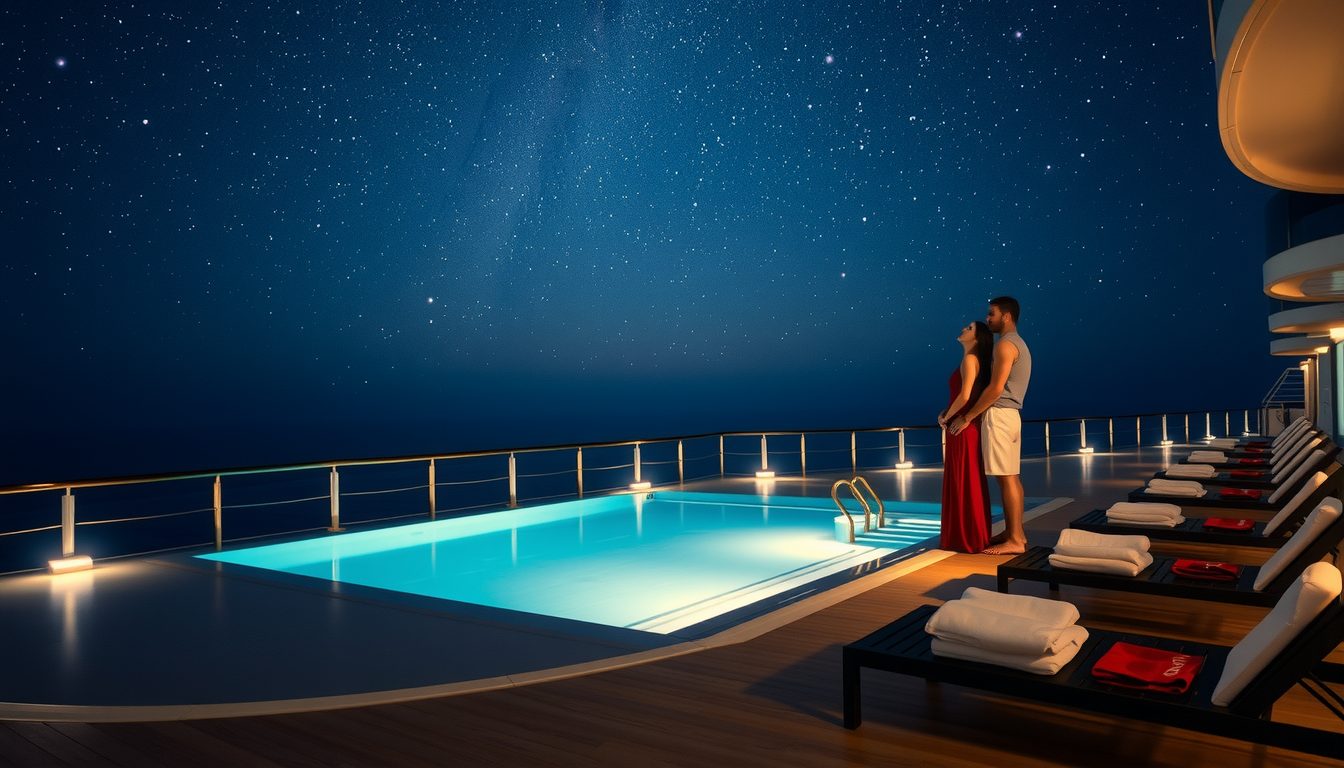
- Open-ocean cruising can create remarkable stargazing conditions because ships often travel far from the light pollution surrounding major cities.
- Alaska, the South Pacific, Norwegian fjords, Antarctica, Hawaii, and remote Caribbean routes can provide particularly memorable night-sky experiences.
- Darker moon phases, remote itineraries, the right viewing location, and a little preparation can dramatically improve what you see from the ship.
Quick Take
- Choose itineraries with long stretches at sea or routes through remote regions with limited artificial light.
- Plan around a new moon or crescent moon when darker skies are important to you.
- Northern itineraries can add aurora possibilities, while southern routes reveal constellations unavailable from northern latitudes.
- Binoculars can improve your view without requiring you to travel with a telescope.
- Download a stargazing app before sailing so you can identify stars and constellations even when internet access is limited.
- Find the darkest accessible outdoor area aboard and give your eyes time to adjust before judging the quality of the sky.
Turn a Cruise Night Into One of the Best Stargazing Experiences of Your Trip
You do not necessarily need a dedicated astronomy cruise to experience an extraordinary night sky at sea.
One of cruising’s natural advantages is distance from cities, highways, buildings, and other sources of artificial light that wash out stars on land.
Once a ship reaches darker open water, constellations, planets, meteor activity, and portions of the Milky Way can become easier to see under favorable conditions.
Where you sail can make that experience even stronger.
Remote South Pacific routes provide dark tropical skies and access to southern celestial landmarks such as the Southern Cross, while Alaska and northern European itineraries can combine stargazing with opportunities to see the aurora during suitable seasons.
Antarctic voyages take that remoteness even farther, and Hawaiian itineraries place travelers in a part of the Pacific already famous for astronomy.
The Caribbean and Mediterranean can also provide rewarding nights, particularly when skies are clear and the ship is well away from major coastal development.
Timing deserves just as much attention as destination.
A bright full moon can illuminate the ocean beautifully, but it can also overpower many fainter stars.
Traveling around a new moon or thin crescent gives you darker conditions, while aligning your sailing with a major meteor shower can turn an ordinary night on deck into a highlight of the voyage.
Your ship matters too.
Bright pool decks, illuminated signs, restaurants, and entertainment areas can interfere with night vision even when the surrounding ocean is exceptionally dark.
Observation areas farther from concentrated lighting generally provide better viewing, and organized stargazing programs may temporarily reduce nearby lighting when operationally possible.
You also do not need complicated equipment.
Your eyes can reveal plenty once they have adjusted to the darkness, while compact binoculars can add detail without creating the stability problems that come with trying to use a telescope on a moving ship.
A stargazing app, warm layer, and red-light flashlight can make the experience considerably easier.
The result is a cruise activity that costs almost nothing, works for beginners as well as astronomy enthusiasts, and can transform a quiet night at sea into one of the most memorable parts of the trip.
Make the Night Sky Your Destination with Stargazing Cruises
First things first: almost any ocean cruise provides excellent opportunities for stargazing.
The absence of light pollution in the middle of the ocean makes it an ideal setting for viewing stars, planets, and constellations.
Whether you’re on a luxury liner or a budget-friendly vessel, simply stepping onto the ship’s deck after sunset can reveal a dazzling display of celestial wonders.
For the best experience, choose a cruise with open decks or special observation areas.
Many modern ships are designed with stargazing in mind, offering secluded observation decks or even lounges with skylights for comfortable viewing.
Online‑Only Cruise Offers You Won’t Find Elsewhere
Unlock special pricing and start planning the sailing that matches your perfect itinerary

Sail Itineraries Built for Deep Cosmic Connection
If you’re passionate about astronomy, consider booking a cruise specifically designed with stargazing in mind.
These itineraries often feature guest astronomers, onboard telescopes, and lectures about the night sky.
Beyond just casual stargazing, these cruises aim to enrich your understanding of the cosmos.
Here are some top options:
Viking Ocean Cruises
Known for their smaller ships and intimate settings, Viking offers itineraries like the “Into the Midnight Sun” cruise, which sails through the Arctic Circle.
The experience is tailored for celestial enthusiasts, with opportunities to witness the midnight sun in summer or the dazzling northern lights in winter.
Their planetarium, available on select ships, provides immersive shows, helping passengers grasp complex astronomical concepts.
Guests can also attend astronomy lectures led by knowledgeable experts, ensuring both beginners and seasoned stargazers leave with newfound insights.
Princess Cruises
Princess Cruises has partnered with Discovery at Sea to offer stargazing programs led by expert guides.
These sessions are designed for all ages, making them perfect for families or beginner stargazers.
Guests are provided with telescopes, star maps, and cozy blankets to enhance their viewing experience.
On select itineraries, you may even participate in workshops about celestial navigation, learning how sailors once used the stars to traverse vast oceans.

Sail Away to Paradise Without Overpaying
Find cruise deals that make it easy to escape, relax, and enjoy the ocean without stretching your budget
Royal Caribbean’s Astronomy Cruises
Royal Caribbean occasionally hosts themed cruises focusing on astronomy, making them a haven for space enthusiasts.
Onboard activities include interactive workshops, where passengers can learn to identify constellations and track planets.
Planetarium shows are offered on select ships, allowing guests to explore distant galaxies from the comfort of a luxurious theater.
Top-tier astronomers often join these cruises, providing engaging lectures and hands-on stargazing sessions that cater to all levels of interest.
Paul Gauguin Cruises in the South Pacific
Sailing through remote regions like French Polynesia, Paul Gauguin Cruises offers an unparalleled stargazing experience in the southern hemisphere.
This is one of the few cruises where you can observe unique constellations such as the Southern Cross, which is not visible from northern latitudes.
The smaller ship size creates an intimate setting, and some itineraries include dedicated astronomy events.
Guests can enjoy the serene beauty of tropical nights while receiving personalized guidance from experts.
Hurtigruten Expeditions
Known for their expedition-style cruises, Hurtigruten combines adventure with stargazing opportunities.
Their Arctic Circle voyages provide breathtaking views of the aurora borealis during winter months.
Many itineraries include onboard astrophotography workshops, helping you capture the beauty of the night sky.
The ships are equipped with advanced tools like telescopes and even night-vision equipment for enhanced viewing experiences.
These cruises go beyond casual stargazing, offering curated experiences that blend luxury, education, and an appreciation for the universe.
Whether you’re looking to deepen your knowledge or simply marvel at the night sky, these cruises deliver unforgettable moments under the stars.
Top Cruise Deals From Trusted Cruise Lines
Compare exclusive online offers and find the fare that fits your trip and your budget
Discover Cruise Destinations with the Clearest Skies on Earth
While any ocean cruise offers great stargazing opportunities, certain destinations are particularly known for their exceptional night skies.
These locations combine natural beauty with ideal conditions for observing the cosmos:
Alaska
Cruises through Alaska offer clear, dark skies perfect for stargazing.
In addition to stars, you might also catch the aurora borealis during fall or winter sailings.
Glacier Bay and other remote areas provide minimal interference from artificial lights, making this a prime destination for night-sky enthusiasts.
Some cruise lines also organize nighttime excursions to secluded spots, allowing for even better views.
The Caribbean
With warm tropical nights and minimal cloud cover, the Caribbean is a stargazer’s paradise.
Cruise lines often organize beach stargazing events during shore excursions, where expert guides point out constellations and planets using laser pointers.
The calm sea and balmy weather make it easy to enjoy long hours under the stars.
The Mediterranean
The Mediterranean offers a combination of scenic coastlines and incredible night skies, particularly during summer months when the weather is clear and mild.
Popular itineraries through the Greek Isles or along the coast of Italy offer passengers tranquil settings to observe the heavens.
Some cruises even coordinate their schedules with celestial events, ensuring passengers experience something truly magical.
The South Pacific
The South Pacific is home to some of the clearest skies in the world.
Remote islands like Bora Bora and Tahiti are far from urban areas, providing unmatched views of the Milky Way and constellations like the Southern Cross.
Cruises in this region often offer nighttime deck parties or astronomy-themed events to enhance the experience.

Luxury Cruise Experiences at Smarter Prices
See premium sailings and upgraded cabins priced for travelers who know how to book well
The Norwegian Fjords
The Norwegian Fjords provide a truly unique stargazing experience, especially during winter months.
As your cruise sails through dramatic landscapes, you’ll have the opportunity to see the aurora borealis lighting up the sky.
These northern lights cruises often include lectures and guided sessions to help passengers understand the science behind this breathtaking phenomenon.
Antarctica
For the ultimate in remote stargazing, Antarctica offers crystal-clear skies and a pristine environment.
Expedition cruises to this region provide unparalleled views of the southern celestial hemisphere, including constellations and phenomena not visible elsewhere.
Guests on these cruises often have access to expert guides who provide insights into both the night sky and the icy terrain below.
Hawaii
Hawaiian cruises combine lush landscapes with perfect stargazing conditions.
The islands’ location in the middle of the Pacific Ocean ensures minimal light pollution.
Many itineraries include nighttime excursions to volcanic peaks like Mauna Kea, where observatories are stationed for their world-class views of the stars.
These destinations offer more than just incredible views; they provide a sense of connection to the universe and the natural world.
Each location has its own unique charm, ensuring your stargazing cruise is as memorable as the celestial wonders you’ll witness.
Master Cruise Stargazing Like a Pro—Even on Your First Voyage
Maximize your stargazing experience on a cruise with these tips:
Choose an itinerary with minimal light pollution
Opt for itineraries that spend more time at sea or travel through remote areas.
Open-ocean routes offer the darkest skies. If possible, research cruises that advertise their “dark-sky” experience.
Bring binoculars or a telescope
While the naked eye can see plenty, a small pair of binoculars or a portable telescope can enhance your experience.
Many compact models are designed specifically for travel. Look for options with a tripod for added stability, especially on a moving ship.
Plan around moon phases
A new moon or crescent moon provides the darkest skies for stargazing.
Check the lunar calendar before booking your cruise. Some cruises even advertise itineraries timed to coincide with these darker phases.
Dress for the weather
Nights at sea can get chilly, so bring a warm jacket or blanket to stay comfortable while watching the stars.
Layering is key, especially on cruises through colder regions like Alaska or Scandinavia.
Don’t forget gloves and a hat for extra warmth.
Join onboard stargazing programs
Many cruise lines offer expert-led stargazing sessions that provide a deeper understanding of what you’re seeing.
These programs often include guided discussions and Q&A sessions.
Check if your cruise offers telescopes or astronomy guides onboard.
Use a stargazing app
Download a stargazing app like SkySafari or Star Walk before your trip.
These apps help identify stars, constellations, and planets in real time, adding an educational element to your experience.
Offline modes are particularly helpful since Wi-Fi at sea can be limited.
Time your viewing for peak celestial events
If possible, plan your cruise to coincide with a meteor shower, a planetary alignment, or an eclipse.
The Perseid and Geminid meteor showers, for example, are spectacular when viewed from the open ocean.
Find the darkest spot on the ship
Locate areas on the ship where lights are minimal, such as observation decks.
Some cruise lines dim the lights on deck during stargazing sessions, making it easier to enjoy the celestial display.
Bring a red flashlight
If you need light to navigate, use a red flashlight.
It preserves your night vision and prevents disruption to others nearby.
These are inexpensive and easily portable.
Keep a star journal
Bring along a notebook to jot down what you see each night.
Note constellations, shooting stars, and any celestial events you observe.
It’s a great way to document your experience and learn more about astronomy.
By following these tips, you’ll not only enhance your stargazing experience but also create lasting memories of the beautiful night skies viewed from the deck of a cruise ship.
Why Stargazing Cruises Create Memories That Last a Lifetime
Stargazing cruises aren’t just about the stars—they’re about connecting with the natural world in a way that’s hard to replicate on land.
The gentle rocking of the ship, the soothing sound of the waves, and the vast expanse of the sky create a magical experience that stays with you long after your journey ends.
Imagine standing on deck, looking up at a sky filled with shooting stars, distant galaxies, and even meteor showers.
For families, stargazing cruises can also be a fantastic educational experience for children.
Kids can learn about astronomy firsthand and develop a greater appreciation for the universe.
Couples, on the other hand, will find stargazing cruises to be incredibly romantic, offering a perfect backdrop for creating lasting memories.
Whether you’re an amateur astronomer or just someone who loves a beautiful night sky, a stargazing cruise is a fantastic way to combine your love of travel with your fascination for the cosmos.
So pack your bags, grab your telescope, and get ready to sail under the stars.
FAQ – How Can You Choose a Cruise for the Best Stargazing at Sea?
Why Are Cruises So Good for Stargazing?
Cruise ships regularly travel through areas with far less artificial light than most populated places on land.
Once the ship moves well offshore, the darker surroundings can make stars, planets, constellations, and other celestial objects easier to see.
Cloud cover, moonlight, ship lighting, and atmospheric conditions still affect visibility, so an ocean location does not guarantee a perfect sky every night.
When those factors cooperate, however, open water can provide a remarkably dark setting without requiring a special trip to a land-based dark-sky site.Which Cruise Destinations Offer Some of the Best Stargazing?
Alaska, the South Pacific, Norwegian fjords, Antarctica, Hawaii, the Caribbean, and parts of the Mediterranean can all provide strong stargazing opportunities.
Remote South Pacific and Antarctic routes stand out because they travel through sparsely populated areas with very little surrounding artificial light.
Northern itineraries add the possibility of aurora viewing during appropriate seasons, while tropical routes can offer comfortable nights for spending longer periods outside.
The best destination depends on whether your priority is exceptionally dark skies, northern lights, southern constellations, warm-weather viewing, or a particular celestial event.Which Cruise Lines Offer Astronomy or Stargazing Experiences?
Viking, Princess, Paul Gauguin, Hurtigruten, and other cruise operators have incorporated astronomy-related programming into certain ships, voyages, or special sailings.
Programs can vary from guided observation and expert talks to astronomy lectures, astrophotography instruction, or educational activities.
Availability is not universal across every ship or departure.
If onboard astronomy programming is important to your decision, verify the activities offered on the specific ship and sailing before booking rather than assuming a cruise line provides the same experience fleetwide.Do You Need a Special Stargazing Cruise to See the Night Sky?
No.
Almost any cruise traveling far enough from heavily illuminated coastlines can provide worthwhile stargazing when skies are clear.
A specialized sailing can add astronomers, lectures, guided sessions, equipment, or programming that helps you understand what you are seeing.
Travelers who simply want to step outside and enjoy a dark night sky can still have an excellent experience on an ordinary ocean cruise.What Is the Best Moon Phase for Stargazing on a Cruise?
A new moon generally gives you the darkest conditions because there is little or no bright moonlight competing with faint stars.
The days around a thin crescent can also work particularly well.
A full moon creates a beautiful scene over the ocean but makes many dimmer celestial objects more difficult to see.
Checking the lunar calendar before choosing your sailing can therefore be worthwhile when stargazing is one of your main priorities.Can You See the Northern Lights From a Cruise Ship?
Yes, on itineraries traveling through sufficiently northern regions during favorable aurora conditions.
Norway and other Arctic routes are particularly associated with northern-lights cruising, while Alaska can also provide opportunities at the right time of year.
Aurora displays depend on solar activity, darkness, cloud cover, latitude, and other conditions, so sightings can never be guaranteed.
Choosing an itinerary designed around darker northern seasons can improve your opportunity compared with traveling during periods of extended summer daylight.Can You See Different Constellations on a South Pacific Cruise?
Yes.
Traveling into the Southern Hemisphere reveals portions of the sky that are difficult or impossible to see from many northern locations.
The Southern Cross is one of the most recognizable examples and can become a highlight for travelers cruising around French Polynesia and other southern destinations.
The farther your itinerary moves from dense development, the more impressive the combination of unfamiliar constellations and dark skies can become.Should You Bring a Telescope on a Stargazing Cruise?
Not necessarily.
The naked eye can provide an excellent experience, and a compact pair of binoculars is often easier to use from a ship.
Telescopes can be challenging because a vessel is continually moving, making precise alignment and high-magnification viewing more difficult.
If your cruise provides guided astronomy sessions or viewing equipment, you may be able to enjoy enhanced observations without packing specialized gear yourself.Where Is the Best Place on a Cruise Ship for Stargazing?
Look for an accessible outdoor area with the least artificial lighting and the widest unobstructed view of the sky.
Bright pool decks, illuminated signs, restaurants, and entertainment spaces can reduce your ability to see faint stars.
Observation decks or quieter outdoor areas may provide better conditions when they are open to passengers.
Always respect closed areas and crew instructions because some dark forward or upper-deck locations may be restricted for navigation, wind, or safety reasons.How Long Does It Take Your Eyes to Adjust for Better Stargazing?
Your night vision improves gradually after you move away from bright lights.
Repeatedly looking at a bright phone screen can undo much of that adjustment and make faint stars harder to see again.
Lowering screen brightness and using a red-light mode can help preserve your ability to see in darker conditions.
Give yourself some uninterrupted time outside before deciding that there is not much to see.Which Stargazing Apps Work Well on a Cruise?
SkySafari, Star Walk, Stellarium, and similar astronomy apps can help you identify stars, planets, and constellations.
An app becomes especially useful at sea because you may be looking at a sky that is unfamiliar compared with what you normally see at home.
Download the app and any necessary offline data before departure because internet access aboard the ship may be limited or expensive.
Using an offline-capable app also means you can identify objects without depending on a cellular connection hundreds of miles from land.Can You Plan a Cruise Around a Meteor Shower?
Yes, and a major meteor shower can provide an excellent reason to choose one sailing date over another.
Events such as the Perseids and Geminids return during generally predictable periods each year, although viewing quality depends on weather, moonlight, your location, and the timing of peak activity.
An itinerary with several nights in open water gives you more opportunities than a schedule that spends most evenings brightly illuminated in port.
Check both the meteor-shower calendar and moon phase because a bright moon can reduce the number of meteors you actually see.Are Stargazing Cruises Good for Children and Beginners?
Yes, because enjoying the night sky does not require previous astronomy knowledge.
Children can learn to recognize constellations, planets, meteor showers, and differences between northern and southern skies while experiencing them directly.
Guided sessions and astronomy programs can make those observations easier to understand without turning the activity into a technical lesson.
Beginners can also start with nothing more complicated than finding a dark spot, looking up, and using an app or star map to identify what they see.What Should You Bring for Stargazing on a Cruise Ship?
A warm layer is useful even on many tropical cruises because wind and nighttime temperatures can make open decks feel cooler than expected.
Binoculars can enhance viewing without taking up much luggage space, while a red flashlight helps you move around without destroying your night vision.
An offline stargazing app can identify celestial objects, and a small notebook can be useful if you want to record what you see.
For colder itineraries such as Alaska, Norway, or expedition routes, additional layers, a hat, and gloves can make staying outside long enough to enjoy the sky much more comfortable.
Plan Your Next Cruise!

Sail Into Italian Elegance: Costa Cruises for Culture, Cuisine, and Unforgettable Voyages
One Delay Can Cost Your Entire Cruise A quick coverage check now protects you from the problems no one sees coming….

From Icon to Oasis: Explore Royal Caribbean’s Groundbreaking Ships and Unforgettable Voyages
One Delay Can Cost Your Entire Cruise A quick coverage check now protects you from the problems no one sees coming….

Discover Princess Cruise Line: Elegant Ships, Immersive Voyages, and World‑Class Experiences
One Delay Can Cost Your Entire Cruise A quick coverage check now protects you from the problems no one sees coming….

Sail Into Freestyle Freedom: Norwegian Cruise Line for Adventure Thrills, Gourmet Dining, and Destination‑Rich Voyages
One Delay Can Cost Your Entire Cruise A quick coverage check now protects you from the problems no one sees coming….
Explore More

Sail Cash‑Free: Where Apple Pay and Google Pay Work on Cruise Ships

Enjoy Cruise Room Service with Menus, Fees, and Perks Explained

Sail into Love: Romantic Cruises That Blend Intimacy, Luxury, and Unforgettable Journeys