One Delay Can Cost Your Entire Cruise
A quick coverage check now protects you from the problems no one sees coming
Short Excerpt
- Seasickness in children can cause nausea, dizziness, sweating, and vomiting, but early recognition and appropriate prevention strategies can help reduce discomfort.
- Fresh air, horizon viewing, thoughtful cabin selection, hydration, and age-appropriate motion sickness treatments can make a first family cruise easier.
- A practical seasickness kit, parent-friendly remedies chart, and clear warning signs help families respond confidently without unnecessary medication or guesswork.
Quick Take
- Watch for early symptoms such as unusual quietness, pale skin, yawning, sweating, or dizziness.
- Choose midship areas and encourage children to look toward the horizon when motion becomes uncomfortable.
- Use small snacks and frequent sips to support comfort and hydration.
- Discuss medication with your pediatrician before sailing, particularly for younger children.
- Seek onboard medical assistance when vomiting persists, dehydration develops, or symptoms seem unusual or severe.
Recognize Your Child’s Seasickness Warning Signs Before Nausea Takes Over
One of the most useful things parents can learn before a family cruise is that seasickness often begins well before a child says their stomach hurts.
Recognizing those early changes gives you an opportunity to respond while symptoms are still relatively mild.
Some children become unusually quiet or lose interest in activities they normally enjoy.
Others start yawning repeatedly, looking pale, complaining of a headache, or asking to sit down.
Increased saliva, sweating, unusual warmth, and dizziness can also appear before nausea or vomiting develops.
Younger children may struggle to describe these sensations. Instead of saying they feel motion sick, they might become clingy, irritable, restless, or suddenly uninterested in food.
These behaviors do not automatically mean your child is seasick.
However, when they occur during noticeable ship movement, especially in a child who has previously experienced car sickness, they are worth paying attention to.
Know When Seasickness Is More Likely to Develop
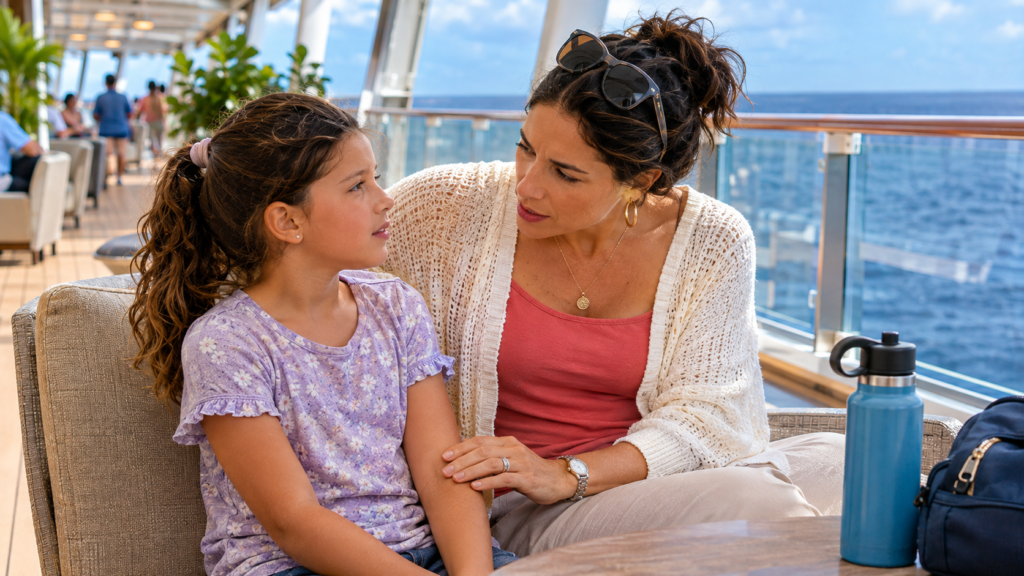
A child’s sensitivity to motion can change throughout the day.
Activities that feel perfectly comfortable when seas are relatively gentle may become unpleasant when the ship encounters stronger rolling or pitching.
Location also influences the experience.
Movement can feel more noticeable toward the front of the ship or on higher decks, while lower and more centrally located areas often experience less pronounced motion.
Visual activities can contribute to discomfort.
Reading books, playing handheld games, or watching a phone screen may increase the mismatch between what a child’s eyes see and what their inner ears detect.
Warm, enclosed environments and strong food odors can make existing nausea more unpleasant.
Moving to a comfortable outdoor area with a visible horizon may help some children feel better, provided conditions on deck are safe.
Prepare for Children Who Cannot Explain Their Symptoms Clearly
Toddlers and younger school-age children may communicate physical discomfort through behavior rather than words.
Parents can make recognition easier by teaching a few simple descriptions before the cruise.
For example, ask your child to tell you when their tummy feels strange, their head feels dizzy, or the ship’s movement makes them uncomfortable.
You can also explain that feeling queasy does not mean they have done anything wrong.
Seasickness is a physical response to movement, not a failure to be brave or enjoy the vacation.
A familiar response routine can make these moments less confusing.
Move your child to a comfortable location, reduce visual stimulation, offer appropriate fluids, and allow time to rest.
Know When Symptoms Need Medical Attention
Although seasickness is a common explanation for nausea during ocean travel, it is not the only possibility.
Gastrointestinal infections, dehydration, overheating, and other medical problems can produce symptoms that appear similar.
Repeated vomiting, inability to keep fluids down, worsening dizziness, unusual drowsiness, or signs of dehydration should prompt medical evaluation.
Top Cruise Deals From Trusted Cruise Lines
Compare exclusive online offers and find the fare that fits your trip and your budget
Severe abdominal pain, confusion, breathing difficulty, or difficulty waking your child require urgent medical attention.
It is also important not to assume that every stomach illness aboard a cruise ship is motion-related.
Vomiting accompanied by fever, diarrhea, or other concerning symptoms should be assessed appropriately, particularly because infectious illnesses can spread in shared environments.
The strongest seasickness plan combines early recognition with a clear understanding of when ordinary comfort measures are no longer enough.
Parents do not need to predict every episode.
They need to recognize developing discomfort, respond appropriately, and know when professional help is the safer choice.
Why Kids Get Seasick on Cruises—and How Parents Can Prevent a Rough First Day
Seasickness in kids can feel like the one worry that overshadows your first family cruise.
You picture pool days and shows, yet wonder if nausea will derail the fun.
Then you imagine a pale face, a queasy stomach, and a child who refuses to leave the cabin.
That worry is normal, especially on a first cruise when everything is unfamiliar.
The truth?
Most seasickness moments can be prevented with a simple plan that starts early and stays steady.
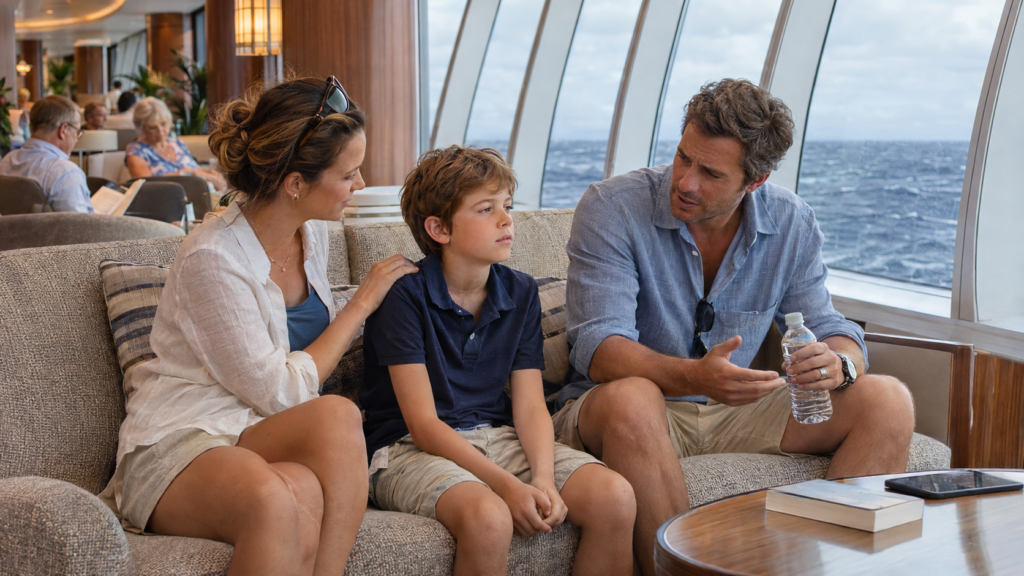
The even better news is that the plan works without turning you into a shipboard medic.
You need a few prevention habits, a few “in the moment” tools, and a clear way to decide what comes next.
This guide gives you practical steps, a kid-friendly remedies chart, and medication basics so you feel prepared—not panicked.
This is NOT medical advice. Always consult your child’s doctor before using any medication or supplement.
Why Kids Get Seasick On A Cruise
Seasickness happens when the brain gets mixed signals from movement, eyes, and inner ears.
A child might feel the ship moving even when the cabin looks still.
Another child might see the horizon shift while their body feels supported in a chair.
That sensory mismatch can trigger nausea, dizziness, sweating, and fatigue.
Kids are also more likely to get motion sickness between ages two and twelve.
A first cruise adds novelty, which can make the body feel more reactive.
Online‑Only Cruise Offers You Won’t Find Elsewhere
Unlock special pricing and start planning the sailing that matches your perfect itinerary
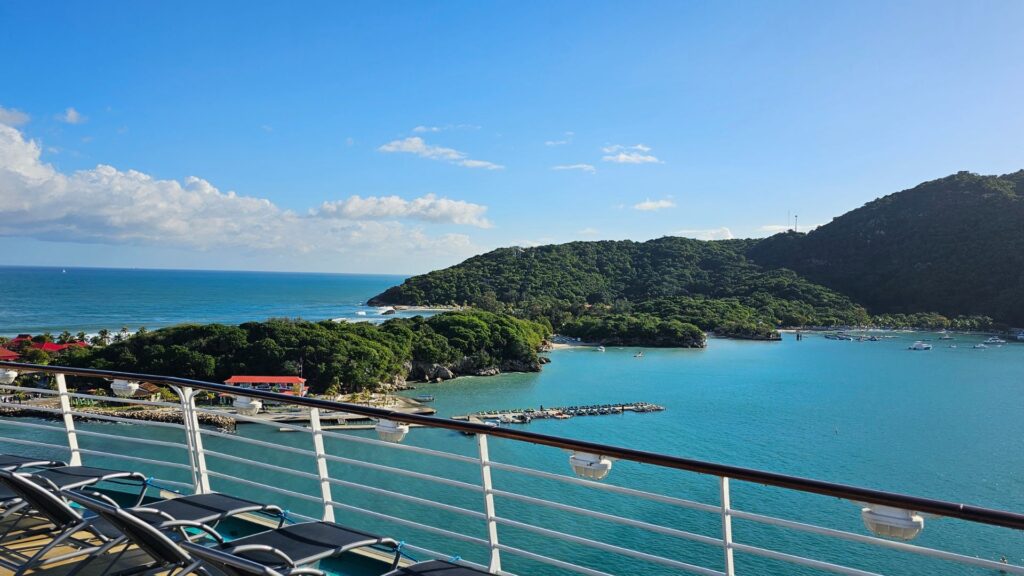
Heat, dehydration, and long gaps between snacks can make symptoms feel stronger.
Once you understand the trigger, your strategy becomes simpler and more effective.
Mixed Signals Explained
Motion sickness is not weakness or drama.
The body is doing a normal protective response to confusing sensory input.
Some kids describe it as “my head feels weird” before they say “I’m nauseous.”
Others go quiet, get clingy, or look glassy-eyed.
Early signs are your advantage window.
Responding early often prevents the full spiral.
That early response is the difference between “a moment” and “the whole afternoon.”
A moment is manageable, and a whole afternoon feels heavy for everyone.
The Cruise Factor
Cruise movement is different from car movement.
A ship can have a slow, rolling motion that never fully stops.
That rolling motion can bother kids most when the sea is choppy.
Cabin location can also play a role, especially on higher decks forward.
Dining smells, warm theaters, and crowded elevators can add discomfort.
None of these factors mean you should avoid cruising with kids.
They simply point you toward prevention habits that reduce the odds.
Prevention is easier than recovery once nausea is strong.
Parent Relief Points
Motion sickness comes from sensory mismatch, not from kid stubbornness.
Early signs give you time to respond before symptoms intensify.
Prevention habits reduce both nausea risk and parent stress.
What “Motion Remedies” Means For Parents
“Motion remedies” is a broad term for the tools that reduce nausea and dizziness during movement.
Some remedies are non-medication options like fresh air, hydration, and horizon time.
Other remedies are over-the-counter medicines used to prevent or treat motion sickness.
A few remedies are wearable supports, like acupressure wristbands.
Parents often feel overwhelmed because the category sounds bigger than it is.
In practice, you only need a small toolkit and a simple order of operations.
Order of operations means you try the lowest-friction options first.
If symptoms continue, you step up to the next level with confidence.
Your Remedy Ladder
Think of remedies as a ladder, not a random pile of ideas.
Step one is environment and timing, like air, shade, and the horizon.
Step two is gentle stomach support, like small snacks and steady hydration.

Luxury Cruise Experiences at Smarter Prices
See premium sailings and upgraded cabins priced for travelers who know how to book well
Step three is wearable supports if your child tolerates them.
Step four is medication, used correctly and at the right time.
Medication works best when given before symptoms explode.
That timing detail is where many first-time parents get tripped up.
A simple ladder keeps you from guessing under pressure.
Why Timing Matters
Most motion sickness medicines work best as prevention.
Once a child is actively vomiting, options shrink and frustration rises.
That does not mean you are powerless after symptoms start.
It means prevention deserves more attention than parents usually give it.
The goal is not “never feel queasy.”
The goal is “bounce back quickly and keep the day enjoyable.”
Bouncing back quickly protects the whole family’s mood.
A better mood makes the cruise feel like the vacation you wanted.
Toolkit Mindset
Remedies work best as a ladder, not as random experiments.
Timing is the hidden superpower for preventing nausea spirals.
A small toolkit reduces overwhelm more than a giant shopping bag.
The Best Prevention Plan Before You Sail
Prevention starts before the ship ever leaves the dock.
A first cruise has so many new sensations that your best move is creating predictability.
Predictability can be as simple as consistent snacks and consistent hydration.
It can also mean choosing the right cabin location when possible.
If you already booked, you still have plenty of ways to reduce risk.
This plan is about building “steady body inputs” on purpose.
Steady inputs make motion feel less threatening to the brain.
Less threat means fewer nausea signals.
Choose Smart Packing
Pack a small “nausea kit” that stays in your day bag.
Include ginger chews or ginger candies if your child tolerates the taste.
Add salty, simple snacks like crackers or pretzels for quick stomach settling.
Bring a refillable water bottle and a few electrolyte packets.
Include a spare shirt and a small plastic bag for emergencies.
Pack a few wipes and a small towel for quick cleanup.
A nausea kit is not pessimistic, and it is freedom.
Freedom is knowing you can handle a moment without panic.
Cabin And Ship Strategy
Midship cabins tend to feel more stable than forward cabins on many ships.
Lower decks can also feel less motion than higher decks in rougher seas.
If you can choose, aim for midship and mid-lower decks for sensitive kids.
If you cannot choose, use the ship itself as your tool.
Spend time midship in public spaces when the sea feels bumpy.
Pick breezier deck areas instead of warm indoor venues during movement peaks.
Use the horizon as a reset, especially after indoor time.
A few location choices can reduce symptoms more than parents expect.
A Quick Test Run
If you plan to use an over-the-counter motion sickness medicine, do a test dose at home first.
Some kids get drowsy, and some kids get paradoxical agitation instead.
Agitation can look like restlessness, whining, or “wired” behavior.
A test dose helps you learn your child’s response in a safe setting.
It also reduces the fear of trying something new on day one.
Always follow age guidance and label directions for any medication.

Sail Away to Paradise Without Overpaying
Find cruise deals that make it easy to escape, relax, and enjoy the ocean without stretching your budget
If your child is under two, talk with a pediatrician for safe options.
A test run is a small step that can save a big chunk of your cruise.
Prevention Takeaways
A packed day-bag kit reduces parent worry in real time.
Midship time and horizon time can lower nausea triggers fast.
Test doses help you avoid surprises with kid reactions to medicines.
Your First-Day Routine That Sets Kids Up For Success
Embarkation day can feel like a sprint, especially with kids.
Lines, excitement, warm spaces, and unusual meal timing stack up quickly.
That stack is exactly what can trigger a first-day nausea episode.
A better plan is to start the cruise like you are easing into a new environment.
Ease-in does not mean boring, and it means controlled inputs.
Controlled inputs include hydration, shade, and short movement breaks.
Your goal is keeping the body regulated while the brain adjusts.
Adjustment happens faster than you think when you guide it.
Start With Simple Fuel
Begin with a simple snack and water, even if your child insists they are fine.
Small snacks prevent the empty-stomach nausea that sneaks up later.
Avoid very greasy foods in the first few hours if your child is sensitive.
Skip heavy ice cream and sugary overload right away if nausea is a pattern.
Choose something salty and plain, then build from there.
Keep water steady rather than chugging all at once.
A steady sip rhythm supports the stomach better than big gulps.
That small rhythm can make the day feel smoother.
Pick The Right Spaces
Hot, crowded, indoor spaces can make queasiness worse.
Choose breezy deck time early, even if only for ten minutes.
Use the horizon as a visual anchor, especially if the ship is moving.
Avoid spinning games and intense motion activities until you see how your child feels.
If your kid wants to explore, do it in short loops with rest breaks.
Short loops prevent fatigue, and fatigue makes nausea feel stronger.
The ship will still be there after the first hour.
A steady start helps you enjoy the rest of the cruise.
Build A Reset Habit
Teach your child a simple reset routine they can repeat.
A reset can be “sit, sip, breathe, look at the horizon.”
Another reset can be “cool air, small snack, then a quiet activity.”
Kids love routines that feel like a secret trick.
A reset routine also gives you something to do instead of worrying.
Action reduces fear, and fear can amplify symptoms.
A reset routine makes the whole situation feel manageable.
Manageable is the word you want on a family cruise.
Day-One Wins
Small snacks and steady sips prevent empty-stomach nausea spikes.
Breezy spaces and horizon time reduce sensory mismatch quickly.
Reset routines help kids feel in control during a queasy moment.
Kid-Friendly Remedies Chart You Can Use All Week
This is the section parents wish they had before the first “my tummy feels weird” moment.
Use the chart as a quick decision tool, not as a rigid rulebook.
Start with the lowest-friction options when symptoms are mild.
Move up the ladder when signs persist or intensify.
If vomiting starts, focus on comfort, hydration, and professional guidance when needed.
Medication can be useful, yet it should be used thoughtfully and age-appropriately.
When in doubt, choose safety over speed and consult your child’s clinician.
A smart plan feels supportive, not frantic.
Kid-Friendly Remedies Chart
| Remedy | Best For | When To Use | Parent Notes |
|---|---|---|---|
| Fresh air on deck | Early queasiness, warm venues | First signs, after indoor time | Pair with horizon viewing and shade |
| Horizon focus | Sensory mismatch, dizziness | During movement, on deck | Face forward, avoid reading screens |
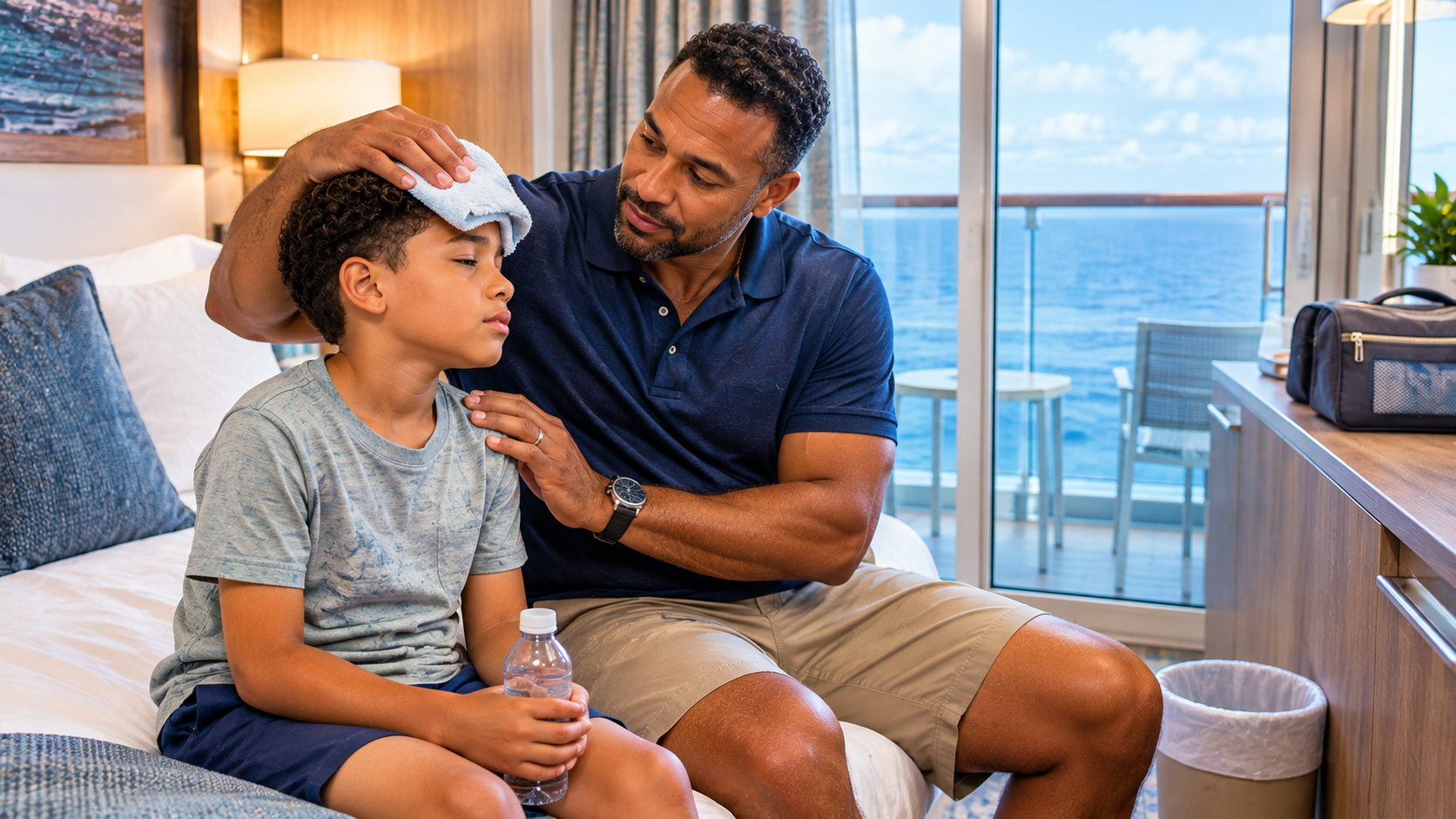
| Cool compress | Nausea with warmth | After active play | Use forehead or back of neck |
| Small salty snack | Empty stomach nausea | Before peak activities | Crackers, pretzels, plain toast |
| Slow sips of water | Dehydration risk | All day | Add electrolytes if sweating or vomiting |
| Ginger chews | Mild nausea | Early symptoms | Check tolerance, avoid if disliked |
| Acupressure bands | Kids who tolerate wearables | Before symptoms or early signs | Works best when worn consistently |
| Quiet seated activity | Overstimulation | Early signs | Coloring, audio story, simple game |
| Dimenhydrinate | Moderate symptoms, prevention | Before triggers | Use only with correct age and dosing |
| Medical guidance | Severe symptoms, dehydration | Vomiting persists | Seek onboard medical support when needed |
How To Read The Chart
If your child is mildly queasy, start with air, horizon, and a snack.
If the sea is rough, keep them midship and avoid overly warm venues.
If they improve in fifteen to twenty minutes, keep your plan steady and simple.
If they keep sliding downhill, step up the ladder rather than waiting.
A wearable support can be added without much downside for many kids.
Medication can be considered when prevention is needed or symptoms persist.
Follow label guidance and age limits, and avoid mixing sedating options.
A ladder keeps you from doing everything at once in a panic.
Chart Takeaways
Start with air, horizon, and snacks before jumping straight to medication.
A remedy ladder prevents panic because it gives you a clear next step.
Onboard medical help is appropriate when dehydration becomes a concern.
Medication Options Parents Ask About On Cruises
Parents want straight answers about medicine, especially on a first cruise.
Over-the-counter options exist, yet age guidance and dosing rules matter.
Some medicines are labeled for children, and others are not recommended for kids.
Drowsiness is common with antihistamine-based motion sickness medicines.
Paradoxical agitation can happen in some children with certain antihistamines.
That is why a test dose before travel can be helpful.
For serious allergies, medical conditions, or complex medication lists, talk with your pediatrician before you sail.
Safe planning is what lets you relax once you board.
Dimenhydrinate Basics
Dimenhydrinate is commonly sold for motion sickness, including kid formulations.
Many products include dosing guidance by age and weight on the label.
It is typically taken before travel or before a known trigger window.
Drowsiness can be a side effect, especially in the first doses.
Some children may become restless or irritable rather than sleepy.
Using the correct children’s formulation helps reduce dosing confusion.
Avoid doubling up with other sedating medicines unless a clinician guides you.
When used correctly, it can be a useful tool in your ladder.
Meclizine Basics
Meclizine is another motion sickness antihistamine found in some products.
Many labels specify use for adults and children twelve years and older.
It is often marketed as longer-lasting and “less drowsy,” yet drowsiness can still occur.
For younger kids, it is not typically the first choice based on labeling.
If your child is twelve or older, talk through dosing and timing with a clinician.
Timing still matters, because prevention works better than rescue.
Avoid mixing with alcohol, sedatives, or other drowsy-making medicines.
Keeping it simple helps you decide with less stress.
Scopolamine Reality
Scopolamine patches are generally labeled for adults for motion sickness prevention.
Some references caution against use in children due to side effects and confusion risk.
That risk profile is why parents should not treat patches as a casual fix.
If a clinician specifically advises it for an older child, follow that guidance carefully.
Otherwise, stay with kid-labeled options and non-medication strategies.
A safe plan is worth more than a fast hack.
Safety is what protects the whole trip’s mood.
You deserve that protection.
Medication Takeaways
Kid-labeled medicines can help when used early and exactly as directed.
Age guidance matters because not all motion medicines are intended for children.
Test dosing and simple routines reduce surprises and parent worry.
Avoid Common Seasickness Mistakes: Simple Fixes for a Calmer Cruise With Kids
Most parent mistakes come from urgency, not from lack of care.
When your child looks queasy, it is easy to throw five solutions at them.
That scatter approach can overwhelm the child and the parent.
A ladder approach works better because it stays predictable.
Another common mistake is waiting too long to act.
Early signs are the easiest moment to intervene.
A third mistake is letting kids overheat on the pool deck.
Heat and dehydration can intensify nausea quickly.
Screen Time Traps
Reading in a moving environment can make nausea worse for some kids.
Scrolling on a phone can do the same, especially below deck.
If your child looks uneasy, switch to audio stories instead of screens.
Try coloring or simple games that do not require intense focus.
Keep the activity seated and stable for a few minutes.
Then layer in horizon time if possible.
A small change in inputs can create a big change in symptoms.
Symptoms often soften when the brain gets consistent signals again.
Big Meal Mistakes
A huge meal right before motion can backfire for some kids.
An empty stomach can also backfire, which is the tricky part.
The sweet spot is small, steady snacks and simple meals.
Greasy foods can feel heavier during choppy seas.
Sugary overload can make some kids feel worse, especially with heat.
Keep meals simple during movement peaks, then enjoy treats later.
A simple plan prevents the “I think I made it worse” guilt.
Guilt is not helpful, and you are doing your best.
Over-Sedation Risk
Parents sometimes assume sleepiness is the goal, and that is not the goal.
Over-sedating a child can be dangerous, and it can also mask dehydration.
Use only recommended dosages, and use the right formulation for the right age.
Avoid stacking multiple sedating medicines without clinician guidance.
Do a test dose ahead of time if you plan to use an antihistamine remedy.
Watch hydration closely, especially in hot climates and port days.
If symptoms escalate, seek onboard medical support without hesitation.
Your job is safety, not perfection.
Mistake Takeaways
A remedy ladder works better than throwing everything at the problem.
Heat and screens can intensify nausea, especially during movement peaks.
Safe dosing protects kids and protects your peace of mind.
The Fears Parents Have And What Usually Helps
Parents do not just fear vomiting.
Parents fear losing control of the day.
Parents fear their child will suffer and they will feel helpless.
Parents fear they will spend the whole cruise inside the cabin.
Those fears are understandable, and they are usually bigger than reality.
Most kid seasickness comes in waves, not as a constant state.
A steady approach shortens the wave and speeds recovery.
Recovery is what lets you get back to fun quickly.
Fear Of Ruining The Trip
One queasy afternoon does not ruin a cruise.
A good ladder plan can turn a rough patch into a small detour.
Kids often bounce back quickly once the inputs improve.
Parents bounce back faster when there is a script to follow.
A script can be “air, horizon, snack, sip, sit.”
That script reduces frantic energy, which kids absorb immediately.
When you look confident, your child feels safer.
Safety is the emotion that unlocks relaxation and play again.
Fear Of Nighttime
Nighttime nausea worries parents, especially when the sea is rough.
Keeping dinner simple on rough evenings can help.
Hydration should be steady, not excessive right before sleep.
A brief deck walk for air can help before going to the cabin.
Keep a bag, wipes, and spare clothing easy to reach.
Preparedness reduces fear even if you never need the items.
If your child wakes queasy, start with small sips and a cool cloth.
A slow approach is often more effective than rushing.
Fear Of Dehydration
Dehydration is the risk to take seriously, especially with repeated vomiting.
Watch for dry mouth, low urine output, dizziness, and unusual fatigue.
Offer small sips frequently rather than large amounts at once.
Use electrolyte solutions when vomiting or sweating is significant.
If your child cannot keep liquids down, get medical support onboard.
Medical staff on ships deal with nausea and dehydration regularly.
Seeking help is not dramatic, and it is responsible parenting.
Responsibility is what keeps the cruise safe and enjoyable.
Parent Confidence Notes
A short “air and horizon” script helps you respond without panic.
Preparedness reduces fear even when symptoms never escalate.
Medical support is appropriate when hydration becomes a real concern.
A Low-Stress Cruise Is Still Possible With Kids
Seasickness is one of the most common worries for first-time cruising parents.
That worry does not have to define your trip.
Prevention habits do the heavy lifting when you start early and stay consistent.
A day-bag nausea kit gives you freedom and fast options.
Horizon time, shade, steady snacks, and hydration create better body signals.
A remedy ladder keeps you from guessing when symptoms show up.
When you use the chart and keep your response steady, kids often recover faster than you expect.
You can still have pool days, shows, and joyful family memories, even if you manage a queasy moment along the way.
FAQ – How Can Parents Prevent Seasickness in Children and Help Them Feel Better During a Cruise?
Why Do Some Children Get Seasick on Cruise Ships?
Seasickness occurs when the brain receives conflicting information from the eyes, inner ears, and other systems that detect movement.
A child may feel the ship rolling while looking at an interior wall or screen that appears stationary, creating a sensory mismatch that triggers nausea or dizziness.
Children vary considerably in their sensitivity, and those who experience car sickness may also be more susceptible to motion sickness at sea.
The ship’s movement, cabin location, and surrounding environment can all influence how strongly symptoms develop.What Are the Earliest Signs of Seasickness in Kids?
Early symptoms can include frequent yawning, pale skin, sweating, dizziness, increased saliva, or an unusual feeling of warmth.
Some children become quiet, lose interest in food, or complain that their head or stomach feels strange before nausea becomes obvious.
Younger children may express their discomfort through clinginess, irritability, or a sudden desire to lie down.
Recognizing these changes early allows parents to adjust the environment and consider appropriate preventive or supportive measures before symptoms worsen.What Is the Best Cruise Cabin Location for a Child Prone to Seasickness?
A midship cabin on a lower passenger deck is often a sensible starting point for families concerned about motion sensitivity.
These locations generally experience less pronounced movement than cabins situated high on the ship or toward the bow.
However, no cabin position can eliminate motion, and sea conditions can change throughout a voyage.
If you have already booked elsewhere, spending time in more centrally located public areas when conditions become uncomfortable may still help.Does Looking at the Horizon Really Help Children With Seasickness?
Looking toward the horizon can help some children because it provides visual information that better matches the movement sensed by the inner ear.
This may reduce the sensory conflict responsible for motion sickness symptoms.
Encourage your child to sit comfortably, keep their head relatively still, and look toward a distant point rather than focusing on a nearby screen or book.
Choose a safe location with adequate ventilation, and avoid exposed decks when weather or ship conditions make them unsuitable.What Should Parents Pack in a Cruise Seasickness Kit for Kids?
A practical kit can include a refillable water bottle, simple crackers, wipes, disposable bags, spare clothing, and a small towel.
An age-appropriate oral rehydration product may also be useful if your child’s clinician recommends it.
If medication is part of the plan, bring the correct product in its original packaging with the dosing instructions readily available.
Keep the kit in your carry-on or day bag so it remains accessible during embarkation, sea days, and excursions.Can Fresh Air and Small Snacks Help a Seasick Child?
Fresh air and a comfortable environment may reduce nausea for some children, particularly when warm indoor spaces or strong odors worsen their symptoms.
Small portions of simple foods such as crackers or toast may be easier to tolerate than heavy or greasy meals.
Frequent small sips of fluid can support hydration without requiring the child to drink a large amount at once.
These approaches are supportive measures rather than guaranteed treatments, and persistent or worsening symptoms may require medical assistance.Do Ginger Chews or Ginger Candies Help Prevent Seasickness in Children?
Some families find ginger products helpful for mild nausea, but evidence that ginger reliably prevents motion sickness is limited.
Products marketed as ginger chews or candies can also differ substantially in ingredients and concentration.
Chewy candies and lozenges may pose choking risks for younger children, while supplements can have additional safety considerations.
Ask your child’s healthcare professional about suitability before relying on ginger as part of a prevention plan.Do Acupressure Wristbands Work for Kids Who Get Seasick?
Acupressure wristbands are marketed as non-medication options for nausea relief, but evidence of their effectiveness for preventing motion sickness is inconsistent.
Some children may enjoy wearing them, and many families consider them a low-effort addition to their comfort routine.
However, they should not replace proven preventive measures or medical care when symptoms become significant.
Make sure any wristband fits appropriately, does not irritate the skin, and does not cause discomfort from excessive pressure.Can Children Take Dramamine for Seasickness on a Cruise?
Certain dimenhydrinate products, including formulations marketed as Dramamine for Kids, are labeled for specific pediatric age groups.
The correct dose depends on the product’s active ingredient, strength, labeling, and the child’s age.
Dimenhydrinate can cause significant drowsiness, and some children may experience unusual agitation instead.
Speak with your child’s pediatrician before sailing and follow the exact directions for the particular formulation rather than assuming all Dramamine products are interchangeable.Is Meclizine Safe for Children Who Experience Cruise Motion Sickness?
Meclizine is used to prevent and treat motion sickness, but common over-the-counter products are generally labeled for adults and children aged 12 years and older.
Younger children should not be given adult meclizine products without specific medical guidance.
Drowsiness remains possible even when the medicine is described as less sedating than other options.
Parents should review age eligibility, dosing instructions, possible interactions, and appropriate administration timing with a qualified healthcare professional.Can Children Use Scopolamine Patches to Prevent Seasickness?
Scopolamine patches should not be treated as a routine seasickness remedy for children.
Pediatric safety concerns include potentially serious effects such as confusion, hallucinations, and other anticholinergic reactions.
The CDC advises avoiding scopolamine in children because of these risks.
Parents should seek pediatric medical guidance about safer, age-appropriate motion sickness options rather than using an adult patch or attempting to reduce its dose.Should You Test a Motion Sickness Medicine Before Your Child’s Cruise?
A healthcare professional may recommend a supervised or appropriately planned trial before departure when a child is expected to use a motion sickness medicine.
This can help reveal side effects such as marked drowsiness or paradoxical agitation before the family is at sea.
However, a test dose is not appropriate for every child or every medication, and parents should not experiment with unfamiliar products without suitable guidance.
Discuss the plan with your pediatrician and use only the recommended product and dose.When Should You Give Children Motion Sickness Medication Before a Cruise?
Many motion sickness medications work better when administered before significant movement exposure rather than after severe nausea or vomiting develops.
However, timing depends on the medication, formulation, and child’s age, so a single schedule does not apply to every product.
Parents should follow the medication’s labeling and any individualized instructions provided by their child’s healthcare professional.
Avoid giving extra doses simply because symptoms appear sooner than expected, and never combine sedating medicines without appropriate medical advice.What Should You Do When Your Child Starts Feeling Seasick on Embarkation Day?
Move your child away from hot, crowded spaces and activities that require focusing on nearby screens or reading material.
A seated position, view of the horizon, fresh air when safely available, and small sips of fluid may improve comfort.
Offer simple food if your child feels able to eat, but do not force meals when nausea is significant.
If vomiting begins repeatedly, symptoms worsen, or your child appears unusually unwell, contact the ship’s medical team.Can Reading, Phone Games, or Tablet Screens Make Cruise Seasickness Worse?
Yes, looking at a nearby screen or book can increase motion sickness symptoms for some children because the visual information does not match the movement their bodies are experiencing.
This is particularly noticeable when a ship is rolling and a child remains focused on a stationary object.
Switching to an audio story, looking at the horizon, or resting with eyes closed may be more comfortable.
Once symptoms improve, children can gradually return to preferred activities according to their tolerance.What Foods Should Children Eat When They Feel Seasick?
Small amounts of bland food may be easier to tolerate than heavy meals when a child experiences motion-related nausea.
Crackers, toast, or other familiar simple foods are reasonable choices when the child wants to eat.
Greasy meals and unusually large portions may worsen discomfort for some children, particularly during stronger ship movement.
Hydration is important, but a child who is actively vomiting may need an age-appropriate oral rehydration approach and medical guidance rather than being encouraged to eat immediately.How Can Parents Handle Seasickness When Their Child Wakes Up Nauseous at Night?
Help your child rest in a safe, comfortable position and keep a disposable bag, wipes, and spare clothing within reach.
If the child is fully alert and able to swallow safely, offer small amounts of fluid as tolerated.
Avoid automatically repeating medication doses without checking the approved schedule and any instructions from your healthcare professional.
Repeated vomiting, worsening symptoms, or signs of dehydration should prompt contact with the ship’s medical center.How Can You Tell Whether a Seasick Child Is Becoming Dehydrated?
Possible dehydration signs include a dry mouth, reduced urination, unusual tiredness, dizziness, and an inability to tolerate sufficient fluids.
Younger children may show fewer tears or other age-dependent signs of inadequate hydration.
Repeated vomiting can increase the risk, particularly in hot weather or when the child has already been active outdoors.
Seek medical assistance when your child cannot keep liquids down, becomes unusually sleepy, or shows signs of moderate or severe dehydration.Does the Cruise Ship Medical Center Help Children with Seasickness?
Cruise ship medical centers can evaluate children experiencing significant nausea, vomiting, or suspected dehydration and determine whether additional treatment is needed.
Onboard clinicians can also consider other possible causes of symptoms, including illnesses unrelated to ship movement.
Treatment availability and charges vary by cruise line and vessel, so families should not assume that every medicine or service will be provided without cost.
Contact the medical center promptly when your child’s symptoms persist, become severe, or raise concerns beyond ordinary motion discomfort.Can Kids Still Enjoy Their First Cruise If They Experience Seasickness?
Yes, some children experience occasional motion-related discomfort and still enjoy most of their cruise activities.
Their symptoms may improve as they adjust to the movement or when sea conditions become gentler, although recovery patterns vary.
A practical plan involving suitable cabin areas, early symptom recognition, hydration, rest, and appropriate medical guidance can make disruptions easier to handle.
Families should remain flexible about activities and prioritize the child’s wellbeing rather than trying to maintain every planned event.
Plan Your Next Cruise!

Sail Into Timeless Luxury: Cunard Cruises for Transatlantic Elegance and Destination‑Rich Voyages
One Delay Can Cost Your Entire Cruise A quick coverage check now protects you from the problems no one sees coming….

Discover Princess Cruise Line: Elegant Ships, Immersive Voyages, and World‑Class Experiences
One Delay Can Cost Your Entire Cruise A quick coverage check now protects you from the problems no one sees coming….

Experience the Perfect Blend of Disney Magic, Luxury Cruising, and Family Adventure at Sea
One Delay Can Cost Your Entire Cruise A quick coverage check now protects you from the problems no one sees coming….

Sail in Style: Oceania Cruises’ Culinary Excellence, Cultural Immersion, and Refined Luxury
One Delay Can Cost Your Entire Cruise A quick coverage check now protects you from the problems no one sees coming….
Explore More

Discover Silversea Cruises: Ultra‑Luxury Voyages to the World’s Most Exclusive Destinations
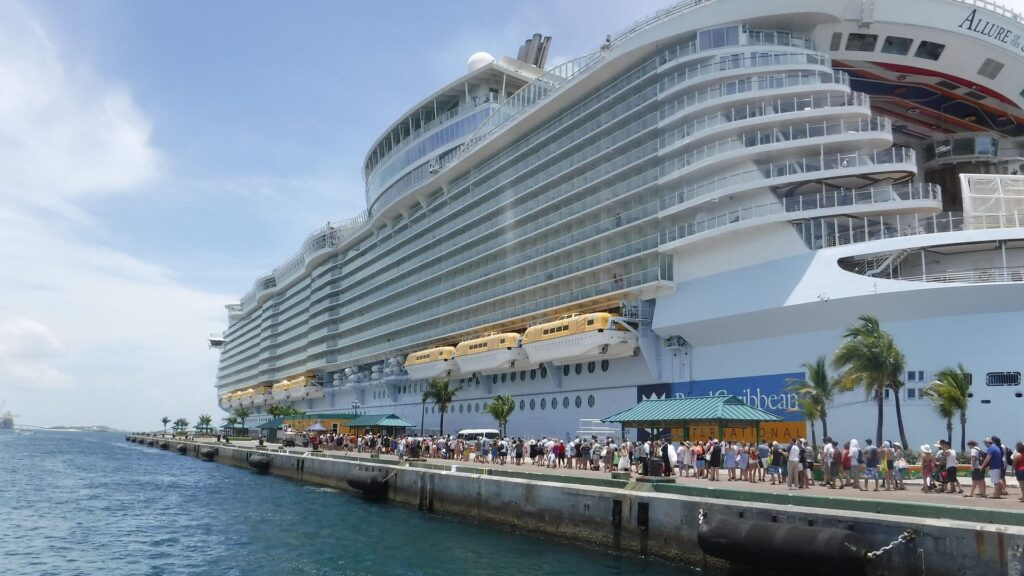
Conquer Every Deck: Smart Navigation Tips for Giant Cruise Ships

Plan Your Cruise Nights with Broadway Shows, Musicals, and Unique Productions