One Delay Can Cost Your Entire Cruise
A quick coverage check now protects you from the problems no one sees coming.
Short Excerpt
- Cruise ships operate like floating cities, with deck officers, engineers, hotel teams, medical staff, entertainers, chefs, housekeeping crews, and many other specialists working behind the scenes.
- Understanding who does what can help you know exactly where to turn when you need assistance onboard.
- The captain may be the most visible authority, but thousands of daily tasks depend on departments most passengers rarely see.
Quick Take
- The captain holds overall command of the ship, while senior officers oversee navigation, engineering, safety, and hotel operations.
- Guest Services handles many passenger questions, account issues, lost items, and general concerns.
- Cabin stewards manage stateroom housekeeping and can help with many routine cabin requests.
- Dining teams include chefs, restaurant managers, servers, bartenders, and behind-the-scenes galley staff.
- Medical teams handle onboard health emergencies and determine when additional care ashore may be necessary.
- Entertainment, security, technical, environmental, and shore-excursion teams all have specialized responsibilities that keep the cruise running.
Who Actually Does What on a Cruise Ship—and Who Should You Ask for Help?
A cruise ship can carry thousands of passengers, but the guest experience depends on an equally complex network of people working across very different departments.
Some roles are highly visible.
You may interact with your cabin steward every day, see dining servers at each meal, speak with Guest Services, or watch the cruise director hosting events around the ship.
Other crew members perform critical work almost entirely out of passenger view.
Deck officers navigate the vessel and manage bridge operations, engineers maintain propulsion and essential mechanical systems, while environmental teams handle waste, water, and other systems required to keep a floating resort operating safely.
The organizational structure matters because not every crew member can solve every problem.
A cabin steward is the natural person to ask about housekeeping or many stateroom needs, while Guest Services is better suited for account questions, lost property, general concerns, or issues requiring coordination between departments.
Restaurant questions may need a maître d’, dining-room manager, or specialty-restaurant team rather than your cabin staff.
Medical concerns belong with the ship’s medical center, while security matters should be handled by the onboard security team.
The captain sits at the top of the ship’s command structure, but that does not mean the captain personally manages ordinary passenger problems.
Senior officers and department heads oversee specialized teams so the ship can operate continuously while passengers sleep, eat, explore ports, attend shows, and enjoy the vacation.
Learning a few of those roles can make the ship feel much less mysterious.
It also helps you get assistance faster because you can take a problem directly to the department most capable of solving it.
Meet the Frontline Crew Who Shape Your Cruise Experience
A Note on Tipping
One way to show appreciation for the hardworking crew is through tipping.
Many crew members rely on tips to supplement their base salary, as gratuities often make up a significant portion of their earnings.
While some cruise lines include gratuities in your fare, others give you the option to tip directly.
If gratuities are automatically added, consider leaving them in place rather than opting out.
These contributions go a long way in supporting the crew members who make your vacation exceptional.
When you think of cruise ship jobs, you likely picture the staff members you interact with daily.
These team members work directly with passengers to create a memorable experience.
Unlock Your Dream Cruise with Exclusive Online Deals!
Discover How Hospitality Staff Create Comfort and Care Onboard
Hospitality crew members are the heart and soul of your guest experience.
From the moment you board, they’re there to assist with your needs.
- Guest Services: Found at the front desk or guest relations, these crew members answer questions, solve problems, and help you navigate the ship.
They’re also the go-to team for handling issues like lost luggage or special requests, ensuring every passenger feels valued and cared for.
On luxury lines like Seabourn or Oceania, the guest services team often goes above and beyond to remember passenger preferences and offer a highly personalized experience.
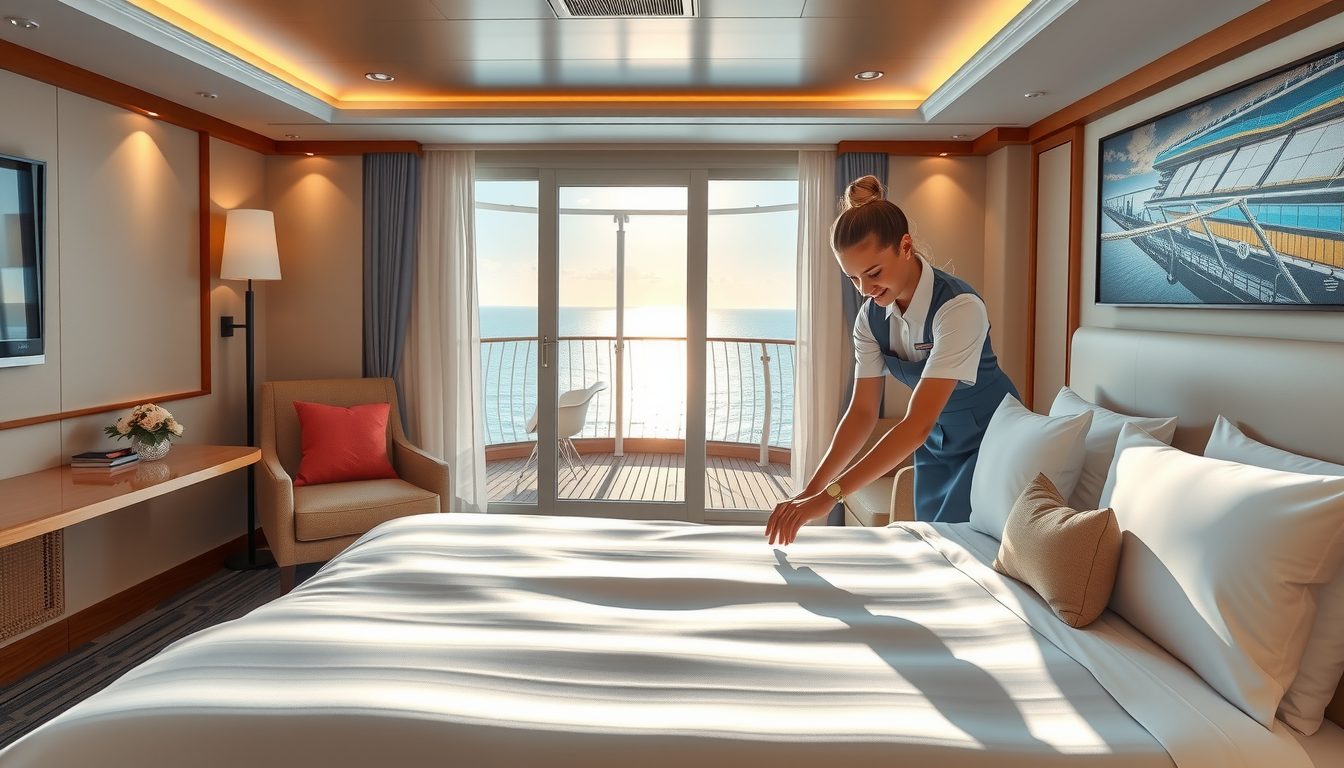
- Cabin Stewards: Responsible for keeping your stateroom clean and comfortable, cabin stewards ensure your bed is made, towels are fresh, and any special requests are handled promptly.
Many cruise lines, such as Holland America and Princess Cruises, train their cabin stewards to leave creative towel animals, adding a personal touch to your stay.
They also take note of passenger routines, ensuring services are timed for maximum convenience.
- Waitstaff and Bartenders: Serving your meals and drinks with a smile, these team members are crucial in creating a top-notch dining experience.
On some luxury lines, such as Regent Seven Seas or Silversea, waitstaff may even address you by name after the first day.
Sommeliers may also be part of the dining staff, offering expert wine pairings to elevate your meals.
Bartenders on cruise ships are often skilled mixologists, capable of crafting custom cocktails to suit any palate.
Explore How Entertainment Crew Keep the Energy Alive at Sea
The entertainment team is responsible for keeping the fun going throughout your cruise.
- Cruise Directors: As the face of onboard activities, cruise directors announce daily events, host shows, and keep passengers informed.
They are masters of ceremonies for everything from dance parties to bingo games.
Cruise directors on ships like Royal Caribbean’s Oasis class are often considered celebrities in their own right due to their lively and engaging personalities.
- Performers: From singers and dancers to comedians and magicians, these talented individuals bring Broadway-caliber performances to life.
Cruise lines like Royal Caribbean and Norwegian are known for spectacular productions, including acrobatics, ice skating shows, and even underwater performances.
Performers often undergo rigorous auditions and training to meet the high standards set by these lines.
- Activity Staff: Whether organizing trivia games, leading yoga classes, or hosting karaoke, these team members ensure there’s never a dull moment.
Some ships, like those from Disney Cruise Line, even have character performers who interact with guests of all ages, bringing beloved stories to life.
Activity staff also often lead unique workshops like cooking classes or dance lessons, offering passengers a chance to learn new skills while at sea.

Grab Your Ticket to Paradise with These Deals!
See How Retail and Spa Staff Deliver Relaxation and Luxury
If you’ve ever purchased duty-free goods or enjoyed a massage at sea, you’ve interacted with retail and spa staff.
- Shop Assistants: Selling jewelry, souvenirs, and luxury items, they offer tax-free shopping opportunities.
Many ships have exclusive collections and themed merchandise you can’t find anywhere else.
On larger vessels, such as those operated by Carnival and MSC, shopping areas resemble mini malls with multiple boutiques.
- Spa Therapists: Trained in wellness services, they provide everything from hot stone massages to facials, often under cruise lines like MSC’s Aurea Spa or Carnival’s Cloud 9 Spa.
They may also lead fitness classes, offer consultations, and recommend products for ongoing wellness.
On ultra-luxury ships like those from Regent Seven Seas, spa therapists often have advanced certifications in niche therapies such as aromatherapy or reflexology.
Unlock Memorable Adventures With Shore Excursion Staff Support
This specialized team ensures passengers make the most of their time in port.
- Excursion Coordinators: Assist passengers in selecting and booking shore excursions, providing detailed itineraries and advice on what to bring.
They often work closely with local tour operators to ensure excursions run smoothly and offer unique insights into each destination.
- Tour Guides: Sometimes employed directly by the ship, they lead group excursions and share local insights, making destinations come alive.
On expedition cruises like those operated by Lindblad Expeditions or Hurtigruten, tour guides are often naturalists or historians who provide expert commentary on the environment and culture.
Click for Exclusive Offers on Top Cruise Lines!
Recognize the Behind‑the‑Scenes Crew Who Keep Ships Running
While frontline staff are more visible, countless crew members work tirelessly behind the scenes to ensure the ship operates smoothly.
Their onboard staff duties are just as vital to the passenger experience.
Understand How Engine and Technical Teams Power Every Voyage
The engine crew keeps the ship moving and ensures safety at all times.
- Engineers: Oversee the ship’s propulsion, electrical systems, and safety equipment.
They perform regular inspections and troubleshoot any mechanical issues.
These professionals also manage the ship’s energy efficiency, ensuring fuel consumption is optimized for both cost and environmental considerations.
- Electricians: Handle wiring, lighting, and other electrical needs.
Their expertise ensures everything from stage lighting to cabin outlets works perfectly.
They are also responsible for maintaining emergency backup systems, ensuring the ship remains functional during unexpected outages.
- Plumbers: Resolve issues with water systems, including pools and onboard plumbing.
They also ensure water purification systems meet strict health standards, making potable water available at all times.
On larger ships, plumbers might also manage complex desalination systems that convert seawater into drinkable water.
Discover How Culinary Teams Create Dining Experiences at Sea
Feeding thousands of passengers is no small feat.
Behind the elegant dining rooms are hardworking kitchen staff.
- Chefs: From executive chefs to sous chefs, they create gourmet meals for every taste.
Celebrity Cruises, for example, is renowned for its Michelin-star-level cuisine.
Chefs often collaborate with nutritionists to accommodate dietary restrictions, including gluten-free, vegan, and allergen-free options.
They also oversee specialty dining experiences, such as chef’s tables or wine-pairing dinners.
- Bakers and Pastry Chefs: Craft fresh bread, desserts, and pastries daily.
Some ships even feature demonstrations or classes led by these talented bakers.
On lines like Princess Cruises, passengers can watch bakers in action during special culinary events.
- Provision Masters: Ensure the ship is stocked with enough food and beverages for the entire voyage.
This includes managing complex inventory systems and liaising with suppliers at different ports.
They are also tasked with forecasting needs based on passenger numbers and preferences, a critical role in minimizing waste.

Experience Luxury Cruises at Unbeatable Prices Today!
See How Housekeeping and Maintenance Staff Ensure Comfort and Safety
While cabin stewards handle your stateroom, other crew members maintain the ship’s public spaces and systems, ensuring both functionality and enjoyment for everyone on board.
- Cleaners: Responsible for keeping hallways, lobbies, and dining areas spotless, cleaners work around the clock to maintain hygiene and visual appeal.
They often operate behind the scenes during off-peak hours, ensuring spaces are ready for guests each morning.
Beyond cleanliness, their efforts are critical in upholding health standards, particularly in high-traffic areas where germs can spread quickly.
Cleaners are the unsung heroes in preventing potential outbreaks and maintaining a safe environment.
- Laundry Staff: These crew members manage massive volumes of linens, uniforms, and towels, often operating in industrial-scale laundry facilities.
On larger ships, advanced technologies such as ozone washing systems are used to conserve water and energy while ensuring hygiene.
Without their tireless work, guests wouldn’t have fresh towels, crisp sheets, or clean dining linens, which are key to a luxurious onboard experience.
- Maintenance Workers: Maintenance teams are the backbone of the ship’s physical integrity.
They handle everything from fixing minor wear-and-tear issues, like squeaky doors or broken handrails, to addressing larger technical problems, such as elevator malfunctions.
Their role extends to maintaining air conditioning, plumbing, and lighting systems, ensuring comfort for every guest.
On modern vessels, they also manage smart systems, such as automated climate control and energy-efficient lighting, ensuring the ship operates sustainably.
Without them, the ship’s day-to-day operations and passenger enjoyment would quickly falter.
Together, the housekeeping and maintenance staff form the backbone of the ship’s comfort and operational excellence.
Their work, though often unnoticed, is foundational to the seamless and enjoyable cruise experience passengers expect.
Learn How Medical Staff Protect Passenger Health Onboard
Every cruise ship has a medical team to handle emergencies.
- Doctors and Nurses: Provide care for everything from seasickness to serious injuries.
They’re equipped to handle urgent care situations and coordinate evacuations if necessary.
Many cruise lines, such as Viking and Cunard, employ highly experienced medical professionals trained in emergency medicine.
- Lab Technicians: Handle testing, especially important in the post-pandemic world.
They ensure health protocols are met to keep everyone safe.
Lab technicians also monitor water quality and food safety standards as part of routine health inspections.
- Public Health Officers: Ensure the ship meets stringent health and safety guidelines.
They conduct regular inspections and oversee sanitation protocols, including air quality monitoring and pest control measures.
Their efforts are critical in preventing outbreaks of illnesses onboard.
Explore Leadership Roles That Guide and Protect Every Cruise
Every cruise ship operates under a strict hierarchy to ensure efficiency and safety.
The Captain and Bridge Officers
The captain is the highest-ranking officer, responsible for the ship’s navigation, safety, and overall operation.
Supporting the captain are the first officer, second officer, and other bridge staff who monitor radar, weather, and maritime traffic.
They also conduct safety drills and oversee emergency protocols.
Hotel Directors
Overseeing all guest-facing operations, hotel directors manage everything from food services to housekeeping.
They’re essentially the “hospitality CEOs” of the ship, ensuring passengers’ needs are met promptly and efficiently.
Department Heads
Each department—entertainment, dining, engineering—has a manager who ensures operations run smoothly.
For example, the chief engineer oversees the technical team, while the food and beverage director supervises all culinary staff.
They hold regular meetings to coordinate efforts across departments.
Discover Specialized Roles That Personalize the Cruise Experience
Some jobs on cruise ships cater to unique passenger needs.
- Childcare Providers: Oversee kids’ clubs and activities, ensuring young passengers have as much fun as the adults.
Some ships offer babysitting services and teen lounges.
- Photographers: Capture special moments, whether it’s a formal dinner or a port excursion.
They also manage onboard photo galleries where passengers can purchase prints.
- Shore Excursion Managers: Plan and coordinate tours at each destination, often working with local guides.
They’re key to providing immersive travel experiences.
IT Specialists: Maintain the ship’s technology infrastructure, including Wi-Fi systems, ticketing systems, and entertainment networks.
Understand Why Crew Members Are the Heart of Every Cruise
Cruise crew roles aren’t just jobs; they’re the backbone of the cruise experience.
Whether it’s the chef creating your favorite meal, the cleaner ensuring pristine conditions, or the captain navigating safely through the seas, every crew member plays a part in delivering an exceptional vacation.
Their hard work, often done far from home, ensures your journey is unforgettable.
From luxury liners to adventure-focused expeditions, it’s the people behind the scenes who turn a cruise from good to extraordinary.
So next time you’re aboard, take a moment to appreciate the incredible team behind the magic.
FAQ – Who Runs a Cruise Ship and Which Crew Member Should You Ask for Help?
What Does the Captain of a Cruise Ship Actually Do?
The captain has overall command of the vessel and ultimate responsibility for its safe operation.
That includes navigation, regulatory compliance, emergency decisions, coordination with senior officers, and responsibility for the ship, passengers, and crew.
Many day-to-day navigation duties are performed by qualified bridge officers under the captain’s command.
Passengers may see the captain at special events, but much of the role involves operational responsibilities away from public areas.What Does the Staff Captain Do on a Cruise Ship?
The staff captain is one of the most senior officers aboard and typically serves directly below the captain in the deck department.
Responsibilities can include safety operations, emergency preparedness, security coordination, crew management, and oversight of deck-related functions.
The exact division of duties can vary between cruise lines.
Passengers may rarely interact with the staff captain, but the position is central to the ship’s operational structure.What Do Cruise Ship Deck Officers Do?
Deck officers help navigate the ship and maintain safe bridge operations around the clock.
Their responsibilities can include monitoring the vessel’s position, weather, traffic, communications, passage planning, and compliance with maritime procedures.
Because a cruise ship operates 24 hours a day, officers work scheduled watches so qualified personnel are always on the bridge.
They also participate in drills and emergency-response duties.What Does the Chief Engineer Do on a Cruise Ship?
The chief engineer oversees the technical department responsible for many of the systems that keep the vessel operating.
Propulsion, electrical generation, machinery, climate-control systems, water production, and other technical infrastructure require continuous monitoring and maintenance.
A large engineering team works beneath the chief engineer to keep those systems functioning around the clock.
Passengers may rarely see these crew members even though their work affects nearly every part of the onboard experience.What Does a Cruise Director Do?
The cruise director is one of the most visible members of the onboard entertainment team.
This role commonly involves coordinating activities, introducing major shows, hosting events, communicating entertainment information, and helping establish the social atmosphere aboard.
The cruise director also works with a larger team of activity hosts and entertainment staff.
The exact role varies by cruise line, with some directors appearing frequently around the ship and others focusing more heavily on managing programming behind the scenes.What Can Your Cabin Steward Help You With?
Your cabin steward is primarily responsible for servicing your stateroom.
That can include making the bed, replacing towels, cleaning the bathroom, removing trash, and maintaining the cabin throughout the voyage.
Stewards can also help with many routine requests involving bedding, towels, ice, or other cabin-related needs.
Billing questions, major maintenance problems, medical issues, and broader complaints usually need to be directed to the appropriate department instead.What Does Guest Services Handle on a Cruise Ship?
Guest Services acts as a central point for many passenger questions and problems.
The team can assist with onboard accounts, key cards, lost property, general information, certain complaints, documentation questions, and coordination with other departments.
When you are unsure which department handles a particular issue, Guest Services is often a practical starting point.
For urgent medical, safety, or security concerns, however, contact the appropriate emergency resource immediately rather than waiting in a Guest Services line.Who Runs the Restaurants and Dining Rooms on a Cruise Ship?
Cruise dining operations involve a large hierarchy of chefs, restaurant managers, maître d’s, servers, assistant servers, bartenders, sommeliers, galley staff, dishwashing teams, and provisioning personnel.
Executive chefs oversee major culinary operations, while restaurant managers and dining-room leaders manage passenger-facing service.
Your server handles routine meal service, but more complicated seating, dietary, or service issues may need a dining manager or maître d’.
Specialty restaurants can also have their own management and culinary teams.What Does the Hotel Director Do on a Cruise Ship?
The hotel director oversees much of the passenger-facing hotel operation.
Depending on the cruise line, this can include housekeeping, Guest Services, food and beverage operations, accommodations, and other hospitality departments.
The role is comparable in some ways to managing a large resort, except the property is moving between ports while operating around the clock.
Most passengers will not need to contact the hotel director directly because department managers handle routine concerns.Who Handles Medical Emergencies on a Cruise Ship?
Cruise ships typically carry medical personnel such as doctors and nurses who staff the onboard medical center.
They can evaluate illnesses and injuries, provide treatment, stabilize serious patients, and determine whether additional care ashore is necessary.
Medical facilities have limits compared with full hospitals, so severe cases may require transfer at a port or an emergency evacuation.
Passengers should contact the medical team promptly when a potentially serious health issue develops rather than relying on ordinary hotel staff.What Does Cruise Ship Security Do?
Security personnel help protect passengers, crew, restricted areas, and the vessel itself.
Their duties can include access control, screening, surveillance, incident response, investigations, crowd management, and coordination with authorities when necessary.
Security officers also become involved when passenger conduct creates safety or legal concerns.
Situations involving threats, assault, theft, missing persons, or other serious safety issues should be reported rather than handled personally.Who Organizes Shore Excursions on a Cruise Ship?
The shore-excursion team manages cruise-line-sponsored activities in the ports the ship visits.
Staff members can answer questions about excursion schedules, meeting locations, physical requirements, transportation, and tour details.
They also coordinate with local tour operators and help address operational changes when excursions are delayed or canceled.
Independent excursions are generally outside the cruise line’s direct management.Who Handles Maintenance Problems in Your Cruise Cabin?
Your cabin steward can be a good first contact for a routine maintenance issue because they can report it to the technical or hotel maintenance team.
Problems involving plumbing, electrical fixtures, air conditioning, doors, safes, or other cabin equipment may require a specialist.
Guest Services can also arrange assistance when the problem is urgent or remains unresolved.
Reporting an issue early gives the ship more opportunity to repair it before it affects the rest of your cruise.Who Cleans the Public Areas of a Cruise Ship?
A large housekeeping and sanitation team works beyond the cabin stewards passengers commonly recognize.
Crew members clean corridors, stairways, elevators, lounges, restrooms, dining spaces, and other public areas throughout the day and night.
Other teams handle laundry, linens, waste, and specialized sanitation procedures.
Much of this work happens continuously because heavily used areas can require repeated attention throughout a sailing.Who Works Behind the Scenes That Passengers Rarely See?
Engineering crews, galley workers, laundry teams, environmental officers, electricians, plumbers, refrigeration specialists, provision teams, technical staff, safety personnel, and many other employees spend much of their working time outside passenger areas.
Their work keeps electricity flowing, water available, food stored safely, machinery operating, waste processed, and essential systems functioning.
A cruise vacation therefore depends on far more people than the crew members passengers regularly encounter.
The visible service team is only one part of a much larger operation running continuously behind the scenes.
Plan Your Next Cruise!
Discover Princess Cruise Line: Elegant Ships, Immersive Voyages, and World‑Class Experiences
One Delay Can Cost Your Entire Cruise A quick coverage check now protects you from the problems no one sees coming….
Sail Smart: Discover The Real Cost of Luxury Cruises and Maximize Your Travel Value
One Delay Can Cost Your Entire Cruise A quick coverage check now protects you from the problems no one sees coming….
Unlock Seabourn’s World: Yacht‑Like Luxury, Exclusive Destinations, And Unmatched Comfort
One Delay Can Cost Your Entire Cruise A quick coverage check now protects you from the problems no one sees coming….

Sail Into Timeless Luxury: Cunard Cruises for Transatlantic Elegance and Destination‑Rich Voyages
One Delay Can Cost Your Entire Cruise A quick coverage check now protects you from the problems no one sees coming….
Explore More
Back-To-Back Cruises Explained: Extend Your Voyage and Explore More Destinations
Cruise Ship vs Ocean Liner: A Deep Dive into Their Structural and Operational Differences
Sea Weather on Cruises — From Calm Days to Storms at Sea