
One Delay Can Cost Your Entire Cruise
A quick coverage check now protects you from the problems no one sees coming
Short Excerpt
- Your first cruise with kids can be a wonderful family vacation when you understand how youth programs, dining, cabins, and daily activities work onboard.
- A flexible routine that includes familiar meals, exciting activities, and enough downtime helps children adjust to the ship without becoming overwhelmed.
- Practical kids club guidance, embarkation-day strategies, and a family packing checklist can make your first sailing more enjoyable for everyone.
Quick Take
- Choose a family-friendly ship with activities, cabin arrangements, and youth programs appropriate for your children’s ages.
- Visit the kids club early to understand registration requirements, drop-off procedures, operating hours, and available activities.
- Build each day around a few priorities, keeping meals, snacks, and rest periods flexible enough to accommodate your children.
- Plan for smaller cabin spaces with organized essentials, familiar bedtime items, and accessible travel-day supplies.
- Prepare children for shipboard safety, including how to find crew assistance, stay together, and follow family rules.
Make Your First Family Cruise Easier by Choosing the Right Ship, Cabin, and Daily Routine
The best family cruise isn’t necessarily the one with the biggest water park, the most elaborate kids club, or the longest list of activities.
It’s the one where your children have enough to enjoy, you have enough flexibility to relax, and everyone can settle into a routine that makes the ship feel familiar rather than overwhelming.
That distinction becomes particularly important when you’re planning your first sailing.
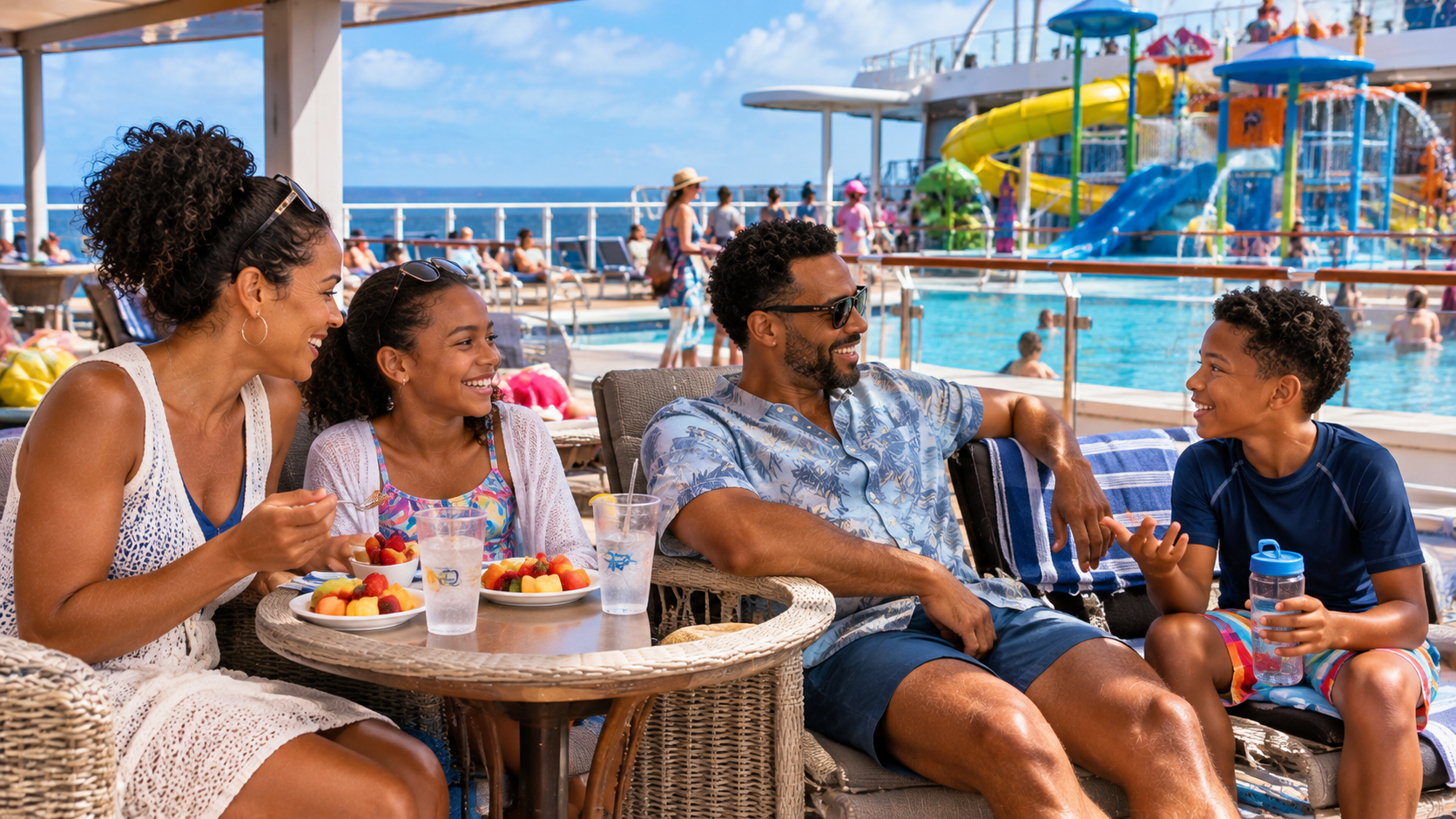
Cruise ships can be wonderful for families because entertainment, restaurants, pools, and accommodations are all within the same vacation environment.
However, the convenience only works in your favor when the ship’s facilities and daily schedule are suitable for your children’s ages and interests.
A toddler who needs an afternoon nap will experience the ship very differently from a teenager who wants independence, late-night entertainment, and opportunities to meet friends.
Even siblings close in age can have completely different expectations, which makes understanding the ship’s family facilities an important part of choosing your cruise.
Match the Ship to Your Children’s Ages, Not Just Its Attractions
Before booking, look closely at the age requirements for youth programs, water attractions, and other family facilities.
Some cruise lines offer supervised programming for several age groups, while others have more limited options for infants, toddlers, or younger children who aren’t toilet-trained.
Nursery services, where available, may operate separately from traditional kids clubs and can involve additional fees or reservations.
This matters because a ship advertised as family-friendly may still have restrictions that prevent your youngest child from participating in activities you expected to use.
Pool rules deserve attention as well.
Most cruise ship swimming pools do not permit children in diapers, including swim diapers, although some ships provide designated splash facilities designed for younger passengers.
Checking these details before booking can prevent disappointing surprises once everyone is excited to swim.
Older children have different needs.
Tweens and teenagers may enjoy dedicated lounges, sports activities, gaming areas, or supervised social events, but the specific offerings and participation rules vary by cruise line.
The goal is to choose a ship where every child has something appealing to anticipate, even when family members aren’t interested in the same activities.
Think About How Your Family Will Actually Use the Cabin
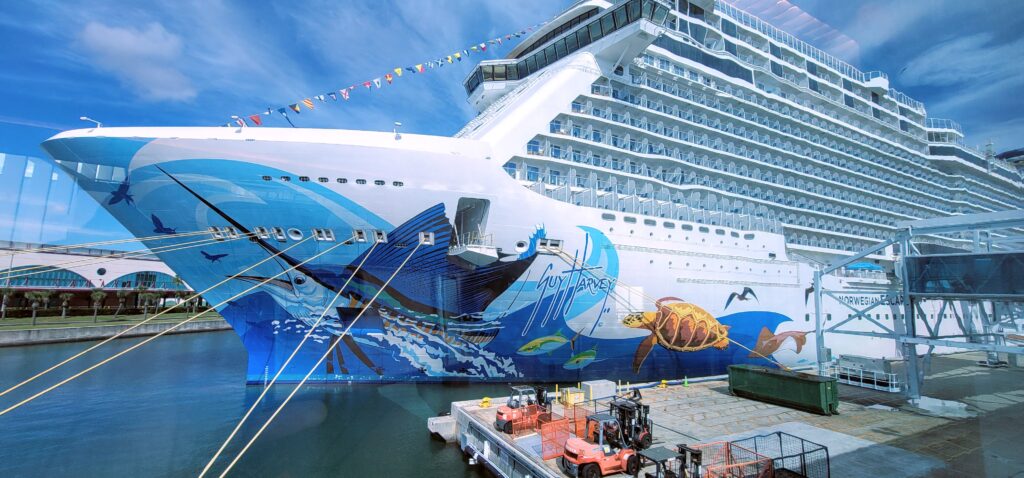
Cruise cabins can feel smaller than hotel rooms, especially when several people share one stateroom.
However, square footage alone doesn’t tell you whether a cabin will work comfortably for your family.
A room with thoughtful storage, suitable sleeping arrangements, and enough space to move around may be more practical than a larger cabin with an awkward layout.
Before reserving your room, confirm where everyone will sleep.
Some family staterooms use upper berths, sofa beds, or convertible sleeping arrangements, and these may not be appropriate for every child’s age or mobility needs.
If you’re traveling with a baby, ask whether a crib or portable cot is available and whether it fits comfortably in the cabin you’ve selected.
Top Cruise Deals From Trusted Cruise Lines
Compare exclusive online offers and find the fare that fits your trip and your budget
Connecting staterooms can be worth considering when traveling with older children or a larger family.
They may provide additional bathroom space and privacy, although you’ll need to compare the cost with a family cabin or suite.
Balcony safety is another consideration.
Families should supervise children closely around balcony doors and railings, follow the ship’s safety guidance, and never allow children to climb on outdoor furniture.
Make Embarkation Day About Getting Comfortable, Not Doing Everything
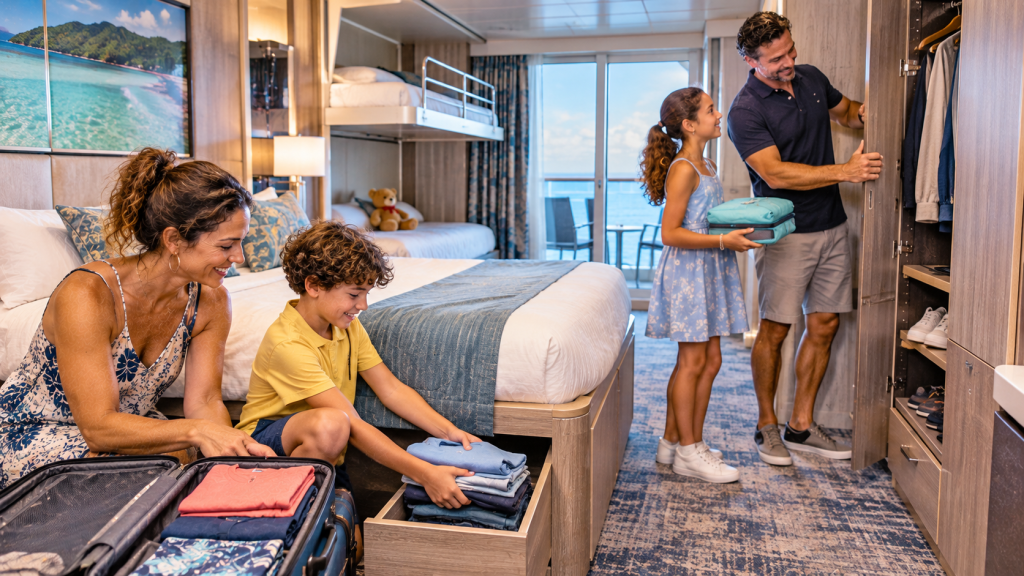
Your first few hours onboard can shape how your children feel about the entire experience.
It’s tempting to rush toward the pool, explore every deck, and start taking advantage of the activities you’ve been looking forward to.
However, embarkation also involves security procedures, luggage delivery, the required safety briefing, and learning an unfamiliar environment.
A better approach is to handle the essentials first, then give your family a chance to settle in.
Complete the required muster procedures, locate important facilities, and find out when youth program registration or orientation is available.
Afterward, enjoy a meal and explore a few nearby attractions rather than attempting a complete ship tour while everyone is tired.
Once your cabin is available, show your children where their belongings belong and establish a simple place for shoes, room keys, and other frequently used items.
A familiar bedtime item, an organized bag, and a little time to explore can make the room feel more comfortable without requiring an elaborate setup.
Make Sure Your Children Know What to Do if They Need Help
Family cruises become easier when children understand a few simple safety expectations from the beginning.
Younger children should know that they must remain with their designated adult unless they’re participating in an approved supervised activity.
Older children who are allowed some independence should understand which areas they’re permitted to visit, when they must check in, and how to contact a parent or crew member.
Show children how to recognize official crew identification and explain that they should request help immediately if they become separated from their family.
Parents should also notify ship personnel promptly if they cannot locate a child, rather than relying on a series of meeting points or delaying assistance while searching independently.
These conversations don’t have to be frightening.
They’re simply part of learning how a new environment works, much like explaining safety rules at a swimming pool or unfamiliar attraction.
Give Yourself Permission to Change the Plan
Even the most carefully organized family cruise will include moments when someone is tired, hungry, overstimulated, or uninterested in the activity you’ve chosen.
Your child might love the kids club one day and prefer staying with you the next.
A shore excursion that sounded exciting at home could suddenly feel too demanding after a busy morning.
Rather than treating these changes as setbacks, build enough flexibility into the vacation to accommodate them.
Online‑Only Cruise Offers You Won’t Find Elsewhere
Unlock special pricing and start planning the sailing that matches your perfect itinerary

One memorable family activity, an enjoyable meal, and some time to relax can make a day feel successful without requiring everyone to participate in every scheduled event.
Your first cruise with kids should give your family more opportunities to enjoy time together, not another schedule you feel obligated to complete.
When the ship suits your children’s ages, your cabin supports everyday routines, and your plans leave room for real family life, cruising starts to deliver the convenience and enjoyment that made you want to book in the first place.
What to Expect on Your First Cruise with Kids—and How to Make Family Ship Life Work for Everyone
Your first cruise with kids can feel exciting and overwhelming at the same time.
You’re dreaming of sunsets and pool days, but you’re also picturing meltdowns in unfamiliar hallways.
That mental tug-of-war is normal for first-time cruisers, especially when you’re responsible for little humans.
A ship is a floating resort with rules, routines, and rhythms that are different from a hotel.
The good news?

Family cruising is easier when you know what’s normal and what matters most.
You don’t need to be a cruise expert to do this well with kids.
You just need a family-friendly plan that lowers friction and keeps everyone fed, rested, and entertained.
This guide gives you practical tips for kids clubs, meals, daily rhythms, and a packing checklist that prevents chaos.
Why A Cruise Feels Different With Kids
A cruise compresses everything into one shared environment.
That’s wonderful, because you don’t have to drive anywhere once you board.
It’s also challenging, because your kids can’t “run out for a change of scenery” the way they can on land.
Small stressors can feel bigger when you’re in a new space with lots of stimulation.
The upside is that ships are designed around repeat patterns that families can learn quickly.
When you build a simple routine, your kids start to feel secure fast.
Security lowers whining, reduces power struggles, and makes the day feel smoother.
A smoother day is the real secret to enjoying cruising with kids.
Routine Helps
A predictable rhythm makes kids feel safe in a new environment.
A predictable rhythm also helps you stop making decisions every ten minutes.
Decision fatigue is a parent’s hidden enemy on vacation.
When your brain is tired, every small issue feels personal.
When your brain is supported, you respond with steadiness instead of frustration.
That steadiness spreads to the whole family.
Kids borrow your energy more than they follow your instructions.
That’s why routine is not rigid, it’s supportive.
Space Is Shared
A cabin is smaller than most hotel rooms, even when it’s a great cabin.
That means you’ll feel the effects of clutter and chaos more quickly.
You’ll also feel the benefits of simple organization more quickly.
A few basic systems, like a packing cube strategy and a “drop zone” for key items, save you daily stress.
Daily stress is what makes parents say, “We should have planned this better.”
You don’t need complicated planning to fix it.
You need two or three smart habits that repeat easily.
Those habits turn the cabin into a base, not a bottleneck.
Food Is A Schedule
Kids don’t only get hungry, they get hungry on a timeline.
A cruise gives you a lot of food options, but your child’s hunger doesn’t wait for your plan.
When you anchor meals and snacks, everything else becomes easier.
The right snack at the right time prevents half of the arguments families have onboard.
That is not an exaggeration, it is parenting physics.
You’ll see it on day one.
The ship is full of fun, but fun goes poorly on an empty stomach.
Food planning is joy planning when you cruise with kids.
Rhythm Beats Guessing
A simple routine reduces decision fatigue and keeps the whole family steadier.
Organization Pays Daily
Small cabin systems prevent daily friction that builds into bigger stress.
Snacks Save Days
Food timing is one of the fastest ways to keep kids regulated onboard.
Kids Club Explained in Plain English
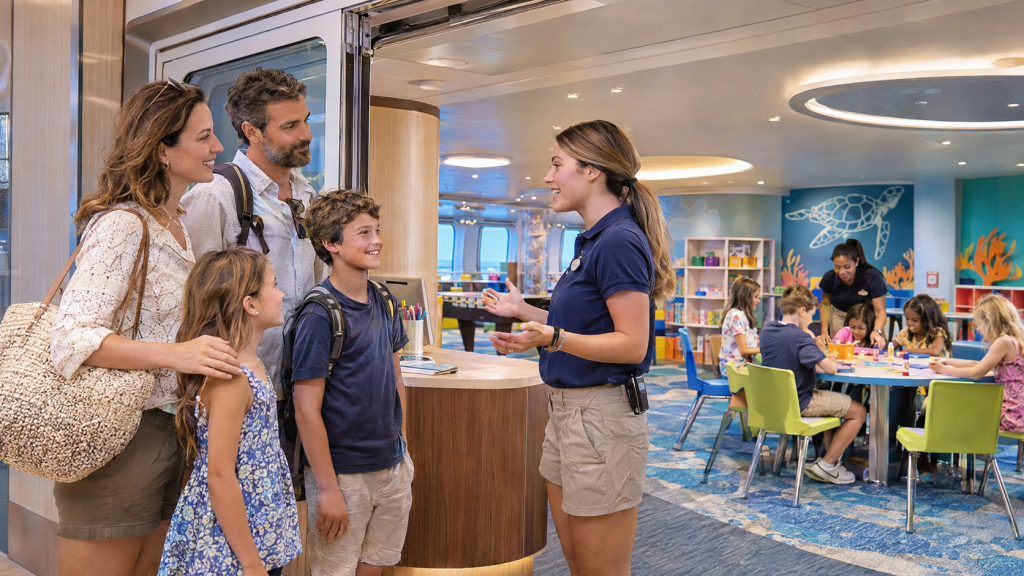
A kids club is a supervised youth program run by the cruise line.
It’s typically organized by age group, with scheduled activities, games, crafts, and themed events.
Some ships have separate spaces for toddlers, younger kids, and teens.
The kids club is not daycare in the strict sense, because it often follows set hours and programming.
Still, many families use it as a reliable way to give kids fun and give parents breathing room.
It also helps kids make friends quickly, which can transform the whole trip.

Luxury Cruise Experiences at Smarter Prices
See premium sailings and upgraded cabins priced for travelers who know how to book well
When your child feels connected, they’re more flexible and less resistant to transitions.
That flexibility makes ports, dinners, and evenings feel easier for everyone.
What Parents Expect
Many first-time parents assume the kids club is only for “drop-off and disappear.”
On most ships, it can be that, but it can also be a “stay and explore” situation early on.
A smart move is visiting the kids club on day one, together, before you ever try a drop-off.
That first visit reduces fear and makes the space feel familiar.
Familiar spaces feel safe to kids.
Safe kids separate more easily when it’s time.
That separation gives you a chance to reset, not escape.
Reset is healthier than trying to outrun parenting.
What Kids Actually Feel
Kids usually feel three things in a brand-new kids club.
They feel curiosity, because it looks fun.
They feel uncertainty, because it’s unfamiliar.
They feel social pressure, because other kids seem to know what’s happening.
Your job is to normalize that first-day awkwardness.
Awkwardness is not failure, it’s the warm-up phase.
When you treat it like a warm-up, kids relax and engage faster.
Engagement is when the magic of cruising with kids really starts.
How Drop-Off Works
Drop-off rules vary by cruise line, but the pattern is similar.
You check in, confirm contact details, and follow the youth staff instructions.
Some age groups require a guardian signature at drop-off and pick-up.
Most programs also have specific time windows and capacity limits.
That means you’ll want to show up early the first time, especially on sea days.
Being early turns drop-off into a smooth handoff instead of a rushed moment.
Rushed moments create tears that feel avoidable.
Avoidable tears are what parents want to prevent most.
Tour First Always
A day-one visit builds familiarity, which helps kids separate more easily later.
Awkward Is Normal
First-day hesitation is a warm-up phase, not a sign your child “won’t do it.”
Early Wins
Arriving early for drop-off prevents rushed emotions and keeps the experience positive.
What A Typical Family Cruise Day Looks Like
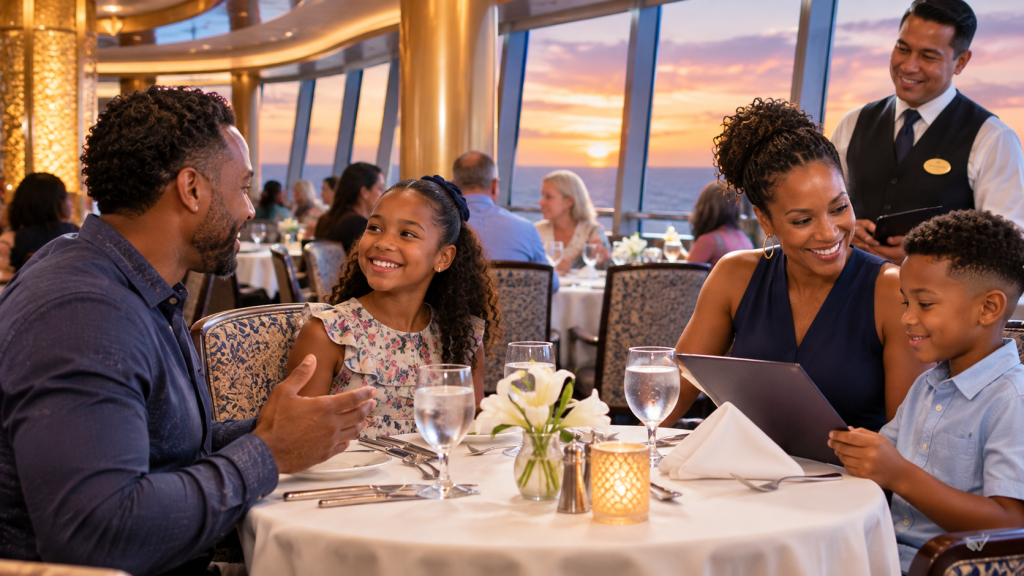
Cruise days are built around predictable blocks.
That’s good news, because kids thrive on blocks and transitions they can understand.
A family day usually starts with breakfast and a quick plan for the morning.
Then you rotate between kid-friendly activity time, downtime, and food time.
Evenings usually involve dinner, a show, and a wind-down routine.
The details shift depending on sea days versus port days, but the structure stays recognizable.
Once you accept the block structure, you stop trying to “do everything.”
Doing everything is what creates family burnout on a ship.
Sea Day Rhythm
Sea days are when you learn your ship.
They’re also when kids clubs and pool decks get busiest.
A strong sea day starts with one anchor activity that feels like a family win.
That might be water time, mini golf, a family game, or a youth activity block.

Sail Away to Paradise Without Overpaying
Find cruise deals that make it easy to escape, relax, and enjoy the ocean without stretching your budget
Then you build in a real rest window, even if your kids claim they don’t need it.
Rest can look like quiet time in the cabin, a movie, or a calm walk on deck.
That rest window prevents the late-afternoon crash that ruins dinner vibes.
Dinner vibes matter, because tired kids struggle most at dinner.
Port Day Rhythm
Port days add a different kind of energy.
Kids can get overstimulated in a new place with heat, crowds, and unfamiliar routines.
A smart move is keeping mornings simple and predictable before you go ashore.
After you return, plan a decompression window before you demand “nice behavior” at dinner.
Decompression can be snacks, showers, and fifteen minutes of quiet.
That quiet transition is where parents regain control of the evening.
For port planning, family-friendly tours with clear meeting points can reduce stress.
GetYourGuide and Viator can be useful for browsing family-friendly options and seeing what fits your child’s age and stamina.
Nighttime Rhythm
Evenings feel magical on a cruise, but kids still have limits.
A first-time family mistake is treating every night like a late-night celebration.
Some nights can be big, and some nights should be earlier.
When you alternate, the whole week feels better.
Your child will enjoy the “big night” more when they aren’t depleted.
If your child wants to dress up, let it be fun instead of strict.
Fun dress-up builds buy-in and makes dinner smoother.
Smooth dinners are where parents start to truly relax onboard.
Blocks Create Ease
Cruise days run in predictable blocks that help kids feel secure and flexible.
Rest Is A Tool
A daily decompression window prevents late-day crashes and dinner meltdowns.
Alternate Nights
Mixing big nights with earlier nights keeps energy stable across the week.
Family Tips That Make The Whole Trip Feel Easier
Family cruising becomes enjoyable when you remove friction points in advance.
Friction points are small problems that repeat, like lost cards, wet towels, or snack emergencies.
Removing them doesn’t require perfection.
It requires two or three systems that work even when you’re tired.
Think in terms of “family defaults.”
Defaults are what you do when you don’t have time to decide.
When defaults are good, the vacation feels supportive.
When defaults are missing, the vacation feels like constant improvisation.
Pick A Meeting Spot
Ships are big, and kids move fast.
A simple family meeting spot prevents panic when someone gets separated.
Choose one landmark that’s easy to describe, like a central atrium feature or a well-known café.
Choose a backup spot too, in case the first one is crowded.
Then set a simple rule about waiting, like “wait ten minutes before moving.”
Rules like this turn a scary moment into a manageable moment.
Manageable moments keep your nervous system steady.
A steady nervous system is a parent’s best travel asset.
Learn Two Routes
Pick two routes from your cabin to your main family zones.
One route can use elevators, and the other can use stairs.
Two routes matter because crowds can block your first choice.
Blocked routes make parents feel trapped, especially with strollers.
Knowing a second route creates confidence.
Confidence changes how kids respond to you.
When you move with confidence, kids follow more easily.
That’s one of the quickest wins on a big ship.
Use Simple Labels
Kids lose things, even on vacation.
Label water bottles, lanyards, and any device your child carries.
Labels prevent the daily hunt that drains patience.
Daily hunts create arguments that feel avoidable.
Avoidable arguments are the ones you’ll regret later.
A small label habit saves more emotional energy than most parents expect.
Energy saved is enjoyment gained.
Enjoyment is why you booked the cruise in the first place.
Plan One Parent Break
Parents need at least one true break on a cruise.
That break can be as short as an hour.
It can happen while kids are at the kids club, at a family movie, or with another trusted adult.
A break should feel restorative, not like you’re escaping your kids.
Restorative breaks make you kinder, more patient, and more playful afterward.
Playful parents create playful kids.
Playful kids are easier to travel with, even in lines.
That one break can shift the whole tone of your week.
Landmarks Prevent Panic
A clear meeting spot rule turns separation fear into a simple procedure.
Two Routes Win
Alternate routes prevent stroller frustration and help you move with confidence.
Parent Break Matters
One restorative break improves the whole family’s mood for the rest of the day.
Family Packing Checklist That Prevents Travel-Day Chaos
Packing for a family cruise is not about bringing everything.
It’s about bringing the items that prevent the predictable friction points.
Friction points for families are usually snacks, sleep supports, wet clothes, and small comfort items.
A smart checklist keeps you from buying overpriced replacements onboard.
It also prevents the “I knew we forgot something” feeling on day one.
Keep your checklist short enough to follow, but complete enough to be useful.
This list is designed for first-time cruisers who want a smoother start.
Use it as a base, then customize for your child’s age.
Family Packing Checklist
| Category | Bring This | Why It Helps |
|---|---|---|
| Documents | IDs, birth certificates if needed, boarding docs | Prevents last-minute stress at check-in |
| Health | Kids meds, thermometer, bandages | Handles common issues without scrambling |
| Sleep | Nightlight, small white-noise device, favorite comfort item | Helps kids settle in a new cabin |
| Pool | Rash guard, swim shoes, extra suits, goggles | Reduces mid-day “we’re done” moments |
| Snacks | Shelf-stable snacks, refillable bottles | Prevents hunger meltdowns between meals |
| Clothing | Layers, one nicer outfit, backup shoes | Handles changing temps and dressier nights |
| Tech | Chargers, tablet headphones, power bank | Keeps entertainment smooth on travel days |
| Convenience | Zip bags, stain remover pen, mini laundry kit | Saves you from cabin chaos and spills |
| Stroller Gear | Clip fan, rain cover, stroller hooks | Makes port days and deck days easier |
| Port Days | Sunscreen, hats, small day bag | Keeps shore time comfortable and organized |
How To Pack Smarter
Pack by function, not by outfit.
Function packing means you group items by what you’ll need at the same time.
Pool items go together, so you aren’t hunting for goggles at the worst moment.
Medical items go together, so you aren’t tearing the cabin apart at midnight.
Snack items go together, so you can refill a small bag quickly before an excursion.
These groups reduce stress because you stop making micro-decisions all day.
Micro-decisions add up fast with kids.
Removing micro-decisions is the secret to a smoother cruise.
Don’t Forget The Travel Day
Most family stress happens before you board.
Travel day is when kids are tired, hungry, and sensitive.
Pack one small “travel day kit” that never gets checked.
Include wipes, snacks, chargers, and one comfort item per child.
A travel day kit turns delays into manageable waits.
Manageable waits keep your mood steady before embarkation.
Steady starts lead to better first impressions of the ship.
Better first impressions make the whole week feel easier.
Checklist Prevents Rebuys
A targeted list keeps you from spending money onboard for basic fixes.
Pack By Function
Functional grouping reduces daily micro-decisions that drain parent patience.
Travel Day Kit
A simple carry-on kit protects your day-one mood more than most upgrades.
Avoid These Common Mistakes That Make Family Cruises Harder
Most first-time mistakes are not dramatic.
They’re small decisions that repeat and create frustration.
The good news is that you can avoid them with simple adjustments.
You don’t have to parent perfectly on a cruise.
You do have to plan for predictable kid needs.
Predictable needs include food timing, sleep timing, and transition timing.
When those three are handled, the trip feels easier.
This section covers mistakes parents mention most often after their first sailing.
Overbooking Everything
Some parents schedule every hour to “get their money’s worth.”
That approach usually backfires.
Kids need unstructured time to adjust to the ship.
Unstructured time is where they explore, regulate, and feel ownership of the space.
When you overbook, your child feels rushed all day.
Rushed kids resist, complain, and melt down more often.
A better plan is two highlights and one rest window per day.
That rhythm keeps the week fun without feeling like a performance.
Skipping The First-Day Tour
Many families skip the kids club visit on day one.
Then they try drop-off on day two when everyone is already tired.
That timing increases resistance.
A day-one tour makes day-two drop-off easier.
It also helps you understand the program rules early.
Rules feel less stressful when you learn them before you need them.
Learning early gives you control.
Control reduces parental stress fast.
Underestimating Dinner
Dinner can be a pressure point on family cruises.
Kids are tired by then, and parents want a pleasant meal.
If you push a long formal dinner every night, you might feel trapped.
Instead, mix dining styles when your cruise line allows it.
Use the buffet sometimes, use the main dining room sometimes, and choose timing that fits your kids.
Earlier dinner times tend to work better for younger kids.
A flexible dinner strategy protects the evening mood.
Protecting evening mood protects the whole week.
Ignoring Backup Plans
Families do best when there is always a simple plan B.
Plan B is not “giving up.”
Plan B is how you prevent a small obstacle from becoming a ruined day.
A rain plan can be kids club plus a family movie.
A tired-kid plan can be early dinner plus a quiet deck walk.
A missed-port plan can be a ship day with one special treat.
The point is having one alternate path ready.
Alternate paths reduce pressure.
Reduced pressure increases enjoyment.
Space For Flex
Overbooking creates resistance, while a lighter rhythm keeps kids cooperative.
Tour Early
A first-day kids club visit makes later drop-offs much smoother.
Dinner Strategy
Flexible dinner choices protect the hardest hour of the day for many families.
Handle the Biggest Parent Fears About Cruising with Kids
Parents carry a specific set of cruise fears.
They worry their child won’t sleep in the cabin.
They worry their child won’t eat anything.
They worry their child won’t separate for the kids club.
They worry they’ll annoy everyone around them.
They worry they’ll miss important ship times and feel embarrassed.
Most of these fears soften once you see how family-oriented cruising really is.
Ships are full of families, and staff are used to kid dynamics.
You still need a plan, but you don’t need to panic.
Sleep Fear
Cabins feel new, and kids can resist sleep in new spaces.
A simple sleep support kit helps, like a nightlight and familiar comfort item.
A steady bedtime routine helps more than a strict bedtime hour.
Routine can be pajamas, a short story, and a quiet reset.
Quiet resets signal safety.
Safety is what kids need to sleep well.
If your child wakes early, treat mornings as slow and gentle.
Slow mornings can become one of your favorite parts of the trip.
Food Fear
Parents worry their child will refuse everything.
Cruises usually offer enough familiar options to keep kids fed.
Your job is planning snacks so hunger doesn’t become a crisis.
A crisis mood makes picky eating worse.
A steady mood makes kids more flexible.
Let kids choose one “safe food” each day, then invite one new bite.
New bites work better when the pressure is low.
Low-pressure tasting turns meals into curiosity instead of conflict.
Kids Club Fear
Parents often assume separation will be dramatic.
Sometimes it is, especially on day one.
Day-one separation is not a prediction of day three.
Kids often warm up quickly once they make one friend.
You can support that by arriving early and staying upbeat.
Upbeat does not mean fake, it means confident.
Confidence tells your child, “This is safe.”
Safe messages help kids settle faster than speeches do.
Judgment Fear
Parents often worry other guests will be annoyed.
Most guests expect kids on family-friendly sailings.
Staff are trained to support families and handle kid energy.
You can still be considerate, and you don’t have to be invisible.
When a child melts down, step away, reset, and restart.
Restarting is a parenting skill that matters on cruises.
A restart prevents one hard moment from poisoning the day.
That’s how you protect your enjoyment without perfection.
Most Fears Fade
Sleep, food, and separation worries usually soften once routines and familiarity settle in.
Pressure Makes Worse
Low-pressure routines work better than strict rules when kids are overstimulated.
Restart Is Powerful
A quick reset keeps one tough moment from defining your day.
Simple Planning Tools That Save Time, Money, And Energy
Family cruising becomes easier when logistics feel handled.
Handled logistics free your brain to enjoy the trip.
A pre-cruise hotel night can reduce travel-day intensity, especially with small kids.
Booking.com, Trip.com, Agoda, and Tripadvisor can help you compare family-friendly hotels near the port with reviews that highlight noise and breakfast quality.
If you arrive early and want to explore hands-free, Radical Storage can help you store bags while you grab food and let kids move.
Luggage you trust also matters, because broken wheels with kids turn everything into a struggle.
Travelpro is a practical option many families like for sturdy rolling luggage that handles airports without drama.
For port days, city passes and structured tours can reduce decision fatigue for families.
Go City works well in many major destinations, while GetYourGuide can help you browse family-friendly tours with clear meeting instructions.
If your port has a hop-on hop-off route, Big Bus Tours can be a helpful way to keep kids engaged without long walks.
If you want bikes for a family port day, BikesBooking.com can simplify rentals so you aren’t negotiating on the pier.
For peace of mind, travel insurance options like VisitorsCoverage, World Nomads, EKTA, and Insubuy can help families choose coverage that fits their travel style.
If flights get disrupted, Compensair can be useful for eligible compensation claims depending on route rules.
Logistics Reduce Stress
Parents feel better when the basics are covered.
Covered basics include sleep, food, and transport.
When transport is predictable, kids behave better because transitions feel safer.
Safe transitions reduce resistance.
Reduced resistance keeps your relationship with your child warmer on vacation.
Warm relationships create better memories than any upgrade.
That’s the truth parents remember later.
It’s also why planning tools are worth using.
Tours Save Energy
Families often underestimate how tiring decision-making can be in port.
You arrive, you see ten options, and kids start asking for everything at once.
A structured plan prevents the “we’re wasting time” feeling.
It also reduces arguments about what to do next.
When the plan is clear, kids settle into it.
When kids settle, parents relax.
Relaxed parents make better choices and enjoy the day more.
Enjoyment is what the trip is for.
Optional Tools Help
Hotels, storage, and sturdy luggage reduce friction that families feel most sharply.
Structure Saves Energy
Tours and passes reduce decision fatigue and keep port days smoother for kids.
Coverage Adds Confidence
Insurance and flight-claim tools can reduce “what if” worries for many parents.
Make Your First Family Cruise Feel Like A Win
Cruising with kids for the first time is not about perfect behavior.
It’s about building a predictable rhythm and giving your family space to adjust.
Kids clubs can be a huge help when you tour first and ease into drop-off.
Sea days feel better when you plan one anchor activity and one true rest window.
Port days feel better when you give kids a decompression moment after you return.
A packing checklist prevents travel-day chaos and saves money on replacements onboard.
When you focus on routine, snacks, and transitions, the ship starts to feel supportive instead of overwhelming.
That’s when your first cruise with kids becomes the kind of trip you actually want to repeat.
FAQ – How Can Parents Prepare for Their First Cruise With Kids, Manage Daily Routines, and Keep the Whole Family Happy?
Is a Cruise a Good Vacation for Families With Young Children?
A cruise can be an excellent family vacation because accommodations, dining, entertainment, and many activities are available in one environment.
Instead of organizing transportation and searching for restaurants throughout the day, parents can focus on choosing experiences that suit their children’s interests and energy levels.
However, not every ship offers the same facilities for babies, toddlers, or older children, so it’s important to review age requirements and family amenities before booking.
The most enjoyable experience usually comes from choosing a suitable ship and maintaining a flexible routine rather than trying to participate in everything available.What Should Parents Expect on Their First Cruise With Kids?
Your first family cruise will involve learning a new daily routine that includes meals, activities, entertainment, and time in a relatively compact cabin.
Children may initially find the unfamiliar surroundings exciting, but busy public spaces and changing schedules can also leave them tired or overstimulated.
Most families benefit from allowing time to settle in, learning a few important routes, and keeping familiar elements of their home routine wherever practical.
Once everyone understands where to eat, where to find favorite activities, and when to rest, the ship often becomes much easier to navigate.How Do Kids Clubs Work on Cruise Ships?
Cruise ship kids clubs are youth programs that typically provide supervised activities organized around children’s ages.
Depending on the cruise line, programming may include games, crafts, themed events, interactive entertainment, and opportunities to meet other children.
Registration requirements, operating hours, supervision policies, and whether parents can remain during activities vary between programs.
Visit the youth facilities early in the cruise so you understand how participation works before planning your day around them.Are Cruise Ship Kids Clubs Free or Do Parents Have to Pay?
Many cruise lines include certain supervised youth activities in the cruise fare, particularly during scheduled daytime program hours.
However, nursery services, late-night childcare, special sessions, or activities for younger children may involve additional charges.
Age restrictions and availability can also vary, so an included kids club for school-age children doesn’t necessarily mean equivalent services are offered for infants or toddlers.
Review your cruise line’s current program details and ask about any additional costs before deciding how much you plan to use childcare onboard.What Is the Best Way to Introduce a Shy Child to the Cruise Kids Club?
Start by visiting the kids club together during an approved orientation or family-access period, giving your child time to see the environment and meet the staff.
Explain what kinds of activities are available and describe the drop-off and pick-up process in language appropriate for their age.
If the program permits it, a short first session can help your child become familiar with the surroundings without feeling committed to a long period away from you.
Some children settle in quickly while others need additional reassurance, so follow the program’s guidance and your child’s comfort level rather than treating participation as mandatory.Can Toddlers and Children Who Are Not Toilet-Trained Attend Cruise Kids Clubs?
Eligibility depends on the cruise line and the particular youth program, as some programs accept younger children while others have minimum age or toilet-training requirements.
Ships with dedicated nurseries may offer care for infants and toddlers separately from the main kids club, sometimes requiring reservations and additional fees.
Parents should verify minimum ages, diaper-changing policies, staff supervision arrangements, and operating hours before making a booking.
These details are especially important if you expect to use childcare for a specialty dinner, spa appointment, or adults-only activity.How Can Parents Plan a Typical Sea Day with Kids Without Overdoing It?
A comfortable sea day usually combines one or two activities your children are excited about with enough flexibility for meals and rest.
You might begin with breakfast and some pool time, enjoy a youth program or family activity later in the morning, then spend part of the afternoon relaxing in your cabin.
This leaves room for an evening show or another shared experience without making the day feel like a race between attractions.
Younger children may need more structured downtime, while older children can often help decide which activities matter most to them.What Is the Best Daily Routine for Kids on a Cruise Ship?
The most useful routine is one that preserves familiar meal, rest, and bedtime patterns while allowing your family to enjoy the ship’s activities.
Children often adjust more comfortably when they know what to expect, particularly during transitions from swimming to meals or from evening entertainment to bedtime.
Rather than following an exact schedule, establish a few dependable anchors such as breakfast, an afternoon rest period, and a familiar nighttime routine.
This gives the day enough structure to feel manageable without making every change of plans stressful.How Can Parents Make Cruise Ship Dining Easier with Young Children?
Begin by choosing dining times that suit your children’s usual hunger and bedtime patterns, since a late formal dinner may be difficult after an active day.
Cruise ships often provide a combination of main dining rooms, buffets, and casual restaurants, allowing families to adjust meals according to their energy levels.
If your children are selective eaters, identify a few familiar foods available onboard rather than expecting them to enjoy an unfamiliar menu every evening.
Keeping suitable snacks accessible and allowing some flexibility between dining venues can make mealtimes more enjoyable for everyone.Should Families Choose Early Dining or Flexible Dining on Their First Cruise?
Early dining can work particularly well for families with younger children who become tired or hungry before later dinner periods.
Flexible dining may be more appealing when shore excursions, evening activities, or varying family schedules make a fixed reservation inconvenient.
However, availability and reservation procedures differ between cruise lines, so review the choices offered on your ship before departure.
The best arrangement is the one that fits your children’s normal routines while leaving enough time to enjoy the activities that interest your family.What Should Families Pack for Their First Cruise with Kids?
A family cruise packing list should prioritize travel documents, medications, comfortable clothing, swimwear, sun protection, and items that help children sleep in unfamiliar surroundings.
It’s also useful to bring a compact day bag with snacks, wipes, spare clothing, and activities for waiting periods, provided the food and other supplies comply with cruise line policies.
Because stateroom storage can be limited, organizing belongings by purpose often works better than packing large quantities of everything you might possibly need.
Review the ship’s policies for electrical devices, baby equipment, prohibited items, and food before deciding what to bring.How Can You Help Your Child Sleep Comfortably in a Cruise Cabin?
Keeping parts of your child’s familiar bedtime routine can make sleeping in a new environment easier, especially during the first few nights.
A favorite comfort item, familiar pajamas, and a short bedtime story may help the cabin feel more like home, while a suitable nightlight can make nighttime bathroom trips less confusing.
If you plan to bring a white-noise device, confirm that it complies with the cruise line’s electrical equipment rules and won’t disturb neighboring cabins.
Try to balance evening activities with your child’s usual sleep needs rather than assuming that every night should end after the final show.Can Children Swim in Cruise Ship Pools and Splash Areas?
Children can enjoy many cruise ship pools and water attractions, but minimum ages, height requirements, supervision policies, and toilet-training restrictions vary by facility.
Most cruise ship swimming pools prohibit children wearing diapers, including swim diapers, although some ships have specifically designed splash areas for younger children.
Parents should check which attractions their children can actually use before booking, particularly when swimming is expected to be a major part of the vacation.
Regardless of the rules or the presence of lifeguards, children need appropriate adult supervision around water.How Can Families Prevent Children from Getting Lost on a Cruise Ship?
Start by setting age-appropriate supervision rules and making sure children understand which areas they can visit without a parent.
Younger children should remain with their designated adult except when participating in an approved supervised program, while older children may benefit from clear check-in expectations.
Teach children how to recognize official crew members and ask for assistance if they become separated.
If you cannot locate your child, notify ship personnel promptly so they can coordinate the appropriate response rather than delaying help while searching multiple locations independently.What Are the Best Shore Excursions for Families with Young Kids?
The best family excursions combine activities your children enjoy with practical arrangements that suit their ages, stamina, and attention spans.
Short sightseeing tours, suitable beach visits, wildlife experiences, and attractions with accessible facilities can all work well, depending on the destination.
Before booking, check walking distances, transportation requirements, bathroom availability, heat exposure, and any minimum age restrictions.
A single enjoyable activity with a comfortable return to the ship is often more satisfying than trying to fit several demanding experiences into one port visit.How Can Parents Avoid Exhaustion on Cruise Port Days With Children?
Port days can become tiring because families are navigating unfamiliar surroundings while managing transportation, meals, weather, and sightseeing.
Choosing one primary activity gives you room for breaks without feeling that the day has been wasted.
Bring suitable water, sun protection, snacks, and other essentials, then allow enough time to return before the ship’s all-aboard deadline.
Once onboard, a short rest period before dinner can help children recover from the excitement and make the evening more enjoyable.Can Parents Enjoy Time Alone While Their Kids Attend Cruise Youth Programs?
Cruise youth programs can provide opportunities for parents to enjoy a meal, spa appointment, or other activity while eligible children participate in supervised programming.
However, available hours, age requirements, additional fees, and communication procedures vary by cruise line, and parents remain responsible for following the program’s rules.
Before making reservations for adult activities, confirm when the program operates and how staff will contact you if your child needs assistance.
Parents traveling with younger children should also check whether nursery services or other childcare arrangements must be booked in advance.What Are the Biggest Mistakes Families Make on Their First Cruise?
Common mistakes include choosing a ship without checking youth program age requirements, overloading the daily schedule, and underestimating how much rest younger children need.
Families may also overlook cabin sleeping arrangements, assume every pool is suitable for toddlers, or leave important packing essentials in luggage they cannot access during embarkation.
Another frequent problem is choosing overly ambitious shore excursions without accounting for transportation delays and children’s energy levels.
Reviewing these practical details before departure can help you avoid preventable frustration while leaving room for the unexpected moments that make family vacations memorable.How Can You Make Your First Cruise with Kids Enjoyable for the Whole Family?
Begin by choosing a ship that offers suitable activities for your children’s ages and accommodations that work for your family’s everyday needs.
Once onboard, establish a comfortable routine around meals, rest, and a few activities everyone looks forward to, while allowing children some choice in how the day unfolds.
Use supervised youth programs when appropriate, but don’t feel obligated to fill every free moment with scheduled entertainment.
The most rewarding family cruises often come from a balance of exciting experiences, familiar routines, and unhurried time together.
Plan Your Next Cruise!

Sail Into Italian Elegance: Costa Cruises for Culture, Cuisine, and Unforgettable Voyages
One Delay Can Cost Your Entire Cruise A quick coverage check now protects you from the problems no one sees coming….

Sail Into Freestyle Freedom: Norwegian Cruise Line for Adventure Thrills, Gourmet Dining, and Destination‑Rich Voyages
One Delay Can Cost Your Entire Cruise A quick coverage check now protects you from the problems no one sees coming….

Discover Regent Seven Seas Cruises: Opulent Suites, Gourmet Dining, and Exclusive Destinations
One Delay Can Cost Your Entire Cruise A quick coverage check now protects you from the problems no one sees coming….

From Icon to Oasis: Explore Royal Caribbean’s Groundbreaking Ships and Unforgettable Voyages
One Delay Can Cost Your Entire Cruise A quick coverage check now protects you from the problems no one sees coming….
Explore More

Master Cruise Ship Payments: Simplify Onboard Spending and Enjoy a Stress-Free Voyage

Sleep Better at Sea: Cruise Pillow Types, Requests, and Allergy‑Safe Options

Sail Into Modern Luxury: Celebrity Cruises for Design, Culinary Excellence, and Destination‑Rich Voyages