

One Delay Can Cost Your Entire Cruise
A quick coverage check now protects you from the problems no one sees coming
Short Excerpt
- Your first cruise introduces unfamiliar routines, from formal-night clothing and automatic gratuities to sharing pools, dining rooms, and entertainment venues.
- Good cruise etiquette is primarily about respecting fellow passengers, understanding the crew’s responsibilities, and following the ship’s specific guidelines.
- Use the interactive cruise etiquette checker to get practical answers to common first-timer questions before you sail.
Quick Take
- Follow your ship’s dress code. Formal night and dining requirements vary, and you rarely need an elaborate wardrobe for every evening.
- Understand gratuities before tipping extra. Daily service charges may already cover routine dining and housekeeping service.
- Treat your cabin steward respectfully. Communicate requests clearly and give the crew reasonable access to clean your room.
- Share public spaces thoughtfully. Avoid saving empty loungers, blocking elevators, or holding theater seats for people who aren’t present.
- Ask when you’re unsure. Crew members can explain venue-specific rules far more reliably than guessing based on another ship’s practices.
The Cruise Etiquette Rules That Actually Matter on Your First Sailing
You’ve booked your first cruise, started thinking about what to pack, and imagined enjoying dinners, live entertainment, and days beside the pool.
Then someone mentions formal night, another traveler talks about tipping the cabin steward, and you discover an entire conversation about whether passengers should reserve pool chairs.
Suddenly, a vacation that sounded straightforward comes with questions you didn’t expect.
Will you feel underdressed at dinner?
Should you give the dining staff additional cash?
Is it acceptable to save a theater seat for your partner while they finish getting ready?
These aren’t unreasonable concerns.
Cruise ships combine accommodations, restaurants, entertainment, transportation, and recreational spaces in one environment shared by hundreds or thousands of passengers.
Your choices can affect other guests more directly than they might during a typical hotel stay.
However, you don’t need to learn an elaborate rulebook before boarding.
Most cruise etiquette comes down to three practical habits: respect the people around you, understand the policies of the spaces you’re using, and communicate courteously when you need something.
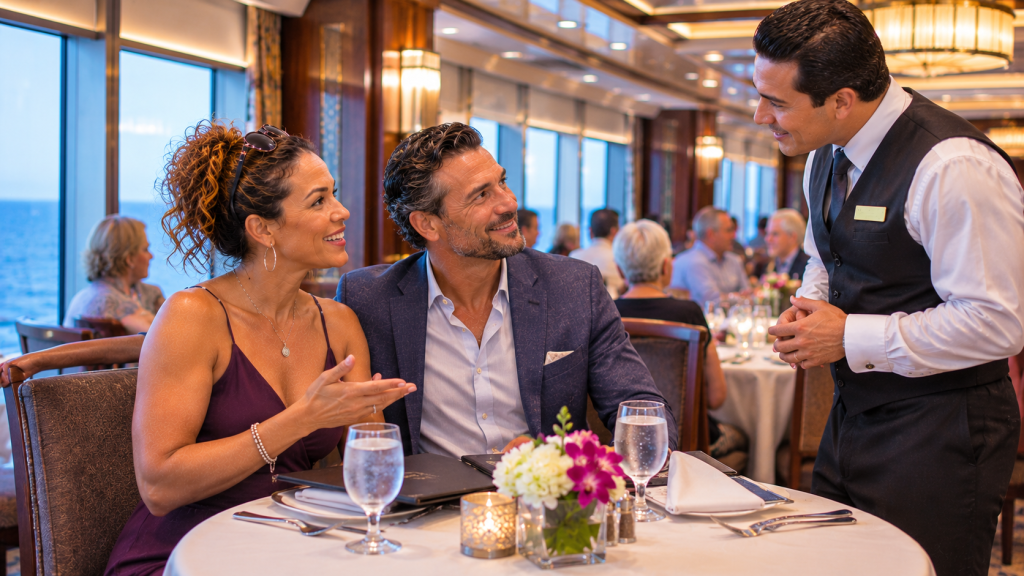
The rest becomes much easier once you understand a few common situations.
For example, formal night usually encourages guests to dress more elegantly for dinner, but requirements differ between cruise lines and venues.
Your cabin steward helps maintain your stateroom, while daily gratuities may contribute to the compensation arrangements for housekeeping and other designated employees.
Poolside seating, shared tables, elevators, and theaters also have straightforward expectations intended to give everyone a reasonable opportunity to enjoy the ship.
Rather than trying to memorize every rule, focus on how to respond when you encounter these situations.
What Should You Do When an Unfamiliar Cruise Situation Comes Up?
Imagine it’s your first sea day and you find several empty loungers with towels draped across them.
You’re not sure whether someone is returning shortly or whether the chairs have been left unused for hours.
Later, you arrive at the main dining room wearing a casual outfit and wonder whether it meets the evening’s dress requirements.
These small uncertainties can make passengers uncomfortable because they don’t want to inconvenience anyone or accidentally break a rule.
A useful approach is to identify the situation, understand the considerate choice, and verify any ship-specific restrictions before acting.
The interactive etiquette checker below does exactly that.
Select the situation you’re concerned about and receive practical guidance you can use onboard.
Interactive First-Cruise Etiquette Checker
First-Cruise Etiquette Checker
Not sure what’s appropriate onboard? Choose a situation for practical guidance, then check off the things you’ve confirmed before sailing.
General etiquette advice only. Requirements for dress codes, pool seating, show reservations, tipping, and housekeeping vary by cruise line and sailing. Confirm exact policies with your operator or crew. Your checklist isn’t saved between page visits.
If you are heading out on your first cruise and wondering how to handle etiquette without feeling awkward, you are not alone.
Cruise ships have their own rhythms and shared spaces, but the truth is, good manners at sea are simple once you know the basics.
You might be wondering how dressed up you have to be on formal night, whether you are tipping enough in gratuities, or what exactly your cabin steward does all day.
You may be replaying questions like “Should I save seats at the show,” “Do I have to talk to strangers at dinner,” or “Am I going to annoy people without realizing it.”
That background worry can chip away at the fun before you even see the ocean.
Top Cruise Deals From Trusted Cruise Lines
Compare exclusive online offers and find the fare that fits your trip and your budget

The good news is that cruise etiquette is less about rigid rules and more about basic respect in a shared space.
Once you know the handful of areas that matter most—dining, dress codes, tipping, cabins, public spaces—you will realize you are already more prepared than you think.
With a few clear tips for dress codes, gratuities, and everyday behavior, you can relax and enjoy your voyage with confidence.
Why Cruise Etiquette Feels Confusing—and How to Make It Simple
On land, you are used to juggling separate spaces.
You eat in restaurants, sleep in hotels, and take transport to get between them.
On a ship, all those roles sit under one roof, and you share them with thousands of other people for days at a time.
That can make every small choice feel larger.
You are not just walking down a hallway.
You are walking down a hallway where people are sleeping, where crew are working, and where other guests are trying to find their cabins.
You are not just ordering dinner.
You are ordering in a dining room where a team of servers is timing courses for dozens of tables.
You hear terms you may never have used before.
A formal night is a dinner evening where the cruise line encourages dressier clothes, like dresses, slacks, collared shirts, and maybe jackets or cocktail outfits.
You do not usually need a tuxedo or ball gown unless that is your idea of fun.
It is about elevating the mood, not enforcing a runway.
Gratuities are the automatic or recommended tips that go to crew members who serve you throughout the cruise, like dining staff, cabin stewards, and behind-the-scenes workers.
Many lines add these to your onboard account daily.
You can sometimes adjust them, but they are part of how crew are paid and appreciated.
Your cabin steward or room steward is the crew member assigned to your stateroom.
They clean your room, make the beds, refresh towels, and often handle small requests like extra pillows or ice buckets.
“Cabin steward” and “room steward” are two names for the same role.
Why This All Feels Like A Test
You might feel like everyone else has secretly memorized a rulebook you never got.
They have not.
Most people learned the basics by trial and error and a little observation.
Ships Are Shared Homes, Not Strict Schools
Etiquette exists because you are living, eating, and relaxing in a shared home at sea, not because someone wants to judge you.
Confidence Comes From A Few Clear Anchors
Once you know what matters with dress codes, tipping, and everyday behavior, you can stop overthinking and start enjoying yourself.
Practical Cruise Etiquette Tips for Confidence Onboard
You do not need perfect manners to be a good cruiser.
You just need a few consistent habits that keep life smoother for you, the crew, and your fellow guests.
Dress Codes And Formal Night Without Drama
First, let’s talk about formal night.
On many mainstream lines, this is now more “dressy night” than strict formality.
Think of it as “nicer than what you would wear to the buffet, but comfortable enough to enjoy dinner and a show.”
For men, that usually means slacks or dark jeans, a collared shirt, and maybe a sport coat.
For women, that might mean a simple dress, jumpsuit, or nice top with tailored pants or a skirt.
If you love dressing up, go for it.
If you do not, aim for neat and respectful rather than hyper-casual.
Pool wear, cutoffs, and graphic tank tops do not belong in the main dining room at dinner, especially on formal nights.
Buffets are more relaxed, so if you really do not want to dress up at all, you can always eat there.
Tipping And Gratuities
Now, gratuities.
Most large cruise lines automatically add gratuities to your onboard account each day.
This covers a base level of tipping for your dining team, your cabin steward, and many behind-the-scenes crew who make things work smoothly.
You can leave these as-is, increase them if you feel especially well cared for, or in some cases adjust them at Guest Services if there is a serious issue.
Online‑Only Cruise Offers You Won’t Find Elsewhere
Unlock special pricing and start planning the sailing that matches your perfect itinerary

On top of that, it is common to hand a little extra cash to people who go above and beyond.
Many guests give their cabin steward an additional envelope at the end of the cruise, especially if that person handled special requests, kept kids’ beds organized, or always seemed two steps ahead.
You might also tip porters at the terminal a few dollars per bag when they handle your luggage, and local guides on excursions booked through Viator, GetYourGuide, Klook, or similar platforms.
Those small gestures carry a lot of weight for the people serving you all week.
Respecting Your Cabin Steward And Your Space
Your cabin steward or room steward is not just “housekeeping.”
They are your point person for comfort in your cabin.
They typically visit once or twice a day to straighten the room, empty trash, change towels, and sometimes leave fun touches like towel animals.
A few etiquette tips go a long way here.
Use the door magnets or signs (“Do Not Disturb” or “Make Up Room”) so they are not guessing when they can enter.
Do not leave valuables lying out.
Keep cords, chargers, and suitcases reasonably organized so they can move efficiently.
If you have a request—extra hangers, softer pillows, an ice bucket—ask kindly.
They may be responsible for a dozen or more cabins, and they are juggling many small details you never see.
A friendly greeting and a quick thank-you each day build real goodwill.
Everyday Manners In Public Spaces

Public spaces on a ship are where cruise etiquette really shows.
Small choices have big ripple effects.
In the buffet, use tongs and utensils only for the dish they belong to.
Do not reach in with your hands, even for “just one roll.”
Let the line move in one direction instead of weaving through to grab favorites.
If you want to sample several things, circle back.
At the pool, avoid “chair hogging,” which is the habit of leaving items on loungers for hours while you are somewhere else.
If you are gone more than forty-five minutes or so, assume someone else may need the space.
In theaters and lounges, do not reserve rows of seats with bags for people who may or may not show up.
Hold spaces for those actually on their way, and release spots when it is clear they are not coming.
In hallways, remember that people may be sleeping, especially early in the morning or late at night.
Keep voices low, and remind kids that cabins are not playgrounds for door-slamming games.
Elevator etiquette is the same as in any city.
Let people exit before you step in.
Move toward the back so others can fit.
If you are able-bodied and only going one or two decks, consider using the stairs during peak times, especially when elevators are full of guests with mobility needs.
Etiquette Tips: High-Impact Habits
Dress A Step Up For Formal Night
Aim for neat and slightly dressy at dinner, especially when the line suggests it.
Treat Gratuities As Part Of The Trip
Automatic gratuities and small extra tips are how you say “I saw your effort.”
Share The Space Kindly
Buffet lines, loungers, hallways, and elevators work best when you act like you are sharing, not claiming.
Avoid These Common Cruise Etiquette Mistakes
Most first-time cruisers are not trying to be rude.
They simply do not realize how their choices affect others in a floating community.
Overlooking The Cabin Steward’s Role
One common mistake is treating your cabin like a hotel room where staff appear and disappear invisibly.
On a cruise, your cabin steward is more present and more central to your daily comfort.
Leaving the room in complete chaos, stepping out of the shower while they are trying to clean, or ignoring their greetings can create awkwardness you never intended.
You do not have to be spotless, but small efforts help.
Hanging wet swimsuits where they can drip without soaking the floor, consolidating trash, and letting them know your preferred cleaning time all make their job easier.
Offering a genuine thank-you and an extra tip at the end says, “I noticed your work.”
Treating Crew Like Background Extras
Another mistake is talking over crew or treating them as if they are not really there.
Crew members are professionals with long hours and demanding schedules.
They are also people who remember kindness.

Luxury Cruise Experiences at Smarter Prices
See premium sailings and upgraded cabins priced for travelers who know how to book well
Saying hello when you see your server again, learning your cabin steward’s name, and thanking bartenders or entertainers directly takes seconds but changes the feel of your trip.
If you booked planning tools or experiences through partners like Go City, GetYourGuide, or BikesBooking.com, extend that same respect to local guides and drivers in port.
They are part of your cruise story too.
Ignoring Posted Dress Codes
Some guests assume that because they paid for their vacation, they can wear anything, anywhere.
Showing up to dinner shirtless, dripping from the pool, or in sleepwear sends the message that you are not considering the shared environment.
You will not be thrown off the ship, but you may be turned away at some venues.
It is easier and more comfortable to follow the simple guidelines the line provides.
Chair Hogging And Space Hoarding
“Saving” loungers and seats with a towel or bag for hours is one of the fastest ways to annoy strangers.
You might think you are just stepping away, but to others it looks like claiming space without actually using it.
The same goes for taking over entire hot tubs, hogging trivia tables, or spreading bags over half a row in the theater long after showtime.
Use what you need, then make room for the next group.
Talking Through Shows And Late-Night Hallway Noise
Most ships have great entertainment, from comedians to production shows.
Talking loudly through performances or letting your phone light and notifications flash is distracting for everyone around you.
Save conversations for before and after.
At night, remember that narrow hallways amplify sound.
Late-night shouting, door slamming, and loud music in cabins are small choices that can wake entire sections.
Etiquette Mistakes And Better Alternatives
Recognize Your Cabin Steward As Part Of Your Experience
A little respect and communication turn “housekeeping” into a trusted ally.
Follow The Spirit Of Dress Codes
You are not being graded, but staying within guidelines keeps public spaces pleasant for everyone.
Use, Enjoy, Then Share The Space
Instead of guarding chairs and seats all day, enjoy them and then let someone else have their turn.
Ease Your Biggest Cruise Etiquette Fears with Simple Truths
Even once you know the basics, you might still feel uneasy.
You may worry you are being watched, judged, or whispered about if you make a mistake.
You might replay small moments in your head and wonder whether you did something “wrong.”
Those feelings are human, especially in a new environment.
Fear: “Everyone Will Notice If I Mess Up”
In reality, most people are focused on their own vacations.
They are thinking about their excursions, their kids, their dinner reservations, and whether they packed enough sunscreen.
If you walk into the wrong dining room, show up underdressed one night, or forget a norm at the buffet, you are not the first.
Crew will usually redirect you kindly.
You adjust, move on, and it becomes a story you laugh about later.
Fear: “I Do Not Know How To Tip ‘The Right Way’”
Tipping can feel like a test because every region handles it differently.
On cruises, gratuities simplify most of it.
Automatic daily charges ensure that your dining and housekeeping teams are thanked.
From there, anything extra is a gesture, not a requirement.
If you feel someone made your trip easier—your cabin steward, a favorite bartender, or a guide on a small-group tour booked through Viator or GetYourGuide—handing them an envelope or some extra cash and a thank-you is always appreciated.
Travel insurance providers like VisitorsCoverage, World Nomads, Ekta, and Insubuy can also help protect the larger financial side of your trip, which makes tipping feel less stressful because your overall investment is supported.
Fear: “I Am Not Fancy Enough For Formal Night Culture”
If your mental picture of formal night comes from cruise ads full of sequins and tuxedos, you might feel like you do not belong.
The reality is far more mixed.
You will see everything from simple black dresses and button-down shirts to more glamorous outfits.
The goal is not perfection.

Sail Away to Paradise Without Overpaying
Find cruise deals that make it easy to escape, relax, and enjoy the ocean without stretching your budget
The goal is a slightly elevated atmosphere for those who enjoy it.
If you show up clean, tidy, and presentable, you have done your part.
If dressing up truly stresses you out, choosing the buffet on those nights is an etiquette-safe option too.
Fear: “I Will Bother People By Asking Questions”
Some guests stay quiet because they fear annoying crew with basic questions.
In truth, asking once is far better than guessing wrong.
If you are unsure whether shorts are allowed, whether you can bring a drink into a theater, or how auto gratuities work on your line, ask Guest Services or your dining team.
It is their job to explain, not your job to magically know.
Emotional Reframes For Etiquette Anxiety
Curiosity Beats Silent Worry
Asking a simple question is a sign you care about doing things respectfully, not a sign of ignorance.
Most People Remember Feelings, Not Flubs
They will remember that you were kind or considerate long after they forget small missteps.
You Are Allowed To Grow Into Cruise Culture
You do not have to get everything right on your first sailing to belong on board.
FAQ – What Cruise Etiquette Should First-Time Cruisers Know Before Boarding?
What Are the Most Important Cruise Etiquette Rules for Beginners?
The most important cruise etiquette rules involve respecting shared spaces, following dress codes, treating crew members courteously, and understanding onboard gratuities.
You should also be considerate in buffets, elevators, theaters, cabin hallways, and pool areas.
Individual ships may have additional policies that affect particular venues or activities.
First-time cruisers don’t need to memorize every custom, but following posted guidance and showing consideration for others will help them navigate most situations.Do You Have to Dress Up for Formal Night on Your First Cruise?
That depends on your cruise line, the venue, and the dress requirements for the evening.
Some ships encourage elegant outfits while others have more relaxed formal-night traditions.
A dressy outfit or appropriate smart-casual clothing may work for certain restaurants, but stricter venues can require more formal attire.
Review your sailing’s published dress code before packing rather than assuming a tuxedo or evening gown is always necessary.Can You Skip Formal Night on Your First Cruise?
Yes, you’re generally free to choose another dining option rather than participate in a formal-night dinner.
Many mainstream ships provide casual dining venues that remain available in the evening, although their hours and requirements vary.
Skipping a dressier restaurant doesn’t mean you’ve broken cruise etiquette.
Check the dining schedule so you know which alternatives are open and whether reservations are required.Can You Wear Jeans or Shorts to Dinner on a Cruise Ship?
Jeans and shorts may be acceptable in certain dining venues or at particular meal times, depending on the cruise line.
However, some restaurants restrict casual clothing during dinner, especially on designated formal or dressier evenings.
Pool clothing and bare feet are commonly prohibited in indoor dining venues.
First-time cruisers should follow the specific restaurant’s requirements rather than relying on a general rule for the entire ship.What Are Automatic Gratuities and Do You Need to Tip Extra?
Automatic gratuities are charges collected through a cruise line’s service or tipping arrangements, often calculated daily for eligible guests.
They commonly support designated dining, housekeeping, and other service personnel, although the allocation differs by operator.
Additional cash tips for exceptional service are generally a personal choice rather than a requirement for every interaction.
Check whether your fare includes or prepays gratuities before deciding how much extra money to bring.Should You Tip Your Cabin Steward at the Beginning or End of the Cruise?
Some passengers prefer giving an additional personal tip at the beginning of a cruise, while others wait until the end to recognize service throughout the voyage.
Neither timing is universally required.
Your cabin steward’s routine work may already be covered by the cruise line’s daily gratuity system.
If you choose to tip extra, base the gesture on your preferences, budget, and experience rather than assuming advance payment is expected.What Does a Cabin Steward Do During Your First Cruise?
A cabin steward or room steward is responsible for designated housekeeping duties associated with your stateroom.
These may include making beds, refreshing towels, removing trash, and helping with reasonable accommodation requests.
Service schedules and responsibilities vary by cruise line and cabin category.
You can make their work easier by communicating politely, securing personal belongings, and allowing access during the ship’s housekeeping hours.Is It Rude to Ask Your Cabin Steward for Extra Towels or Pillows?
No, reasonable requests for items such as towels, pillows, or hangers are a normal part of cruise accommodation service, subject to availability.
The appropriate approach is to ask politely and allow time for the steward to respond.
Remember that the crew member may be responsible for several other cabins.
If a request can’t be accommodated, ask what alternatives might be available instead of assuming the staff member is refusing to help.Can You Reserve Pool Chairs with Towels on a Cruise Ship?
Cruise lines often discourage leaving towels or belongings on loungers for extended periods when nobody is using them.
Some ships actively monitor unattended chairs and remove belongings under published procedures.
The exact time limits and enforcement methods vary by operator.
First-time cruisers should follow the posted deck policy and make loungers available when they’re no longer using them.Is It Acceptable to Save Seats for Family Members at Cruise Shows?
That depends on the theater’s rules, but reserving large numbers of seats for absent passengers is generally inconsiderate.
Some venues prohibit seat saving entirely, particularly for popular performances.
Arriving together is the most reliable way to ensure your group can sit near one another.
Review any reservation or seating instructions before the show rather than assuming you can hold places indefinitely.What Is Proper Buffet Etiquette on Your First Cruise?
Use designated serving utensils, respect queues, and follow posted hand-hygiene instructions.
Avoid touching shared food directly or using utensils from one serving dish in another.
During busy periods, make your table available after everyone in your party has finished eating.
These straightforward habits improve the experience for other passengers and help maintain appropriate food-handling practices.Should You Let Other Passengers Exit the Elevator First?
Yes, passengers leaving the elevator should have space to exit before others board.
Avoid crowding the doorway, blocking controls, or pushing into an elevator that’s already full.
It’s considerate to make room for passengers using mobility aids or strollers whenever possible.
Using the stairs for short trips can help reduce congestion if they’re accessible and comfortable for you.How Quiet Should You Be in Cruise Ship Hallways?
Keep conversations and other noise at a reasonable level, especially early in the morning or late at night.
Cabin corridors can carry sound, and passengers may be sleeping or resting at different times.
Closing doors gently and avoiding loud conversations near staterooms are simple ways to show consideration.
Check whether your ship has additional rules for quiet hours, balconies, or music.Do You Have to Talk to Strangers at Dinner on Your First Cruise?
No, you aren’t required to engage in extended conversations with unfamiliar passengers.
Some cruise dining arrangements involve shared tables, while others offer private seating or flexible dining preferences.
You can be polite and friendly without feeling obligated to participate in conversations beyond your comfort level.
If seating arrangements matter to you, check the available dining options or ask the dining team about your preferences.What Should You Do if You Accidentally Break a Cruise Etiquette Rule?
Respond courteously, correct the situation when possible, and follow any instructions from the crew.
For example, if you enter a restaurant wearing clothing that doesn’t meet its policy, ask about acceptable alternatives.
Most minor etiquette mistakes can be addressed without confrontation.
First-time cruisers should focus on learning the ship’s routines rather than worrying that every unfamiliar situation will become embarrassing.Is It Appropriate to Bring Children into Adult-Only Cruise Areas?
Generally, you should respect posted age restrictions and use designated family-friendly areas with younger children.
Ships may have adult-only pools, lounges, specialty venues, or other spaces with specific entry requirements.
These rules vary by cruise line and sometimes by time of day.
Check the applicable policy before entering rather than assuming that all public spaces are open to every passenger.Should You Tip Shore Excursion Guides and Cruise Terminal Porters?
Tipping customs for excursion guides, drivers, and porters depend on the destination, service provided, and whether gratuities are already included.
These individuals may not be covered by the ship’s routine gratuity system.
You can review tour inclusions and local customs before deciding whether a separate tip is appropriate.
When tipping is customary, carrying a modest amount of suitable currency can make the process easier.How Can Families Teach Children Good Cruise Etiquette?
Start with a few expectations about shared spaces, noise, swimming pools, and respecting crew members.
Remind children to walk in crowded areas, use appropriate buffet utensils, and keep voices down near staterooms.
Explain that some venues have age restrictions or specific behavior requirements.
Clear, age-appropriate guidance allows children to enjoy the cruise while respecting other passengers.What Cruise Etiquette Mistakes Do First-Time Cruisers Make Most Often?
Common mistakes include saving unattended pool chairs, holding large numbers of theater seats, ignoring restaurant dress codes, and making unnecessary noise near cabins.
Some passengers also overlook service charges and assume every crew interaction requires additional cash tipping.
Other problems arise from misunderstanding the cabin steward’s role or failing to follow buffet hygiene procedures.
Learning these expectations before sailing can prevent most avoidable situations.What’s the Easiest Way to Feel Comfortable with Cruise Etiquette on Your First Sailing?
Focus on a few basics: check dining dress codes, understand your gratuity arrangements, communicate respectfully with the crew, and share public spaces thoughtfully.
Review important venue policies through your cruise line’s app or onboard information.
When you’re uncertain, ask an appropriate crew member instead of relying on assumptions.
You don’t need extensive cruising experience to be considerate and comfortable on your first voyage.
Plan Your Next Cruise!
Sail the World in Style: MSC Cruises’ Innovative Ships, Luxury Amenities, and Global Adventures
One Delay Can Cost Your Entire Cruise A quick coverage check now protects you from the problems no one sees coming….

Discover Regent Seven Seas Cruises: Opulent Suites, Gourmet Dining, and Exclusive Destinations
One Delay Can Cost Your Entire Cruise A quick coverage check now protects you from the problems no one sees coming….

Unlock Seabourn’s World: Yacht‑Like Luxury, Exclusive Destinations, And Unmatched Comfort
One Delay Can Cost Your Entire Cruise A quick coverage check now protects you from the problems no one sees coming….

Escape To Paradise: Inside The Exclusive World of Cruise Line Private Islands
One Delay Can Cost Your Entire Cruise A quick coverage check now protects you from the problems no one sees coming….
Explore More

Sail Boldly: Experience Virgin Voyages’ Adults‑Only Cruises With Style, Freedom, And Fun

Dance Into Adventure: Learn Salsa at Sea with Cruise Lessons for Every Skill Level

Sail Gluten-Free: How Cruise Lines Deliver Safe, Delicious Dining for Every Guest
