
One Delay Can Cost Your Entire Cruise
A quick coverage check now protects you from the problems no one sees coming
Short Excerpt
- Getting sick on your first cruise can be unsettling, especially when you’re unfamiliar with the ship’s medical center and emergency procedures.
- Learn how to report symptoms, contact medical staff, prepare for an appointment, and understand possible treatment costs.
- Use the interactive medical-visit preparation checklist to organize information for the ship’s healthcare team without trying to diagnose yourself.
Quick Take
- Report concerning symptoms promptly. The onboard medical team can assess your condition and explain the next steps.
- Use the ship’s emergency number for serious symptoms. Don’t attempt to find the clinic or move an unstable person during an emergency.
- Know what medical centers can provide. Cruise clinics can treat many illnesses and injuries, but advanced treatment may require care ashore.
- Prepare for possible expenses. Consultations, tests, medications, and other onboard treatment generally cost extra.
- Follow infection-control instructions. Gastrointestinal and respiratory illnesses can affect other passengers, making symptom reporting particularly important.
- Keep your medical documentation. Itemized bills, medical reports, and receipts may be needed for insurance claims or subsequent treatment.
What Should You Do First If You Feel Sick on Your First Cruise?
Your first cruise is supposed to be filled with new experiences.
You might be looking forward to exploring unfamiliar ports, relaxing by the pool, trying different restaurants, or enjoying the entertainment onboard.
Then you wake up feeling unwell.
Perhaps you’ve developed an upset stomach after dinner, started feeling feverish, or noticed that an injury from the previous afternoon is becoming increasingly uncomfortable.
Being ill during a vacation is disappointing anywhere.
On a cruise, it can feel particularly uncertain because you’re away from your usual healthcare providers and may be sailing far from the nearest hospital.
You might wonder whether you should rest in your cabin, contact Guest Services, or go directly to the ship’s medical center.
There’s also the question of cost. Does the cruise fare include a doctor’s appointment?
What if you need medication, tests, or additional care after the ship reaches port?
The most useful thing to understand is that you don’t need to diagnose yourself before contacting the ship’s medical team.
Most major oceangoing cruise ships have medical facilities intended to evaluate illnesses and injuries, provide appropriate onboard treatment, and stabilize patients who may need additional care ashore.
However, the available equipment, personnel, and treatments vary by vessel.
A ship’s clinic shouldn’t be treated as equivalent to a fully equipped land-based hospital.
The CDC specifically recommends understanding those limitations when preparing for cruise travel.
For your first cruise, a practical response begins with recognizing when professional assessment is needed, knowing how to request assistance, and having important information ready for the people treating you.
Don’t Confuse Common Seasickness With Every Other Illness
Feeling nauseated during your first day at sea doesn’t necessarily mean you’re dealing with a contagious illness.
Motion sickness can cause nausea, dizziness, and discomfort, particularly while you’re adjusting to the ship’s movement.
However, vomiting, stomach cramps, diarrhea, and other symptoms can have different causes.
A person experiencing gastrointestinal illness may require medical assessment and infection-control instructions rather than simply taking seasickness medication and continuing with their activities.
The CDC advises travelers who become ill during a voyage to seek care through the ship’s medical center.
Medical staff can evaluate the situation, provide care, and implement appropriate measures when an infectious illness is suspected.
Similarly, an injury that seems minor initially may require medical attention when pain, swelling, or difficulty moving develops.
You don’t have to determine the exact cause yourself.
If you’re uncertain what to do, contact the medical team through the ship’s published procedure and explain what you’re experiencing.
Recognize When You Need Emergency Help Immediately

Some symptoms should never be treated as ordinary vacation discomfort.
Severe chest pain, difficulty breathing, signs of a stroke, loss of consciousness, uncontrolled bleeding, or a major injury require an immediate emergency response.
Use the emergency number verified for your ship, or urgently alert a crew member who can activate the appropriate medical procedure.
Don’t delay emergency assistance to gather paperwork, complete a checklist, or search for the medical center.
If someone is seriously unwell or cannot move safely, follow the medical team’s instructions rather than attempting to transport that person through the ship yourself.
The exact response arrangements depend on the vessel, but serious symptoms warrant immediate assistance rather than waiting for routine clinic hours.
Prepare for Your Cruise Medical Visit Without Forgetting Important Details
If you’re feeling unwell, you may find it difficult to remember exactly when symptoms started, which medications you’ve taken, or what you wanted to ask the doctor.
That’s understandable, particularly when you’re tired, uncomfortable, or concerned about what the illness could mean for your vacation.
A brief written summary can make the conversation easier.
You might record when symptoms began, how they’ve changed, what you’ve already taken, and any information the healthcare team should know about your usual medications or allergies.
Top Cruise Deals From Trusted Cruise Lines
Compare exclusive online offers and find the fare that fits your trip and your budget

You don’t need an elaborate medical history or a detailed diary.
The goal is to organize relevant information so the medical team can ask better follow-up questions and make appropriate decisions.
The interactive preparation tool below helps you do that.
Interactive First-Cruise Medical Visit Preparation Checklist
My Cruise Medical Visit Notes
Prepare information for the ship’s medical team. This tool does not diagnose symptoms or determine whether you need emergency care.
Medical Visit Summary
Symptoms began: Not recorded
Current symptoms: Not recorded
Changes: Not recorded
Already taken: Not recorded
Questions: Not recorded
Educational preparation tool only. It cannot assess symptoms, contact a clinician, or recommend treatment. Don’t delay medical care while filling out the fields. Avoid including personal identifiers, policy numbers or other sensitive account information. Entries are not saved between page visits.
What Happens When You Visit the Ship’s Medical Center?
Once you contact the ship’s medical team, staff can advise you about the appropriate next step.
For routine concerns, you may be directed to attend during consultation hours or follow another appointment procedure.
In a more serious situation, the team may arrange an urgent assessment or send personnel to help you.
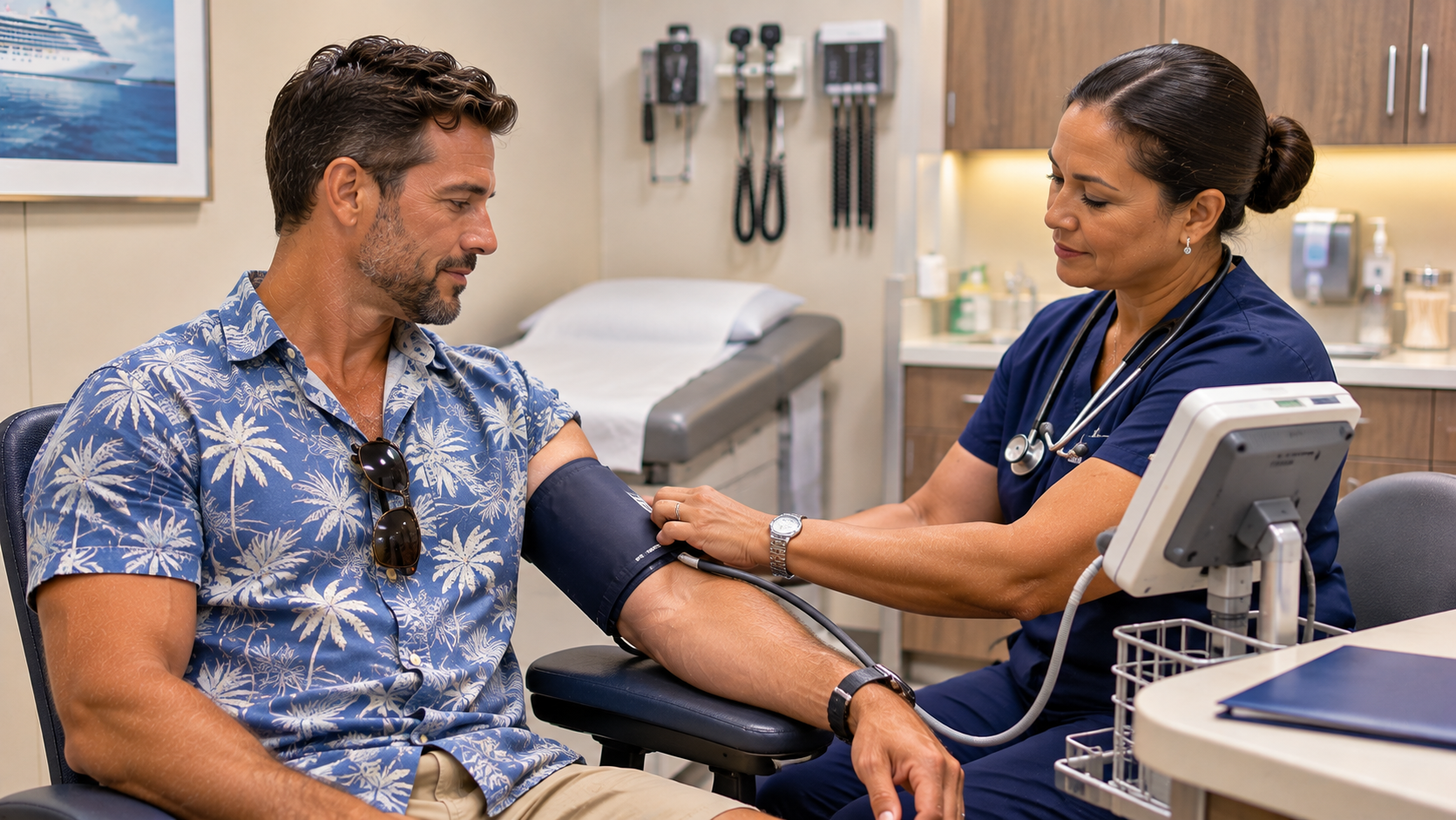
Depending on the ship and medical concern, an appointment may involve questions about your symptoms, a physical examination, vital signs, diagnostic testing, or treatment.
The available services vary considerably between vessels.
The CDC describes ship medical centers as capable of providing a range of care, but it also notes that their capabilities depend on the ship, itinerary, and other factors.
Some patients need further evaluation or treatment ashore.

That means you shouldn’t assume every ship has identical diagnostic equipment, medications, or specialist services.
During the appointment, explain your symptoms clearly and answer questions about any treatments you’ve already tried.
If medical staff recommend medication, observation, follow-up, or additional care, ask for written instructions when possible.
Report Vomiting and Diarrhea Instead of Assuming It’s Seasickness
One particularly important first-cruise habit is reporting possible gastrointestinal illness.
Vomiting and diarrhea can sometimes indicate a contagious infection rather than simple motion sickness or an ordinary reaction to unfamiliar food.
Cruise lines have procedures for identifying and managing these illnesses because infections can spread among passengers and crew in shared environments.
Online‑Only Cruise Offers You Won’t Find Elsewhere
Unlock special pricing and start planning the sailing that matches your perfect itinerary

The CDC’s Vessel Sanitation Program explains that reporting gastrointestinal symptoms helps medical staff detect potential outbreaks and take steps to limit their spread.
This doesn’t mean every upset stomach represents an outbreak.
It means passengers should avoid guessing about symptoms that may require evaluation.
If you’re experiencing vomiting or diarrhea, contact the ship’s medical team and follow its instructions about assessment, hygiene, dining, and possible isolation.
That may involve temporarily changing your activities, but it also helps protect other travelers.
Understand That Treatment May Change Your Cruise Plans
If the medical team determines that your condition requires rest, reduced activity, or isolation, your vacation schedule may change.
You might need to miss an excursion, postpone a specialty dinner, or spend additional time in your cabin.
How long those changes last depends on the illness, severity, and medical guidance.
For a potentially contagious condition, infection-control instructions may be particularly important.
Don’t assume that feeling slightly better immediately means it’s appropriate to return to crowded areas.
Likewise, don’t assume a single day of rest guarantees you’ll be ready for an active excursion the following morning.
Follow the instructions provided by the medical team, including any requirements for further evaluation.
Know Which Cruise Medical Costs You May Need to Pay
A visit to the ship’s doctor isn’t usually included in your cruise fare.
Medical consultations, diagnostic testing, medication, and other treatments can result in additional expenses.
The CDC advises cruise travelers to consider medical coverage and evacuation protection because onboard medical care and treatment ashore can involve substantial costs. CDC Yellow Book™
You may also need to pay for treatment before seeking reimbursement from your insurer, depending on the cruise line and policy.
If you have purchased coverage through VisitorsCoverage, World Nomads, EKTA, Insubuy, or another provider, review its medical benefits, limitations, exclusions, and claims procedures.
The existence of a policy doesn’t automatically mean every onboard appointment or missed excursion will be covered.
Ask the medical facility for itemized invoices and relevant treatment documentation when appropriate.
These records can help with insurance claims and any follow-up care you may need after the voyage.
Don’t Mix Medications Without Checking for Interactions
Travelers sometimes carry seasickness remedies, pain relievers, antihistamines, or other medications in a small cruise health kit.
Having appropriate supplies can be useful, especially when they’re recommended by your clinician.
However, combining medications without understanding their ingredients or interactions can create additional risks.
Some over-the-counter products contain overlapping ingredients, while others cause drowsiness or interact with prescription medicines.
If you’re already taking medication, tell the ship’s medical team what you’ve used and when.
Avoid taking leftover prescription medicines, particularly antibiotics, for a new illness without appropriate medical advice.
A health kit is a preparation tool, not a substitute for professional assessment when symptoms are concerning.
Understand When Medical Care Ashore Becomes Necessary
Cruise medical centers can treat many conditions, but their resources have limitations.
A patient requiring surgery, certain specialist services, or more advanced monitoring may need treatment at a hospital ashore.
The ship’s medical staff can evaluate the situation and help coordinate appropriate next steps.
However, evacuation isn’t necessarily immediate or straightforward.
The available options may depend on the ship’s position, weather, nearby ports, transportation resources, and the patient’s medical needs.
Travel insurance with appropriate medical evacuation benefits may help with eligible expenses, but coverage must be verified under the policy.
If you’re traveling with an existing medical condition, discussing the cruise’s suitability with your clinician and operator before departure is especially important.
Know What to Do if Illness Affects a Shore Excursion
You may have already paid for an excursion when illness prevents you from participating.
Whether you can reschedule, cancel, or obtain a refund depends on the booking terms and circumstances.
Cruise-line excursions may follow different policies from independently booked experiences.
For an excursion purchased through Viator, GetYourGuide, or another marketplace, the individual activity’s cancellation conditions and booking deadlines matter.

Luxury Cruise Experiences at Smarter Prices
See premium sailings and upgraded cabins priced for travelers who know how to book well
Don’t assume an illness automatically entitles you to a refund, even when you can provide medical documentation.
If you’re unable to participate, contact the relevant booking provider as soon as practicable and retain any instructions or medical records that may support a request.
Also check whether your travel insurance includes benefits applicable to missed activities.
Prepare for Sick Days Without Expecting Them
Before sailing, identify how to contact the medical center, bring your prescribed medications, and keep important medical information accessible.
A small health kit may be appropriate, provided its contents are suitable for you and comply with applicable travel rules.
Save your insurance documents somewhere accessible offline, and make sure the people traveling with you know how to request help.
You should also discuss how your group would manage planned activities if someone became ill.
Perhaps another adult could look after the children while one person receives treatment, or a companion could help organize transportation if additional care becomes necessary.
The point isn’t to create an elaborate emergency scenario for every possible illness.
It’s to know whom to contact and how to respond without delaying care.
Your first cruise doesn’t have to go exactly as planned to remain worthwhile.
When health problems arise, knowing what to do next helps you make better decisions for yourself and the people around you.
What to Do When You Feel Sick at Sea and Need the Ship’s Medical Team

If you are planning your first cruise and wondering what happens if you get sick onboard, you are not alone.
You are stepping onto a floating city far from your usual doctor, and your mind is asking the question every traveler asks before a big trip: “What if I get sick out here?”
Maybe you picture a stomach bug, a fever on day three, or an ankle injury on the stairs.
Maybe you are unsure what a ship’s medical center really is or what the ship doctor can actually handle.
You might also be worried about cost, embarrassment, or being “the one” who has to visit the clinic while everyone else is at the pool.
The truth is simpler than your imagination—cruise ships have medical centers, trained doctors, and clear steps to help you recover and keep your vacation on track.
Cruise ships are used to taking care of sick guests.
There is a process, a place, and a team whose job is to help you feel better and keep everyone around you safe.
Once you know how the onboard clinic works and what to do when symptoms appear, getting sick at sea becomes a manageable challenge instead of a spiraling fear.
Know Your Cruise Medical Center and Team Before You Need Them
On a modern cruise ship, the medical center is the onboard clinic where health issues are evaluated and treated.
Think of it as a small, well-equipped urgent care located right on the ship.
It usually has exam rooms, basic diagnostic tools, medications, and emergency equipment.
The doctors and nurses who work there are licensed professionals with experience in emergency medicine, general practice, or similar fields, and they are used to seeing everything from minor seasickness to serious conditions that need quick attention.
When people talk about the ship doctor, they mean the physician in charge of that medical center.
This person is the point lead for your care at sea.

Sail Away to Paradise Without Overpaying
Find cruise deals that make it easy to escape, relax, and enjoy the ocean without stretching your budget
They examine you, decide what tests or treatments are needed, and determine whether you can safely stay on the ship or need additional care ashore.
They work alongside nurses and medical assistants who handle triage, vital signs, medications, and follow-up.
The medical center has set hours for routine visits, and there is also an emergency line available after hours for urgent situations.
You will usually find details about location, opening times, and contact instructions in the cruise app, daily planner, or information booklet in your cabin.
If you cannot find it, Guest Services can tell you exactly how to reach them.
Why The Medical Center Exists
The medical center is not just there for dramatic emergencies.
It is there for ordinary human health problems that happen to show up during your vacation.
What The Ship Doctor Actually Does
The ship doctor is there to assess, treat, and stabilize you, and to coordinate care ashore if your condition needs more than the ship can provide.
You Are Not A Burden For Asking For Help
Seeing the medical team is part of how cruising is designed to work, not a sign that you are ruining anything.
Act Fast: Step-by-Step Guide for Feeling Sick at Sea
The most important thing to remember is that you do not have to wait until you are desperate before asking for help.
The sooner you act, the more options you usually have and the easier it is to avoid complications.
Step 1: Notice Your Symptoms And Pause
Maybe you feel a scratchy throat, a low fever, or stomach cramps that do not match simple motion sickness.
Maybe you tripped on the stairs and your ankle is swelling more than you expected.
Whenever something makes you stop and think, “This is more than just being tired,” give yourself a moment to acknowledge it.
You do not have to diagnose yourself.
You just have to be honest that something is off.
Take a mental note of when the symptoms began, what you were doing, and anything you have already taken, such as seasickness pills or pain relievers.
Step 2: Decide If Self-Care Is Enough For Now
For very mild issues, a bit of rest, hydration, and simple food may be enough at first.
If you have a slight headache from too much sun, or you feel a little off after a long day in port, lying down in a dark, quiet cabin with water and a light snack might be all you need.
However, if symptoms are strong, getting worse, or feel at all alarming—sharp pain, chest tightness, trouble breathing, high fever, persistent vomiting, severe diarrhea, or confusion—skip the “wait and see” phase and move to the next step.
On a ship, acting a bit earlier is almost always better than pushing through.
Step 3: Contact Guest Services Or The Medical Center
If you are unsure whether you need to be seen, you can call Guest Services from your cabin phone and say exactly that.
“I am not feeling well and I am not sure if I should come to the medical center.
Can you tell me what to do.”
They will either connect you directly or give you instructions based on the ship’s system.
If your symptoms feel urgent, use whichever number is listed in your cabin for emergencies or medical help.
Do not worry about “bothering” anyone.
If it turns out to be something simple, the medical staff will be just as happy as you are.
Step 4: Prepare For Your Visit
If the medical center asks you to come in, bring your cruise card, a list of medications you take, and any important medical information you have.
If you booked travel insurance through companies like VisitorsCoverage, World Nomads, Ekta, or Insubuy, keep your policy or digital card handy on your phone or in your bag.
Wear comfortable clothing that makes it easy to examine the area that hurts.
If you have symptoms related to your stomach, bring a mental timeline of when they began and what you ate or drank in the last day.
If someone in your party is sick, have a healthy adult come with them if possible, especially for children, older parents, or anyone feeling weak or dizzy.
Step 5: During The Appointment
When you arrive, staff will usually check you in, ask you to sit in a waiting area, and then bring you back for triage.
They may take your temperature, blood pressure, heart rate, and oxygen levels.
Then you will see the ship doctor or a nurse practitioner who will ask questions and perform an exam.
They might order basic lab tests, give you medicine, or recommend fluids and rest.
For injuries, they may provide bandaging, stitches, X-rays if available, or stabilization.
If your condition needs further care ashore, they will explain your options, coordinate with local providers, and work with the ship’s officers to decide the safest plan.
Step 6: Aftercare And Follow-Up
You may be given prescriptions to fill at the medical center or instructions to purchase certain items from the onboard shop.
Follow the timing directions carefully, especially with antibiotics, pain medications, or anti-nausea drugs.
The medical staff may ask you to return for a check-up the next day or sooner if symptoms worsen.
If you need to stay in your cabin for a while to avoid spreading illness, room service and the cruise app will be your best friends.
You can still order food, watch shows, and rest while you recover.
Travel insurance through companies like VisitorsCoverage, World Nomads, Ekta, or Insubuy can help you later when it is time to submit claims for covered medical visits, missed excursions, or extra hotel nights if your trip home has to change.
If airline schedules are affected because you needed extra time ashore, tools like Compensair and AirHelp can help you pursue eligible compensation for flight disruptions, which takes one more worry off your plate.
Step-By-Step Truths To Hold Onto
Acting Early Gives You More Options
The sooner you talk to the medical team, the easier it is to keep small problems from becoming big ones.
The Medical Center Is Built For Moments Like This
The ship doctor and nurses handle sick guests every voyage, not just once in a while.
You Are Allowed To Prioritize Your Health
Taking time to see the medical center is part of protecting your vacation, not ruining it.
Avoid These Costly Mistakes When Illness Strikes Onboard
When people feel unwell on a cruise, they sometimes respond in ways that make things harder, not easier.
Most of these mistakes come from fear, embarrassment, or not wanting to “waste” the trip.
Waiting Too Long To Ask For Help
The number one mistake is waiting.
Guests tell themselves “I will see how I feel tomorrow,” even when they know something is not right.
They push through dinner, shows, or port days hoping things will magically improve.
By the time they finally visit the medical center, they may be dehydrated, exhausted, and much sicker than they would have been with earlier care.
On a ship, waves of stomach illness or respiratory bugs can spread quickly in closed spaces, so waiting also increases the chance of passing something along to others.
Self-Medicating Without Good Information
Another mistake is mixing medications without guidance.
Guests sometimes combine seasickness pills, pain relievers, leftover antibiotics from home, and over-the-counter cold remedies in doses that do not make sense together.
That can complicate symptoms, strain your system, and make it harder for the ship doctor to see what is really going on.
Bringing a basic kit from home is helpful, but using it wisely is even more important.
Ignoring Hydration And Rest
Cruise culture encourages you to keep going.
There is always another show, trivia game, late-night snack, or shore excursion.
When people get sick, they sometimes try to keep that same pace, telling themselves they did not pay to stay in bed.
Skipping rest and failing to drink enough water slows down recovery from almost every illness.
It also increases the risk that a minor issue will turn into something that genuinely affects your whole trip.
Hiding Symptoms From The Crew
Some guests have a quiet fear that if they admit they are sick, they will automatically be quarantined or removed from the ship.
They hide fevers, coughs, or stomach issues from the medical team and hope no one notices.
In reality, the medical staff’s goal is to treat you appropriately and protect everyone else, not to punish you.
If isolation is needed, they will explain why and for how long, and they will work with you on practical details.
Keeping them in the dark usually makes everything more stressful later.
Not Using The Protection They Bought
Many travelers purchase insurance before they leave and then forget what it covers.
When they get sick, they do not keep receipts, they avoid care because they panic about cost, or they never file a claim afterward.
Companies like VisitorsCoverage, World Nomads, Ekta, and Insubuy exist precisely for these moments.
If you have a policy, it is worth using it as intended.
Keep receipts from the medical center, save documentation from the ship, and talk to the insurer’s support line if you are unsure how to handle something complex.
Mistakes And Better Alternatives
Talk To The Medical Team Sooner, Not Later
Waiting rarely makes serious symptoms better and often makes them harder to treat.
Let One Professional Plan Your Meds
Working with the ship doctor reduces the chance of combining medications in ways that do not fit.
Resting For A Day Can Save The Whole Cruise
A short reset with focused care is often the fastest way to get back to enjoying your trip.
Shrink Your Biggest Cruise Health Fears With Simple Truths
Even when you know the process, you may still carry deep worries about being ill on a ship.
Those fears are understandable and worth naming.
Fear: “What If The Medical Center Is Not Good Enough”
People sometimes imagine a single overworked doctor with a tiny first-aid kit.
In reality, ship medical centers are designed to handle a wide range of issues.
They have equipment, medications, and protocols for many common conditions and emergencies.
If your situation requires more than the ship can provide, the doctor’s job is to stabilize you and arrange transfer to a hospital ashore.
You are not being left to figure that out alone.
Fear: “What If It Costs A Fortune”
Health care at sea is not free, and the bill can feel intimidating if you are not prepared.
This is exactly why trip protection and medical coverage from companies like VisitorsCoverage, World Nomads, Ekta, and Insubuy can be so valuable.
You pay for support before you leave so you do not have to decide between health and money in the moment.
You still have to pay the ship initially in many cases, but coverage can help reimburse appropriate expenses afterward.
If you do not have insurance, it is still better to be seen early and work out payment over time than to let a serious issue worsen.
Fear: “What If They Confine Me To My Cabin”
In some situations, especially with contagious illnesses, the medical team may recommend or require that you stay in your cabin for a period of time.
This is not a punishment.
It is a protective measure for everyone, including you.
Room service, entertainment on TV, the cruise app, and even balcony time if you have one can make that period far more comfortable than you might expect.
You may also be eligible for partial credits or adjustments depending on the line’s policies and your insurance coverage, especially if you miss paid excursions booked through trusted platforms like Viator, GetYourGuide, Klook, Go City, or BikesBooking.com.
Fear: “What If Getting Sick Ruins All My Travel Plans”
Sometimes illness means changing flights, staying in a hotel near a port, or delaying your journey home.
That feels overwhelming when you are already tired.
Support tools exist for this part too.
Hotel platforms like Booking.com, Trip.com, Agoda, or Tripadvisor-listed properties can help you quickly secure a safe place to stay ashore.
Travel insurance can assist with covered costs for these changes.
Compensair and AirHelp can help you pursue eligible compensation if airline disruptions connect to your situation.
Knowing these backups exist lowers the mental load while you focus on healing.
Emotional Reframes For Health Anxiety At Sea
You Are Not Stuck Without Help
There is a medical center, a doctor, and a plan for getting you to further care if needed.
Money Worries Are Real, But You Still Deserve Treatment
Insurance, claims tools, and flexible booking systems exist to help soften the financial impact.
Being Honest About Symptoms Protects You And Everyone Else
Speaking up early is a sign of responsibility, not weakness.
Plan Ahead for Sick Days So You Can Truly Relax at Sea
No one books a cruise hoping to spend part of it in the medical center.
But knowing what you would do if that happened oddly makes it easier to enjoy the days when you feel great.
Before you sail, gather your basics.
Pack a small health kit with approved over-the-counter medications recommended by your own doctor, plus items like a thermometer and oral rehydration packets.
Store your travel insurance details somewhere easy to grab.
When you board, note the location and hours of the medical center and save the phone numbers for Guest Services and emergencies in your phone.
Talk with your travel companions about a simple plan.
If anyone feels genuinely unwell, you agree to check in with the medical team instead of guessing.
If someone needs to rest or isolate for a day, you agree not to treat them as an inconvenience.
You also agree to stay flexible with plans and excursions if health needs take priority.
With that framework in place, your mind does not have to rehearse “what if” scenarios all night.
It knows that even if someone gets sick, there is a path forward.
Planning For Sick Days, Not Just Perfect Days
A Simple Plan Takes The Edge Off Worry
Knowing who to call, where to go, and how to pay makes everything feel less overwhelming.
Support Systems Stretch Beyond The Ship
Onboard medical care, travel insurance, hotel options, and flight assistance tools work together more than you might think.
Looking After Health Is Part Of Enjoying The Trip
When you treat your well-being as a priority, you give yourself the best chance to enjoy every good day you get.
FAQ – What Should First-Time Cruisers Do If They Get Sick or Injured Onboard?
What Should You Do First If You Feel Sick on Your First Cruise?
Contact the ship’s medical team when symptoms are concerning, worsening, or may involve an infectious illness.
Explain what you’re experiencing, when it began, and whether you’ve already taken any medication.
Follow the instructions you receive rather than trying to diagnose the problem yourself.
Serious symptoms require immediate use of the ship’s emergency response procedure.Do Cruise Ships Have Doctors and Nurses to Treat Sick Passengers?
Most major oceangoing cruise ships have healthcare professionals and medical facilities for illnesses and injuries.
Depending on the vessel, the team may provide examinations, diagnostic testing, medications, and emergency stabilization.
However, available resources vary and aren’t equivalent to a full-service hospital.
Passengers requiring specialized treatment may need additional care ashore.How Do You Contact the Medical Center When You’re Sick on a Cruise?
Your ship should provide instructions for contacting medical personnel through its onboard communication system.
Routine medical concerns may be handled through designated clinic contact procedures or assistance from Guest Services.
Emergency situations require the ship’s verified emergency number or immediate assistance from a crew member.
Confirm the appropriate contacts during embarkation rather than assuming every ship uses the same number.When Should You Call for Emergency Medical Help on a Cruise Ship?
Serious chest pain, difficulty breathing, signs of a stroke, loss of consciousness, severe bleeding, or a major injury require immediate emergency assistance.
Use your ship’s official emergency contact procedure rather than waiting for routine clinic hours.
Tell the responding personnel your location and describe what has happened.
Follow their directions instead of attempting to move an unstable person through the vessel.Is Seasickness the Same as a Stomach Illness on a Cruise?
No, seasickness and gastrointestinal illness can share certain symptoms but have different causes and may require different responses.
Nausea or vomiting shouldn’t automatically be attributed to the ship’s motion, particularly when diarrhea, fever, or other concerning symptoms are present.
Cruise medical staff can assess the situation and provide appropriate instructions.
Reporting possible infectious illness also helps protect other passengers and crew.Should You Report Vomiting or Diarrhea to the Ship’s Medical Team?
Yes, reporting these symptoms helps the medical team assess your condition and determine whether infection-control measures are necessary.
Gastrointestinal illnesses can spread in shared cruise environments, and symptom reporting helps ships identify potential outbreaks.
Medical staff may recommend examination, treatment, hygiene precautions, or temporary isolation.
Follow their directions even if you believe the illness may be mild.Can You Visit the Cruise Medical Center for a Minor Illness?
Cruise medical centers commonly assess a range of illnesses and injuries, including conditions that aren’t life-threatening.
The appropriate procedure may involve attending during consultation hours or contacting the medical team first.
The availability of appointments, walk-in care, and specific treatments varies by ship.
If you’re unsure whether your symptoms need evaluation, contact the medical team for guidance.What Should You Bring to a Medical Appointment on Your First Cruise?
Bring your cruise identification and relevant information about medications, allergies, and important medical conditions when available.
It may also help to note when symptoms began, how they’ve changed, and any remedies you’ve already taken.
Keep your insurance details accessible in case they’re needed for billing or documentation.
Don’t delay urgent care while searching for paperwork.Does It Cost Money to See a Cruise Ship Doctor?
Yes, medical consultations and treatments aboard cruise ships generally involve charges beyond the cruise fare.
Additional expenses may apply to medications, tests, imaging, supplies, and other services.
Billing arrangements depend on the cruise line and type of care.
Review your insurance policy before sailing and request itemized documentation when treatment is provided.Does Travel Insurance Cover Getting Sick on a Cruise?
Some travel insurance policies include benefits for eligible medical expenses, trip interruptions, or medical evacuation.
However, coverage depends on the specific policy, medical circumstances, exclusions, and claims requirements.
You may have to pay for treatment initially and submit a reimbursement claim afterward.
Review the terms before sailing rather than assuming every illness or missed activity is covered.Can You Get Prescription Medication from the Cruise Medical Center?
A cruise medical center may stock medications for common illnesses and emergency situations.
However, its inventory is limited, and your particular medicine, brand, or dosage may not be available.
Bring adequate supplies of necessary prescriptions according to your clinician’s guidance and applicable travel requirements.
Inform the medical team about medications you’ve already taken before receiving additional treatment.What Happens if You Need More Medical Care Than the Ship Can Provide?
The onboard medical team may recommend further assessment or treatment at a shoreside medical facility.
This can involve coordinating transportation, transferring medical information, and adjusting your travel plans.
The timing and availability of additional care depend on the ship’s location, the patient’s condition, and available medical resources.
Appropriate travel medical and evacuation coverage may help with eligible expenses, but benefits aren’t automatic.Can a Cruise Ship Require You to Stay in Your Cabin When You’re Sick?
Cruise lines may implement isolation or other infection-control measures when passengers have certain contagious illnesses or symptoms.
The medical team can explain the applicable restrictions and how to obtain necessary assistance during that period.
Requirements and duration depend on the condition and ship’s procedures.
Follow the instructions provided rather than assuming you can resume activities immediately after symptoms improve.Can You Use Room Service While Recovering from an Illness on a Cruise?
Available meal arrangements depend on the cruise line, ship, and any instructions associated with your condition.
Some passengers may be able to receive food in their cabins, including when infection-control measures limit normal dining access.
However, menu availability, delivery procedures, and charges aren’t identical across operators.
Ask the medical team or designated ship staff what arrangements apply to your situation.What Should You Do if You Injure Yourself on Your First Cruise?
Contact the ship’s medical team for an injury that requires professional evaluation, particularly when pain, swelling, or difficulty moving is significant or worsening.
Serious falls, major injuries, uncontrolled bleeding, or suspected head or spinal injuries require immediate emergency assistance.
Explain what happened and when the injury occurred.
Follow medical instructions rather than attempting to continue physically demanding activities without appropriate assessment.Can You Miss a Shore Excursion Because You’re Sick?
Yes, illness may prevent you from safely or reasonably participating in a planned shore excursion.
Refunds, rescheduling options, and cancellation penalties depend on the individual booking terms.
Contact the cruise line or outside excursion provider as soon as possible if you cannot attend.
Keep relevant documentation and review your insurance policy for any applicable benefits.What Should You Do if Your Child Gets Sick on a Cruise?
Contact the ship’s medical team for guidance when a child develops concerning symptoms, particularly if they’re worsening or involve possible dehydration or respiratory difficulty.
Children can require different medical assessments and treatment decisions from adults.
Bring relevant medication, allergy, and health information to the consultation when available.
For serious symptoms, use the ship’s emergency procedure immediately.Should You Take Over-the-Counter Medicine Before Seeing the Ship Doctor?
That depends on the symptoms, the medication, and your personal health circumstances.
Over-the-counter products can have side effects or interact with other medicines, so avoid combining them without appropriate guidance.
Mild symptoms may sometimes be managed with measures already recommended by your clinician, but worsening or concerning symptoms require professional assessment.
Tell the medical team about everything you’ve taken and the approximate timing.What Medical Records Should You Keep After Getting Sick on a Cruise?
Ask for relevant treatment summaries, itemized bills, and receipts when medical care is provided.
You may need those records for follow-up treatment, insurance claims, or questions about charges.
Keep copies of prescriptions, test results, and any written activity or travel restrictions when supplied.
The exact documentation needed for reimbursement depends on your policy and the circumstances involved.How Can You Prepare for Getting Sick Without Worrying Throughout Your First Cruise?
Learn how to contact the medical center and save the ship’s verified emergency number during embarkation.
Bring appropriate prescription medications, keep medical and insurance information accessible, and make a simple plan with your traveling companions.
If symptoms develop, contact the appropriate onboard staff and follow their instructions rather than relying on guesswork.
That preparation allows you to enjoy your vacation while knowing what to do if illness interrupts your plans.
Plan Your Next Cruise!

From Icon to Oasis: Explore Royal Caribbean’s Groundbreaking Ships and Unforgettable Voyages
One Delay Can Cost Your Entire Cruise A quick coverage check now protects you from the problems no one sees coming….

Discover Regent Seven Seas Cruises: Opulent Suites, Gourmet Dining, and Exclusive Destinations
One Delay Can Cost Your Entire Cruise A quick coverage check now protects you from the problems no one sees coming….

Escape To Paradise: Inside The Exclusive World of Cruise Line Private Islands
One Delay Can Cost Your Entire Cruise A quick coverage check now protects you from the problems no one sees coming….

Sail Into Sophistication: Holland America Cruises for Luxury, Culture, and Unforgettable Journeys
One Delay Can Cost Your Entire Cruise A quick coverage check now protects you from the problems no one sees coming….