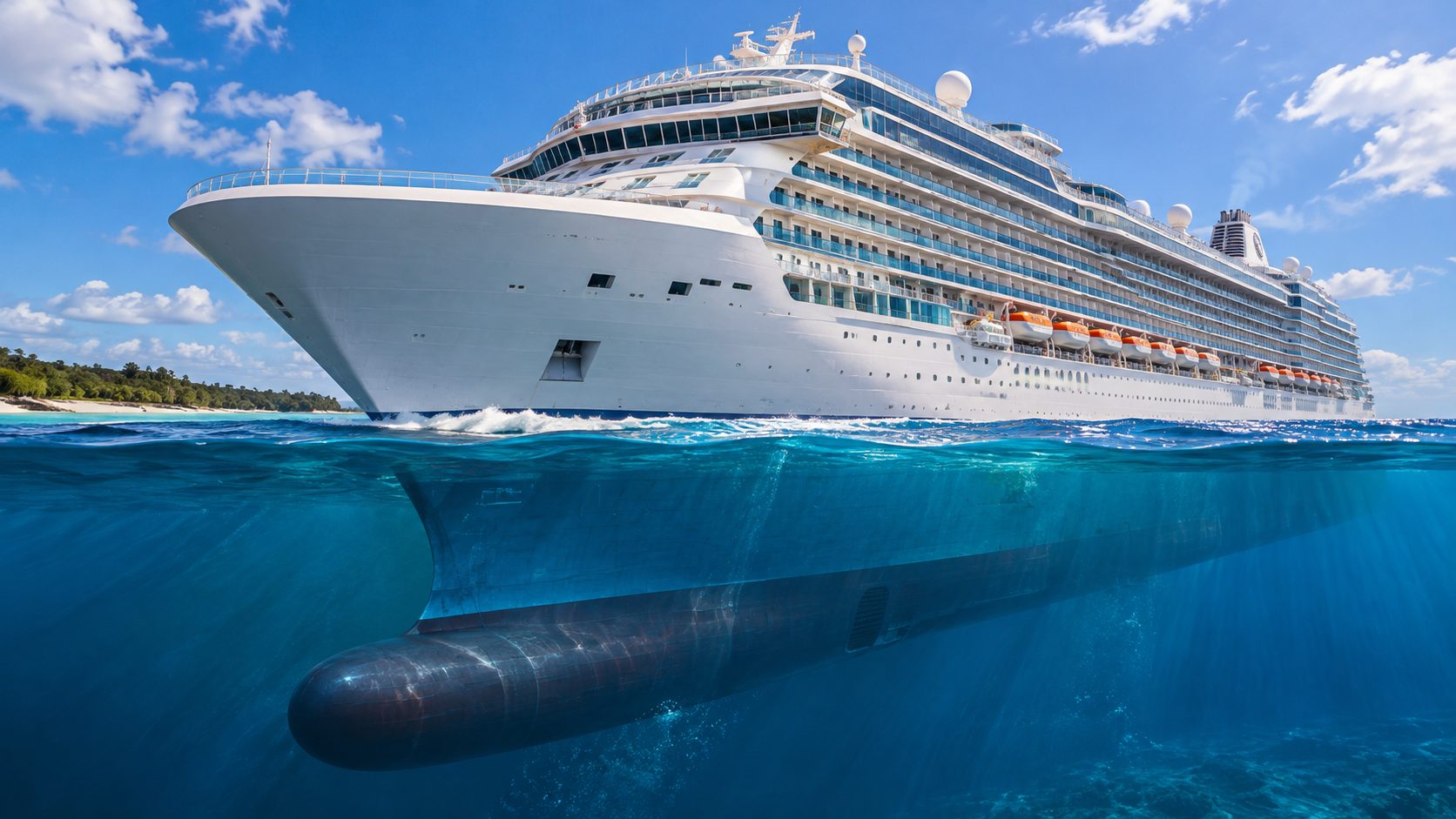
A cruise ship may look like a floating resort, but its design involves far more than passenger cabins, restaurants, and entertainment venues.
Beneath the decks, carefully engineered hull structures, stability systems, and underwater dimensions determine how a vessel moves, which ports it can enter, and how it handles changing ocean conditions.
Understanding cruise ship anatomy reveals the engineering decisions behind passenger comfort, seaworthiness, and long-term operation.
This guide brings together practical explanations of ship beams, keels, drafts, stabilizers, tender boats, dry-dock maintenance, and the working lifespan of modern cruise ships.
Cruise Ship Anatomy: Understanding the Beam, Keel & Draft
Three fundamental measurements and structural features help explain how a cruise ship is designed: its beam, keel, and draft.
Together, they influence hull strength, stability, maneuverability, and access to different ports.
Although these terms sound technical, understanding them makes it easier to appreciate why cruise ships come in different shapes and sizes and how naval architects balance passenger space with performance at sea.
– Cruise Ship Beam: How Width Affects Stability & Comfort — Learn how a vessel’s width influences stability, passenger space, water resistance, and the overall arrangement of cabins and public areas.
– Cruise Ship Keel: The Structural Backbone of a Vessel — Explore how keel construction supports the hull, why keel laying matters in shipbuilding, and how engineers inspect this essential structure.
– Cruise Ship Draft: Why Underwater Depth Matters — Understand how draft is measured, why it changes with loading conditions, and how it influences safe passage through shallow waterways.
How Cruise Ship Stabilizers Reduce Movement at Sea
A cruise ship’s hull is designed to provide stability, but wind, waves, and changing sea conditions can still cause rolling.
Stabilizer systems help reduce this side-to-side motion, improving passenger comfort during certain sailing conditions.
Modern vessels may use retractable fins or other stabilization technologies.
Their effectiveness depends on ship speed, sea conditions, and system design, so even a well-equipped cruise ship cannot eliminate every movement.
– Cruise Ship Stabilizers: How They Reduce Rolling in Rough Seas — Discover how stabilizer systems operate, when they’re deployed, and how they influence passenger comfort and ship efficiency.
Cruise Ships vs. Ocean Liners: How Their Designs Differ
Cruise ships and ocean liners both carry passengers, but they were developed around different operational priorities.
Modern cruise ships typically emphasize leisure itineraries and onboard amenities, while traditional ocean liners were engineered for scheduled long-distance ocean crossings.
Those differences influence hull design, operating speed, passenger spaces, and the ability to maintain demanding routes.
Understanding the distinction provides useful context for how passenger ships have evolved.
– Cruise Ship vs. Ocean Liner: Design & Engineering Differences — Compare vessel construction, structural priorities, propulsion requirements, and the different purposes behind these passenger ship designs.
How Cruise Ship Tenders Connect Ships to Shore
Not every destination has a pier capable of accommodating a large cruise ship.
Water depth, harbor infrastructure, and local conditions can require vessels to anchor offshore and use smaller boats to transport passengers.
These boats, known as tenders, connect the ship with the destination.
Tender operations depend on suitable weather and sea conditions, making them an important part of both cruise logistics and passenger safety.
– Cruise Ship Tenders: How Offshore Transfers Work — Learn why ships use tenders, how passengers board them, and what weather, water depth, and mobility considerations can affect operations.
Cruise Ship Dry Dock: Repairs, Inspections & Major Upgrades
Cruise ships require ongoing maintenance throughout their working lives, including periodic visits to specialized shipyard facilities.
Dry docking allows engineers to inspect and repair underwater areas that are difficult to access while the ship remains afloat.
These scheduled maintenance periods can also involve propulsion repairs, hull cleaning, safety inspections, interior refurbishments, and major upgrades.
For passengers, the results may include refreshed accommodations, improved amenities, and updated onboard equipment.
– Cruise Ship Dry Dock: What Happens During Repairs & Refurbishments — Explore how dry docks work, which ship systems receive attention, and why scheduled maintenance helps extend a vessel’s service life.
How Long Do Cruise Ships Last Before Retirement?
Cruise ships can remain in service for decades, but their working lifespan depends on more than their physical age.
Maintenance history, operating expenses, fuel efficiency, safety requirements, and passenger expectations all influence how long a vessel remains commercially viable.
Older ships may receive extensive refurbishments, transfer to other cruise operators, or continue serving different markets.
Eventually, some become hotels or museums, while others are dismantled and recycled.
– Cruise Ship Lifespan: From First Voyage to Retirement — Discover how long cruise ships typically operate, what determines retirement, and why maintenance and modernization can extend their useful lives.
Where Should You Start Exploring Cruise Ship Design?
If you’re curious about how cruise ships are constructed, begin with the beam, keel, and draft guides.
They explain the structural characteristics that influence everything from stability to port accessibility.
Travelers interested in passenger comfort can explore stabilizers and tender operations, while those fascinated by shipbuilding and maritime history may prefer the ocean liner comparison, dry-dock guide, and ship lifespan article.
Understanding these systems offers a different perspective on cruising.
Every voyage depends on engineering decisions made long before passengers board, followed by years of inspections, maintenance, and operational improvements.