One Delay Can Cost Your Entire Cruise
A quick coverage check now protects you from the problems no one sees coming
Short Excerpt
- Making friends on your first cruise can feel intimidating, especially when you’re traveling solo or aren’t naturally comfortable starting conversations with strangers.
- Cruise ship activities, casual meetups, shared excursions, and familiar daily routines create opportunities to connect without forcing small talk.
- A few easy conversation starters and a flexible social plan can help you meet people, build friendships, and feel more comfortable onboard while still enjoying time to yourself.
Quick Take
- Start with familiar faces rather than instant friendships. Small conversations become easier when you see the same passengers throughout your sailing.
- Look for organized social activities, including solo traveler gatherings, trivia, group classes, and passenger meetups.
- Use natural conversation starters based on the ship, destinations, food, or activities you’re already enjoying.
- Return to the same venues occasionally so brief introductions have opportunities to develop into longer conversations.
- Keep socializing optional and enjoyable. You can make meaningful connections without filling every day with group activities.
Make Your First Cruise Feel More Social Without Having to Become an Extrovert
One of the most appealing things about cruising is the opportunity to meet people you might never encounter during an ordinary vacation.
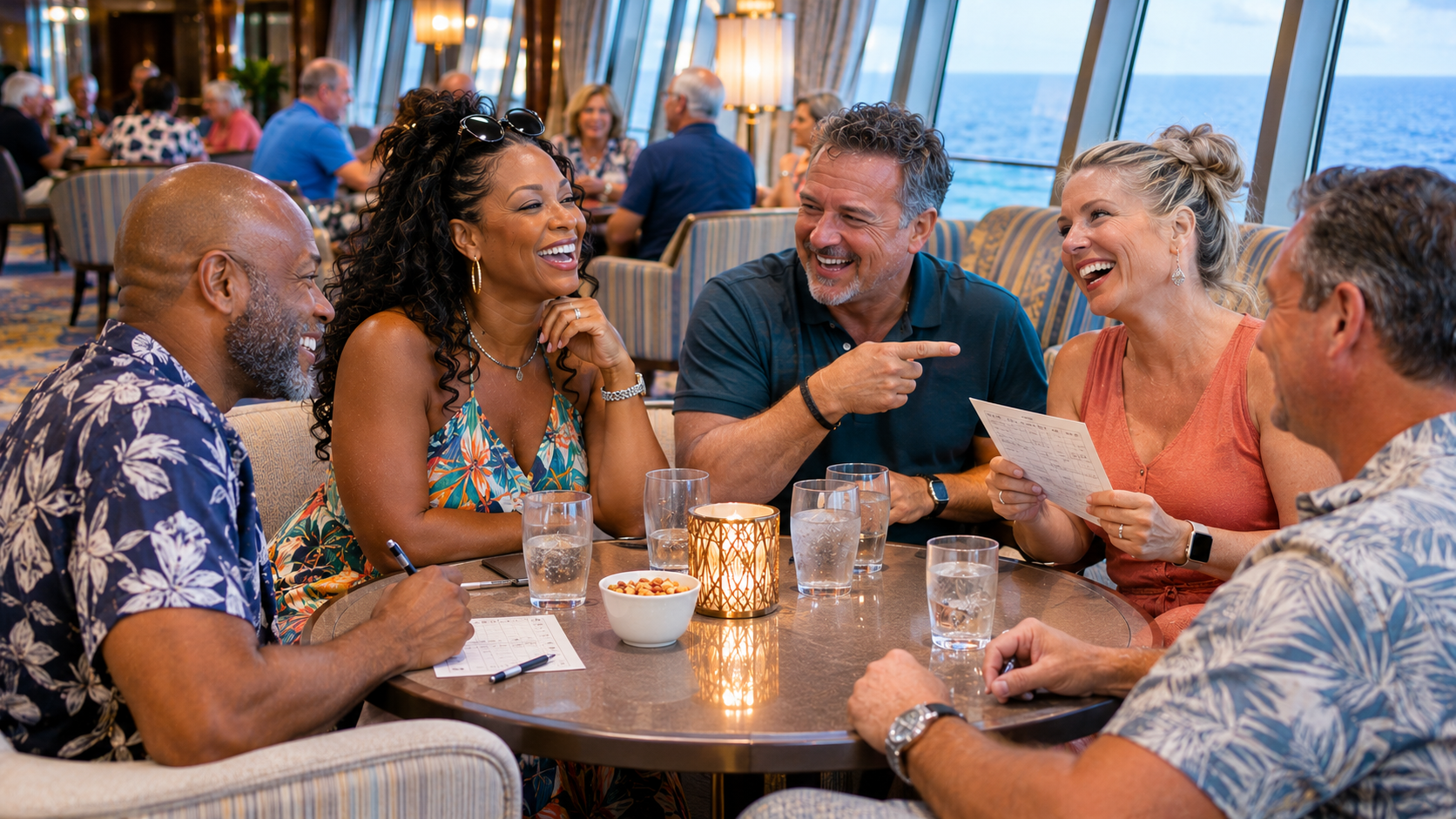
You can spend an afternoon exploring a new destination, enjoy dinner beside passengers from another country, and find yourself laughing with people you’ve only just met during an evening trivia game.
However, knowing those opportunities exist doesn’t necessarily make starting a conversation feel easy.
If you’re traveling alone, you might wonder whether everyone else already has a partner or group of friends.
Couples sometimes feel equally uncertain about joining activities, especially when the people around them appear to know each other.
Even outgoing travelers can feel unexpectedly hesitant when they’re surrounded by thousands of unfamiliar faces.
Fortunately, making friends onboard rarely requires walking into a crowded lounge and introducing yourself to everyone.
Cruise ships offer something particularly useful for building connections: you can encounter the same people repeatedly without needing to arrange every interaction.
That familiarity allows friendships to develop at a comfortable pace, especially when you spend time doing activities you genuinely enjoy.
Choose Activities That Give You Something Natural to Talk About
Starting a conversation becomes much easier when you’re already sharing an experience.
During trivia, for example, you don’t have to invent an interesting topic.
You can ask whether a team has room for another player, discuss a question, or laugh about an answer nobody expected.
A cooking demonstration or art workshop provides similar opportunities because everyone is paying attention to the same activity.

You can ask another passenger what they think, compare experiences, or talk about something you want to try later in the cruise.
The important advantage is that the conversation has a natural starting point.
You aren’t interrupting someone’s vacation to request their attention.
You’re participating in an experience where brief exchanges are appropriate.
For first-time cruisers who aren’t particularly outgoing, activities with a shared purpose may be much more comfortable than entering a busy bar and trying to start a conversation without context.
Look for Social Opportunities During the First Two Days
Cruise friendships often become easier when you meet people early enough to see them again later in the voyage.
That’s why checking the onboard activity schedule during embarkation day or your first sea day can be worthwhile.
Some cruise lines offer gatherings for solo travelers, while others may schedule hosted social events or activities designed around particular interests.
Top Cruise Deals From Trusted Cruise Lines
Compare exclusive online offers and find the fare that fits your trip and your budget
Programs vary by ship and sailing, so don’t assume that every vessel offers the same social events.
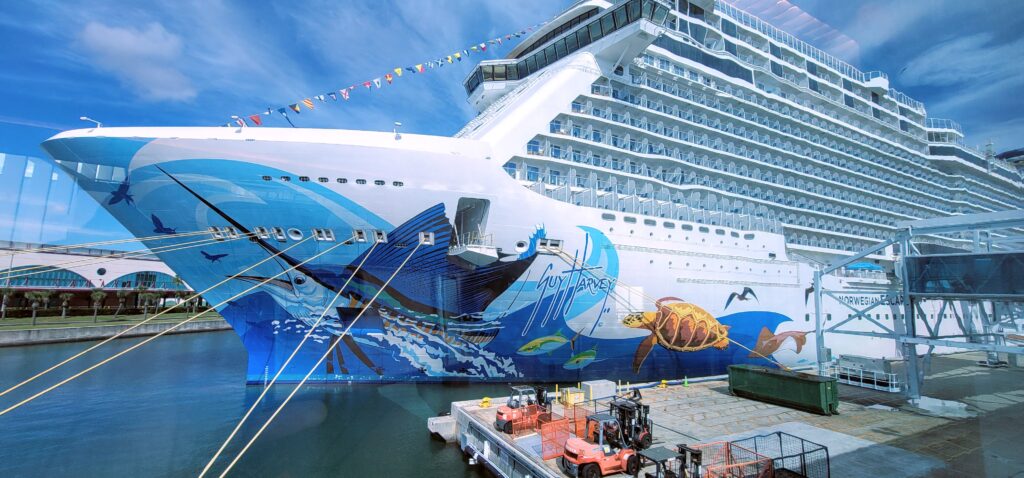
For example, Norwegian Cruise Line offers solo accommodations and dedicated Studio Lounges on applicable ships, although lounge access and facilities vary.
Its solo traveler gatherings can also provide opportunities to connect with other passengers.
You should also distinguish between organized cruise line events and passenger-led meetups.
Royal Caribbean confirms that its former official Cruise Critic Meet & Mingle events have been discontinued, although guests can still organize their own gatherings onboard.
That distinction matters when you’re planning because a meetup advertised in an online group isn’t necessarily an event organized or supervised by the cruise line.
Check your ship’s daily schedule, and don’t hesitate to ask Guest Services whether any relevant gatherings are planned.
Use Familiar Places to Turn Brief Encounters Into Friendships
You may discover that meeting people becomes easier simply by establishing a few enjoyable routines.
Perhaps you visit the same coffee shop every morning or attend trivia whenever it’s scheduled.
After a couple of days, you may begin recognizing passengers you’ve seen before.
That recognition creates an easy reason to say hello.
You might ask someone how they enjoyed yesterday’s excursion or whether they’re returning for another trivia session.
Because you’ve already shared a setting, the exchange feels less like approaching a stranger.
You don’t need to follow an exact schedule for this to work.
The idea is to choose places you would enjoy visiting anyway, then remain open to conversations when opportunities arise.
Over the course of a sailing, a few pleasant exchanges can lead to longer conversations, shared meals, or invitations to activities you hadn’t originally considered.
Make Shore Excursions Part of Your Social Experience
Port days can be especially useful for meeting other passengers because organized excursions provide a shared experience away from the ship.
During a sightseeing tour, you might spend several hours with the same group while visiting attractions, traveling between locations, and learning about the destination.
Conversations often begin naturally because people can discuss what they’re seeing or ask about each other’s travel experiences.
Cruise-line excursions and independently organized tours can both provide these opportunities, although group size and arrangements vary.
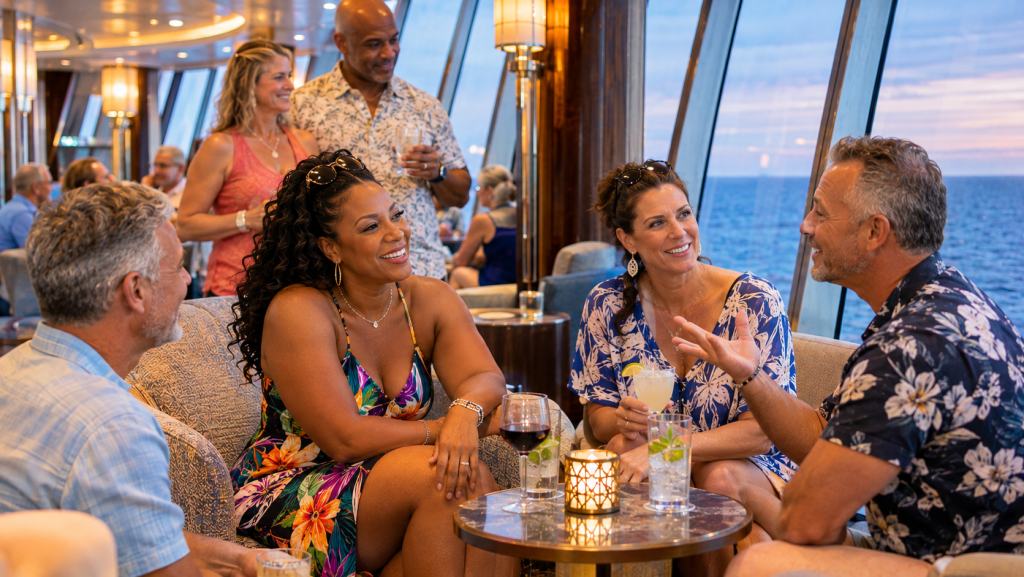
If you’d like a guided activity, platforms such as GetYourGuide and Viator can help you explore excursions suited to your interests.
The most important consideration is choosing an experience you genuinely want to enjoy rather than booking something solely because you hope to meet people.
A tour that combines a subject you’re interested in with a sociable environment gives you two opportunities for a worthwhile day.
And if you happen to reconnect with those passengers back on the ship, you’ll already have something memorable to discuss.
Remember That a Friendly Conversation Doesn’t Have to Become a Friendship
One reason meeting people can feel uncomfortable is the pressure to make every interaction meaningful.
You might start talking to someone and immediately wonder whether you should invite them to dinner, exchange contact details, or suggest another activity.
Most conversations don’t need to move that quickly.
Online‑Only Cruise Offers You Won’t Find Elsewhere
Unlock special pricing and start planning the sailing that matches your perfect itinerary
Sometimes a pleasant five-minute exchange is simply that.
Other times, you meet someone whose interests and personality make you want to continue the conversation.
You can allow those differences to unfold without treating either outcome as a success or failure.
It’s also important to respect other passengers’ preferences.
Someone reading quietly or enjoying a private conversation may not want company, while a passenger participating in a group activity may be much more open to chatting.
Paying attention to the setting and responding naturally will usually feel better than following a rigid social script.
Leave Enough Time to Enjoy Your Own Vacation
Making friends is only one possible part of a successful cruise.
You may love spending an afternoon with people you’ve just met and still prefer having dinner alone that evening.
Couples might enjoy meeting another pair for trivia without wanting to rearrange their entire itinerary around them.
Those preferences are completely compatible with a social vacation.
The most enjoyable connections are often the ones that fit comfortably into activities you already planned.
If you discover a group you’d like to see again, suggest something simple, such as meeting at a scheduled game or stopping by the same lounge the following evening.
Should those plans work out, wonderful. If not, you’ll still have plenty to enjoy.
You don’t need to make friends with everyone onboard to feel connected.
A few friendly conversations, familiar faces, and shared experiences can make your first cruise considerably more enjoyable.
When you approach socializing as an opportunity rather than an obligation, meeting new people becomes another pleasure of cruising instead of something you have to accomplish before the vacation ends.
How to Meet People on Your First Cruise and Turn Awkward Introductions Into Natural Conversations
If you are planning your first cruise and worried you will feel out of place, you are not alone.
You can be genuinely excited for your first cruise and still worry you will feel out of place the second you walk into the terminal.
That worry is not irrational.
Cruising has its own rhythm, its own routines, and its own little language of “people who have done this before.”
When you are new, that familiarity can look like confidence you do not have yet.
Add in loyalty tiers and a few rules that are not always explained clearly, and the ship can briefly feel like a private world you did not get invited into.
If that thought has crossed your mind, you are already describing the real problem.
It is not that you do not belong.
It is that you have not learned the patterns yet.
This post zeroes in on three specific reasons first-time cruisers doubt they belong.
One is the “everyone knows what they’re doing” effect.
Another is loyalty culture, where tiers and priority lines can look like a ranking system. (Celebrity Cruises)
The third is the fear of breaking an unwritten rule, especially around timing and where to go next.

Luxury Cruise Experiences at Smarter Prices
See premium sailings and upgraded cabins priced for travelers who know how to book well
Once you understand why these triggers feel intense, you can neutralize them with a few simple habits.
Those habits are not about acting like a veteran cruiser.
They are about making your first day feel steady.
When your first day feels steady, belonging follows naturally.
This guide gives you simple habits to feel confident and belong from day one.
Why Cruise Terminals Feel Intimidating and How to Stay Calm
The cruise terminal is where belonging anxiety spikes, because everything looks official and fast-moving.
You see multiple lines, multiple signs, and people who walk straight ahead without hesitating.
Your brain does what brains do in new environments.
It scans for mistakes.
Then it invents a story that explains the scanning, and the story is often, “Everyone knows, and I don’t.”
What you are actually seeing is repetition in motion.
Frequent cruisers are running familiar steps, not judging you.
The terminal feels like a test only because you have not taken it before.
The Familiarity Advantage
Repeat cruisers are not “better at cruising” as people.
They are simply rehearsed.
They know where to drop bags without thinking.
They know which venue to head to first so they are not hungry while exploring.
They know that the ship’s day has predictable peaks and quieter pockets.
You will learn those same patterns quickly, because the ship repeats them on purpose.
The gap is not personality.
The gap is time spent doing the routine.
The First Day Spotlight
A first-time cruiser often feels watched, especially in lines.
Most of that feeling comes from your own attention being turned inward.
You notice what you are doing because everything is new.
Experienced cruisers do not notice themselves as much because the environment is familiar.
That difference can look like social confidence when it is actually mental load.
If your shoulders are tense on day one, that is normal.
Once you have a plan for the next two hours, the tension drops.
The Belonging Switch
Belonging starts the moment you stop improvising under pressure.
A simple plan removes improvising.
Pick one first meal option right after boarding.
Pick one short exploration loop to learn the layout.

Sail Away to Paradise Without Overpaying
Find cruise deals that make it easy to escape, relax, and enjoy the ocean without stretching your budget
Pick one reset spot you can return to when the ship feels loud.
When you can name your next step, you no longer feel like you are guessing in public.
That is the switch that makes you feel like you fit.
Familiarity Beats Myth
Most “confident cruisers” are simply repeating a routine they have done before.
Day One Feels Intense
Belonging anxiety is strongest early because your brain is processing more at once.
Plans Create Ease
A small two-hour plan reduces pressure faster than any pep talk can.
Close the “Everyone Knows” Gap with Three Simple Habits
On a ship, movement has patterns.
People seem to know when the buffet is busiest, where coffee is fastest, and which elevator bank saves time.
They show up early for popular shows without debating it.
They use the app like it is second nature.
Watching that can make you feel behind, even if you are doing fine.
The truth is that you can close the “everyone knows” gap with three habits in one day.
You do not need to learn everything.
You need a handful of defaults you can repeat.
Build Three Defaults
Default one is your schedule check.
Look once in the morning and once in late afternoon, then pick two highlights only.
Default two is your food backup.
Choose a main option and a second option, so hunger never pushes you into the most crowded line.
Default three is your reset location.
Find one lounge, one quiet deck, or one shaded corner that feels good, then return there on purpose.
These defaults turn the ship from overwhelming to navigable.
They also make you look confident, because you move with intent.
Intent is what people mistake for experience.
Ask The One Question
When you are unsure, do not apologize for being new.
Being new is normal.
Ask a crew member, “What is the simplest next step for first-time guests right now.”
That question works because it is specific and easy to answer.
It also signals you want guidance, not special treatment.
Guidance shows up quickly when you ask clearly.
Once you get direction, your body relaxes, and you start enjoying the moment.
Choose One Easy Win
Confidence grows from small wins that happen in public.
Pick one low-pressure activity your first day.
Trivia works because nobody expects you to be good.
A short show works because you can leave quietly if you want.
A deck walk works because it teaches the ship without social effort.
One easy win tells your brain, “I can do this here.”
That message is how belonging gets built.
Defaults Create Confidence
Three simple habits remove the feeling that you are winging it.
Clear Questions Work
Staff expect beginners, and the right question gets fast direction.
Small Wins Add Up
One easy activity can change how you feel about the entire ship.
Understand Cruise Loyalty Perks Without Feeling Left Out
Loyalty culture is one of the reasons cruising can feel like a club.
You might see a priority line at the terminal.
You might hear people talk about tier levels like they are milestones.
You might notice small perks that look like “insider access.”
Celebrity even notes that guests who complete online check-in, are members of loyalty programs, or are in suites may use priority embarkation lines where available. (Celebrity Cruises)
The Points Guy describes priority boarding as a common loyalty benefit that gets you on the ship faster and sometimes improves access to reservations. (The Points Guy)
A first-time cruiser can interpret that visibility as a signal they are second-class.
It is not a signal about your worth.
It is a system for rewarding repeat purchases.
What Status Really Means
Loyalty perks are business incentives.
They exist to encourage repeat travel.
They do not change the fact that the cruise line needs first-timers to have an excellent experience.
They do not reduce your access to the core vacation.
You still have the same ocean, the same shows, the same venues, and the same ability to enjoy the ship.
If someone boards ten minutes earlier, your week is not smaller.
Your first cruise is still yours to shape.
When you see loyalty perks as logistics and marketing, they stop feeling personal.
Where It Feels Most Obvious
Embarkation is where status can feel sharp, because lines are visible.
Certain events can also highlight tiers, because invitations and signage stand out.
Debarkation can be another moment, because the ship is managing crowd flow efficiently.
Those are the exact moments when your brain is most likely to compare.
Comparison is what creates the “I do not belong” feeling.
The antidote is choosing focus.
Focus on your plan and your comfort, not someone else’s perk.
When your day feels smooth, status becomes background noise.
Make Your Own Priority
Your best “priority boarding” is arriving ready.
Arriving ready can mean coming in the day before if your travel schedule is tight.
It can mean packing a simple carry-on with essentials so you are not stressed if bags arrive later.
It can mean knowing your first two hours onboard so you are not wandering hungry and uncertain.
It can also mean planning one easy port day so you do not feel lost off the ship.
Previewing options through tools like Viator, GetYourGuide, Klook, Go City, Big Bus Tours, and BikesBooking.com can reduce decision fatigue, because you understand timing and meeting points before you arrive.
That kind of readiness creates the relaxed confidence you think loyalty tiers provide.
You can build it on your very first cruise.
Loyalty Is Not Belonging
Tiers reward repeat sailing, but they do not determine who fits onboard. (Celebrity Cruises)
Comparison Is The Trap
Status only stings when you let it rewrite your story mid-vacation.
Readiness Wins
A simple first-day plan creates the confidence you actually want.
Decode Cruise Timing Rules So You Never Feel Lost
Unwritten rules create the sharpest belonging fear because they feel high-stakes.
You worry you will stand in the wrong place, miss a cutoff, or ask a question that sounds naive.
Your brain treats uncertainty like danger, even when nothing is actually dangerous.
The cure is separating real rules from habits.
Most “rules” you see cruisers follow are habits that work well.
The true rules revolve around safety and timing.
Once you know the timing rules, you stop freezing.
That is when the ship starts feeling friendly.
All Aboard Matters
All aboard time is the deadline you should treat as absolute.
Royal Caribbean notes that the ship’s all aboard time is generally scheduled about 30 minutes before sailing and is posted near the gangway. (Royal Caribbean)
Norwegian Cruise Line states it is the guest’s responsibility to be back onboard no later than one hour before scheduled departure time, and warns that shipboard time may differ from the port of call time. (Norwegian Cruise Line)
Those policies explain why beginners feel nervous in port.
The ship’s clock is the authority, not your phone. (Norwegian Cruise Line)
If you want the simplest beginner rule that prevents chaos, use this.
Plan to be back onboard at least one hour before all aboard time, not just before departure.
That buffer protects you from traffic, long piers, and slow security lines.
It also protects your peace, which is the real win.
Lines Are Not A Judgment
Lines can make you feel exposed because they are public.
Most people in line are thinking about lunch, not evaluating you.
Lines form in predictable waves, especially right after boarding and around showtime.
You can reduce line pressure by shifting timing by thirty minutes when you can.
You can also reduce line pressure by using alternative venues instead of the most obvious one.
Choosing an alternate option is not a beginner move.
It is an experienced move.
Once you do it once, you stop feeling trapped by the crowd.
Asking Without Shame
One of the most freeing cruise skills is asking questions plainly.
Crew members are trained to direct guests, and they handle first-timers constantly.
A clear question gets a clear answer.
Try, “Where do first-time guests usually go next.”
That question turns confusion into direction fast.
Direction turns stress into confidence.
Confidence turns the ship into a place where you can relax.
You belong the moment you stop treating questions like admissions of failure.
Timing Is The Real Rule
All aboard time is the one concept that prevents the worst vacation stress. (Norwegian Cruise Line)
Waves Are Predictable
Most lines are timing waves, and small shifts make a big difference.
Questions Build Belonging
Clear questions are normal cruise behavior, not a sign you are out of place.
Pick Your Cruise Style Early to Feel Comfortable Faster
Belonging does not come from acting like a certain type of cruiser.
Belonging comes from choosing the lane that matches your energy and preferences.
That lane choice is what makes the ship feel like it was built for you.
Start by naming what drains you and what energizes you.
Crowds drain some travelers and excite others.
Structure relaxes some travelers and frustrates others.
Neither is better.
The right lane is simply the one that feels good in your body.
Build A Lane That Fits You
Crowds overwhelm you.
Choose earlier meal times, quieter decks, and one planned activity instead of five.
Noise drains you.
Use your reset spot daily and protect a quiet hour in the afternoon.
Too many choices stress you.
Pick two highlights per day and treat everything else as optional.
New places excite you.
Lean into exploration and make your ship map walk a fun ritual.
Ports feel intimidating.
Anchor the day with one planned excursion so the rest feels open, not chaotic.
Independence feels thrilling.
Explore on your own with a strong time buffer and a simple meeting-point plan.
Once you pick your lane, you stop trying to “belong” and start enjoying the vacation.
Optional Supports That Reduce Friction
A guided tour can remove the pressure of figuring out transportation in a new port.
Viator and GetYourGuide are useful for previewing meeting points, durations, and what is included so you feel prepared rather than rushed.
Klook can also help you compare activities in popular destinations when you want options laid out clearly.
Go City can be helpful if you are adding a pre-cruise city day and want bundled attraction planning that feels predictable.
Big Bus Tours can simplify sightseeing in big cities when you want a straightforward loop without complex logistics.
BikesBooking.com can be a clean solution in ports where a bike ride is the easiest way to see more without overpaying for taxis.
These tools are not required.
They are there when your lane benefits from structure.
Fit Beats Performance
The fastest way to feel at home is choosing a cruising style that matches you.
Two Highlights Is Plenty
Limiting the daily plan reduces decision fatigue and increases enjoyment.
Structure Can Be Optional
Using planning supports is about ease, not about proving you belong.
Avoid These First-Cruise Mistakes That Increase Stress
Most first-cruise mistakes are not embarrassing.
They are draining.
They turn normal cruise moments into moments that feel loaded with meaning.
The fix is not perfection.
The fix is choosing a few smarter defaults and refusing to negotiate with timing.
When you do that, the ship stops feeling like a club and starts feeling like a vacation.
Here are the mistakes that commonly create the “outsider” feeling.
Mistake One Performing Competence
Trying to look experienced can keep you from learning.
It can stop you from asking a simple question that would save you thirty minutes.
It can push you into crowded venues because you are afraid to choose differently.
It can make you say yes to things you do not even want.
Cruising rewards comfort, not performance.
Let yourself be new and you will learn faster.
Fast learning looks like confidence anyway.
That is how the irony resolves.
Mistake Two Cutting Timing Close
Timing anxiety is the fastest way to ruin a port day.
NCL states guests are responsible for being back onboard no later than one hour before scheduled departure time and that shipboard time may differ from port time. (Norwegian Cruise Line)
Royal Caribbean notes that all aboard time is generally about 30 minutes before sailing and is posted near the gangway. (Royal Caribbean)
Those statements explain why “close enough” is not a strategy.
A beginner-safe habit is returning early every time.
Returning early is not wasted vacation.
It is what makes the rest of the day feel easy.
You trade a small amount of extra time for a large amount of relief.
Mistake Three Overbuilding Day One
First-time cruisers often try to do everything immediately.
That instinct makes sense because the ship feels like a new city.
The downside is decision fatigue.
Decision fatigue makes you second-guess, and second-guessing feels like not belonging.
A better approach is choosing two highlights and leaving space.
Space allows discovery, and discovery is where cruising becomes personal.
When the trip becomes personal, belonging stops being a question.
Comfort Is The Goal
Cruising gets easier when you stop treating it like a performance.
Timing Is Nonnegotiable
Returning early removes the highest-stakes stress on a cruise. (Norwegian Cruise Line)
Less Creates More
A lighter plan often produces a better first cruise than a packed schedule.
Your Confidence Map for Common First-Cruise Doubts
The “club” feeling usually spikes in predictable moments.
It spikes when you are hungry and surrounded by lines.
It spikes when you see a priority lane and feel behind.
It spikes when you are in port and time feels uncertain.
A simple map keeps those moments from turning into spirals.
Use it as a quick internal script when you feel the doubt rising.
You do not need to solve everything.
You just need the next right step.
Confidence Map
| Moment That Triggers Doubt | What It Usually Means | Next Step That Restores Control |
|---|---|---|
| People move fast in the terminal | They have done this routine before | Run your three defaults and stop comparing |
| You notice a priority lane | Loyalty or suite logistics at work (Celebrity Cruises) | Reframe as “I am early in the story” |
| Port time feels confusing | Ship time matters more than phone time (Norwegian Cruise Line) | Verify all aboard near the gangway and return early |
| You feel lost on the ship | Your brain is overloaded | Take a reset break and choose one highlight |
| You fear asking a question | You want predictability | Ask one clear question and move with intent |
Doubt Has Patterns
Belonging anxiety usually shows up in the same moments, which means it is manageable.
Control Creates Confidence
A next-step plan reduces stress faster than trying to “feel confident” first.
Early Is A Strength
Being new is not a flaw, and your second cruise will feel dramatically easier.
You Are Not An Outsider You Are Early
If cruising feels like a club at first, it is usually because you are watching familiarity in motion.
You will gain that familiarity faster than you think.
A few defaults make the ship navigable.
A clear view of loyalty culture makes perks feel neutral instead of personal. (Celebrity Cruises)
A simple timing rule removes the biggest fear point in ports. (Norwegian Cruise Line)
Once those pieces are in place, you stop trying to prove you belong.
You simply start enjoying the trip.
That is what belonging looks like on a cruise.
FAQ – How Can First-Time and Solo Cruisers Make Friends, Join Meetups, and Start Conversations Without Feeling Awkward?
Is It Easy to Make Friends on Your First Cruise?
Making friends on your first cruise can be easier than you expect because passengers spend several days sharing the same ship, activities, and destinations.
You might recognize someone from breakfast, encounter them again at trivia, and discover that you’re both booked on the same shore excursion.
These repeated opportunities can make conversations feel more natural than approaching strangers in an unfamiliar city.
However, friendships aren’t guaranteed, so it’s better to enjoy social opportunities without expecting every interaction to develop into a lasting connection.How Can Shy or Introverted Travelers Meet People on a Cruise?
Shy and introverted travelers may find it easier to socialize through organized activities where conversation already has a natural purpose.
Trivia, workshops, guided tours, and smaller gatherings provide shared topics without requiring you to initiate a lengthy personal conversation.
You can begin with a simple question about the activity, enjoy a brief exchange, and participate more when you feel comfortable.
Returning to the same activity later in the sailing may also help because familiar faces can make introductions less intimidating.What Is a Cruise Meet and Mingle Event?
A cruise meet and mingle is a gathering where passengers have an opportunity to introduce themselves and talk in an informal social setting.
Some are arranged around particular interests, solo travel, or online communities where passengers have connected before sailing.
Others may be organized directly by guests rather than by the cruise line, so arrangements and attendance can vary.
Check whether a gathering is an official onboard activity or a passenger-led event before assuming that staff, refreshments, or a reserved venue will be provided.Does Royal Caribbean Still Offer Cruise Critic Meet and Mingle Events?
Royal Caribbean no longer offers its former official Cruise Critic Meet & Mingle onboard gatherings.
However, passengers are still welcome to organize self-led gatherings in appropriate public venues, and sailing-specific online communities may provide opportunities to coordinate those plans.
That means you may still encounter a meetup advertised by fellow passengers even though it isn’t an official cruise line event.
Before relying on a particular gathering, confirm its current arrangements and distinguish passenger-organized activities from those listed in the ship’s official schedule.Do Cruise Lines Organize Special Meetups for Solo Travelers?
Some cruise lines organize activities specifically intended to help solo passengers meet one another, although the frequency and format depend on the sailing.
Norwegian Cruise Line is particularly associated with solo accommodations and social opportunities, including dedicated lounge facilities on applicable ships.
Other operators may offer scheduled solo traveler gatherings or general social activities without providing a dedicated meeting space.
Review your ship’s daily program early in the voyage so you can find out which opportunities are actually available.What Should You Say When Introducing Yourself to Someone on a Cruise?
A simple introduction connected to your surroundings is usually more comfortable than attempting to make an unusually memorable first impression.
You might mention that it’s your first cruise and ask whether the other passenger has sailed on the ship before.
Questions about an upcoming port, a show, or a favorite restaurant can also lead naturally into conversation because they’re relevant to both travelers.
Keep the opening brief, listen to the response, and allow the conversation to develop at a pace that feels comfortable.Where Are the Best Places to Make Friends on a Cruise Ship?
Some of the easiest places to meet people are activities that encourage interaction, such as trivia, group games, classes, and organized passenger gatherings.
Lounges, cafés, and other shared spaces may also provide opportunities for casual conversation, particularly when you see the same passengers regularly.
Shore excursions can be especially sociable because participants spend time experiencing the same destination together.
Rather than searching only for the busiest venues, choose places where the activity and atmosphere make conversation feel appropriate.Is Cruise Ship Trivia a Good Way to Meet New People?
Trivia can be an excellent social activity because teams already have a shared goal and plenty of opportunities to talk about the questions.
If you’re traveling alone, you can politely ask whether an existing team has room for another participant, although some groups may already be full.
Even when you don’t join a team immediately, attending the same event regularly can help you recognize other passengers and become familiar with the atmosphere.
You don’t need to be particularly knowledgeable or competitive to enjoy the social side of the experience.How Can Solo Cruisers Meet People Without Feeling Like They’re Interrupting?
Choose environments where social interaction is already expected, such as scheduled gatherings, group excursions, and interactive activities.
That removes much of the uncertainty about whether someone is interested in participating in a conversation.
You can begin with a brief question about the shared activity and see whether the other person responds with interest.
If they seem occupied or prefer not to continue talking, a friendly acknowledgment is enough, and you can move on without treating the exchange as a personal rejection.Can You Make Friends During Cruise Shore Excursions?
Yes, guided shore excursions can create opportunities to meet people because passengers often spend several hours traveling and exploring together.
A conversation might begin while waiting for transportation, visiting an attraction, or discussing something the guide has explained.
Shared experiences can make it easier to reconnect with someone later, particularly if you encounter them again onboard.
However, choose excursions based primarily on the destinations and activities you want to experience, since group dynamics and the willingness of other participants to socialize will vary.What Is Norwegian Cruise Line’s Studio Lounge and Can It Help Solo Travelers Make Friends?
Norwegian Cruise Line offers Studio Lounges on applicable ships as dedicated spaces where eligible solo passengers can relax and socialize.
These lounges can make meeting people easier because you may encounter the same travelers over coffee, snacks, or informal conversations throughout the sailing.
However, lounge availability, access rules, and facilities vary by ship, so travelers should check the accommodations and benefits associated with their specific booking.
You don’t need access to a Studio Lounge to make friends, since Norwegian also offers other onboard activities and social opportunities.How Can You Turn a Short Cruise Conversation Into a Friendship?
A useful next step is finding something you and the other passenger would both enjoy doing again.
If you meet during trivia, for example, you might mention that you’re planning to attend the next session and ask whether they’ll be there.
This creates an opportunity to reconnect without immediately exchanging personal contact information or making elaborate plans.
As you become more familiar with each other, longer conversations and shared activities can develop naturally.What Should You Do if a Conversation Feels Awkward or Goes Quiet?
A brief pause doesn’t necessarily mean a conversation has gone badly, particularly when both people are meeting for the first time.
You can ask a simple follow-up question about the cruise, an upcoming destination, or an activity you’ve both experienced.
If the other person seems ready to leave or the conversation doesn’t continue naturally, it’s perfectly acceptable to end with a friendly goodbye.
One awkward exchange doesn’t predict how future interactions will go, and another setting may provide a more comfortable opportunity to talk.How Can You Leave a Cruise Conversation Politely Without Being Rude?
You can end a conversation by briefly acknowledging that you’ve enjoyed it and explaining that you’re heading to another activity.
For example, mentioning that you’re going to dinner or catching a show provides a natural conclusion without suggesting that the other person has done anything wrong.
There’s no need to invent an elaborate excuse or remain in a discussion longer than you’re comfortable with.
A friendly goodbye also makes it easy to greet the person again if your paths cross later in the cruise.Can Couples Make Friends with Other Passengers on a Cruise?
Couples can meet other travelers through shared activities, dining arrangements, shore excursions, and organized onboard gatherings.
Joining trivia, attending a class, or taking a group tour allows both partners to participate in conversations without making socializing the focus of the entire vacation.
You may meet another couple with similar interests or enjoy talking to solo travelers who happen to be participating in the same activity.
The important thing is choosing experiences you both enjoy while leaving room for spontaneous conversations.Should You Join a Cruise Roll Call Before Your Sailing?
A cruise roll call can be useful if you’d like to connect with other passengers before arriving at the departure port.
These online discussions often allow travelers on the same sailing to exchange planning ideas, discuss excursions, and arrange informal gatherings.
However, participation varies, and meeting someone online doesn’t guarantee you’ll become friends once you’re aboard.
If you decide to attend a passenger-led gathering, choose an appropriate public venue and avoid sharing unnecessary personal or cabin information with strangers.How Can You Make Friends on a Cruise Without Spending Extra Money?
Many cruise ships offer included activities that create social opportunities without requiring an additional purchase.
Trivia, scheduled games, certain classes, and entertainment gatherings can be good places to meet people, although specific activities and fees vary by ship.
You can also develop familiarity through ordinary routines, such as visiting the same café or attending recurring events.
Meaningful conversations depend much more on shared interests and mutual friendliness than on purchasing premium experiences.What Are the Biggest Mistakes First-Time Cruisers Make When Trying to Socialize?
One common mistake is expecting to make close friends immediately, which can make ordinary introductions feel unnecessarily important.
Another is avoiding scheduled activities because you assume everyone else already knows one another, even though many passengers may be looking for opportunities to connect.
Some travelers also fill their schedules with social events they don’t particularly enjoy, leaving little time for the vacation experiences that attracted them to cruising.
Choosing a few suitable activities and allowing relationships to develop gradually usually creates a more enjoyable balance.How Can You Manage Social Anxiety While Meeting People on a Cruise?
Start with situations that feel manageable, such as asking a brief question during an activity rather than approaching a large unfamiliar group.
You can also attend a gathering for a short period and leave when you’re ready, rather than expecting yourself to stay for the entire event.
Taking breaks between social activities may help prevent overstimulation, especially during busy sea days.
If social anxiety is persistent or significantly interferes with daily life, support from a qualified mental health professional may be helpful in addition to ordinary travel preparation.Can Cruise Friendships Continue After the Vacation Ends?
Cruise friendships can continue after disembarkation when both travelers enjoy the connection and want to stay in touch.
You might exchange contact information near the end of the sailing, connect through a shared online group, or make plans to meet again during a future trip.
However, not every enjoyable cruise friendship needs to become a long-term relationship to have value.
Sometimes a few meaningful conversations and shared experiences are enough to make a particular vacation more memorable.
Plan Your Next Cruise!

Sail Into Sophistication: Holland America Cruises for Luxury, Culture, and Unforgettable Journeys
One Delay Can Cost Your Entire Cruise A quick coverage check now protects you from the problems no one sees coming….

Sail in Style: Oceania Cruises’ Culinary Excellence, Cultural Immersion, and Refined Luxury
One Delay Can Cost Your Entire Cruise A quick coverage check now protects you from the problems no one sees coming….

Sail Into Freestyle Freedom: Norwegian Cruise Line for Adventure Thrills, Gourmet Dining, and Destination‑Rich Voyages
One Delay Can Cost Your Entire Cruise A quick coverage check now protects you from the problems no one sees coming….

Sail Smart: Discover The Real Cost of Luxury Cruises and Maximize Your Travel Value
One Delay Can Cost Your Entire Cruise A quick coverage check now protects you from the problems no one sees coming….
Explore More
Sail Into Freestyle Freedom: Norwegian Cruise Line for Adventure Thrills, Gourmet Dining, and Destination‑Rich Voyages

What Happens to Sewage on Cruise Ships? Waste Systems That Protect the Ocean
Cruise Ship Emergency Evacuation Plans — How Safety Systems Protect Passengers at Sea