One Delay Can Cost Your Entire Cruise
A quick coverage check now protects you from the problems no one sees coming
Short Excerpt
- Your first accessible cruise can be enjoyable and comfortable when you choose a ship, stateroom, and itinerary that accommodate your specific mobility, sensory, or medical needs.
- Accessible cabin layouts, bathroom features, mobility equipment policies, and port accessibility can vary considerably between cruise ships.
- A practical accessibility checklist helps you confirm essential accommodations, avoid unsuitable excursions, and plan a vacation around your independence and comfort.
Quick Take
- Confirm accessible cabin dimensions and bathroom features before making a final reservation.
- Contact the cruise line’s accessibility department to arrange equipment, assistance, and other necessary accommodations.
- Check tender ports and shore excursions carefully, since an accessible ship does not guarantee accessible transportation ashore.
- Plan around your individual stamina and mobility needs, allowing enough time for elevators, dining, entertainment, and port activities.
- Get essential arrangements confirmed in writing so you know what to expect when you arrive.
Choose a Cruise That Accommodates Your Needs Before You Choose a Cabin
An accessible cruise starts with a decision many travelers overlook: choosing the right ship and itinerary before concentrating on the stateroom itself.
A well-designed accessible cabin can provide an excellent living space, but the rest of your experience depends on whether you can comfortably reach the places and activities that make the vacation worthwhile.
Imagine finding a beautiful wheelchair-accessible balcony cabin, only to discover that several ports require tender boats you cannot board with your mobility equipment.
The cabin may be exactly what you wanted, yet the itinerary could prevent you from enjoying excursions that influenced your decision to book.
A different ship visiting ports with direct pier access might offer a much better vacation, even if the cabin is less luxurious.
That’s why accessibility planning should begin with the complete experience, rather than a list of isolated accommodations.
Understand What ADA Protections Mean for Cruise Passengers
The Americans with Disabilities Act is relevant to cruise travel, but the phrase “ADA compliant” does not provide a complete answer about a ship’s accessibility.
Cruise ships serving U.S. ports are subject to applicable disability nondiscrimination requirements, including federal rules governing passenger vessel operators.
However, those protections should not be confused with a universal guarantee that every ship, cabin, venue, or shore excursion meets the same physical accessibility specifications.
The U.S. Department of Transportation’s passenger vessel rules address disability-related policies and services, while comprehensive technical accessibility guidelines specifically for passenger vessels have remained a separate rulemaking matter.
For travelers, the practical implication is straightforward: asking whether a ship complies with accessibility laws is only the beginning. You also need to establish whether its actual facilities meet your needs.
A cabin advertised as accessible may include a roll-in shower and widened doorway, but that information alone does not confirm the placement of grab bars, the availability of transfer space, or whether your particular mobility device can maneuver comfortably.
Similarly, a ship may offer accessible public areas without guaranteeing that every attraction or port transfer will be usable by every passenger.
The most reliable approach is to ask for measurable features and clearly described assistance arrangements rather than relying on a general accessibility label.
Match the Ship to Your Mobility Equipment and Daily Routine
Before booking, make a short list of the equipment and accommodations you rely on every day.
That might include a wheelchair, mobility scooter, walker, shower chair, portable oxygen equipment, CPAP machine, or another assistive device.
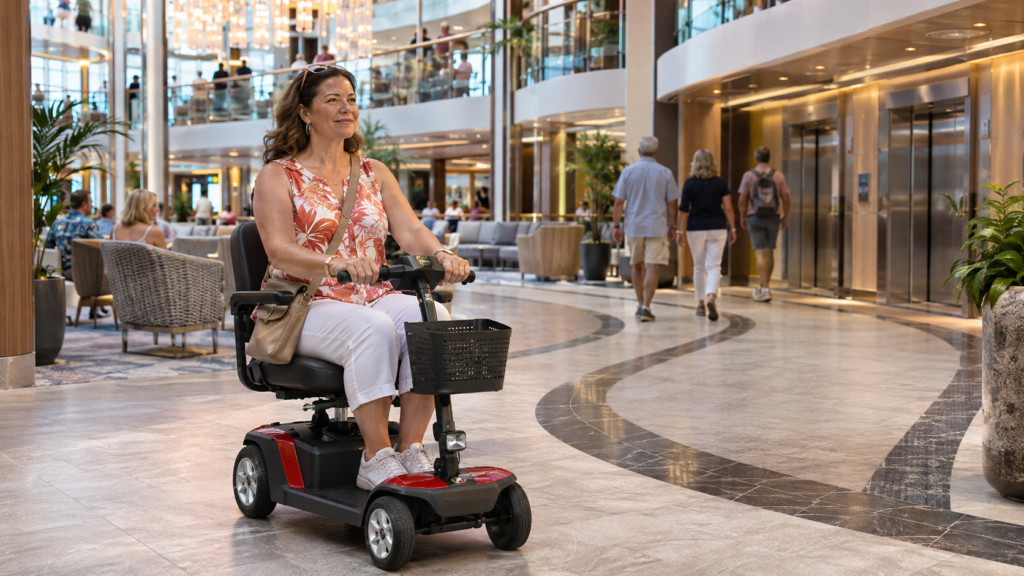
For wheelchair and scooter users, the dimensions of the equipment are especially important.
Doorways, turning spaces, thresholds, and storage arrangements can determine whether the cabin works comfortably, even when it is categorized as accessible.
Some cruise lines require mobility scooters to be stored and charged inside the passenger’s stateroom rather than in corridors.
That makes it essential to confirm both the entrance width and available interior space.
Other travelers may care less about doorway dimensions and more about proximity to elevators, accessible seating, hearing assistance, or a predictable environment with fewer sensory triggers.
The right booking decision should reflect how you actually move through daily life, not simply which accommodations appear on a marketing checklist.
Make the Itinerary Part of Your Accessibility Decision
Once you identify suitable ships, compare their itineraries with particular attention to how passengers reach shore.
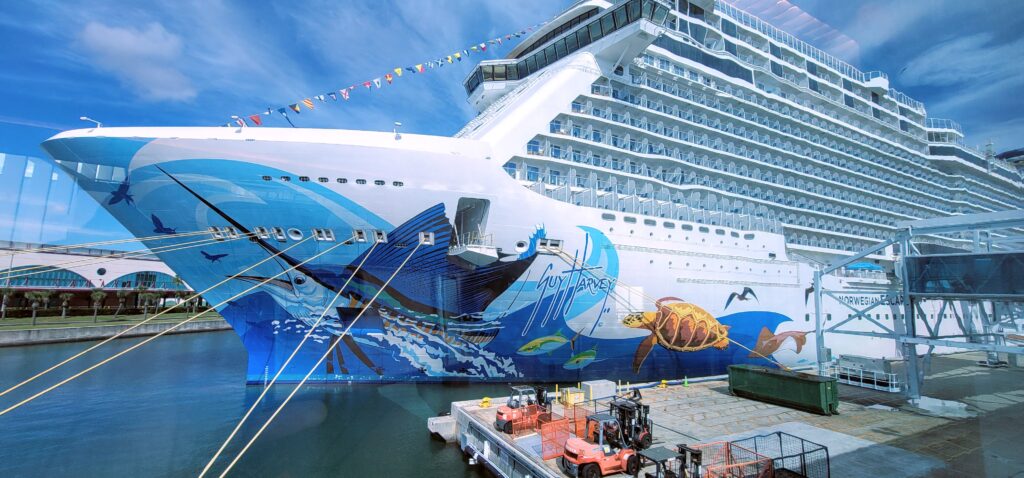
Some ports allow the ship to dock directly at a pier, while others require tender boats to transport passengers between the vessel and land.
Tender access can depend on the ship, tender equipment, sea conditions, port facilities, and the passenger’s ability to transfer safely.
This distinction can be significant for travelers who use power wheelchairs or mobility scooters.
In certain circumstances, those devices cannot be taken aboard tenders unless suitable roll-on arrangements are available.
Top Cruise Deals From Trusted Cruise Lines
Compare exclusive online offers and find the fare that fits your trip and your budget
Even when tender access is possible, conditions can change.
For that reason, ask the cruise line about every tender port on your itinerary and what alternatives exist if going ashore is not feasible.
Shore excursions require the same attention.
An activity described as easy or suitable for limited mobility may still involve steps, uneven pavement, inaccessible restrooms, or transportation without a wheelchair lift.
Before paying for an excursion, confirm the actual walking distance, transfer requirements, terrain, vehicle accessibility, and restroom facilities.
When necessary, request information from the excursion operator rather than depending entirely on a short activity description.
Arrange Assistance Before Embarkation Day
Many cruise lines have accessibility or special-needs departments that coordinate requested services and equipment.
Contacting the appropriate department early gives you the best opportunity to understand what is available and complete any required forms.
Depending on your needs, you may need to arrange embarkation assistance, medical equipment support, mobility device accommodations, accessible transportation, or communication assistance.
Certain services require advance notice, and deadlines vary by operator.
Online‑Only Cruise Offers You Won’t Find Elsewhere
Unlock special pricing and start planning the sailing that matches your perfect itinerary
Travelers should therefore make these arrangements during the booking process whenever possible rather than waiting until the final days before departure.
If you are traveling with a caregiver or companion, ask how assistance is coordinated and whether your specific equipment or transfer requirements can be supported.
Crew members may not be permitted to lift passengers or their mobility equipment, so never assume physical transfer assistance will be available without confirmation.
Accessibility planning should also cover emergencies.
Ask about accessible muster arrangements, evacuation procedures, and the assistance available to passengers who cannot use stairs.
A few clear answers before departure can eliminate significant uncertainty later, allowing you to board knowing that essential arrangements have already been discussed.
The best accessible cruise is the one that lets you participate in the experiences you care about without spending your vacation working around preventable barriers.
Choosing the appropriate ship, matching its facilities to your needs, and understanding your options ashore creates a stronger foundation than choosing a stateroom based on an accessibility label alone.
Cruising With Disabilities for the First Time: What to Know Before You Book
Cruising with a disability for the first time can feel exciting and overwhelming in the same breath.
You picture ocean views and easy meals, yet wonder if cabin space, bathrooms, and independence will feel simple or stressful.
Unknowns can still get loud before you ever pack.
Questions about cabin space, bathrooms, and independence are common for first-time cruisers.
The truth?
Accessibility on a cruise is possible when you plan for the details that matter most.
Planning ahead is not pessimistic.
Good planning is how you protect comfort and dignity from day one.
This guide gives you practical tips, ADA context, and a checklist that turns uncertainty into confidence.
By the time you board, you’ll feel prepared, supported, and ready to enjoy the trip without pressure.
What ADA Compliance Means At Sea
ADA compliance is a phrase people use to describe accessibility standards connected to the Americans with Disabilities Act.
In cruise conversations, that phrase is often used as shorthand for “this ship has accessibility features.”
Shorthand can help you start the conversation, yet it can also hide important details.
Cruise ships operate under maritime rules, and many are registered under non-U.S. flags.

Luxury Cruise Experiences at Smarter Prices
See premium sailings and upgraded cabins priced for travelers who know how to book well
That reality means accessibility can vary by ship, cabin category, itinerary, and even by port infrastructure.
A practical approach works best here.
Verification matters more than assumptions when accessibility is part of your trip.
A short set of specific questions can prevent most unpleasant surprises.
Clarity First
Accessibility labels help you start, yet details protect your comfort.
Specific questions get specific answers, which lowers stress quickly.
Written confirmation builds confidence because you are not relying on memory.
Choose An Accessible Cabin That Fits Your Needs
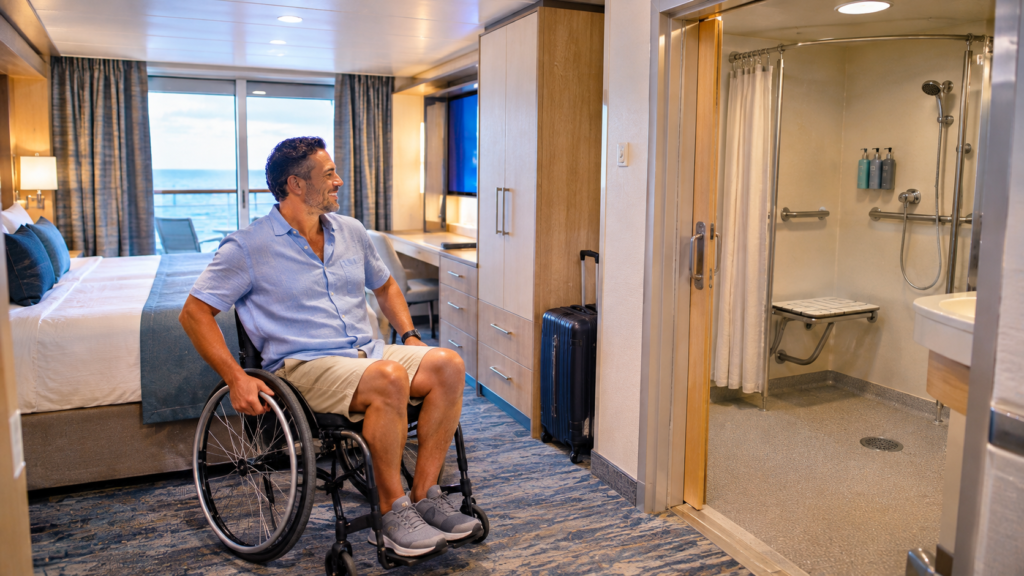
An accessible cabin is a stateroom designed to support guests with mobility, hearing, or other accessibility needs.
Wider doorways and more open floor space are common design goals.
Adapted bathrooms are often the biggest difference, and they can vary more than you expect.
One ship’s accessible layout can feel perfect, while another ship’s layout can feel frustrating.
Naming your top two needs makes the booking process easier.
Bathroom safety is the deciding factor for many travelers.
Turning space and bed clearance are the deciding factors for others.
Once priorities are clear, you can book with confidence instead of guessing.
Bathroom Matters
Shower style and thresholds can determine whether bathing feels independent or exhausting.
Grab bar placement affects transfers and balance in real life, not in theory.
A workable setup improves the quality of every day onboard.
Flow Protects Energy
Room layout matters more than square footage when mobility devices are involved.
Bed clearance can determine whether you move easily or bump into furniture daily.
A good cabin flow reduces fatigue across the week.
Location Saves Steps
Elevator proximity can change your daily experience more than a view ever will.
Shorter routes protect stamina and make the ship feel friendlier.
Midship locations can feel more stable for some travelers who are motion sensitive.
Cabin Fit Wins
A cabin that matches your body and equipment supports dignity and independence.
Priority-based choices reduce overwhelm and prevent regret.
Location strategy protects energy, which protects enjoyment.
Build Your Cruise Accessibility Checklist: Questions That Protect Comfort and Confidence
A checklist turns uncertainty into a plan you can execute.
This is not about making vacation complicated.
The goal is preventing the “we assumed” moments that ruin moods.
Use this checklist before you book and again before final payment.
Send it in writing to the cruise line accessibility desk or your travel advisor.
Written requests are easier to track and easier to honor.
Keep the list prioritized, because prioritized lists get faster answers.
A fast answer lets you move forward without spiraling.
Accessibility Checklist
| Area | Confirm This | Why It Matters |
|---|---|---|
| Cabin door | Width and threshold style | Supports entry with mobility devices |
| Bathroom door | Width and clearance | Prevents daily pinch points |
| Shower type | Roll-in or step-in | Affects safety and independence |
| Grab bars | Placement and stability | Supports transfers and balance |
| Shower seating | Built-in or removable | Reduces risk and fatigue |
| Toilet height | Standard or raised | Impacts comfort and transfers |
| Bed clearance | Space on both sides | Helps mobility and caregiver support |
| Turning space | Device turning radius | Reduces bumps and frustration |
| Elevator access | Nearest banks and routes | Cuts daily walking distance |
| Venue seating | Accessible seating locations | Improves comfort at events |
| Tender ports | Whether tendering is required | Tendering can be a barrier |
| Excursions | Terrain and walking expectations | Prevents “too hard” shore days |
Use It In Layers
Start by identifying the three items that would make the trip unworkable if wrong.
Send those three first so you get clear confirmation quickly.
Follow up with quality-of-life items like venue seating and elevator route options.
If you use a mobility device, confirm storage and charging needs in advance.

Sail Away to Paradise Without Overpaying
Find cruise deals that make it easy to escape, relax, and enjoy the ocean without stretching your budget
If you travel with a caregiver, confirm bed clearance and bathroom flow early.
If sensory needs are part of your reality, ask about quieter spaces and predictable routines.
A layered approach prevents you from chasing perfection.
Practical priorities protect your experience without adding pressure.
Checklist Value
A written list replaces guesswork with clarity.
Layering questions prevents overwhelm and improves response quality.
Priorities protect both comfort and enjoyment.
Moving Around The Ship Without Burning Out
Big ships can feel like small cities.
That scale can be exciting, and it can also create distance you feel in your body.
Short “ship loops” are an effective first-timer strategy.
One loop can be cabin to dining and back.
A second loop can be cabin to theater or a favorite lounge and back.
Repeated routes create familiarity.
Familiarity reduces stress and supports confidence fast.
Time buffers protect comfort because elevators and crowds are real.
Time Your Routes
Elevators often get busiest right before dinner and right after shows.
Earlier arrivals can reduce waiting and give you better seating options.
A buffer helps you move at your pace without feeling rushed.
Rushing increases risk, especially when mobility aids are involved.
Space matters, and extra time protects your space.
That protection supports dignity in busy areas.
Dignity is part of accessibility.
Choose A Home Base
Pick one public spot that feels comfortable and easy to reach.
A café area, a quieter lounge, or a less crowded deck corner can work well.
Returning to one familiar spot reduces overstimulation.
Familiar spots also make meetups easier when you travel with others.
Less mental load feels like relief.
Relief leaves more energy for enjoyment.
Enjoyment is why you booked the cruise.
Plan Rest Windows
Rest is not a failure on a cruise.
Strategic rest is how you protect your week.
A short reset before dinner can transform your evening.
A mid-afternoon break can prevent the late-day crash.
If fatigue is part of your disability, plan around it on purpose.
Planning around fatigue is strength, not limitation.
Steady energy supports better moods and better memories.
Navigation Takeaways
Short loops build confidence faster than big explorations.
Buffers protect your pace and reduce crowded-stress moments.
Rest windows protect your body and your week.
Dining, Shows, And Everyday Comfort
Shared spaces can be wonderful, and they can be where small barriers show up.
Chair spacing can be tight in some dining room sections.
Accessible seating can be limited in certain venues when rooms fill quickly.
Buffets can feel crowded at peak times.
None of these realities mean you cannot enjoy the cruise.
A comfort-forward plan simply makes the experience easier.
Comfort is not a luxury here.
Comfort is what makes participation possible.
Dining Comfort
If your dining setup does not feel workable, ask for a change early.
Earlier dining times can reduce crowds and reduce fatigue.
Quieter table locations can help with hearing or sensory needs.
Clearer spacing can help with mobility devices and transfers.
Predictable routines can feel supportive if you like structure.
Flexible dining can feel supportive if you prefer spontaneity.
The best rhythm is the one that lowers friction for you.
Lower friction creates a better vacation tone.
Show Strategy
Arriving early gives you more seating choices and less pressure.
Asking staff for the easiest route can save effort and frustration.
Aisle seats can reduce stress when standing up frequently is difficult.
Lower-stimulus venues can be a better fit for some travelers than big theaters.
Lounge music can feel just as special as a headline show.
“Special” should be defined by comfort and enjoyment.
Comfort lets you stay present.
Presence is the real luxury on a cruise.
Quiet Is Real Value
Deck walks during off-peak hours can feel restorative.
Sunrise coffee can feel private even in a shared space.
Small private moments reduce the pressure to “keep up.”
Keeping up is not the goal.
Enjoying your experience is the goal.
Enjoyment improves when you choose what fits your body.
That choice is empowering.
Empowerment is part of why people love cruising.
Comfort Takeaways
Early requests often lead to better solutions than late requests.
Lower-stimulus choices can deliver richer enjoyment for many travelers.
Quiet moments count as highlights, not missed opportunities.
Shore Days and Excursions That Still Feel Accessible
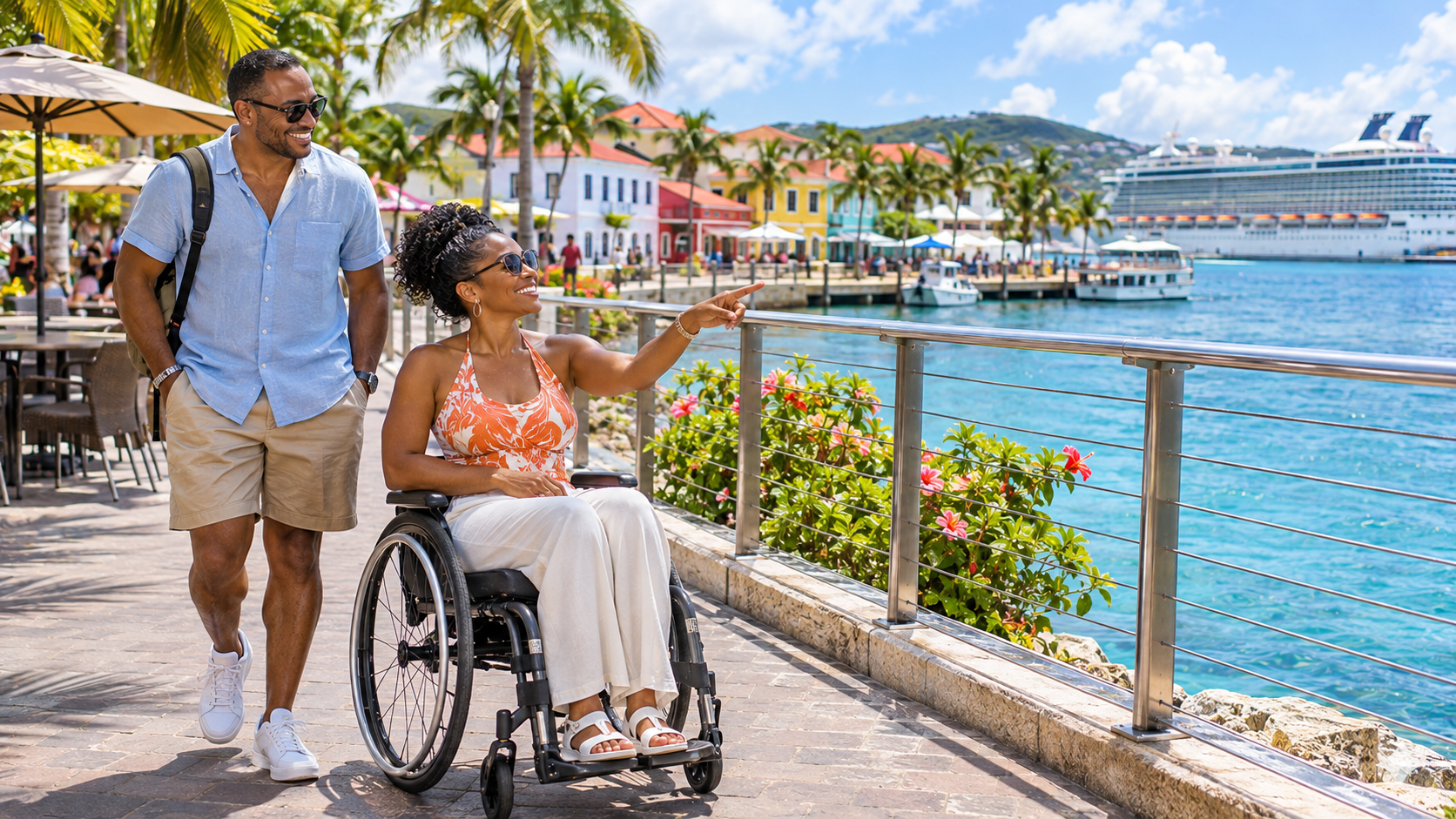
Ports are where accessibility can change dramatically.
Even when the ship is accessible, the destination might have uneven sidewalks or limited ramps.
Transportation style can matter as much as the attraction itself.
A scenic drive can be more accessible than a walking-heavy city tour.
A beach day can be easy or hard depending on distance, shade, and surface.
Reading excursion details with a terrain-first lens helps.
A good shore day should still leave energy for dinner.
Energy preserved is enjoyment protected.
Read Activity Levels
Excursions often list an activity level, and that level can still be vague.
Look for phrases like “uneven ground,” “steps,” and “long walks.”
Pay attention to how much standing is expected.
Bathroom access matters more than many listings admit.
Heat exposure matters too, especially with chronic conditions.
When details are unclear, asking questions before booking is worth it.
Questions protect your comfort.
Comfort protects your week.
Choose Structure
Structured tours reduce decision fatigue.
Clear meeting points reduce stress in unfamiliar environments.
GetYourGuide can be useful for browsing tours and reading reviews for pacing details.
Big Bus Tours can reduce walking in some cities while still letting you see highlights.
Go City can help some travelers plan predictable attraction days when ports align with major destinations.
Structure is not restrictive.
Structure can be freeing when it saves your energy.
Energy saved is energy you can spend on fun.
Return With Buffer
Planning to be back onboard well before all-aboard time protects your pace.
Extra time reduces rushing, and rushing is when things go sideways.
Mobility devices often make crowded paths slower, which is normal.
Elevator waits can add time you cannot control.
Buffers reduce frustration because you are not racing the clock.
A low-stress return improves the tone of the evening.
Better evening tone makes the cruise feel more enjoyable overall.
Enjoyment is the outcome you deserve.
Shore Takeaways
Terrain and heat often matter more than the headline attraction.
Structured plans protect energy and reduce decision fatigue.
Buffers protect safety and preserve your mood.
Avoid Common Accessibility Mistakes: Simple Fixes for a Stress-Free Cruise
Many first-time accessibility issues are preventable.
Booking based on the word “accessible” alone is the most common mistake.
Verifying door widths, thresholds, and shower style is the fix.
Choosing a cabin far from elevators to save money can create daily fatigue.
Stacking too many active port days can drain energy faster than expected.
Waiting until day four to request a seating change can limit options.
Assuming “easy excursion” means “minimal walking” can lead to disappointment.
Early confirmation and steady pacing prevent most problems.
Fix It Early
Embarkation day is when systems are still flexible.
Dining changes and accessibility requests are often easier early in the sailing.
Waiting can reduce choices, especially on full ships.
Early asks are not being difficult.
Early asks are practical.
Practical choices protect your week.
Protected weeks feel more enjoyable.
Enjoyable weeks create better memories.
Keep It Simple
A first accessible cruise should not be an endurance event.
Two highlights per day is a strong rhythm for many travelers.
One rest window per day can protect energy and mood.
Steady routines reduce decision fatigue.
Decision fatigue makes every barrier feel bigger.
Lighter days make barriers feel manageable.
Manageable experiences feel empowering.
Empowerment is the emotional win here.
Mistake Takeaways
Specific verification beats label-based assumptions every time.
Elevator distance adds up across a week more than most beginners expect.
Pacing wins because it protects energy and dignity.
Step Onboard Knowing You Belong Here
An accessible first cruise is built on specifics, pacing, and self-trust.
ADA language can point you in the right direction, yet features lists protect real comfort.
Accessible cabins work best when bathroom design and cabin flow match your actual needs.
A checklist turns uncertainty into a plan you can execute without pressure.
Short ship loops, smart timing, and planned rest windows protect stamina.
Ports can still be enjoyable when terrain, heat, and structure are part of the decision.
When you plan for dignity and comfort, the ship becomes a place you can truly enjoy.
You belong on this vacation, and you deserve to experience it with confidence.
FAQ – How Can Travelers With Disabilities Choose Accessible Cruise Cabins, Arrange Assistance, and Enjoy Ports With Confidence?
Are Cruise Ships Accessible for Passengers with Disabilities?
Many modern cruise ships provide accessible staterooms, elevators, adapted public facilities, and assistance for passengers with disabilities.
However, the extent of those features varies between cruise lines, ships, and individual cabin categories, so accessibility should never be assumed based solely on a company’s general description.
A vessel that works well for someone who walks short distances with a cane may not meet the requirements of a full-time power wheelchair user.
Before booking, discuss your specific needs with the cruise line’s accessibility department and request confirmation of the facilities that matter most.Do Cruise Ships Have to Comply with the Americans with Disabilities Act?
Cruise ships operating in connection with U.S. ports are subject to applicable disability nondiscrimination requirements, including federal rules governing passenger vessel operators.
However, those rules do not mean that every ship must have identical cabin dimensions, bathroom configurations, or accessible features throughout the vessel.
The legal framework for passenger vessels is different from simply applying ordinary hotel building standards to a ship.
When assessing a particular sailing, combine an understanding of your passenger rights with direct verification of its actual accessibility features.What Should You Look for When Booking an Accessible Cruise Cabin?
Begin with the features necessary for your independence, such as doorway width, turning space, bathroom configuration, and the placement of grab bars.
Travelers using mobility equipment should also confirm that their devices can enter the cabin and be stored safely without obstructing essential access routes.
Bed height, bedside clearance, toilet arrangements, and shower seating can be equally important, depending on your needs.
Ask for detailed cabin specifications or photographs when available rather than assuming that all accessible staterooms have the same layout.Do Accessible Cruise Cabins Have Roll-In Showers and Grab Bars?
Many wheelchair-accessible cruise cabins include features such as roll-in showers, grab bars, handheld showerheads, and adapted bathroom thresholds.
However, the exact arrangement can vary, and some features may be better suited to certain transfer methods than others.
Someone who needs assistance transferring from a wheelchair, for example, may require particular clearance around the toilet or shower seat.
Confirm those details with the cruise line before booking, especially when bathroom accessibility is essential to your daily independence.Can You Bring Your Own Wheelchair or Mobility Scooter on a Cruise?
Cruise lines commonly permit passengers to bring wheelchairs and mobility scooters, subject to equipment dimensions, storage requirements, and safety policies.
Certain devices may be too wide for standard cabin doorways, making an accessible stateroom necessary even when the passenger can otherwise use some regular facilities.
Ships may also require scooters to be stored and charged inside the cabin rather than in hallways or other shared spaces.
Contact the accessibility department with your equipment’s measurements, battery information, and storage needs before making a reservation.Where Can You Charge a Mobility Scooter on a Cruise Ship?
Mobility scooters generally need to be charged in an approved location, which on some cruise lines means inside the passenger’s stateroom.
Charging or storing equipment in corridors can create obstructions and interfere with emergency evacuation routes, so it may be prohibited.
Before sailing, ask whether your equipment can be accommodated, which charging arrangements are permitted, and whether any restrictions apply to its battery type.
Do not assume you can use an extension cord or charging setup without first confirming the ship’s safety requirements.Should You Choose an Accessible Cabin Near the Elevators?
A cabin close to an elevator bank can reduce the distance you need to travel between your room and frequently used public areas.
This may be particularly valuable if you experience pain, fatigue, limited stamina, or difficulty walking long corridors.
However, elevator proximity can also bring additional hallway activity, and individual preferences for noise and convenience differ.
Review the deck plan and choose a location that balances accessibility with the comfort you want throughout the voyage.Can Cruise Ship Staff Help Passengers with Disabilities During Embarkation?
Many cruise lines offer embarkation and disembarkation assistance for passengers who require additional support, including help navigating parts of the terminal.
The type of assistance available may depend on the port, staffing, equipment, and passenger’s circumstances, and it does not necessarily include continuous wheelchair assistance throughout the cruise.
Some operators also restrict crew members from physically lifting passengers or mobility devices.
Contact the cruise line before departure to explain the support you need and confirm how to request it at the terminal.Are Cruise Ship Tenders Accessible to Wheelchair and Scooter Users?
Tender accessibility varies considerably, and a port requiring tender boats can create significant difficulties for passengers who cannot transfer independently.
Some tender operations accommodate particular mobility devices, while others may not permit power wheelchairs or scooters unless suitable roll-on access is available.
Weather, sea conditions, and the port’s facilities can also affect whether boarding is possible on the day of arrival.
Review your itinerary carefully, contact the cruise line about specific tender ports, and avoid treating advertised accessibility as a guarantee that you can go ashore.How Can You Tell Whether a Cruise Shore Excursion Is Accessible?
Start by reviewing more than the excursion’s general activity rating, because descriptions such as easy or moderate may not explain the physical requirements clearly enough.
Ask about walking distances, steps, uneven surfaces, wheelchair-accessible transportation, restroom availability, and whether passengers must transfer between vehicles.
If you use a mobility device, provide its dimensions and ask whether the entire excursion, rather than just the main attraction, can accommodate it.
A scenic drive or accessible sightseeing tour may provide a more enjoyable experience than an activity that requires more walking or standing than you can comfortably manage.Can You Enjoy a Cruise if You Cannot Walk Long Distances?
Yes, many passengers with limited walking ability enjoy cruising by choosing suitable ships, cabin locations, and onboard activities.
Large vessels can involve considerable distances between venues, so planning shorter routes and allowing extra travel time may reduce fatigue.
Mobility aids or rental equipment may also be options, although availability and suitability should be confirmed before sailing.
The most enjoyable itinerary is one that matches your actual capabilities and preferences instead of requiring you to push through physical discomfort to participate.Are Cruise Ship Restaurants and Theaters Accessible?
Many cruise ships provide accessible routes to dining rooms, theaters, lounges, and other public venues, but individual layouts and seating arrangements can vary.
Dining tables may have different clearances for wheelchairs, while theater seating areas may offer limited wheelchair spaces or specific companion seating arrangements.
Contact the cruise line about essential requirements, then speak with dining or entertainment staff early in the voyage if you need a particular arrangement.
Planning ahead is especially useful for passengers who require wheelchair access, hearing assistance, or seating that makes transfers easier.Can Cruise Lines Accommodate Passengers with Hearing or Visual Disabilities?
Cruise lines may provide services such as assistive listening systems, accessible communication arrangements, visual alerts, or other accommodations, depending on the vessel and passenger’s needs.
Some services require advance notice because equipment or trained personnel must be arranged before departure.
Passengers should explain their specific communication requirements rather than assuming that every ship provides the same technology.
It is also worth discussing emergency announcements and muster instructions so you understand how important safety information will be communicated during the voyage.What Should Travelers with Sensory Disabilities Know Before Their First Cruise?
Cruise ships can have busy atriums, crowded dining areas, loud entertainment venues, and changing daily schedules, which may be challenging for travelers sensitive to noise, lighting, or overstimulation.
Choosing a suitable cabin location and identifying quieter public spaces can make it easier to enjoy activities without becoming overwhelmed.
Some cruise lines offer additional support or guidance for passengers with autism, developmental disabilities, or other sensory-related needs.
Contact the accessibility team before sailing to discuss available arrangements and review the ship’s facilities with your own comfort requirements in mind.Can You Cruise with a Service Animal?
Many cruise lines permit appropriately trained service animals, subject to applicable policies and destination-specific documentation requirements.
However, emotional support animals and pets are not necessarily treated the same way as trained service animals, and the rules can vary according to the operator and itinerary.
Some countries impose restrictions involving vaccinations, health certificates, import permits, or other animal-entry requirements.
Notify the cruise line before booking and verify requirements for every destination, including ports where you may not intend to leave the ship.How Can Travelers with Chronic Illness or Limited Stamina Avoid Exhaustion on a Cruise?
Begin by choosing a ship layout and itinerary that reduce unnecessary walking, long transfers, or demanding excursion schedules.
You may find it more enjoyable to select one or two activities each day and leave space between them for rest, meals, and transportation.
Port days deserve particular attention because heat, uneven terrain, and extended sightseeing can consume more energy than equivalent activities at home.
Allow your plans to reflect your actual stamina rather than treating every advertised excursion or onboard attraction as something you must complete.What Medical Equipment Can You Bring on a Cruise Ship?
Cruise lines may accommodate various medical devices, including CPAP machines, portable oxygen equipment, and other necessary supplies, although policies differ by operator and equipment type.
Some devices require advance arrangements for electrical power, appropriate storage, distilled water, or other support services.
Travelers who use oxygen or equipment requiring specialized handling should contact the accessibility or medical accommodations department well before departure.
Provide accurate equipment details and confirm what the ship can supply, because the onboard medical center is not a guaranteed source of replacement equipment.What Should You Do if Your Accessible Cruise Cabin Does Not Match What You Booked?
Contact Guest Services or the ship’s designated accessibility representative as soon as you identify the problem, especially if it prevents safe bathroom access, equipment storage, or necessary transfers.
Explain the specific feature that differs from the confirmed arrangement and provide any written documentation or cabin specifications you received before sailing.
Ask what practical solutions are available, whether that involves equipment, assistance, or another suitable accommodation.
If the issue remains unresolved, request escalation through the cruise line’s established accessibility complaint process and keep a written record of your concerns.Do Cruise Passengers with Disabilities Need Special Emergency Evacuation Arrangements?
Some passengers require additional emergency assistance because they cannot use stairs, have limited mobility, or need accessible communication during alarms.
Cruise lines have established safety procedures, but the specific arrangements can vary by ship and the nature of the passenger’s disability.
Discuss your needs before sailing and confirm the applicable instructions during the mandatory muster briefing.
Understanding the designated assistance procedures is more dependable than assuming that ordinary passenger evacuation routes will be suitable for everyone.What Are the Biggest Mistakes to Avoid When Booking Your First Accessible Cruise?
One common mistake is reserving a cabin based solely on an accessible label without confirming the features needed for everyday use.
Travelers may also underestimate the importance of scooter storage, elevator distance, tender access, and the physical demands of shore excursions.
Waiting until embarkation to arrange essential equipment or communication services can create unnecessary difficulties, particularly when advance notice is required.
A better approach is to prioritize your nonnegotiable requirements, verify them directly with the cruise line, and retain written confirmation before final payment.
Plan Your Next Cruise!

Discover Regent Seven Seas Cruises: Opulent Suites, Gourmet Dining, and Exclusive Destinations
One Delay Can Cost Your Entire Cruise A quick coverage check now protects you from the problems no one sees coming….

Sail the World in Style: MSC Cruises’ Innovative Ships, Luxury Amenities, and Global Adventures
One Delay Can Cost Your Entire Cruise A quick coverage check now protects you from the problems no one sees coming….

Sail Into Modern Luxury: Celebrity Cruises for Design, Culinary Excellence, and Destination‑Rich Voyages
One Delay Can Cost Your Entire Cruise A quick coverage check now protects you from the problems no one sees coming….

Sail Into Freestyle Freedom: Norwegian Cruise Line for Adventure Thrills, Gourmet Dining, and Destination‑Rich Voyages
One Delay Can Cost Your Entire Cruise A quick coverage check now protects you from the problems no one sees coming….
Explore More

Sail in Style: Oceania Cruises’ Culinary Excellence, Cultural Immersion, and Refined Luxury
Cruise Ship vs Ocean Liner: A Deep Dive into Their Structural and Operational Differences
Cruise Ship Stabilizers: The Hidden Technology That Keeps Voyages Smooth and Safe
