One Delay Can Cost Your Entire Cruise
A quick coverage check now protects you from the problems no one sees coming.
Short Excerpt
- Most cruise ships remain in service for about 30 years, but maintenance, upgrades, operating costs, regulations, and passenger demand can shorten or extend that timeline.
- Older ships are not automatically less safe or less enjoyable because major refurbishments and dry-dock work can keep them competitive for decades.
- Retirement does not always mean scrapping; ships can be sold, converted into hotels or museums, repurposed, or dismantled for recycling.
Quick Take
- About 30 years is a useful average for a cruise ship’s working life, not a fixed expiration date.
- Regular dry-dock maintenance can help some vessels remain operational for 40 years or longer.
- Fuel efficiency, environmental requirements, technology, and passenger expectations can retire a ship before its physical condition does.
- Older ships may offer smaller-scale cruising and lower fares even when newer vessels provide more modern amenities.
- Retired ships can be sold, repurposed, preserved, or dismantled depending on their condition and economic value.
A Cruise Ship’s Age Matters Less Than What Has Happened During Those Years
Seeing that a cruise ship is 20, 25, or even 30 years old can make some passengers wonder whether they should choose a newer vessel instead.
Age alone does not tell you enough.
Cruise ships are built for long-term commercial service and undergo regular inspections, maintenance, dry-dock work, repairs, and major refurbishments throughout their operating lives.
A well-maintained older ship can therefore remain competitive long after newer vessels have entered the same fleet.
What often determines retirement is not whether a ship can physically continue sailing, but whether keeping it in service still makes financial and operational sense.
Older vessels may consume more fuel, require increasingly expensive repairs, lack newer environmental technology, or need costly upgrades to meet changing regulations.
Passenger expectations also play a role.
New ships increasingly offer larger balconies, extensive dining choices, water parks, smart-cabin technology, faster connectivity, elaborate entertainment, and other features that can be difficult or impractical to retrofit into an older vessel.
That does not automatically make an older ship a worse vacation.
Some travelers prefer their smaller passenger counts, traditional layouts, easier navigation, distinctive character, or itineraries that larger ships cannot operate.
The better question is therefore not simply how old the ship is.
Look at when it was last refurbished, what upgrades were completed, how the ship fits your vacation style, and whether its amenities match what you actually want from the cruise.
Understand the Average Lifespan of a Cruise Ship and Why It Matters
On average, a cruise ship’s lifespan is around 30 years.
However, this number can vary based on several factors, including maintenance, upgrades, and operational wear and tear.
Cruise lines invest millions in building their vessels, and with such a hefty price tag, they aim to keep them operational for as long as possible.
During its lifespan, a cruise ship typically undergoes periodic refurbishments to ensure it meets modern safety standards, remains energy efficient, and continues to appeal to passengers.
These upgrades often extend the functional life of the ship, sometimes pushing it well beyond the 30-year mark.
Online‑Only Cruise Offers You Won’t Find Elsewhere
Unlock special pricing and start planning the sailing that matches your perfect itinerary
Some ships have even reached the 40-year milestone, especially when they’ve been maintained meticulously and updated with modern amenities.
Cruise ships also face challenges that may affect their lifespan.
For example, newer and larger ships entering the market often eclipse older models.
These massive, feature-packed vessels can attract more passengers, making older ships less profitable for cruise lines.
This economic reality often hastens the retirement of aging vessels, regardless of their condition.
Explore the Key Factors That Shape a Cruise Ship’s Lifespan
The age of cruise vessels isn’t the only determinant of their retirement.
Here are the main factors that impact how long a cruise ship remains in service:
- Maintenance and Repairs: Ships that undergo regular maintenance and adhere to strict safety checks can last much longer than those that don’t.
Cruise lines often perform dry dock repairs to maintain the ship’s structural integrity and update its systems.
Dry docking typically occurs every two to three years and is crucial for extending the ship’s operational life.
Without this consistent care, problems like corrosion, engine inefficiencies, or structural weaknesses can severely reduce the ship’s lifespan.
Well-maintained ships, on the other hand, can operate well beyond expectations, as seen with some vessels that surpass 40 years of service.
- Technological Advancements: Technology in the cruise industry evolves rapidly.
Ships built decades ago may lack modern amenities like energy-efficient engines, advanced wastewater treatment systems, or cutting-edge navigation tools.
Retrofitting these older ships to include such features can be costly and is sometimes deemed impractical, leading to earlier retirements.
Moreover, the growing focus on green technology, such as LNG (liquefied natural gas) engines, places older, less efficient ships at a disadvantage.
Passengers now expect fast Wi-Fi, interactive entertainment systems, and smart cabin features, which many older ships struggle to provide.
- Passenger Demand: As passenger preferences shift, older ships may struggle to compete with newer models that boast state-of-the-art facilities, from onboard water parks to robot bartenders.
Travelers increasingly seek eco-friendly options, which older ships often can’t provide.
Ships that can’t keep up with these demands may see reduced bookings, prompting cruise lines to consider replacing them with more modern vessels.
Additionally, the aesthetics of older ships, with smaller cabins and fewer balcony options, may make them less appealing to today’s travelers who prioritize luxury and comfort.

Sail Away to Paradise Without Overpaying
Find cruise deals that make it easy to escape, relax, and enjoy the ocean without stretching your budget
- Regulatory Changes: Maritime laws frequently evolve, requiring ships to comply with stricter environmental and safety standards.
Regulations related to fuel emissions, wastewater disposal, and fire safety are becoming more rigorous.
Sometimes, retrofitting older ships to meet these requirements isn’t cost-effective, hastening their retirement.
For example, the International Maritime Organization’s (IMO) sulfur cap regulations introduced in 2020 forced many cruise lines to either retrofit their older ships with exhaust gas cleaning systems or retire them entirely.
Compliance with these regulations is non-negotiable, and failure to meet them can result in hefty fines or being barred from certain ports.
- Fuel Efficiency: Newer ships are often designed with advanced propulsion systems and hull designs that significantly improve fuel efficiency.
In contrast, older ships consume more fuel, making them less economically viable in an industry that’s increasingly focused on sustainability.
Fuel costs are a significant expense for cruise lines, and inefficient ships can dramatically cut into profitability.
With the rising focus on reducing carbon footprints, cruise lines are prioritizing ships with lower emissions, leaving older, fuel-guzzling vessels at a disadvantage.
- Natural Disasters and Accidents: Occasionally, external events like hurricanes, onboard fires, or collisions can drastically reduce a ship’s operational life.
While insurance often covers repairs, some damages may be so severe that the ship is deemed beyond repair, leading to early retirement.
- Market Competition: Cruise lines operate in a fiercely competitive market, and staying relevant often means investing in newer, larger ships with groundbreaking features.
As a result, older ships may be phased out simply because they no longer align with the brand’s image or strategic goals.
For instance, luxury cruise lines may retire older vessels to maintain a consistent fleet aesthetic and meet the high expectations of their clientele.
By understanding these factors, it becomes clear why some ships can thrive for decades while others are retired much earlier than expected.
The combination of engineering advancements, market trends, and external pressures makes the lifespan of a cruise ship a dynamic and complex issue.
Top Cruise Deals From Trusted Cruise Lines
Compare exclusive online offers and find the fare that fits your trip and your budget
Discover What Really Happens When Cruise Ships Retire
Ship retirements are a natural part of the cruise industry.
Once a ship reaches the end of its operational life, several outcomes are possible:
- Selling to Smaller Cruise Lines: Older ships often find new life with smaller or regional cruise operators.
These companies cater to niche markets or regions where passenger expectations are lower, making these vessels more viable.
For example, a 25-year-old ship might serve as a budget-friendly option for travelers in emerging cruise markets like South America or Asia.
In these markets, passengers prioritize affordability and unique itineraries over cutting-edge features.
- Conversion for Alternate Uses: Some ships are repurposed as floating hotels, restaurants, or museums.
This trend has grown over the years, as more cities recognize the value of these iconic vessels.
For instance, the Queen Mary, permanently docked in Long Beach, California, serves as a floating hotel and tourist attraction.
Similarly, other ships have been transformed into training facilities for maritime academies or even as floating office spaces, offering innovative new purposes.
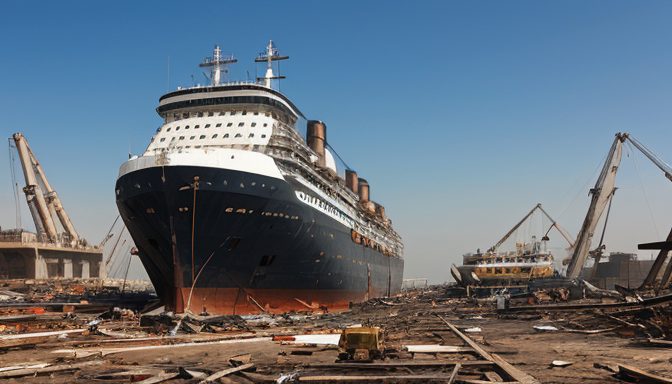
- Dismantling and Recycling: If a ship cannot be repurposed or sold, it is often sent to shipbreaking yards.
In these facilities, materials such as steel, aluminum, and copper are salvaged and recycled.
While this process is environmentally taxing, efforts are underway to improve sustainability in ship recycling.
Some cruise lines are partnering with organizations to ensure eco-friendly dismantling practices, reducing the environmental footprint of this necessary process.
- Chartered Uses: Occasionally, retired ships are used as temporary housing or for humanitarian purposes.
In the aftermath of natural disasters, older cruise ships have been deployed to house displaced populations or serve as mobile medical facilities.
For example, after Hurricane Katrina, several ships were used to accommodate displaced residents and relief workers.
This demonstrates the versatility of cruise ships even after their commercial life ends.
- Historic Preservation: While less common, some ships are preserved as historic landmarks.
These ships often hold cultural or historical significance, making them ideal candidates for preservation.
For example, ships like the Queen Elizabeth 2 (QE2) have been converted into floating hotels to showcase their rich maritime history while generating revenue as a tourist attraction.
- Floating Casinos or Entertainment Venues: In certain cases, older ships find a second life as floating casinos or entertainment hubs.
These ships operate in international waters to bypass local gambling laws, attracting visitors who are eager for a unique experience.
The versatility of retired cruise ships highlights the creativity of the maritime industry in repurposing these vessels.
Rather than allowing them to waste away, these ships often find new ways to continue serving people, whether as budget-friendly travel options, humanitarian tools, or historic landmarks.

Luxury Cruise Experiences at Smarter Prices
See premium sailings and upgraded cabins priced for travelers who know how to book well
Discover What Really Happens When Cruise Ships Retire
Several iconic ships have gone through notable retirements, demonstrating the variety of post-service outcomes:
- SS France/SS Norway: Originally a transatlantic liner, this ship was later converted into a cruise ship and served for decades before being scrapped.
Once considered one of the most luxurious liners, it became a symbol of elegance during its years of operation.
The ship underwent multiple refurbishments and extended its career before eventually being dismantled.
- Pacific Princess: Known as the “Love Boat,” this vessel became a cultural phenomenon thanks to the hit TV series.
After decades of service, it changed ownership several times before being dismantled.
Despite its retirement, the ship remains iconic, as it introduced many people to the idea of cruising as a leisure activity.
- Queen Elizabeth 2 (QE2): Preserved as a floating hotel in Dubai, this ship is an iconic representation of British maritime history.
Unlike many retired ships, the QE2 avoided scrapping and found new life as a luxury destination.
Visitors can stay onboard, dine in its restaurants, and experience a piece of maritime legacy.
- MS Monarch: Once a part of Royal Caribbean’s fleet, this ship was sold to Pullmantur Cruises before ultimately being dismantled in 2020.
Its decommissioning marked a poignant end to a ship that had carried millions of passengers during its lifetime.
- SS Rotterdam: Preserved as a hotel and museum in the Netherlands, this ship is a stunning example of how retired vessels can serve as cultural landmarks.
Visitors can explore its original interiors, dine in its restaurants, or stay overnight, gaining insight into its rich history.
What the Lifespan of a Cruise Ship Means for Travelers and the Industry
The lifespan of a cruise ship is influenced by a combination of maintenance, innovation, market trends, and external factors.
While the average ship lasts around 30 years, many factors can extend or shorten that timeline.
Whether refurbished, repurposed, or retired, cruise ships have a fascinating lifecycle that reflects the evolution of the maritime industry.
Each ship’s journey leaves an indelible mark on the seas it sailed and the passengers it served.
FAQ – What Really Determines How Long a Cruise Ship Can Stay in Service?
What Is the Average Lifespan of a Cruise Ship?
A cruise ship commonly remains in service for around 30 years.
That figure is an average rather than an expiration date because some vessels retire earlier while others continue operating for 40 years or longer.
Maintenance quality, refurbishment history, operating costs, regulatory requirements, and passenger demand all influence how long a particular vessel remains commercially viable.
A ship can therefore be relatively old without necessarily being near the end of its service life.Can a Cruise Ship Last Longer Than 30 Years?
Yes.
Ships that receive consistent maintenance, structural repairs, system upgrades, and major refurbishments can remain operational well beyond the typical 30-year range.
Some vessels have exceeded 40 years of service, particularly when operators can continue maintaining them economically.
Longevity ultimately depends on whether the ship can remain safe, compliant, reliable, and financially worthwhile to operate.How Often Do Cruise Ships Go into Dry Dock?
Cruise ships periodically enter dry dock so their hulls, propulsion systems, machinery, safety equipment, and other components can be inspected or repaired.
Major maintenance periods commonly occur every few years, although the exact schedule depends on regulatory requirements, ship age, classification rules, and operating needs.
Dry dock can also be used for cabin renovations, restaurant changes, technology upgrades, and other passenger-facing improvements.
Regular maintenance helps prevent corrosion, mechanical deterioration, and other problems from shortening the vessel’s usable life.Why Do Cruise Lines Retire Ships That Can Still Operate?
A ship does not need to be mechanically unusable before a cruise line decides to retire it.
Fuel consumption, maintenance expenses, environmental upgrades, passenger demand, fleet strategy, and competition from newer vessels can make continued operation less attractive.
Retrofitting an older ship with newer propulsion, emissions controls, wastewater systems, connectivity, or modern amenities can also become prohibitively expensive.
At that point, selling or retiring the vessel may make more financial sense than continuing to invest in it.Do Environmental Regulations Affect How Long Cruise Ships Stay in Service?
Yes.
Modern cruise ships must meet increasingly strict requirements involving emissions, wastewater, fuel, safety systems, and other environmental or operational standards.
Older vessels can sometimes be upgraded to comply, but major retrofits may cost enough to influence retirement decisions.
Newer ships are often designed from the beginning around more efficient propulsion, improved hull designs, advanced wastewater treatment, and lower-emission technologies.
Compliance costs can therefore become one of several factors that shorten the commercial life of an older ship.Are Older Cruise Ships Less Safe Than Newer Ships?
Not simply because they are older.
Ships remaining in commercial service must continue meeting applicable inspection, maintenance, safety, and regulatory requirements.
A vessel’s maintenance history and condition are more useful indicators than its launch year by itself.
Newer ships may include more modern systems and technology, but a properly maintained older vessel can continue operating safely for many years.What Happens to Cruise Ships After They Retire?
Several outcomes are possible.
Some ships are sold to smaller or regional cruise companies and continue carrying passengers under a different brand.
Others are converted into floating hotels, museums, restaurants, training facilities, temporary housing, or entertainment venues.
When continued use is no longer practical, ships can be dismantled so steel, aluminum, copper, equipment, and other materials can be recovered or recycled.Do Cruise Ships Ever Become Hotels or Museums?
Yes.
A small number of historically significant or commercially useful vessels have found second lives as permanently moored hotels, museums, or attractions.
Queen Mary in Long Beach and Queen Elizabeth 2 in Dubai are prominent examples of passenger ships preserved for continued public use.
Other vessels have been adapted into training facilities, restaurants, offices, or entertainment spaces.
Preservation is less common than sale or dismantling because maintaining a large retired ship can still be expensive.Can Accidents or Severe Weather Shorten a Cruise Ship’s Life?
They can.
Major fires, collisions, severe structural damage, or other serious incidents can make repairs financially impractical even when reconstruction is technically possible.
Weather itself does not normally determine a ship’s lifespan because cruise ships are designed for demanding marine environments and operators can reroute around dangerous conditions.
An unusually severe incident, however, can create repair costs high enough to accelerate retirement.
Economic considerations often determine whether a damaged vessel returns to service or is withdrawn permanently.Does New Technology Make Older Cruise Ships Obsolete Faster?
Sometimes.
Passengers increasingly expect faster connectivity, updated entertainment systems, modern cabins, efficient climate control, extensive dining choices, and other amenities that newer ships incorporate during construction.
Cruise lines can retrofit many features during refurbishment, but structural limitations can make some changes difficult or expensive.
Technology also matters behind the scenes through improvements in propulsion, navigation, fuel efficiency, emissions control, and wastewater treatment.
When upgrading an older ship costs more than its remaining commercial value justifies, replacement becomes more attractive.Is a Newer Cruise Ship Automatically Better Than an Older One?
Not necessarily.
New ships usually provide newer technology, contemporary cabins, expanded dining, larger entertainment complexes, and attractions that older vessels were never designed to accommodate.
Older ships can offer advantages of their own, including fewer passengers, easier layouts, traditional cruise features, distinctive character, and access to ports that cannot accommodate today’s largest vessels.
Your preferred activities, itinerary, ship size, cabin style, and onboard atmosphere matter more than age alone.
Checking the refurbishment history can also tell you whether an older ship has received substantial recent improvements.What Should You Check Before Booking an Older Cruise Ship?
Start with the ship’s most recent refurbishment rather than focusing only on the year it entered service.
Look at whether cabins, public spaces, restaurants, pools, mechanical systems, and passenger amenities have received meaningful updates.
Compare the ship’s size, entertainment, dining, cabin options, and itinerary with what you actually want from the vacation.
An older vessel can be an excellent fit when its condition and features match your priorities, while a newer ship may be more suitable when cutting-edge attractions and technology are central to the experience.
Plan Your Next Cruise!
Escape To Paradise: Inside The Exclusive World of Cruise Line Private Islands
One Delay Can Cost Your Entire Cruise A quick coverage check now protects you from the problems no one sees coming….

Experience the Ultimate Vacation with Carnival Cruise Line’s Fun Ships, World‑Class Entertainment, and Relaxation
One Delay Can Cost Your Entire Cruise A quick coverage check now protects you from the problems no one sees coming….

Sail in Style: Oceania Cruises’ Culinary Excellence, Cultural Immersion, and Refined Luxury
One Delay Can Cost Your Entire Cruise A quick coverage check now protects you from the problems no one sees coming….

Experience the Perfect Blend of Disney Magic, Luxury Cruising, and Family Adventure at Sea
One Delay Can Cost Your Entire Cruise A quick coverage check now protects you from the problems no one sees coming….
Explore More

Sail Into Modern Luxury: Celebrity Cruises for Design, Culinary Excellence, and Destination‑Rich Voyages

Sleep Better at Sea: Cruise Pillow Types, Requests, and Allergy‑Safe Options
Ensuring Cruise Safety: What the Muster Drill Teaches Every Passenger