Short Excerpt
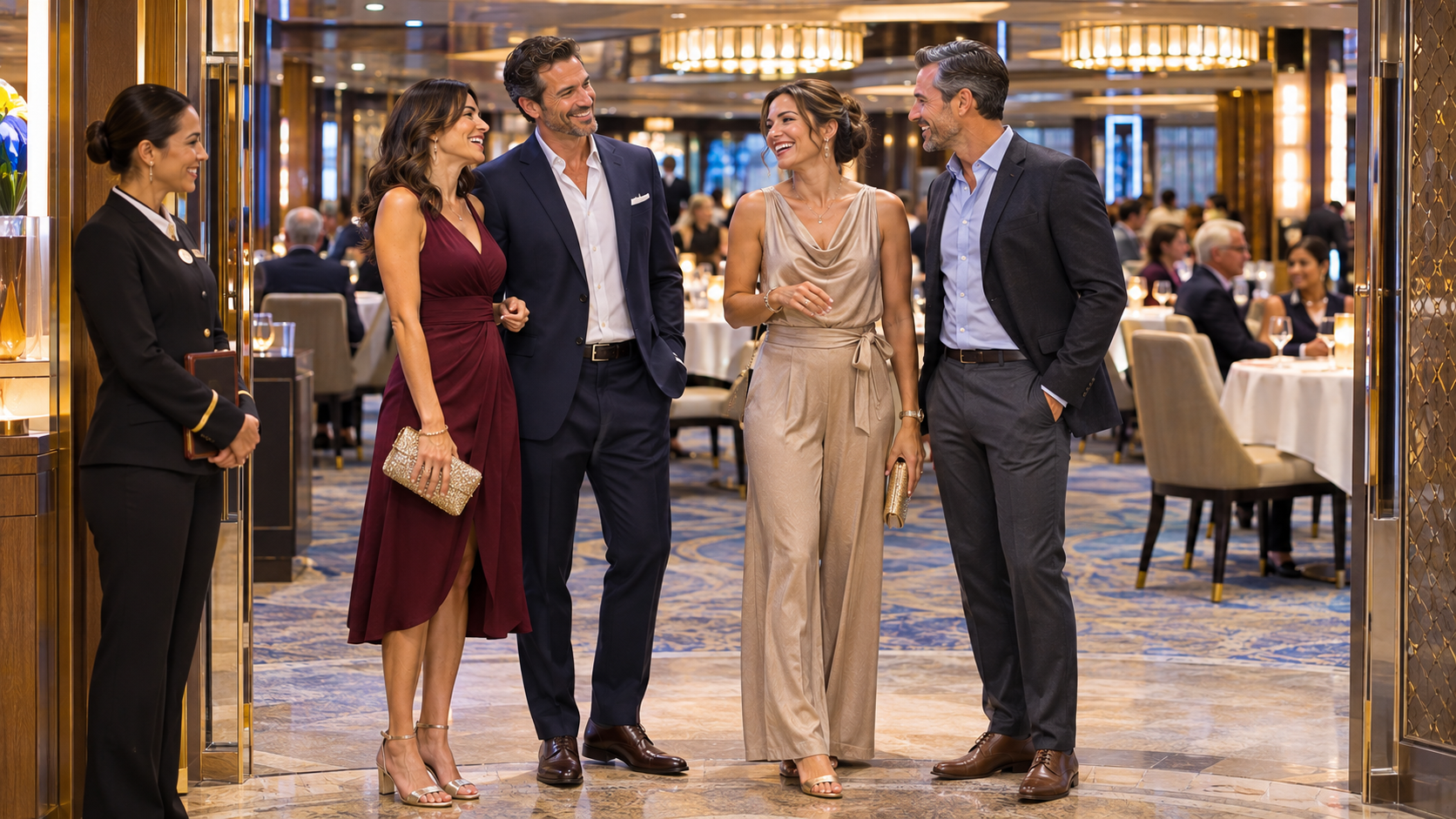
- Understand the differences between casual, resort casual, smart casual, and formal cruise attire.
- Compare evening dress expectations on Royal Caribbean, Carnival, Norwegian, Disney, and MSC cruises.
- Learn why a ship’s suggested dress-up theme isn’t necessarily the same as a restaurant’s clothing requirements.
- Prepare for your first cruise with clear outfit guidance, fewer packing mistakes, and more confidence at dinner.
Quick Take
- Cruise dress codes vary by cruise line, restaurant, and occasion. There is no universal definition of formal or smart casual that applies to every ship.
- Daytime clothing is generally relaxed, but swimwear, bare feet, and certain casual garments may be restricted inside restaurants.
- Smart casual usually means a more polished appearance than ordinary daytime clothing, although acceptable footwear, jeans, and other items depend on the venue.
- Formal, Cruise Elegant, Dress Your Best, and Gala Night are different cruise-line traditions, not interchangeable rules.
- An optional dress-up evening doesn’t automatically eliminate mandatory restaurant clothing restrictions.
- Check your ship’s dining policies and evening schedule before packing. You may need fewer special-occasion outfits than you expect.
What Do Cruise Dress Codes Really Mean on Your First Sailing?
Understanding cruise dress codes before your first sailing can prevent one of the more awkward vacation surprises: arriving at dinner wearing something that doesn’t meet the restaurant’s clothing requirements.
You might see terms such as cruise casual, resort casual, smart casual, formal, Cruise Elegant, or Dress Your Best while planning your vacation.
They sound straightforward until you discover that different cruise lines use them in different ways.
Does smart casual allow jeans?
Are shorts acceptable at dinner?
Can you wear sneakers to a specialty restaurant?
And if your ship schedules a formal night, does everyone have to dress up?
There isn’t one answer that applies across the cruise industry.
A Royal Caribbean passenger may encounter a Dress Your Best evening, while someone sailing with Carnival might prepare for Cruise Elegant.
Norwegian Cruise Line generally emphasizes flexibility, whereas Disney and MSC also have their own dressier evening traditions.
The important distinction is between what the cruise line encourages you to wear and what an individual restaurant actually requires.
Once you understand how those two things work together, the language becomes much easier to interpret.
Why Cruise Dress Codes Depend on the Restaurant, Not Just the Evening
A common first-time cruiser assumption is that the entire ship follows one dress code at a particular time of day.
In practice, attire expectations often depend on where you’re going.
A passenger relaxing by the pool may wear clothing that wouldn’t be permitted inside the main dining room.
Someone visiting a casual restaurant may have more flexibility than a guest with a reservation at an upscale specialty venue.
These differences can exist on the same ship, during the same evening.
Suggested Attire and Required Attire Are Different
A suggested evening theme is an invitation to dress in a particular style.
For example, a cruise line may encourage passengers to wear elegant clothing for photographs and a special dinner atmosphere.
Guests might participate enthusiastically, dress somewhat more casually, or choose another restaurant.
A required restaurant dress code is different.
Restaurants may restrict items such as swimwear, bare feet, certain shorts, ripped clothing, or other garments regardless of the evening’s broader theme.
That means you can decline to participate in a formal-night celebration and still need to meet the minimum clothing requirements of the restaurant you choose.
It also means dressing elegantly doesn’t guarantee that every accessory or footwear choice is acceptable in every venue.
Main Dining Rooms and Specialty Restaurants May Have Different Rules
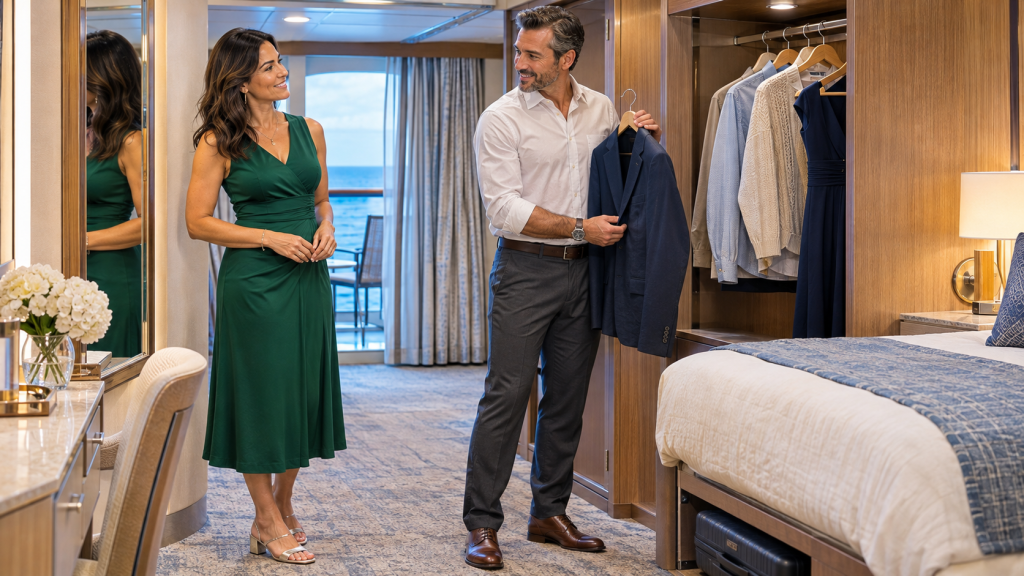
The main dining room is often where first-time cruisers become most conscious of dress codes.
It typically provides a more structured dining experience than a buffet or poolside restaurant, with attire expectations that may change between casual and dressier evenings.
Specialty restaurants can introduce additional requirements.
Disney Cruise Line, for instance, describes its adult-exclusive restaurants as elegant dining experiences and recommends attire appropriate to the sophistication of the venue.
Its general cruise dining guidance is more relaxed. (Disney Cruise Line — Dining Dress Codes)
The practical lesson is to check the rules for the restaurant you intend to visit rather than relying exclusively on the evening’s theme.
How Dress Codes Differ Across Popular Cruise Lines
If you’re sailing for the first time, comparing your cruise line’s terminology with its actual expectations is more useful than memorizing generic fashion categories.
The following distinctions explain why clothing advice that works for one passenger may not work for another.
Royal Caribbean: Casual, Smart Casual, and Dress Your Best
Royal Caribbean identifies casual, smart casual, and formal evening attire categories.
Its smart casual guidance includes clothing such as jackets, sports coats, blazers, collared shirts, dresses, skirts, blouses, and pantsuits.
For formal attire, Royal Caribbean describes options including suits and ties, tuxedos, cocktail dresses, and evening gowns.
The cruise line also uses Dress Your Best evenings, with the number generally depending on sailing length. (Royal Caribbean — Onboard Dress Code)
These descriptions establish the intended style for the occasion, but guests should also check individual restaurant requirements.
If you’re preparing for a Royal Caribbean cruise, pay attention to both the evening theme and any specialty dining reservations.
Carnival Cruise Line: Cruise Casual and Cruise Elegant
Carnival distinguishes between Cruise Casual attire on most evenings and Cruise Elegant attire on designated nights.
Its regular dining guidance includes a variety of everyday clothing choices, while Cruise Elegant encourages passengers to dress more sharply.
Suggested elegant attire includes dresses, pantsuits, dressy separates, dress shirts, trousers, suits, and other polished options.
Carnival also publishes restrictions on certain clothing in its dining rooms, so dressing casually doesn’t mean every type of garment is accepted. (Carnival Cruise Line — What to Wear)
For first-time Carnival passengers, the distinction between suggested elegant clothing and the dining room’s actual restrictions is particularly useful.
You don’t necessarily need traditional black-tie clothing, but you should understand the standards that apply to your dinner plans.
Norwegian Cruise Line: Freestyle Cruising and Flexible Attire
Norwegian Cruise Line takes a more flexible approach through its Freestyle Cruising philosophy.
Its packing guidance describes a wide range of acceptable vacation styles, from casual shorts and collared shirts to linen clothing, dresses, and more elaborate eveningwear.
Passengers who enjoy dressing up can do so, while others may prefer a relaxed resort-style wardrobe.
Norwegian also recognizes that elevated specialty dining experiences may encourage dressier clothing. (Norwegian Cruise Line — What to Pack)
However, flexibility shouldn’t be confused with an absence of restaurant rules.
If you’re booking specialty dining, check the applicable clothing guidance before assuming that an outfit accepted at a casual restaurant will be appropriate everywhere.
Disney Cruise Line: Cruise Casual and Dress-Up Evenings
Disney Cruise Line generally follows a cruise casual dress code in many onboard dining venues.
The cruise line also schedules themed evenings on eligible sailings, including opportunities for formal or semiformal attire.
Disney describes these as occasions when passengers can dress up and participate in onboard photography experiences.
Its adult-exclusive restaurants have their own expectations for elegant dining attire. (Disney Cruise Line — Dining Dress Codes)
This creates an important distinction for families.
Children and adults may participate in dress-up traditions without needing formal clothing for every restaurant or evening, but specific dining reservations still deserve attention.
Review the Navigator app and your sailing’s dining information for the scheduled themes.
MSC Cruises: Smart Casual and Gala Night
MSC Cruises encourages casual clothing during much of the day, with more polished evening attire and designated Gala Night celebrations.
For Gala evenings, MSC suggests elegant clothing that can include cocktail dresses, skirts, tailored trousers, dressy tops, blazers, suits, and evening gowns.
Its published guidance also acknowledges that clothing expectations vary with the venue and time of day. (MSC Cruises — What to Wear)
For first-time MSC passengers, Gala Night is an opportunity to dress elegantly without assuming every guest must choose the most traditional black-tie outfit.
Check the current dining restrictions and evening schedule for your ship before choosing what to pack.
Can You Wear Jeans, Shorts, or Sneakers to Cruise Dinner?
These three clothing categories create more confusion than almost anything else in cruise dress-code discussions.
The difficulty is that terms such as “jeans” or “sneakers” describe broad categories of clothing rather than one specific appearance.
A pair of tailored dark jeans looks different from heavily distressed denim. Clean, understated sneakers may create a different impression from athletic shoes designed for running.
However, appearance alone doesn’t determine whether a particular restaurant permits an item.
Jeans May Be Acceptable in Some Dining Venues
Some cruise lines permit neat jeans in certain restaurants or on casual evenings.
Carnival, for example, includes jeans within its published Cruise Casual dining guidance, subject to its restrictions on particular clothing. (Carnival Cruise Line — What to Wear)
That doesn’t mean jeans are acceptable at every restaurant or during every dressier occasion.
If you want to wear denim to dinner, verify the requirements for your cruise line and the venue.
Don’t assume that choosing expensive or fashionable jeans automatically overrides a published restriction.
Shorts Depend on the Dining Venue
Shorts are common daytime clothing aboard mainstream cruise ships.
They’re generally practical for pool areas, outdoor decks, warm-weather sightseeing, and relaxed activities.
Evening dining rules can be different.
Some venues permit particular styles of shorts, while others restrict them during dinner service.
Check the clothing guidance for the restaurant and the evening rather than assuming all shorts are either universally accepted or universally prohibited.
Sneakers Are Not Automatically Acceptable Everywhere
Comfortable sneakers are useful on cruises because passengers spend considerable time walking around large ships and exploring ports.
However, certain restaurants may expect dressier footwear.
Whether clean, fashion-oriented sneakers qualify depends on the cruise line’s rules, not simply on whether they look polished.
If you’re planning an upscale dinner, review the footwear requirements before deciding which shoes to wear.
How Can You Find Your Cruise’s Actual Evening Dress Schedule?
General cruise-line guidance tells you what kinds of evenings to expect, but it doesn’t always establish exactly what will happen on your sailing.
The number and timing of formal or themed evenings can depend on cruise length, ship, itinerary, and operational scheduling.
Before departure, review your cruise reservation, the cruise line’s published guidance, and any available sailing-specific information.
Once aboard, the ship’s daily activity schedule or mobile app may provide the most relevant details about evening themes and dining arrangements.
For Disney passengers, for example, the cruise line specifically directs guests to its Navigator app for nightly dining attire guidance. (Disney Cruise Line — Cruise Packing Guidance)
If you’re uncertain, ask guest services or the restaurant staff before your reservation.
Knowing where to find the information is more reliable than assuming every ship follows the same weekly dress schedule.
What Happens If Your Outfit Doesn’t Meet the Restaurant Dress Code?
Most first-time cruisers don’t expect to encounter a clothing problem at dinner, but it’s useful to understand what can happen.
If your outfit doesn’t meet a restaurant’s stated requirements, staff may ask you to change before being seated.
The precise response depends on the cruise line, restaurant, and circumstances.
Enforcement can vary, but that doesn’t mean the written policy should be ignored.
If you’re uncertain about an outfit, ask the restaurant staff before your reservation rather than waiting until you arrive for dinner.
You can also review whether another dining venue has different clothing requirements.
The objective isn’t to dress more formally than everyone else.
It’s to understand the expectations well enough to avoid an unnecessary interruption to your evening.
Check the Dress Code Before You Decide What to Pack
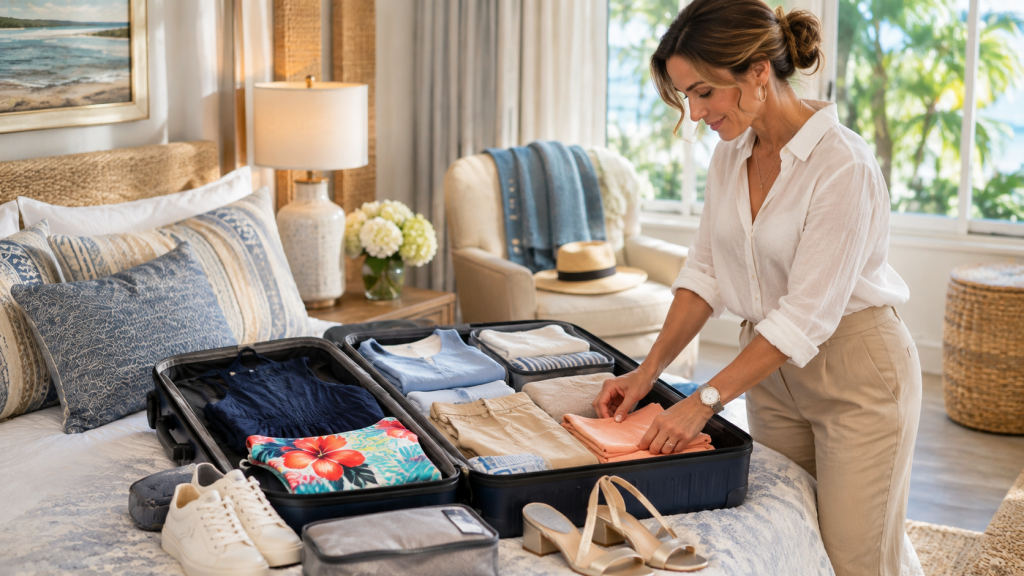
Cruise dress codes become easier to manage when you make the important decisions before choosing your wardrobe.
Start by identifying your cruise line’s regular evening attire categories.
Then review any formal, elegant, gala, or themed evenings expected during your sailing.
Look separately at the restaurants you’ve reserved, particularly if you’re planning specialty dining.
If you enjoy dressing up for photographs or special occasions, you can choose a more elegant outfit even when the minimum requirement is relatively relaxed.
If you prefer comfortable, understated clothing, the same research will help you identify appropriate options without buying clothes you don’t need.
Once you’ve established what each occasion actually requires, the outfit examples, dress-code definitions, and packing strategies below become much easier to use.
Why Cruise Dress Codes Can Feel Confusing on Your First Sailing
Cruise dress codes can feel confusing when you’re planning your first trip.
The words sound formal, but most ships keep things relaxed and welcoming.
Most first-time cruisers worry about standing out at dinner.
That worry is normal, and it is also very fixable.
A clear guide makes the rules feel predictable and kind.
This post breaks down the most common dress codes in plain language.
It also gives you a simple cheat sheet you can follow without overpacking.
By the end, you will know what to wear and why it works.
Confidence on a cruise rarely comes from “perfect” outfits.
It comes from having a plan that covers the main moments.
Photos, dinner, and shows are the usual pressure points.
A calm outfit strategy reduces stress across the entire trip.
Packing smarter also helps if luggage is delayed by flights.
That is where travel protection can add emotional breathing room.
Providers like World Nomads, VisitorsCoverage, EKTA, and Insubuy can help protect prepaid costs when delays or interruptions hit.
If a flight disruption turns into compensation paperwork, Compensair and AirHelp can reduce the hassle while you focus on the cruise.
You’ll learn how to pack without stress, avoid common mistakes, and feel confident every night.
By the end, you’ll know what to wear, why it works, and how to enjoy dinner without second-guessing your outfit.
The Confidence Map That Makes Dress Codes Make Sense
Dress codes are not meant to shame anyone.
They are meant to set a vibe in shared spaces.
Dining rooms feel nicer when everyone looks “evening ready.”
Pools feel easier when everyone looks “day casual.”
That is the entire concept in one breath.
Confusion happens because the labels sound stricter than they are.
Clarity comes from translating each label into real outfits.
Once translated, the pressure drops quickly.
Cruise lines also want consistency without being harsh.
Many ships welcome a wide range of styles and budgets.
Neat and intentional is usually the true rule.
Comfort matters because ships involve more walking than expected.
Shoes can matter more than the dress code label.
A light layer matters because theaters can feel cool.
A simple plan covers most “what if” worries.
That is the goal of this guide.
Confidence Anchor
Smart outfits are the ones you can wear with ease.
Ease reads as confidence in photos and at dinner.
Confidence makes the ship feel friendlier immediately.
Calm Translation
Dress codes become simple when you think “venue and time.”
Day venues want casual, and evening venues want polished.
That structure is easier than memorizing rules.
Reality Check
Most ships do not enforce dress codes like a strict nightclub.
Staff mainly wants clothing that is respectful and tidy.
A calm plan keeps you from overthinking the room.
Cruise Dress Code Vocabulary In Plain English
Two phrases cause most of the confusion.
Smart casual sounds vague, and formal sounds intimidating.
Both are easier when you define them clearly.
The ship is not asking for luxury fashion.
The ship is asking for a clean, put-together look.
That is why fit and neatness matter so much.
A simple definition helps you pack fewer items.
Fewer items usually means less stress.
Smart Casual Defined
Smart casual is a polished everyday outfit.
Think neat, clean, and slightly dressier than daytime shorts.
For women, this can be a sundress, jumpsuit, or dressy top with pants.
For men, this can be chinos or dark jeans with a collared shirt.
Closed-toe shoes or clean sandals often work well.
Athletic wear usually feels too casual for dining rooms.
The easiest test is whether you would wear it to a nice dinner at home.
If yes, it usually fits smart casual onboard.
Formal Defined
Formal on a cruise is elevated evening wear.
It is often less strict than black tie expectations.
For women, think cocktail dress, elegant jumpsuit, or dressy separates.
For men, think suit, or jacket with dress pants.
A tie can be optional on many sailings.
Shoes should look intentional, and clean matters most.
This dress code is often tied to photos and special dinners.
A strong outfit plan makes it feel fun, not stressful.
Why Clear Definitions Make Packing Easier
Definitions Reduce Anxiety
Clear definitions remove the fear of guessing wrong at dinner.
Knowing the target look makes packing decisions easier.
Neatness Is The Secret
Clean, well-fitting clothes solve most dress code concerns.
Neatness often matters more than brand or price.
Comfort Still Counts
Comfort supports confidence, especially during long evenings onboard.
A comfortable plan helps you enjoy the whole night.
The Most Common Cruise Dress Codes And When They Show Up
Most cruises run on a simple rhythm.
Daytime is casual in most areas of the ship.
Evenings shift toward polished looks in dining spaces.
Some nights are labeled “formal” or “dressy.”
Those nights are usually optional, not a trap.
The goal is giving you a choice to dress up.
A breakdown helps you plan without stress.
The cheat sheet later will summarize this cleanly.
Day Casual
Day casual is what you wear around the pool and decks.
Swimwear is expected near the pool, with cover-ups for walking inside.
Shorts, tees, sundresses, and casual shoes are normal choices.
Comfort matters because you will move around the ship often.
A light layer helps when the wind picks up on decks.
Sun protection matters more than fashion in the daytime.
The biggest rule is staying respectful in indoor venues.
Cover-ups and shoes make daytime feel easy and appropriate.
Resort Casual
Resort casual is the bridge between day and dinner.
Think tidy casual that is still comfortable.
This can include sundresses, polos, and casual pants.
It works well for early dinners and casual restaurants.
It also works for shows where you want a slightly nicer look.
This category is often the most forgiving on ships.
A simple “clean and neat” approach fits well here.
Many first-time cruisers are happiest living in this zone.
Smart Casual Nights
Smart casual often appears as the default dining room expectation.
It suggests a step above shorts and tank tops.
A dressy top and pants can cover most smart casual nights.
For men, a collared shirt plus pants is the common path.
Shoes can be comfortable while still looking polished.
This is the dress code that rewards simple planning.
One or two outfits can rotate through the week.
Rotation reduces overpacking and cabin clutter.
Formal Or Dressy Nights
Formal nights are the dress-up moments of the cruise.
They are often tied to photos, special menus, and a celebratory mood.
Some guests go all-in, while others keep it simple.
A polished outfit is usually enough to feel included.
Alternative venues like buffets may stay more casual.
That can be a relief if you want a quieter night.
Formal night works best when you pack an outfit formula.
A formula prevents last-minute panic.
Simple Rules That Keep Cruise Packing Calm
Day Is Easy
Daytime dress is mostly about comfort and sun safety.
Cover-ups and shoes help you move indoors confidently.
Dinner Is Polished
Evenings usually ask for neat outfits in dining rooms.
A simple plan prevents repeated outfit doubt.
Formal Is Optional
Formal nights are a chance to dress up, not a strict demand.
A calm approach keeps it enjoyable and light.
Dress Code Cheat Sheet For Fast Decisions
This table is designed to remove decision fatigue.
Use it while packing and again when getting ready onboard.
The goal is clarity, not perfection.
Choose outfits that match your comfort needs.
Reuse shoes when possible to save space.
Pack one light layer for cool indoor venues.
Build one backup option to protect against spills.
That is how confidence stays steady.
| Dress Code | Where You See It | Women’s Easy Outfit Ideas | Men’s Easy Outfit Ideas | What To Avoid | Quick Calm Tip |
|---|---|---|---|---|---|
| Day Casual | Pool, decks, daytime activities | Swimwear with cover-up, shorts, sundress, sandals | Shorts, tee, casual sneakers, sandals | Bare swimwear inside dining areas | Keep a cover-up by the door for quick transitions |
| Resort Casual | Casual dining, early evenings | Sundress, jumpsuit, blouse with pants | Polo with chinos, dark jeans with collared shirt | Gym wear in dining rooms | Choose one “go-anywhere” outfit for most evenings |
| Smart Casual | Main dining room, many shows | Dressy top with pants, midi dress, polished flats | Collared shirt with pants, loafers, clean sneakers | Tank tops, ripped denim, flip-flops in dining | Pack two tops that rotate with one pair of pants |
| Formal | Formal night, photos, specialty dining | Cocktail dress, elegant jumpsuit, dressy separates | Suit, or jacket with dress pants, optional tie | Athletic shoes, very casual shorts | Bring one trusted outfit and hang it on day one |
How to Use the Cheat Sheet for Quick Decisions
Reduce Decisions
A cheat sheet keeps you from overthinking each night.
Less thinking means more relaxing, which is the point.
Reuse Pieces
Reusing pants, shoes, and layers saves space fast.
Space savings lowers cabin clutter and stress.
Keep A Backup
A backup top or shirt prevents a spill from ruining the night.
One backup option can create a lot of calm.
Packing Strategy That Covers Every Dress Code Without Overpacking
Overpacking usually happens for emotional reasons.
You pack extra because you fear being unprepared.
The cruise cabin then feels cluttered and stressful.
A smarter strategy is packing in outfits, not items.
Outfits are complete sets that work together.
That approach also keeps mornings and evenings easier.
If luggage is delayed, a carry-on outfit can save your mood.
A good plan builds confidence before you sail.
The Three-Zone Closet
Divide your cruise wardrobe into three zones.
Zone one is daytime, which is mostly casual and easy.
Zone two is dinner, which is polished and repeatable.
Zone three is formal, which is one main outfit plus a backup.
This structure covers the whole trip without chaos.
It also keeps your suitcase smaller and easier to manage.
Suitcase ease matters because cabins have limited storage.
When storage is easy, your mind feels easier too.
The Two-Top Rule
A simple rotation works for most cruises.
One pair of dinner pants or a skirt can repeat.
Two tops can rotate across multiple nights.
A third top can serve as a backup if you spill.
This rule is calm because it is predictable.
It also frees space for daywear and comfortable layers.
Many guests realize they wore fewer outfits than expected.
Repeating outfits is normal and completely fine.
The Formal Formula
Formal night becomes easy when you pack a formula.
Pick one outfit that makes you feel confident in photos.
Pick one backup that reuses the same shoes.
Pack one light layer that works for dining and theaters.
Hang the formal outfit as soon as you reach the cabin.
Hanging reduces wrinkles without heat tools.
Avoid packing steamers or irons because many ships restrict heat devices.
A calm wrinkle plan beats a risky gadget.
Packing Tips That Save Space and Reduce Stress
Zones Create Order
Day, dinner, and formal zones prevent random overpacking.
Order in the suitcase creates order in your head.
Rotation Saves Space
Rotating two tops with one base outfit reduces luggage bulk.
Less bulk makes cabins feel more comfortable.
Formal Gets Simple
One formal formula plus one backup covers nearly every cruise.
Confidence comes from having a plan you trust.
Mistakes That Make Dress Codes Feel Harder Than They Are
Most dress code stress is self-inflicted.
It comes from packing extremes and skipping practical basics.
The first mistake is packing uncomfortable shoes.
The second mistake is packing outfits that require constant adjusting.
The third mistake is packing too many options and creating doubt.
A fourth mistake is forgetting indoor venues can be cool.
A small layer can save you from discomfort fast.
Each mistake has a simple fix that reduces stress.
Uncomfortable Shoe Trap
Ships involve long walks, stairs, and long evenings.
Shoes that look great but hurt will ruin your mood.
Comfortable shoes help you feel confident and relaxed.
A clean pair of flats or loafers can still look polished.
Breaking in shoes before the cruise is a real advantage.
If blisters are a fear, pack blister patches.
Those patches weigh nothing and can save a whole evening.
Comfort support is confidence support.
Outfit Complexity Trap
Outfits that ride up or pinch become stressful quickly.
Dinner lasts longer than most people expect.
Shows afterward can extend the evening further.
Choose fabrics and cuts that allow comfortable movement.
A simple, stable outfit often photographs better than a fussy one.
A belt or small accessory can elevate without discomfort.
That is a smarter path than forcing an uncomfortable look.
Comfort makes you look more confident in photos.
Too Many Options Trap
Five dinner outfits creates decision fatigue.
Decision fatigue makes you doubt every choice.
Doubt feels like stress even when you look fine.
A two-top rotation solves this problem cleanly.
Small accessory changes can create variety without adding bulk.
A scarf, tie, or earrings can shift the vibe easily.
Less luggage also means faster unpacking.
Fast unpacking makes day one calmer.
Common Packing Mistakes and How to Avoid Them
Shoes Matter Most
Comfortable shoes protect your mood more than any outfit upgrade.
Happy feet make the whole ship feel more enjoyable.
Simple Wins
Stable outfits reduce self-consciousness and adjusting.
Less adjusting means more enjoying the night.
Fewer Choices Helps
A smaller wardrobe can create more confidence, not less.
Confidence comes from clarity, not from options.
First-Time Fears About Dress Codes and Calming Answers
Dress code fear is usually social fear.
You worry someone will notice you do not belong.
Cruises are built for a wide range of guests.
Many guests are dressing up for fun, not status.
The ship environment is more welcoming than many people expect.
Neat, clean, and comfortable usually fits every room.
A calm plan also protects you from unexpected travel hiccups.
That is why carry-on planning matters.
Fear Of Being Underdressed
Most dining rooms want polished, not perfect.
Guests wear a wide range of outfits on formal nights.
A classic dress, jumpsuit, or jacket outfit blends in easily.
Neat hair and clean shoes can elevate even a simple look.
Choosing a darker base color can feel more formal instantly.
A light layer can make you feel more “finished” too.
Feeling finished reduces anxiety fast.
Anxiety drops when you feel prepared.
Fear Of Luggage Delays
Delayed bags happen most often because flights get disrupted.
A small carry-on outfit can protect your evening plans.
Pack one dinner-ready outfit in your carry-on.
For men, that can be a collared shirt and pants.
For women, that can be a dressy top and pants or a simple dress.
Travelpro-style organized carry-ons can help you protect that outfit from crushing.
For broader peace of mind, World Nomads, VisitorsCoverage, EKTA, or Insubuy can help when delays or interruptions affect prepaid costs.
If the issue becomes a compensation claim, Compensair and AirHelp can reduce the paperwork drain while you focus on the trip.
Fear Of Not Feeling Like Yourself
Some people worry dress codes force a personality shift.
They do not, and you can stay true to your style.
A polished version of your usual look is enough.
Pants outfits are common and widely accepted onboard.
Modest outfits are also common and respected onboard.
Comfort-first styling often looks better than forced glamour.
Photos tend to favor relaxed confidence.
Relaxed confidence comes from being yourself.
Fears Takeaways
You Will Blend In
Most ships include every style preference, every sailing.
A neat outfit is enough to feel included.
Carry-On Saves Nights
One carry-on dinner outfit can rescue your plans.
A small backup option creates big calm.
Personal Style Works
Your style belongs on the ship, even on formal night.
Polished comfort is a winning strategy.
Step Onboard With A Plan That Makes Every Night Easy
Cruise dress codes are easier than they sound.
Daytime is casual and comfort-driven on most ships.
Evenings are polished in dining spaces, and smart casual is the common baseline.
Formal nights are a chance to dress up, not a strict test.
A cheat sheet and a simple rotation strategy remove the guesswork.
A carry-on backup outfit protects you from travel delays and stress.
If you want extra peace of mind, World Nomads, VisitorsCoverage, EKTA, and Insubuy can help protect prepaid trip costs when disruptions hit.
If flights create claim paperwork, Compensair and AirHelp can help you handle it with less effort and less frustration.
FAQ – What Should First-Time Cruisers Know About Cruise Dress Codes?
What is the dress code on most cruise ships?
Most mainstream cruise lines allow casual clothing during daytime activities but apply additional clothing requirements to certain restaurants and evening occasions.
Common attire categories include casual, smart casual, and formal, although individual cruise lines may use different names.
The requirements can also vary between main dining rooms, buffets, and specialty restaurants aboard the same ship.
Check your cruise line’s current dining policies rather than assuming one dress code applies throughout the vessel.What is the difference between cruise casual and smart casual?
Cruise casual generally refers to comfortable everyday clothing suitable for relaxed shipboard activities and many dining venues.
Smart casual suggests a more polished appearance, potentially including collared shirts, tailored trousers, dresses, blouses, or coordinated separates.
However, these descriptions are not universal, and individual cruise lines may permit or restrict specific garments within each category.
The practical difference is the level of polish expected and the clothing rules of the particular venue.What does resort casual mean on a cruise?
Resort casual usually describes comfortable, neat vacation clothing that is more polished than swimwear or athletic clothing.
Depending on the cruise line, suitable examples might include casual dresses, polos, coordinated separates, or trousers.
However, resort casual isn’t a universally standardized cruise dress code, and the term may be interpreted differently between ships and restaurants.
Always review the venue’s specific clothing restrictions before using the label to decide what to wear.Is formal night mandatory on a cruise?
Participating in a cruise line’s formal-night celebration isn’t necessarily mandatory, and many ships provide alternative dining options.
However, individual restaurants may still have clothing requirements that apply even if you choose not to dress up for the occasion.
Some cruise lines encourage traditional formalwear, while others allow passengers greater flexibility.
Check your sailing’s evening schedule and restaurant policies before deciding whether to participate.What is the difference between Cruise Elegant, Dress Your Best, and Gala Night?
Carnival uses Cruise Elegant, Royal Caribbean uses Dress Your Best, and MSC Cruises offers Gala Night celebrations.
These traditions encourage passengers to wear dressier clothing, often for special dinners and photographs.
However, each cruise line publishes its own examples of appropriate attire and any applicable restaurant restrictions.
The names describe similar occasions but don’t establish one identical dress code across all three companies.Can you wear jeans to dinner on a cruise?
Jeans are acceptable in some cruise dining venues, particularly during casual evenings, but restrictions vary by cruise line. Carnival includes jeans in its Cruise Casual guidance while maintaining rules about certain types of clothing. Other restaurants may restrict distressed denim or expect a dressier appearance. Review the clothing requirements for your particular restaurant rather than assuming all jeans are either acceptable or prohibited.
Can you wear shorts in a cruise ship dining room?
Shorts may be permitted in some casual dining venues, but certain main dining rooms and specialty restaurants restrict them during evening service.
The rules can depend on the cruise line, restaurant, and occasion.
Tailored shorts aren’t automatically acceptable simply because they look more polished than beachwear.
Check the venue’s published policy before deciding whether to wear shorts to dinner.Are sneakers allowed in cruise ship restaurants?
Sneakers may be acceptable in some cruise restaurants, particularly those with relaxed attire requirements.
However, certain upscale dining venues may expect dressier footwear or restrict specific types of shoes.
Clean fashion sneakers and athletic running shoes can look different, but their appearance doesn’t override a restaurant’s rules.
If you’ve reserved specialty dining, confirm its footwear guidance before choosing what to wear.Can you wear flip-flops to dinner on a cruise?
Flip-flops are common around pools and in relaxed daytime areas, but some cruise restaurants restrict them during dinner.
The acceptability of sandals and other open footwear can depend on the cruise line and dining venue.
You shouldn’t assume that every type of sandal is prohibited or that flip-flops are welcome everywhere.
Review the restaurant’s current requirements and choose footwear that’s both comfortable and appropriate.Do men need a suit and tie for cruise formal night?
A suit and tie aren’t universally required on mainstream cruise ships, even when formal or elegant evenings are scheduled.
Royal Caribbean includes suits and ties among its suggested formal attire, while other cruise lines may accept a wider range of dressy clothing.
Certain specialty dining experiences may have stricter requirements than the general evening celebration.
Check your cruise line’s guidance before deciding whether a complete suit is necessary.Can women wear pants instead of dresses on formal night?
Tailored pantsuits, dressy jumpsuits, and coordinated separates can be appropriate formal-night alternatives on many cruise lines.
Carnival and Royal Caribbean both include pants-based outfits within their dressier attire guidance.
However, the exact requirements may depend on the restaurant and occasion.
Choose clothing that meets the published standards while remaining comfortable and consistent with your personal style.Do children have to follow cruise dinner dress codes?
Cruise-line dining requirements can apply to children as well as adults, although the appropriate clothing may differ by age.
A neat dress, collared shirt, tailored trousers, or another comfortable outfit can be suitable for a dressier family dinner.
Some restaurants have specific clothing restrictions regardless of whether the guest is an adult or a child.
Review your cruise line’s family dining guidance before packing special-occasion clothing for children.Do specialty restaurants have stricter dress codes?
Some specialty restaurants have clothing requirements that differ from the ship’s main dining room or casual venues.
Upscale dining experiences may request smart casual, elegant, or formal attire depending on the cruise line and restaurant.
An outfit accepted at the buffet may therefore be inappropriate for a reserved specialty dinner.
Check the restaurant’s individual guidance before sailing, especially if you’ve booked a special occasion.Can you skip formal night and eat at the buffet?
Many mainstream cruise ships offer buffet dining or other casual alternatives during dressier evenings.
These venues may have more relaxed clothing requirements than the main dining room or specialty restaurants.
However, available dining options and operating hours depend on the ship and itinerary.
Review the daily dining schedule so you know which restaurants are available without participating in the formal-night event.How many formal nights are there on a seven-night cruise?
The number of dressier evenings depends on the cruise line and the particular sailing.
Royal Caribbean generally schedules two Dress Your Best evenings on cruises lasting six to ten nights, while other cruise lines follow their own arrangements.
Some operators emphasize optional dress-up events rather than traditional formal-night schedules.
Check your sailing’s published information and onboard daily schedule before deciding how many formal outfits to bring.Can you wear the same dinner outfit several times on a cruise?
Yes, repeating an appropriate dinner outfit is a practical way to reduce luggage without affecting your dining plans.
You can create some variety by changing a shirt, blouse, tie, jacket, or accessory while reusing other clothing pieces.
There is generally no reason to assume that you need a completely different outfit for every evening.
The important consideration is that your clothing remains clean, comfortable, and appropriate for each restaurant.What happens if you don’t meet a cruise restaurant’s dress code?
Restaurant staff may ask you to change into clothing that meets the venue’s requirements before seating you.
Enforcement practices vary, but passengers shouldn’t assume that a written restriction will be ignored.
If you’re uncertain about your clothing, ask the restaurant staff or guest services before your reservation.
Having a suitable alternative outfit or another dining option can prevent the situation from disrupting your evening.Can you wear swimwear inside cruise restaurants?
Swimwear is generally appropriate in designated pool and recreational areas, but many indoor dining venues require additional clothing and footwear.
A cover-up may be acceptable in some casual settings, although this depends on the restaurant’s specific rules.
Bare feet and uncovered swimwear are commonly restricted outside appropriate poolside areas.
Check the ship’s guidance before moving directly from the pool to a restaurant.Are cruise formal-night photographs included in the fare?
Professional photography services are often available during formal or elegant evenings, but purchasing the finished images may involve an additional charge.
Some cruise lines offer digital image packages, printed photographs, or promotions that include certain photography benefits.
The availability and cost of these services vary by operator and sailing.
Check your cruise line’s current photography offerings before purchasing a package or assuming portraits are included.How can you avoid overpacking for cruise dress codes?
Start by reviewing your cruise line’s regular dining requirements, scheduled dressier evenings, and any specialty restaurant reservations.
Choose versatile clothing that can meet several occasions rather than packing a separate outfit for every dinner.
Comfortable shoes and coordinated accessories can help you create different combinations without substantially increasing luggage volume.
The goal is to meet your actual dining needs instead of preparing for a dress code that may not apply to your sailing.
Plan Your Next Cruise!
From Icon to Oasis: Explore Royal Caribbean’s Groundbreaking Ships and Unforgettable Voyages
One Delay Can Cost Your Entire Cruise A quick coverage check now protects you from the problems no one sees coming….

Sail Into Freestyle Freedom: Norwegian Cruise Line for Adventure Thrills, Gourmet Dining, and Destination‑Rich Voyages
One Delay Can Cost Your Entire Cruise A quick coverage check now protects you from the problems no one sees coming….

Sail Into Sophistication: Holland America Cruises for Luxury, Culture, and Unforgettable Journeys
One Delay Can Cost Your Entire Cruise A quick coverage check now protects you from the problems no one sees coming….

Sail Into Italian Elegance: Costa Cruises for Culture, Cuisine, and Unforgettable Voyages
One Delay Can Cost Your Entire Cruise A quick coverage check now protects you from the problems no one sees coming….
Explore More
Sail Further for Less: Discover the Perks of a Repositioning Cruise
Dance Into Adventure: Learn Salsa at Sea with Cruise Lessons for Every Skill Level

Cruise Cannabis Policies: Zero‑Tolerance Rules, Port Laws, and Passenger Consequences