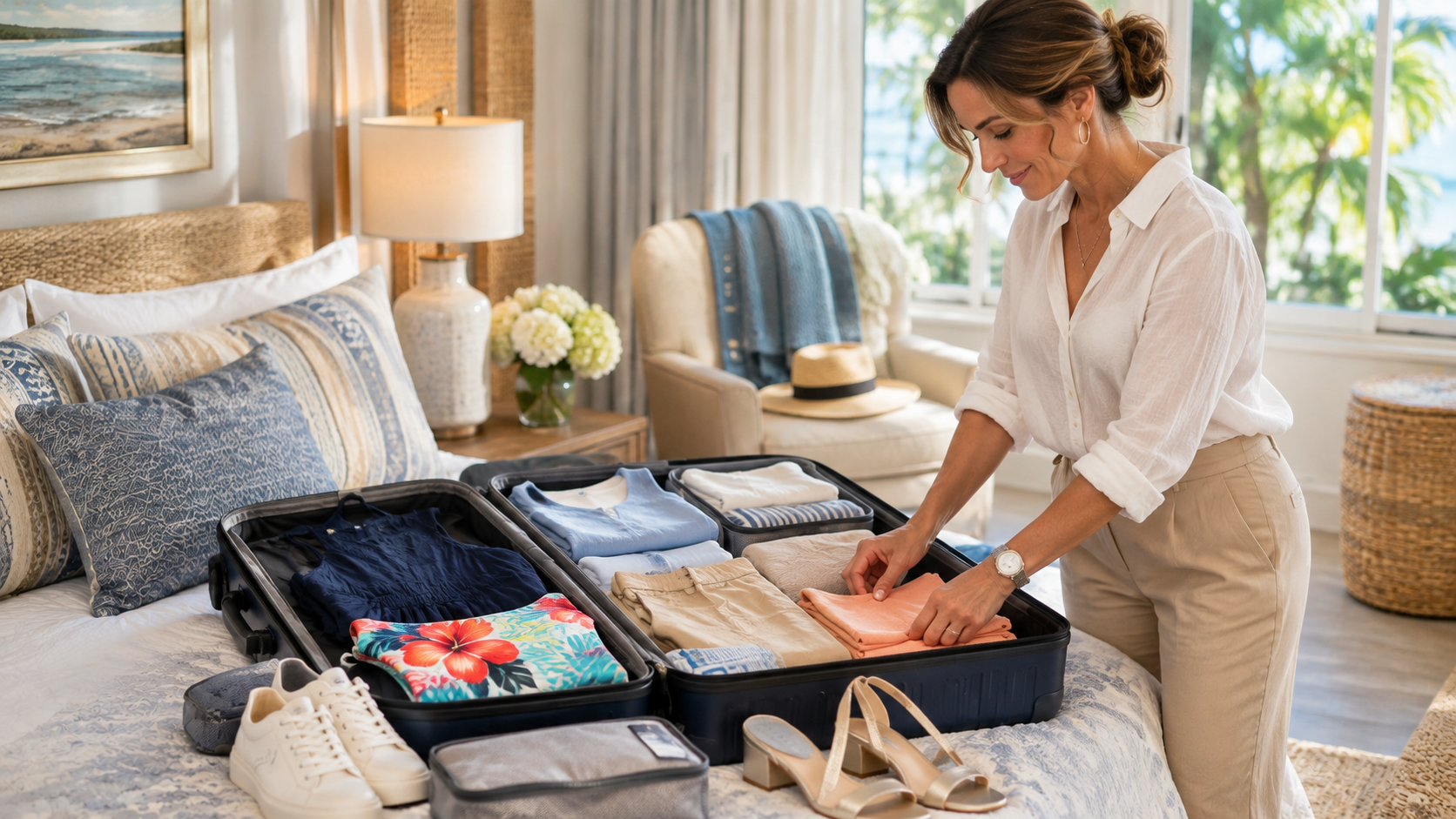

One Delay Can Cost Your Entire Cruise
A quick coverage check now protects you from the problems no one sees coming
Short Excerpt
- Discover how to prepare for your first cruise without bringing more luggage than you actually need.
- Learn which travel documents, medications, and important belongings deserve priority before packing clothing.
- Understand how cruise-line rules and your itinerary affect the items you can bring.
- Use the existing printable packing checklist to organize your carry-on, checked luggage, and last-minute essentials.
Quick Take
- Start with boarding requirements. Your travel documents depend on your citizenship, itinerary, destinations, and cruise line.
- Keep medications, identification, valuable belongings, and other necessities accessible during embarkation.
- Don’t assume that ordinary travel accessories are permitted aboard every cruise ship. Check the prohibited-items policy before packing.
- Match your clothing to the actual destinations and activities on your itinerary rather than preparing for every possible scenario.
- Verify dining requirements before deciding how many dressier outfits to bring. An evening theme and a restaurant’s clothing rules aren’t necessarily the same.
- Use the checklist below to divide essentials, comfort items, and optional extras into manageable packing decisions.
What Should You Check Before Packing for Your First Cruise?
Packing for your first cruise becomes easier once you distinguish between things you absolutely need to travel and belongings that simply make the vacation more comfortable.
A forgotten evening accessory may be inconvenient, but missing identification or an essential medication can create a much more serious problem.
Similarly, an ordinary travel accessory that passes airport security isn’t necessarily permitted aboard your cruise ship.
That’s why the order in which you prepare matters.
Before deciding how many outfits, shoes, or storage accessories to bring, review your boarding requirements, cruise-line restrictions, travel arrangements, and planned activities.
These decisions establish the practical boundaries of your packing list.
The checklist and wardrobe strategies later in this guide can then help you organize the belongings you’ve decided to take.
Verify Your Cruise Documents Before Packing Your Suitcase
Travel documents deserve attention before clothing because passengers who arrive without the required documentation may be unable to board.
Your requirements depend on citizenship, itinerary, departure and return ports, and the countries you’re visiting.
For some qualifying closed-loop cruises, U.S. citizens may be eligible to travel using approved documents other than a passport book.
However, these exceptions don’t apply universally, and the cruise line or destination may impose additional requirements.
The U.S. Department of State strongly recommends traveling with a valid passport book even when it isn’t required for the cruise.
If an emergency forces you to leave the ship and fly internationally, a passport book can be essential for returning home. (U.S. Department of State — Cruise Ships) Travel.state.gov
Why Your Specific Itinerary Matters
A cruise that begins and ends at the same U.S. port may have different documentation requirements from one that departs in one country and finishes in another.
Traveling with children can introduce additional considerations, particularly when a child is accompanied by only one parent or another adult.
Before departure, verify the identification, citizenship documents, visas, and any other authorizations required for everyone in your traveling party.
Don’t assume that a friend who sailed a similar itinerary needed exactly the same documents.
Check Your Cruise Line’s Prohibited-Items Policy
A common first-cruise packing mistake is assuming that anything allowed in a hotel room or airplane suitcase can also be brought onto a cruise ship.
Cruise lines maintain their own safety rules covering electrical accessories, heating appliances, beverages, and other belongings.
Top Cruise Deals From Trusted Cruise Lines
Compare exclusive online offers and find the fare that fits your trip and your budget

Royal Caribbean, for example, prohibits clothing irons, garment steamers, power strips, extension cords, and multi-plug outlets, subject to its published policy and any applicable exceptions. (Royal Caribbean — Prohibited Items) Royal Caribbean Cruises
This matters because products described as cruise-friendly or cruise-approved aren’t automatically permitted aboard every ship.
Verify Electrical Accessories Instead of Assuming They’re Safe
Before bringing a charging hub, multi-outlet adapter, power strip, or similar device, review your specific cruise line’s electrical-equipment rules.
Surge protection isn’t the only consideration.
Some operators prohibit entire categories of devices regardless of whether they have surge-protection features.
The same principle applies to garment-care equipment.
A compact travel steamer may be convenient in a hotel, but that doesn’t mean it can be used aboard your ship.
If you need wrinkle removal, check whether the ship provides an approved pressing service rather than bringing a prohibited appliance.
Understand What Happens to Your Luggage on Embarkation Day
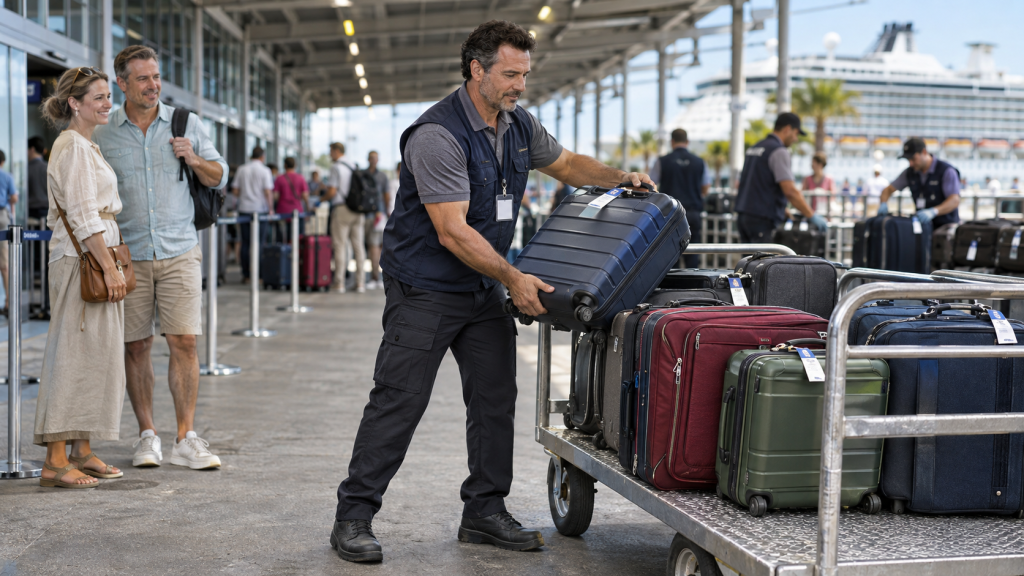
On many cruises, passengers hand larger suitcases to authorized terminal porters before boarding.
Those bags are screened and handled separately from passengers’ carry-on belongings.
Their delivery to individual cabins can take several hours.
Royal Caribbean specifically advises that checked luggage can arrive after sailaway because of the high volume of bags processed during embarkation. (Royal Caribbean — Luggage Delivery) Royal Caribbean Cruises
That distinction is especially important for first-time cruisers who expect their suitcase to be waiting as soon as they reach their cabin.
Your Carry-On Protects the First Part of Your Vacation
The original article includes a useful three-column packing checklist separating carry-on items, checked luggage, and belongings to collect before leaving home.
That organization works because these categories serve different purposes.
Your carry-on protects access to immediate necessities.
Checked luggage holds items that can wait for cabin delivery, while the last-minute column helps you remember belongings that are still in use immediately before departure.
Royal Caribbean’s own pre-cruise guidance similarly recommends bringing a small carry-on with travel documents, medications, and useful first-day clothing. (Royal Caribbean — What to Do Before Your Cruise) Royal Caribbean Cruises
The detailed checklist below will help you put that separation into practice.
Make Your Packing Checklist Match Your Actual Cruise
Not every first-time cruiser needs the same clothing or equipment.
A short Caribbean sailing with beach excursions presents different requirements from an Alaska itinerary involving glacier viewing and outdoor sightseeing.
A traveler flying to the departure port also faces different baggage limitations from someone driving directly to the terminal.
Before choosing clothing quantities, consider your itinerary, cruise length, transportation plans, and reserved activities.
Look at Your Shore Excursions Before Choosing Clothes
An excursion description can reveal specific clothing requirements that aren’t obvious from the destination alone.
A city sightseeing tour may call for comfortable walking shoes and modest clothing at certain attractions.
Hiking, water activities, and boat excursions may require different footwear or weather protection.
Online‑Only Cruise Offers You Won’t Find Elsewhere
Unlock special pricing and start planning the sailing that matches your perfect itinerary

Check whether your excursion operator provides equipment and whether particular clothing is mandatory.
This prevents you from packing unnecessary specialized gear while overlooking something required for an activity you’ve already booked.
Check Dining Requirements Before Planning Your Evening Wardrobe
The original article recommends a simple evening wardrobe consisting of a dressier outfit and versatile smart-casual options.
That can be a useful starting point, but it shouldn’t be presented as a universal requirement for every cruise.
Some cruise lines schedule several dressier evenings, while others follow more relaxed traditions.
Individual restaurants may also have clothing requirements that differ from the ship’s general evening theme.
Before settling on the number of dinner outfits, check your cruise line’s dress-code guidance, sailing length, and any specialty restaurant reservations.
The goal is to bring clothes you’ll genuinely wear while still meeting the requirements that apply to your vacation.
Use the Packing Checklist to Separate Essentials From Extras
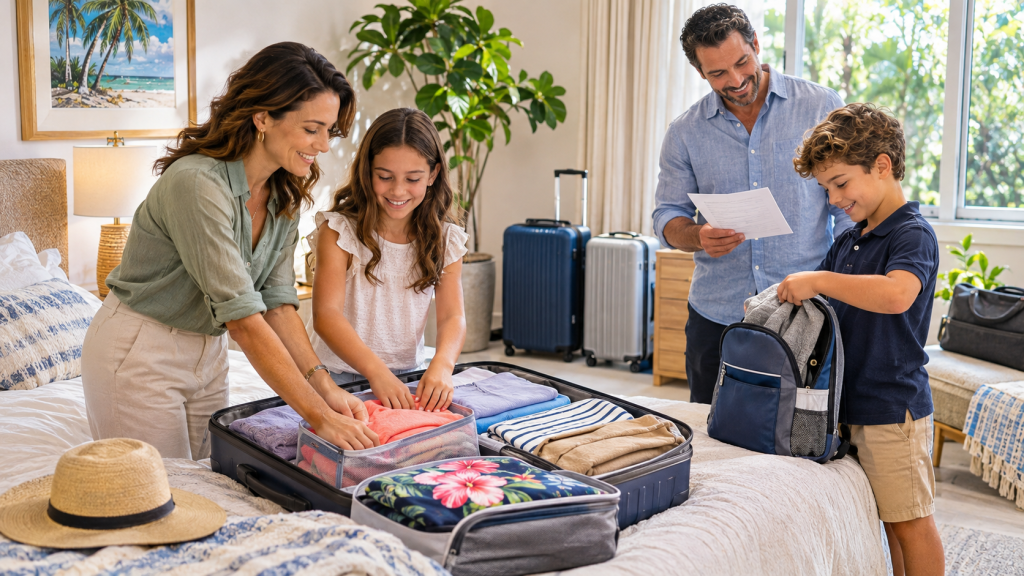
Once you’ve verified your documents, onboard restrictions, and itinerary requirements, the remaining packing decisions become more straightforward.
You can divide belongings according to how important they are and when you’ll need them.
Items required for boarding or personal health deserve the highest priority.
Everyday clothing, toiletries, and suitable footwear form the next category, while optional accessories should earn their place based on how much practical value they’ll provide.
The original guide’s system of packing for daily routines is particularly useful at this stage.
Rather than building separate wardrobes for every imagined possibility, you’ll be choosing clothing and belongings that support the activities you’re actually likely to enjoy.
That approach leads directly into the practical packing system and printable checklist below.
Why Packing for Your First Cruise Can Feel More Complicated Than It Is
Packing for your first cruise can feel high-stakes because the ship is not a normal hotel.
Once the ship leaves port, quick replacements become harder, slower, or expensive.
That reality can push your brain into “pack everything” mode.
Overpacking usually follows, and then the cabin feels smaller than it needs to.
A calmer approach exists, and it works even if you are an anxious packer.
Instead of packing for every possible outcome, you pack for your real routines.
Routines are predictable, which makes the checklist predictable too.
By the end of this guide, you will feel prepared, not pressured.
Cruise packing gets easier when you accept one reassuring truth.
The ship is designed to support guests, and you are not expected to bring your entire life onboard.
What you do need is a clear essentials plan, plus a simple outfit strategy for evenings.
Carry-on choices matter most on embarkation day, because checked bags can arrive later.
Comfort shoes matter more than extra outfits, because ships involve more walking than people expect.
A printable checklist reduces anxiety because it turns guessing into a quick scan.
When luggage and organization feel effortless, Travelpro pieces can fit naturally into cruise travel, because terminals and corridors reward smooth rolling and smart pockets.
Let’s build a practical plan you can reuse on every cruise after this one.
Pack Smarter for Calm: A Cruise Packing System That Works
The fastest way to reduce packing anxiety is to stop thinking in terms of random items.
Start thinking in terms of moments you will actually live through each day.
Morning has a rhythm on a ship, even on sea days.
Daytime has a rhythm, whether you swim, explore, or lounge.
Evening has a rhythm, even when you keep dinner casual.
Sleep has a rhythm, and that rhythm protects your mood.
When you pack for those moments, the list becomes shorter and more realistic.
A realistic list feels calming because it is easy to trust.
Cruise cabins are also smaller than many first-timers imagine.
Clutter makes the room feel tighter, especially when you are tired.
A tight space can amplify stress in a way that feels surprising.
That is why this system focuses on organization, not volume.
You will still be prepared, but your suitcase will not fight you.
You will also find items faster, which saves patience.
Patience improves the trip more than almost any extra accessory.
A calm cabin becomes your quiet reset button.
Pack For Moments
Picture your day in three blocks: daytime, evening, and sleep.
Daytime is coffee, walking the ship, pool time, and ports.
Evening is dinner, a show, and a relaxed wind-down.
Sleep is a reset that protects your next day’s energy.

Luxury Cruise Experiences at Smarter Prices
See premium sailings and upgraded cabins priced for travelers who know how to book well
Once those blocks are clear, outfits and essentials stop feeling mysterious.
Decision fatigue drops because every item has a job.
When an item has no job, it does not come.
That one rule prevents most overpacking instantly.
Use Three Zones
Create three zones that stay the same for every cruise.
Essentials zone holds items you cannot comfortably replace onboard.
Comfort zone holds items that keep you feeling like yourself.
Optional zone holds “nice-to-have” extras that are not required.
This is the anxiety antidote, because it protects what truly matters.
If you feel unsure, focus on essentials first.
After essentials are done, comfort becomes easy to choose.
Optional items only enter the bag when space and calm allow it.
Keep One Calm Rule
If an item does not support a real moment in your day, skip it.
That rule protects your suitcase space and your mental space.
Less weight means fewer frustrations in airports and terminals.
Less clutter means fewer misplaced items in the cabin.
A tidy cabin feels bigger, and bigger feels calmer.
Calm matters on a first cruise because everything is new.
New experiences are easier when your basics are handled.
Handled basics are the quiet foundation of confidence.
System Creates Relief
Packing by moments makes the checklist feel obvious and manageable.
Zones prevent the “throw everything in” spiral that fuels anxiety.
A calm cabin supports better sleep and better mornings.
Organization Protects Joy
Reduced clutter lowers stress when you return to the room tired.
Faster item-finding saves patience during busy embarkation hours.
Patience is the fuel that keeps the vacation feeling light.
Prepared Can Be Simple
Prepared does not mean packed heavy, it means packed intentionally.
A short list you trust is more soothing than a long list you fear.
Trust is what makes packing feel calm instead of urgent.
Cruise Dress Codes Explained So You Feel Confident At Dinner
Dress codes create anxiety because the words feel vague and judgmental.
“Formal night” can sound like you need a gala wardrobe.
“Smart casual” can sound like a test you might fail.
In real cruise life, these terms mostly shape the dining room atmosphere.
Many guests dress up, some keep it simple, and both are normal.
Most ships also offer casual dining options if you want less pressure.
Once you understand the terms, you can pack one reliable plan and move on.
A reliable plan is what replaces worry with confidence.

Sail Away to Paradise Without Overpaying
Find cruise deals that make it easy to escape, relax, and enjoy the ocean without stretching your budget
Evening wear is also easier when you build around comfort.
Shoes and layers matter more than people expect.
Dining rooms can feel cool, and theaters can feel cooler.
A light wrap, cardigan, or jacket solves that problem instantly.
Comfortable “nice” shoes prevent the painful regret that steals your mood.
One photo-ready outfit is usually enough for a first cruise.
Two smart casual dinner looks cover most other evenings.
That is plenty, and plenty feels reassuring.
Formal Night Meaning
Formal night is a dressier evening where many guests enjoy photos and dinner.
Men often wear a suit, sport coat, or dress shirt with dress pants.
Women often wear a cocktail dress, elegant jumpsuit, or dressy separates.
Some guests go all-out, while others simply look a step nicer.
That range is common, and it is usually accepted.
Aim for one outfit that makes you feel confident and comfortable.
Choose shoes you can actually walk in without suffering.
A calm smile beats an uncomfortable outfit every time.
Smart Casual Meaning
Smart casual means neat, clean, and intentional.
Think polished casual rather than formal.
Men often choose chinos or dark jeans with a collared shirt.
Women often choose a sundress, a nice top with pants, or a casual dress.
The goal is avoiding overly sloppy items at dinner in main venues.
A light layer helps because indoor spaces can feel chilly.
Smart casual is more about a tidy look than a strict rule.
Relaxed confidence is the real dress code.
The Dress Code Shortcut
Plan one photo-ready outfit for the dressier night.
Plan two comfortable dinner outfits that still look polished.
Add one light layer that works with every evening look.
That trio handles most first-cruise dinner needs with ease.
It also prevents packing ten outfits and still feeling unsure.
Uncertainty often comes from lack of a simple plan.
A plan makes packing feel finished.
Finished feels calm.
Dinner Confidence Matters
Understanding the terms removes the fear of being underdressed.
One planned dressier outfit is usually enough for a first sailing.
Comfortable shoes protect mood more than extra outfits.
Layers Save Evenings
A light layer prevents discomfort in cool dining rooms and theaters.
Comfort makes you more willing to enjoy dinner and shows.
Enjoyment is easier when you are not physically annoyed.
Simple Beats Stress
Two smart casual looks cover most evenings without overpacking.
A clear plan prevents “maybe outfits” from taking over your suitcase.
Less packing pressure makes the trip feel lighter before you leave.
Printable Packing Checklist That Covers What You Actually Need
A checklist reduces anxiety because it turns uncertainty into a simple scan.
This one is designed for first-time cruisers, which means it includes the basics people forget.
It also separates carry-on needs from checked-bag needs, because timing matters on embarkation day.
Checked bags can arrive later, while you may want to start enjoying the ship immediately.
Carry-on essentials protect comfort during that first stretch.
A smart checklist also prevents the opposite problem: packing too much “just in case.”
You will feel prepared without stuffing the cabin full of extras.
Prepared is the feeling we are aiming for.
Use the table below as your master list, then print the three-column version after it.
The master list helps you confirm you have the categories covered.
The printable version helps you pack in a calm, step-by-step way.
Printing is powerful for anxious packers, because it makes progress visible.
Visible progress quiets the “what am I forgetting” loop.
A calm loop-free brain makes better decisions.
Better decisions create a lighter suitcase.
A lighter suitcase creates a smoother travel day.
Master Checklist Table
| Packing Category | What To Pack |
|---|---|
| Documents | Passport or ID, cruise documents, travel confirmations, payment card |
| Health | Prescription meds, basic pain relief, motion support, bandages |
| Cabin Comfort | Sleepwear, light sweater, earplugs, eye mask |
| Daywear | Casual tops, shorts, lightweight pants, swimsuit cover-up |
| Pool And Sun | Swimsuits, sunscreen, sunglasses, hat, flip-flops |
| Shoes | Walking shoes, comfortable dinner shoes, pool shoes |
| Evening | One formal night outfit, two smart casual outfits, light layer |
| Tech | Phone, charger, portable battery, earbuds |
| Toiletries | Toothbrush, deodorant, travel-size essentials |
| Extras | Reusable bottle, small day bag, laundry bag |
Printable Packing Checklist Table
| Carry-On | Checked Bag | Grab Before You Leave |
|---|---|---|
| Documents and ID | Most clothing | Phone charger |
| Medications | Extra shoes | Medications |
| Swimsuit and cover-up | Toiletries backups | Documents |
| Light layer | Packing cubes | Wallet and keys |
| Charger and battery | Formal night outfit | Sunglasses |
| Small toiletry kit | Smart casual outfits | Reusable bottle |
Carry-On Must-Haves
Keep your carry-on focused on comfort and control.
Documents and medications belong there every time.
A swimsuit in the carry-on lets embarkation day feel like vacation sooner.
A light layer prevents discomfort in cool interior spaces.
A charger prevents the stress of a dead phone during check-in steps.
A tiny toiletry kit helps after flights and terminal waits.
This is not overkill, it is reassurance.
Reassurance makes the first afternoon feel smooth and easy.
Printing Makes It Easier
A printable list works best when it is organized by travel timing.
Carry-on is about comfort before your luggage arrives.
Checked bag is about your wardrobe and backups.
Grab-before-you-leave is about the last-minute items people forget.
Place the printed page near your door the night before departure.
That routine prevents the panic rush in the morning.
A calm departure sets the tone for the whole trip.
When departure feels calm, the cruise feels exciting instead of stressful.
Checklists Reduce Panic
A printed checklist turns anxiety into a quick, confident scan.
Carry-on planning protects your first day onboard in a practical way.
A grab-before-you-leave column prevents the most common last-minute mistakes.
Timing Creates Comfort
Embarkation comfort improves when essentials are reachable immediately.
A swimsuit and charger can transform the first afternoon onboard.
Small choices create big emotional relief.
Print And Assign
Printing helps families divide tasks and reduce pressure on one person.
Shared responsibility prevents rushed packing and arguments.
A calmer start makes the whole vacation feel better.
Luggage That Makes Cruise Travel Easier With Natural Travelpro Picks
Cruise travel is a chain of transitions: airport, transfer, terminal, security, ship corridors, and cabin storage.
Luggage that rolls smoothly reduces friction in every one of those transitions.
Organization features reduce friction inside the cabin, where space is limited.
That is why luggage matters more on cruises than many first-timers expect.
You are not just carrying a bag, you are protecting your calm through movement.
Travelpro can fit naturally here because cruise trips often include flights, long corridors, and lots of rolling time.
Treat luggage as a tool, not a trophy.
The right tool makes the day feel easy.
Start with your carry-on, because it is your comfort anchor.
A carry-on should roll well, stand upright, and open without chaos.
Pockets matter because documents, chargers, and small items disappear easily.
If you like a structured carry-on that stays stable, a Travelpro carry-on spinner is a practical option for terminals and ship corridors.
If you prefer a smaller personal item, a Travelpro underseat-style bag can keep documents and tech organized without digging.
For checked luggage, durability matters because curb drops and terminal floors are not gentle.
A Travelpro medium suitcase can be a smart fit if you cruise more than once and want consistent packing space.
Consistency is calming because you always know where things go.
Carry-On That Calms
Choose a carry-on that rolls smoothly and does not wobble.
Look for pockets that keep essentials easy to reach during check-in steps.
Select a size you can lift without strain, because you may handle it often.
Travelpro carry-on spinners work naturally for this kind of movement-heavy travel.
A stable carry-on reduces the “everything is slipping” frustration in terminals.
Less frustration means more patience for embarkation lines.
Patience makes the first day feel far more pleasant.
A pleasant first day builds confidence for the rest of the cruise.
Checked Bag That Stays Organized
A checked bag should open neatly inside a small cabin.
Packing cubes help, especially when you pack by zones.
Choose a suitcase size that matches your real habits, not your fear.
Fear-based packing creates heavy bags and back strain.
A Travelpro medium or large suitcase can be practical if you want durability and smooth rolling for repeat trips.
Durability matters because flimsy wheels fail at the worst moments.
When the suitcase behaves, you think less about logistics.
Less logistics means more vacation brain.
Day Bag That Saves Time
A day bag matters on ships and in ports.
You will carry sunscreen, a phone, a card, and maybe a light layer.
Hands-free options reduce frustration on stairs and gangways.
A compact Travelpro personal item can work well if you like structured pockets and quick access.
Pocket consistency reduces mental load because you always know where things live.
Knowing where things live prevents the constant “where did I put it” search.
Less searching means more enjoying.
Enjoying is why you booked the trip.
Luggage Reduces Friction
Smooth-rolling luggage makes terminals and long ship corridors easier.
A stable carry-on protects your calm on embarkation day.
Smart pockets prevent the repeated “dig and panic” routine.
Choose Tools You Trust
Travelpro works best when you want durability and consistent organization.
A carry-on spinner can be especially helpful for movement-heavy cruise days.
Right-sizing the suitcase prevents heavy-bag frustration and stress.
Organization Feels Like Luxury
A tidy suitcase makes the cabin feel bigger and calmer.
Less clutter reduces irritation when you return tired at night.
Calm evenings lead to better sleep and better mornings.
Packing Mistakes First-Time Cruisers Make And How To Avoid Them
Most packing mistakes come from a reasonable fear of being unprepared.
That fear is normal, especially when the ship environment is new.
Overpacking often follows because “more” feels safer in the moment.
Then travel days become harder because bags are heavier and messier.
Cabins feel smaller because everything has nowhere to go.
Small cabins can make you feel crowded when you are tired.
The solution is not packing less out of pride.
The solution is packing intentionally, so you feel safe and comfortable.
Too many outfits is the most common beginner mistake.
Cruise days are usually casual, and repeats are normal.
Decision fatigue grows when you pack ten dinner choices.
Decision fatigue makes you feel tired even when the trip is great.
Carry-on mistakes also create stress, because timing is unpredictable.
Shoes create another common problem, because pain drains patience fast.
A few simple fixes prevent most of these issues.
Fixes are comforting because they are easy to do.
Outfit Overload
Packing too many outfits creates clutter and decision fatigue.
Plan mix-and-match pieces that support real moments in your day.
Choose tops and bottoms that work together without effort.
Limit dinner outfits to a small set you feel good wearing.
Bring one dressier option, then relax about the rest.
Repeating an outfit is normal, and nobody minds.
When you pack fewer outfits, you pack better outfits.
Better outfits feel more reassuring than a pile of maybes.
Carry-On Oversight
Placing all essentials in the checked bag is a common first-timer slip.
Medications and documents belong in the carry-on every time.
Add a swimsuit so the first afternoon can feel easy and fun.
Include a light layer to stay comfortable in cool indoor spaces.
Bring a charger so your phone stays ready for check-in steps.
This small kit prevents a surprisingly large amount of stress.
Stress prevention is what makes embarkation day feel smooth.
Smooth is the goal.
Shoe Regret
Uncomfortable shoes can quietly ruin a cruise day.
Ships involve long corridors, stairs, and lots of standing.
Ports often include uneven sidewalks and longer walks than expected.
Pack one reliable walking shoe that you already trust.
Choose dinner shoes that still let you walk comfortably.
Pain drains patience, and patience is the fuel of fun.
Protect your feet, and you protect your mood.
Mood is the vacation.
Fewer Choices Helps
A capsule wardrobe reduces decision fatigue and keeps packing lighter.
Carry-on essentials protect comfort when luggage timing is unpredictable.
Comfortable shoes protect mood more than extra outfits ever will.
Small Fixes Win
One swimsuit in the carry-on can transform embarkation day emotionally.
A reliable walking shoe prevents painful surprises on sea and port days.
A light layer prevents unnecessary discomfort in indoor venues.
Intentional Beats Fear
Packing with intention keeps luggage lighter and cabins calmer.
Fear-based packing creates weight, clutter, and frustration.
A calm plan protects your enjoyment before the cruise even starts.
First-Time Packing Fears Answered In A Calm, Practical Way
Packing fears usually come from imagining a worst-case scenario.
That imagination is common when you have never cruised before.
A calming response is building a simple backup plan for small essentials.
Backups do not require extra suitcases or duplicate outfits.
A spare charging cable is a backup that weighs almost nothing.
A small medication pouch is a backup that protects peace of mind.
When a backup exists, the fear quiets down.
Quiet fear makes packing faster and calmer.
Worry about dress codes is also common, and it is usually unnecessary.
A simple dinner plan handles most ships and most nights.
Worry about forgetting something is solved by printing the checklist and following it once.
Worry about overpacking is solved by returning to moments and zones.
These are not complicated fixes, and that is the point.
Cruise travel should feel supportive, not stressful.
Support starts with a checklist you trust.
Trust replaces spiraling with confidence.
Fear Of Forgetting Essentials
A printable checklist is the simplest cure for forgetting fear.
Use the grab-before-you-leave column as your safety net.
Place the printed list by your door the night before departure.
Check off documents, medications, and chargers last.
That routine prevents the morning rush panic.
A calm departure makes the whole trip feel lighter.
Lighter feelings make new experiences easier.
Ease is what you want on a first cruise.
Fear Of Overpacking
Overpacking usually comes from wanting to feel comfortable and put-together.
A moments-based plan provides that comfort without excess weight.
Pick two smart casual dinner looks and one dressier outfit.
Add a layer and shoes you can actually wear with confidence.
Once that plan is set, stop adding “maybe” items.
Maybe items are what create heavy bags and frustration.
Clarity is what makes packing feel finished.
Finished packing feels calming.
Fear About Dress Codes
Dress codes feel intimidating because the words sound strict.
In practice, they are guidelines designed to create atmosphere.
Pack one outfit that makes you feel photo-ready and comfortable.
Pack smart casual options that feel tidy and relaxed.
If you want casual dinners some nights, that is common on many ships.
The goal is enjoying dinner, not passing a fashion test.
When you reframe it that way, anxiety drops.
Comfort is allowed.
Backups Quiet The Mind
Small backups reduce anxiety without adding heavy luggage.
A printed checklist prevents the last-minute “what did I miss” spiral.
Confidence grows when you follow a simple plan once.
Clarity Makes Packing Easy
Knowing what the terms mean removes the fear of being “wrong.”
A moments-based wardrobe plan stops outfit overload quickly.
A calm carry-on kit protects comfort on embarkation day.
Comfort Is Enough
You do not need perfect outfits to enjoy a cruise fully.
You need comfortable basics and one planned dressier option.
That is enough to feel confident and relaxed.
Pack Once And Step Onboard Feeling Ready
Packing becomes calm when you focus on routines instead of hypothetical problems.
A clear checklist protects you from forgetting essentials without forcing you to overpack.
Dress-code clarity removes the biggest evening anxiety points.
A strong carry-on strategy keeps you comfortable even before checked bags arrive.
Practical luggage that rolls smoothly reduces friction through airports, terminals, and long corridors, which is why Travelpro carry-on and checked-bag options can fit naturally when you want dependable movement and organization.
Your goal is simple: feel comfortable, feel prepared, and keep your cabin space tidy.
When those pieces are in place, you step onboard confident, not stressed.
Confidence is what lets the vacation feeling take over quickly.
FAQ – What Should First-Time Cruisers Know About Packing Without Stress?
What are the most important things to pack for your first cruise?
Your required travel documents, identification, prescription medications, payment methods, and essential personal belongings should receive priority.
Next, focus on comfortable clothing, appropriate footwear, toiletries, chargers, and items needed for your planned activities.
Your cruise length and destinations determine how much clothing and specialized equipment you’ll need.
Use a checklist to distinguish genuine necessities from optional conveniences rather than treating everything as equally important.Do you need a passport for your first cruise?
Passport requirements depend on your citizenship, itinerary, departure and return ports, and destination countries.
Some U.S. citizens on qualifying closed-loop cruises may travel with approved alternative documents, but these exceptions don’t apply to every sailing.
A valid passport book is strongly recommended for international cruises because unexpected circumstances may require you to return home by air.
Confirm the documentation requirements with your cruise line and the appropriate government authorities before departure.How far in advance should you start packing for a cruise?
Begin reviewing your travel documents, cruise-line policies, and itinerary requirements well before departure.
This gives you time to resolve missing documentation, replace worn-out essentials, and purchase items that are genuinely necessary.
You can organize clothing and accessories closer to the sailing date when destination forecasts become more reliable.
Complete a final carry-on and document check before leaving home so important belongings aren’t accidentally left behind.How many outfits should you pack for a seven-night cruise?
The appropriate number depends on your itinerary, weather, dining plans, and access to laundry services.
A wardrobe built around interchangeable tops, bottoms, and layers can reduce the need for a different complete outfit every day.
You may also need swimwear, evening clothing, or specialized apparel for certain excursions.
Plan around your actual activities rather than assuming seven nights require seven completely separate daytime and evening wardrobes.What should go in your cruise embarkation-day carry-on?
Keep your travel documents, required identification, medications, valuables, and other essential belongings accessible.
A swimsuit, change of clothes, sunscreen, basic toiletries, and phone charger can also be useful before your checked suitcase arrives.
If you’re flying, follow the applicable airline restrictions on liquids and spare lithium batteries.
Choose a bag you can comfortably carry because your cabin may not be available immediately after boarding.Should you bring carry-on and checked luggage on your first cruise?
Many first-time cruisers find that using both is convenient because each bag serves a different purpose.
A carry-on keeps important belongings accessible, while checked luggage holds bulkier clothing and items that aren’t needed immediately.
However, a carry-on-only approach may work for shorter trips or travelers with modest packing needs.
Consider your cruise line’s luggage requirements, airline restrictions, and the amount of baggage you can comfortably manage.What happens if your checked luggage is delayed?
Checked luggage commonly reaches cabins after passengers board, and delivery may take several hours.
If your suitcase hasn’t arrived within the cruise line’s expected delivery period, contact guest services or follow the ship’s luggage-assistance procedures.
Keep identification details or other information that can help staff locate your bag.
Packing essential items in your carry-on helps you remain comfortable while waiting for delivery.Do you need to pack formal clothing for your first cruise?
Not every cruise line requires traditional formalwear, although some schedule elegant or dressier evenings.
The clothing expected in individual restaurants may differ from the ship’s suggested evening theme.
A versatile dinner outfit may be sufficient on some sailings, while others warrant additional formal clothing depending on your plans.
Check your cruise line’s published dress requirements before deciding what to bring.What does smart casual mean on a cruise?
Smart casual generally describes clothing that is more polished than ordinary daytime attire but less formal than traditional eveningwear.
Depending on the cruise line, appropriate examples may include collared shirts, tailored trousers, dresses, blouses, or coordinated separates.
The term isn’t universally standardized, and some restaurants restrict specific garments or footwear.
Review the requirements for the venues you plan to visit rather than relying solely on a general definition.How many pairs of shoes should you pack for your first cruise?
Many travelers can manage with comfortable walking shoes, appropriate evening footwear, and sandals or pool shoes.
Certain excursions may justify additional specialized footwear, such as hiking shoes or water shoes.
Packing several pairs that serve nearly identical purposes can increase luggage weight without providing much benefit.
Choose shoes you’ve already worn comfortably so you don’t discover painful fit problems during your vacation.Are packing cubes useful for a cruise?
Packing cubes can help separate clothing categories and make it easier to organize belongings inside a small cabin.
You might use different cubes for daytime outfits, evening clothing, and undergarments.
However, they don’t automatically reduce luggage weight or eliminate the consequences of overpacking.
Use a manageable number that genuinely improves organization rather than purchasing extra accessories simply because they’re marketed to cruise travelers.Can you bring a power strip or extension cord on a cruise?
Power-strip and extension-cord policies differ between cruise lines.
Some operators prohibit these devices regardless of whether they include surge protection, while others permit certain models under specified conditions.
A product advertised as cruise-approved isn’t necessarily acceptable aboard every ship.
Check your cruise line’s current prohibited-items list before placing any multi-outlet electrical accessory in your luggage.Can you bring a clothes iron or steamer on a cruise?
Many cruise lines prohibit personal clothes irons and garment steamers because of fire-safety concerns.
Royal Caribbean, for example, lists both among its prohibited belongings.
Packing wrinkle-resistant clothing and hanging garments promptly after unpacking can reduce the need for pressing.
If you need additional garment care, check whether your ship offers approved laundry or pressing services.Should you pack motion sickness medication for your first cruise?
Motion sickness remedies may be useful for travelers who are susceptible to nausea during sea travel.
Some medications can cause drowsiness or interact with other treatments, so discuss appropriate options with a healthcare professional before departure.
Keep necessary medications accessible in your carry-on rather than relying on the ship’s medical center or onboard shops.
You don’t need to assume you’ll experience seasickness, but knowing your options beforehand can be helpful.Can you do laundry during a cruise?
Laundry facilities and services vary between cruise lines and individual ships.
Some vessels have self-service laundry rooms, while others offer paid washing, dry-cleaning, or pressing services.
Knowing what’s available can help you decide whether packing fewer clothing items is practical.
Check your specific ship’s services and fees before building your wardrobe around doing laundry onboard.What toiletries should you pack for your first cruise?
Start with the personal-care items you use regularly, including dental products, deodorant, skincare, and any specialized toiletries.
Your ship may supply basic bathroom amenities, but the specific products and availability can differ between operators and cabin categories.
If you’re flying, follow airport-security rules for liquids in carry-on luggage and pack larger products appropriately.
Avoid bringing unnecessary duplicates of amenities that your cruise line already provides.How should you pack for a cruise with changing weather?
Review the seasonal conditions and forecasts for every destination on your itinerary.
Consider wind, precipitation, humidity, and the activities you’ve planned rather than relying only on daily high temperatures.
Versatile layers can help you adjust between warm outdoor areas, cooler indoor venues, and changing conditions ashore.
For colder destinations or demanding excursions, pack any additional insulation or weather protection genuinely required.Should you bring extra clothes in case your luggage is delayed?
A compact backup outfit in your carry-on can be useful if checked luggage is delayed during air travel or cruise embarkation.
Choose versatile clothing that can serve several purposes rather than adding multiple complete outfits.
Medications, identification, valuables, and other essential belongings should remain accessible regardless of whether you carry extra clothes.
The aim is to handle a reasonable delay without creating another bulky bag to transport.What are the biggest packing mistakes first-time cruisers make?
Common mistakes include bringing too many outfits, packing uncomfortable shoes, placing essential items in checked luggage, and overlooking cruise-line restrictions.
Some travelers also buy unnecessary accessories before checking what their ship provides.
These decisions can increase luggage weight, reduce available cabin storage, and complicate embarkation.
Reviewing your itinerary, making a practical checklist, and checking official policies can prevent many of these problems.How can you avoid overpacking without forgetting something important?
Begin by separating mandatory travel essentials from comfort items and optional extras.
Use your actual itinerary and daily activities to decide which clothing and supplies deserve space in your suitcase.
A checklist helps you verify that important belongings are included without repeatedly adding duplicate items for unlikely situations.
Before closing your luggage, review the optional items and remove anything that doesn’t provide a clear benefit for your trip.
Plan Your Next Cruise!

Sail Into Modern Luxury: Celebrity Cruises for Design, Culinary Excellence, and Destination‑Rich Voyages
One Delay Can Cost Your Entire Cruise A quick coverage check now protects you from the problems no one sees coming….

Discover Princess Cruise Line: Elegant Ships, Immersive Voyages, and World‑Class Experiences
One Delay Can Cost Your Entire Cruise A quick coverage check now protects you from the problems no one sees coming….

Unlock Seabourn’s World: Yacht‑Like Luxury, Exclusive Destinations, And Unmatched Comfort
One Delay Can Cost Your Entire Cruise A quick coverage check now protects you from the problems no one sees coming….

Sail in Style: Oceania Cruises’ Culinary Excellence, Cultural Immersion, and Refined Luxury
One Delay Can Cost Your Entire Cruise A quick coverage check now protects you from the problems no one sees coming….
Explore More

Cruise Ship vs Ocean Liner: A Deep Dive into Their Structural and Operational Differences

Find Your Cruise Cabin Fast: Insider Navigation Tricks That Save Time Onboard

Feel the Difference: Choose Between Saltwater and Freshwater Cruise Ship Pools for Your Perfect Swim