
One Delay Can Cost Your Entire Cruise
A quick coverage check now protects you from the problems no one sees coming.
Short Excerpt
- Staying connected on a cruise is easier than it used to be, but the best approach depends on whether you need messaging, calls, work access, or occasional check-ins.
- Ship Wi-Fi, cruise-line apps, port-day connections, offline tools, and local networks can all play a role without forcing you to stay online constantly.
- Planning your communication before sailing can reduce costs, prevent roaming surprises, and make it easier for family at home to know when they should expect to hear from you.
Quick Take
- Decide before sailing how often you actually need to check in with family or friends.
- Pre-purchase cruise Wi-Fi when the line offers a meaningful advance-booking discount.
- Turn off cellular data roaming before leaving port unless you understand exactly how your plan handles maritime networks.
- Use cruise-line apps for onboard schedules, maps, reservations, and messaging when supported.
- Download entertainment, maps, documents, and other large files before embarkation.
- Use port Wi-Fi or local mobile data strategically when you need to handle larger uploads or longer calls.
Stay Connected at Sea Without Letting Your Phone Take Over the Cruise
Staying connected on a cruise no longer requires choosing between complete isolation and spending the entire vacation fighting an expensive internet connection.
Modern ships increasingly use faster satellite systems, stronger onboard networks, cruise-line apps, and multiple Wi-Fi access points to give passengers more ways to communicate at sea.
The first decision is not which internet package to buy.
Decide what you actually need the connection to accomplish.
Someone who only wants to reassure family with a daily message has very different requirements from a traveler who plans to make video calls, upload large photo collections, stream entertainment, or work remotely during the cruise.
That difference can save you money.
A basic connectivity plan may be enough for messaging and light browsing, while higher-tier packages can make more sense for video calls, streaming, larger uploads, or work that requires a stronger connection.
Communication with people aboard the ship deserves separate planning.
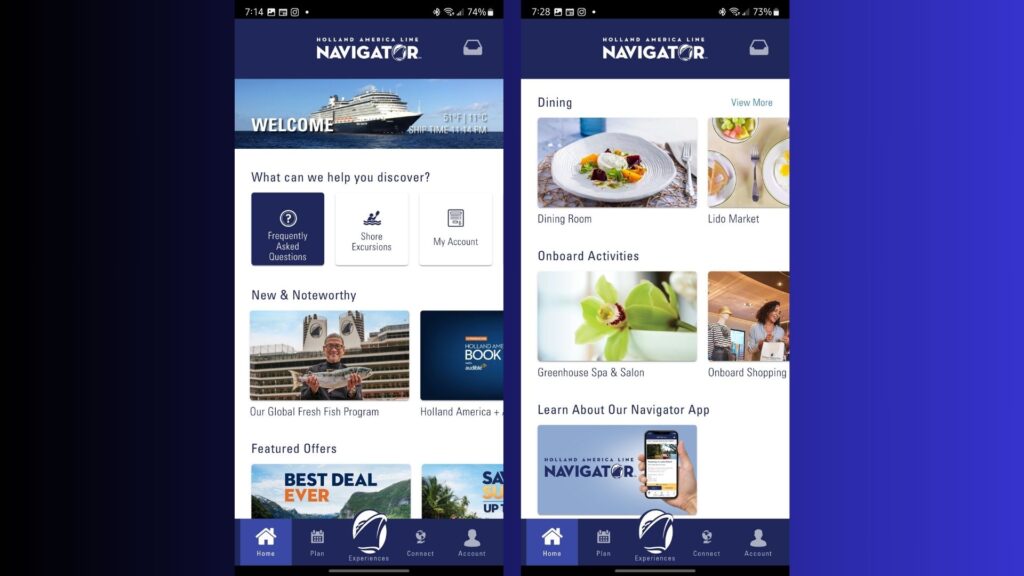
Cruise-line apps can provide schedules, ship maps, restaurant reservations, account information, and messaging features without requiring you to rely entirely on the same services you use at home.
Family members traveling together can use those tools to separate during the day without constantly searching the ship for one another.
Your phone settings matter just as much as the Wi-Fi package.
Leaving ordinary cellular roaming active at sea can expose you to maritime-network charges that operate differently from normal land-based roaming.
Turning off cellular data roaming and deliberately choosing when to connect can prevent an unpleasant surprise after the cruise.
Port days create another opportunity.
Local Wi-Fi, international mobile data, and destination-specific connectivity can be useful for calls, photo uploads, cloud backups, and other tasks that do not need to happen while the ship is at sea.
The goal is not to remain reachable every minute.
A simple communication plan can give family at home reassurance while letting you spend most of the cruise looking at the destination instead of your screen.
How Modern Cruise Ships Keep You Connected Across the Ocean
Gone are the days when being at sea meant being completely off the grid.
Today’s cruise ships are floating cities, equipped with cutting-edge technology to keep passengers connected no matter how far from shore they are.
Cruise lines are investing heavily in infrastructure, ensuring passengers can access the internet, make calls, and use messaging services seamlessly.
Let’s dive into some of the ways cruise ship connectivity has transformed modern travel.
Harness Satellite Power to Stay Online at Sea
Cruise ships use advanced satellite technology to enable internet access and other communication services.
Unlike older systems, modern ships are equipped with faster, more reliable satellite connections.
Companies like Starlink and other next-generation providers have revolutionized internet speed at sea, making it possible to stream videos, participate in video calls, and even handle work-related tasks while onboard.
While these advancements come with a cost, the technology ensures you’re not entirely cut off from the world.
Unlock Your Dream Cruise with Exclusive Online Deals!

Find Reliable Wi‑Fi Anywhere Onboard Your Cruise
Today’s cruise ships feature multiple Wi-Fi hotspots scattered throughout public areas, cabins, and even outdoor decks.
These hotspots allow passengers to stay connected from virtually anywhere onboard.
Whether you’re relaxing in your stateroom, enjoying a coffee at a lounge, or sunbathing by the pool, you can access the ship’s internet services.
Some ships even offer dedicated coworking spaces for remote workers, enhancing connectivity options further.
Choose the Right Internet Plan to Match Your Cruise Needs
Cruise lines offer tiered internet plans designed to meet various needs.
Basic plans may cater to light users who only need to send emails or browse social media, while premium packages are ideal for those who need high-speed access for streaming, video calls, or online gaming.
Some ships provide family packages that allow multiple devices to connect simultaneously, making it easier for everyone in your group to stay online.
Researching and purchasing these packages before boarding can save you money and ensure smoother connectivity during your trip.
Enjoy Faster Speeds and Smoother Connections Onboard
Newer cruise ships are designed with enhanced onboard networks, reducing latency and improving bandwidth.
Unlike older vessels, which often had spotty and slow internet, these upgraded networks provide a more consistent and user-friendly experience.
This makes it possible for passengers to share real-time updates, upload photos, and stay connected to loved ones without constant interruptions.

Grab Your Ticket to Paradise with These Deals!
Use Messaging and Planning Tools Built for Cruise Travelers
To streamline connectivity, many cruise lines now offer proprietary apps that integrate communication features with other onboard services.
For example, Carnival’s Hub App and Royal Caribbean’s Royal App not only allow messaging between passengers but also provide access to daily schedules, dining reservations, and ship maps.
These apps eliminate the need to rely on external messaging services, ensuring you can stay in touch with your family onboard and back home with minimal hassle.
Benefit from Smarter Networks That Switch Seamlessly
Some cruise lines are experimenting with hybrid connectivity systems that combine satellite and land-based networks.
This is particularly beneficial for cruises that hug coastlines, as the ship can switch between satellites and terrestrial towers for faster speeds.
Hybrid systems provide more stable connections and often result in better service quality at a lower cost for passengers.
Unlock the Power of 5G for Staying Connected on Cruises
As 5G technology becomes more widespread, some cruise lines are beginning to incorporate it into their connectivity offerings.
While still in the early stages, 5G networks at sea promise ultra-fast speeds and reduced lag times, rivaling what you might experience on land.
This development will likely make staying connected even easier and more seamless in the near future.
By combining these technologies and services, cruise ships have transformed into hubs of connectivity, allowing passengers to stay in touch with family, friends, and even work responsibilities while exploring the open ocean.
With so many options available, it’s easier than ever to maintain that important lifeline back home.
Click for Exclusive Offers on Top Cruise Lines!

Smart, Simple Ways to Keep Loved Ones Updated While Cruising
1. Set Communication Expectations
Before your cruise, discuss how often you’ll check in with your family.
Whether it’s a daily text or a quick call every few days, setting expectations helps avoid misunderstandings and keeps everyone informed.
Knowing your plan can also help your family avoid unnecessary worry if they don’t hear from you immediately.
It can also give you peace of mind to focus on enjoying your trip without feeling pressured to constantly check in.
For added organization, consider creating a simple schedule with specific times you’ll attempt to connect based on your itinerary and expected connectivity.
2. Take Advantage of Port Days
When the ship docks, take the opportunity to use local Wi-Fi.
Many cafes and restaurants near cruise ports offer free or inexpensive internet access, making it a great time to call or video chat with your family.
This is also a good time to download any large files or media you might want to use onboard.
For an added bonus, consider researching reliable Wi-Fi spots at your destinations before you leave home to maximize your connectivity time.
Apps like WiFi Map can help you identify locations with free or low-cost internet in advance.
3. Schedule Communication Times
Time zones can be tricky while cruising, especially if you’re traveling internationally.
Plan specific times to communicate with your family to ensure they’re available when you call or message.
Using a world clock app can help you keep track of the time differences.
This strategy is particularly helpful for parents wanting to check in with kids or for staying in touch with older family members who may have a more structured daily routine.
Consider establishing a backup plan, such as sending an email update if a live conversation isn’t possible due to timing issues.

Experience Luxury Cruises at Unbeatable Prices Today!
4. Share Your Itinerary
Provide your family with a copy of your cruise itinerary.
This way, they’ll know where you are and can anticipate when you’ll have better connectivity.
It also gives them peace of mind knowing your schedule.
You can also include port arrival and departure times so they know when you’re likely to have service.
Sharing your itinerary can also help family members feel more engaged in your journey, as they’ll know exactly where you are.
Additionally, consider including emergency contact information for the cruise line or port agents for added reassurance.
5. Use Offline Messaging Apps
Some messaging apps, like WhatsApp or Facebook Messenger, allow you to draft messages offline that will send automatically once you’re back online.
This feature is perfect for staying connected without needing constant Wi-Fi access.
These apps can also be used to share photos or videos once you reconnect.
Additionally, you can prepare updates or journals in offline apps and share them in bulk when you find a stable connection.
Don’t forget to enable any app features that let you compress photos or videos before sending them to save on data usage and upload time.
6. Share Media Creatively
If direct communication isn’t always possible, consider alternative ways to share your journey with loved ones.
You could pre-record short video updates on your phone and upload them during a strong connection.
Similarly, curate photo albums or write blog-style posts that summarize your adventures, which you can share all at once when internet access is available.
This approach helps maintain a personal touch while accommodating limited connectivity.
7. Use Cloud Storage
Apps like Google Drive or Dropbox can be a lifesaver for sharing larger files.
Upload your photos or videos to the cloud during port days or when the ship’s internet is stable, and share the link with family members.
This way, you don’t need to worry about slow uploads when time is tight.
By using these strategies, you can maintain meaningful connections with your family, ensuring they feel part of your adventure without sacrificing the relaxation and excitement of your cruise.
Budget‑Friendly Communication Tips Every Cruise Traveler Can Use
While communication at sea can be pricey, there are ways to keep costs down:
- Pre-purchase Wi-Fi Packages: Many cruise lines offer discounts on Wi-Fi plans if purchased before boarding.
Booking in advance can save you up to 20%, and some lines even offer promotions where Wi-Fi packages are included with higher-tier bookings or suite upgrades.
Research any early-bird deals or package bundles that combine Wi-Fi with other perks, like dining or beverage packages.
- Use Free Wi-Fi in Ports: Local cafes, libraries, or shopping centers near cruise terminals often offer free or inexpensive Wi-Fi.
Apps like WiFi Finder can help you locate these spots in advance, saving you time during port visits.
For frequent travelers, portable Wi-Fi devices or hotspots that work internationally might also be a worthwhile investment.
- Turn Off Data Roaming: To avoid expensive roaming charges, disable data roaming on your phone before your cruise begins.
Instead, rely on shipboard Wi-Fi or local networks when in port.
Be sure to download offline maps or apps before your trip to help you navigate without using data.
- Stick to Text Messaging: Texting can be a cost-effective option for staying in touch.
Many roaming plans offer unlimited texting, even while on a cruise.
Apps like WhatsApp, iMessage, or Facebook Messenger work well for this, especially when paired with a basic Wi-Fi package.
- Consider Group Packages: Some cruise lines allow passengers to share a single Wi-Fi package among family members, which can significantly lower the overall cost.
Group packages are especially useful for larger families or friends traveling together.
- Limit Data Usage: Reduce data usage by disabling automatic app updates, syncing, or photo backups while connected to the ship’s Wi-Fi.
Use data-efficient modes on apps like Instagram or Facebook to minimize consumption.
- Download Before Departure: Download books, movies, podcasts, and other media before your trip.
This minimizes the need for streaming or large downloads while on the ship, reducing your reliance on costly internet plans.
By planning ahead and taking advantage of these tips, you can stay connected with loved ones without overspending, ensuring you enjoy your trip while keeping communication stress-free.
Creative Ways to Share Your Cruise Journey Without Wi‑Fi
If staying constantly connected isn’t essential, consider these alternatives to keep your family updated:
- Send Postcards: Many cruise ports have charming local post offices where you can send a postcard home.
It’s a thoughtful, tangible way to share your journey.
Personalized notes from unique destinations add a special touch and become keepsakes for your loved ones.
- Use Social Media Updates: Post updates on your social media profiles when you have Wi-Fi access.
This way, multiple family members can follow your adventures without needing direct communication.
Create photo albums or short videos to share highlights of your trip.
Consider tagging locations or adding captions to make your posts even more engaging.
Protect Your Data While Using Cruise Ship and Port Wi‑Fi
It’s important to prioritize security when using public or ship Wi-Fi. Here are some tips to protect your data:
Use a VPN: A virtual private network (VPN) encrypts your connection, keeping your personal information secure.
- Advantages of Using Incogni VPN: Incogni VPN goes beyond traditional VPNs by also offering privacy-focused features that help remove your personal data from online brokers.
This is an excellent choice for travelers who value privacy and want to reduce their online footprint.
Its seamless encryption ensures secure browsing on public networks like those in cruise terminals and ports, while its intuitive interface makes it easy to use, even for non-tech-savvy users.
- Advantages of Using NordVPN: NordVPN is renowned for its lightning-fast speeds and robust global server network, making it a fantastic choice for streaming, video calls, and general browsing while at sea.
It also offers advanced security features, like Double VPN and Threat Protection, to safeguard your data.
Its compatibility with multiple devices allows everyone in the family to stay protected, whether on their smartphones, tablets, or laptops.
Avoid Logging into Sensitive Accounts: Refrain from accessing banking apps or other sensitive accounts while using public Wi-Fi.
Save these tasks for when you’re on a secure, private network.
Log Out After Use: Always log out of apps or accounts once you’re done using them.
This minimizes the risk of unauthorized access if someone else uses the same network.
Connection at Sea Brings Peace of Mind and Shared Joy
Staying in touch with family while cruising is about more than just checking in.
It’s about sharing your experiences, staying informed about events back home, and ensuring peace of mind for everyone involved.
Whether you’re sharing photos of a stunning sunset or updating loved ones on your arrival at a new port, staying connected adds an extra layer of enjoyment to your journey.
It also creates opportunities for your family to feel involved in your trip, even from afar.
For parents, sharing updates can also be a way to reassure kids that you’re safe and having fun.
Stay in Touch Without Missing the Magic Moments of Your Cruise
Contacting family on cruises doesn’t have to be complicated or expensive.
With the right tools and a bit of planning, you can enjoy seamless communication at sea.
Remember to explore all the options available, from Wi-Fi packages to messaging apps, and choose what works best for your needs.
Consider mixing real-time communication with creative updates like postcards or social media posts to keep things fresh and engaging.
By staying in touch, you can fully enjoy your cruise while keeping your family close, no matter how far you’ve traveled.
FAQ – How Can You Stay Connected on a Cruise Without Overspending or Missing the Vacation?
How Reliable Is Wi-Fi on Modern Cruise Ships?
Cruise internet has improved substantially as ships have adopted faster satellite systems and upgraded their onboard networks.
Passengers can often message, browse, use social media, upload photos, and complete other everyday online tasks from cabins and public areas.
Performance can still vary according to the ship, satellite coverage, weather, location, network congestion, and the plan you purchase.
Expect improvement over older cruise internet without assuming the connection will always behave exactly like high-speed service at home.How Do Cruise Ships Get Internet Far from Land?
Cruise ships primarily rely on satellite connections when they are away from terrestrial networks.
Modern satellite systems can provide significantly more bandwidth than earlier generations of maritime internet technology.
Some ships can also use land-based networks when operating close enough to shore.
The network may shift between available connections without passengers needing to manage the underlying technology themselves.Which Cruise Wi-Fi Package Should You Buy?
Choose the lowest tier that comfortably supports what you expect to do.
Messaging, email, and light browsing generally require less bandwidth than video calling, streaming, gaming, or large file transfers.
Families should also check whether the cruise line offers packages covering multiple devices or users.
Paying for maximum speed makes little sense when your only goal is sending a few messages each day.Is It Cheaper to Buy Cruise Wi-Fi Before Sailing?
It often can be.
Cruise lines frequently offer advance-purchase pricing or package promotions that may cost less than buying internet after embarkation.
The amount saved varies by cruise line and sailing, so compare the pre-cruise price with the stated onboard rate before purchasing.
Buying early can also remove one more decision from embarkation day.Can You Message Family Members on the Ship Without Buying Full Internet?
Sometimes.
Cruise-line apps may include onboard messaging that allows passengers on the same ship to communicate through the vessel’s internal network.
Carnival’s HUB App and Royal Caribbean’s app are examples of platforms that combine communication with schedules, reservations, maps, and other cruise functions.
Features and possible messaging fees vary, so check the app for your exact cruise line before sailing.Should You Turn Off Data Roaming on a Cruise?
Yes, unless you specifically understand and intend to use your carrier’s maritime roaming service.
Phones can connect to cellular networks at sea that may carry charges very different from ordinary domestic or international roaming.
Turning off cellular data roaming helps prevent background apps from generating unexpected usage.
You can then deliberately use ship Wi-Fi or reconnect to an appropriate cellular network when you reach port.What Is the Best Way to Keep Family at Home Updated During a Cruise?
Set expectations before you leave.
Tell family whether you expect to send a daily message, check in after port visits, make occasional calls, or communicate only when something important happens.
Sharing your itinerary can also help them understand where you are and why you may be unavailable at certain times.
That simple plan reduces pressure on you and unnecessary concern at home when connectivity becomes inconsistent.How Can You Handle Time Zone Changes When Calling Home?
Choose communication times based on both your ship’s current time and the time where your family lives.
A world-clock feature on your phone can make that easier when the cruise crosses several time zones.
Agreeing on a general window before sailing can prevent missed calls and inconvenient late-night messages.
Keep a backup option, such as email or asynchronous messaging, for days when a live conversation does not work.Can You Use WhatsApp, iMessage, or Facebook Messenger on a Cruise?
Usually, if your internet package supports the service you want to use.
Text-based messaging requires relatively little data, while voice calls, video calls, photos, and videos require progressively more bandwidth.
Some apps let you draft messages while offline and send them automatically once your device reconnects.
That can be useful when you prefer intermittent connectivity instead of remaining online throughout the day.Is Port Wi-Fi a Good Alternative to Cruise Internet?
It can be useful when you only need stronger connectivity occasionally.
Cafes, restaurants, hotels, shopping areas, libraries, and other locations near cruise ports may offer Wi-Fi.
Port connections can be convenient for video calls, photo uploads, software updates, or downloading larger files.
Treat unfamiliar public networks cautiously and avoid assuming that free access means the connection is private or secure.How Can You Reduce Data Use on a Cruise?
Download movies, podcasts, books, maps, documents, and other large files before embarkation.
Disable automatic app updates, unnecessary background syncing, and automatic photo or video backups while using limited ship internet.
Lower-data settings in social-media and streaming apps can also reduce bandwidth consumption.
Saving large uploads for a stronger connection in port can make a basic onboard plan go much farther.Can You Work Remotely from a Cruise Ship?
Sometimes, but the type of work matters.
Email, messaging, document editing, and many cloud-based tasks can be practical when the ship has a strong connection and you purchase an appropriate internet plan.
Frequent video conferencing, large transfers, or work requiring uninterrupted low-latency connectivity carries more risk because maritime internet conditions can change.
Download important files beforehand and keep offline copies of anything you cannot afford to lose access to.How Can You Share Cruise Photos Without Constant Wi-Fi?
Take photos and videos normally, then upload them in batches when you have a stronger connection.
Port days can be useful for larger uploads or cloud backups.
You can also prepare albums, messages, or short video updates offline and send them later.
That approach lets you document the trip without spending every scenic moment waiting for a file to upload.How Can You Use Cruise and Port Wi-Fi More Safely?
Avoid treating an unfamiliar network as completely private simply because it requires a password.
Keep your devices updated, use secure websites and apps, and consider a reputable VPN when using public networks.
Avoid unnecessary financial or other highly sensitive transactions when you do not trust the connection.
Logging out of important accounts after use and keeping device security features enabled adds another layer of protection.
Plan Your Next Cruise!

Sail Into Timeless Luxury: Cunard Cruises for Transatlantic Elegance and Destination‑Rich Voyages
One Delay Can Cost Your Entire Cruise A quick coverage check now protects you from the problems no one sees coming….

Unlock The Viking Ocean Experience: Elegant Ships, Cultural Immersion, And Unrushed Travel
One Delay Can Cost Your Entire Cruise A quick coverage check now protects you from the problems no one sees coming….

Discover Princess Cruise Line: Elegant Ships, Immersive Voyages, and World‑Class Experiences
One Delay Can Cost Your Entire Cruise A quick coverage check now protects you from the problems no one sees coming….

Experience the Ultimate Vacation with Carnival Cruise Line’s Fun Ships, World‑Class Entertainment, and Relaxation
One Delay Can Cost Your Entire Cruise A quick coverage check now protects you from the problems no one sees coming….
Explore More
Discover Princess Cruise Line: Elegant Ships, Immersive Voyages, and World‑Class Experiences

Stay Online at Sea: Cruise Wi‑Fi Plans, Streaming Speeds, and Smart Savings
Unlock a Stress-Free Cruise Start with Smart Check-In, Arrival Timing, and Health Screening