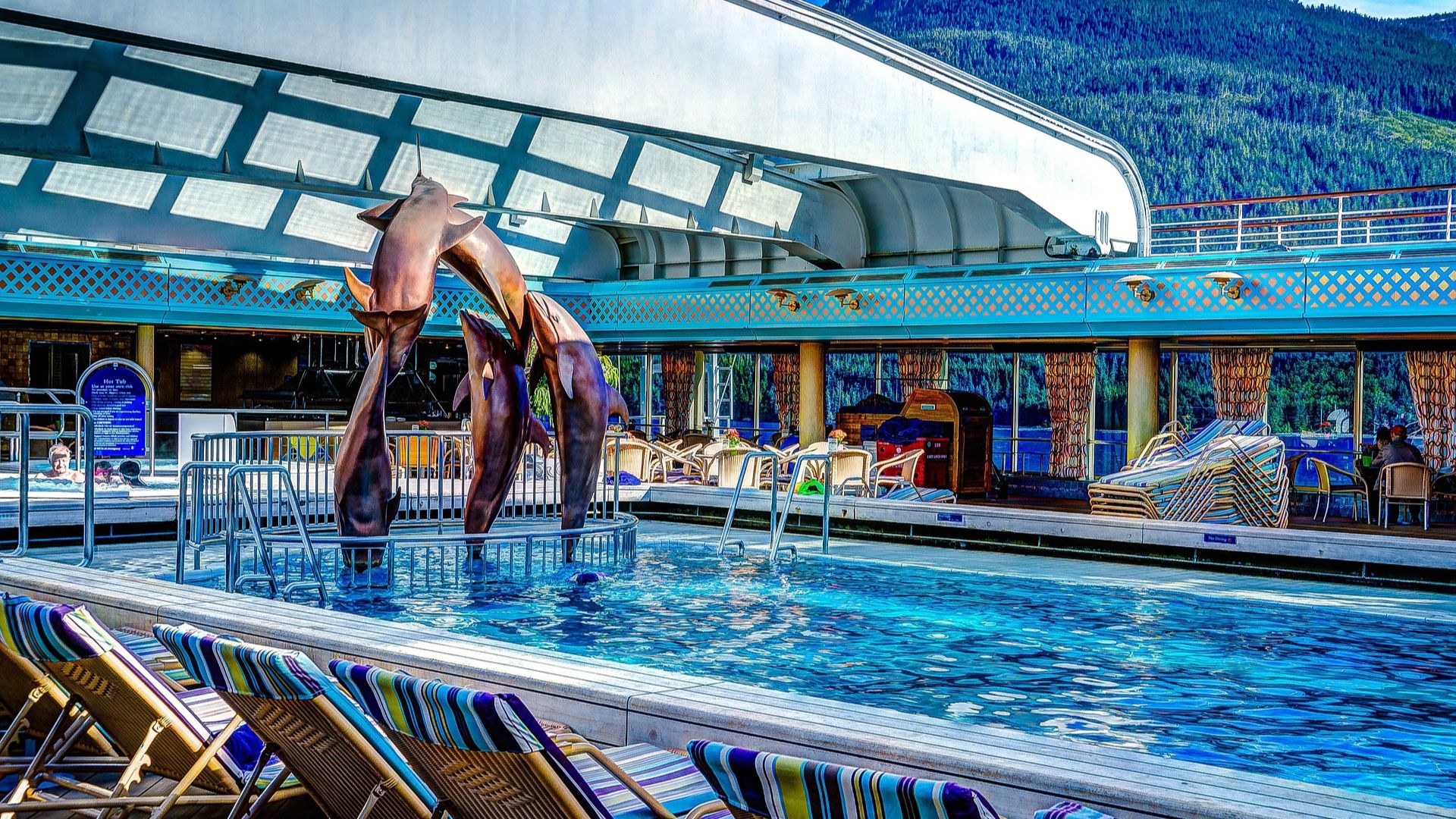
Cruise ship pools are more than just a place to cool off—they’re an experience shaped by the water beneath the surface.
Saltwater pools connect you to the ocean with gentle buoyancy and a softer feel on the skin.
Freshwater pools offer familiar comfort, crystal clarity, and easier maintenance for the crew.
Knowing the difference between these two pool types helps you choose the swim that matches your travel style and comfort preferences.
Discover Cruise Lines with Saltwater Pools for an Ocean‑Inspired Swim
Several cruise lines still use saltwater in their pools.
These are often older or smaller ships.
Some notable examples include:
- Carnival Cruise Line: On some older ships, you will find saltwater pools.
- MSC Cruises: MSC has used saltwater in the pools of many of its ships.
- Costa Cruises: Some Costa ships have saltwater pools.
While these cruise lines offer saltwater pools, most new ships now come with freshwater options.

Experience Luxury Cruises at Unbeatable Prices Today!
Find Cruise Lines Offering Freshwater Pools for Familiar Comfort
Most cruise lines today offer freshwater pools, especially on newer ships. These lines include:
- Royal Caribbean: All Royal Caribbean ships offer freshwater pools.
- Norwegian Cruise Line: Freshwater pools are standard across their fleet.
- Celebrity Cruises: The pools on Celebrity ships are freshwater.
- Princess Cruises: All Princess ships have freshwater pools.
Freshwater pools are often preferred because they are more appealing to the majority of passengers.
Learn Why Some Cruise Ships Use Saltwater Pools for Eco‑Friendly Comfort
Saltwater pools were historically common on cruise ships because of the ship’s natural access to seawater.
The process is simple: seawater is pumped in, filtered, treated for safety, and then added to the pool.
Using seawater for pools has two primary advantages: it reduces the need to carry and store large amounts of freshwater, and it allows the cruise ship to make use of the vast resources of the ocean surrounding it.
These saltwater pools undergo a chlorination process via electrolysis.
The saltwater is passed through a machine that converts some of the salt into chlorine.
This method produces chlorine at a lower concentration than traditional methods, leading to a softer feel on the skin.
Electrolysis reduces the need to add harsh chemicals directly to the pool water, making the swimming experience more pleasant for passengers.
Many cruise lines with saltwater pools see this as a more eco-friendly approach, using a naturally available resource while avoiding the excessive use of artificial chemicals.
See Why Cruise Ships Choose Freshwater Pools for Passenger Comfort
As technology advanced and passenger preferences shifted, more cruise lines began to offer freshwater pools on their ships.
Freshwater pools tend to be more comfortable for passengers, as they’re less likely to cause skin or eye irritation.
This shift toward freshwater pools is largely a response to modern expectations for luxury and comfort.
Freshwater pools are generally treated with traditional methods involving chlorine and other chemical compounds.
These chemicals are closely monitored to maintain the perfect balance for hygiene and comfort.
Many passengers are more familiar with this type of water, as most public pools, hotel pools, and backyard pools are freshwater.
The maintenance of freshwater pools has also improved over the years.
Cruise ships are equipped with advanced filtration and monitoring systems that keep the pool water clean and safe throughout the voyage.
Despite the initial need to store freshwater, cruise lines have developed efficient water recycling systems to ensure that water consumption is minimized.
Click for Exclusive Offers on Top Cruise Lines!
Understand the Technical Differences Between Saltwater and Freshwater Cruise Pools
At the core, the differences between saltwater and freshwater pools come down to how the water is treated and maintained.
Let’s look at the technical distinctions:
Chlorination Process:
- Saltwater Pools: These rely on a salt-chlorination system.
Salt is dissolved in the pool water, and electrolysis generates chlorine from the salt.
The resulting chlorine concentration is usually lower than in freshwater pools, leading to a milder swimming experience.
- Freshwater Pools: These pools require the direct addition of chlorine and other chemicals to maintain water quality.
The chemical balance is monitored regularly, as chlorine dissipates over time and needs replenishment.
Filtration Systems:
- Both types of pools rely on filtration systems to keep the water clean.
However, saltwater pools can present more challenges due to the corrosive nature of salt, which can damage pool equipment and ship infrastructure over time.
Cruise lines must use specialized materials and filtration systems that can withstand the constant exposure to salt.

Grab Your Ticket to Paradise with These Deals!
Resource Usage:
- Saltwater pools eliminate the need to carry large quantities of freshwater, reducing the overall burden on the ship’s water supply.
Freshwater pools, on the other hand, require cruise ships to store and manage water more efficiently.
However, modern filtration and water recycling systems on ships mitigate these issues, allowing for sustainable freshwater usage.
Enjoy the Benefits of Saltwater Pools on Your Cruise
Saltwater pools offer unique benefits that attract certain passengers, and these perks are why some cruise lines still use them on select ships:
- Gentler on the Skin and Eyes: Saltwater pools have a lower chlorine concentration, which means the water is less likely to cause irritation.
Passengers with sensitive skin or allergies often prefer saltwater pools because they feel softer and more natural on the skin.
- Buoyancy: The salt content in these pools makes the water denser, which means swimmers feel more buoyant.
This can make floating and swimming easier, giving passengers a feeling of weightlessness that is enjoyable for relaxation.
- Connection to the Ocean: Saltwater pools allow passengers to experience the sensation of swimming in the ocean without the discomfort of strong currents, marine creatures, or seaweed.
The water comes directly from the sea, filtered and treated, offering a unique link to the environment outside.
- Eco-Friendliness: Since saltwater pools use less artificial chlorine, they may be perceived as more environmentally friendly.
The electrolysis process produces a gentler form of chlorine, and some cruise lines view this as a sustainable approach to pool maintenance.
Unlock Your Dream Cruise with Exclusive Online Deals!

Know the Downsides of Saltwater Pools Before You Swim
Despite their advantages, saltwater pools have some drawbacks that passengers and cruise lines must consider:
- Salt’s Effect on Swimwear and Skin: Prolonged exposure to saltwater can wear out swimwear more quickly than freshwater.
Salt may also leave a slight residue on the skin, which some people find uncomfortable.
Rinsing off after swimming is necessary to remove the salt.
- Corrosion and Maintenance: Saltwater can be corrosive, particularly to metal surfaces.
Ships with saltwater pools need to invest in higher levels of maintenance to prevent rust and damage to the pool deck, railings, and other materials exposed to the water.
- Complex Filtration Needs: The filtration systems for saltwater pools must be robust and regularly cleaned to prevent salt buildup.
This adds another layer of complexity to the maintenance of the ship, and cruise lines must ensure the equipment is designed to handle constant exposure to salt.
- Availability of Saltwater Pools: As more cruise lines transition to freshwater pools, saltwater pools are becoming less common, especially on new ships.
Passengers who prefer saltwater may need to research and choose older vessels or lines that still offer this option.
Discover Why Freshwater Pools Are Popular on Modern Cruise Ships
Freshwater pools have become the standard on many modern cruise ships, offering a more familiar experience for passengers who are accustomed to swimming in traditional pools.
- Passenger Comfort: Freshwater pools feel more like the pools people are used to back home.
They don’t leave the salty residue or cause as much wear on swimwear, making them ideal for families and casual swimmers.
- Ease of Maintenance: Freshwater pools are easier for cruise lines to maintain.
Filtration systems and chemical monitoring have become more advanced, allowing cruise staff to keep the water clean, safe, and balanced throughout the trip.
- Hygiene and Safety: Freshwater pools offer better control over water cleanliness.
The ability to quickly adjust chemical levels makes it easier to ensure the pool is safe for passengers, reducing the risk of skin irritation or waterborne illnesses.
- Wider Availability: Most new cruise ships feature freshwater pools.
Passengers who prefer freshwater pools will find them on the majority of modern vessels, especially on major cruise lines like Royal Caribbean, Norwegian Cruise Line, and Princess Cruises.
Compare Environmental Impacts of Saltwater and Freshwater Cruise Pools
Both saltwater and freshwater pools have environmental impacts, but these vary based on the resource management and maintenance practices used by the cruise line.
- Saltwater Pools: By using seawater, saltwater pools reduce the need for large freshwater reserves, which can be an advantage in terms of resource conservation.
However, the equipment needed to maintain saltwater pools is energy-intensive, and the corrosive nature of salt can lead to frequent repairs and replacements.
- Freshwater Pools: Freshwater pools require more initial resources since the ship needs to carry enough water to supply passengers, showers, and pools.
Modern ships use efficient filtration and water recycling systems to minimize waste, ensuring that freshwater use is sustainable.
In terms of chemical use, saltwater pools require fewer harsh chemicals, which may make them more eco-friendly in that regard.
However, the extra maintenance and potential damage from salt can negate these benefits.
Learn How to Tell If a Cruise Pool Is Saltwater or Freshwater
Yes, you can usually tell if a pool is saltwater or freshwater through a few key indicators:
- Taste: Saltwater pools will have a slight salty taste, although it’s much less pronounced than swimming in the ocean.
- Feel of the Water: Saltwater pools feel softer on the skin and tend to be more buoyant than freshwater pools.
The water may have a slightly different texture.
- Residue: After swimming in a saltwater pool, you may notice a light salt residue on your skin and swimwear.
Most cruise ships will label their pools or mention whether they are saltwater or freshwater in their onboard literature.
You can also ask a crew member if you’re unsure.
Find Your Perfect Cruise Pool for the Ultimate Swim Experience
Cruise ship pools can be either saltwater or freshwater, and each type offers its own set of benefits and drawbacks.
Saltwater pools provide a unique connection to the ocean, with gentler water and less chlorine, but they can be harsher on swimwear and require more maintenance.
Freshwater pools, on the other hand, are more familiar and easier to maintain, making them a popular choice on most modern cruise ships.
Understanding the difference between the two can help you choose the right cruise experience for your preferences.
Whether you prefer the buoyancy of saltwater or the comfort of freshwater, there’s a perfect pool waiting for you on your next voyage.
FAQ – Choosing the Right Cruise Pool Experience
What are the main differences between saltwater and freshwater cruise pools?
Saltwater pools use ocean water that’s filtered and treated onboard.
Freshwater pools rely on stored water and traditional chemical treatments.
Saltwater pools feel softer and offer more buoyancy.
Freshwater pools are more familiar and easier to maintain.
Understanding these differences helps you choose the pool that fits your comfort and travel style.Which cruise lines still offer saltwater pools?
Saltwater pools are found on select ships from Carnival, MSC, and Costa Cruises.
These are typically older or smaller vessels that use ocean water for convenience.
Passengers who prefer saltwater should check ship details before booking.
Saltwater pools offer a unique connection to the sea but are less common on newer ships.Why are freshwater pools more common on modern cruise ships?
Freshwater pools are easier to maintain and more comfortable for most passengers.
They don’t leave salty residue and are gentler on swimwear and skin.
Cruise lines like Royal Caribbean, Norwegian, and Princess use freshwater across their fleets.
Freshwater pools align with modern expectations for hygiene and luxury.Can saltwater pools cause damage to cruise ship equipment?
Yes, saltwater is corrosive and can wear down metal surfaces and filtration systems.
Cruise ships with saltwater pools require specialized materials and frequent maintenance.
This adds complexity and cost, which is why many lines prefer freshwater systems.
Understanding this helps passengers appreciate the engineering behind onboard amenities.How can I tell if a cruise pool is saltwater or freshwater?
Saltwater pools feel softer and more buoyant.
You may notice a light salty taste or residue on your skin.
Freshwater pools feel more familiar and leave no residue.
Most cruise lines label their pools, or you can ask a crew member for details.
Knowing the difference helps you choose the pool that suits your preferences.
Plan Your Next Cruise!

Sail the World in Style: MSC Cruises’ Innovative Ships, Luxury Amenities, and Global Adventures
MSC Cruises delivers a modern, elegant cruise experience that blends cutting‑edge ship design with world‑class entertainment and dining. From the LED‑sky…

Sail Boldly: Experience Virgin Voyages’ Adults‑Only Cruises With Style, Freedom, And Fun
Virgin Voyages is rewriting the rules of cruising with ships designed exclusively for adults who crave style, freedom, and unforgettable experiences….

Experience the Perfect Blend of Disney Magic, Luxury Cruising, and Family Adventure at Sea
Disney Cruise Line transforms every voyage into a seamless blend of luxury cruising and beloved Disney storytelling. Each ship in the…

Sail Into Timeless Luxury: Cunard Cruises for Transatlantic Elegance and Destination‑Rich Voyages
Cunard Cruises blends the romance of classic ocean liners with the sophistication of modern luxury travel. Each voyage offers a seamless…
Explore More

From Priority Boarding to Private Lounges: Inside Cruise Concierge Perks

Sail Without Limits: Wheelchair‑Accessible Cruise Ships That Deliver Comfort and Independence

Cruise Cabin Noise Levels — What to Expect and How to Sleep Better