

One Delay Can Cost Your Entire Cruise
A quick coverage check now protects you from the problems no one sees coming
Short Excerpt
- Lost luggage on a cruise is often a delivery delay or misplaced suitcase rather than a permanent loss.
- Knowing when to contact Guest Services and what information to provide can help locate your bag faster.
- A well-packed carry-on, proper documentation, and a recovery plan can protect your first night and simplify follow-up.
Quick Take
- Check for delivery delays first. Checked luggage may arrive several hours after embarkation.
- Report missing bags to Guest Services with a description, identifying details, and a suitcase photo if available.
- Keep essentials in your carry-on so you can enjoy your first evening without your checked luggage.
- Document purchases and communications in case you need to submit a reimbursement claim.
- Follow up before disembarkation if your suitcase remains missing, and obtain instructions for continued recovery.
What to Do First When Your Cruise Luggage Doesn’t Arrive
Discovering that your suitcase has not arrived at your cabin can quickly overshadow the excitement of boarding a cruise ship.
However, the most important decision is not how urgently you search for the bag.
It is determining when the delay requires action and who is responsible for helping you resolve it.
Cruise luggage follows a different delivery process than airline baggage.
After porters accept checked suitcases at the terminal, bags must pass through security screening, sorting, transportation, and distribution to individual staterooms.
This process can continue well after passengers have boarded and started exploring the ship.
Your suitcase arriving later than expected does not automatically indicate a problem.
Delivery times vary by cruise line, ship, and embarkation conditions, so the absence of your bag early in the afternoon may simply reflect normal operations.
Rather than relying on an arbitrary deadline, ask your cabin steward or Guest Services when checked luggage is expected to reach your stateroom.
Their guidance can help you distinguish a routine delay from a situation that deserves immediate attention.
There is one important exception.
When essential medication, medical equipment, or another urgently needed item is inside a missing suitcase, contact Guest Services and the ship’s medical team promptly rather than waiting for the usual delivery window.
Essential medication and irreplaceable medical supplies should normally remain in your carry-on.
Another distinction involves where the suitcase disappeared.
A bag handed to a cruise terminal porter may require coordination with the ship and terminal personnel, while luggage delayed by an airline remains subject to the airline’s baggage recovery process.
Identifying the responsible organization early can prevent wasted time and incomplete reports.
Most importantly, remember that the ship may leave port before every luggage concern has been fully resolved.
If your suitcase appears genuinely unaccounted for, request assistance before departure whenever possible.
Early communication gives the appropriate teams more opportunity to investigate while the terminal is still accessible.
These distinctions make it easier to decide whether to continue enjoying embarkation day, ask for an update, or begin a formal missing-luggage report.
Why Missing Cruise Luggage Feels Overwhelming and How to Regain Control
Lost luggage on a cruise feels overwhelming because the ship keeps moving even when your suitcase doesn’t.
You don’t need panic—you need a clear plan that protects your first night and speeds up recovery.
That spike of panic is normal on your first cruise, because you do not yet know what the ship can fix quickly and what takes time.
Here is the truth most experienced cruisers learn fast: many “lost luggage” moments are actually delays, mix-ups, or misdelivery that get corrected once the right people are involved.
A simple sequence keeps you from spending your first night running in circles and draining your energy.
Top Cruise Deals From Trusted Cruise Lines
Compare exclusive online offers and find the fare that fits your trip and your budget

You will focus on essentials, documentation, and clear communication so the ship can do its job.
You will also learn how to prevent this from feeling like a crisis next time with a carry-on strategy and smarter bag identification.
This guide gives you a step-by-step sequence, a reporting script, and a flowchart so you know exactly what to do if your bag goes missing.
Understand Cruise Luggage Delays Vs True Loss Before You Act
On embarkation day, the word “lost” gets used for two different situations that feel the same in the moment.
Situation one is delayed delivery, where the bag is onboard and moving through sorting, but it is not at your cabin yet.
Situation two is truly missing luggage, where the bag is unaccounted for or may be in the wrong place entirely.
Your first job is figuring out which situation you are in, because your next steps depend on it.
Delayed delivery often resolves later that afternoon or evening, especially on big turnaround days.
True missing luggage needs a paper trail immediately, because time and identifiers matter.
That distinction alone reduces stress, because you stop assuming worst case before you have evidence.
Lost And Found Basics
“Lost and found” on a cruise is not a single room where everything magically appears.
It is usually a coordinated workflow involving Guest Services, Security, and the team handling luggage delivery.
Items found in public areas are often logged by Security before they are released.
Items found in cabins are often routed through housekeeping, then recorded and transferred.
Bags without readable tags can be held until ownership is verified, because the ship needs certainty before releasing property.
That is why reporting quickly and accurately helps, because accuracy makes matching easier.
When someone says “check lost and found,” translate it as “start the formal tracking workflow.”
Ten Minute Reset
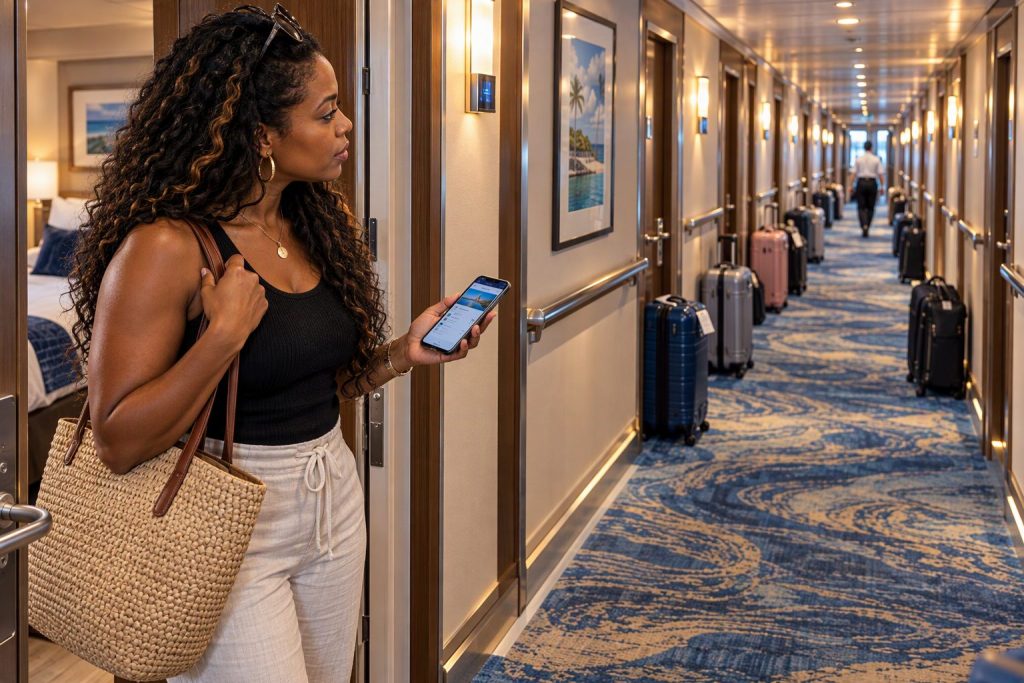
Start by checking your hallway and nearby doors, because misdelivery happens more than people admit.
Next, confirm your cabin number and luggage tag details, because a smudged or torn tag can slow sorting.
Then, open the ship app and locate Guest Services hours and location, because reporting at the correct desk matters.
After that, take a breath and shift from frustration into sequence, because sequence creates progress.
You are going to gather facts and hand them to the people who can locate the bag.
This is the moment to become organized, not apologetic.
Organization is what turns “panic” into “movement” on a ship.
Online‑Only Cruise Offers You Won’t Find Elsewhere
Unlock special pricing and start planning the sailing that matches your perfect itinerary

Confidence Anchor
Your suitcase being missing does not automatically mean your cruise is ruined.
It means you need an essentials plan for the next twelve to twenty-four hours.
Most ships are built to support guests through hiccups, because hiccups happen daily at scale.
Even with strong systems, occasional mix-ups still occur when thousands of bags move on the same day.
You can still enjoy sail-away, dinner, and shows without a perfect outfit.
You are going to protect your first night, and that protects the whole trip.
A steady plan is what experienced cruisers rely on when something goes sideways.
Keep It Real
Delayed delivery and true loss are different problems, and naming the difference gives you control.
Guest Services is usually the correct entry point for logging the issue and starting tracking.
A simple sequence protects your mood and saves time on the first night.
Follow These Embarkation Day Steps to Recover Your Bag Quickly
Embarkation day is loud, crowded, and full of distractions, which is exactly why you want a script.
The biggest mistake is wandering around asking random crew members who are not connected to luggage operations.
The strongest move is reporting the issue in the right place with the right identifiers, then shifting into essentials mode.
You are not being dramatic by reporting it, and you are not being difficult for wanting it logged.
You are creating the information package the ship needs to locate your bag quickly.
Once you do that, you stop chasing and let the process run.
That is how seasoned cruisers stay steady when something irritating happens.
Report It Right
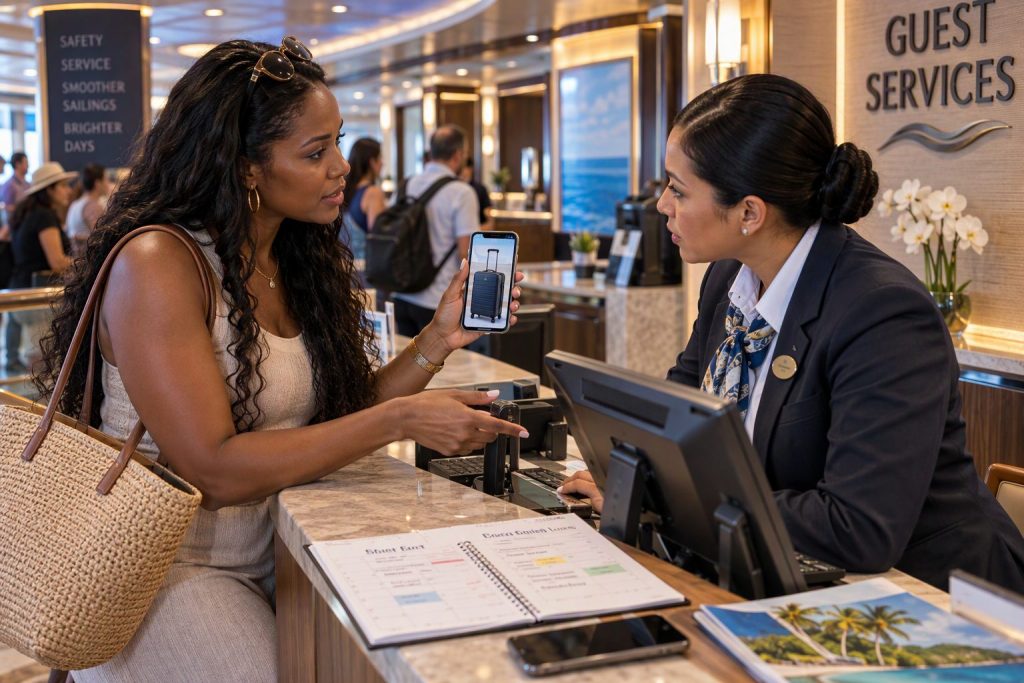
Go to Guest Services and state that your checked bag has not arrived at your cabin.
Provide your full name, cabin number, and the approximate time you boarded.
Describe the bag clearly, including brand, size, color, and distinct features, because generic descriptions slow matching.

Luxury Cruise Experiences at Smarter Prices
See premium sailings and upgraded cabins priced for travelers who know how to book well
Share whether you used porters, how many pieces you handed over, and whether you had printed luggage tags attached.
Mention any standout identifiers, such as a bright strap, ribbon, or sticker, because those help the team spot it quickly.
Ask for the case to be logged and request a reference number if they provide one.
Then ask whether this appears to be normal delayed delivery or an unlocated bag requiring escalation.
Use This Script
“I boarded at approximately [time], and my checked bag has not arrived at my cabin.”
“My cabin is [number], my name is [full name], and I had [number] bags with porters.”
“The bag is [color] [size] with [distinct marker], and it has [tag type] attached.”
“I would like to file a luggage delay report and confirm whether this is within normal delivery timing.”
“I also need guidance on essentials support if it does not arrive by tonight.”
That script keeps the conversation factual, and factual conversations get faster results.
If you have a photo of the bag on your phone, show it right away, because photos beat words.
Essentials Mode
After you report it, stop looping the ship looking for your suitcase.
Go to your cabin and build a simple night one plan using what you do have.
Choose an outfit that works for casual dining, even if it is not what you pictured.
Use your carry-on toiletries to reset, because a shower and fresh clothes change how you feel instantly.
Buy only the minimum onboard if you truly need it, because cruise shops can be pricey.
Save receipts for anything essential, because baggage delay coverage may reimburse essentials depending on your plan terms.
If you want to compare coverage that includes baggage delay or trip delay benefits before your next cruise, tools like VisitorsCoverage and Insubuy can make it easier to compare plan tiers side by side without opening ten tabs.
Protect Night One
A logged report activates tracking, and tracking works best when you provide clear identifiers.
Facts like time boarded, bag count, and unique markers matter more than emotion in the moment.
An essentials plan keeps your first evening enjoyable while the ship searches.
Use This Lost Luggage Flowchart to Stay Organized and Calm
Stress makes your brain jump ahead, which is why a flowchart helps.
A flowchart gives you a next step you can trust when you are tired from travel.
It also prevents a common first-timer mistake, which is escalating to the wrong place too early.
You will start with the most likely explanation and move toward the more serious possibilities.
That approach aligns with how baggage is processed onboard.
Clarity is the difference between wasting two hours and solving the issue in twenty minutes.
Use this as your steady map.
Lost Luggage Flowchart
| Situation | What It Usually Means | Your Next Move | Who Handles It | What To Ask For |
|---|---|---|---|---|
| Bag not in cabin by early afternoon | Sorting still in progress | Wait, then recheck later | Luggage team through Guest Services | Expected delivery window |
| Bag not in cabin by dinner | Possible misdelivery or delayed sweep | Report and log details | Guest Services | Reference number and follow-up time |
| Bag delivered to wrong cabin | Misdelivery | Ask hall steward, then report | Housekeeping and Guest Services | Pickup plan and confirmation |
| Bag never arrived on ship | Port handling issue | Report immediately with porter details | Guest Services and Security | Escalation steps and updates |
| Bag delayed by airline before cruise | Airline delay | File airline report, then inform ship | Airline plus Guest Services | Airline file number and timing |
| Bag found without readable tag | Identification needed | Provide photo and unique markers | Security and Guest Services | Proof of ownership steps |
Use It Onboard
Match your current reality to the left column, then do the next move exactly.
Ask for the item in the last column, because that creates clarity and accountability.
Write the details in your notes app, because memory gets unreliable when you are stressed.
Return at the follow-up time you were given, because consistent follow-up works better than frantic follow-up.

Sail Away to Paradise Without Overpaying
Find cruise deals that make it easy to escape, relax, and enjoy the ocean without stretching your budget
Persistent does not mean dramatic.
Persistent means organized and consistent.
That approach usually gets better outcomes.
If your luggage issue started with an airline delay, keeping your airline file number handy will make every conversation easier.
Flow With The Flowchart
Follow the sequence instead of escalating randomly, because systems respond to clean inputs.
Reference numbers, names, and times make follow-up smoother and faster.
A simple notes app log keeps your story consistent and credible.
Skip These Common Lost Luggage Mistakes and Save Time
Most luggage mistakes come from the same emotional impulse.
You want to fix it instantly, because it feels unfair and it interrupts your excitement.
That impulse is human, and it can lead to choices that slow down recovery.
A cruise ship is a system, and systems respond best to clear information, not scattered requests.
The good news is that avoiding mistakes is easy once you know what they are.
This section is your shortcut, so you do not have to learn the hard way.
You can protect your trip by skipping the common missteps.
Waiting Too Long
Many first-time cruisers wait because they do not want to be a bother.
Waiting can delay tracking if the situation is not a normal delivery lag.
Reporting is not accusing anyone.
Reporting is creating a timeline while details are still fresh.
Fresh details are easier to match against sorting logs and misdelivery patterns.
If a bag is found without a readable tag, early reports make identification faster.
A simple report is the right move.
Vague Descriptions
A surprising number of suitcases look identical on embarkation day.
Plain black bags without distinctive markers are the hardest to identify quickly.
If you do not have a photo, you are stuck with vague descriptions, and vague slows everything down.
Even one unique feature helps, such as a bright strap, a ribbon, or a bold sticker.
A Travelpro suitcase often stands out through design details and build quality, which can make identification easier than a generic lookalike bag.
If your bag is a common style, add a distinctive strap next time so it becomes memorable in a sea of similar luggage.
Photos plus distinctive markers are the easiest win you can give yourself.
Weak Carry On
Your carry-on is your first line of defense on a cruise.
Many beginners pack a carry-on like they are going to a hotel, which means their comfort items end up in the checked bag.
If the checked bag is delayed, the first night becomes unnecessarily stressful.
Pack your carry-on like it is day one and day two of your cruise.
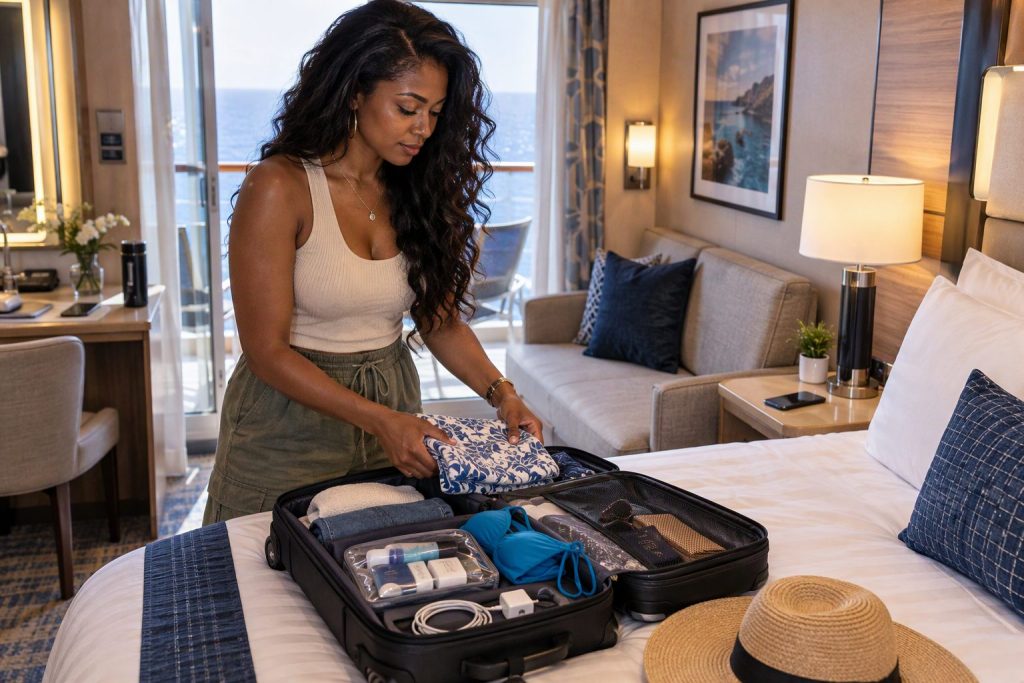
Include sleepwear, a change of clothes, swimwear, medication, chargers, and basic toiletries.
Add a simple charging setup you trust, because dead devices make everything feel harder.
If you connect to public Wi-Fi while tracking airline baggage or accessing your booking, NordVPN can help you protect your logins on shared networks in airports and port areas.
Learn The Shortcuts
Report early so the tracking workflow starts while details are fresh.
Make your bag recognizable with photos and distinct markers so matching becomes faster.
Pack two days in your carry-on so delays feel annoying, not catastrophic.
Replace Cruise Luggage Panic With Smart Recovery Steps
When your luggage is missing, your brain starts writing scary stories.
You worry you will miss formal night, look out of place, or spend too much replacing basics.
You worry the ship will shrug and move on, because you do not know how the internal process works yet.
Those fears are common, and most of them are bigger than the reality.
Reality is often delayed delivery, misdelivery, or an airline bag catching up later.
This section is here to help you stay steady and protect your enjoyment.
A steady traveler makes better choices, and better choices speed up recovery.
“I Will Miss Everything”
Even with a delayed bag, you can enjoy your cruise immediately.
Casual dining, pool time, shows, and most activities do not require special outfits.
Formal nights are optional on many ships, and plenty of guests participate in their own way.
Nobody is judging you the way your anxious brain imagines they are.
Your job is to get through the first evening, then let the system work.
When you focus on experiences instead of clothing, the trip starts feeling normal again.
Normal is what you are trying to recover, and you can recover it fast.
“I Will Spend A Fortune”
Yes, onboard shops can be expensive, which is why you should buy only essentials if you need to buy anything at all.
Start with what you need to sleep, shower, and feel comfortable.
Save receipts for essentials, because baggage delay benefits can reimburse eligible items depending on your plan terms.
If you want coverage that aligns with this kind of travel disruption, comparing plan tiers before your next sailing can help you choose benefits like baggage delay, trip delay, and interruption protection.
VisitorsCoverage and Insubuy are useful for side-by-side comparisons when you want to see how benefits change from basic to higher tiers without guessing.
World Nomads can be a helpful comparison point for travelers who want coverage framed for real travel disruptions and activities, especially if excursions are part of your cruise style.
EKTA is another option some travelers evaluate when travel medical structure is a priority and they want to weigh it alongside trip disruption features.
“Nobody Will Help Me”
Ships handle issues every day, and Guest Services exists for problems like this.
The key is being organized so they can act quickly.
Provide a clear description, a photo if you have it, and a timeline.
Keep your own notes with reference numbers, times, and who you spoke to.
Return for follow-up at the time you were given, because timing matters in workflow systems.
Ask for updates and stay factual, because factual persistence is effective.
That approach gets attention without conflict, and it keeps your energy intact.
Replace Fear With Steps
You can still enjoy day one because most cruise fun does not depend on one suitcase.
You can control spending by buying only essentials and keeping receipts for possible reimbursement.
You can get better results by being organized, consistent, and factual with follow-up.
What To Do If Your Cruise Luggage Is Still Missing at Debarkation
It is rare, but sometimes luggage issues follow you to debarkation.
This can happen when an airline never delivered the bag to port, or when a bag was routed incorrectly in a busy turnaround.
If the bag is still missing at the end, your goal becomes creating a clean trail that continues after the cruise.
Clean trails get resolved more often than messy stories.
You want names, dates, and case details from the ship.
You also want to align the airline report, if an airline is involved.
This is where being organized pays you back.
Close The Loop
Before you disembark, return to Guest Services and request final status.
Ask for written confirmation of the report if available, or at least the reference number and notes they have on the case.
Confirm the next point of contact and the instructions for post-cruise follow-up.
Ask whether the bag was ever scanned, found, or logged as misdelivered.
Request guidance on how found property is returned after the sailing.
Record that guidance immediately, because debarkation mornings blur together.
A simple notes app log is enough to keep your follow-up clean.
Align With Airlines
If an airline delay caused the issue, keep the airline file number front and center.
Make sure the cruise report references that file number if the ship is waiting on a delivery.
Consistency across records makes resolution easier and supports any claim paperwork you may need later.
If your disruption started with a flight delay or cancellation, Compensair can be relevant in some situations where compensation eligibility exists, depending on route rules and specifics.
That tool does not replace insurance, and it does not replace the ship’s process.
It can be one more recovery path when air travel was the trigger.
Recovery works best when you use the right tool for the right part of the problem.
That structure saves time and protects your energy.
Replace In Stages
If your bag is truly lost, replacing everything at once is rarely the smartest move.
Start with what you need for daily life, then replace specialty items based on real future needs.
Keep receipts and document replacement costs if you are pursuing reimbursement.
File claims promptly and follow the documentation checklist, because missing documentation slows everything down.
A simple folder on your phone is enough for photos, receipts, and reference numbers.
Order is your friend in this stage.
Order keeps you from feeling like the situation is expanding.
Finish With Clarity
A final status check onboard prevents you from leaving without a plan.
Aligned documentation across ship and airline records supports faster resolution and cleaner claims.
A staged replacement plan protects your budget and keeps paperwork manageable.
Plan Ahead For Your Next Cruise And Avoid Lost Luggage Stress
The best time to handle lost luggage is before it happens.
That is not pessimism.
That is simply smart cruising.
A few habits dramatically reduce the chance of a luggage issue stealing your first night.
You also feel more confident on travel day because you know you are prepared.
Prepared travelers enjoy travel more, because they are not fragile in the face of small surprises.
This is where you turn a painful possibility into a minor inconvenience.
You are going to build your safety net in layers.
Make It Easy To Spot
Use a bright luggage strap or a bold tag that stands out instantly.
Add a unique marker you can describe clearly in one sentence.
Take two clear photos of the bag before leaving home, because photos shorten every conversation later.
Place a card inside the suitcase with your name, phone number, and sailing details, because external tags can tear.
If you travel often, a durable suitcase like Travelpro can be a practical investment because it tends to hold up better and remain identifiable over time.
A sturdy bag is not only about durability.
It is also about fewer tag tears, fewer handle failures, and fewer moments where your bag becomes “the anonymous black suitcase.”
Pack Like A Pro
Pack two days of outfits in your carry-on, plus sleepwear and swimwear.
Include medication, chargers, and anything you cannot replace easily at sea.
Add basic toiletries and one comfort item that helps you sleep well.
Keep your important documents and any valuable items on you, not in checked luggage.
If you need to access accounts while traveling, using NordVPN on public networks can reduce risk while you log into airline baggage portals or cruise apps.
Your carry-on plan is what keeps you relaxed when luggage delivery is delayed.
That is the real secret experienced cruisers use.
Choose Coverage Wisely
If you want an extra layer of protection for travel disruptions, compare plans that include baggage delay, trip delay, and interruption benefits.
VisitorsCoverage and Insubuy can help you compare tiers so you can see how benefits change as coverage levels increase.
World Nomads can be useful to compare when your trip includes excursions and you want coverage framed around active travel.
EKTA can be a route travelers consider when travel medical structure is a priority and they want to weigh it alongside trip disruption features.
None of this replaces smart packing.
Smart packing and smart coverage work together.
Together is what makes your first cruise feel easier to manage.
Build Your Safety Net
Distinct bag markers and photos speed up recovery when bags are misdelivered or delayed.
A two-day carry-on plan protects your first night and preserves your energy.
The right planning tools and coverage comparisons can support reimbursement and reduce financial stress if disruptions occur.
Enjoy Your Cruise Tonight Even If Your Bag Is Missing
A missing suitcase feels personal because it steals control at the exact moment you wanted to feel excited.
Control comes back when you report correctly, document clearly, and shift into an essentials plan.
Most situations resolve, and the ones that do not still have a process you can follow without spiraling.
Your first cruise is not a test of perfection.
It is a chance to learn the rhythm of cruising and enjoy the experience.
Handling a hiccup well often makes you a more confident traveler than a flawless trip ever would.
That confidence carries into every future sailing.
Featured Image Prompt
Image Prompt: A first-time cruiser in a cruise ship hallway holding a phone with a simple checklist, looking determined, missing suitcase implied, warm lighting, no text.
Alt Text: First-time cruiser following a step-by-step lost luggage plan on a cruise ship after a suitcase delivery delay.
FAQ – What Should You Know About Lost Cruise Luggage, Delayed Bags, and Getting Your Belongings Back?
What Should You Do If Your Luggage Doesn’t Arrive at Your Cruise Cabin?
Start by checking the cruise line’s expected luggage delivery window, since checked suitcases may arrive several hours after embarkation.
Confirm your cabin number and ask your stateroom attendant whether luggage deliveries are still underway.
If the expected delivery period has passed, contact Guest Services with your bag’s description, luggage tag information, and any photographs you have.
Request a report or reference number when available, along with a specific time to follow up.How Long Does It Usually Take for Cruise Luggage to Reach Your Stateroom?
Checked luggage commonly arrives during the afternoon or evening of embarkation day, although delivery schedules vary between ships and cruise lines.
Thousands of suitcases may need to be screened, sorted, and transported to individual cabins before distribution is complete.
Passengers who board early sometimes reach their staterooms well before their checked bags arrive.
Ask your stateroom attendant or Guest Services about the expected delivery window rather than assuming your luggage is missing simply because it has not appeared by a particular hour.How Can You Tell Whether Cruise Luggage Is Delayed or Actually Lost?
Delayed luggage is generally still moving through the ship’s handling and delivery process, while missing luggage cannot be accounted for through the expected tracking channels.
A suitcase that has not arrived during the normal delivery period may simply be awaiting distribution or may have been placed near another cabin.
When crew members cannot locate it after reasonable checks, a formal report becomes increasingly important.
Provide identifying details and ask whether the bag is believed to be onboard, still at the terminal, or otherwise unaccounted for.Who Should You Contact When Your Suitcase Goes Missing on a Cruise?
Guest Services is generally the best starting point when checked luggage fails to reach your stateroom.
Staff can coordinate with the appropriate luggage handling, housekeeping, or security personnel and explain how the ship manages missing-property reports.
Supply your name, cabin number, embarkation details, and a description of the suitcase, including any distinctive markings.
If an airline lost the bag before your cruise, maintain a separate report with the airline and share the reference information with the ship.Can Cruise Luggage Accidentally Be Delivered to the Wrong Cabin?
Yes, suitcases can occasionally be delivered to the wrong stateroom, particularly when tags are damaged, difficult to read, or attached to bags with similar appearances.
If your luggage is missing, check the immediate area around your cabin and ask your stateroom attendant whether there have been delivery mix-ups nearby.
Avoid entering other cabins or moving someone else’s belongings while searching.
Guest Services can coordinate a wider investigation and help verify ownership before a misplaced suitcase is returned.What Information Helps Cruise Staff Locate a Missing Suitcase Faster?
A clear description of the suitcase can make a significant difference when crew members are checking numerous similar bags.
Include its color, approximate size, brand, luggage tag information, and distinctive features such as a bright strap or unusual sticker.
The time you handed the bag to a porter, your cabin number, and the number of suitcases checked can provide additional context.
A photograph taken before departure is particularly useful because it allows staff to recognize the bag without depending entirely on a verbal description.What Should You Keep in Your Carry-On in Case Cruise Luggage Is Delayed?
Pack enough essentials to manage your first day and evening without access to your checked suitcase.
Important items include prescription medication, travel documents, chargers, basic toiletries, sleepwear, and at least one change of clothing.
Swimwear can be useful if you want to enjoy the pool before your checked bags arrive, while valuables and important medical supplies should remain with you.
A carry-on containing up to two days of essentials provides extra protection if luggage remains unavailable longer than expected.Will a Cruise Line Reimburse You for Clothes and Toiletries If Your Luggage Is Missing?
Reimbursement depends on the circumstances of the loss, the cruise line’s policies, and any applicable legal obligations or insurance coverage.
Some situations may qualify for assistance or compensation, but passengers should not assume that every purchase made during a luggage delay will be reimbursed.
Ask Guest Services what support is available and whether purchases require prior approval or specific documentation.
Save itemized receipts and copies of your missing-luggage report so you can support a potential claim.Does Travel Insurance Cover Lost or Delayed Luggage on a Cruise?
Many travel insurance policies offer baggage loss or baggage delay benefits, although limits, exclusions, and eligibility requirements differ considerably.
Baggage delay coverage may reimburse necessary purchases after a qualifying waiting period, while baggage loss benefits may apply to belongings that cannot be recovered.
Some policies distinguish between luggage handled by airlines, cruise operators, and other transportation providers, making the policy wording especially important.
Review waiting periods, covered expenses, benefit limits, and documentation requirements before relying on a particular plan.Can You Still Enjoy Your First Cruise Night Without Your Checked Luggage?
Yes, most onboard activities can continue even when your checked suitcase has not arrived.
Casual dining venues, entertainment, outdoor decks, and many other experiences generally do not require the clothing you packed for later in the vacation.
Dress requirements can vary by venue, so ask about suitable alternatives if a particular restaurant expects attire you cannot access.
Once you have reported the missing bag and arranged a follow-up time, focus on the activities available rather than spending the entire evening searching for your belongings.What Happens If Your Luggage Is Still Missing When the Cruise Ends?
Before disembarking, contact Guest Services and request a final update on the bag’s status.
Obtain a written report or reference number if available, confirm the correct post-cruise contact information, and ask how recovered luggage will be returned.
Preserve photographs, receipts, correspondence, and any airline baggage reports associated with the original incident.
If you plan to file an insurance claim, review the submission deadline and documentation requirements rather than waiting indefinitely for the suitcase to reappear.How Can You Prevent Lost or Delayed Luggage from Disrupting Your Next Cruise?
Start with luggage identification that makes your suitcase easy to recognize among hundreds of similar bags.
Attach a secure external tag, place identifying contact information inside the suitcase, and photograph the bag before handing it to terminal porters.
Pack essential medication, documents, valuables, and at least one change of clothing in your carry-on so you can function comfortably if checked baggage is delayed.
Reviewing baggage coverage before departure provides another opportunity to understand what assistance may be available if a temporary inconvenience becomes a more serious loss.