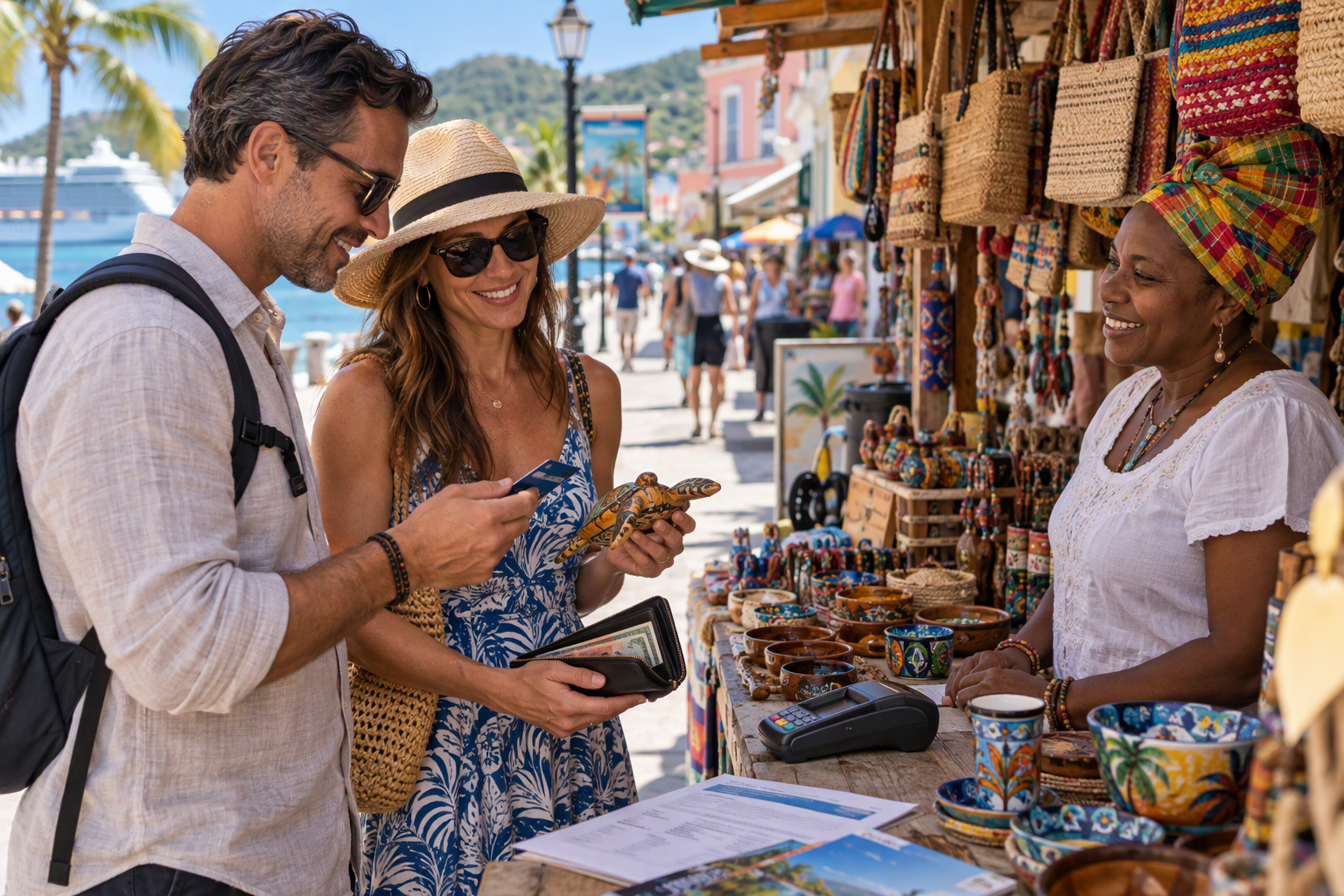
One Delay Can Cost Your Entire Cruise
A quick coverage check now protects you from the problems no one sees coming
Short Excerpt
- Your first cruise may take you to several countries with different currencies, leaving you wondering whether to exchange money before sailing or rely on credit cards in port.
- Onboard purchases and shore expenses work differently, but understanding that distinction makes planning your first cruise budget much easier.
- Learn which payment methods to use, when local cash is helpful, and how to avoid unnecessary exchange fees during your first sailing.
Quick Take
- Separate ship spending from port spending. Your cruise line generally uses an onboard account, while purchases ashore follow local payment practices.
- Check which currencies your first cruise visits. Don’t assume every Caribbean port accepts U.S. dollars or every Mediterranean destination uses euros.
- Choose a credit card with favorable international terms, then carry modest local cash for small vendors, tips, and transportation when necessary.
- Pay in the local currency when a terminal offers to convert a purchase into your home currency, unless you’ve confirmed that the alternative costs less.
- Plan cash around your actual excursions, avoiding large exchanges for destinations where you’ll spend only a few hours.
How Much Foreign Currency Do You Really Need for Your First Cruise?
You’ve chosen your first cruise, researched the destinations, and started imagining yourself exploring unfamiliar streets, sampling local food, and shopping for souvenirs. Then you look at the itinerary and notice that you’ll be visiting several different countries.
Suddenly, something that seemed straightforward becomes another travel question.
Do you need to exchange U.S. dollars before leaving home? Will a credit card work at every port? Should you carry local currency for taxis, tips, and small purchases, even when you’re spending only a few hours ashore?
The temptation is to prepare for everything by exchanging cash for every destination.
However, that approach can leave you carrying unnecessary money, paying conversion fees more than once, and returning home with foreign banknotes you didn’t spend.
For someone taking a first cruise, the better strategy is understanding where cash is actually useful and where another payment method makes more sense.
You don’t need to become an expert in international banking. You need a practical payment plan that fits the way cruise vacations work.
Understand Why You Usually Don’t Need Foreign Cash Onboard
One of the biggest differences between cruising and traveling independently is how purchases are handled on the ship.
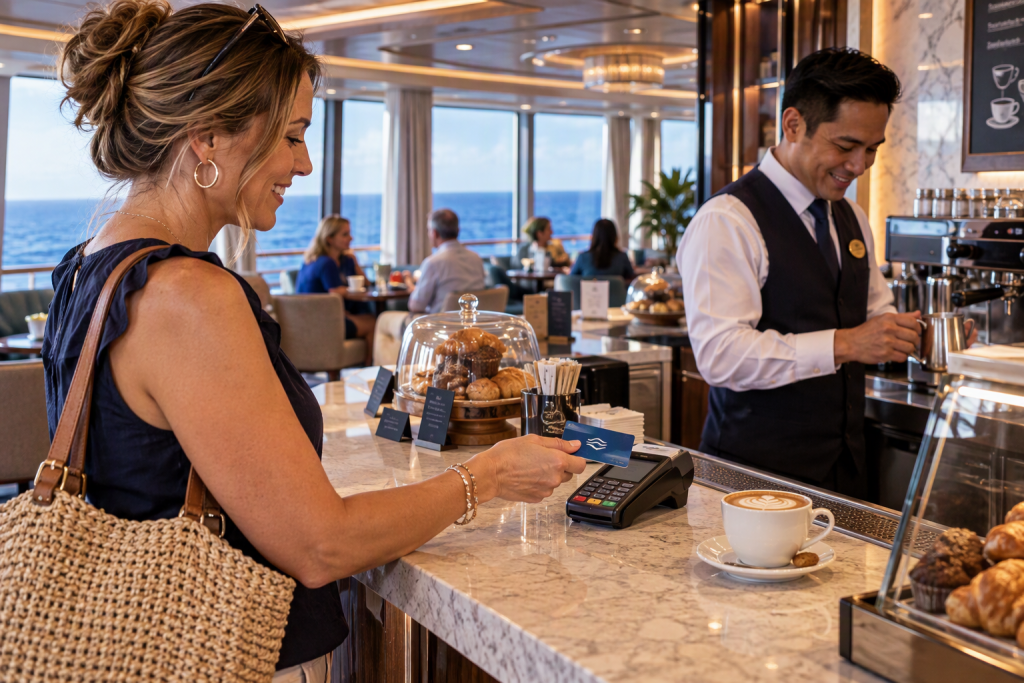
Most major cruise lines operate a cashless onboard spending system. Instead of paying a bartender or restaurant server directly with cash, you charge eligible purchases to an account associated with your reservation.
That account is generally funded or settled using a registered payment card or an approved cash deposit, depending on the operator.
For a first-time cruiser, this means you usually don’t need to exchange foreign currency simply to buy a drink, enjoy specialty dining, or shop onboard.
However, you should check which currency your cruise line uses.
Many U.S.-focused cruise lines use U.S. dollars, while some international operators use euros or another currency. If your bank account is denominated differently from the ship’s onboard currency, your payment provider may apply conversion charges.
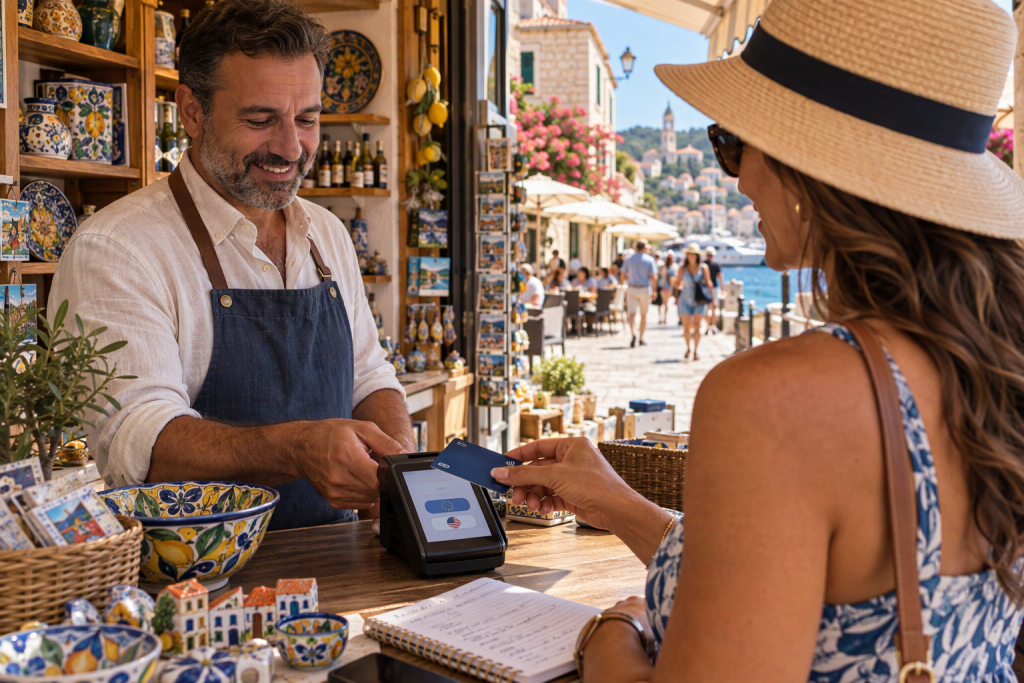
Your first step should therefore be confirming your ship’s onboard currency and understanding how its spending account works.
After that, you can focus on the more complicated part: making purchases when you leave the ship to explore a destination.
Check the Currency at Every Port Before Your Sailing
Your first cruise itinerary may include several destinations that are geographically close but use different payment systems.
A Caribbean sailing, for example, could visit islands where U.S. dollars are commonly accepted by tourist businesses alongside destinations where local currency is preferable.
Cruises visiting Mexico may include shops that accept American dollars, although Mexican pesos remain the country’s official currency.
Top Cruise Deals From Trusted Cruise Lines
Compare exclusive online offers and find the fare that fits your trip and your budget
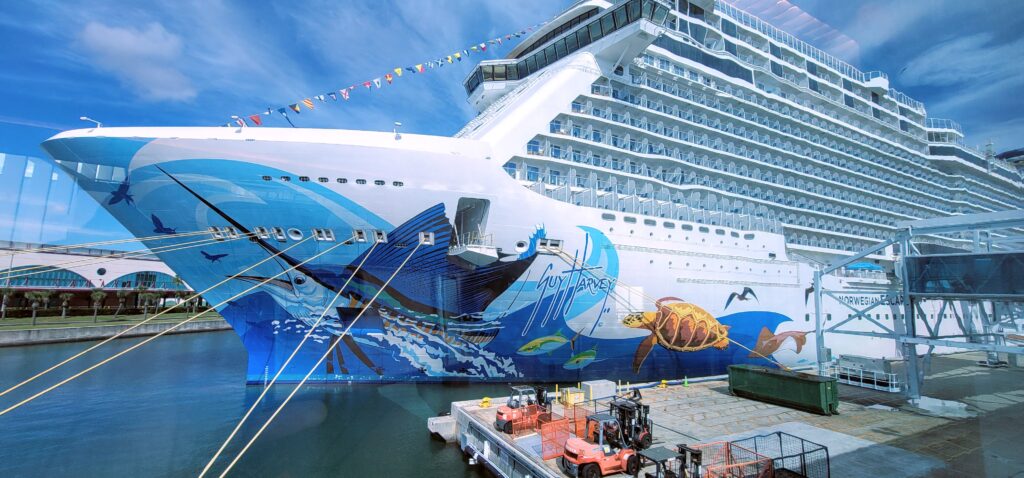
European itineraries require similar attention. Many Mediterranean destinations use euros, but not every country surrounding the Mediterranean has adopted that currency.
You don’t need to memorize every exchange rate.
Instead, review the ports on your itinerary and identify three useful details: the local currency, how commonly cards are accepted in the places you’ll visit, and whether you’re likely to need cash for any planned activities.
Those answers will help you avoid a common first-cruise mistake: carrying large amounts of several currencies without knowing whether you’ll actually use them.
Let Your Shore Excursions Determine How Much Cash You Carry
How you plan to spend your day ashore matters more than the number of countries on your itinerary.
Suppose you’ve booked a guided sightseeing excursion that includes transportation, admission fees, and lunch. Most of your significant expenses may already be covered, leaving only optional tips, drinks, or small souvenirs.
You might need very little cash.
Now imagine you’re exploring another port independently, using local taxis, visiting markets, and stopping at small cafés.
In that situation, having suitable local currency could make your day considerably easier.
Before your first cruise, look at each port separately and identify what you’ve already paid for.
Then consider the smaller purchases you might make during the day.
This is also a good time to check whether your excursion provider accepts cards, which currency any unpaid balance is quoted in, and whether a cash tip is customary or expected.
By calculating your cash needs around real activities, you avoid exchanging money for expenses that may never arise.
Learn the One Currency Conversion Question That Can Cost You Money
One of the most useful financial habits to learn before your first international cruise involves a question you may encounter at restaurants, shops, and ATMs.
A payment terminal might ask whether you’d like to pay in the local currency or have the amount converted into U.S. dollars.
Choosing dollars can feel reassuring because the total is immediately recognizable.
However, this convenience is often provided through dynamic currency conversion, which may include a less favorable exchange rate or additional charges.
Online‑Only Cruise Offers You Won’t Find Elsewhere
Unlock special pricing and start planning the sailing that matches your perfect itinerary

In many cases, choosing the local currency allows your card issuer or payment network to perform the conversion instead.
For a first-time traveler, the easiest default is to select the local currency when offered the choice, provided your card supports the transaction and you haven’t verified a better alternative.
That doesn’t mean all conversion costs disappear.
Some cards charge foreign transaction fees regardless of which currency you choose at the terminal, so reviewing your card’s terms before the cruise is still important.
Have a Payment Backup Without Carrying Too Much Cash
It’s reasonable to worry about what would happen if your primary credit card were declined during your first visit to a foreign port.
That concern deserves a practical solution, but carrying a large amount of cash isn’t necessarily the safest answer.
A more flexible plan includes a primary payment card, a separate backup card, and enough suitable cash to handle reasonable incidental expenses.
Keep the backup somewhere secure rather than storing every payment option in the same wallet.
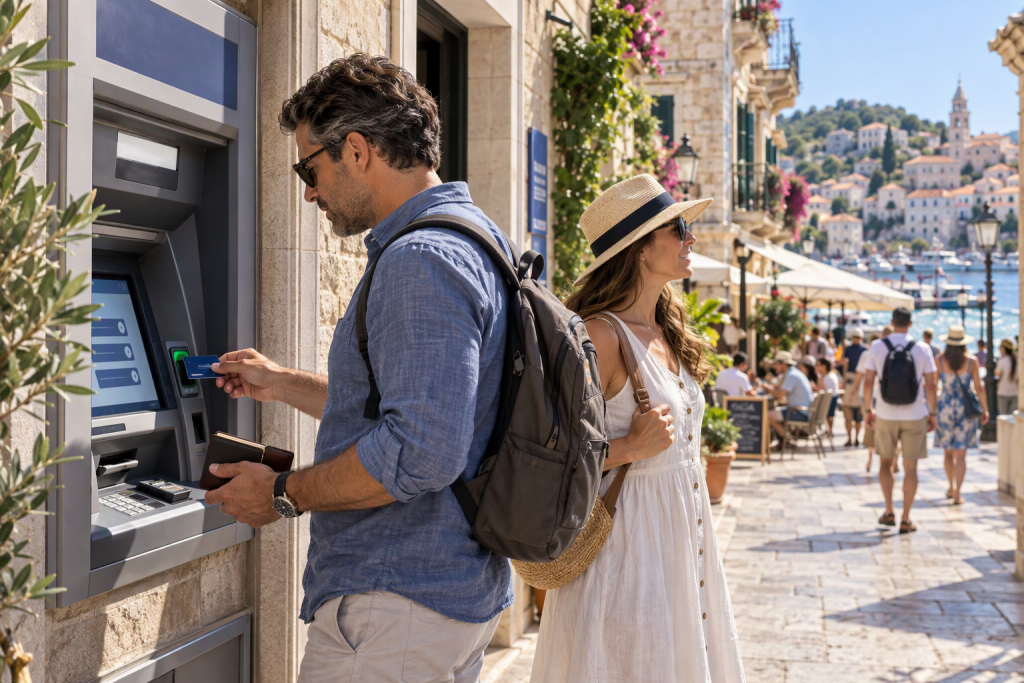
Before departure, confirm that your bank permits international transactions and check how to contact it if a card stops working.
You should also understand any ATM withdrawal fees associated with your debit card.
If you need foreign currency during the cruise, consider using an established ATM in a suitable location rather than automatically accepting an exchange kiosk’s offer.
Review the fees before confirming the withdrawal, and avoid taking out significantly more cash than you’ll need for the port visit.
The idea is to create a backup plan that supports your day without turning your wallet into a collection of unnecessary foreign banknotes.
Don’t Let Money Questions Interfere With Your First Port Experience
Your first shore excursion is something you’ve probably been looking forward to for months.
The last thing you want is to spend valuable sightseeing time searching for a currency exchange kiosk, arguing over a conversion rate, or realizing that a taxi driver doesn’t accept your card.
Much of that frustration can be avoided before you board.
Check the currency used at your first port, confirm how you’ll pay for transportation, and keep the necessary payment options accessible.
When shopping, ask for the total price and currency before agreeing to a purchase. If a merchant offers an exchange rate you don’t understand, you can decline the transaction and look for another option.
Remember that port visits also involve strict return deadlines.

Luxury Cruise Experiences at Smarter Prices
See premium sailings and upgraded cabins priced for travelers who know how to book well
Spending additional time resolving a payment problem isn’t worth risking a late arrival back to the ship.
When you’re familiar with the payment arrangements, your attention can stay where it belongs: on the destination, the experience, and the memories you’re making.
Make Your First-Cruise Currency Plan Easy to Repeat
The best thing about learning a few reliable currency habits is that you can use them again at every destination.
Before each port, check what currency is used locally, decide whether you need cash, and confirm that your primary card is suitable for the purchases you’re expecting.
When a terminal offers an unnecessary conversion into your home currency, choose the more favorable payment arrangement.
If you need local cash, obtain a realistic amount and avoid making large withdrawals simply because you might want something later.
You’ll probably discover that some ports require almost no financial preparation because your transportation and activities are already arranged.
Others may need a little more thought, especially when you plan to explore independently.
Your first cruise should introduce you to new destinations, not leave you worrying about every foreign currency transaction.
With a simple payment plan, you can step ashore knowing how you’ll handle purchases without carrying more money or paying more fees than necessary.
How to Handle Currency Exchange on Your First Cruise Without Confusion
If you are planning your first cruise and worried about currency exchange, you are not alone.
Currency questions have a way of showing up right after you feel “done” planning your first cruise.
You book the sailing.
You picture the ship, the ports, and that first morning at sea.
Then a practical worry hits.
What money do you use onboard.
What money do you use in port.
Do you need to exchange cash ahead of time, or can you handle it as you go.
This guide gives you a simple system so you can stop guessing and feel prepared.
Foreign exchange is the process of converting one currency into another.
Port currency is the local money used in a destination when your ship docks there.
Cruise money rules can feel confusing when onboard spending and port spending work differently.
That split makes it easy to over-prepare with too much cash.
It also makes it easy to overpay at a kiosk because you feel rushed.
You do not need complicated tactics to avoid those problems.
You need a clear plan that separates onboard money from port money.
This guide gives you a simple system to separate onboard charges from port cash needs so you can spend confidently without stress.
Split Onboard and Port Spending So Currency Feels Simple
The fastest way to reduce confusion is to split money into two buckets.
Bucket one is onboard spending.
Bucket two is port spending.
Onboard spending is usually charged to your cruise account, not paid in cash.
That means exchange is rarely an onboard issue for a first-time cruiser.

Sail Away to Paradise Without Overpaying
Find cruise deals that make it easy to escape, relax, and enjoy the ocean without stretching your budget
Port spending is where cash and currency questions show up.
Once you accept that, you stop treating exchange like a full-trip emergency.
You start treating it like a series of short day-trip decisions.
Onboard Basics
On most cruises, you do not carry cash to pay for onboard purchases.
You charge drinks, specialty dining, photos, and shops to your cruise account.
Your account is linked to a card on file or a cash deposit.
That setup keeps the ship convenient.
It also means you can focus your energy on port-day payment choices.
If you handle ports well, the currency problem is mostly solved.
A simple system beats a pile of exchanged bills.
Port Reality
Port spending tends to be smaller than first-timers expect.
Transportation is one category, like taxis or shuttles.
Tips are another category, especially for drivers and guides.
Small food purchases are common, like snacks and cafés.
Markets and souvenirs can add up quickly.
Entrance fees show up when you explore independently.
Most of these needs can be covered with modest cash and a good card.
Why This Helps
When you mix onboard and port spending, everything feels uncertain.
Uncertainty pushes you toward “just in case” exchange.
That usually creates leftover currency, wasted fees, and more stress.
Separating buckets makes the plan feel manageable.
It also makes your wallet safer because you carry less cash.
Less cash means less worry.
That is a win you feel all week.
Two Buckets
When you separate onboard and port spending, the money plan becomes simple.
Smaller Cash Needs
Most ports only require modest cash for tips and small purchases.
Less To Carry
Carrying less cash reduces risk and lowers the pressure in busy tourist areas.
Know Common Cruise Currency Patterns Before You Sail
You do not need to memorize every country’s currency rules.
You need to recognize regional patterns that show up on common cruise routes.
Most Caribbean tourist areas are card-friendly.
Many European cities are also card-friendly.
Some ports are mixed, with cards for big purchases and cash for small ones.
Your best default is card-first, with small cash as a backup.
Then you adjust based on the ports where cash is more common.
Caribbean Mindset
Many Caribbean ports are built for visitors.
Cards are widely accepted in tourist-heavy zones.
US dollars may be accepted informally in some places.
That does not mean you always get a fair exchange rate from a vendor.
Change may come back in local currency at a rate that favors the seller.
A better move is using a card for most spending and carrying small bills for tips.
This keeps purchases clean and reduces rate surprises.
Mexico And Central Stops
Mexico and Central America can be mixed.
Cards work well for bigger purchases in tourist businesses.
Cash is still useful for taxis, small vendors, and tips.
If you want local cash, small amounts go a long way.
Over-exchanging is the common beginner mistake here.
A modest withdrawal or small exchange is usually enough for a port day.
Your goal is flexibility, not a thick stack of bills.
Europe And The Med
Many European ports accept cards easily.
The bigger risk in Europe is not acceptance.
The risk is poor conversion handling at the terminal.
Some terminals offer to charge you in your home currency.
That option often comes with an unfavorable rate.
A simple habit protects you.
Choose to pay in the local currency when the terminal asks.
Pattern First
Treat each port like a short outing.
Plan for small cash needs and predictable card use.
Avoid “every port needs a big exchange” thinking.
That thinking creates leftovers and fees.
A flexible pattern reduces mistakes.
It also reduces the urge to exchange money under pressure.
Prepared travelers spend better.
Regions Repeat
Most routes follow repeatable card-and-cash patterns, so you can plan once.
Cards Cover Most
In many ports, cards handle the majority of spending without extra effort.
Local Currency Choice
Selecting local currency on terminals often protects your conversion rate.
Use This Currency Cheat Sheet to Plan Port Days Easily
This is the part most first-time cruisers wish they had earlier.
You want a quick reference that tells you what to do in common situations.
You also want it to be simple enough to follow in real life.
Use this cheat sheet while you are planning port days.
It helps you decide how much cash to carry.
It also helps you choose when a card is the better tool.
Keep it practical, and adjust for your itinerary.
Currency Cheat Sheet
| Cruise Region Or Port Type | Likely Port Currency Situation | Best Payment Plan | Beginner Cash Tip |
|---|---|---|---|
| Caribbean tourist ports | Cards common, USD often accepted in tourist areas | Card for most spending, small USD bills for tips | Carry small denominations for easy tipping |
| Bahamas style ports | Tourist-focused, cards accepted widely | Card-first, cash for small vendors | Keep small bills to avoid change issues |
| Mexico ports | Mixed acceptance, cash useful for taxis | Card for bigger buys, modest local cash for small needs | Withdraw or exchange only a small amount |
| Central America stops | Vendor-by-vendor variation | Card where possible, cash for small purchases | Avoid exchanging more than you can spend |
| Mediterranean city ports | Cards common, euro often used in many stops | Card-first, pay in local currency when prompted | Cash mainly for tips and cafés |
| Northern Europe ports | Card-friendly, cash sometimes minimal | Card-first, cash as backup | Exchange only if you face cash-only vendors |
| Private islands | Cruise-run systems plus limited vendors | Cruise account plus card as backup | Small cash can help with tips |
| Open-air markets | Cash preferred for small items | Card for bigger buys, cash for stalls | Set a souvenir cash cap |
Cheat Sheet First
A quick reference keeps you from improvising currency decisions at every stop.
Port Plans Improve
Planning tours and transport first makes cash needs easier to estimate.
Smaller Works
A modest cash approach prevents leftover currency and reduces risk.
Pick the Smartest Payment Method for Each Port
Most first-time cruisers do best with a mix.
Use a card for most purchases.
Use cash for tips and small vendors.
This strategy avoids the worst exchange rates and reduces leftovers.
It also reduces risk because you are not carrying large amounts.
If you try to go all-cash, you often pay twice through spreads and exchanges.
A card-first approach is usually cleaner and easier to manage.
Card-First Strategy
A credit card is often the best tool for port spending.
It typically provides competitive conversion through the card network.
Some cards also reduce or remove foreign transaction fees.
Checking your card terms before you sail prevents surprises later.
A card-first plan also creates a clean record of spending.
That helps you keep port days within budget without feeling restricted.
The best part is how simple it feels once you commit to it.
Avoid Conversion Traps
A terminal may offer to charge you in your home currency.
That offer looks helpful, but it can cost more.
A simple rule protects you in many countries.
Choose to pay in the local currency when given the option.
This keeps the conversion in the card network flow.
It also reduces the chance of a poor merchant rate.
One click can protect many purchases.
Cash With Intention
Cash should be your friction remover, not your main method.
Small bills make tipping and quick purchases easier.
Small bills also reduce awkward moments in markets.
A modest amount per port is usually enough.
If you run out, you reassess at the next stop.
That is safer than carrying too much on day one.
Intentional cash keeps you confident and flexible.
Helpful Partners
If you plan to check bank accounts while traveling, security matters.
Using NordVPN can add protection when you use public Wi-Fi in cafés or terminals.
If you want fewer identity and spam headaches long-term, Incogni can help remove personal data from data broker listings.
Connectivity also prevents expensive confusion in port.
Travel eSIMs like Airalo, Yesim, Drimsim, and Sally Sim can give you data for maps and messaging without relying on random networks.
Better navigation often prevents overpriced last-minute transportation.
The benefit is practical, not flashy.
You get smoother port days with fewer money surprises.
Card-First Wins
Cards reduce exchange friction and help you avoid leftover currency waste.
Local Currency Option
Paying in local currency at the terminal often protects your rate.
Cash As Backup
Small bills cover tips and quick buys without forcing big exchanges.
How to Get Local Cash Without Paying High Fees
If you need local currency, the method matters.
Some options bake in big fees or poor rates.
Other options keep costs closer to reasonable.
You do not need perfect exchange every time.
You need to avoid the worst deals that drain money unnecessarily.
A few simple rules protect you.
Those rules also keep you safer while traveling.
ATM Approach
ATMs can be a good way to get local currency.
Fees can stack if you withdraw repeatedly.
A practical move is one modest withdrawal when cash is truly useful.
Avoid isolated machines when you can.
Bank-attached ATMs often feel clearer and safer.
If the ATM offers a home-currency conversion, decline it when possible.
Then keep only what you need on you for that day.
Bank Before Sailing
Some travelers prefer ordering currency from their bank before travel.
This can reduce port-day friction on your first cruise.
It can also prevent a rushed search for an ATM.
Rates can vary by bank and timing.
That tradeoff can still be worth it for peace of mind.
If you choose this approach, keep the amounts modest.
You want convenience, not leftovers.
Avoid High-Fee Kiosks
Exchange kiosks can be convenient.
They can also be expensive through spreads and add-on fees.
The posted rate may not be the real rate you receive.
That is how travelers lose money quietly.
If you use a kiosk, treat it like a convenience fee.
Exchange a small amount and move on.
A card-first plan usually keeps kiosks out of your trip entirely.
Leftover Currency Problem
Leftover currency is a hidden cost.
Over-exchanging often leads to wasted money or a second exchange back.
That second exchange can carry another spread.
First-time cruisers over-exchange because they want to feel prepared.
A better plan is smaller amounts and flexible refills.
When in doubt, go smaller.
Cards can handle most bigger purchases.
One Withdrawal Rule
One modest ATM withdrawal often beats multiple withdrawals with stacked fees.
Prep Helps Beginners
Ordering small amounts in advance can reduce early port-day friction.
Avoid Leftovers
Smaller exchanges prevent waste and reduce the need to convert money twice.
Avoid These Currency Mistakes That Cost First-Time Cruisers
Most currency mistakes come from good intentions.
You want to be safe and prepared.
You want to avoid being stuck.
That mindset can push you into expensive “just in case” choices.
The fix is not becoming rigid.
The fix is using a few consistent habits that prevent predictable errors.
These habits keep port days smooth and spending controlled.
Mistake: Exchanging Too Much
Over-exchanging creates leftovers.
Leftovers create waste and extra conversions.
A modest per-port cash number prevents this.
Decide what you need for tips, a taxi, and small purchases.
Then stop there.
If you need more later, you reassess at the next stop.
Smaller moves keep you flexible and safer.
Mistake: Using Home Currency On Terminals
Dynamic conversion offers can look helpful.
They often cost more.
Choose the local currency instead.
This is a small habit with a big payoff.
It saves money repeatedly.
It also keeps your spending cleaner to track.
One decision can protect an entire trip.
Mistake: Paying For Confusion
Confusion can create expensive port choices.
Getting lost can lead to overpriced rides.
Missing a meeting point can lead to rushed spending.
This is where smart connectivity helps.
An eSIM like Airalo or Yesim can keep maps and messaging available in port.
That reduces confusion spending without adding complexity.
Smaller Exchanges
A per-port cash target prevents leftovers and reduces wasted fees.
Local Currency Choice
Selecting local currency at terminals can protect your conversion rate.
Data Prevents Overpaying
Maps and messaging reduce “lost in port” spending decisions.
Defuse the Fears That Make Currency Decisions Stressful
Money worries feel personal.
No one wants to look confused in a new place.
No one wants to be stuck without a way to pay.
No one wants to lose money to a bad exchange.
Those fears are normal.
The goal is answering them with a plan instead of extra cash.
A plan gives you confidence without creating risk.
Fear: Being Stuck
A layered backup plan solves this fear better than cash.
Carry a primary card and a backup card.
Carry modest cash in small bills.
Keep cards and cash in separate places.
Use port data so you can navigate and find safe ATMs if needed.
This approach is safer than carrying a lot of money.
It also makes you feel more in control in busy areas.
Fear: Looking New
Pressure can push beginners into bad exchange deals.
A simple script helps you avoid that.
Ask what total you will receive after all fees.
Ask whether commission is included.
If answers feel unclear, walk away.
Walking away is not rude.
It is what experienced travelers do.
Confidence grows quickly when you practice this once.
Fear: Missing Out
Some cruisers exchange too much because they fear missing opportunities.
In reality, most bigger purchases can be made by card.
Cash is mainly for small vendors and convenience.
If you plan to shop in markets, set a souvenir cash cap.
A cap prevents regret without reducing fun.
You can still say yes to what matters.
You simply avoid carrying risk you do not need.
Backup Beats Bulk
Cards plus modest cash plus data is safer than carrying large amounts.
Walking Away Works
Leaving unclear exchange deals is a skill, not an attitude.
Cash Is For Small Moments
Cards handle most big spending, so cash can stay modest.
Spend Confidently In Port Without Overthinking Exchange
Currency exchange does not need to dominate your first cruise.
Most first-time cruisers do best with card-first spending and modest cash.
When you avoid home-currency terminal offers, keep small bills, and withdraw cautiously, you prevent the biggest money leaks.
When you add smart connectivity and security habits, ports feel simpler.
That is the outcome you want.
You want to step off the ship focused on the day, not focused on money mechanics.
A simple system gives you that freedom.
FAQ – How Should First-Time Cruisers Handle Currency Exchange, Onboard Payments, and Foreign Cash in Port?
Do You Need to Exchange Currency Before Your First Cruise?
Not always, because the amount of foreign cash you’ll need depends on the destinations and activities included in your first cruise.
Many established tourist businesses accept credit cards, while local markets, taxis, and smaller vendors may prefer cash.
Before exchanging money, review each port and identify which expenses aren’t already covered by your excursions.
You may discover that a suitable payment card and a modest cash reserve are enough for most of your trip.What Currency Will You Use Onboard Your First Cruise?
The currency used onboard depends on your cruise line rather than the countries you’re visiting.
Royal Caribbean uses U.S. dollars for its onboard SeaPass accounts, and Carnival uses a cashless Sail & Sign system for onboard purchases.
Other cruise lines may operate in euros or another currency, so check your booking information before departure.
Once you know the ship’s currency, you can plan your onboard spending separately from purchases made in foreign ports.How Does the Cashless Spending System Work on Your First Cruise?
Most major cruise lines allow you to charge onboard purchases to an account associated with your reservation.
Instead of handing cash to a bartender or restaurant server, you’ll generally use your cruise card or another accepted onboard payment method.
The account may be backed by a registered credit card, debit card, or approved cash deposit, depending on the operator.
Before sailing, learn how to check your balance so you can track purchases throughout your first cruise.Can You Use U.S. Dollars at Every Port on Your First Caribbean Cruise?
No, you shouldn’t assume that U.S. dollars are accepted at every Caribbean destination.
Some tourist businesses accept them, while others prefer their local currency or require payment by card.
Even when dollars are accepted, the merchant may apply an unfavorable exchange rate or return change in local money.
Checking the payment customs of your scheduled ports will help you avoid arriving with cash that isn’t particularly useful.Should You Bring Foreign Cash or Use Credit Cards on Your First Cruise?
A combination of a suitable credit card and modest cash reserves is often practical for a first cruise with international ports.
Cards can simplify payments at many restaurants, shops, and attractions, particularly when they don’t charge foreign transaction fees.
Cash may still be useful for tips, smaller vendors, taxis, and markets where electronic payments aren’t available.
The best approach is to estimate your needs from your actual itinerary instead of exchanging a large amount of money for every destination.How Much Cash Should You Carry During Your First Cruise Port Visit?
The amount depends on what you expect to purchase and which expenses have already been prepaid.
If your first shore excursion includes transportation, lunch, and admission fees, you may need only a modest amount for optional tips or souvenirs.
Exploring independently could require more cash for local transportation and smaller purchases.
Before leaving the ship, create a realistic budget for the day and carry an appropriate reserve without bringing unnecessary amounts.What Is Dynamic Currency Conversion and Why Should First-Time Cruisers Know About It?
Dynamic currency conversion occurs when a merchant or ATM offers to convert a foreign transaction into your home currency.
This may seem helpful during your first cruise because the amount appears in familiar dollars rather than an unfamiliar local currency.
However, the conversion can include an exchange-rate markup or additional fees, potentially making the transaction more expensive.
Visa advises cardholders to review the displayed conversion terms and decline offers that aren’t clear or satisfactory.Should You Choose U.S. Dollars or Local Currency at a Payment Terminal in Port?
Choosing the local currency is generally a sensible default when a foreign merchant offers to convert the purchase into U.S. dollars.
This usually leaves currency conversion to your card issuer or payment network instead of the merchant’s dynamic conversion service.
However, your bank may still charge a foreign transaction fee, and you should review any displayed conversion terms before accepting a transaction.
Learning this choice before your first port visit can help you avoid unnecessary charges throughout the cruise.Are Foreign ATMs a Good Way to Get Cash During Your First Cruise?
Foreign ATMs can be convenient when you need local currency, although the total cost varies by bank and machine.
Your bank may charge an international withdrawal fee, while the ATM operator can impose additional charges.
Some machines also offer currency conversion into your home currency, which may introduce another markup.
Before using an ATM during your first cruise, check the displayed fees, use an appropriate location, and withdraw only a realistic amount.Is It Better to Exchange Money at Home Before Your First Cruise?
Exchanging a modest amount through your bank before departure can be convenient if your first port has limited card acceptance or you want cash immediately upon arrival.
However, banks may charge ordering fees or offer different exchange rates, so advance exchange isn’t automatically the cheapest option.
Compare those costs with your international card and ATM arrangements before deciding.
If you choose to order currency, concentrate on the destinations where you have a clear reason to use cash.Why Should First-Time Cruisers Be Careful With Currency Exchange Kiosks?
Currency exchange kiosks can be convenient, but their exchange rates may include significant markups or separate fees.
During a short cruise port visit, feeling rushed can make it tempting to accept the first available offer without comparing the final amount.
Ask how much local money you’ll actually receive after all charges, rather than relying exclusively on signs advertising attractive rates.
If the terms are unclear, consider another payment option instead of exchanging a large sum.Do You Need Mexican Pesos When Your First Cruise Stops in Mexico?
Mexican pesos are useful because they’re Mexico’s official currency, although some tourist businesses also accept U.S. dollars or credit cards.
The payment method you’ll need depends on the port, the businesses you visit, and whether you’ve arranged an organized excursion.
A prepaid shore tour may leave you with relatively few cash expenses, while independent shopping or transportation can make pesos more convenient.
Check your first Mexican port’s arrangements rather than assuming every merchant will accept American dollars.Do You Need Euros for Every Stop on Your First Mediterranean Cruise?
No, because not every Mediterranean destination uses the euro.
Popular cruise ports in Italy, Spain, France, and Greece use euros, but other countries around the Mediterranean may have different national currencies.
Credit cards are accepted by many tourist businesses, although smaller merchants and transportation providers may have different requirements.
Check every destination on your first cruise itinerary so you don’t exchange money into a currency you won’t need.Will You Need Cash at a Private Island During Your First Cruise?
That depends on the private destination and the cruise line operating the visit.
Some cruise-operated facilities allow purchases through your onboard account, while certain independent vendors, services, or tipping arrangements may require cash.
Not every attraction or merchant necessarily follows the same payment rules as the ship.
Before visiting a private island for the first time, review its payment instructions so you know whether to bring your cruise card, cash, or another method.Can You Use Your Regular Debit Card for Foreign Currency on Your First Cruise?
You may be able to use your debit card for purchases and foreign ATM withdrawals, depending on your bank’s international transaction policies.
However, overseas withdrawal fees, operator charges, and exchange costs may apply.
Debit card activity can also affect money directly available in your bank account, making it important to understand holds and account limits.
Check these details before sailing and consider carrying a separate backup payment card.How Can You Avoid Foreign Transaction Fees During Your First Cruise?
Start by identifying which of your cards charge fees for international purchases or cash withdrawals.
A credit card without foreign transaction fees may be useful for purchases in ports where cards are widely accepted.
You should also avoid accepting unfavorable currency conversion offers simply because a terminal displays your home currency.
Reviewing these arrangements before your first sailing helps you make consistent decisions without analyzing payment costs during every purchase.What Should You Do if Your Credit Card Is Declined During Your First Port Visit?
Ask the merchant whether another accepted payment method is available, then use a backup card or suitable cash if necessary.
A declined transaction can occur because of security restrictions, bank policies, network problems, or other issues unrelated to your available funds.
If you need to contact your bank, use its official app or another trusted communication channel.
Keeping your payment options separate and allowing sufficient time before returning to the ship can prevent a small problem from becoming a larger disruption.What Should First-Time Cruisers Do With Leftover Foreign Currency?
You can keep leftover money for a future trip, use it for appropriate purchases before departing the country, or exchange it back into your regular currency.
However, converting small amounts a second time may involve fees or an unfavorable exchange rate.
If you’re visiting several destinations, it’s worth checking whether a particular currency will be useful again later in the itinerary.
The best way to reduce leftovers is to avoid exchanging significantly more than you expect to spend in the first place.What Are the Biggest Currency Exchange Mistakes on a First Cruise?
Common mistakes include exchanging too much cash, assuming every port accepts U.S. dollars, overlooking card fees, and accepting unfavorable conversion offers.
First-time cruisers may also forget that onboard purchases and expenses ashore are handled through different payment arrangements.
Another issue is waiting until a short port visit to discover that a planned excursion or taxi requires cash.
Reviewing the itinerary, estimating expenses, and checking payment methods before departure can help prevent these problems.What Is the Easiest Currency Exchange Plan for Your First Cruise?
Begin by confirming the currency used onboard and how your cruise account will be settled.
Next, review each destination on your itinerary to determine whether you’ll need local cash for transportation, tips, markets, or excursions.
Choose a primary payment card with suitable international terms, keep a backup available, and exchange modest amounts only where useful.
With these arrangements handled before sailing, you can spend more time enjoying your first cruise and less time worrying about unfamiliar payment systems.
Plan Your Next Cruise!

Sail Into Timeless Luxury: Cunard Cruises for Transatlantic Elegance and Destination‑Rich Voyages
One Delay Can Cost Your Entire Cruise A quick coverage check now protects you from the problems no one sees coming….

Discover Silversea Cruises: Ultra‑Luxury Voyages to the World’s Most Exclusive Destinations
One Delay Can Cost Your Entire Cruise A quick coverage check now protects you from the problems no one sees coming….
Sail Into Sophistication: Holland America Cruises for Luxury, Culture, and Unforgettable Journeys
One Delay Can Cost Your Entire Cruise A quick coverage check now protects you from the problems no one sees coming….

Escape To Paradise: Inside The Exclusive World of Cruise Line Private Islands
One Delay Can Cost Your Entire Cruise A quick coverage check now protects you from the problems no one sees coming….
Explore More

Cruise Cabin Upgrade Guarantee: The Gamble That Could Unlock a Better Room

Do Cruises Have Lifeguards? What Families Need to Know Before Sailing
Sail the World in Style: MSC Cruises’ Innovative Ships, Luxury Amenities, and Global Adventures