One Delay Can Cost Your Entire Cruise
A quick coverage check now protects you from the problems no one sees coming
Short Excerpt
- Dining alone on your first cruise can feel intimidating when you’re unfamiliar with assigned seating, shared tables, and the different restaurant options onboard.
- Traditional dining, flexible dining, buffets, and specialty restaurants offer different experiences, giving solo travelers several ways to enjoy meals comfortably.
- Learn how to request a private table, handle shared seating, and choose a first-night dining arrangement that matches your preferences without unnecessary social pressure.
Quick Take
- Understand your cruise line’s dining system before sailing, particularly whether you have assigned seating or flexible dining.
- Request a private table early if you prefer eating alone, since specific seating arrangements depend on availability.
- Make your first solo meal comfortable by choosing a restaurant, dining time, and atmosphere that suit your energy level.
- Treat shared tables as an option, not an obligation you have to enjoy simply because you’re traveling alone.
- Use simple requests at the host stand rather than feeling that you need to explain or apologize for dining by yourself.
Enjoy Your First Solo Cruise Dinner Without Feeling Like Everyone Is Watching
You can spend the entire day enjoying your first cruise, exploring the ship, meeting interesting people, and looking forward to dinner.
Yet when evening arrives, something as ordinary as walking into a restaurant by yourself can suddenly feel more complicated than it should.
You notice couples arriving together, families gathering around larger tables, and groups of friends discussing their plans for the evening.
Meanwhile, you’re wondering whether the host will ask why you’re alone, whether you’ll be seated with strangers, or whether a table for one will make you stand out.
Those worries can turn an experience you were looking forward to into something you’d rather avoid.
Fortunately, cruise dining offers more flexibility than many first-time travelers realize.
Depending on your ship, you may be able to choose between assigned dining, reservations at different times, casual restaurants, buffets, and other venues where eating alone is completely routine.
The important thing is understanding how those arrangements work before you reach the host stand.
Decide Whether You Want Privacy or Company Before Dinner
One of the most useful decisions you can make is whether you’d prefer to enjoy dinner privately or share a table with other passengers.
Neither choice is more appropriate for a solo traveler.
Some people love meeting strangers over dinner because it gives them an easy opportunity to talk about excursions, entertainment, and the destinations they’ve visited.
Others look forward to a quiet meal where they can relax, take their time, and enjoy the food without participating in an extended conversation.
Your preference might even change during the cruise.
After an active port day, you may want a private table and an early evening.
On a sea day, however, you might feel more sociable and enjoy meeting passengers you haven’t encountered before.
Instead of treating solo dining as one fixed experience, think of it as a choice you can make according to how you want to spend that particular evening.
The key is knowing which dining options your ship offers and how to request the arrangement you prefer.
Learn Why Traditional Dining Can Feel Different From Flexible Dining
Cruise lines use different dining systems, and those arrangements influence how easily you can choose your table and mealtime.
Traditional dining generally involves an assigned seating time and table.
Depending on the cruise line and sailing, you may be seated at a smaller table or assigned to dine with other guests.
Top Cruise Deals From Trusted Cruise Lines
Compare exclusive online offers and find the fare that fits your trip and your budget
That can work beautifully when you enjoy consistency and want to see familiar passengers or servers throughout the voyage.
However, someone who prefers private dining may be more comfortable requesting a different arrangement.
Royal Caribbean offers traditional dining as well as My Time Dining.
Under My Time Dining, passengers can choose dinner times according to availability, and reservations are strongly recommended.
Royal Caribbean also states that guests are seated with the people they arrive with, making it an appealing option for passengers who want to dine independently.
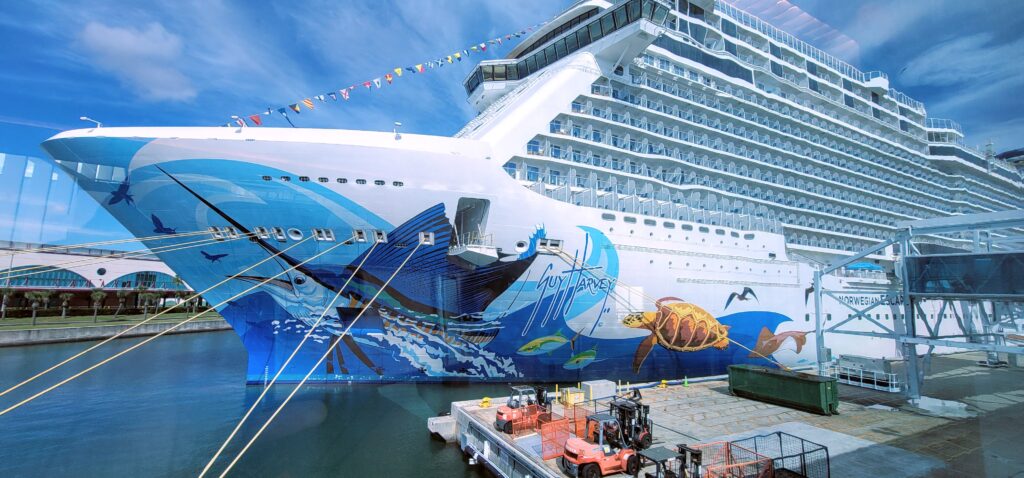
Norwegian Cruise Line takes a different approach through Freestyle Dining, which operates without fixed dining times or pre-assigned seating.
This can make choosing when and where to eat feel particularly straightforward for solo travelers.
Neither dining system guarantees that every preferred table will be available immediately, but understanding the arrangements allows you to make more informed decisions.
Request a Table for One Without Feeling You Need to Explain Yourself
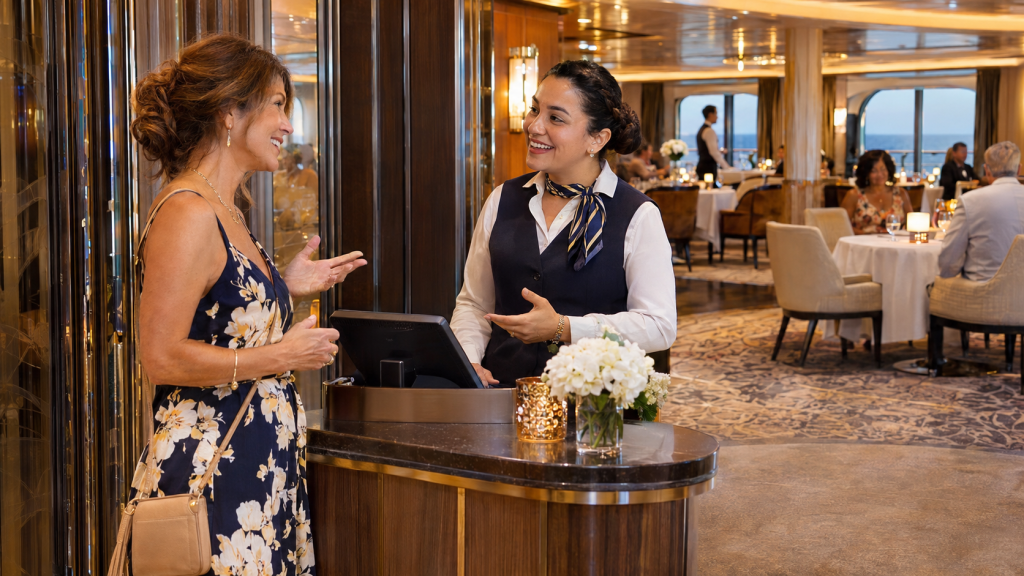
If you’d prefer to dine alone in the main dining room, there’s nothing unusual about making that request.
You can approach the host and ask for a private table, specifying that you’d prefer a quieter location if one is available.
A small table designed for two is often the practical seating arrangement for one passenger, so don’t worry if the restaurant doesn’t have literal single-person tables.
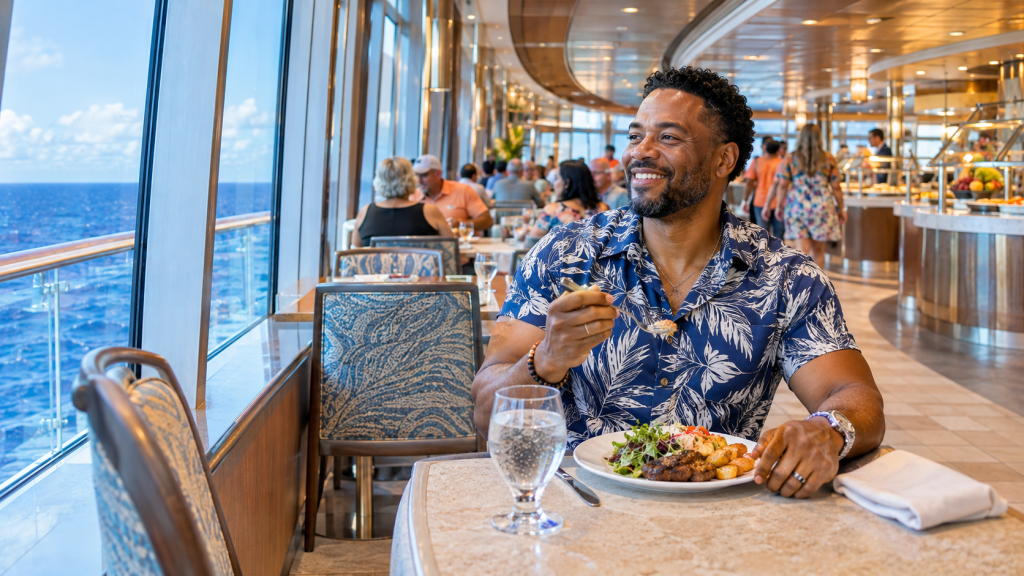
The dining team may be able to accommodate your preference immediately, or they may suggest a different time when suitable seating is available.
For cruises with assigned dining, it’s worth discussing your preference before departure or early on embarkation day.
A table change isn’t guaranteed, but requesting it before dining arrangements become established may provide more flexibility.
Royal Caribbean specifically advises guests who want to change assigned dining arrangements to speak with the dining team on embarkation day.
The goal is to communicate what would make the experience enjoyable for you, just as another passenger might request an earlier meal, accessible seating, or a quieter table location.
Make Your First Evening Easy Without Avoiding the Main Dining Room
Embarkation day can be tiring, particularly when you’ve traveled a long distance, navigated the terminal, and spent several hours getting familiar with the ship.
By dinnertime, you may have less interest in dealing with unfamiliar restaurant procedures than you expected.
That’s one reason it’s useful to plan your first meal before you board.
If you enjoy casual dining, the buffet or another included restaurant may be the easiest way to start.
You can choose your food, find a comfortable seat, and enjoy the meal without following a formal dining sequence.
However, you shouldn’t feel that you need to avoid the main dining room simply because you’re traveling alone.
If you’ve been looking forward to being seated, ordering from a menu, and enjoying attentive service, that’s a perfectly reasonable choice for your first evening.
Online‑Only Cruise Offers You Won’t Find Elsewhere
Unlock special pricing and start planning the sailing that matches your perfect itinerary
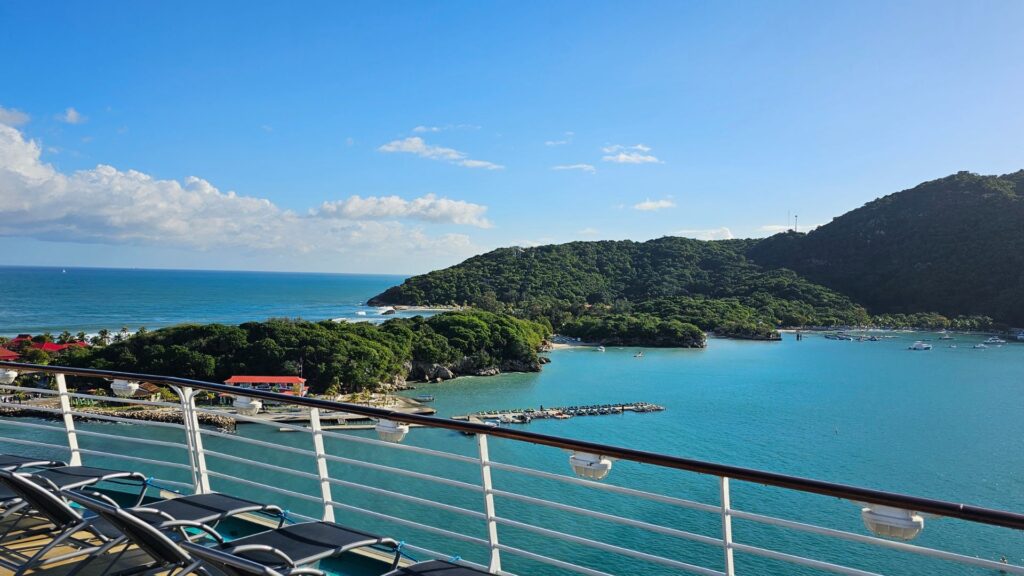
You might make a reservation where available, confirm your dining assignment, or ask the host about a private table before the dining room becomes particularly busy.
When you know what to expect, the experience often feels much less intimidating than the scenarios you imagined beforehand.
Choose Your Dining Atmosphere Around How You Feel That Day
A cruise gives you something that can be particularly valuable when you’re traveling solo: the ability to choose how much interaction you want without coordinating every decision with someone else.
Perhaps you’d enjoy an early dinner followed by a theater performance.
Another evening, you may prefer spending a little longer over dessert and watching the ocean after dark.
You could also choose a casual meal after returning from a demanding excursion, especially when getting dressed for dinner sounds less appealing than relaxing in your cabin.
If you feel like socializing, consider attending a solo traveler gathering or another group activity before dinner.
That gives you an opportunity to connect with passengers without relying on an assigned dining table to create introductions.
And when you prefer privacy, you can enjoy your own company without treating the decision as something that needs an explanation.
Let Dining Alone Become One of the Pleasures of Solo Cruising
One of the unexpected rewards of traveling independently is discovering how enjoyable ordinary experiences can feel when they’re entirely your choice.
You can order exactly what interests you, take as long as you’d like, and decide whether to continue the evening with entertainment or return to your cabin.
There’s no need to negotiate restaurant preferences, coordinate schedules, or wait for another person to decide what sounds appealing.
That freedom is worth appreciating, particularly when you’re experiencing solo travel for the first time.
You may still have moments when you feel self-conscious, but those feelings don’t need to determine where you eat.
Dining alone on a cruise isn’t a compromise you make because you’re traveling without company.
It’s another way to enjoy the vacation you’ve chosen.
Once you understand the dining system and know how to communicate your preferences, your meals can become something you look forward to rather than a daily source of uncertainty.
How to Feel Comfortable Dining Alone on Your First Cruise and Choose the Right Seating Arrangement
If you are planning your first cruise and worried about dining alone, you are not alone.
Cruise dining can feel intimidating when you do not know the system or the options.
Not because anything is actually wrong, but because your brain starts narrating.
A host glances up, you imagine a pause, and suddenly it feels like a spotlight.
That is where first-time cruisers get stuck, because ships are social by design.
Meals happen in visible places, at predictable times, with people arriving in pairs and groups.
Visibility can trigger social anxiety even when nobody is judging you.
Relief comes from learning how cruise dining works, and then using it to your advantage.
This guide shows you how to do that in a way that feels natural, not forced.
One term matters here, because it fuels most of the uncertainty.
Shared tables refers to dining setups where multiple parties are seated together at one table.
For some guests, shared tables feel friendly and fun, because conversation is easy onboard.
For other guests, shared tables feel like a surprise social obligation at the worst time.

Luxury Cruise Experiences at Smarter Prices
See premium sailings and upgraded cabins priced for travelers who know how to book well
Either reaction is normal, and neither makes you difficult.
Knowing what to request, when to request it, and where to dine first removes most of the pressure.
By the end, you will have scripts, timing strategies, and a night-one plan that works.
The goal is simple: eat well, feel comfortable, and stop overthinking dinner.
Why Dining Alone Feels Intimidating on Your First Cruise
Cruise dining anxiety is rarely about food.
Social pressure is the real issue, especially when you are new and still learning the ship.
A first-time cruiser often assumes solo dining is unusual onboard.
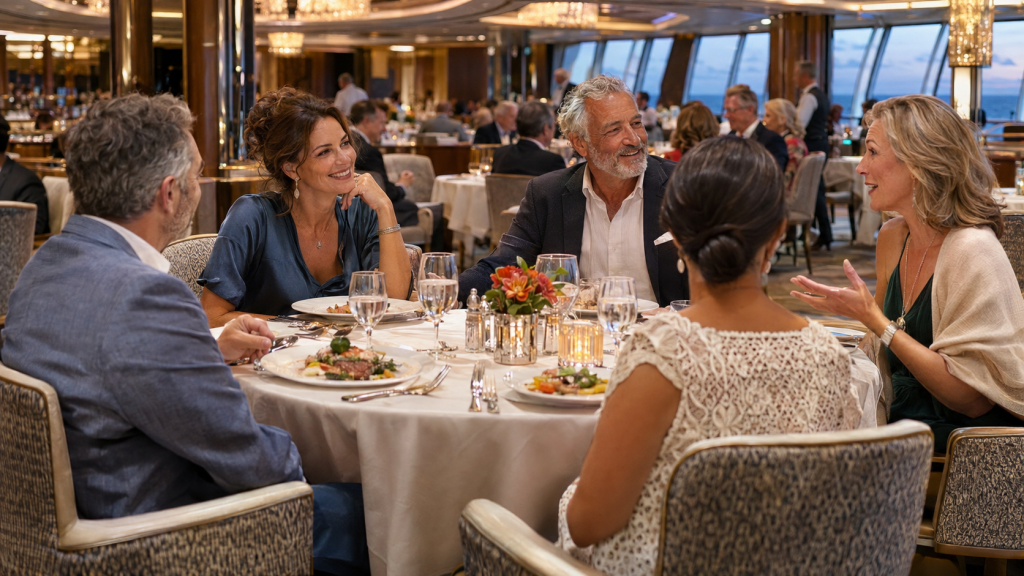
That assumption makes you scan the room for proof, and scanning creates tension.
Then tension makes you want to avoid the dining room, which can leave you hungry and frustrated.
Hunger turns small worries into bigger ones, which is how a simple dinner becomes a whole mood.
A better approach is treating solo dining as a skill you practice early, not a hurdle you delay.
Once your nervous system gets one “this was fine” experience, the fear drops fast.
The spotlight myth
Most guests are focused on their own table, not on the room.
Menus, conversations, and exhaustion from port days keep attention local.
Your brain feels watched because you are watching yourself.
That self-awareness is normal in unfamiliar environments, especially when you want to fit in.
A cruise ship also compresses space, so the dining room can feel more public than a restaurant at home.
Even so, solo diners exist on every sailing, and staff see them constantly.
After one or two solo meals, your body learns the environment is safe.
That learning is the foundation of confidence on a ship.
Cruise dining is a system
Restaurants on land are flexible, but ships run on structure.
That structure is what creates predictability for thousands of people.
Hosts seat guests quickly, servers manage timing, and kitchens coordinate volume.
Structure can feel intimidating when you do not know it yet.
At the same time, structure is what lets you ask for what you need with clarity.
Once you understand the dining style on your ship, you can choose the easiest path.
Ease is not luck, it is knowing the system and using it.
That is what you are building here.
Your first win matters
A first solo meal is not a “big brave moment.”
It is practice, and practice works because it is repeatable.
Plan one solo dinner early in the cruise, ideally before you feel worn down.
Choose an off-peak time, or pick a venue where seating flows casually.

Sail Away to Paradise Without Overpaying
Find cruise deals that make it easy to escape, relax, and enjoy the ocean without stretching your budget
Walk in with a simple request ready, so you do not freeze at the host stand.
Small preparation turns a stressful situation into a normal interaction.
Normal interactions are how you start feeling like you belong.
Belonging is not a personality trait, it is familiarity.
Solo dining is common
Solo dining happens on every cruise, even when most guests travel in groups.
Systems create comfort
Knowing the dining format makes your request feel simple and routine.
One good meal helps
A successful first solo dinner changes how the rest of the week feels.
Understand Cruise Dining Formats So Solo Meals Feel Easy
Cruise dining is not one single thing.
Different cruise lines, and even different ships, use different dining formats.
Those formats determine whether shared tables are likely, and how much control you have.
The good news is that control is usually higher than beginners assume.
Requests are easier to honor when they are made early and stated clearly.
Timing is also leverage, because early arrivals create more seating options.
This section makes the system clear, so your choices feel real, not theoretical.
Once the system is clear, confidence stops being a vague goal and becomes a plan.
Traditional dining
Traditional dining typically assigns a set dinner time and a table arrangement.
On some sailings, that arrangement includes larger tables with multiple parties.
On other sailings, a smaller two-top may be available for solo diners.
A request matters here, because staff can often adjust assignments.
The simplest ask is “A table for one, if available.”
A stronger preference can be “I prefer not to share a table tonight.”
Polite clarity works best when it happens early, not after you are already seated.
Early communication gives the dining team room to solve it.
Flexible dining
Flexible dining reduces solo anxiety because the system expects varying party sizes.
Royal Caribbean says My Time Dining is flexible, and you will be seated with whomever you arrive with. (Royal Caribbean)
That matters for solo dining, because arriving alone typically means being seated alone. (Royal Caribbean)
Reservations are also strongly recommended to avoid delays in seating, which helps you skip long waits. (Royal Caribbean)
Norwegian Cruise Line explains that Freestyle Dining means dining when and where you want, with no fixed dining times or pre-assigned seating. (Norwegian Cruise Line)
That setup often feels easier for solo diners because it reduces the “assigned table” pressure. (Norwegian Cruise Line)
If solo comfort is important to you, flexible dining is a feature worth prioritizing when choosing a first cruise. (Royal Caribbean)
Comfort is not only emotional, it is also operational.
Shared tables explained
Shared tables are not automatically bad, and you do not have to fear them.
Some cruisers love table sharing because it creates easy conversation and community.
Other cruisers prefer privacy, especially after a long day in port.
Condé Nast Traveler notes that sharing a table can enhance or detract from the cruise experience depending on preference. (Condé Nast Traveler)
That is the key point: preference matters.
A practical reality also exists, because some ships still seat guests together unless a preference is requested. (Emma Cruises)
When you want a private table, earlier dining times and reservations often help, because seating inventory is more flexible then.
If a shared table is the only option in the moment, you can still steer the experience in a way that feels safe for you.
You will learn how in the next sections.
Solo-friendly ship features
Dining alone feels easier when the ship supports solo travelers in general.
Norwegian Cruise Line promotes solo and studio staterooms and notes that solo staterooms include access to a Studio Lounge on applicable ships. (Norwegian Cruise Line)
That matters even if you are not traveling solo full-time, because solo-friendly spaces make it easier to meet people on your terms. (Norwegian Cruise Line)
A lounge meet-up can give you familiar faces without forcing you into a dinner conversation you did not choose.
Choice is the opposite of social anxiety, because choice gives you control.
Control is what your brain has been asking for the whole time.
When you feel in control, dining alone stops feeling like a risk.
It starts feeling like freedom.
Format changes everything
Dining format determines whether solo dining feels automatic or awkward. (Royal Caribbean)
Preferences are valid
A request for privacy is normal, and staff handle it constantly. (Condé Nast Traveler)
Solo spaces help
Solo-friendly lounges and meetups can reduce pressure without forcing anything. (Norwegian Cruise Line)
Plan Your First Night Dinner to Reduce Solo Dining Anxiety
Night one is where many first-time cruisers get stuck.
Everything feels new, the ship is busy, and your brain is already tired from travel.
That combination makes social anxiety louder, even if you are confident in daily life.
Planning night one is not overthinking, it is protecting your experience.
A simple plan keeps you from wandering hungry, which is where awkward feelings intensify.
The goal is to create a low-pressure win that tells your body dinner is safe.
Once you have that win, the rest of the cruise becomes easier.
This plan is designed to be forgiving, flexible, and realistic.
Choose the easiest venue
Start night one with the dining venue that feels least performative.
On many ships, the buffet or casual venues feel easiest because seating is self-directed.
That can be a great first step if your anxiety is high.
If you want the main dining room experience, choose it with structure.
Reserve when possible, or arrive early when the room opens.
Early arrival increases seating flexibility and reduces awkward waiting.
A short wait feels manageable when you expected it, and miserable when you did not.
Set yourself up for manageable.
Walk in with one request
Nervousness spikes when you do not know what to say.
Give yourself one sentence you can repeat without apology.
Try “Table for one, please, and a quiet spot if possible.”
That sentence does three things.
It states your party size, sets a preference, and signals you are easy to work with.
Staff can usually respond quickly with either a solution or a timing suggestion.
If a host says a shared table is the only option right now, ask a follow-up.
A good follow-up is “Is there a later seating with a private table available.”
Decide your conversation posture
Shared tables create anxiety because they feel like forced conversation.
Conversation is optional, even at a shared table.
A friendly greeting is polite, and then you can keep it light. (Condé Nast Traveler)
Short responses, a smile, and attention to your menu are all socially acceptable.
If you want to speak, ask easy topics like ports, shows, or favorite foods. (Condé Nast Traveler)
If you want quiet, keep your focus on the meal and your evening plan.
Nobody is entitled to your energy, especially when you are unwinding.
Respectful quiet is still respectful.
Use a “soft exit” plan
Social anxiety often spikes when you feel trapped.
Give yourself a soft exit that does not feel dramatic.
One option is choosing an early seating and planning a short walk afterward.
Another option is planning a show or a deck stroll right after dinner.
Plans after dinner reduce the pressure to make dinner the whole event.
Dinner becomes one part of the night, not the entire identity of the night.
That shift is powerful for beginners.
A night that keeps moving feels easier than a night that feels like a stage.
Dining confidence guide
Use this table as your quick decision tool when nerves show up.
It is designed to keep you from spiraling, because it points you to the next step.
It also helps you choose the right venue based on the kind of comfort you need that day.
Save it in your notes before you sail, and you will use it more than once.
The goal is not forcing yourself into one style of dining.
The goal is matching the dining choice to your energy level.
That is how solo dining becomes sustainable.
That is how it becomes enjoyable.
| If you feel this | Choose this dining move | Ask for this | Your confidence win |
|---|---|---|---|
| High anxiety, low energy | Buffet or casual venue | “A quiet corner table, please.” | You ate without pressure. |
| Mild anxiety, want structure | Main dining room early | “Table for one, quiet spot.” | You practiced the format. |
| Curious about meeting people | Shared table by choice | “Happy to share tonight.” | You controlled the choice. |
| Overstimulated after port | Room service or grab-and-go | “Delivery time that works.” | You protected your bandwidth. |
| Worried about awkward waiting | Reservation when possible | “Reservation for one.” | You avoided the lobby hover. |
Night one sets tone
A simple first dinner plan reduces nerves for the rest of the sailing.
Scripts prevent freezing
One prepared sentence removes the awkward pause at the host stand.
Choice builds comfort
Matching dining style to your energy makes solo meals feel natural.
Simple Habits That Make Solo Dining Feel Natural Onboard
Comfort during solo dining is not only about where you sit.
It is also about how you arrive, how you pace the experience, and how you frame the moment.
A first-time cruiser often tries to “act normal,” which ironically creates tension.
A better approach is building a few habits that make solo dining feel intentional.
Intentional is the opposite of awkward, because intentional looks confident.
Confidence does not mean loud or social, it means steady.
This section gives you steady habits you can use in any venue.
Use them like tools, not like rules.
Arrive with purpose
Walking in slowly while scanning the room can intensify self-consciousness.
A simple fix is choosing your next step before you enter.
Know whether you are asking for a quiet table, a two-top, or a shared table by choice.
Walk to the host stand, say your sentence, and then relax.
Purpose reduces the feeling that you are wandering.
Wandering is what makes many first-timers feel exposed.
Even if you feel nervous, acting with purpose changes the experience.
Your body follows your plan faster than your feelings do.
Bring a comfort anchor
A comfort anchor is a small thing that makes solo dining feel familiar.
Some people bring a book or an e-reader.
Others bring a journal, or plan to review tomorrow’s port schedule.
Another option is using a phone intentionally, not as a panic shield.
Check the daily schedule, text a friend, or look at photos from the day.
If you use public networks to handle travel details, extra privacy protection can help you feel more secure.
NordVPN can add a layer of protection when browsing on shared connections.
Security is not only technical, it is psychological, because it lowers background worry.
Use staff as allies
Cruise staff can make solo dining easier when you communicate clearly.
A host can often suggest quieter sections or better times.
A server can pace the meal at the speed you prefer.
If you want faster dining, say so early in a friendly way.
If you want a slower pace, mention you are enjoying a relaxing meal.
Staff respond well to clear preferences because it helps service flow.
Service flow improves your experience and the staff’s workflow.
That is why polite clarity is a win for everyone.
Make shared tables work for you
Sometimes a shared table happens even when you did not want it.
That does not mean the evening is ruined.
Start with a friendly hello, then choose your level of engagement. (Condé Nast Traveler)
Short conversation is enough to be polite.
A simple topic like “Which port was your favorite so far” keeps things easy. (Condé Nast Traveler)
If quiet feels better, let your menu be your focus and keep responses brief.
Boundaries can be gentle and still real.
The goal is leaving dinner feeling fed and respected, not socially depleted.
Purpose beats awkward
Entering with a plan changes the entire tone of solo dining.
Anchors reduce anxiety
A small comfort habit makes a new dining room feel familiar.
Boundaries are allowed
Polite conversation is optional, and quiet can still be respectful. (Condé Nast Traveler)
Avoid These Solo Dining Mistakes That Increase Stress
First-time cruisers often blame themselves for dining anxiety.
That blame is unnecessary, because most issues come from predictable missteps.
Those missteps are easy to fix once you see them clearly.
The biggest trap is waiting too long and letting hunger force a decision.
Another trap is assuming you have to accept whatever seating is offered without asking.
A third trap is treating one awkward moment as proof solo dining will always feel bad.
None of that is true, and your nervous system can learn quickly.
This section gives you the mistakes, the fear underneath each one, and the simple fix.
Mistake one waiting too long
Hunger makes social anxiety louder.
When you wait until peak time, crowds increase and hosts have fewer options.
Fewer options can make you feel trapped, which spikes awkwardness.
The fix is eating a little earlier, or reserving when possible. (Royal Caribbean)
Even a small snack before dinner can prevent the “I need food now” panic.
Food should never feel like a social emergency on vacation.
A little timing control changes everything.
Early wins create steady confidence.
Mistake two not stating preferences
Many beginners assume requesting a private table sounds demanding.
In reality, staff handle preferences constantly, because ships serve many personalities.
If shared tables are not for you, say so politely.
A request is not a complaint.
When a host cannot meet the request immediately, timing alternatives often exist.
Asking “Is there a later private table” keeps the tone easy and practical.
Your comfort is a legitimate factor in your vacation.
That truth is worth practicing.
Mistake three treating quiet as failure
Some solo diners feel pressured to be social to justify dining alone.
That pressure creates performance anxiety, which ruins the meal.
Quiet is not failure, and quiet is not rude when you are polite.
A smile, a hello, and respectful body language are enough. (Condé Nast Traveler)
Cruising includes extroverts and introverts, and both belong.
A dining room can hold many styles at once.
Your style is allowed to exist without explanation.
Dinner is still a success when you enjoyed it quietly.
Mistake four skipping the dining room entirely
Avoidance can feel protective, but it can also make you feel isolated.
Skipping the dining room can reduce anxiety short term while increasing it long term.
Trying one structured meal early is often the better strategy.
A single positive experience teaches your brain you can handle it.
After that, you can choose buffet, main dining, casual venues, or room service freely.
Freedom is the goal, not forcing yourself into one format.
Once freedom arrives, awkwardness loses its leverage.
That is how solo dining becomes comfortable.
Timing prevents spirals
Earlier dining and simple reservations reduce pressure and increase options. (Royal Caribbean)
Preferences are normal
A polite request for privacy is common and reasonable on a cruise. (Condé Nast Traveler)
Quiet can be confident
A calm presence is not required, and a steady presence is enough. (Condé Nast Traveler)
Build a Solo Dining Mindset That Makes Your Cruise Easier
Confidence does not come from telling yourself not to feel awkward.
Confidence comes from having a plan that works even when awkwardness shows up.
That is why systems beat pep talks, especially on a first cruise.
A system turns “What do I do” into “I know my next step.”
When you know your next step, your body relaxes.
Relaxation changes your face, your posture, and your tone without effort.
That is why people think confident cruisers are “naturals.”
They are not naturals, they are practiced and prepared.
The two-choice rule
Give yourself two dining choices every night.
One choice is the easiest option for your energy level.
Another choice is the stretch option that builds confidence.
A buffet meal can be the easy option.
A main dining room meal can be the stretch option.
Rotate as needed, and nothing feels like a permanent identity.
This removes pressure, because pressure often comes from feeling locked in.
You are not locked in.
You are choosing.
The small-connection option
Sometimes solo dining anxiety is really loneliness dressed up as awkwardness.
Loneliness can show up even when you like your independence.
On those nights, a small connection can help.
Attend a solo meetup, sit at a shared table by choice, or join a low-pressure trivia team.
Solo-friendly ship design can make this easier on certain lines. (Norwegian Cruise Line)
The point is not forcing friendships.
The point is giving yourself an option that is lighter than a deep social commitment.
Light connection often reduces the pressure around dinner.
The practical comfort layer
Comfort improves when the rest of your travel feels organized.
A pre-cruise hotel night can reduce the rushed feeling that makes you tense on day one.
Booking.com, Agoda, Trip.com, and Tripadvisor can help you choose a convenient location near the port.
Luggage storage through Radical Storage can help when you arrive early and want to explore.
A guided city experience through Viator or GetYourGuide can give you an easy win before you even board.
That early win can raise confidence before your first dinner, because you already navigated something new successfully.
These tools are not required for dining alone.
They simply reduce friction around the trip, which gives you more bandwidth for everything onboard.
Systems beat pep talks
A repeatable plan works even when nerves show up at the worst moment.
Two choices help
An easy option plus a stretch option keeps you moving forward without pressure.
Friction matters
Reducing travel-day stress can make onboard confidence feel easier to access.
You Can Enjoy Dinner Alone On This Ship
Dining alone on a cruise is not a sign you are out of place.
It is a normal way to travel, a normal way to rest, and a normal way to enjoy the food you paid for.
A host stand request, a timing strategy, and one practiced meal can change your whole week.
Shared tables can become optional rather than intimidating once you understand your choices. (Condé Nast Traveler)
Most importantly, you do not need to perform sociability to belong on a cruise ship.
You only need a plan that respects your comfort and still lets you enjoy the experience.
That is what this guide is designed to give you, starting with your very next dinner.
FAQ – How Can Solo Cruisers Enjoy Dining Alone, Request Private Tables, and Handle Shared Seating Without Feeling Awkward?
Is It Normal to Eat Alone on a Cruise Ship?
Yes, dining alone is a normal part of cruising, particularly for passengers traveling independently or choosing to spend part of the day apart from their companions.
Cruise restaurants serve many different party sizes, and dining staff are accustomed to welcoming guests with different preferences.
Although seeing couples and groups around you may initially make eating alone feel more noticeable, you don’t need a dining partner to enjoy the restaurant.
Once you’ve experienced the process a few times, ordering a meal by yourself often begins to feel like any other part of your vacation.Can You Request a Private Table for One in the Cruise Main Dining Room?
You can request private seating in the main dining room, although availability depends on the cruise line, dining format, and restaurant’s existing arrangements.
A small table for two may be used to accommodate a solo diner, since dedicated single-person tables aren’t always available.
If private dining is important to you, make the request before sailing when possible or speak with the dining team early during embarkation.
Being clear about your preference gives staff the best opportunity to suggest a suitable arrangement or alternative dining time.Will You Be Forced to Share a Dining Table with Strangers on a Cruise?
Not every cruise line uses shared dining tables, and many ships offer arrangements that allow passengers to dine privately.
Traditional dining may involve assigned tables that include several parties, while flexible dining systems can provide more choice over when and with whom you eat.
If you don’t want to share a table, communicate that preference before the dining assignment is finalized or ask the host what alternatives are available.
A private table cannot always be guaranteed at your preferred time, but you can usually discuss other dining options rather than assuming shared seating is your only choice.What Is the Difference Between Traditional Dining and Flexible Dining for Solo Cruisers?
Traditional dining generally assigns passengers a specific dinner time and table, which can appeal to travelers who enjoy routine and familiar servers.
Flexible dining allows guests to choose from available dining times, often with reservations or walk-in seating depending on the cruise line.
For solo travelers, flexible arrangements can be appealing because they provide opportunities to adjust dinner around entertainment, shore excursions, and personal preferences.
Neither system is automatically better, so consider whether you value consistency or the freedom to decide when you want to eat.Is Royal Caribbean My Time Dining Good for Solo Travelers?
Royal Caribbean’s My Time Dining can be a convenient option for solo travelers because it allows guests to select dinner times according to availability.
The cruise line states that passengers are seated with the people they arrive with, so arriving independently supports a private dining preference.
Reservations are strongly recommended, particularly when you want to avoid waiting during popular dinner periods.
You can also request a specific table or seating arrangement, although the dining team must work within the available space.Is Norwegian Cruise Line Freestyle Dining Easier for Solo Cruisers?
Norwegian Cruise Line’s Freestyle Dining can be particularly appealing to independent travelers because it doesn’t use fixed dining times or pre-assigned seating.
Instead, you can choose among available restaurants and dine at times that fit your activities and preferences.
This flexibility may reduce some of the uncertainty associated with traditional table assignments, although popular restaurants can still have waits or reservation requirements.
If dining independence is one of your main priorities, reviewing Norwegian’s available restaurants and dining options may help you decide whether its approach suits you.When Should You Request a Table for One on a Cruise?
The best time to communicate your dining preference is before the cruise when the operator allows advance requests.
If you’ve already received an assigned table that doesn’t suit you, speak with the dining team on embarkation day rather than waiting until several dinners have passed.
For flexible dining, making a reservation when available can help you plan your evening and discuss preferences in advance.
Although early requests don’t guarantee a specific table, they generally give the restaurant more opportunity to consider alternatives.What Should You Say When Asking for a Solo Dining Table?
A polite, direct request is usually all you need, such as asking for a table for one in a quieter section if one is available.
You don’t need to explain why you’re traveling alone or justify your preference for private dining.
If the restaurant cannot accommodate your request immediately, ask whether another dining time would offer more options.
This keeps the conversation practical and gives the staff useful information without making the interaction unnecessarily complicated.Is the Cruise Buffet a Good Choice for Your First Solo Dinner?
The buffet can be an easy starting point because it usually allows guests to choose their own food and seating without following the main dining room’s formal service arrangements.
That flexibility can be particularly appealing after a long embarkation day when you’d prefer a simple meal.
However, buffets can become crowded during peak periods, and you may still need to look for an available table.
If you want a more structured or leisurely dinner, the main dining room remains a reasonable choice even when you’re eating alone.Should You Eat Early to Avoid Feeling Awkward Dining Alone?
Eating earlier can sometimes reduce waiting and make it easier to find available seating, especially when the dining room becomes busy during popular dinner periods.
However, the best time depends on your cruise line’s schedule and whether you’ve selected traditional or flexible dining.
Arriving earlier doesn’t guarantee a private table, and some restaurants may require reservations regardless of when you arrive.
Choose a time that fits your activities and energy level, then confirm the available seating arrangements when necessary.What Should You Do if the Dining Room Host Offers You a Shared Table?
If the host offers shared seating, you can politely explain whether you’d prefer to dine privately or are comfortable joining other passengers.
When private tables aren’t immediately available, ask whether another seating time would provide a suitable alternative.
You may also choose another restaurant for that evening if waiting or sharing a table doesn’t appeal to you.
The important thing is recognizing that the initial seating offer doesn’t prevent you from asking about arrangements that better suit your preferences.How Can You Feel Comfortable Eating at a Shared Cruise Dining Table?
Begin with a friendly greeting and allow the conversation to develop naturally rather than feeling responsible for entertaining everyone.
Cruise destinations, onboard activities, and dining experiences provide easy topics when you’d like to participate.
If you prefer a quieter meal, brief responses and respectful attention to your food can be perfectly appropriate.
Shared dining works best when everyone has room to enjoy the experience at their preferred level of interaction.Do You Have to Make Conversation When Sharing a Cruise Dining Table?
You don’t have to participate in continuous conversation simply because you’re seated with other passengers.
A friendly introduction and occasional acknowledgment are generally sufficient when you’d rather concentrate on your meal.
However, shared tables are naturally social settings, so some interaction may be difficult to avoid entirely.
If privacy is especially important to you, requesting a separate table before being seated is a more practical solution than spending dinner trying to avoid every conversation.Can Solo Cruisers Enjoy Specialty Restaurants Without a Dining Companion?
Yes, solo passengers can enjoy specialty restaurants independently, subject to the venue’s reservation and seating arrangements.
These restaurants may offer a different menu, atmosphere, or service style from the included dining venues, making them an appealing choice when you want a special evening.
It’s sensible to reserve ahead when required, particularly for popular restaurants or limited seating periods.
Choosing a specialty dinner for yourself can be a rewarding part of solo cruising without needing to turn it into a social occasion.Can You Ask Cruise Dining Staff to Make Your Meal Faster or More Relaxed?
You can communicate your preferred dining pace to the server, and staff may be able to adjust service when the restaurant’s operations allow it.
For example, you might mention that you’d like to finish in time for a particular show or that you’re hoping to enjoy an unhurried evening.
Understanding your plans can help the team provide service that fits your expectations, although exact timing cannot always be guaranteed.
Making the request early in the meal is generally more useful than waiting until you’re already running late.What Can You Do While Waiting for Food When Dining Alone?
You can simply enjoy the restaurant atmosphere, look through the menu, or reflect on the activities you’ve experienced during the day.
Some solo travelers appreciate bringing a book, journal, or e-reader, particularly when dining in a casual setting where those items feel appropriate.
Others prefer putting their phones away and treating dinner as an opportunity to enjoy an uninterrupted meal.
There’s no particular activity you need to perform to make dining alone appear natural, so choose whichever approach makes the experience enjoyable for you.How Can You Meet People on a Cruise Without Sharing a Dinner Table?
Cruise ships provide several opportunities to socialize outside the dining room, including trivia, classes, live entertainment, and organized passenger gatherings.
Some sailings also offer solo traveler meetups where you can introduce yourself in an environment intended for social interaction.
Shore excursions can provide another opportunity because participants share activities and experiences throughout the day.
These options allow you to meet people when you’re interested in company while keeping dinner as private as you’d like.What Are the Biggest Mistakes Solo Cruisers Make When Dining Alone?
One common mistake is assuming that everyone in the dining room is paying attention to whether you’re traveling independently.
Another is waiting until you’re extremely hungry before deciding where to eat, which can make an unfamiliar restaurant or long queue more frustrating.
Some passengers also avoid requesting a private table because they worry about inconveniencing the staff.
Understanding the available dining arrangements, communicating preferences early, and allowing flexibility between restaurants can make the experience much more enjoyable.What Should You Do if You Feel Anxious Before Entering the Cruise Dining Room?
Start by choosing the restaurant and type of seating that feel most comfortable for that particular evening.
You can review the dining arrangements in advance and prepare a simple request so you know what to say when you reach the host.
If a formal restaurant feels like too much after a demanding day, enjoying a casual meal is another reasonable choice.
You don’t need to force yourself into the most challenging setting to prove that you can travel independently, and your comfort can guide your decisions throughout the voyage.How Can You Learn to Enjoy Dining Alone Throughout Your First Cruise?
Begin with an arrangement that suits your preferences, whether that’s a casual buffet meal or a private table in the main dining room.
As you become familiar with the restaurants and staff, you may find yourself more comfortable exploring different venues or trying shared seating when you’re interested in meeting people.
Remember that you can choose a different dining experience from one night to the next without needing to justify the change.
The real benefit of solo cruising is having the freedom to enjoy meals according to your own interests, schedule, and appetite.
Plan Your Next Cruise!
Sail Smart: Discover The Real Cost of Luxury Cruises and Maximize Your Travel Value
One Delay Can Cost Your Entire Cruise A quick coverage check now protects you from the problems no one sees coming….
From Icon to Oasis: Explore Royal Caribbean’s Groundbreaking Ships and Unforgettable Voyages
One Delay Can Cost Your Entire Cruise A quick coverage check now protects you from the problems no one sees coming….

Sail Into Freestyle Freedom: Norwegian Cruise Line for Adventure Thrills, Gourmet Dining, and Destination‑Rich Voyages
One Delay Can Cost Your Entire Cruise A quick coverage check now protects you from the problems no one sees coming….

Sail Into Timeless Luxury: Cunard Cruises for Transatlantic Elegance and Destination‑Rich Voyages
One Delay Can Cost Your Entire Cruise A quick coverage check now protects you from the problems no one sees coming….
Explore More
Avoid Costly Losses: Cruise Refund Rules, Cancellation Deadlines, and Insurance Recovery
Cruise Curfews for Minors — What Families Need to Know Before Sailing

Avoid Drone Confiscation: Master Cruise Line Rules and Fly Legally at Every Port