One Delay Can Cost Your Entire Cruise
A quick coverage check now protects you from the problems no one sees coming
Short Excerpt
- Cruise tipping can feel confusing on your first sailing, especially when automatic gratuities, bar service charges, and optional cash tips overlap.
- Most mainstream cruise lines use daily gratuities to support onboard service teams, but the amounts, policies, and included services vary.
- Use the interactive cruise tipping calculator to estimate your gratuities, plan optional tips, and avoid unexpected charges before you board.
Quick Take
- Automatic gratuities usually cover routine onboard service. You generally don’t need to hand cash to every crew member throughout the cruise.
- Calculate daily charges before sailing. The number of guests, cruise nights, and your line’s gratuity rate determine the estimated total.
- Check your booking for prepaid gratuities. Avoid budgeting for the same service charges twice.
- Review receipts before adding another tip. Drinks, specialty dining, and spa purchases may already include a service charge.
- Treat extra tips as intentional appreciation. You can reward exceptional service without feeling obligated to tip every employee separately.
How Much Should You Budget for Tipping on Your First Cruise?
You’ve booked your first cruise and started figuring out how everything works onboard.
Then someone mentions automatic gratuities, another traveler recommends bringing envelopes of cash, and a cruise discussion suggests tipping your cabin steward before the first night.
Suddenly, you’re wondering whether you’ve budgeted enough money to take care of the people who will be looking after you.
The confusing part isn’t necessarily the amount. It’s understanding which tips have already been included in your vacation and which ones you’re expected to handle yourself.
At many mainstream cruise lines, a daily gratuity or service charge is assessed for each eligible guest.
Depending on your booking, you may have prepaid it or the amount may appear on your onboard account during the sailing.
That system is intended to compensate designated service personnel according to the cruise line’s policies, reducing the need to tip every person individually.
However, additional service charges may apply to beverages, specialty restaurants, spa treatments, and other purchases.
You may also encounter situations outside the ship, such as luggage assistance or guided shore excursions, where separate tips are customary.
For someone taking their first cruise, the easiest approach is to divide tipping into three categories: daily gratuities, service charges already included in purchases, and optional personal tips.
Once you know which category a payment belongs to, the uncertainty starts to disappear.
Calculate Your First-Cruise Gratuities Before You Pack Tip Money
Your first step should be confirming the daily gratuity rate associated with your cruise line, ship, and stateroom category.
The rate can vary by operator, accommodation type, and passenger eligibility.
Some cruise lines also use different arrangements for younger guests or fares with prepaid service charges.
That means a number mentioned in a cruise discussion may not apply to your reservation.
Top Cruise Deals From Trusted Cruise Lines
Compare exclusive online offers and find the fare that fits your trip and your budget
Instead, use the rate provided in your booking information.
Multiply that amount by the number of eligible guests and the number of nights to estimate your total daily gratuities.
Then check whether you’ve already prepaid them.
After that, decide whether you’d like to reserve a separate amount for optional tips.
You might want to thank a particularly helpful cabin steward, reward outstanding dining service, or tip a local guide during an excursion.
Those decisions are personal, but they become easier when you’ve already accounted for the standard charges.
The calculator below lets you see how the amounts fit together before your vacation begins.
First-Cruise Tipping & Gratuity Calculator
First-Cruise Tipping Calculator
Estimate your daily gratuities and optional tips before boarding. Replace the example amounts with the rates from your actual cruise booking.
Please correct the highlighted values.
Illustrative figures, not current cruise-line rates. Check eligible guest rules and your reservation. Overall tipping includes prepaid daily gratuities; remaining tips exclude them. Bar purchases themselves aren’t part of this tipping total. Cash tips handed directly to crew won’t appear on your onboard account. Don’t count service charges twice if already included in a package or purchase price. Extra tips are optional.
What Your Tipping Estimate Really Means
The first total to understand is the amount assigned to standard daily gratuities.
That figure represents the estimated charges associated with the eligible guests in your cabin across the entire sailing.
If you've already prepaid gratuities, you generally don't need to budget for that same amount again.
However, prepaid daily gratuities don't automatically mean every other service charge or gratuity is covered.

Depending on your cruise line and purchases, separate charges may apply to beverages, spa treatments, or specialty services.
The calculator also lets you reserve money for personal tips, but those entries aren't mandatory amounts.
If you prefer to rely on the standard gratuity arrangement for routine service, you can enter zero for additional onboard tips.
On the other hand, you may want to have cash available for a crew member who makes your vacation particularly enjoyable.
The important distinction is between what your booking requires or automatically charges and what you personally choose to give beyond that amount.
Check Your Bar Receipts Before Adding Another Tip
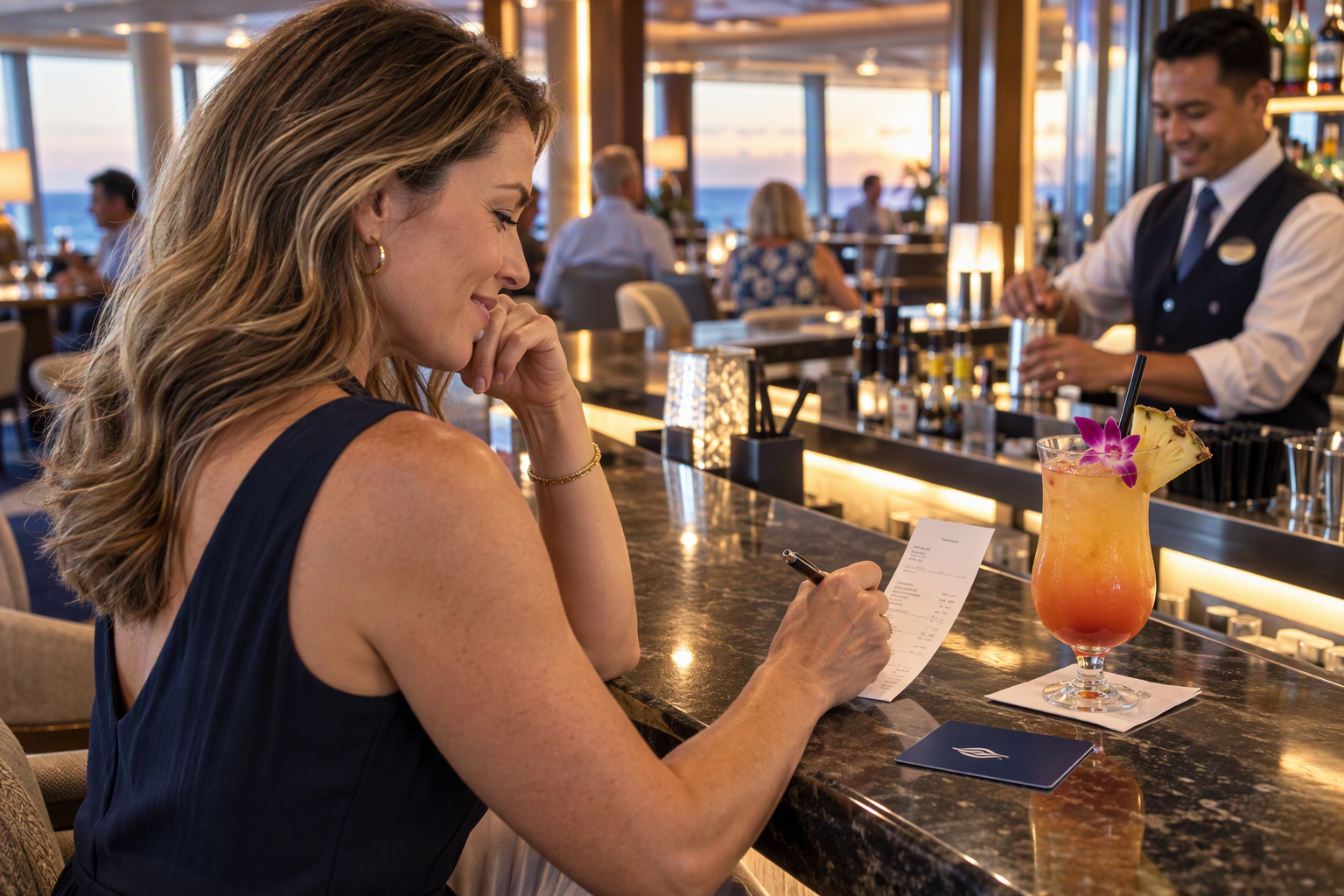
One of the most common sources of confusion for first-time cruisers is the blank tip line on a beverage receipt.
You may order a cocktail, sign the receipt, and notice a space inviting you to add a gratuity.
However, a service charge may already have been added.
Online‑Only Cruise Offers You Won’t Find Elsewhere
Unlock special pricing and start planning the sailing that matches your perfect itinerary

That additional line generally allows you to leave an extra tip if you choose. It doesn't necessarily mean the original purchase lacked a gratuity.
Before entering another amount, review the receipt for service-charge information.
If a separate gratuity is already included, you can decide whether the existing amount is sufficient or whether exceptional service deserves something extra.
Be careful when evaluating beverage packages as well.
Some packages include applicable gratuities in the amount paid at purchase, meaning there may not be a new percentage added every time you order an eligible drink.
Your first-cruise tipping plan should reflect the actual charges shown in your reservation and receipts, not an assumed percentage on every beverage.
Understand When Personal Cash Tips Make Sense
Daily gratuities are designed to support routine onboard service according to your cruise line's policies.
They don't prevent you from recognizing individuals who make an exceptional effort.
Perhaps your cabin steward helps with a special request or consistently takes care of details that improve your stay.
You might also appreciate a dining team that remembers preferences or handles a particular situation thoughtfully.
A personal tip can be a meaningful way to express appreciation.
However, there isn't one universal amount that every first-time cruiser must give.
Suggested cash tipping ranges are informal customs rather than standardized cruise-line requirements, and they vary by destination, service, and personal preference.
If you decide to bring cash, choose an amount that fits comfortably into your vacation budget.
That allows you to be generous without feeling obligated to distribute money each time you interact with a crew member.
Don't Confuse Cruise Ship Gratuities With Port-Day Tips
Another distinction worth understanding before your first sailing is that shipboard gratuities generally don't cover independent services ashore.
A local excursion guide, private driver, or porter assisting with luggage may operate under a different tipping arrangement.
Customary amounts depend on the destination and service provided.

Luxury Cruise Experiences at Smarter Prices
See premium sailings and upgraded cabins priced for travelers who know how to book well
For guided tours, check whether gratuities are included in the booking price.
If they aren't, consider the local tipping customs and the quality of the experience.
You can compare excursions through Viator, GetYourGuide, and Klook, but remember to review the particular operator's inclusions and payment conditions.
Avoid assuming that a tour booked through your cruise line automatically covers every guide or driver tip.
The service description should clarify what's included.
Know When to Ask Guest Services About Gratuities
If you notice a charge you don't understand, addressing it during the sailing is usually more useful than waiting until you return home.
Guest Services can explain your account, applicable daily gratuities, prepaid benefits, and other service charges.
You may also be able to raise concerns about service quality or billing discrepancies.

However, policies governing adjustments to automatic gratuities differ between cruise lines, fares, and regions.
Some charges may be adjustable under particular conditions, while others may not be removable.
It's better to verify your operator's specific policy than assume all mainstream cruise lines follow the same procedure.
If something about the service disappoints you, discuss the issue promptly so the staff has an opportunity to address it.
That approach helps separate legitimate service concerns from confusion about how cruise tipping works.
Keep Your First-Cruise Tipping Plan Simple
Once you've accounted for standard gratuities and confirmed which purchases include additional service charges, there shouldn't be much left to guess.
You can decide whether you'd like a small reserve for exceptional crew service and another amount for tips associated with transportation or excursions.
Then enjoy the vacation without continually wondering whether you're tipping enough.
You don't need to match what another passenger gives, and you don't need to add money to every receipt simply because a blank line appears.
A good first-cruise tipping plan helps you recognize excellent service without paying twice for charges already included in your vacation.
That's the balance worth aiming for: clear expectations, thoughtful appreciation, and spending decisions that feel right for you.
How to Handle Cruise Tipping on Your First Sailing Without Awkward Guesswork
If you are planning your first cruise and feel anxious about tipping, you are not alone.
Questions like who to tip, how much to give, and when gratuities are already included can make money feel complicated.
You have probably heard about automatic gratuities, daily service charges, and bar receipts that already include a tip but still leave an extra line to add more.

Sail Away to Paradise Without Overpaying
Find cruise deals that make it easy to escape, relax, and enjoy the ocean without stretching your budget
You might also worry about looking stingy if you miss a tipping moment or looking reckless if you hand out cash every time someone smiles at you.
All of that can make money feel more complicated than the vacation you are trying to enjoy.
The good news?
Cruise tipping follows clear rules, and a few simple habits can help you handle it confidently without awkward guesswork.
Once you understand how automatic gratuities work, when extra cash is appropriate, and how to avoid overtipping on things like drinks, you can handle tipping with confidence instead of guessing.
Understand Automatic Gratuities So First-Time Cruisers Feel Confident
Let’s start with the phrase that confuses most first-time cruisers.
Automatic gratuities are daily service charges that the cruise line adds to your onboard account for each guest in your cabin.
Instead of handing cash to every crew member you meet, you are paying a structured daily amount that is pooled and distributed to the crew behind your cruise experience.
This pool usually covers people you see and people you never see.
That includes your main dining room wait staff, buffet attendants, and your cabin steward or room steward.
It also includes behind-the-scenes teams who cook food, wash dishes, clean public areas, handle laundry, and keep the ship running smoothly so your days at sea feel easy.
Some lines call these amounts “hotel service charges” or “service gratuities,” but the idea is the same.
They are automated tips spread across the people who make your trip work.

In most cases, these automatic gratuities are added per person, per day and show up on your folio or account summary while you sail.
Some cruise lines let you prepay them before you travel, which can make budgeting easier.
Others add them automatically once you are onboard.
If you prepay, they are usually locked in at that rate for your sailing even if the line increases its daily amount later.
If you pay onboard, the daily rate is whatever is in effect during your cruise.
Can You Adjust Or Remove Automatic Gratuities
On most mainstream lines, you can visit Guest Services and ask to adjust or remove automatic gratuities.
They are not a tax; they are a structured tipping system.
However, it is important to understand what you are changing if you do this.
When you lower or remove automatic gratuities, you are not just adjusting one waiter’s tip.
You are reducing the pot that supports cabin stewards, dining staff, and the many behind-the-scenes workers who keep cabins fresh, dishes clean, and public spaces ready for you to enjoy.
That is why many experienced cruisers treat automatic gratuities as part of the real price of the cruise, not as an optional extra.
If you have a serious, unresolved service issue, you can absolutely speak with Guest Services.
They may adjust part of your charges or work with you on a solution if something truly went wrong.
The key is to raise problems during the cruise so they can be fixed, not wait until the last night and then use gratuity removal as the first step.
Most of the time, staff can correct issues quickly if they know about them.
Automatic Gratuities In Plain Language
Automatic Gratuities Are Structured Tips
They are daily charges that stand in for handing out envelopes to everyone.
They Support A Wide Network Of Crew
Your room steward, your dining team, and many people you never meet all share in this pool.
You Can Adjust Them, But Know The Impact
Reducing or removing them means paying less into the system that supports your week on board.
Know Who to Tip Extra and How Much on Your First Cruise
Once you understand automatic gratuities, the next question is who should still receive extra cash.
The answer is more flexible than strict.
Automatic gratuities cover the basics for many crew members, but personal tips are still a powerful way to say thank you when someone makes your cruise feel special.
Common situations where people tip extra include your cabin steward, your main dining room team, bartenders you see often, and staff members who go out of their way during the week.
An extra envelope for your cabin steward at the end of the cruise is common because they are often the ones quietly handling dozens of small details that make your cabin feel like a retreat.
Some guests tip a little at the start of the cruise as well, especially if they have special requests like extra ice, additional hangers, or specific housekeeping timing.
For dining room teams, many people simply rely on automatic gratuities and then add a bit more in cash at the end if the service was consistently excellent.
You might hand a small envelope to your section headwaiter or server on the final night as a personal thank you.
For bartenders, extra tipping is usually tied to service and familiarity.
If a bartender remembers your preferences, checks on you regularly without hovering, or makes the bar feel like a welcoming spot, you may want to hand them a little extra directly.
You can do this in cash or by adding extra on a receipt when you know exactly what has already been added.
For excursion guides booked through the ship or through companies like Viator, GetYourGuide, or Klook, tipping is typically handled in cash at the end of the tour.
Guides will often suggest a local range, and you can adjust based on the length of the tour and your experience.
General Ranges To Consider
Exact amounts vary by region and cruise line, but many first-time cruisers feel comfortable with modest, consistent ranges.
For cabin stewards, an extra cash tip at the end of $20–$40 per cabin for a week-long cruise is common, with more if the service was exceptional or your cabin required extra attention.
For dining teams, something in the range of $10–$30 per person for the week, on top of automatic gratuities, can feel like a meaningful “thank you” when service is outstanding.
For bartenders you see often, a few dollars extra here and there, or one larger tip at the end of the cruise, is usually appreciated.
For tour guides on excursions, a few dollars per person on shorter tours and more for all-day experiences is a reasonable starting point.
Extra Tipping Highlights
Use Automatic Gratuities As Your Baseline
Think of them as the starting point that covers standard service for the whole week.
Add Extra When Service Truly Stands Out
Personal cash tips are your way of saying “you made this better for me.”
Keep Ranges Modest And Consistent
Small, thoughtful amounts go a long way when you give them with intention.
Avoid Overtipping on Your First Cruise Without Feeling Stingy
One of the easiest places to overspend on tipping is at the bar.
Most large cruise lines include a built-in gratuity or service charge on every drink you buy.
That amount is usually around 18–20 percent and is automatically added to the price of the drink.
Right underneath, the receipt still shows an empty line for an additional tip.
If you are distracted, relaxed, or just not used to this format, it is easy to see the blank line and add a tip there without noticing that a gratuity has already been included.
Over the course of a week, that automatic double tipping can quietly push your bar spending much higher than you planned.
To avoid overtipping by accident, make it a habit to look at the breakdown on the receipt before you sign.
Scan for words like “gratuity,” “service charge,” or a percentage listed under the base drink price.
If you see that a tip has already been added, you have a choice.
You can leave the extra tip line blank if you feel the included amount is appropriate.
Or you can add more on purpose if your bartender has provided standout service and you want to say an extra thank you.
The important part is that you know what you are doing, instead of paying more simply because the blank line is there.
The same concept applies to specialty dining and spa services.
Many of these already include gratuities in the bill, especially on large American-focused lines.
Adding more is always your decision, not an obligation you must meet just because there is space on the bill.
Being aware of these structures lets you be generous without accidentally overspending.
If you are trying to keep your overall cruise budget steady, it can also help to think about tipping as one part of your full spending plan.
The more you understand what is already built into your fare and daily gratuities, the easier it is to decide where extra tips genuinely add value and where they are not necessary.
That frees up money for other experiences you care about, like well-chosen excursions or even flexible travel protections from providers such as VisitorsCoverage, World Nomads, Ekta, or Insubuy that help safeguard the rest of your budget if your trip is disrupted.
Avoiding Overtipping Without Guilt
Read The Receipt Before You Sign
A ten-second glance for “gratuity added” can save you from tipping twice by accident.
Treat Extra Tips As A Conscious Choice
If you add more, do it because you mean it, not because the line was blank.
Remember That Awareness Is Not Stinginess
Knowing what you are already paying allows you to be generous in ways that match your budget and values.
Avoid These Common Tipping Mistakes on Your First Cruise
Most first-time tippers on a cruise are not trying to get it wrong.
They just have not seen how ship systems work yet.
Knowing the most common mistakes ahead of time can keep you from repeating them.
Mistake: Ignoring Automatic Gratuities
Some new cruisers do not realize automatic gratuities are already being added daily.
They then feel pressured to tip every crew member in cash on top of that, believing that nothing has been covered yet.
By the end of the cruise, they are confused about where all their cash went and still unsure whether they “did it right.”
Once you understand that automatic gratuities are already supporting a wide range of crew, you can focus your cash tipping on genuine standouts instead of trying to tip everyone equally.
Mistake: Double Tipping On Drinks All Week
As we covered earlier, the blank tip line on bar receipts is a classic trap.
If you are used to tipping on land, your hand may automatically fill in the line without checking the fine print.
Over a week, that can double your tipping on drinks without you ever realizing it.
When you look at your final folio, the bar total may feel unreasonably high, even though it was built one small, accidental double tip at a time.
Mistake: Overreacting And Removing All Gratuities
Sometimes first-time cruisers hear about automatic gratuities and feel taken by surprise.
They may react by marching to Guest Services and removing them entirely without thinking through who is affected.
Later, when they realize how much work cabin stewards, dining teams, and other crew put in, they feel uneasy about the choice they made.
If you are unsure how you feel about automatic gratuities, you can leave them in place and adjust with personal tips instead of pulling the plug on the system that supports your crew.
Mistake: Not Asking When You Are Unsure
Tipping questions can feel awkward, so first-time cruisers often stay quiet instead of asking.
If you are confused about whether a charge already includes a tip or whether your daily gratuities cover a particular service, you are allowed to ask politely.
Guest Services, bartenders, and dining staff answer these questions every week.
A quick, kind question now is better than frustration later when you see a charge you did not understand.
Tipping Mistakes And Better Moves
Know What Automatic Gratuities Cover
Understanding the system keeps you from trying to tip everyone twice.
Watch The Bar Line
Look for “service charge” before you write in an extra amount every time.
Ask Questions Early
Clarity on day two is worth much more than a quiet worry on day seven.
Shrink Tipping Fears So Your First Cruise Feels Relaxed
Tone: Reassurance
Even with good information, tipping still carries emotion.
Many first-time cruisers fear doing the “wrong” thing and feeling embarrassed.
Fear: “I Will Look Cheap If I Do Not Tip Enough”
You may worry that if you do not hand out cash constantly, crew or fellow passengers will judge you.
Remember that automatic gratuities are already paying staff.
Your extra tips are bonuses, not requirements.
If you give them thoughtfully when service truly stands out, you are doing more than enough.
People around you are usually too focused on their own vacations to track what you hand to your cabin steward.
Fear: “I Will Overpay And Wreck My Budget”
The other side of the fear is that you will end up spending far more than you meant to on tips.
Here, information and simple boundaries help.
Set aside a specific amount of cash for extra tips and know that automatic gratuities are handling the rest.
Check bar receipts for included gratuities.
Look at your folio mid-cruise so you can adjust if something is creeping up faster than expected.
Those small habits protect your budget while still letting you be generous.
Fear: “I Do Not Understand The Culture And I Will Offend Someone”
Tipping norms vary across regions, and cruise ships bring together crew and guests from all over the world.
The structure of automatic gratuities is designed to simplify this.
You are not expected to know every custom.
You are expected to be respectful, appreciative, and fair.
If you are unsure whether extra tipping is appropriate in a particular situation, it is perfectly fine to ask at Guest Services or discreetly watch what most guests seem to be doing.
Fear: “If Something Goes Wrong Financially, I Have No Safety Net”
Sometimes tipping fears are really about broader money worries.
You might worry that a lost bag, delayed flight, or medical issue will make your whole trip feel financially fragile.
Planning your tipping within a bigger budget that includes travel insurance from companies like VisitorsCoverage, World Nomads, Ekta, or Insubuy and flexible arrangements booked through platforms such as Booking.com, Trip.com, Agoda, or Tripadvisor-listed hotels can ease those concerns.
If airlines cause major disruptions, services like Compensair and AirHelp can help you pursue eligible compensation, which supports the larger financial picture around your cruise.
When you know you have layers of support, it feels easier to tip with a generous but steady hand instead of worrying that every dollar will be the one that tips your budget over the edge.
Emotional Reframes For Tipping
Remember That You Are Already Participating
Automatic gratuities mean you are contributing to crew pay even before you hand out extra cash.
Generosity Does Not Require Perfection
You can tip thoughtfully and still make small mistakes; the heart behind it matters more than exact amounts.
You Are Allowed To Protect Your Budget
Being kind to crew and being responsible with money can exist together on the same cruise.
FAQ - How Much Should First-Time Cruisers Tip and When Are Gratuities Already Included?
How Does Tipping Work on Your First Cruise?
Most mainstream cruise lines use daily gratuities or service charges to support designated onboard service teams.
Depending on your booking, those amounts may be prepaid or added to your onboard account during the sailing.
Separate service charges can also apply to drinks, specialty dining, or spa services.
For your first cruise, understanding these charges will help you decide whether additional cash tips are appropriate without paying twice by accident.What Are Automatic Gratuities on Your First Cruise?
Automatic gratuities are charges calculated according to the cruise line's policies, commonly using a daily rate for each eligible passenger.
They are intended to support certain crew members who provide service throughout the voyage.
The distribution of these funds depends on the operator, so you shouldn't assume every employee receives the same share.
First-time cruisers should confirm the applicable rate and whether it's already covered by their reservation.How Much Are Daily Gratuities on Your First Cruise?
Daily gratuity rates vary by cruise line and may also differ according to cabin category, passenger age, or booking terms.
A common way to estimate the expense is to multiply the applicable per-guest daily rate by the number of eligible guests and cruise nights.
For example, an illustrative $18 daily rate for two guests across seven nights produces $252 in gratuities.
Use your cruise line's actual rate rather than treating a general example as the amount you'll be charged.Do You Have to Tip Your Cabin Steward Extra on Your First Cruise?
Additional tipping for your cabin steward is generally a personal choice when standard gratuities already cover routine housekeeping service.
Some passengers provide a cash tip at the end of the voyage to recognize particularly thoughtful assistance.
Others prefer to rely entirely on the cruise line's established gratuity system.
For your first sailing, choose an approach that fits your budget and the service you receive rather than assuming a separate envelope is mandatory.Should You Tip Your Cabin Steward at the Beginning or End of Your First Cruise?
Either approach is possible when you choose to provide an additional personal tip.
Some passengers prefer tipping near the beginning after receiving special assistance, while others wait until the final days to acknowledge the service provided throughout the sailing.
There's no universal requirement to tip in advance to receive attentive housekeeping.
A courteous conversation about your preferences and requests is often more useful than assuming an early cash tip is expected.Do You Need to Tip Your Main Dining Room Waiter Separately?
Usually, you don't need to provide a separate cash tip simply to receive standard dining service when your cruise line's daily gratuity system covers the dining team.
However, some guests choose to recognize exceptional service with additional money.
The amount and timing are personal decisions rather than universal requirements.
Before your first cruise, check how the operator handles dining gratuities so you understand what you've already paid.Should You Tip Buffet Staff on Your First Cruise?
Buffet service personnel may be included in the crew compensation arrangements supported by your cruise line's gratuity system.
You generally don't need to tip every employee who helps you during a meal.
However, you may choose to recognize exceptional assistance with a personal tip where permitted.
First-time cruisers should focus on understanding their cruise line's policy instead of feeling obligated to distribute cash throughout every dining venue.Are Bartender Tips Already Included on Your First Cruise?
Many cruise lines automatically apply a gratuity or service charge to individual beverage purchases or include applicable charges in beverage-package pricing.
However, the specific arrangement varies by operator, venue, and package.
A receipt may still display an additional tip line even when a service charge has already been assessed.
Before adding another amount, check the receipt or package terms so that any additional tip is deliberate.Can You Leave the Extra Tip Line Blank on a Cruise Bar Receipt?
Yes, you can generally leave an optional additional-tip line blank when you're satisfied with the gratuity already included in the purchase.
The existence of a blank line doesn't automatically mean another payment is required.
You may still add money when you want to recognize exceptional service.
For first-time cruisers, checking the listed service charges before signing prevents extra tipping from becoming an unintentional expense.How Can You Avoid Double Tipping on Your First Cruise?
Review the charges associated with each service before deciding whether to provide another tip.
Beverage purchases, spa treatments, and specialty dining may already have automatic service charges, while daily gratuities may cover routine dining and housekeeping.
Check your booking confirmation and receipts rather than assuming every blank tip line requires an additional payment.
Once you know what's already included, you can make personal tipping decisions without accidentally duplicating charges.Is It Better to Prepay Gratuities Before Your First Cruise?
Prepaying gratuities can make budgeting easier because it allows you to settle an expected expense before boarding.
However, availability, rates, and payment arrangements depend on the cruise line and fare.
Some packages already include gratuities, making separate prepayment unnecessary.
Before your first sailing, confirm your reservation's terms and ensure the same amount isn't added to your planning budget twice.Can You Remove Automatic Gratuities During Your First Cruise?
The ability to adjust automatic gratuities depends on the cruise line, applicable booking terms, and the jurisdiction involved.
Some operators permit adjustments through Guest Services under certain conditions, while others have more restrictive policies.
If you're unhappy with a charge or service, raise the issue promptly and ask how it can be resolved.
First-time cruisers shouldn't assume that daily gratuities are freely removable simply because another cruise line has allowed adjustments.Who Receives the Automatic Gratuities Charged on Your First Cruise?
Cruise lines distribute or allocate gratuity-related funds according to their own compensation policies.
Depending on the operator, eligible personnel can include housekeeping and dining teams along with other designated employees.
The specific allocation isn't necessarily identical across cruise lines.
Before assuming a personal tip is necessary to compensate a particular employee, review your operator's explanation of its service-charge arrangements.Do You Need Cash for Tipping on Your First Cruise?
It's useful to carry a modest amount of suitable cash for optional personal tips and situations that occur outside the ship's onboard account system.
However, daily gratuities and many service charges are usually handled through your reservation or onboard billing arrangements.
Cash may be convenient for luggage assistance, local drivers, and excursion guides where tipping is customary.
You don't need to carry a large stack of envelopes to handle routine onboard tipping.How Much Should You Tip Shore Excursion Guides on Your First Cruise?
There isn't one universal amount because tipping customs vary by destination, type of excursion, and service.
Some guided tours include gratuities in their advertised price, while others leave tips to the passenger's discretion.
Before your first cruise, review the excursion's inclusions and learn about local customs for guides and drivers.
When a separate tip is appropriate, consider the duration and quality of service rather than relying on one fixed dollar amount for every port.Should You Tip Cruise Terminal Porters Before Boarding?
Tipping luggage porters can be customary at certain cruise terminals, especially when they assist with handling or transporting bags.
However, expectations vary by port and country, and some terminal workers may operate under different employment arrangements.
It's useful to bring a small amount of local currency if tipping is customary at your departure terminal.
First-time cruisers should check local practices rather than assuming every terminal follows the same tipping conventions.Are Tips Included in Cruise Drink Packages?
Some cruise drink packages include applicable gratuities in the purchase price, while other packages add a service charge during checkout.
A package may therefore include the relevant gratuity cost even when the advertised daily price initially appears lower.
Check the final purchase summary and terms associated with your exact booking.
Knowing how the charge is handled helps first-time cruisers avoid counting the same tip twice in their budgets.Do You Need to Tip Extra at Cruise Specialty Restaurants and Spas?
Specialty dining and spa services may include gratuities or automatic service charges, depending on the cruise line and particular purchase.
An additional tip may be optional, but the receipt and booking terms should clarify what's already included.
If you receive exceptional service, you can choose whether another amount is appropriate.
First-time cruisers should review the final bill before adding an extra tip simply because the payment screen presents that option.What Are the Biggest Tipping Mistakes First-Time Cruisers Make?
Common mistakes include overlooking daily gratuities, tipping again without checking bar receipts, and assuming every crew member must receive a separate cash payment.
Some passengers also forget to budget for porters or shore excursion guides, whose services may follow different tipping arrangements.
Another mistake is relying on another cruise line's gratuity policy instead of checking the rules for the actual sailing.
Understanding the charges beforehand makes these problems much easier to avoid.What Is the Easiest Tipping Plan for Your First Cruise?
Begin by checking whether daily gratuities are included or prepaid and calculate any remaining amount based on your booking's current rate.
Next, review how your cruise line handles automatic service charges for drinks, dining, and spa purchases.
Set aside a modest optional amount for exceptional service and any appropriate tips during shore excursions or luggage assistance.
With those expenses understood before sailing, you can appreciate good service without continually worrying about how much cash to hand out.
Plan Your Next Cruise!

From Icon to Oasis: Explore Royal Caribbean’s Groundbreaking Ships and Unforgettable Voyages
One Delay Can Cost Your Entire Cruise A quick coverage check now protects you from the problems no one sees coming....

Sail Smart: Discover The Real Cost of Luxury Cruises and Maximize Your Travel Value
One Delay Can Cost Your Entire Cruise A quick coverage check now protects you from the problems no one sees coming....

Sail Into Freestyle Freedom: Norwegian Cruise Line for Adventure Thrills, Gourmet Dining, and Destination‑Rich Voyages
One Delay Can Cost Your Entire Cruise A quick coverage check now protects you from the problems no one sees coming....

Unlock Seabourn’s World: Yacht‑Like Luxury, Exclusive Destinations, And Unmatched Comfort
One Delay Can Cost Your Entire Cruise A quick coverage check now protects you from the problems no one sees coming....
Explore More

Avoid Costly Mistakes: Cruise Cancellation Rules You Must Know Before Paying

Stay Hydrated at Sea: Cruise Bottled Water Policies, Costs, and Smart Savings
Sail Boldly: Experience Virgin Voyages’ Adults‑Only Cruises With Style, Freedom, And Fun