One Delay Can Cost Your Entire Cruise
A quick coverage check now protects you from the problems no one sees coming.
Every cruise ship carries a secret beneath its hull—the keel, the backbone that decides whether a voyage is smooth or catastrophic.
This hidden structure anchors stability, lowers the ship’s center of gravity, and shields passengers from the ocean’s most violent forces.
Understanding the keel isn’t trivia—it’s the key to knowing how cruise ships survive storms, save fuel, and safeguard thousands of lives at sea.
In this article, we’ll dive deep into the world of keels, exploring what they are, how they work, and why they’re vital to the design and operation of modern cruise ships.
1. The Keel’s Core Role: Safeguarding Cruise Ships Against Ocean Forces
Protect Every Voyage: How the Keel Safeguards Cruise Ships at Sea
At its core, the keel is the principal structural component of a ship, running longitudinally along the bottom of the vessel.
Think of it as the spine of the ship—it provides the essential framework that holds the entire structure together.
But unlike the human spine, which is hidden away, the keel’s importance extends beyond mere support.
It’s the foundation upon which the ship’s balance, stability, and integrity are built.
In the world of cruise ships, the keel takes on an even more critical role.
Cruise ships are not just large; they’re floating cities that must remain stable and safe under a variety of challenging conditions—from calm seas to turbulent storms.
The keel ensures that these massive vessels can navigate safely, offering a smooth ride for passengers while keeping the ship structurally sound.

Trace the Keel’s Evolution from Ancient Timber to Modern Steel Giants
The concept of the keel dates back to the earliest days of seafaring.
Ancient shipbuilders realized that a sturdy central beam running the length of the vessel was key to constructing a ship that could withstand the forces of the ocean.
Early keels were often simple wooden beams, but as shipbuilding evolved, so did the design and materials used in keels.
In modern times, the keel remains a fundamental part of ship design, but its construction has become far more sophisticated.
Today’s keels are typically made of high-strength steel and are carefully engineered to balance the ship’s structural needs with hydrodynamic efficiency.
2. Inside the Keel Designs Driving Stronger, Smarter Cruise Ships
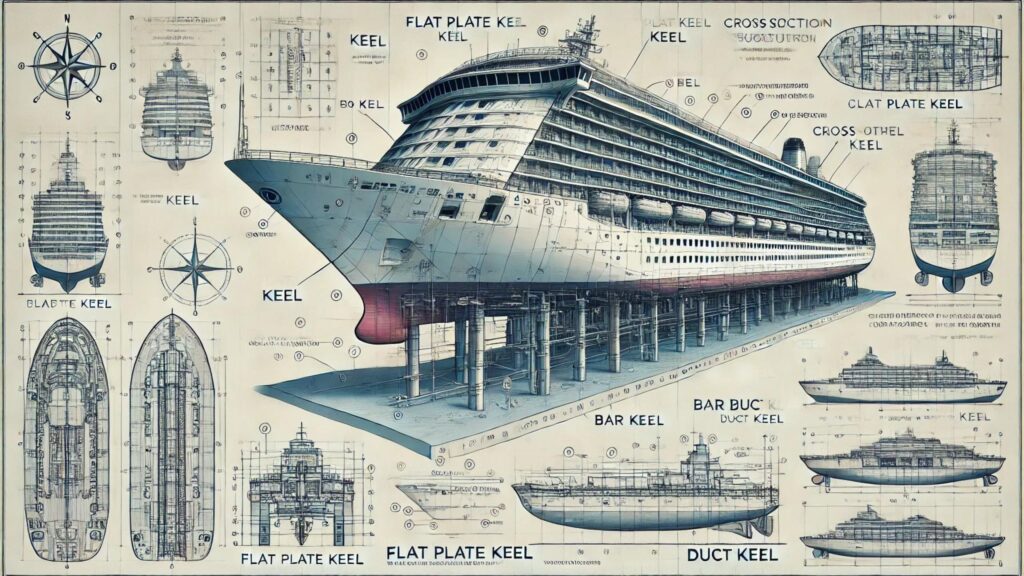
Not all keels are created equal.
Depending on the ship’s design and purpose, different types of keels are used.
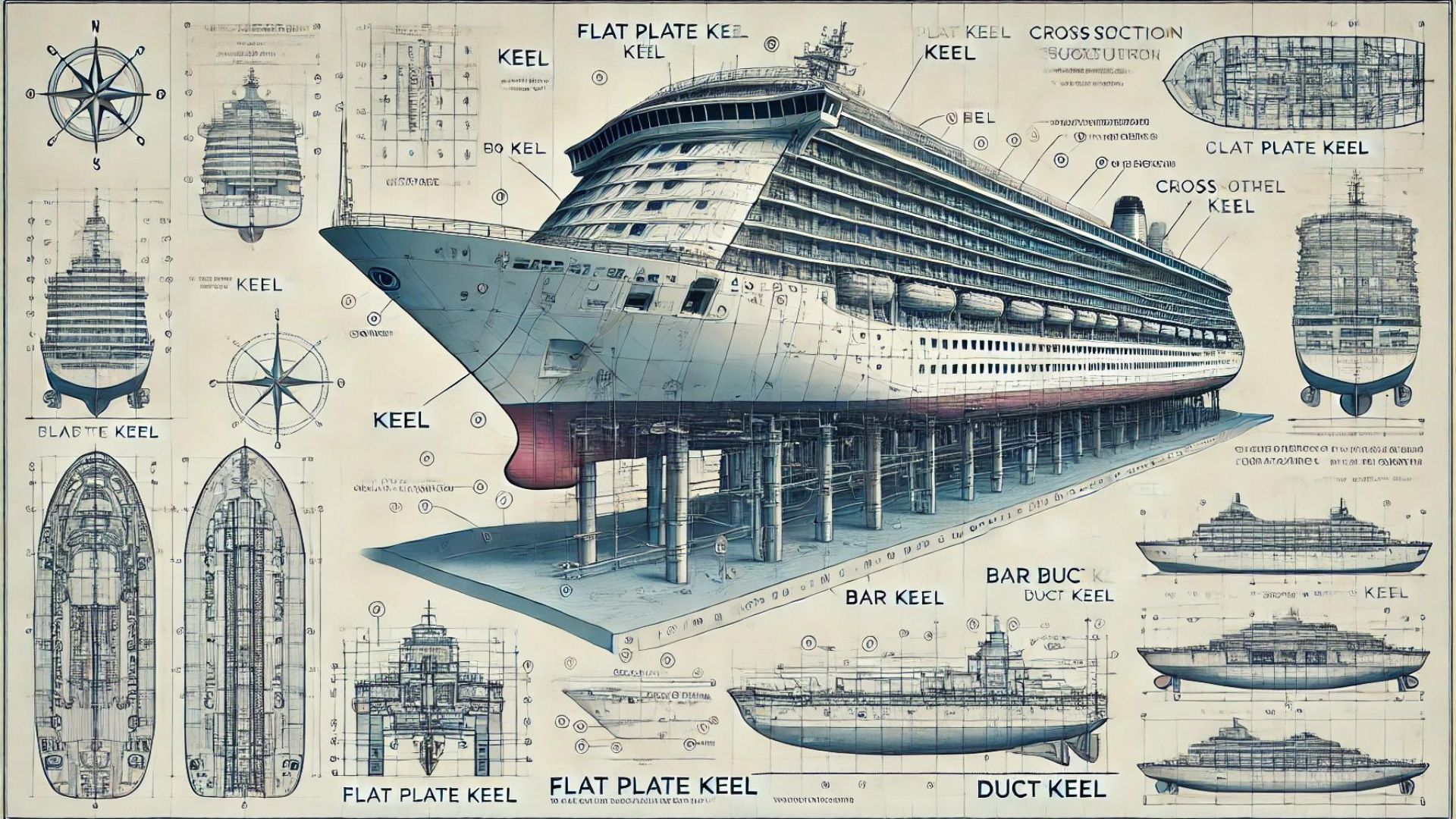
Let’s explore the three main types commonly found in modern cruise ships.
Click for Exclusive Offers on Top Cruise Lines!
How the Flat Plate Keel Cuts Drag and Saves Fuel on the World’s Largest Ships
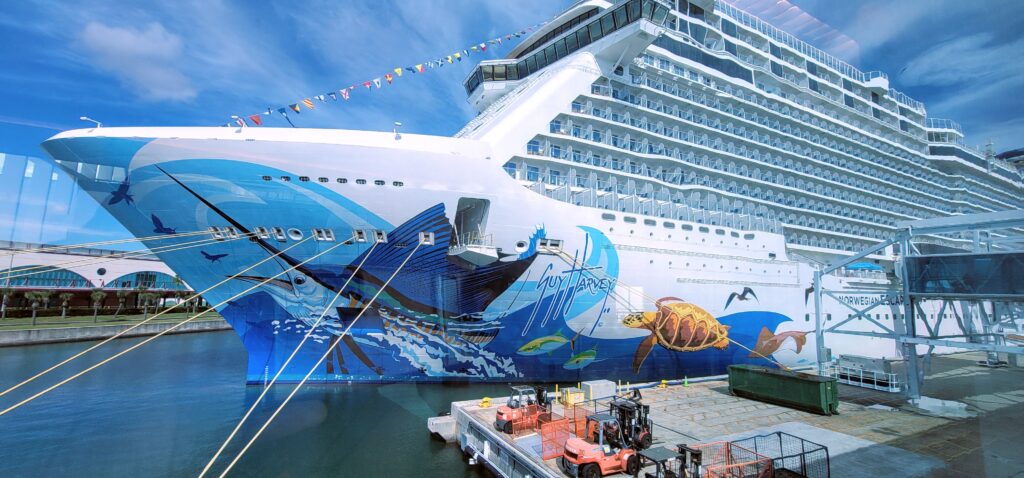
The flat plate keel is the most commonly used type of keel in modern shipbuilding, especially for large vessels like cruise ships.
As the name suggests, this keel is a flat, wide plate of steel that runs the length of the ship.
This simple yet effective design allows for even distribution of the ship’s weight, which is crucial for maintaining stability.
But the flat plate keel isn’t just about stability.
Its design also allows for a streamlined hull shape, which reduces drag and improves the ship’s fuel efficiency.
For a cruise ship that might travel thousands of miles on a single voyage, this efficiency translates into significant cost savings and environmental benefits.
From Icebreakers to Cruise Ships: The Bar Keel’s Legacy of Unmatched Strength
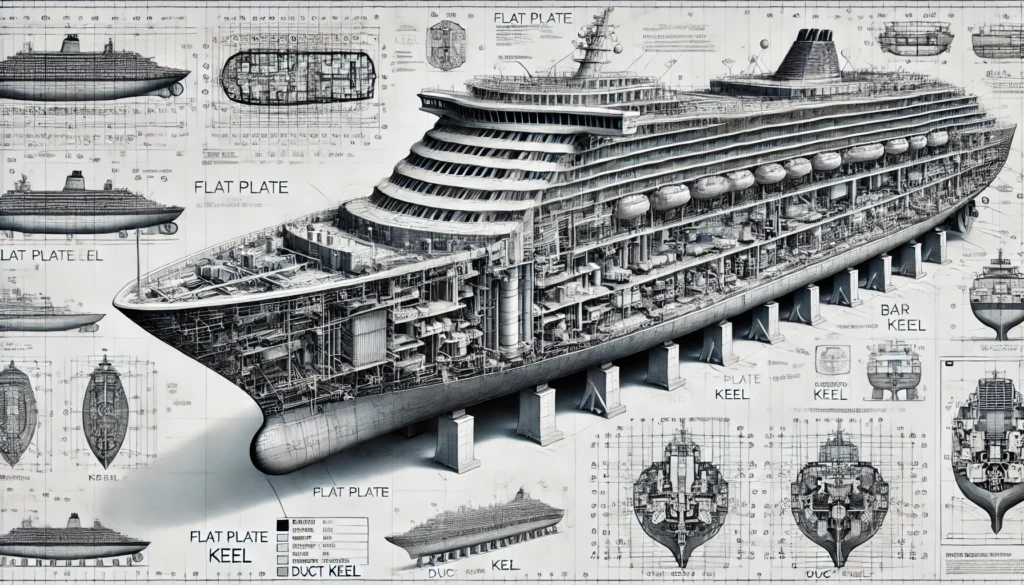
The bar keel is a more traditional design, often found in smaller ships or vessels that require additional reinforcement, such as icebreakers.
It consists of a solid, thick bar of steel that runs along the ship’s bottom.
While it doesn’t provide the same level of hydrodynamic efficiency as a flat plate keel, its solid construction offers unmatched strength and durability.
In the context of a cruise ship, the bar keel might be used in conjunction with other structural elements to provide extra support in critical areas.
For example, some cruise ships operating in polar regions may incorporate elements of a bar keel to withstand the harsh conditions encountered in icy waters.

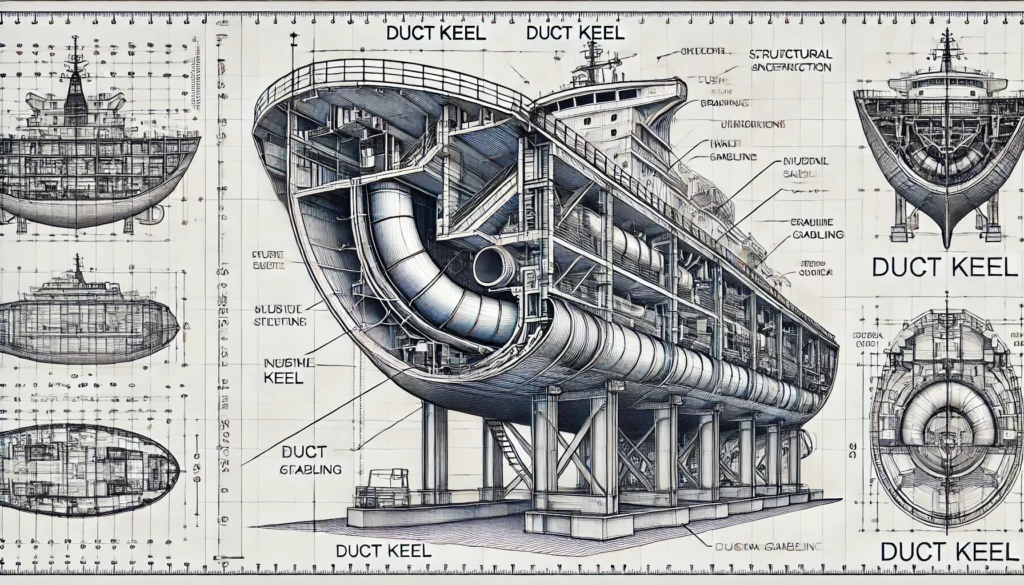
Inside the Duct Keel: How It Shields the Hidden Systems That Keep Cruise Ships Alive
A duct keel is a specialized type of keel that includes an internal space or duct running along its length.
This space is used to house essential systems like piping and cabling, protecting them from the harsh marine environment.
While not as common as flat plate or bar keels, duct keels are sometimes used in large vessels where space for utilities is at a premium.
The advantage of a duct keel lies in its ability to combine structural support with practical utility.
In a cruise ship, where every inch of space is valuable, the duct keel offers a way to protect critical systems without sacrificing the vessel’s structural integrity.
3. Forging the Backbone: How Shipbuilders Craft the Keel That Holds It All Together
Inside the Alloys: The Hidden Science That Powers Cruise Ship Durability
The materials used in constructing a keel are chosen for their strength, durability, and resistance to the corrosive effects of seawater.
Steel is the most common material, thanks to its exceptional strength-to-weight ratio and its ability to withstand the mechanical stresses imposed by the ocean.
However, not all steel is created equal.
In many cases, shipbuilders use specialized steel alloys that offer enhanced corrosion resistance and structural integrity.
These alloys are designed to perform well in the harsh marine environment, where constant exposure to saltwater and varying temperatures can take a toll on lesser materials.
The selection of steel for the keel isn’t just about strength—it’s also about flexibility.
The keel must be strong enough to support the ship’s structure but also flexible enough to absorb the forces generated by waves and wind without cracking or breaking.

Grab Your Ticket to Paradise with These Deals!
Keel Laying: The First Strike That Brings a Cruise Ship to Life
The process of laying the keel is a pivotal moment in the construction of any ship.
It’s the first physical step in building the vessel and is often marked by a ceremonial event known as the keel laying ceremony (more on that later).
Laying the keel begins with positioning the first section of the keel in the dry dock.
This section serves as the foundation for the rest of the ship’s hull, so precision is key.
The shipyard workers carefully align the keel section, ensuring it is perfectly straight and level.
Once the first section is in place, additional sections are added, welded together to form a continuous structure.
This process requires not only precision but also immense skill.
The alignment of the keel is crucial—any deviation could compromise the ship’s stability and seaworthiness.
Advanced tools and techniques are used to ensure that the keel is laid with millimeter accuracy, setting the stage for the construction of the rest of the ship.
Unlock Your Dream Cruise with Exclusive Online Deals!
4. The Keel’s Hidden Power: Preventing Cruise Ships From Capsizing
From Storms to Calm: How the Keel Balances Cruise Ships at Sea
One of the primary functions of the keel is to provide stability to the ship, particularly in rough seas.
The keel acts as a counterbalance to the forces that act on the ship, such as wind and waves, helping to keep the vessel upright and preventing it from capsizing.
To understand how this works, imagine a ship sailing through choppy waters.
As the waves push against the side of the ship, the vessel tends to tilt or roll.
The keel, submerged deep in the water, resists this motion by providing a stabilizing force in the opposite direction.
This resistance is due to the keel’s shape and weight, which work together to keep the ship balanced.
In more technical terms, the keel’s role in stability can be explained through the concept of the ship’s center of buoyancy and center of gravity.
The center of buoyancy is the point where the upward buoyant force acts, while the center of gravity is the point where the ship’s weight is concentrated.
For a ship to remain stable, these two centers must be carefully balanced.
The keel helps to achieve this balance by lowering the ship’s center of gravity, making it more difficult for external forces to tip the ship over.
The Keel’s Hidden Power: Keeping Cruise Ships Upright Against the Waves
The keel’s influence on the ship’s center of gravity is crucial for maintaining stability, especially in a vessel as large and top-heavy as a cruise ship.
The center of gravity is essentially the point where the ship’s mass is evenly distributed. If the center of gravity is too
high, the ship becomes top-heavy and more prone to capsizing.
By adding weight to the lowest part of the ship, the keel lowers the center of gravity, making the vessel more stable.
This is particularly important in a cruise ship, where the superstructure (the part of the ship above the main deck) can be quite tall, creating a high center of gravity.
The keel’s design and placement are carefully calculated to counteract this, ensuring that the ship remains stable and upright, even in rough seas.
5. Why Every Cruise Ship’s Strength Begins With the Keel
The Keel’s Strength: The Foundation That Holds Cruise Ships Together
The keel isn’t just about stability; it’s also the core structural element of the ship.
Like the spine in a human body, the keel provides the central support for the entire ship’s framework.
All other structural components—such as the frames, bulkheads, and decks—are attached to the keel, making it the foundation of the ship’s overall design.
In a cruise ship, which can weigh upwards of 100,000 tons, the keel must be exceptionally strong to support the weight of the vessel and its passengers.
The keel’s design takes into account not just the static load of the ship’s structure but also the dynamic forces generated by waves, wind, and the ship’s own movement through the water.
The Keel’s Core Role: Holding Frames and Girders Together for Ocean Survival
The keel is connected to a network of structural components that together form the ship’s hull.
These components include transverse frames, which run across the width of the ship, and longitudinal girders, which run parallel to the keel.
The frames and girders are attached to the keel, creating a rigid structure that can withstand the forces encountered at sea.
The frames provide lateral support, helping to maintain the shape of the hull and distribute the weight of the ship evenly across the keel.
The longitudinal girders, on the other hand, provide additional support along the length of the ship, helping to resist the bending forces that can occur when the ship encounters large waves.
This network of structural elements is what gives the ship its strength and integrity.
Without a properly designed and constructed keel, the entire structure would be compromised, leading to potential safety hazards.
6. How Cruise Ship Keels Transformed From Wooden Roots to Modern Marvels
Why Cruise Ship Keels Deliver Stability Smaller Vessels Can’t Match
Modern cruise ship keels have evolved significantly from their historical counterparts.
While the basic concept remains the same, the materials, design, and construction techniques have all advanced, allowing for larger, more stable, and more efficient ships.
One of the key differences between cruise ship keels and those of other vessels is size.
Cruise ships are among the largest ships in the world, and their keels must be proportionately larger and stronger to support their immense size.
This has led to innovations in keel design, such as the use of reinforced steel alloys and advanced welding techniques.
Another difference is the shape of the keel. In many modern cruise ships, the keel is designed to work in conjunction with other hydrodynamic features, such as the bulbous bow, to reduce drag and improve fuel efficiency.
This integration of keel design with other elements of the ship’s hull is a testament to the sophistication of modern shipbuilding techniques.
Next-Gen Keels: The Designs Driving Safer, Greener Cruise Ships
As technology continues to advance, so too does the design of ship keels.
One of the most significant innovations in recent years is the development of the bulbous bow, a protruding section at the front of the ship that reduces drag and improves fuel efficiency.
The bulbous bow is closely related to the keel, as it affects the flow of water around the hull and contributes to the ship’s overall stability.
In addition to the bulbous bow, there are ongoing efforts to develop keels that are lighter and stronger, using advanced materials such as composite metals and carbon fiber.
These materials offer the potential to reduce the weight of the keel while maintaining or even enhancing its strength, leading to more efficient and environmentally friendly ships.
Looking to the future, we can expect to see further innovations in keel design as shipbuilders continue to push the boundaries of what is possible.
Whether through the use of new materials, advanced construction techniques, or innovative designs, the keel will continue to play a central role in the evolution of cruise ships.
7. Keel Laying: The Defining Moment That Births Every Ocean Giant
Inside the Keel Laying Ceremony: Where Every Ocean Voyage Begins
The laying of the keel is more than just a technical milestone in shipbuilding; it’s a moment steeped in tradition and symbolism.
The keel laying ceremony marks the official start of a ship’s construction and is often accompanied by rituals and ceremonies that date back centuries.
In many cultures, the keel laying is considered the “birth” of the ship.
Traditionally, coins or other tokens were placed under the keel as a symbol of good luck and protection for the vessel and its crew.
This practice continues in modern shipbuilding, with shipbuilders often embedding ceremonial coins or plaques in the keel as a nod to maritime heritage.
Why the Keel Laying Ceremony Remains the Defining Blessing of Every Ocean Voyage
While the keel laying ceremony is rooted in tradition, modern practices have evolved to incorporate advanced technology.
Today’s ceremonies often include the use of digital tools to ensure precision in the placement of the keel, as well as the involvement of dignitaries and industry leaders to mark the occasion.
Despite these modern touches, the essence of the keel laying ceremony remains the same: it’s a moment of celebration and anticipation, as the ship begins to take shape and the dream of its maiden voyage moves one step closer to reality.
8. The Keel’s Lifeline: How Routine Inspections Safeguard Every Ocean Voyage
Beneath the Hull: The Routine Checks That Keep Cruise Ships Upright and Safe
Once the keel is laid and the ship is complete, maintaining the keel becomes a top priority.
Regular inspections are conducted to check for signs of wear, corrosion, or damage.
These inspections are crucial for ensuring the long-term safety and seaworthiness of the ship.
In a cruise ship, the keel is subjected to constant stress from the movement of the ship and the forces of the sea.
Over time, this can lead to fatigue or damage, particularly in areas where the keel is connected to other structural elements.
By conducting routine checks and addressing any issues promptly, shipowners can ensure that the keel remains in good condition for the life of the vessel.
From Crack to Catastrophe: Why Keel Damage Must Never Be Ignored
When damage to the keel is detected, it must be addressed immediately to prevent further complications.
Depending on the severity of the damage, repairs may involve welding new sections of steel to the keel, reinforcing existing structures, or even replacing parts of the keel entirely.
The impact of keel damage can be significant, affecting not only the stability and safety of the ship but also its performance and fuel efficiency.
This is why regular maintenance and prompt repairs are so important for the longevity of the vessel.
9. Next-Gen Keels: The Breakthrough Designs Driving Safer, Greener Cruise Ships
How the Keel and Bulbous Bow Together Slash Drag and Drive Efficiency
One of the most significant innovations in modern ship design is the bulbous bow, a protruding section at the front of the ship that helps to reduce drag and improve fuel efficiency.
The bulbous bow works in conjunction with the keel to optimize the ship’s hydrodynamics, allowing for smoother and more efficient movement through the water.
The relationship between the keel and the bulbous bow is a key factor in the ship’s overall design.
Together, these elements help to reduce the resistance encountered by the ship as it moves through the water, resulting in lower fuel consumption and a more environmentally friendly operation.
Breakthrough Keels: The Designs Powering Safer, Cleaner Cruise Ships
As shipbuilders continue to innovate, we can expect to see further advancements in keel design.
This could include the use of lighter, stronger materials, as well as new shapes and configurations that enhance the ship’s stability and performance.
As environmental concerns continue to grow, there may also be a greater focus on developing keels that contribute to more sustainable and efficient shipping practices.
Whatever the future holds, one thing is certain: the keel will remain a central element of ship design, continuing to play a crucial role in the safety, stability, and performance of cruise ships.
How the Keel Holds Cruise Ships Together Against the Ocean’s Forces
The keel may be hidden from view, but its importance cannot be overstated.
It is the foundation upon which every cruise ship is built, providing the strength, stability, and balance that allow these floating cities to safely traverse the world’s oceans.
As shipbuilding technology continues to evolve, the keel will remain a cornerstone of maritime engineering, embodying the blend of tradition and innovation that defines the modern cruise industry.
Understanding the keel gives us a deeper appreciation of the complexities involved in building and operating a cruise ship.
So, the next time you step aboard one of these marvels of engineering, take a moment to consider the keel—the backbone of the ship, silently doing its job, ensuring a safe and smooth journey for all on board.
FAQ – How the Keel Safeguards Cruise Ship Stability and Safety
What makes the keel the backbone of a cruise ship?
The keel runs along the bottom of the ship and acts as its structural spine.
It anchors the frames and girders that hold the vessel together.
By lowering the ship’s center of gravity, it keeps cruise ships upright and stable even in rough seas.How does the keel protect cruise ships during hurricanes?
The keel adds weight deep below the waterline, which reduces rolling in violent waves.
This stabilizing force helps cruise ships resist capsizing during hurricane conditions.
By anchoring balance, the keel supports passenger safety when storms strike.Why is keel maintenance critical for long-term cruise ship safety?
Routine inspections detect cracks, corrosion, or stress damage before they become catastrophic.
Repairs and reinforcements extend the keel’s lifespan and preserve the ship’s seaworthiness.
Without vigilant care, hidden keel damage can compromise stability and endanger voyages.How do modern keel designs improve cruise ship efficiency?
Flat plate keels streamline hull shape, cutting drag and saving fuel.
When paired with bulbous bows, they reduce resistance and boost hydrodynamic performance.
These innovations deliver smoother, greener voyages for passengers and operators alike.What is the keel laying ceremony and why does it matter?
The keel laying marks the official birth of a cruise ship.
Traditionally, coins are placed under the keel to bless the vessel with good fortune.
This ceremony symbolizes strength, safety, and the beginning of every ocean voyage.
Plan Your Next Cruise!
Sail Smart: Discover The Real Cost of Luxury Cruises and Maximize Your Travel Value
One Delay Can Cost Your Entire Cruise A quick coverage check now protects you from the problems no one sees coming….

Unlock The Viking Ocean Experience: Elegant Ships, Cultural Immersion, And Unrushed Travel
One Delay Can Cost Your Entire Cruise A quick coverage check now protects you from the problems no one sees coming….

Sail Boldly: Experience Virgin Voyages’ Adults‑Only Cruises With Style, Freedom, And Fun
One Delay Can Cost Your Entire Cruise A quick coverage check now protects you from the problems no one sees coming….

Experience the Perfect Blend of Disney Magic, Luxury Cruising, and Family Adventure at Sea
One Delay Can Cost Your Entire Cruise A quick coverage check now protects you from the problems no one sees coming….