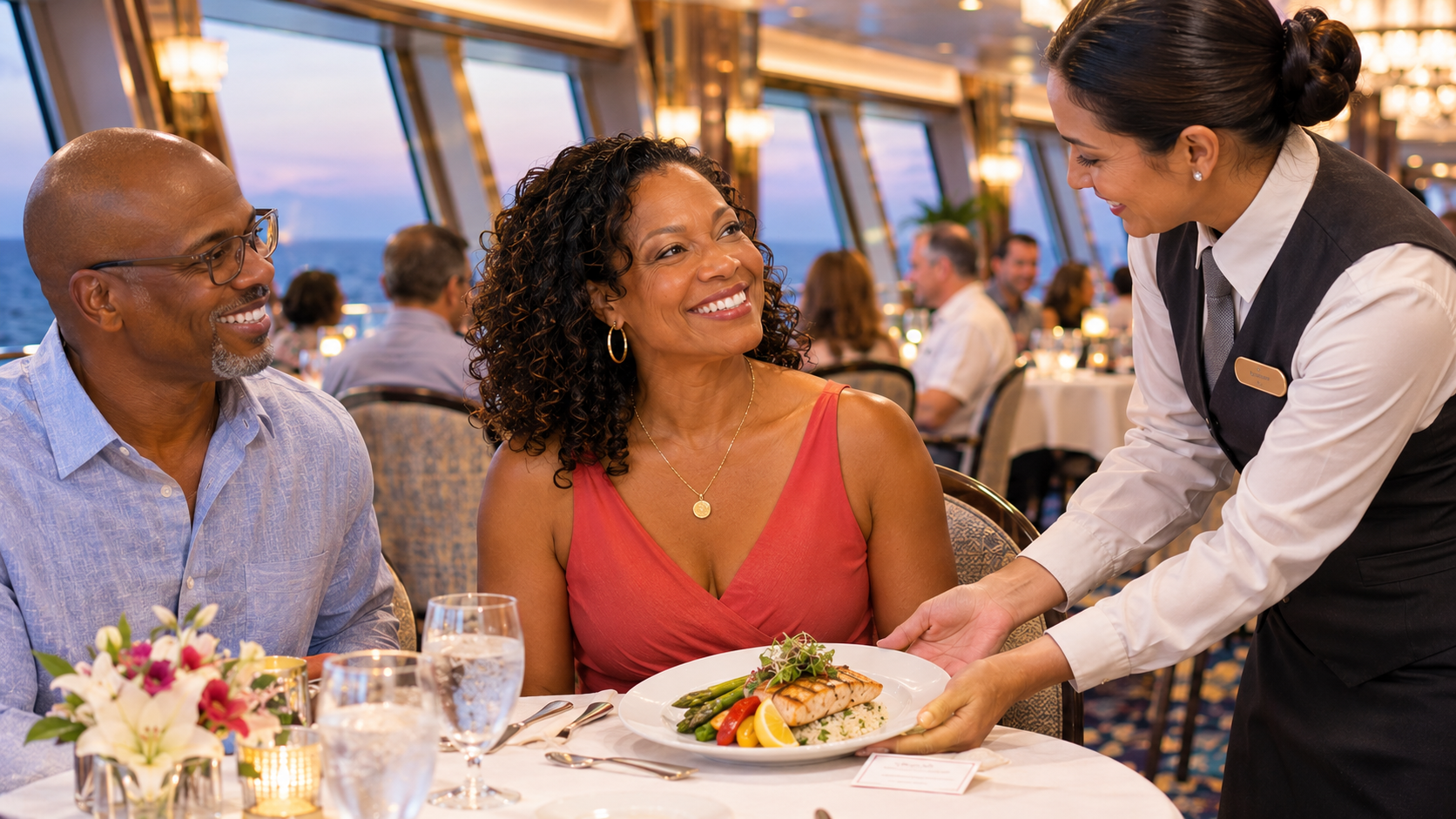
One Delay Can Cost Your Entire Cruise
A quick coverage check now protects you from the problems no one sees coming
Short Excerpt
- Cruising with food allergies, gluten intolerance, celiac disease, or other dietary restrictions can be enjoyable when you arrange dining accommodations before departure.
- Communicating your needs clearly, understanding cross-contact risks, and knowing which dining venues can accommodate you helps prevent unpleasant surprises.
- A practical dining plan gives you more confidence when ordering meals, visiting buffets, choosing specialty restaurants, and exploring ports.
Quick Take
- Notify the cruise line before sailing and confirm that your dietary requirements are documented.
- Speak with the dining team on embarkation day to understand how special meals and advance ordering work.
- Never assume a buffet item is allergy-safe based solely on appearance or its menu label.
- Use consistent dining arrangements when possible, especially for medically necessary restrictions.
- Bring appropriate backup snacks and medication so unexpected delays or limited food choices are easier to manage.
Know Which Cruise Dining Accommodations You Need Before You Book
Cruise ships serve an extraordinary variety of meals, but having dozens of food choices does not automatically mean every passenger can eat safely at every venue.
For travelers with dietary restrictions, the more important question is whether the ship can prepare food that meets their specific requirements consistently throughout the voyage.
Fortunately, many cruise lines have established procedures for handling food allergies, gluten-free requests, vegetarian meals, and other dietary needs.
The level of accommodation can vary between companies, ships, and dining venues, which makes it worth discussing your requirements before committing to a particular sailing.
A passenger who avoids dairy by preference may have considerably more flexibility than someone with a medically diagnosed milk allergy.
Both deserve respectful service, but they may need different food preparation procedures.
With an allergy, even a small amount of an ingredient transferred through shared equipment can potentially cause a serious reaction.
That’s why it helps to distinguish between avoiding an ingredient and needing protection from cross-contact.
Understand the Difference Between Food Preferences and Medical Restrictions
Some dietary requests relate primarily to personal preferences, religious practices, or lifestyle choices.
Vegan travelers, for example, may need meals without meat, dairy, eggs, or other animal-derived ingredients, while passengers following a vegetarian diet may have different requirements.
Medical restrictions can introduce additional considerations.
Someone with celiac disease needs gluten-free food prepared with appropriate precautions against cross-contact, whereas a passenger who simply prefers to avoid gluten may have different needs.
Food allergies require particular attention because the consequences of accidental exposure can be serious.
Top Cruise Deals From Trusted Cruise Lines
Compare exclusive online offers and find the fare that fits your trip and your budget
If you have a peanut, tree nut, shellfish, milk, egg, or another diagnosed food allergy, communicate the specific allergen and whether cross-contact must be avoided.
The distinction is not about making one passenger’s request more important than another’s.
It is about helping the dining team understand exactly what precautions are necessary.
Ask About the Ship’s Capabilities Before Paying for Your Cruise
When a dietary restriction is essential to your health or religious observance, research the cruise line’s accommodation procedures before finalizing your reservation.
Ask which dining venues can accommodate your needs, whether special ingredients must be requested in advance, and how the kitchen handles preparation when cross-contact is a concern.
Certain requests, particularly specialized kosher meals or other meals requiring advance provisioning, may need substantial notice.
Some cruise lines specify different deadlines based on the itinerary, so checking the requirements for your actual sailing is more dependable than assuming a universal cutoff.
You should also ask whether the cruise line can realistically accommodate your requirements.
Even companies with extensive dining programs may not be able to guarantee an allergen-free environment or fulfill every request.
Getting this clarification early allows you to make a better booking decision rather than discovering limitations once the ship has departed.
Plan for the Meals You’ll Eat Away From the Main Dining Room
Dinner often receives the most attention, especially when the same server and dining team can become familiar with your needs.
However, breakfast, lunch, late-night snacks, and food purchased during excursions deserve just as much consideration.
A restaurant that can prepare an appropriate dinner may not operate during breakfast, while a casual dining venue may use different staff and food preparation procedures.
Specialty restaurants and room service can also have their own accommodation processes.
Before sailing, find out whether dietary requests are shared across dining venues or must be confirmed individually.
This becomes especially useful on port-intensive itineraries, when you may return hungry after an excursion and want a suitable meal without starting the conversation from the beginning.
For passengers with serious allergies, never assume that a previously documented request means every employee knows the details.
Confirm the restriction each time you order and ask for a supervisor when additional clarification is needed.
Prepare for an Unexpected Food Allergy Reaction
Travelers with prescribed emergency medication should carry it according to their clinician’s instructions, including during embarkation and shore excursions.
Medication needed for an emergency should remain accessible rather than being packed in luggage that may be delayed or stored out of reach.
Before your cruise, review your allergy action plan with your healthcare professional and make sure you and any traveling companions know what to do if symptoms develop.
Online‑Only Cruise Offers You Won’t Find Elsewhere
Unlock special pricing and start planning the sailing that matches your perfect itinerary
Once aboard, locate the ship’s medical center and learn how to request urgent medical assistance.
If a serious allergic reaction occurs, follow your prescribed emergency plan and seek immediate help instead of waiting to see whether symptoms resolve.
Food planning also extends beyond the ship.
When eating in unfamiliar ports, language differences and local preparation practices can make communication more difficult.
Carrying a clearly written allergy card in the appropriate language may help explain your needs, although it cannot guarantee safe preparation.
Your goal is not to find a cruise ship that promises every dish will be suitable.
It’s to choose a sailing where your essential needs can be accommodated, understand the ordering process, and have a dependable plan for the meals you actually want to enjoy.
With those arrangements in place, dining becomes something you can look forward to rather than a problem you need to solve three times a day.
How to Handle Dietary Restrictions on Your First Cruise Without Missing Out on Great Food
Dietary restrictions on a first cruise can feel like the one detail that might derail your excitement.
Excitement is high, and anxiety can still sneak in when you imagine unfamiliar kitchens and busy dining rooms.
Food is not a small detail on a cruise.
Meals shape your daily rhythm, your energy, and your sense of comfort onboard.
A good plan turns food from a worry into a dependable part of the vacation.
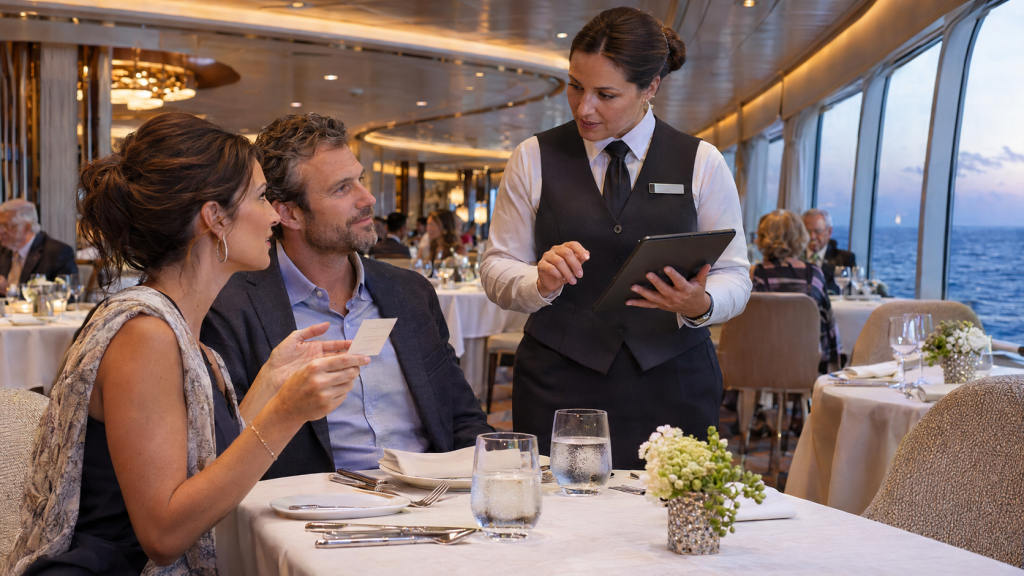
You picture ocean views and easy meals, yet wonder if unfamiliar kitchens and busy buffets will feel safe.
The truth?
Cruise dining can work beautifully when you plan for clarity and consistency.
This guide gives you practical steps, simple scripts, and a strategy that turns food from a worry into a source of comfort.
By the time you board, you’ll feel prepared, confident, and ready to enjoy every meal without stress.
What “Special Request” Means In Cruise Dining
A “special request” is the cruise line’s way of describing a dining accommodation you ask for in advance or onboard.
That request could be a food allergy note, a medical diet, or a preference like gluten-free or vegan meals.
It can also include texture needs, low-sodium meals, diabetic-friendly choices, or avoidance of specific ingredients.

Luxury Cruise Experiences at Smarter Prices
See premium sailings and upgraded cabins priced for travelers who know how to book well
Special requests are normal on cruise ships because they serve thousands of guests with different needs.
Normal does not mean automatic, though.
Automatic happens when you communicate early and clearly.
Vague requests create confusion, and confusion creates anxiety.
Clarity is how you protect both safety and enjoyment.
Why Clarity Works
Dining teams run on systems.
A clear request fits the system and gets acted on.
A fuzzy request gets interpreted differently by different staff members.
Interpretation is where mistakes happen.
Mistakes are what first-time cruisers fear most.
Preventing mistakes is not hard, but it does require a few specific steps.
Those steps are simple.
Simple steps reduce worry quickly.
Set Your Baseline
Start by defining your restriction in one sentence.
For an allergy, name the ingredient and the severity.
For intolerance, name what happens if you eat it, in plain language.
For lifestyle diets, name what you avoid and what you do eat.
This baseline statement becomes your script.
A script keeps you from overexplaining in the moment.
Overexplaining can feel emotional and exhausting.
Exhaustion steals the joy from dining.
Systems Prefer Specific
Clear requests fit ship systems and reduce mistakes.
Scripts Reduce Stress
One sentence about your diet keeps communication consistent.
Baselines Protect Safety
Defining severity helps staff take the right level of care.
Plan Ahead for Dining Success: Three Pre-Cruise Steps That Reduce Stress
The biggest dining wins happen before you ever step onboard.
Pre-cruise preparation gives the cruise line time to note your profile and plan ingredients.
It also gives you emotional relief because you know the request is already in motion.
Start by adding dietary notes to your booking profile if your cruise line allows it.

Sail Away to Paradise Without Overpaying
Find cruise deals that make it easy to escape, relax, and enjoy the ocean without stretching your budget
Then contact the cruise line or your travel advisor to confirm the request is documented.
Finally, pack a small backup plan so you never feel trapped if you cannot find what you need immediately.
A backup plan is not pessimism.
It is insurance for your comfort.
Put It In Writing
Written requests create accountability and clarity.
An email note or booking form entry is easier to reference than a conversation.
If you have a medically serious allergy, include the ingredient list and a short statement about cross-contact risk.
Cross-contact is when a safe food touches an unsafe surface.
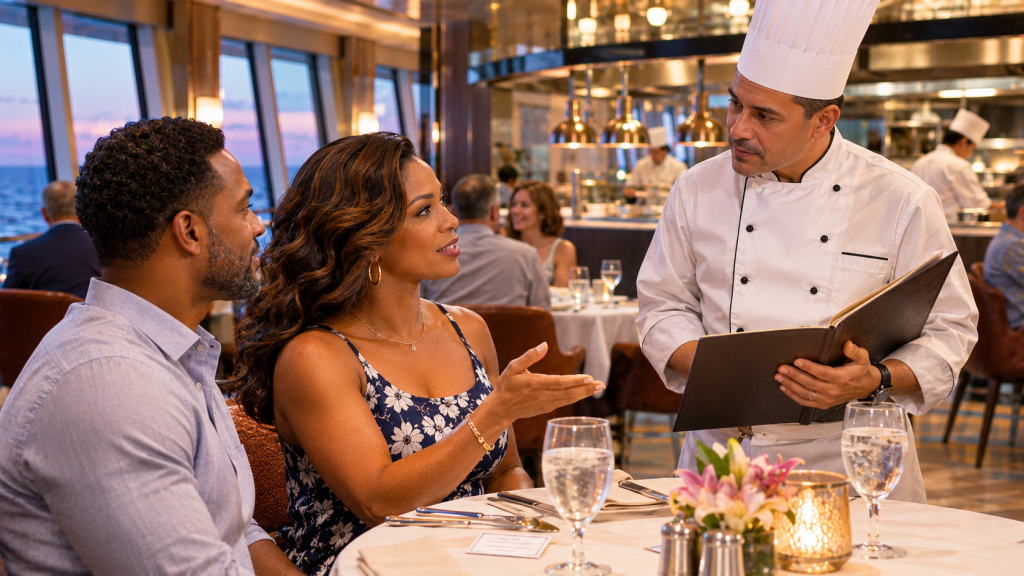
That detail matters more in busy kitchens than most first-timers realize.
Keeping it short helps the staff act on it.
Long explanations can bury the key point.
Short and clear is your best friend here.
Bring A Small Safety Snack Kit
A snack kit is the quiet hero of a first cruise with restrictions.
Pack a few shelf-stable, restriction-safe items that help in a pinch.
Think bars, crackers, or snacks that stabilize your blood sugar.
The purpose is avoiding the “I’m hungry and nothing feels safe” moment.
That moment can turn into panic quickly.
Panic makes decision-making harder.
A snack kit buys you time to find the right dining support.
Time is what reduces anxiety.
Research The Dining Structure
Cruise dining usually includes a main dining room, buffet options, and casual spots.
Specialty restaurants may also be available and can sometimes be easier for focused requests.
Knowing the structure helps you plan where to go first.
A good beginner move is speaking to the dining room team early on embarkation day.
Embarkation day is when dining staff are still adjusting assignments and handling requests.
Early conversations tend to yield better solutions than late ones.
Solutions are what create relief.
Relief makes your cruise feel like a vacation again.
Writing Creates A Trail
Written notes help staff follow the correct plan consistently.
Snack Kits Save Moments
A safe snack kit prevents panic when timing and options don’t line up.
Structure Reduces Anxiety
Knowing dining locations and timing makes you feel more in control.
What To Say On Embarkation Day
Embarkation day can feel like a lot, especially for first-time cruisers.
It is also the best day to set dining up for success.
The goal is having one calm, practical conversation with the right person.
That person is often the main dining room host or the dining services desk, depending on the ship.
Use your baseline script and keep the request specific.
Then ask what the process will look like for the week.
Process questions reduce confusion.
Reduced confusion makes you feel safer.
Use This Simple Script
Try something like this.
“I have a medically serious allergy to peanuts and tree nuts, and I need to avoid cross-contact.”
Or this.
“I eat gluten-free, and I need meals without wheat, barley, or rye.”
Or this.
“I’m vegan, and I avoid all animal products, including dairy and eggs.”
Then ask.
“What is the best way to order each day so the kitchen can prepare it safely.”
This keeps the conversation respectful and clear.
Clear conversations are the foundation of safe dining onboard.
Safe dining makes everything else on the cruise easier.
Ask For The Daily Flow
Ask how dinner ordering works for your restriction.
Some ships prefer that you pre-order meals the night before.
Some ships can accommodate day-of requests when the staff are informed.
Some dining rooms will assign a specific server who learns your needs quickly.
Consistency matters.
Consistency reduces the chance that your restriction is missed.
Missed restrictions are what cause fear.
Reducing fear is the goal.
Confirm Buffet Strategy
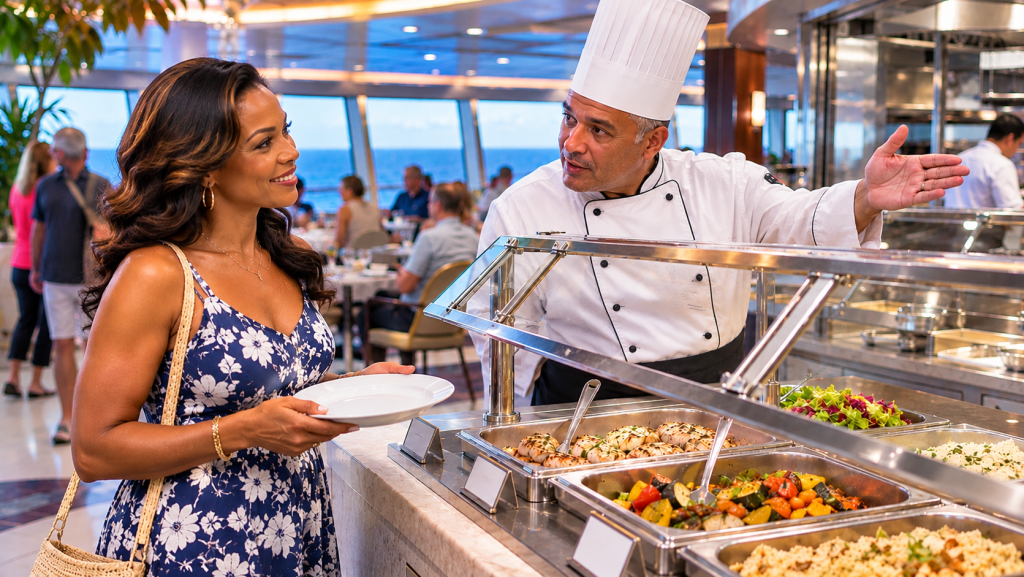
Buffets can be convenient and also tricky.
Serving utensils can move between dishes.
Labeling can be incomplete.
Crowds can increase cross-contact risk.
That does not mean you cannot use the buffet.
It means you use it with a strategy.
Ask which stations are safest for your needs.
A staff-guided buffet strategy can change everything for first-time cruisers.
Scripts Keep It Clean
A short script keeps requests consistent and easy to follow.
Process Prevents Mistakes
Knowing the daily ordering flow reduces the chance of missed details.
Buffet Needs Strategy
Buffets can work when you approach them with guidance and caution.
How To Eat Well All Week Without Feeling On Edge
Once the first two days are handled well, the rest of the week usually gets easier.
The key is creating repeatable habits.
Repeatable habits reduce decision fatigue.
Decision fatigue can make dietary anxiety worse.
Good habits make the cruise feel predictable in the best way.
Predictable dining feels restful.
Restful dining supports better energy and better mood.
Better mood makes everything onboard more enjoyable.
Pick Your “Safe Defaults”
Choose two or three meal options that you know work for you.
Use them as your default choices while you explore slowly.
Exploration is fine, but it should not feel like a risk every time.
Defaults reduce the pressure of constant decision-making.
Pressure makes food feel like a threat instead of a pleasure.
A vacation should not feel like that.
A safe default plan keeps you steady.
Steady is the emotional goal here.
Use The Main Dining Room As Your Anchor
The main dining room is often the easiest place to get consistent support.
A server team can learn your needs and communicate with the kitchen.
That ongoing relationship reduces anxiety.
Anxiety drops when you feel known.
Feeling known is powerful for first-time cruisers with dietary restrictions.
If you don’t like your dining assignment, visit the main dining room and request an arrangement that fits you better.
A good fit can make dining feel comfortable instead of stressful.
Comfort is what makes the week flow.
Explore Specialty Dining Carefully
Specialty restaurants can be a great option for focused meals.
They can also add complexity because menus change and teams rotate.
If you want a specialty night, communicate your needs early in the meal.
Ask what the chef can recommend.
Chef guidance can be more reassuring than guessing based on the menu.
Guessing is where anxiety grows.
A confident recommendation feels safer.
Safer means more enjoyable.
Defaults Reduce Pressure
Safe meal defaults create steadiness while you learn the ship.
Dining Rooms Build Consistency
A familiar server team can reduce anxiety through routine and recognition.
Chef Guidance Helps
Direct chef input often feels more reliable than menu guesswork.
Avoid Common Dining Mistakes: Simple Fixes for a Safer Cruise Experience
Most dining issues happen because of timing and assumptions.
Assumptions sound like “they’ll know” or “the label will be correct.”
The fix is being politely proactive.
Polite proactivity is not being difficult.
It is being responsible.
Responsibility can still be relaxed.
Relaxed is the vacation vibe you want.
A few simple corrections can prevent most regret.
Waiting Until You’re Hungry
Many first-timers try to figure it out on the fly.
That approach is fine until you hit a busy moment.
Busy moments increase stress and reduce options.
Hunger also reduces patience.
Reduced patience makes communication harder.
Hard communication makes you feel self-conscious.
Self-consciousness steals enjoyment.
A better approach is handling dining questions early each day.
Treating The Buffet Like A Guarantee
Buffets are not a guarantee for strict restrictions.
They can still work with the right strategy.
A strategy includes asking staff for guidance and avoiding risky cross-contact zones.
A strategy also includes watching utensils and choosing fresh stations when possible.
Fresh stations reduce cross-contact risk.
Lower risk supports confidence.
Confidence lets you relax.
Relaxation is what you deserve on this trip.
Not Naming Cross-Contact
Some guests say “no peanuts” without clarifying cross-contact risk.
When cross-contact matters, the kitchen needs to know.
A short statement is enough.
“I need to avoid cross-contact” communicates the seriousness without drama.
Drama is not needed.
Clarity is needed.
Clarity protects you.
Protection makes the cruise feel easier.
Timing Is Everything
Early questions prevent hungry stress and improve options.
Buffets Need Boundaries
Buffets can work when you avoid cross-contact traps.
Cross-Contact Clarity
A short cross-contact statement can dramatically improve safety.
The Fears You Might Have And What Usually Happens
First-time dietary anxiety often comes from imagining worst-case moments.
That imagination is understandable.
The ship is new, and the kitchen is not yours.
In practice, many cruise dining teams are experienced with allergies and restrictions.
Most problems are communication problems, not care problems.
Communication problems are fixable.
A clear request and a steady routine solve a lot.
Routine is comforting when food is a worry.
Fear Of Feeling Like A Burden
Many travelers worry they will annoy staff.
Good staff want you to be safe and enjoy your vacation.
Clear requests make their job easier, not harder.
A simple thank you goes a long way.
Respect and clarity are the ideal combination.
That combination keeps the conversation easy.
Easy conversations reduce anxiety.
Reduced anxiety helps you enjoy the trip.
Fear Of Getting Sick
Fear of getting sick is real and deserves respect.
This is where your snack kit and your script work together.
A snack kit gives you control over timing.
A script gives you control over communication.
Control is what reduces fear.
Reduced fear increases appetite.
Appetite makes the trip feel normal again.
Normal is comforting.
Fear Of Missing Out
Some travelers worry their restriction will limit the fun.
Fun is not only about food variety.
Fun is about being present and feeling safe.
When you feel safe, you can enjoy shows, ports, and the ocean.
Food becomes a steady support rather than a constant worry.
That steadiness opens up the rest of the cruise.
The rest of the cruise is the part you’re excited about.
Excitement is allowed here.
Respect Reduces Burden
Clear, polite communication usually makes staff support easier.
Control Calms Fear
Snack kits and scripts restore control and lower anxiety.
Safety Unlocks Fun
When food feels safe, the rest of the cruise feels open and enjoyable.
Enjoy Your Cruise Knowing Food Is Handled
Dietary restrictions do not have to shrink your first cruise.
A clear special request, written confirmation, and an embarkation-day conversation create a strong foundation.
Safe defaults keep you steady while you learn the ship’s rhythm.
A buffet strategy protects you from cross-contact surprises.
Small proactive habits prevent most beginner mistakes.
When you combine clarity with kindness, dining becomes predictable in the best way.
Predictable dining reduces anxiety, and reduced anxiety makes space for enjoyment.
That enjoyment is what you came for, and you deserve it.
FAQ – How Can You Eat Safely and Enjoy Cruise Dining With Food Allergies, Gluten-Free Needs, or Other Dietary Restrictions?
Can Cruise Ships Accommodate Passengers with Food Allergies and Special Diets?
Many cruise lines offer dining accommodations for passengers with food allergies, gluten-free requirements, vegetarian or vegan diets, and certain medical or religious dietary needs.
However, the available arrangements depend on the cruise line, ship, menu, and type of restriction, so it is important to contact the company before sailing.
A common food preference may be relatively easy to accommodate, while a severe allergy or specialized meal could require additional preparation and advance notice.
No cruise line should be assumed to provide a completely allergen-free environment, making clear communication and confirmation essential.How Far in Advance Should You Notify a Cruise Line About Dietary Restrictions?
Notify the cruise line as soon as you book, particularly when your restriction involves a serious allergy, celiac disease, or meals requiring special ingredients.
Some cruise lines have specific advance-notice requirements for certain dietary accommodations, and the deadlines may vary according to the sailing region or meal type.
Waiting until embarkation could limit the kitchen’s ability to obtain ingredients or arrange an appropriate preparation process.
Even after receiving written confirmation, review your needs with the dining team once you board.What Is the Best Way to Request Special Meals Before Your First Cruise?
Start with the cruise line’s booking portal, special-needs department, or designated dietary accommodation process.
Clearly identify the foods you must avoid, distinguish a medical restriction from a preference when relevant, and explain whether cross-contact is a concern.
Include your reservation information so the request can be attached to the correct booking, then save the confirmation for reference.
If you booked through a travel advisor, ask whether the request has been documented with the cruise line rather than assuming that a conversation with the advisor automatically reaches the ship.What Should You Say to the Dining Staff About a Serious Food Allergy?
Explain the allergy using the specific ingredient name and make clear that you must avoid accidental exposure through shared preparation equipment or utensils.
For example, you might say, “I have a serious tree nut allergy and need to avoid cross-contact. Could you confirm which dishes can be prepared with the necessary precautions?”
Ask the server to communicate with the kitchen or bring a dining supervisor into the conversation when necessary.
A short written allergy card can reinforce your request, but it should support rather than replace direct communication.Is the Main Dining Room the Best Place to Eat with Dietary Restrictions?
The main dining room can be a practical choice because its structured service may make it easier to communicate requests, discuss menus, and establish familiarity with the same dining team.
Some ships also provide advance meal ordering or guidance from a head waiter for guests with particular dietary needs.
However, the ability to accommodate a restriction still depends on the kitchen’s procedures and available ingredients.
Confirm the process on embarkation day rather than assuming that every main dining room meal will automatically meet your requirements.Are Cruise Ship Buffets Safe for Passengers with Food Allergies?
Buffets can present additional cross-contact concerns because shared serving utensils, crowded stations, and self-service activity make it harder to control how food is handled.
An item that appears suitable based on its ingredients may still have been exposed to an allergen through another dish or preparation surface.
Instead of relying solely on food labels, ask a dining supervisor about ingredients and preparation procedures, including whether a suitable meal can be prepared separately when available.
If the staff cannot verify that a food meets your needs, choose another option rather than taking an unnecessary risk.Can People with Celiac Disease Eat Gluten-Free Meals on a Cruise?
Many cruise lines offer gluten-free dishes, but travelers with celiac disease need to consider preparation procedures as well as ingredients.
A meal described as gluten-free may not be appropriate if cross-contact with wheat, barley, rye, or other gluten-containing foods occurs during preparation or service.
Notify the cruise line that your restriction is medically necessary and ask how the kitchen handles dedicated equipment, separate preparation, and ingredient verification.
Having a consistent dining contact can also make it easier to confirm arrangements throughout the voyage.What Vegan and Vegetarian Dining Options Are Available on Cruise Ships?
Cruise ships commonly offer vegetarian dishes, and many also provide vegan choices or can adapt certain meals upon request.
However, menu variety and the availability of specialized ingredients can differ considerably between ships and dining venues.
Vegan travelers should clarify that their meals must exclude animal products such as dairy, eggs, meat, and fish, since a dish labeled vegetarian may still contain several of those ingredients.
Contacting the dining team early can help you identify suitable options and make specialty dining arrangements more enjoyable.Can Cruise Lines Provide Kosher, Halal, or Other Religious Dietary Meals?
Some cruise lines offer religious dietary accommodations, although the preparation methods, certification, menu choices, and advance-notice requirements vary.
Kosher meals, for example, may need to be arranged before sailing because they can require special sourcing or packaging.
Passengers requesting halal food should confirm whether the available meals meet their specific requirements rather than assuming that a vegetarian or seafood dish is automatically suitable.
Ask about preparation and service procedures before booking if strict religious observance is essential to your dining experience.Can You Request Low-Sodium, Diabetic-Friendly, or Other Medical Diets on a Cruise?
Many cruise lines can discuss accommodations for low-sodium, low-fat, or other medically related diets, but the available choices may differ by ship and meal service.
Travelers managing diabetes or another condition should explain their practical food requirements rather than relying on a broad label such as “diabetic-friendly.”
Your healthcare professional or registered dietitian can help you identify the nutritional considerations that matter most for your individual needs.
Share that information with the cruise line ahead of time and confirm how menus or ingredient details can be reviewed onboard.Should You Bring Your Own Snacks When Cruising with Dietary Restrictions?
A small supply of familiar, shelf-stable snacks can be helpful when meal schedules change or a suitable food option is temporarily unavailable.
However, cruise lines have their own rules about bringing food onboard, and some permit only commercially packaged, unopened, nonperishable items.
Check those requirements before packing rather than assuming homemade meals, fresh produce, or refrigerated foods will be allowed.
For medically necessary food supplies, contact the cruise line directly to discuss what accommodations or exceptions may be available.Can Specialty Restaurants Handle Food Allergies and Gluten-Free Requests?
Specialty restaurants may be able to accommodate dietary restrictions, but their menus, ingredients, equipment, and preparation procedures can differ from those in the main dining room.
If you are planning a special meal, contact the restaurant or dining team in advance so they can explain what is possible before your reservation.
This is especially important when a dish involves shared fryers, sauces, marinades, or ingredients that are difficult to modify.
When the kitchen cannot confidently accommodate your restriction, choosing a different meal or venue is more sensible than relying on an uncertain substitution.Can You Pre-Order Meals on a Cruise If You Have Dietary Restrictions?
Some cruise lines allow passengers with special dietary needs to review menus or order certain meals in advance, which can give the kitchen additional preparation time.
The process may involve speaking with a head waiter, dining supervisor, or assigned server, and arrangements can vary between ships.
Ask whether advance ordering is required for every dinner or only for particular meals that need special preparation.
Once you understand the procedure, you can build it into your daily routine without repeatedly explaining everything at the last minute.What Is Food Cross-Contact and Why Does It Matter on Cruise Ships?
Cross-contact occurs when an allergen unintentionally transfers from one food, utensil, preparation surface, or piece of equipment to another food.
This can happen even when the original recipe does not contain the ingredient, which is why simply requesting that an allergen be left off a plate may not be sufficient.
Cruise ship buffets and busy kitchens deserve particular attention because ingredients and utensils may be handled in shared environments.
Travelers with medically significant allergies should explain their cross-contact requirements directly and confirm whether the kitchen can follow the necessary precautions.Is It Better to Have the Same Server Throughout Your Cruise?
Having a familiar server can make dining more comfortable because you do not need to establish the same preferences from scratch at every meal.
A consistent dining team may also become familiar with your dietary requirements and the process used to communicate them to the kitchen.
Even so, familiarity should never replace confirming a serious allergy when placing each order, particularly when ingredients, menus, or kitchen personnel change.
If you prefer a consistent arrangement, ask the main dining room whether it can accommodate your request.What Should You Do If the Dining Staff Cannot Confirm Whether a Meal Is Safe?
Do not eat a dish when the staff cannot adequately verify that it meets a medically necessary restriction.
Ask to speak with the head waiter, dining manager, or another person who can communicate directly with the kitchen about ingredients and preparation.
If uncertainty remains, request an alternative or choose a different dining venue rather than feeling pressured to accept the meal.
A respectful but firm approach protects your safety and gives staff a clearer opportunity to explain what they can realistically provide.How Do You Handle Dietary Restrictions During Cruise Shore Excursions?
Food availability can be less predictable during shore excursions, especially when tours include meals at unfamiliar restaurants or travel through areas with limited dining choices.
If your excursion includes lunch, contact the operator beforehand to ask whether your dietary requirements can be accommodated and whether cross-contact precautions are possible.
Carry permitted, appropriate snacks for situations where a suitable meal is unavailable, while also observing local food import rules.
Travelers with serious allergies should keep prescribed emergency medication accessible and bring translated allergy information when language differences could complicate communication.What Should You Do If You Have an Allergic Reaction While Dining on a Cruise?
Follow your prescribed allergy emergency action plan and seek immediate medical assistance through the ship’s emergency procedures.
If you have been prescribed epinephrine for anaphylaxis, use it as directed by your healthcare professional rather than waiting for symptoms to become more severe.
Notify the dining staff and have someone contact the ship’s medical team promptly, since a serious allergic reaction can progress quickly.
Do not rely on drinking water, waiting for symptoms to pass, or taking an antihistamine alone to treat suspected anaphylaxis.What Are the Most Common Dietary Restriction Mistakes First-Time Cruisers Make?
One common mistake is assuming that adding a dietary note to a reservation means every restaurant and server will automatically know the details.
Others include waiting until mealtime to explain a complex restriction, trusting buffet labels without asking about preparation, and forgetting to plan for meals during shore excursions.
Travelers may also assume that removing an ingredient eliminates cross-contact risk, even when shared equipment or utensils remain involved.
Advance communication, direct confirmation, and a flexible backup plan can help prevent these problems.How Can You Enjoy Cruise Dining Without Constantly Worrying About Your Dietary Restrictions?
Begin by arranging your essential accommodations before sailing and identifying which dining venues can realistically meet your needs.
Once onboard, establish a reliable communication process with the dining team and keep a few suitable meal options in mind for days when your schedule changes.
For medically necessary restrictions, continue confirming ingredients and preparation rather than relying on assumptions, even when previous meals have gone well.
Having a dependable routine allows you to spend less time navigating uncertainty and more time enjoying the food, destinations, and experiences that make cruising special.
Plan Your Next Cruise!
Discover Princess Cruise Line: Elegant Ships, Immersive Voyages, and World‑Class Experiences
One Delay Can Cost Your Entire Cruise A quick coverage check now protects you from the problems no one sees coming….
Unlock The Viking Ocean Experience: Elegant Ships, Cultural Immersion, And Unrushed Travel
One Delay Can Cost Your Entire Cruise A quick coverage check now protects you from the problems no one sees coming….

Sail Into Freestyle Freedom: Norwegian Cruise Line for Adventure Thrills, Gourmet Dining, and Destination‑Rich Voyages
One Delay Can Cost Your Entire Cruise A quick coverage check now protects you from the problems no one sees coming….
Experience the Ultimate Vacation with Carnival Cruise Line’s Fun Ships, World‑Class Entertainment, and Relaxation
One Delay Can Cost Your Entire Cruise A quick coverage check now protects you from the problems no one sees coming….
Explore More

Turn the Ocean into Your Dance Floor: Cruises for Non‑Stop Nightlife
Turn Your Family Vacation into an All‑Ages Cruise Adventure

Avoid Onboard Money Mistakes: Cruise Currency Strategies That Save You Fees and Stress
