One Delay Can Cost Your Entire Cruise
A quick coverage check now protects you from the problems no one sees coming.
Cruise ships allow heating pads, but only if they meet strict safety standards.
Fire risk is the top concern, and outdated or damaged devices may be confiscated.
Each cruise line has its own rules, so knowing them ahead of time prevents surprises.
From voltage compatibility to automatic shut-off features, your heating pad must pass inspection to be approved for onboard use.
Understand Cruise Line Policies on Electric Devices and Heating Pads
Cruise lines take safety very seriously, especially when it comes to electrical devices brought by passengers.
Fire hazards are one of the most significant risks onboard a cruise ship, so most cruise lines have strict rules about what kinds of devices can be plugged into their electrical outlets.
A heating pad, although generally considered safe, may be subject to inspection and restrictions.
Here is how some of the most popular cruise lines handle bringing a heating pad.
Click for Exclusive Offers on Top Cruise Lines!
Carnival Cruise Line Heating Pad Rules and Safety Requirements
Carnival allows small personal electric devices like heating pads, as long as they are in good working condition and pose no obvious risks.
However, the cruise line is cautious about devices that could create fire hazards.
To ensure your heating pad is accepted, make sure it is modern and equipped with an automatic shut-off feature, which most newer models have.
Carnival also limits the use of extension cords and power strips onboard.
Your heating pad must plug directly into the wall socket.
Bringing along extension cords or multi-plug adapters may not be allowed, and they could be confiscated.
This is important if your heating pad’s cord is short and you plan to use it away from the wall.
Ensure you position yourself close to the outlet when using the device.
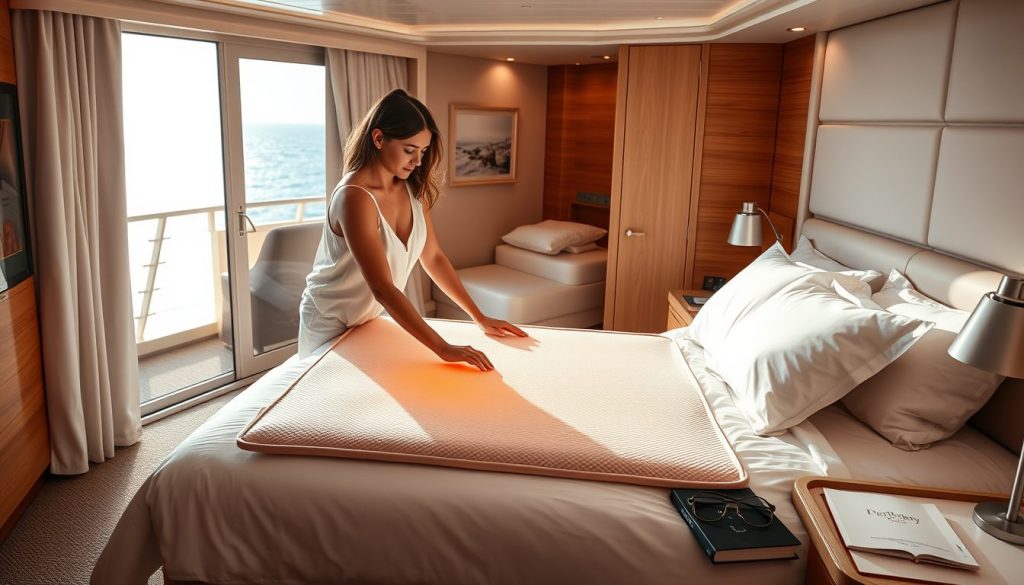
Royal Caribbean Heating Pad Policy and Inspection Guidelines
Royal Caribbean has similar policies regarding heating pads and other small electric items.
They are generally allowed onboard but are subject to inspection.
One key thing to keep in mind is that if your heating pad appears to be worn out, damaged, or old, it could be deemed unsafe and confiscated for the duration of the cruise.
Like Carnival, Royal Caribbean prefers devices with an automatic shut-off to prevent overheating or fire.
In terms of outlets, Royal Caribbean ships usually have both U.S.-style 110V outlets and European-style 220V outlets in the cabins.
So if you’re traveling with a heating pad from another country, you may need an adapter to use it onboard.

Norwegian Cruise Line Heating Pad Approval Process
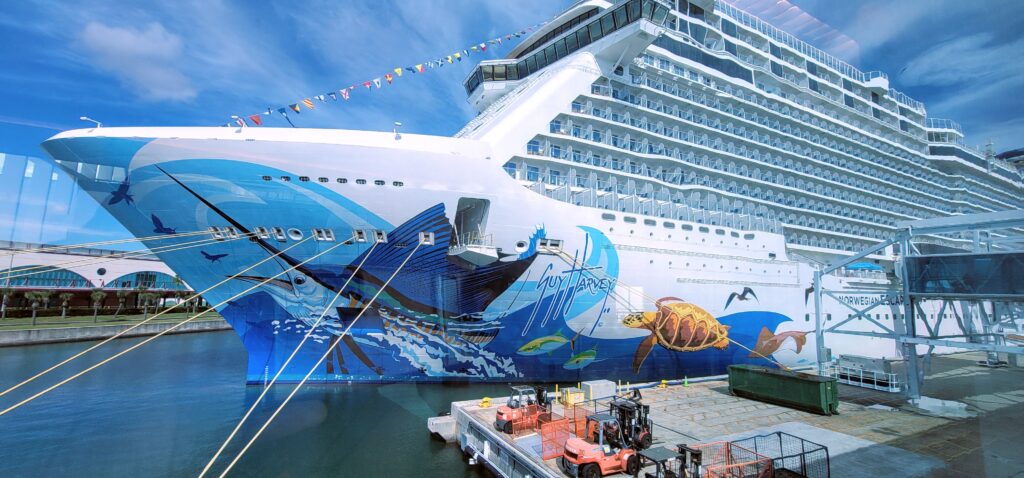
Norwegian Cruise Line (NCL) allows heating pads onboard but with a couple of conditions.
First, they request that any personal electrical items be disclosed during boarding or checked by a crew member to ensure safety.
If they deem your device to be unsafe, they may store it until the end of the cruise.
NCL is also cautious about the use of personal electric devices in cabins due to the limited number of electrical outlets.
If your cabin only has one or two outlets, you may need to rotate between charging your phone, using your heating pad, or powering other devices.
Bringing additional electronics like laptops or tablets could also make outlet availability more challenging.

Princess Cruises Heating Pad Safety Standards
Princess Cruises allows small appliances like heating pads onboard but specifies that they should meet the ship’s electrical standards.
Newer heating pads with automatic shut-off functions are preferred.
They also warn against using any electric device that shows wear and tear, as it may not meet their safety requirements.
On Princess ships, the cabin outlets are typically 110V, which means your heating pad should work as long as it’s compatible with U.S. voltage.
It’s also worth mentioning that Princess Cruises is generally very cautious about extension cords.
So it’s better to avoid bringing one unless it’s necessary for medical reasons and pre-approved.
Unlock Your Dream Cruise with Exclusive Online Deals!

Disney Cruise Line Heating Pad Rules for Safe Use
Disney Cruise Line (DCL) is family-friendly and allows a wide range of personal comfort items onboard, including heating pads.
However, their rules state that any electrical device, especially those that generate heat, must be safe and fully functional.
Devices that are frayed, have exposed wiring, or seem outdated may be confiscated.
Disney Cruise Line also limits the use of power strips and extension cords for safety reasons.
Be sure your heating pad doesn’t need additional accessories to work with the ship’s outlets, which are usually 110V in cabins.
MSC Cruises Heating Pad Policy and Safety Checks
MSC Cruises allows heating pads onboard but warns passengers that any electrical device could be inspected by their safety team.
Like other cruise lines, they’re particularly concerned about fire hazards, so you’ll want to ensure that your heating pad is modern and has safety features like automatic shut-off.
They also caution passengers that misuse of electric devices could result in the confiscation of those items until the end of the cruise.
Heating Pad Rules on Other Major Cruise Lines
Other cruise lines, like Holland America, Celebrity Cruises, and Cunard, typically follow similar rules.
Heating pads are allowed, but the device must be safe, in good condition, and equipped with safety features such as an automatic shut-off function.
In general, regardless of the cruise line you’re sailing with, the most important rule is that your heating pad needs to meet safety standards to be allowed onboard.
Plan Ahead: Packing a Heating Pad for Your Cruise Without Issues
While it’s possible to bring a heating pad on a cruise, there are several practical considerations you should think about before packing one.

Grab Your Ticket to Paradise with These Deals!
Check Voltage and Plug Requirements for Cruise Heating Pads
Cruise ships often use 110V outlets, which are standard in the United States.
However, some ships also have 220V outlets, which are common in Europe and other regions.
Before you pack your heating pad, double-check its voltage rating.
If your heating pad is dual-voltage, it can handle both 110V and 220V outlets.
Otherwise, you may need a voltage converter to safely use it onboard.
In addition to voltage, you’ll need to verify the plug type.
If your heating pad has a different plug than the one used on the ship, you’ll also need a plug adapter.
Most U.S.-based cruise ships use Type A or Type B plugs, but ships registered in Europe or Asia may use different types.
Manage Outlet Availability in Cruise Cabins for Heating Pad Use
Cabins on cruise ships often have a limited number of electrical outlets. Some smaller cabins may have only one or two outlets available for use.
If you’re sharing a cabin with others, you may need to coordinate when you’ll use the outlet to avoid conflicts with charging phones, using hairdryers, or powering other devices.
If you need to use your heating pad regularly, consider packing a small, portable power strip with surge protection if your cruise line allows it.
This will let you plug in multiple devices simultaneously without needing extra outlets.
Save Space in Your Cruise Cabin When Packing a Heating Pad
Cruise cabins are notoriously small, especially if you’re staying in an interior or oceanview cabin.
Space is often limited, and larger items like heating pads may take up valuable real estate in your luggage and cabin.
You might want to consider packing a smaller, travel-sized heating pad instead of a full-sized one.
Travel heating pads are just as effective for personal comfort and take up much less space.
Grab Your Ticket to Paradise with These Deals!
Store Your Heating Pad Safely in a Cruise Cabin
When your heating pad is not in use, be sure to store it properly in your cabin.
Don’t leave it plugged in when you’re not using it, and always make sure it’s on a hard, flat surface when in operation.
Many cabins have small tables or counters where you can safely use and store your heating pad.
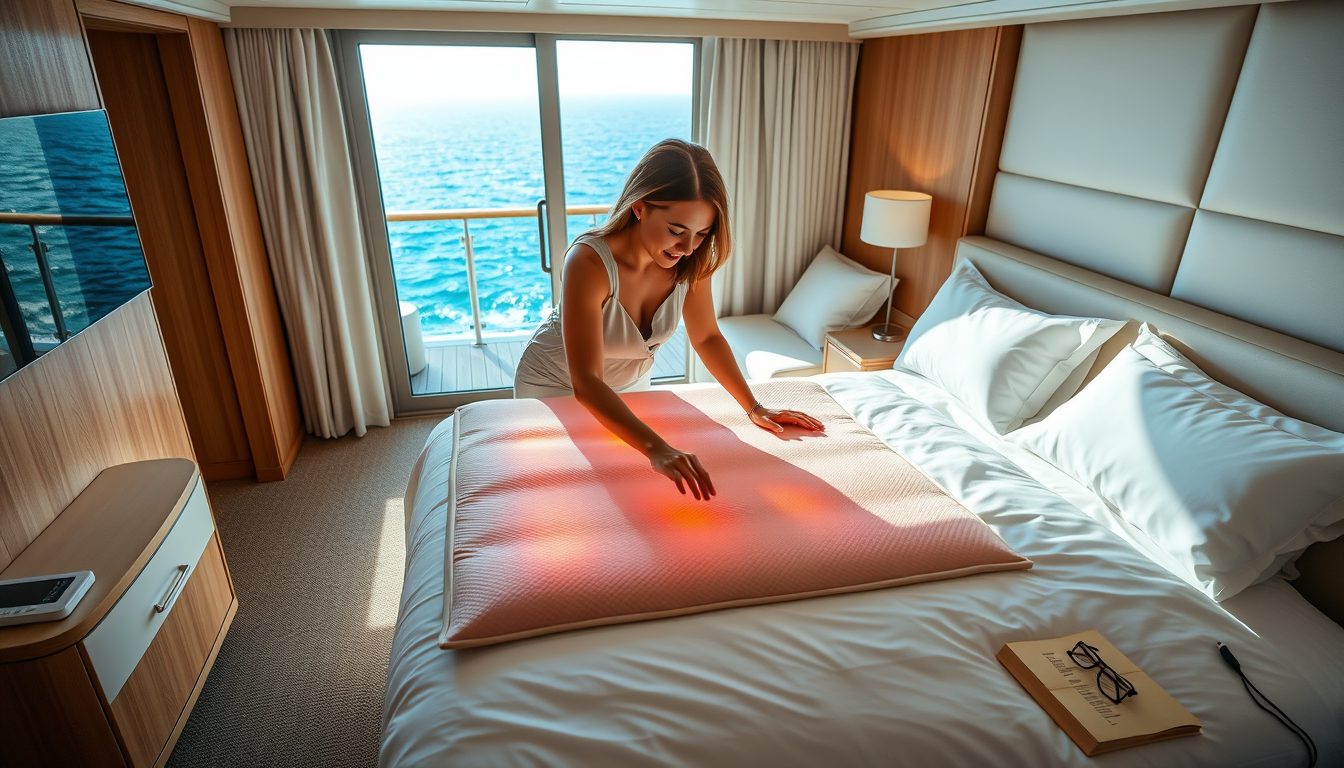
Avoid using it on the bed or any soft surfaces, as these can pose a fire risk.
Follow Cruise Safety Regulations for Heating Pads and Electric Devices
Safety is the top priority on any cruise ship, and this extends to the use of electric devices in passenger cabins.
Cruise lines have strict regulations to prevent fire hazards, which means any electric device you bring onboard must meet certain criteria.
Pass Heating Pad Inspection at Cruise Embarkation
When you board the ship, your luggage may be inspected either by hand or via X-ray machines.
If your heating pad or other electrical devices are spotted, they may be subject to further inspection to ensure they meet safety standards.
Crew members may check for visible damage, frayed wires, or other signs that the device is unsafe.
If your heating pad fails inspection, it will be confiscated and stored until the end of the cruise.
In some cases, you may be able to retrieve it later, but if the crew deems it unsafe, they’ll hold onto it for the duration of the trip.
Avoid Fire Hazards with Heating Pad Safety Features
The main reason cruise lines restrict certain electrical devices is the risk of fire.
A malfunctioning or overheating heating pad can create a dangerous situation, especially in confined spaces like a cruise cabin.
To minimize this risk, most cruise lines prefer devices with built-in safety features like automatic shut-off.
If your heating pad doesn’t have an automatic shut-off feature, it’s worth upgrading to a newer model.
These safety features not only protect you from potential hazards but also increase the likelihood that your heating pad will be allowed onboard.
Use Heating Pads Properly to Stay Safe on a Cruise
When using a heating pad in your cabin, be mindful of how and where you’re using it.
Avoid placing it on the bed, near pillows, or any other soft materials.
These can trap heat and increase the risk of fire.
Always use your heating pad on a hard, stable surface like a desk or table.
Be sure to turn it off when not in use, even if it has an automatic shut-off function, to reduce the risk of overheating.
Safe Alternatives to Heating Pads for Cruise Comfort
If you’re concerned about the restrictions or logistics of bringing a heating pad on a cruise, consider some non-electric alternatives that can provide similar comfort and relief.
Use Disposable Heat Wraps as a Cruise-Safe Heating Option
Disposable heat wraps are a popular alternative to electric heating pads.
These wraps generate heat through a chemical reaction when exposed to air and can provide warmth for several hours.
Since they don’t require electricity, they’re a safe option to bring on a cruise without worrying about outlet availability or fire hazards.
Disposable heat wraps are also lightweight and take up minimal space in your luggage, making them an excellent option for travelers who want to pack light.
Hot Water Bottles: A Safe Cruise Heating Alternative
Hot water bottles can be a great substitute for a heating pad.
Many cruise cabins have kettles or other ways to access hot water, so you can fill a bottle and use it as a portable heat source.
Hot water bottles are particularly useful for localized relief, such as for sore muscles or cramps, without requiring electricity.
Thermal Blankets for Warmth Without Electricity on a Cruise
Thermal blankets, also known as space blankets, are designed to retain body heat and provide warmth without the need for an external heat source.
These blankets are lightweight and compact, making them easy to pack.
While they don’t offer targeted heat like a heating pad, they can help you stay warm and comfortable during your cruise.
Prepare Your Heating Pad for Cruise Approval
If you’re set on bringing your heating pad on your cruise, there are a few steps you should take to ensure everything goes smoothly.
Check Cruise Line Heating Pad Policies Before You Sail
Even if your cruise line generally allows heating pads, it’s always a good idea to double-check their policies before you sail.
Cruise lines may update their rules, and it’s better to confirm in advance than to face issues during boarding.
Review the cruise line’s website or call customer service to verify that heating pads are permitted.
Test Your Heating Pad Before Your Cruise
Before you pack your heating pad, test it to ensure it’s in good working order.
Check the cord for any fraying or wear, and make sure the heating pad functions properly.
If it’s showing signs of age or damage, it may be worth investing in a new model before your trip.
Bringing a faulty heating pad onboard could lead to it being confiscated.
Pack the Right Adapter or Converter for Your Heating Pad
If you’re traveling on an international cruise or using a heating pad with a different voltage or plug type, make sure to pack the necessary adapters or converters.
You don’t want to arrive onboard only to find that you can’t plug in your heating pad due to incompatible outlets.
Bringing a Heating Pad on a Cruise: Rules, Safety, and Tips
Bringing a heating pad on a cruise is generally allowed, but it’s essential to follow the specific rules and guidelines of your cruise line.
Most ships permit small electric devices like heating pads, but they must be in good working condition and meet safety standards.
Make sure your heating pad has features like automatic shut-off, check the voltage requirements, and avoid using extension cords or power strips.
If you prefer a non-electric option, consider alternatives like disposable heat wraps or thermal blankets to provide comfort and warmth without the need for electricity.
By following these tips, you can enjoy the comfort of your heating pad while ensuring a safe and smooth cruise experience.
FAQ – Cruise Heating Pad Rules, Safety Checks, and Packing Tips
Are Heating Pads Allowed on All Cruise Lines?
Most major cruise lines allow heating pads if they meet safety standards.
Your device must be in good condition, free from frayed cords or visible damage.
An automatic shut-off feature is strongly preferred to reduce fire risk.
Always check your cruise line’s latest policy before packing.What Safety Features Should My Heating Pad Have for Cruise Approval?
Choose a heating pad with an automatic shut-off to prevent overheating.
Ensure the cord is intact and the plug fits securely into the outlet.
Avoid older models that lack modern safety certifications.
These features increase the likelihood your device will pass inspection.Do I Need an Adapter or Converter for My Heating Pad on a Cruise?
Most U.S.-based cruise ships use 110V outlets with Type A or B plugs.
Some ships also have 220V outlets, requiring a converter for single-voltage devices.
If your heating pad’s plug type differs from the ship’s outlets, bring an adapter.
Dual-voltage models are the most convenient for international itineraries.Can My Heating Pad Be Confiscated During Embarkation?
Yes, if your heating pad appears damaged, outdated, or unsafe, it may be held.
Crew members inspect flagged devices for compliance with safety rules.
Confiscated items are usually returned at the end of the cruise.
Bringing a compliant, modern device minimizes this risk.Are Extension Cords or Power Strips Allowed with Heating Pads?
Most cruise lines prohibit standard extension cords and power strips.
If medically necessary, request pre-approval for a surge-protected cord.
Using unapproved accessories can lead to confiscation.
Plan to plug your heating pad directly into the cabin outlet.What Are Safe Alternatives to Electric Heating Pads on a Cruise?
Disposable heat wraps provide hours of warmth without electricity.
Hot water bottles can be filled onboard for targeted heat.
Thermal blankets retain body heat and are lightweight to pack.
These options avoid outlet limitations and fire risks.BONUS: How Can I Pack My Heating Pad to Avoid Damage in Transit?
Wrap your heating pad in soft clothing or bubble wrap for protection.
Place it in the center of your luggage to cushion against impacts.
Avoid packing it near liquids or sharp objects.
Proper packing ensures it arrives in working condition.BONUS: What Should I Do If My Heating Pad Fails Inspection?
Ask the crew for clarification on why it was rejected.
If possible, offer proof of safety certifications or recent purchase.
Request a safe alternative from the ship’s medical or guest services team.
Use non-electric options until your device is returned.
Plan Your Next Cruise!

Discover Silversea Cruises: Ultra‑Luxury Voyages to the World’s Most Exclusive Destinations
One Delay Can Cost Your Entire Cruise A quick coverage check now protects you from the problems no one sees coming….

Sail Into Modern Luxury: Celebrity Cruises for Design, Culinary Excellence, and Destination‑Rich Voyages
One Delay Can Cost Your Entire Cruise A quick coverage check now protects you from the problems no one sees coming….

Unlock Seabourn’s World: Yacht‑Like Luxury, Exclusive Destinations, And Unmatched Comfort
One Delay Can Cost Your Entire Cruise A quick coverage check now protects you from the problems no one sees coming….

From Icon to Oasis: Explore Royal Caribbean’s Groundbreaking Ships and Unforgettable Voyages
One Delay Can Cost Your Entire Cruise A quick coverage check now protects you from the problems no one sees coming….