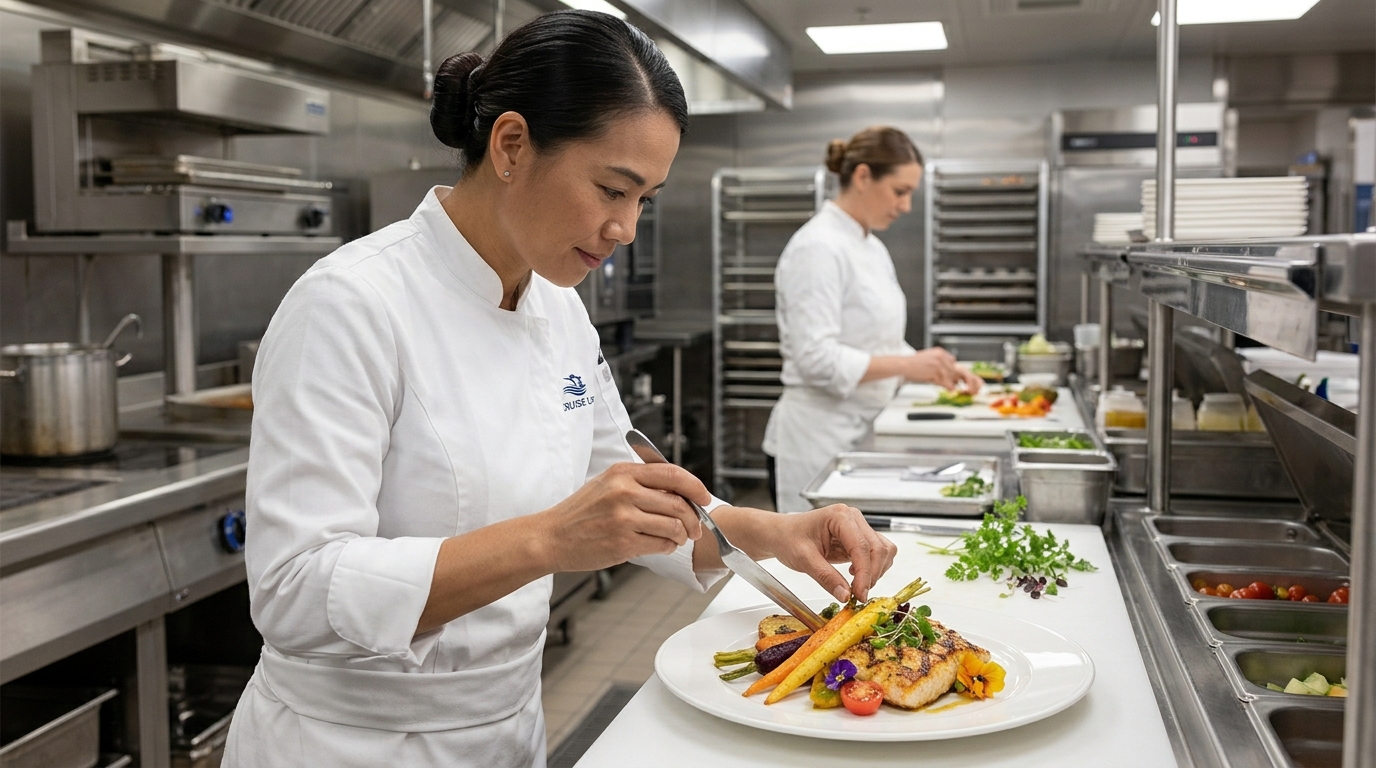
Having dietary restrictions shouldn’t mean missing out on the food experiences that make cruising enjoyable.
Whether you need gluten-free meals, follow a vegan or vegetarian diet, observe kosher or halal requirements, or manage serious food allergies, many cruise lines offer accommodations that can help you enjoy dining at sea.
However, special dietary needs often require planning before embarkation.
Meal availability, ingredient handling, and advance-notice requirements vary between cruise lines and ships.
This guide brings together practical information about requesting special meals, communicating food allergies, exploring dietary alternatives, and making more thoughtful food choices throughout your cruise.
How Do Cruise Lines Accommodate Special Dietary Needs?
Most major cruise lines can accommodate a range of dietary requirements, but the available meals and preparation procedures aren’t identical across every ship.
Main dining rooms, specialty restaurants, buffets, and room service may offer different levels of flexibility.
Passengers with medical dietary restrictions should notify the cruise line before departure and confirm their needs with the dining team after boarding.
Advance communication is particularly important when ingredient substitutions, specialized preparation, or protection against cross-contact is necessary.
Gluten-Free Dining on Cruise Ships
Gluten-free cruise dining has become more accessible, with many ships offering suitable bread, pasta, desserts, and modified menu selections.
However, passengers with celiac disease or significant gluten sensitivity need to consider more than whether a dish contains gluten.
Shared preparation surfaces, cooking equipment, and buffet utensils can introduce cross-contact risks.
Speaking directly with dining staff and asking about preparation procedures is especially important when strict gluten avoidance is medically necessary.
–Gluten-Free Cruise Dining: Meals, Menus & Safety Tips — Explore gluten-free dining options, advance requests, buffet precautions, specialty restaurants, and ways to reduce cross-contact risks onboard.
Vegan and Vegetarian Cruise Dining Options
Cruise lines increasingly offer plant-based meals alongside traditional dining selections.
Vegetarian passengers may find suitable dishes throughout the ship, while vegan travelers should pay closer attention to ingredients such as dairy, eggs, butter, and animal-based broths.
Some restaurants offer clearly identified plant-based dishes, while others may need advance notice to modify recipes.
Reviewing your cruise line’s dining options before sailing makes it easier to enjoy variety without relying on the same limited selections every day.
– Vegan and Vegetarian Cruise Dining Options — Explore plant-based meals, menu customizations, dining venue choices, and strategies for maintaining your dietary preferences at sea.
Kosher and Halal Meals: Why Advance Planning Matters
Religious dietary requirements can involve specific ingredients, food preparation methods, certifications, and handling procedures.
These needs may be more difficult to accommodate through ordinary menu substitutions.
Some cruise lines arrange specially prepared kosher meals or offer halal-friendly selections, but availability and the level of religious dietary compliance vary.
Travelers should contact the cruise operator before booking when strict observance is essential, then obtain confirmation of the arrangements.
– Kosher and Halal Cruise Dining: Special Meal Requirements — Understand advance meal requests, religious dietary considerations, specialized food preparation, and questions to ask before reserving a cruise.
How Cruise Ships Handle Food Allergies
Food allergies require particular attention because even small amounts of an allergen can trigger a serious reaction in susceptible passengers.
Cruise lines may have procedures for documenting allergies, communicating with kitchen staff, and modifying meal preparation, but no shared kitchen can be assumed completely free from cross-contact.
Passengers should disclose allergies before departure and speak with the dining team onboard.
Those prescribed emergency medication should carry it as directed by their healthcare professional rather than relying on the ship’s medical center to have their specific medication immediately available.
– Cruise Ship Food Allergy Protocols and Dining Safety — Explore allergy notification procedures, ingredient questions, cross-contact precautions, and communicating dietary requirements with onboard staff.
How Thoughtful Dining Choices Help Reduce Food Waste at Sea
Cruise dining also offers opportunities to make more responsible food choices.
Large ships prepare thousands of meals, making portion planning, ingredient management, and food waste reduction important operational considerations.
Passengers can contribute by starting with smaller buffet portions, requesting reasonable modifications, and choosing additional servings only when needed.
These habits complement cruise lines’ efforts to improve food sourcing and reduce unnecessary waste without limiting your dining enjoyment.
– How Cruise Lines Reduce Food Waste and Support Sustainable Dining — Discover how cruise operators manage ingredients, reduce unused food, introduce plant-based selections, and encourage more responsible dining habits.
How to Arrange Special Dietary Meals Before Your Cruise
Start by reviewing your cruise line’s dietary accommodation policies before booking, particularly when you have strict medical or religious requirements.
Contact the cruise line directly to explain your needs, ask about advance-order deadlines, and confirm whether the specific ship can provide appropriate meals.
Once onboard, speak with the dining team before your first meal and repeat important allergy or ingredient requirements when ordering.
Don’t assume that a buffet label or general menu description guarantees a dish meets your needs.
Travelers with gluten-free or allergy-sensitive diets should begin with the relevant safety guides, while vegan, vegetarian, kosher, and halal passengers can focus on the meal-planning resources that match their preferences.
With early communication and realistic expectations, you can make dining arrangements that better support your needs throughout the voyage.