

One Delay Can Cost Your Entire Cruise
A quick coverage check now protects you from the problems no one sees coming
Short Excerpt
- Learn which embarkation mistakes can complicate your first cruise, including misunderstanding terminal arrival times.
- Understand the difference between your assigned check-in window and the final boarding deadline.
- Use an interactive preparation checklist to organize travel documents, luggage, transportation, and first-day essentials.
- Discover how to avoid unnecessary crowds and last-minute surprises without relying on questionable boarding shortcuts.
Quick Take
- Follow your assigned arrival time. Don’t assume arriving before your scheduled window will get you aboard sooner. Early passengers may be asked to wait or return later.
- Respect the final boarding deadline. Your ship’s scheduled departure time isn’t the same as the last permitted check-in or boarding time.
- Plan for transportation delays. Allow for traffic, parking, hotel shuttles, and unexpected document questions without intentionally arriving hours ahead of schedule.
- Keep essentials in your carry-on. Required identification, medications, valuables, boarding documents, and first-day necessities should remain accessible.
- Check available onboard facilities. The buffet isn’t necessarily your only dining option, but restaurants and public areas may have different embarkation-day operating schedules.
- Prepare your technology before traveling. Complete online check-in, download your cruise documents, and understand the difference between land-based cellular data and shipboard internet service.
Worried About Making Embarkation Mistakes on Your First Cruise? Start With What Actually Matters
Embarkation day is the moment your cruise stops being a reservation and becomes an actual vacation.
You’ve arranged transportation, packed your luggage, and imagined what it will feel like to walk aboard your ship.
But when you’re approaching an unfamiliar cruise terminal for the first time, even ordinary decisions can feel surprisingly complicated.
Should you arrive earlier than your assigned time to get ahead of the crowds?
What happens to your luggage at the curb?
What if check-in takes longer than expected, or your cabin isn’t ready when you board?
The most useful preparation isn’t memorizing every embarkation trick you’ve encountered online.
It’s knowing which instructions are mandatory, which decisions are flexible, and where an incorrect assumption could interfere with boarding.
Your assigned terminal arrival window and the ship’s final boarding deadline are two different things.
The arrival window indicates when the cruise line expects you to report to the terminal.
The final boarding deadline establishes when you must have completed the applicable boarding requirements.
Neither should be treated casually.
Royal Caribbean instructs guests to arrive during the arrival window selected through its app.
Holland America also assigns terminal check-in times that appear in passengers’ boarding documents. (Royal Caribbean — Cruise Port Arrival Time) (Holland America — Boarding Procedures)
Carnival requires guests to select an arrival appointment during online check-in and be onboard by the final boarding time shown on their boarding pass. (Carnival — Online Check-In and Arrival Appointment)
Virgin Voyages likewise provides specific arrival instructions, including advising passengers who drop off luggage early to return no earlier than 15 minutes before their selected terminal arrival time. (Virgin Voyages — Port Information)
These differences matter because arriving hours early doesn’t automatically mean boarding earlier.
You may simply spend more time waiting outside or be asked to return closer to your appointment.
Instead, build your travel plan around the official instructions for your sailing, finish online check-in before departure, and keep the necessary documents accessible.
Once those basics are handled, the remaining decisions become easier to manage.
Interactive First-Cruise Embarkation Readiness Checklist
Before leaving for the port, use this checklist to confirm that you’ve handled the details most likely to create avoidable boarding problems.
It deliberately doesn’t calculate a terminal arrival time or encourage passengers to arrive ahead of their assigned window.
Those decisions depend on the cruise line, departure port, and instructions for the specific sailing.
My First-Cruise Embarkation Checklist
Check off each task as you prepare. You can copy your checklist to keep a record of completed and outstanding steps.
My First-Cruise Embarkation Checklist
Review the tasks that matter before your first cruise. Check each step as you complete it.
Preparation aid only. Always follow the official arrival instructions and final boarding deadline for your specific sailing.
Why Your Boarding Instructions Matter More Than Arriving First
The most useful advantage you can give yourself on embarkation day is knowing which decisions are actually within your control.
You can prepare your documents, pack a manageable carry-on, arrange dependable transportation, and plan to reach the terminal during your assigned window.
What you cannot assume is that terminal staff will admit you early, that every dining venue will be open, or that your sailing will follow the same procedure another passenger experienced months earlier.
With those expectations established, the common embarkation mistakes below become easier to recognize and avoid.
Why First-Time Cruisers Make Embarkation Mistakes—and How to Avoid Them
Embarkation day has a big reputation, especially if this is your first cruise.
You may have heard stories about long lines, confusing directions, strict arrival rules, and people feeling overwhelmed before they even see their cabin.
What most of those stories leave out is how small, fixable choices created most of the stress in the first place.
You do not need insider status or elite loyalty level to have a smooth, organized start to your cruise.
You just need to understand how the process really works, where new cruisers usually stumble, and what to do instead.
Top Cruise Deals From Trusted Cruise Lines
Compare exclusive online offers and find the fare that fits your trip and your budget

Once you see the patterns, embarkation stops feeling like a test and starts feeling like the first page of your vacation.
You can walk into the terminal with realistic expectations, a simple plan, and the confidence that comes from knowing what usually goes wrong and how to avoid it.
Why Embarkation Mistakes Happen to Smart First-Time Cruisers

Most embarkation mistakes are not about being careless or unprepared.
They come from doing what looks right on paper without realizing how things actually work at the port.
You see a printed arrival time on your boarding pass and assume it is a strict appointment.
You see crowds heading toward the buffet and assume that is what you are supposed to do.
You hear one or two horror stories and assume you need to carry all your luggage yourself or arrive at the last possible second to avoid lines.
Meanwhile, the cruise line is trying to move thousands of people through a system that has to work even when guests do not read every instruction.
That gap between the official version and the real-world flow is where most new cruisers trip up.
Your job is not to memorize every rule.
It is to understand the basics, notice where your choices matter, and use a few planning tools that make the day easier on your body and your nerves.
Why Smart Travelers Still Slip Up
You Are Working From Paper, Not Practice
Printed windows and stern wording can sound stricter than the way things really operate at the terminal.
You Copy What Everyone Else Seems To Be Doing
Following the crowd feels safe, but on embarkation day the crowd is often tired, hungry, and guessing.
You Do Not Yet Know Which Details Actually Matter
You care about everything equally and end up spending energy on the wrong problems instead of the ones that move the day along.
Misreading Check-In Windows And Arrival Times
One of the most common embarkation mistakes starts before you ever reach the port.
It happens when first-time cruisers assume the time printed on the boarding pass is either totally flexible or absolutely rigid.
In reality, how that check-in window is handled depends on the cruise line.
A check-in window is the time range printed on your boarding pass or shown in the app that indicates when the cruise line wants you to arrive at the terminal and begin the check-in process.
Online‑Only Cruise Offers You Won’t Find Elsewhere
Unlock special pricing and start planning the sailing that matches your perfect itinerary

Lines like Carnival and Holland America say they enforce these times, and officially that is the rule.
But many cruisers discover that once the terminal opens and security starts moving, the process quietly shifts to something much simpler.
For a lot of sailings, it becomes first come, first served.
Whoever arrives at the terminal early enough to get through security and finish check-in sooner is placed in earlier waiting groups and often boards the ship earlier, even if their printed window was technically later than someone else’s.
There is an important exception.
Virgin Voyages is known for actually enforcing arrival times.
If you show up far ahead of your assigned slot with Virgin, you may be told to come back closer to your scheduled time instead of being processed early.
Understanding that difference keeps you from showing up too late on lines that load people as they arrive, or too early with a cruise line that genuinely sticks to its schedule.
Check-In Window Mistakes And Fixes
Treating Every Line The Same
Assuming every cruise company handles arrival times like a strict appointment or a loose suggestion leads to frustration.
Ignoring When The Terminal Actually Opens
If you only look at your printed time and never check when doors open, you may show up much later than you needed to.
Fix: Match Your Strategy To Your Cruise Line
For most mainstream lines like Carnival and Holland America, aim to arrive as early as the terminal reasonably allows so you are among the first through security and into early boarding groups.
For Virgin Voyages, treat your arrival time as a real appointment and plan to show up close to that slot, not hours ahead.
Cutting It Too Close To Final Check-In
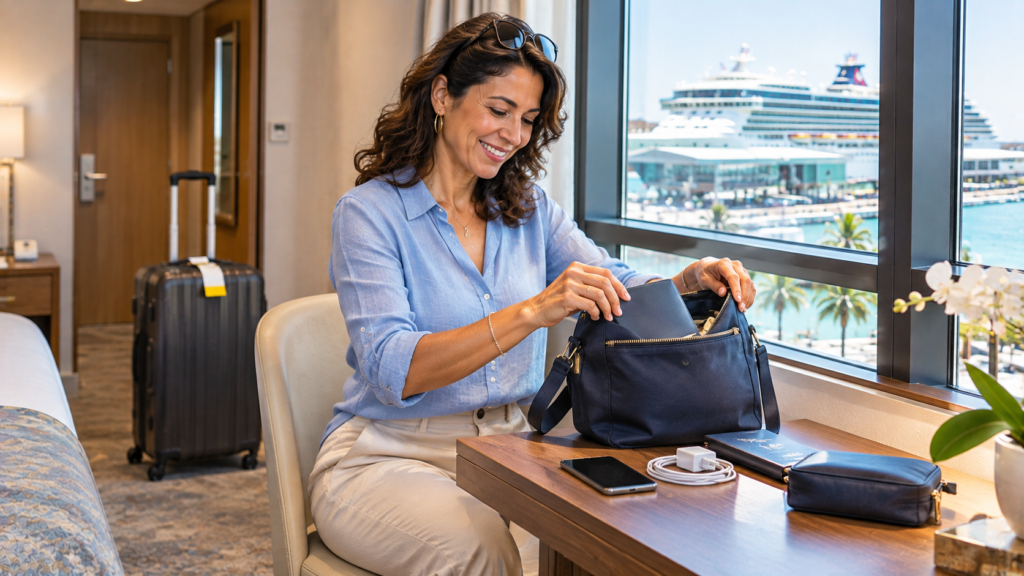
Another confidence-killing mistake is treating the last possible time as your target instead of your safety line.
You might look at the clock and think, “As long as I get there before the final check-in deadline, I am fine.”
Technically, that may be true.
In real life, things like traffic, slow hotel shuttles, a busy security line, or a document issue can easily eat the buffer you thought you had.
If you arrive at the port with just a thin margin, every minor delay feels like a crisis.
That feeling spreads quickly, especially if you are traveling with kids or extended family.
It can also push you into rushed decisions about transportation or baggage that make the day more stressful than it needs to be.
Building a realistic buffer into your day is not about being anxious.
It is about giving yourself enough space that normal travel bumps do not threaten your entire plan.
Flying in the day before and staying at a port-area hotel you booked through Booking.com, Trip.com, Agoda, or Tripadvisor is one of the easiest ways to create that buffer.
On embarkation day, you are starting from a nearby hotel, not from a delayed flight two hours away.
Running Late Mistakes And Fixes
Treating The Last Minute As Your Goal
If you aim for the final check-in time, any small delay suddenly feels like a disaster.
Not Accounting For Real-World Delays
Forgetting about port traffic, security queues, and shuttle timing makes your plan look good only on paper.
Fix: Use A “Comfort Window,” Not A “Bare Minimum”
Plan your day so you reach the terminal near when it opens, not when it closes, especially on lines that quietly board in first-come-first-served waves.
Use flight tools like Kiwi.com, Omio, CheapOair, or Aviasales to choose earlier arrivals, and pair those flights with travel protection from VisitorsCoverage, World Nomads, Ekta, or Insubuy so schedule changes are an inconvenience, not a catastrophe.
Hauling Too Much Luggage Through Every Step
It is natural to worry about your stuff on your first cruise.
You might think, “If I keep it all with me, nothing can get lost.”
The result is that you end up rolling multiple big suitcases plus backpacks through every checkpoint, every elevator, and every waiting area.
By the time you reach the seating area, you are already worn down from managing your bags.

Luxury Cruise Experiences at Smarter Prices
See premium sailings and upgraded cabins priced for travelers who know how to book well
Once boarding begins, those same bags make it harder to move around the ship, find a seat, or take an elevator without bumping everyone around you.
The check-in process is designed around the idea that most guests will hand over their big bags at the curb.
Porters move those suitcases to the ship, and later they appear in the hallway outside your cabin.
Keeping only a focused carry-on lets you move like a regular traveler, not a pack mule.
A well-built bag like a Travelpro carry-on with strong wheels and smart pockets lets you keep essentials close without dragging your whole wardrobe into the terminal.
Luggage Mistakes And Fixes
Carrying Everything “Just In Case”
Bringing all your bags through the terminal turns each step into a physical challenge you did not need.
Forgetting To Tag And Hand Off Bags
If you never attach the provided tags or never use the porters, you are doing extra work that the system was designed to spare you from.
Fix: Check Big Bags and Build a Smart Day Bag
Let porters handle anything you do not absolutely need before your cabin is ready.
In your carry-on, keep documents, medications, valuables, and one small set of “first afternoon” items like a swimsuit and sunscreen.
With a lighter load, boarding feels more like entering a hotel lobby and less like moving apartments.
Following The Crowd Straight into The Buffet

Once your group is called and you walk onto the ship, you reach another decision point.
Most first-time cruisers follow the people in front of them.
They hear music, smell food, and see signs for the buffet, so they head straight there.
It feels like the obvious move: the food is included, everyone is hungry, and the buffet seems like the most “cruise” thing you could do.
The problem is that thousands of other people have the same idea at the same time.
That is how you end up circling for tables, balancing trays, and weaving around people who are just as disoriented as you are.
You do not have to start your cruise that way.
If you arrived early and boarded with the first waves, you have valuable time on your side.
You can step away from the crowd and look for the quiet corners they are ignoring.
Libraries, card rooms, game rooms, observation lounges, and bars that will not be busy until evening often sit nearly empty while everyone else fights for buffet seats.
Crowd-Following Mistakes And Fixes
Assuming The Noisiest Place Is The Right Place
Loud music and big crowds can make it feel like you are supposed to be there, even when you are miserable.
Forgetting That Other Venues Are Open
Many ships quietly open main dining rooms or smaller restaurants for embarkation lunch, but they are easy to overlook in the rush.
Fix: Walk Past The Buffet And Choose Quieter Spaces On Purpose
Use your early arrival to head for the library, card room, or a tucked-away lounge where you can sit, plug in your phone, and read the daily program in peace.
Check the app or printed schedule to see if a main dining room is open for lunch and choose table service instead of the busiest buffet line.
While you sit, you can review independent tours you booked through GetYourGuide, Viator, Go City, BikesBooking.com, or Big Bus Tours, adjust plans, and actually feel like day one of your cruise has started.
Overlooking Money, Documents, And Tech Until It Is Inconvenient
Another common embarkation mistake is treating money, documents, and tech setup as an afterthought.
You might step onto the ship assuming you will sort out Wi-Fi, app logins, and payment methods “later.”
“Later” often turns out to be the first couple of hours after boarding—precisely when Guest Services and Wi-Fi help desks are their busiest.
If something is wrong with your onboard account or you cannot log into the cruise app, you find out at the same time as everyone else.
The same thing happens with connectivity.

Sail Away to Paradise Without Overpaying
Find cruise deals that make it easy to escape, relax, and enjoy the ocean without stretching your budget
If you wait to think about international data until you have already left home, you may end up hunting for random networks or paying premium rates for last-minute options.
A little prep before you travel lets you skip most of that frustration.
Setting up a travel eSIM from providers like Airalo, Drimsim, Yesim, or Sally Sim before you leave means your phone connects as soon as you land or reach port.
Adding a privacy layer using a tool like NordVPN lets you safely log into cruise accounts, airline apps, and booking sites from hotel and port Wi-Fi without worrying about who else is on the network.
Money And Tech Mistakes And Fixes
Waiting To Check Your Account Until The Ship Is Busy
If you only look at your onboard charges on the last morning, you may find issues when lines are longest.
Ignoring Data And Security Until You Need Them
Scrambling for Wi-Fi passwords and network names after you land adds stress when you already have plenty to think about.
Fix: Handle Accounts And Tech Before The Rush
Before sailing, confirm your payment method and traveler details in the cruise app.
On your last sea day, review your onboard account and visit Guest Services then if something looks wrong.
Set up your eSIM and VPN before your trip so you can use tools like Tripadvisor, flight apps, and your tour confirmations without extra friction.
Letting Other People’s Horror Stories Drive Your Fears
First-time cruisers often arrive with vivid images in their heads that came from other people’s worst days.
You might have read about someone who was denied boarding, someone who missed the ship, or someone who spent hours in line for no clear reason.
Those stories can make you feel like you are always one step away from disaster.
The result is that you overcorrect in the wrong directions.
You might carry too much luggage, arrive either far too early or dangerously late, or assume you have to follow the crowd just because you are new.
What actually helps is building a plan around what usually happens, then adding realistic buffers.
Flying in a day early when you can, using trusted tools like Booking.com, Trip.com, or Agoda to stay near the port, and reaching the terminal early in the day for most lines puts you ahead of the curve without living in fear.
Protecting your trip with coverage from VisitorsCoverage, World Nomads, Ekta, or Insubuy and knowing that services like Compensair and AirHelp can help you understand your options if flights go seriously wrong adds another layer of stability.
You are not hoping everything goes perfectly.
You are giving yourself enough support that you can handle imperfections without feeling overwhelmed.
Fear-Driven Mistakes And Fixes
Planning Around Someone Else’s Worst Day
If you only react to horror stories, you can end up with a plan that is more stressful than the problem you were trying to avoid.
Assuming You Are The Only Person Who Does Not Know What To Do
Feeling behind everyone else makes you more likely to copy bad habits just because they look confident.
Fix: Build A Grounded Plan And Trust It
Use realistic arrival times, a light carry-on, quiet onboard spaces, and solid protection to build a day that works for your situation, not someone else’s.
Once you have that, you can treat normal lines and pauses as background noise instead of warning signs.